“We don’t have enough stock to satisfy clients waiting to purchase their escape out of the city.”
By Terry Christodoulou
Thu, Jun 3, 2021 2:16pm 4min
Deborah Cullen has worked her way through the real estate industry, from boutique agencies and corporate heavy-hitters, to selling Sydney’s finest homes.
However, through 2020’s pandemic, Cullen saw an opportunity to specialise her skillset, partnering with Richard Royle to open a boutique (and luxurious) agency with a renewed focus on rural estates and coastal escapes away from the capital cities.
We caught up to discuss the capital city exodus of COVID and how the second-home market continues to play out.
Kanebridge News: I guess we’ll start at the beginning of your property career – you were a Personal Trainer before, why property?
Deborah Cullen: Fitness and real estate are passions for me. Firstly, real estate – for me it was a love of renovating and styling that made me fall in love with properties. I used to go to inspections, view beautiful homes and get ideas for what current trends were for my own family and future homes.
Working as a fitness coach is all about communication and care, all easily transferrable skills into selling property I think.
KN: In 2020 you launched a new boutique agency – Cullen Royle – what was the catalyst there? What makes it different?
DC: After starting and heading up a prestige team within a large corporate business I saw the opportunity in a COVID affected market to provide a very personalised boutique service and one that focused on family and lifestyle properties rather than one that concentrated on volume and transactions. I
Working together with my business partner Richard Royle, who also came from large corporate background in rural and agribusiness, our work is based on personal referrals and repeat business. We have seen an incredible amount of business come our way since starting Cullen Royle and we feel very honoured and blessed to look after our clients most important and valuable property assets.
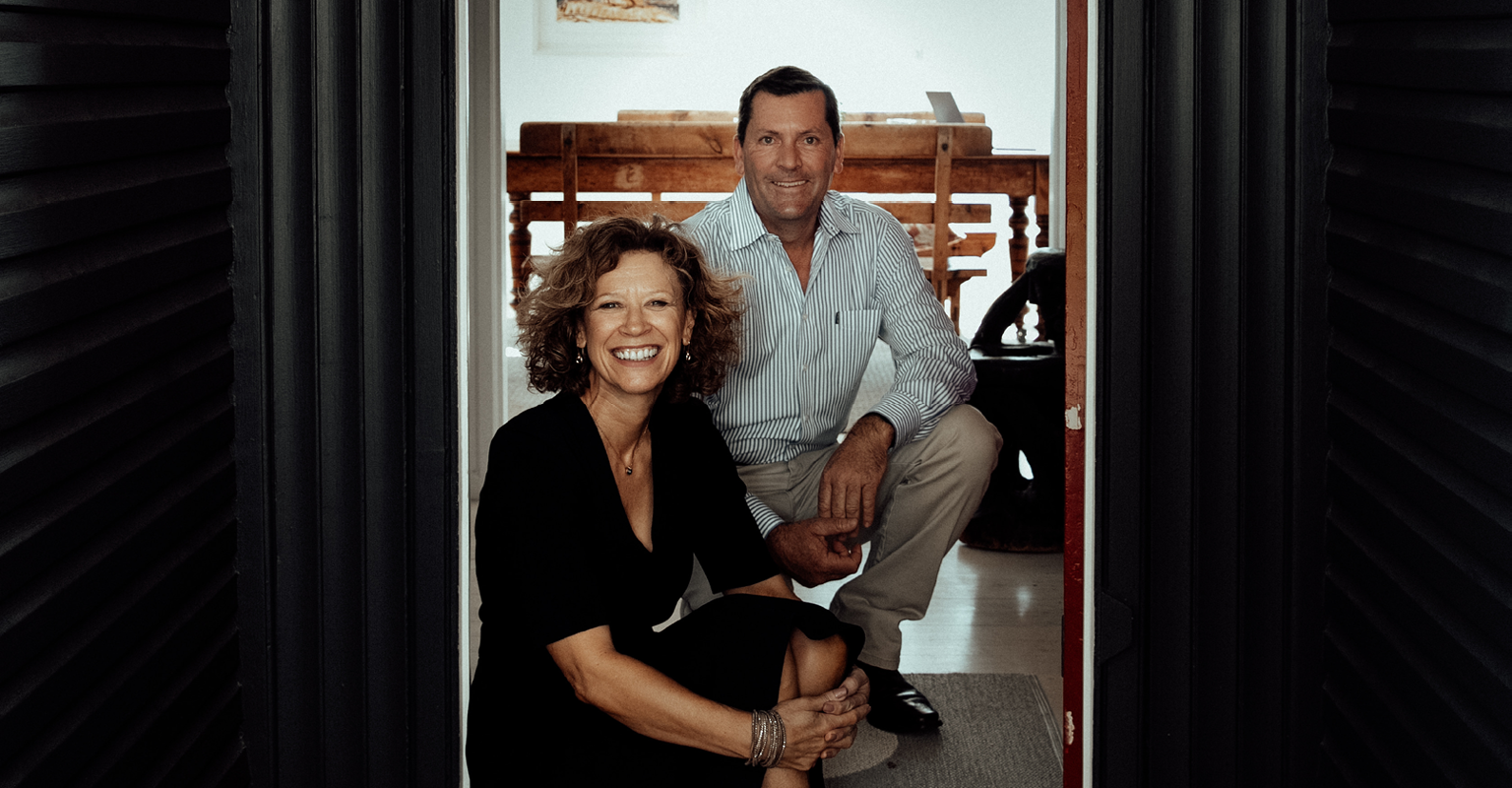
Deborah Cullen and Richard Royle.
KN: How is it different selling a rural estate to a waterfront Sydney mansion?
DC: They both can be emotional purchases. Country lifestyle estates are usually driven by family desires to getaway and be together. Waterfront homes are wonderful estates to represent as we see a huge response from our expat database – but they also usually include the added check list of requirements such as best schools, transport, shopping, entertainment etc. So, it needs to work on many more levels to be a perfect fit.
KN: What about your personal preference, rural or coastal?
DC: That is a tough one but luckily I get to spend time at both for my clients. It is very common for our clients to have a city base, country estate and beach house. I really enjoy the coast myself, but I have to say, wintertime in the country with the fireplaces lit and the glass of red is very hard to beat.
KN: How noticeable was the shift away from the cities to regional pockets of Australia?
DC: It was and still is an amazing shift that gained momentum very quickly. Country and coastal homes were always popular but then when the COVID experience hit us, the desire to be away in nature and fresh air everyday escalated to a new level. It is still there, we don’t have enough stock to satisfy clients waiting to purchase their escape out of the city.”
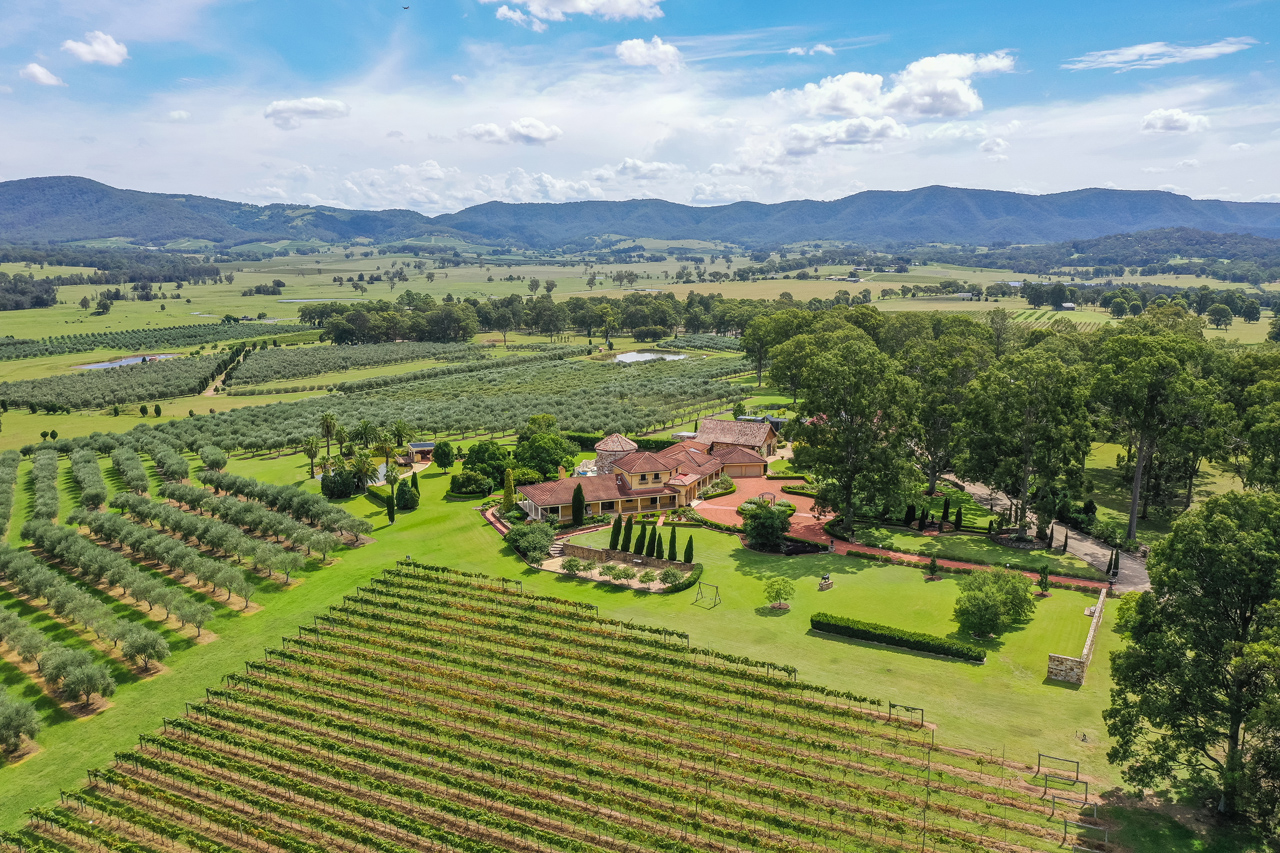
Olio Mio estate, one of Cullen’s premier listings.
KN: Are prestige buyers still looking to move out of the cities permanently, or is the market returning to those looking for a 2nd home? What’s the split like?
DC: It is very definitely still a split lifestyle between a city base and lifestyle retreat. What we have seen is the city base become the smaller home and the coastal or country home be a larger investment. Those who are moving permanently are doing so to be with family or making it a definite business relocation. Most of our clients want the flexibility to still stay in the city when needed so have a foot in both camps.
KN: What regional areas do you think are growing with popularity now, and which do you see as having potential over the next few years?
DC: We have seen areas come back to life again that are still an easy drive to big cities. In particular the Hunter Region is now a strong lifestyle draw and has the inclusion of tourism and entertainment on its doorstep. The other area is the South Coast of Sydney, the Blue Mountains and Mudgee regions which continues to draw those from the city out. There is a tremendous amount of luxury stays and farm getaways in these areas that are making people consider these regions as options.
KN: What of the prestige property market as a whole – is it to continue to be as safe and as in demand as ever?
DC: The resilience of the Sydney prestige market in particular has shown continually to be a sound investment. It really comes down to the amount of quality properties being available in blue ribbon areas. Sydneysiders are driven by the desire to be near the harbour and beaches plus have a stunning country retreat. These quality estates will always attract a discerning audience to assess. We see this continuing for the foreseeable future for sure.
KN: What do you make of the trend of downsizers or rightsizers? Do you think that will continue to grow and perhaps lessen the appeal of a sprawling country estate or coastal home in the future?
DC: Rightsizing is all about finding the right home for a particular time in your life. At the moment, we are seeing an abundance of clients purchasing estates to have the opportunity to share and gather for celebrations and to create precious memories. I don’t think that will change for a while with COVID still being an influence in our lives.
In 2021, luxury estate purchases are now about the experience shared together as a family and the options of where they can do this? Well, that, can be anywhere now. So let us at Cullen Royle do the hunting and find it for you.
BNW Developments has established a Sydney presence, joining Arada and Sobha Realty among the growing number of UAE developers pursuing Australian buyers and development opportunities.
The Australian leather house has opened an immersive four-day pop-up in Manhattan, unveiling its Bloom Collection and redefining what a product launch can look like.
Related Stories
Property
Dopamine Design: A Couple Lists Their 1950s ‘Happy House’ in Palm Springs Ahead of Modernism Week
By Chava Gourarie 05/10/2026
Property
Dubai and Abu Dhabi’s Trophy-Home Developers Are Doubling Down on Waterfront Living
By Jake Emen 01/10/2026
Property
BNW joins growing wave of UAE developers targeting Australia
A vibrant 1954 Palm Springs home featuring eight colorful murals by late artist Shawn Savage is on the market for $2.295 million. The 2,237-square-foot property features bold hot-pink doors, three bedrooms, a pool, mountain views and playful interiors blending modern glamour with classic Palm Springs style.
By Chava Gourarie
Mon, Oct 5, 2026 3min
A bold 1950s home in Palm Springs, California, adorned with eight colorful murals by the late artist Shawn Savage, is coming to market ahead of the city’s annual Modernism Week.
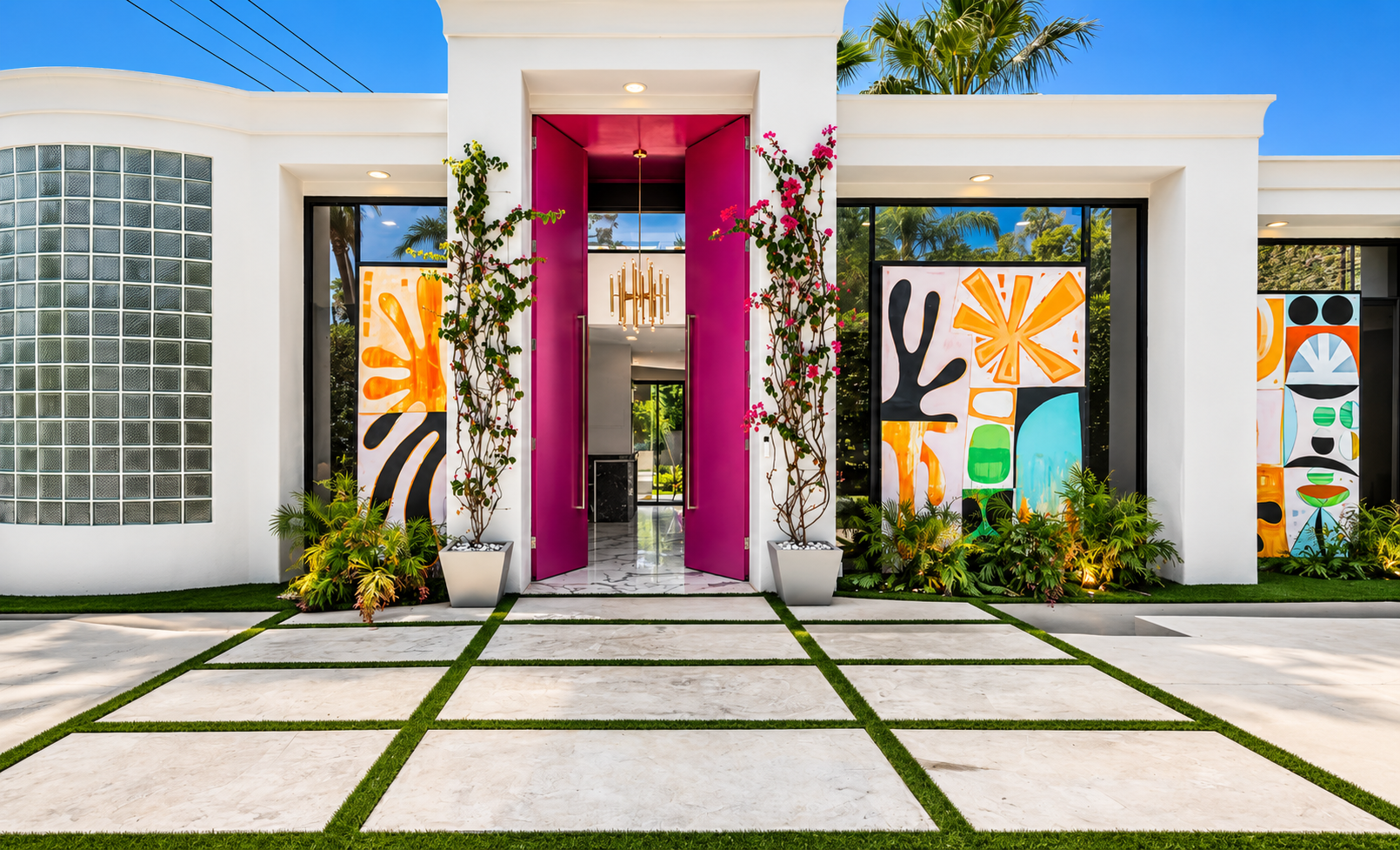
The white stucco home on El Camino Way, built in 1954 and recently renovated, has an asking price of $2.295 million. Its staggered facade features three playfully abstract murals on either side of double-height hot pink doors.
The sellers are Los Angeles-based partners John Freeman and Mathieu Faure, who knew it was “the one” when they saw it after several months of searching in the winter of 2023. “It’s a happy house,” Freeman said. “We really liked the feel of the house: the uniqueness, the openness, the brightness—and the art.”
Located in the Mesa neighborhood of Palm Springs, which backs up to the San Jacinto Mountains, the 2,237-square-foot house features three bedrooms, an angled bonus room and a yard with a pool, desert mountain views and another colorful mural running alongside the pool.
“I never thought in my life I would have a house with pink doors,” said Faure, a producer at Apple TV who is originally from Paris. “It’s so colorful, it’s so different. And so Palm Springs.”
Abstract murals can be found on the facade.Patrick Ketchum
The layout of the home creates a smooth flow from the front doors through the open-plan common area—a foyer, bar, and living and dining room—into the kitchen around a fireplace wall and out to the yard. A corridor leads to a private bedroom wing, where the primary suite has floor-to-ceiling windows and the primary bath is only a tad smaller than the bedroom.
Faure has filled the home with Jonathan Adler furniture, rugs and accessories, riffing on the energetic California vibes of the house to create an aesthetic of “modern American glamour,” he said.
“It was enjoyable for me to play with different types of furniture and make this house ‘happy chic,’ as I describe it,” he said.
“He did a fantastic job,” said Freeman, who is an attorney and consultant. “It does kind of bring a smile to my face whenever I walk into the house.”
Since the furniture and decor were chosen for the particularities of the space, the couple is open to selling them with the home. Their West Hollywood house is already furnished; the collection doesn’t match the vibes of a Houston loft they bought near family; and Faure can’t imagine these pieces in New York—where he’s lived in the past—he said.
The duo bought the Palm Springs house for $1.925 million in 2024, according to property records, and will list the home Monday. They are represented by Stewart Smith, Patrick Jordan and Kevin Stanley of Bennion Deville Homes/Luxury Portfolio International.
The previous owners had purchased the home in 2021 for $975,000 and then spent more than two years and $700,000 on the renovation, according to Realtor.com. They commissioned Savage, a local Palm Springs artist and painter known for his joyful abstract work, to decorate the home.
Savage, who died in 2024, lived in the Coachella Valley from 2003, and his work can be found in various local institutions and is on exhibit at the Illumine Gallery in Palm Springs. “Some artists pass through a place. Shawn Savage became a part of it,” the gallery’s description states.
Unsurprisingly, the murals invite lots of friendly conversations, as well as guided tours and interested lookers, but never to a degree that it disturbed the peacefulness of their home or the neighborhood, the sellers said. “It felt like living in an art gallery, and you have the exterior that you would share with the world,” Faure explained.
The neighborhood also played a role in their decision to buy, because of its access to the hiking trails of the San Jacinto Mountains, the lack of through-roads and the neighborly environment.


 4 min
4 min