As Chinese Tastes Change, Farmers Everywhere Rip Up and Replant
The windfall is transforming entire regions, but some are starting to worry: What if China stops buying?
By JON EMONT
Wed, Nov 22, 2023 8:38am 4min
Durian, a pungent fruit, has become wildly popular in China. JON EMONT / THE WALL STREET JOURNAL
EA YONG, Vietnam—In the verdant highlands of central Vietnam, warehouses the size of airplane hangars dominate small farming towns, bristling with mounds of tropical fruit. The bounty is destined for a colossal market: China.
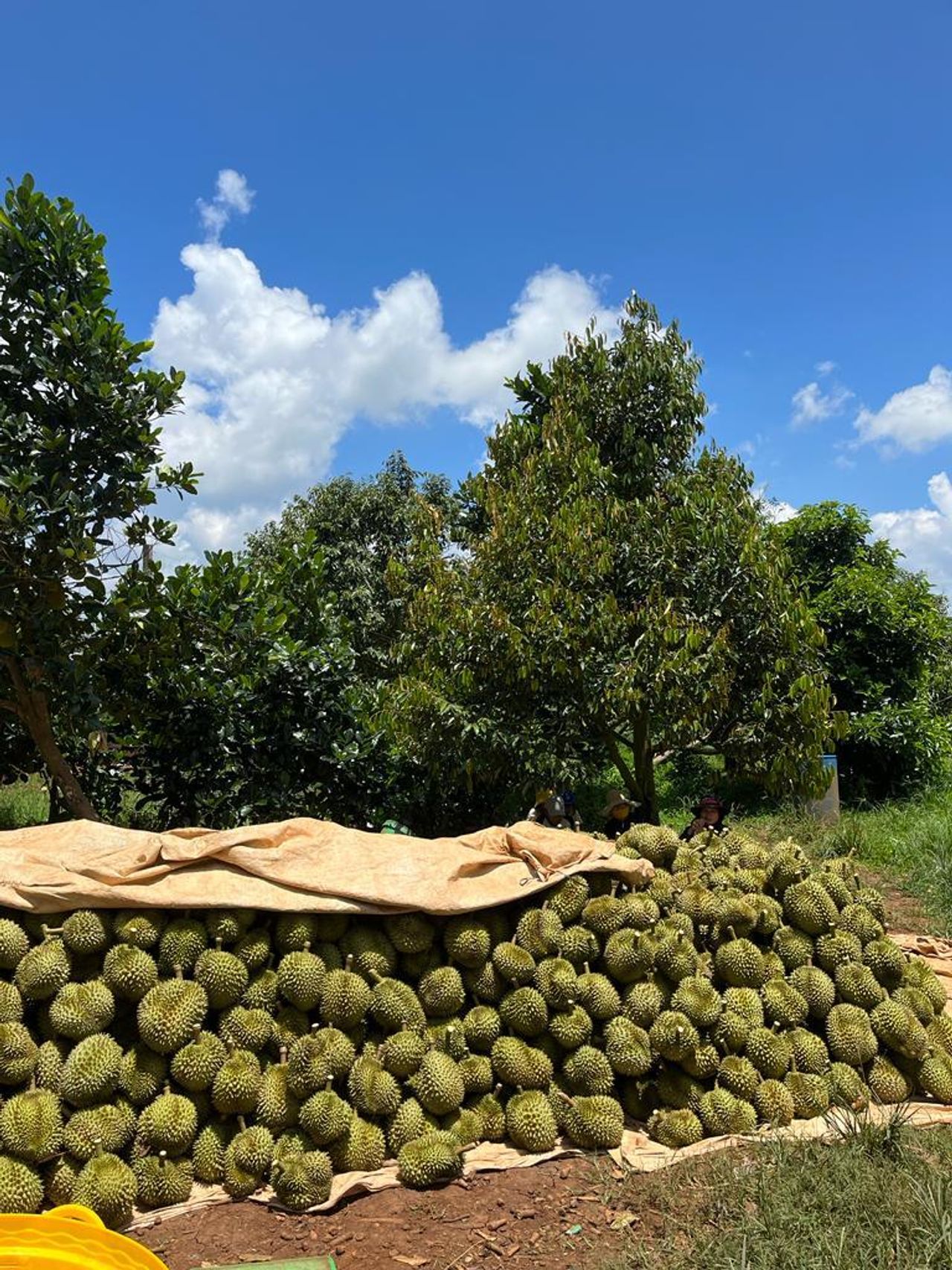
Farmers are felling coffee trees traditionally grown in this cool hilly region to plant spiky durians, pungent fruits that have become wildly popular in China. They are reaping the windfall to buy new irrigation systems, pay off loans and build shiny marble facades to their homes.
“We locals aren’t just doing well, we can even be considered rich,” said Pham Van Trung, 54, as he ate a late lunch of pork and rice wine. Trung made $81,000 this year selling durian, and said the region was swarming with Chinese buyers.
China’s appetite for foreign produce has grown in recent decades along with the wealth of its consumers. The amount of food the world’s second most populous nation imports has risen to over $200 billion a year—more than any other country—from about $15 billion two decades ago, according to the World Trade Organization. Avocado farmers in Kenya, shrimp cultivators in India, soy producers in Russia and banana growers in Cambodia are all cashing in.
While economic growth in China has slowed recently and its population is shrinking, demand for nutrient-rich foods such as beef and tropical fruit has remained high.
Last year, the Chinese noshed through more than 800,000 metric tons of imported durian and nearly six million metric tons of imported meat—both world-leading totals. It bought 90 million metric tons of soybeans from overseas last year, accounting for roughly 60% of global trade, for use in making tofu and to feed the country’s hundreds of millions of pigs.
Feeding China’s massive middle class presents a historic opportunity for countries seeking to boost the incomes of people in poor, rural areas. But it also poses a quandary: how to tap in to its huge market without becoming dependent on a trade partner that can be fickle.
In recent years, China has restricted imports of Norwegian salmon, Taiwanese pineapples, Philippines bananas and Australian lobsters. It usually cites contamination, pests or issues with quality—but Beijing’s curbs have also often coincided with political disputes.
China slapped hefty antidumping duties on Australian wine exports in 2020 after Australia called for an independent probe into the origins of Covid-19. In 2012, China halted purchases from banana growers in the Philippines, saying mealybugs had been discovered in shipments, after a flare-up between the countries in the South China Sea.
“With the size of the Chinese economy, it can always use trade to punish an exporter,” said Yun Sun, director of the China program at the Stimson Center, a think tank in Washington, D.C. Selling to China is “an opportunity, and it is a risk,” she said.
The risk is higher because when the chance to export to China’s massive market opens up, often entire agricultural belts go all in. This can lead to what Sun calls “singularification,” or the concentration of a local economy around one product, making it vulnerable to disruption.
Vietnamese farmers are felling coffee trees to plant durians for export to China. PHOTO: JON EMONT/THE WALL STREET JOURNAL
That is what appears to be happening in Vietnam’s central highlands. The region is famed for its Robusta coffee, which is sold around the world. But last year, Beijing opened the gates to large-scale imports of Vietnamese durian—and farmers here began uprooting their coffee crops. Traders flocked to snap up the produce, causing local prices to more than double this year.
Be Duc Huynh, a 26-year-old farmer who got rid of his entire coffee crop, said he makes about five times as much from a hectare of durian as he earned from coffee. He harvested four tons of durian this year, up from one ton last year—all of it destined for China.
China buys around 90% of durian exports from Vietnam, which also sells much of its dragon fruit, bananas, mangoes and jackfruit to its giant neighbour. In recent months around 60% of Vietnam’s fruit and vegetable exports have gone to China, up from one-third a decade ago, according to official figures compiled by data provider CEIC.
During the autumn harvest time, the village air carried the sharp smell of the fruit. Families stacked mounds of durian in front of their homes to entice traders, who thwacked the durian shells with knife handles to test for quality. Hard means it is too young; soft means it is ripe and can sell for a higher price.
On a recent afternoon, durian trader Nguyen Thai Huyen dug into the flesh with her painted-pink fingernails, tasting bits of durian to determine their ripeness. Huyen posts snappy videos on TikTok of her visits to plantations and the mountains of durian she has on offer.
“A few years ago people considered durian a crop to reduce poverty,” she said. “Now it is the million-dollar crop.”
She has tried selling to Japan, but said buyers there only take small amounts. She isn’t especially worried about being too reliant on China, though. She says durian’s popularity has room to grow in the country, where many are still unfamiliar with the fruit.
Vietnam’s government is less certain. Earlier this year the agriculture ministry issued a warning about what state media called reckless durian cultivation, saying many farmers were abandoning traditional crops such as coffee and rice and planting durian in areas unsuited to it. Agriculture experts cited in state media have encouraged farmers to develop alternative markets to China and try to sell more of their produce locally.
Traders say that is easier said than done. The fruit has few takers outside of the region, and recent high prices put durian out of reach of many local Vietnamese.
Still, farmers say they want to be careful. In September, some fruit exports including durian were halted after Beijing complained about mealybugs and other pests. It reminded farmers of a major disruption in January 2022 when truckloads of Vietnamese produce rotted after China sealed off its southern border to contain the spread of Covid-19.
H’Meng, a farmer who goes by one name, has planted hundreds of durian trees in recent years. Now, she said, she is planning to grow more coffee. The prices are more stable, she said, because the market for coffee isn’t focused on one nation.
“I’m worried about becoming too dependent on China,” she said.
Copyright 2020, Dow Jones & Company, Inc. All Rights Reserved Worldwide. LEARN MORE
BNW Developments has established a Sydney presence, joining Arada and Sobha Realty among the growing number of UAE developers pursuing Australian buyers and development opportunities.
The Australian leather house has opened an immersive four-day pop-up in Manhattan, unveiling its Bloom Collection and redefining what a product launch can look like.
Related Stories
Money
How Families Can Beat 7% Mortgage Rates and Lower Their Tax Bills
By Laura Saunders 09/10/2026
Money
The Stock Market’s Breezy Summer Is Over. Investors Beware.
By Hannah Erin Lang 08/09/2026
Money
The Sudden Unraveling of Wall Street’s Momentum Trade
By Gregory Zuckerman and Gunjan Banerji 31/08/2026
Strong family financial planning can help reduce taxes and support younger generations. From intrafamily loans and asset gifts to inheritance disclaimers, strategic cooperation can create meaningful financial benefits—when families have the trust and structure to make it work.
By Laura Saunders
Fri, Oct 9, 2026 4min
Happy is the family whose members—parents, grandparents and grown children—trust each other enough to cooperate on shared goals, especially financial ones. When that is truly the case, Uncle Sam’s tax rules can help as well.
This matters especially now that mortgage rates are above 7%, and many families are looking for ways to help younger members. If the elders have resources and are confident younger ones can cooperate, a family loan could make homeownership possible while providing the elders with a useful income stream.
Other strategies can actually lower taxes, such as when funding 529 plans or Roth IRAs, or when someone inherits a traditional IRA with required withdrawals larger than they will need.
Here are three strategies useful for functional families.
Intrafamily loans
It is perfectly legal for families to lend money to a relative for a down payment or even a private mortgage.
But it is important not to cut corners, says Ryan McKeown, a CPA with Modern Wealth Enhancement in Minnesota. If the loan is for a down payment, be honest with the mortgage provider and have a formal agreement. The lender owes tax on the interest payments received.
If the loan is for a private mortgage, both sides should have legal representation with a formal written agreement, including payment terms. The lender owes tax on the interest, and the borrower often can deduct it if he or she itemizes.
To avoid IRS trouble, the interest rate shouldn’t be lower than the agency’s Applicable Federal Rate at the time of the loan. Currently that is about 5% for loans longer than nine years; about 4.5% for loans three to nine years; and about 4% for loans three years or less. Currently, traditional mortgage rates are generally above 7%.
In addition, the lender could use the $19,000 annual gift-tax exemption (described below) to forgive some or all of the interest or principal annually. If both lenders and borrowers are married, that is up to $76,000 a year. There is no tax for the borrower on such forgiveness, because it is from a gift.
If you’re going this route, McKeown advises against having a fixed plan to forgive the debt. Instead, do it in one-off letters specifying the amount—and keep careful records. Otherwise the IRS might try to treat the loan as a taxable gift.
Asset gifts
Powerful tax-saving moves for families often use gift-tax provisions. Under current law, anyone can give anyone else up to $19,000 of assets annually, free of gift tax. That means a married couple with three grandchildren could give them a total of $114,000 in 2026.
The gifts can be cash or other assets, like stock. For noncash gifts, the cost basis—which is the starting point for measuring taxable gain after a sale—“carries over” to the recipient. So if someone buys $1,000 of stock and gives it away when it is worth $5,000, the recipient’s cost basis is $1,000. If the recipient later sells the shares for $8,000, the taxable gain is $7,000.
Here’s an example showing how gifts could save a family taxes. Grandma is a widow of modest means, while her child and spouse have prospered. The couple has two children, and they want to contribute $5,000 to a 529 college-savings plan for each—but they need to sell stock to do it. Their tax rate on the sale would be 18.8%, and they would need to sell about $11,000 of stock.
However, Grandma’s federal tax rate on the stock sale is 0%. If the couple gives $10,000 of shares to Grandma, she could sell them, pay no tax, and fund the grandchildren’s 529 plans. This saves about $1,000 of tax.
These moves are legal, and they could be used in other ways, such as to help a young person fund a Roth IRA.
But trust among family members is essential: Under the law, givers can’t put conditions on a gift. Grandma could use her stock proceeds to take a cruise, but she makes 529 contributions instead.
Mark Sellner, a retired tax attorney and CPA living in Sarasota, Fla., uses this strategy. His children sell stock he gives them and fund 529 plans for his grandchildren.
The family’s tax savings aren’t huge, but he likes other benefits. The sales by his children don’t boost his adjusted gross income, which in turn could raise his Medicare Irmaa premiums or his 3.8% surtax on net investment income.
Sellner doesn’t worry about his children using the funds for another purpose.
“There can’t be any strings attached to gifts. Of course, it is up to us to decide whether to make them in the future,” he says.
Two caveats: The “kiddie tax” applies to most children under age 24, and it is levied at the parents’ rate on investment income above $2,700 in 2026. Consider this before making gifts to a young person.
Investors who give away stock also forgo the step-up, an important provision that exempts assets held at death from capital-gains tax.
Sellner knows he’s losing a step-up, but says, “The children could use a little more now. Why should they wait 20 years to get it?”
Disclaimers
A disclaimer is a highly useful strategy in which one heir renounces an inheritance in favor of another heir. Assuming family members cooperate, this can save taxes.
Here’s one example. Dad died and had a large traditional IRA that he left to Mom. She has enough assets and income to cover her expenses, and she lives in a state with a stiff estate tax. The inherited IRA would put her estate over the threshold.
Also surviving are three young-adult children. If Mom disclaims all or part of Dad’s IRA within nine months of his death, that amount could go directly to the children. They will have 10 years to empty the account, and the family as a whole will likely save estate and income taxes.
Disclaimers have many key details, especially regarding beneficiary documents. Although heirs have great freedom in choosing what assets to disclaim, the rules about who gets disclaimed property are rigid. It is best if the original owner names tiers of heirs so that if one disclaims, the next recipient is clear.



 4 min
4 min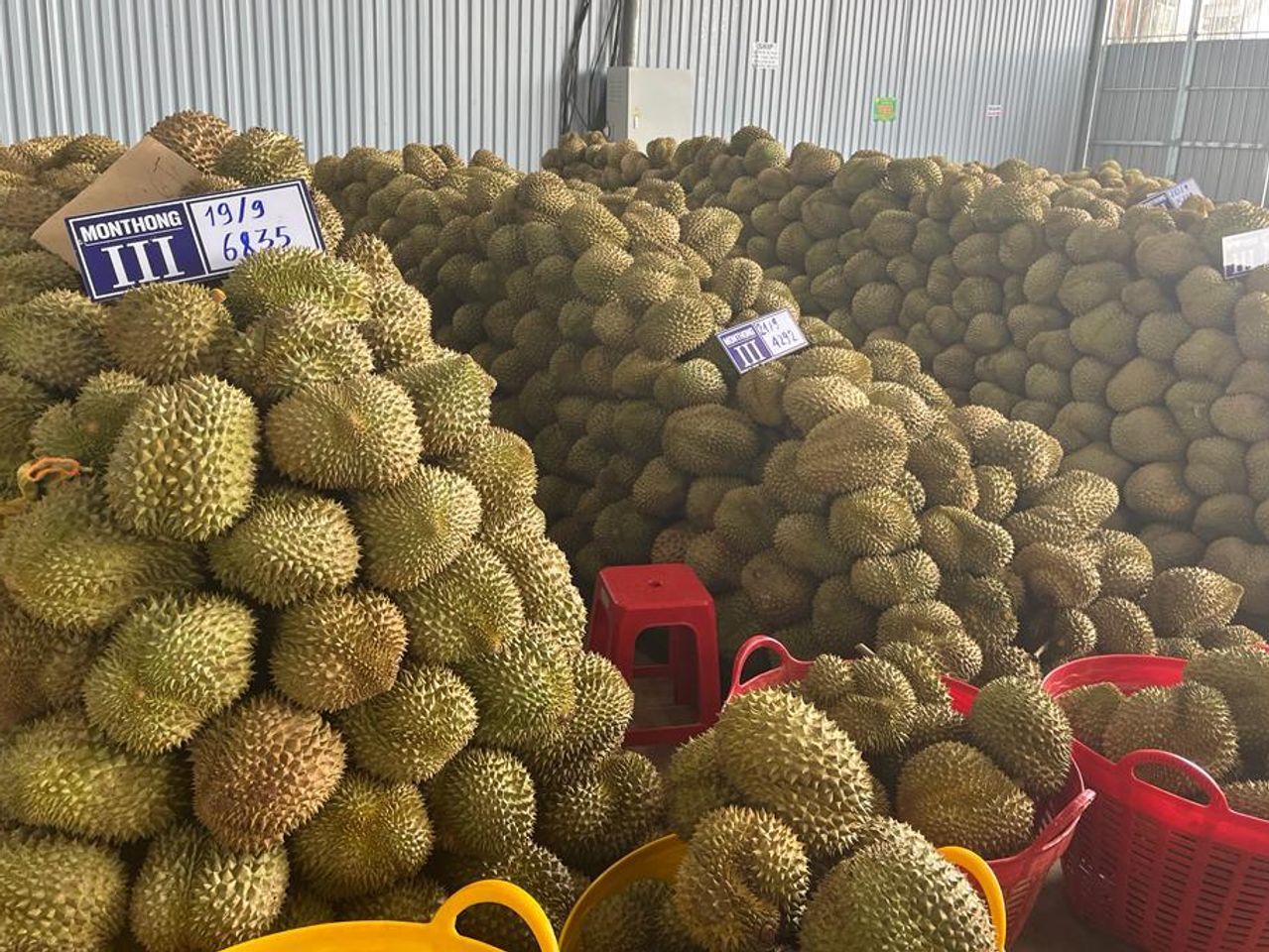
 Copyright 2020, Dow Jones & Company, Inc. All Rights Reserved Worldwide.