Don’t Roll Your Eyes: Looking the Part Could Land You That Job
Applying to be a programmer? Better grab a pair of glasses. Different jobs favour certain looks, new research shows.
By ANNE MARIE CHAKER
Tue, Dec 5, 2023 8:41am 4min
DAISY KORPICS/THE WALL STREET JOURNAL, ISTOCK (3), PIXELSQUID
Think appearances don’t matter if you’re applying for a job online? New research shows that looking the part is very much part of the equation.
Your credentials and referrals may get you on the shortlist. Even if the whole process takes place online, though, it’s rare that a hiring manager won’t check out your LinkedIn profile. Making the final cut can come down to nailing a specific professional look, according to a new study published by the Harvard Business School.
Analysing 63,000 job openings and the more than 160,000 freelancers who applied for them over a six-month period, researchers found that certain accessories or physical features gave candidates an edge in landing the job—even after controlling for race, age and gender. Researchers used computer vision technology and machine learning to help classify which attributes made someone be perceived as a better fit for a job, then examined what role that played in hiring.
Different jobs favoured certain looks. The analysis showed that men wearing glasses and having a computer visible in the photo were perceived to be a better fit for a software programming assignment than men without glasses, boosting their chances of getting it. A beard gave them a slight edge, too.
With design and media-related jobs—one of two broad job categories examined in the study—flashing a smile and using a photo with high image quality was also important. Women sporting reading glasses and an “artistic” look were seen as a better fit for graphic design jobs than other women.
Fashion designer. ILLUSTRATION: DAISY KORPICS/THE WALL STREET JOURNAL, ISTOCK, PIXELSQUID
The researchers, from Harvard and the University of Southern California, found that certain photo features could tilt the selection process when profiles included equally high ratings from previous clients. The advantage could be roughly the equivalent of a 5% pay differential.
On the other hand, the study suggests that looking the part for a job doesn’t rely just on a candidate’s gender, ethnicity and age. Rather, paying attention to the details of a profile photo can go a long way, recruiters say.
“We would be fooling ourselves to say it’s not part of the package,” says Jessica Vann, founder of Maven Recruiting Group, a San Francisco job-placement firm. While not as important as job or communication skills, “it’s a piece, for sure.”
It’s generally a good idea to have a neutral background and no children, pets or celebrities in the photo. Vann, whose firm specialises in placing executive assistants and chiefs of staff at Silicon Valley companies, says she has counselled job seekers to eschew an obviously AI-generated photo or tone down the makeup.
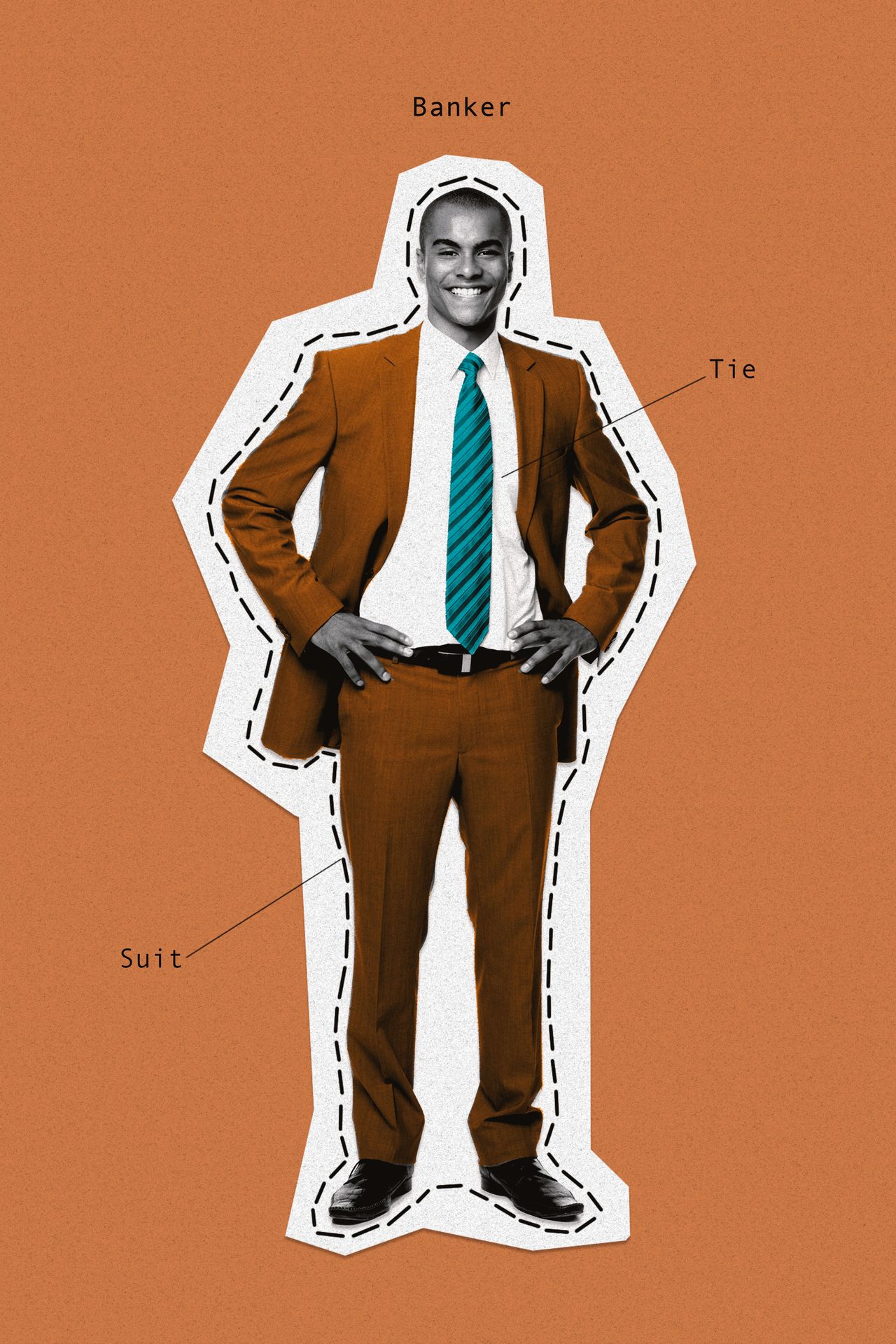
Banker. ILLUSTRATION: DAISY KORPICS/THE WALL STREET JOURNAL, ISTOCK
In a CivicScience poll of more than 2,000 people conducted online last week, about half of respondents said they had used a professional-looking photo of themselves in some capacity; 82% agree that appearance makes a difference in a job offer.
Title VII of the Civil Rights Act of 1964 prohibits employers from discriminating because of race, gender and religion, among other factors. But other aspects of personal appearance—whether height, weight or hairstyle—aren’t necessarily covered by the federal statute, says Steven Pearlman, a labor attorney at Proskauer Rose in Chicago. Plus, it’s often difficult to legally prove whether such biases were the reason for a candidate’s rejection.
Brent McCreary, a theatre ticketing director in New York, has found certain photo details can swing a hiring manager’s decision either way. His professional profile picture usually shows him with a favorite celebrity. At one point it was Britney Spears. Now it’s Kelly Clarkson.
The choice worked against him when he lost out on a revenue management job at a theme park three years ago. In the rejection note, the interviewer suggested a more professional LinkedIn photo.
A month later, though, the executive director of a San Francisco-based streaming platform contacted him. The job he’d applied for was already filled but she noticed his photo. “Your personality and background seem so fun and special,” she wrote in a LinkedIn message. When another project-management job opened soon after, McCreary got it. The job turned out to be a better fit for him, too, he says.
“The company I ended up working for was one where I kind of jelled with the organisation,” he says.
Looking the part is often informed by stories and stereotypes, career coaches say. “You see it in books and movies,” says Catherine Fisher, a LinkedIn career expert who studies data and trends on the professional social media network.
Programmer. ILLUSTRATION: DAISY KORPICS/THE WALL STREET JOURNAL, ISTOCK
Every industry has its own sartorial vibe, from the fleeced vests and sweatshirts of Silicon Valley to the traditionally suited-up finance crowd in New York.
“You always think hoodies are related to tech companies, but that doesn’t mean I have to wear one,” Fisher says. By the same token, angular bobs and big sunglasses have come to be associated with the fashion industry, though “not everyone in fashion looks like Anna Wintour,” she says.
That’s rapidly changing as home and work life become more mixed, Fisher says. More than half of working Americans say that how they present themselves at work has changed since the pandemic, according to a poll of 2,000 people conducted last year by LinkedIn. Two-thirds said they thought that managers and co-workers were more accepting of different ways of dressing and styling than several years ago.
Alice Stephenson, a 42-year-old lawyer, says that for much of her early career, she dressed the part and concealed her piercings and tattoos. “I wore a stereotype of what a professional looked like,” she says. “I never felt comfortable or able to express my own individuality or creativity through my appearance.”
That changed after she started her own law firm. In her photo on the firm’s website, in her email signature and on LinkedIn, she is wearing a friendly smile, a blue sleeveless dress and a visible sleeve of tattoos.
“I want to look friendly and approachable,” says Stephenson, who lives in Amsterdam. “That’s key to my brand.”
Copyright 2020, Dow Jones & Company, Inc. All Rights Reserved Worldwide. LEARN MORE
BNW Developments has established a Sydney presence, joining Arada and Sobha Realty among the growing number of UAE developers pursuing Australian buyers and development opportunities.
The Australian leather house has opened an immersive four-day pop-up in Manhattan, unveiling its Bloom Collection and redefining what a product launch can look like.
Related Stories
Money
How Families Can Beat 7% Mortgage Rates and Lower Their Tax Bills
By Laura Saunders 09/10/2026
Money
The Stock Market’s Breezy Summer Is Over. Investors Beware.
By Hannah Erin Lang 08/09/2026
Money
The Sudden Unraveling of Wall Street’s Momentum Trade
By Gregory Zuckerman and Gunjan Banerji 31/08/2026
Strong family financial planning can help reduce taxes and support younger generations. From intrafamily loans and asset gifts to inheritance disclaimers, strategic cooperation can create meaningful financial benefits—when families have the trust and structure to make it work.
By Laura Saunders
Fri, Oct 9, 2026 4min
Happy is the family whose members—parents, grandparents and grown children—trust each other enough to cooperate on shared goals, especially financial ones. When that is truly the case, Uncle Sam’s tax rules can help as well.
This matters especially now that mortgage rates are above 7%, and many families are looking for ways to help younger members. If the elders have resources and are confident younger ones can cooperate, a family loan could make homeownership possible while providing the elders with a useful income stream.
Other strategies can actually lower taxes, such as when funding 529 plans or Roth IRAs, or when someone inherits a traditional IRA with required withdrawals larger than they will need.
Here are three strategies useful for functional families.
Intrafamily loans
It is perfectly legal for families to lend money to a relative for a down payment or even a private mortgage.
But it is important not to cut corners, says Ryan McKeown, a CPA with Modern Wealth Enhancement in Minnesota. If the loan is for a down payment, be honest with the mortgage provider and have a formal agreement. The lender owes tax on the interest payments received.
If the loan is for a private mortgage, both sides should have legal representation with a formal written agreement, including payment terms. The lender owes tax on the interest, and the borrower often can deduct it if he or she itemizes.
To avoid IRS trouble, the interest rate shouldn’t be lower than the agency’s Applicable Federal Rate at the time of the loan. Currently that is about 5% for loans longer than nine years; about 4.5% for loans three to nine years; and about 4% for loans three years or less. Currently, traditional mortgage rates are generally above 7%.
In addition, the lender could use the $19,000 annual gift-tax exemption (described below) to forgive some or all of the interest or principal annually. If both lenders and borrowers are married, that is up to $76,000 a year. There is no tax for the borrower on such forgiveness, because it is from a gift.
If you’re going this route, McKeown advises against having a fixed plan to forgive the debt. Instead, do it in one-off letters specifying the amount—and keep careful records. Otherwise the IRS might try to treat the loan as a taxable gift.
Asset gifts
Powerful tax-saving moves for families often use gift-tax provisions. Under current law, anyone can give anyone else up to $19,000 of assets annually, free of gift tax. That means a married couple with three grandchildren could give them a total of $114,000 in 2026.
The gifts can be cash or other assets, like stock. For noncash gifts, the cost basis—which is the starting point for measuring taxable gain after a sale—“carries over” to the recipient. So if someone buys $1,000 of stock and gives it away when it is worth $5,000, the recipient’s cost basis is $1,000. If the recipient later sells the shares for $8,000, the taxable gain is $7,000.
Here’s an example showing how gifts could save a family taxes. Grandma is a widow of modest means, while her child and spouse have prospered. The couple has two children, and they want to contribute $5,000 to a 529 college-savings plan for each—but they need to sell stock to do it. Their tax rate on the sale would be 18.8%, and they would need to sell about $11,000 of stock.
However, Grandma’s federal tax rate on the stock sale is 0%. If the couple gives $10,000 of shares to Grandma, she could sell them, pay no tax, and fund the grandchildren’s 529 plans. This saves about $1,000 of tax.
These moves are legal, and they could be used in other ways, such as to help a young person fund a Roth IRA.
But trust among family members is essential: Under the law, givers can’t put conditions on a gift. Grandma could use her stock proceeds to take a cruise, but she makes 529 contributions instead.
Mark Sellner, a retired tax attorney and CPA living in Sarasota, Fla., uses this strategy. His children sell stock he gives them and fund 529 plans for his grandchildren.
The family’s tax savings aren’t huge, but he likes other benefits. The sales by his children don’t boost his adjusted gross income, which in turn could raise his Medicare Irmaa premiums or his 3.8% surtax on net investment income.
Sellner doesn’t worry about his children using the funds for another purpose.
“There can’t be any strings attached to gifts. Of course, it is up to us to decide whether to make them in the future,” he says.
Two caveats: The “kiddie tax” applies to most children under age 24, and it is levied at the parents’ rate on investment income above $2,700 in 2026. Consider this before making gifts to a young person.
Investors who give away stock also forgo the step-up, an important provision that exempts assets held at death from capital-gains tax.
Sellner knows he’s losing a step-up, but says, “The children could use a little more now. Why should they wait 20 years to get it?”
Disclaimers
A disclaimer is a highly useful strategy in which one heir renounces an inheritance in favor of another heir. Assuming family members cooperate, this can save taxes.
Here’s one example. Dad died and had a large traditional IRA that he left to Mom. She has enough assets and income to cover her expenses, and she lives in a state with a stiff estate tax. The inherited IRA would put her estate over the threshold.
Also surviving are three young-adult children. If Mom disclaims all or part of Dad’s IRA within nine months of his death, that amount could go directly to the children. They will have 10 years to empty the account, and the family as a whole will likely save estate and income taxes.
Disclaimers have many key details, especially regarding beneficiary documents. Although heirs have great freedom in choosing what assets to disclaim, the rules about who gets disclaimed property are rigid. It is best if the original owner names tiers of heirs so that if one disclaims, the next recipient is clear.



 4 min
4 min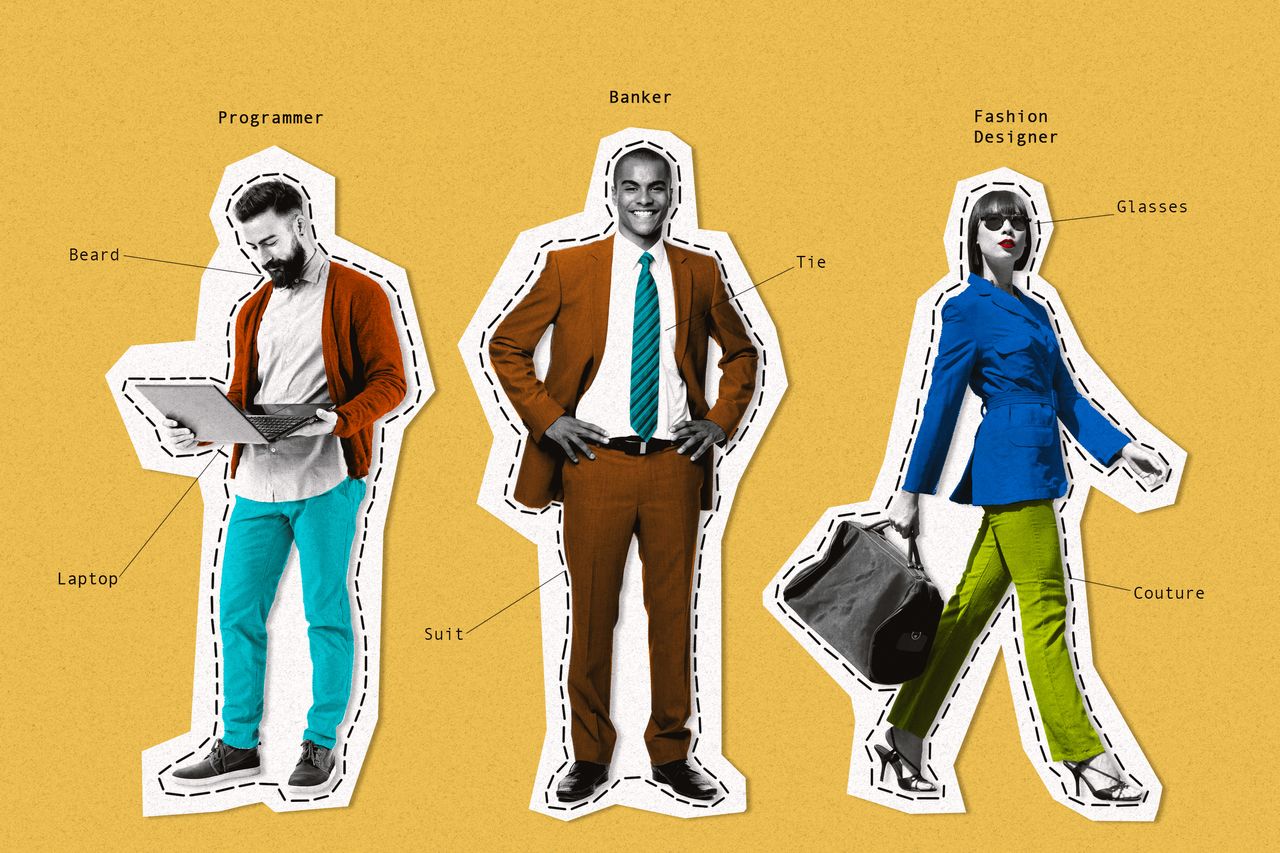


 Copyright 2020, Dow Jones & Company, Inc. All Rights Reserved Worldwide.