Retro Kitchens Are Everywhere—and the Ultimate Rejection of the Sterile Luxury Trend
Playful 1950s style spotlights details like coloured cabinets, checkerboard and mosaic tile patterns, vintage lighting, and SMEG appliances
By TRACY KALER
Mon, Apr 22, 2024 9:56am 6min
“The key to a modern, fresh look in your kitchen is to reference, not imitate, signature looks of the 1950s,” said New York-based designer Andrew Suvalsky.
DLUX EDITIONS
The 1950s spawned society’s view of kitchens as the heart of the home, a hub for gathering, cooking, eating and socialising. Thus, it makes perfect sense that the same decade could inspire today’s luxury kitchens.
“The deliberate playfulness and genius of the era’s designers have enabled the mid-century style to remain a classic design and one that still sparks joy,” said James Yarosh, an interior designer and gallerist in New Jersey.
That playful style spotlights details like coloured cabinets, checkerboard and mosaic tile patterns, vintage lighting, and SMEG appliances—all of which are a conspicuous rejection of the sterile, monochrome kitchens that have defined luxury home design for years. One of the hottest brands to incorporate into retro-style kitchens, SMEG is turning up more these days. But the question is: How do you infuse a colourful refrigerator and other elements from this nostalgic era without creating a kitschy room?
“The key to a modern, fresh look in your kitchen is to reference, not imitate, signature looks of the 1950s,” said New York-based designer Andrew Suvalsky, who often laces retro style throughout the rooms he designs. He said using the period as inspiration will steer you away from imagining a garish space.
“When it comes to incorporating that retro-esque look, it’s a fine dance between looking beautiful and looking kitschy,” added Lisa Gilmore, a designer in Tampa, Florida. Gilmore suggested balancing contemporary pieces with vintage touches. That balance forges a functional yet attractive design that’s easy to live with while evoking a homey atmosphere––and ultimately, a room everyone wants to be in.
Color Reigns Supreme
Suvalsky said one way to avoid a kitschy appearance is to mingle woods and colours, such as lacquered base cabinets and walnut wall cabinets, as he did in his Montclair, New Jersey, kitchen.
“Mixing colours into your kitchen is most effective when it’s done by colour-blocking––using a single colour across large areas of a space––in this case, zones of cabinetry,” he explained. He tends to lean toward “Easter egg colours,” such as baby chick yellow and pale tangerine. These soft pastels can suggest a starting point for the design while lending that retro vibe. But other hues can spark a vintage feel as well.
A mid-century-inspired kitchen by Blythe Interiors. Natalia Robert
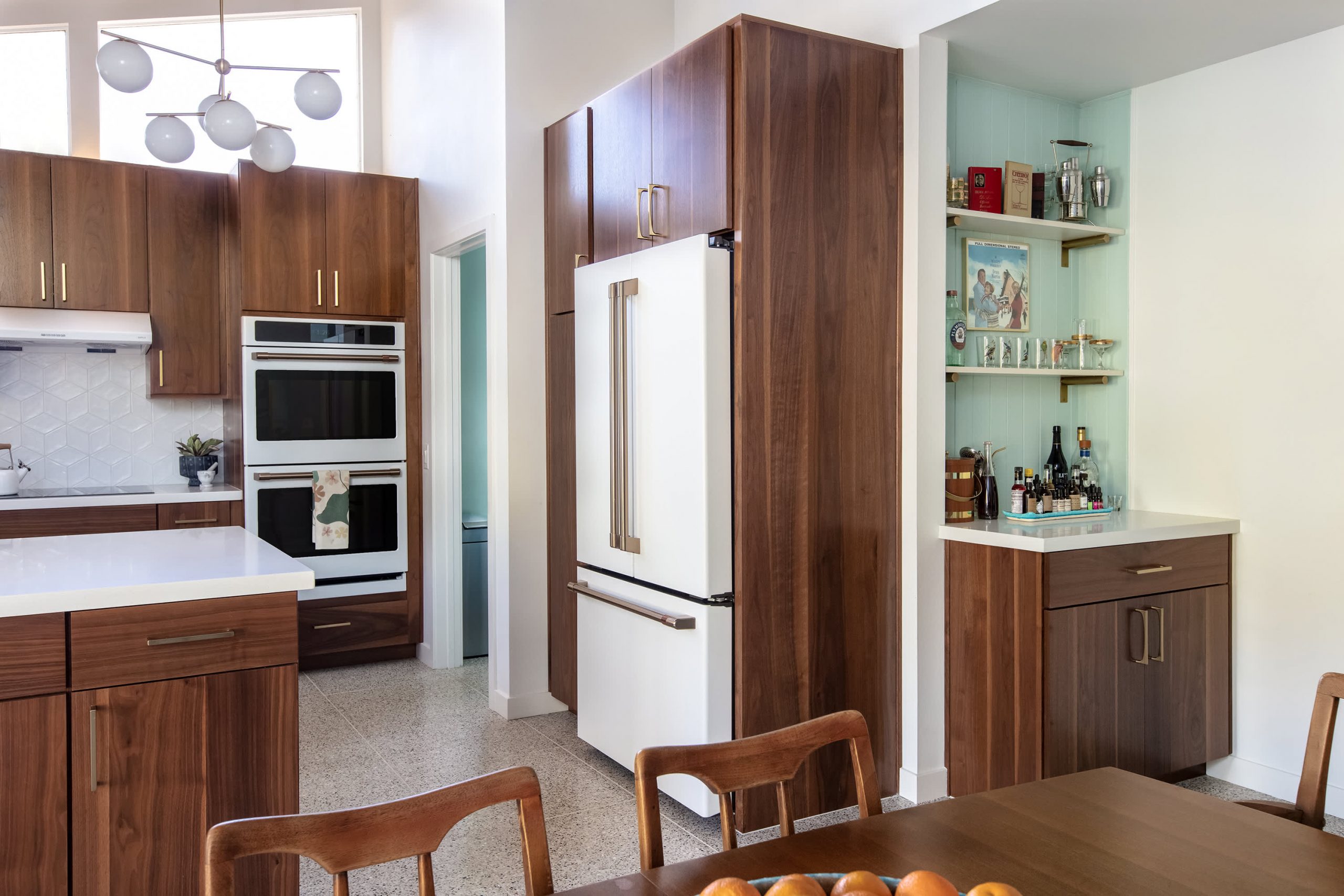
“Shades of green and blue are a timeless base foundation that work for a 1950s vintage look,” said designer Jennifer Verruto of Blythe Interiors in San Diego. But wood isn’t off the table for her, either. “To embrace the character of a mid-century home, we like a Kodiak stain to enhance the gorgeous walnut grain,” she said. “This mid-tone wood is perfect for contrasting other lighter finishes in the kitchen for a Mid-Century Modern feel.”
Since colour is subjective, a kitchen lined with white cabinetry can assume a retro aesthetic through accoutrements and other materials, emanating that ’50s vibe.
“The fun of retro designs is that you can embrace colour and create something that feels individual to the house and its homeowner, reflecting their tastes and personality,” Yaosh said. He recommended wallpaper as an option to transform a kitchen but suggested marrying the pattern with the bones of the house. “Wallpaper can create a mid-century or retro look with colours and hand-blocked craftsmanship,” he said. “Mauny wallpapers at Zuber are a particular favourite of mine.”
Suvalsky suggested Scalamandre wallpapers, for their 1950s patterns, and grass cloth, a textile that was often used during that decade. He also likes House of Hackney, a brand that “does a great job reinventing vintage prints in luscious colours,” he noted. “Many of their colourways invert the typical relationship between light and dark, with botanical prints in dark jewel tones set over light, more playful colours.”
Materials Matter
Beyond wall covering, flooring, countertops and backsplashes can all contribute to the 1950s theme. Manufactured laminate countertops, specifically Formica, were all the rage during the decade. But today’s high-end kitchens call for more luxurious materials and finishes.
“That’s a situation where going the quartz route is appropriate,” Gilmore said. “There are quartzes that are a through-body colour and simple if someone is doing coloured cabinetry. A simplified white without veining will go a long way.” She also recommended Pompei quartz Sunny Pearl, which has a speckled appearance.
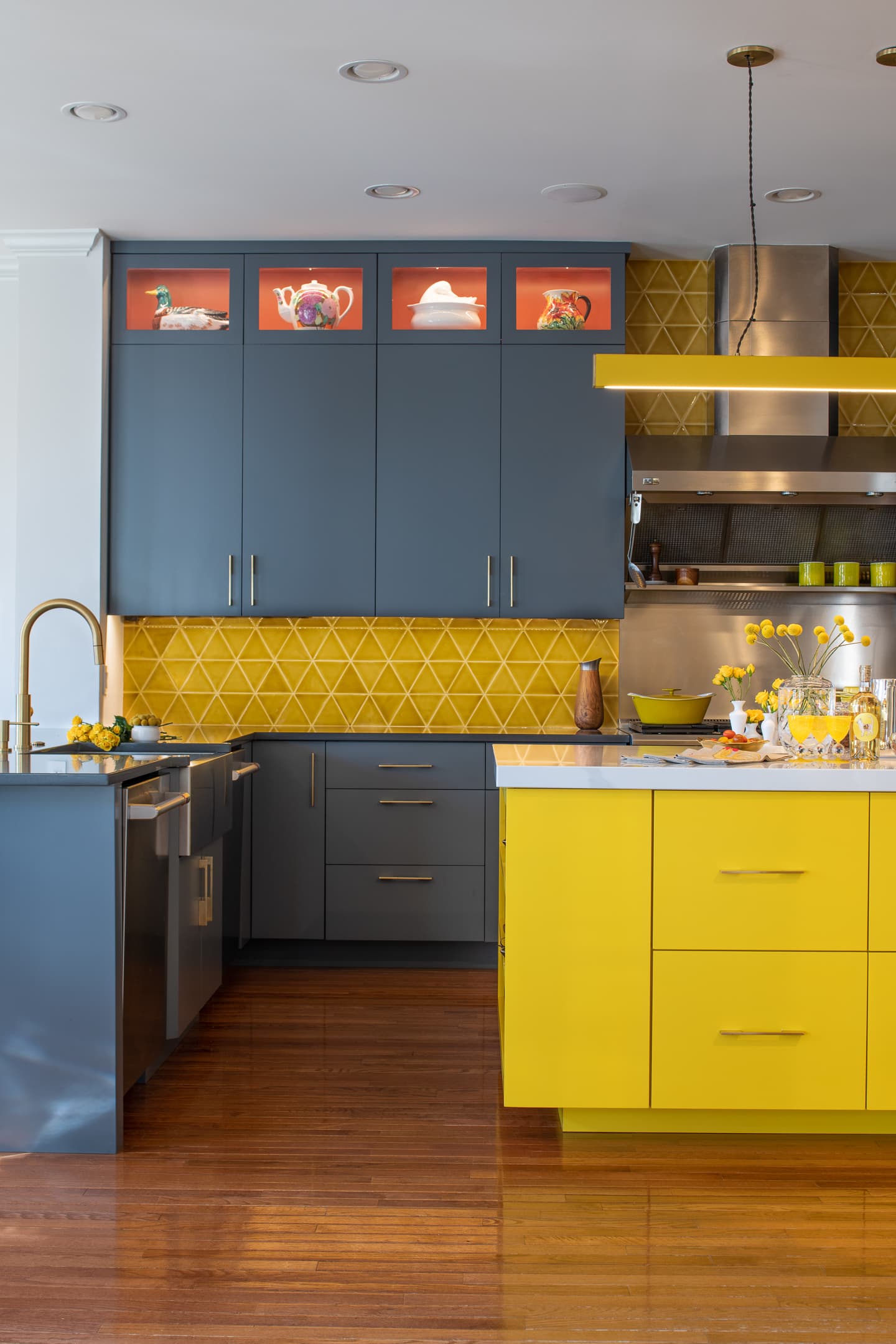
A kitchen designed by James Yarosh that incorporates pops of yellow. Patricia Burke
But for those who welcome vibrant colour schemes, countertops can make a bold statement in a vintage kitchen. Gilmore said solid surface materials from the era were often a colour, and quartz can replicate the look.
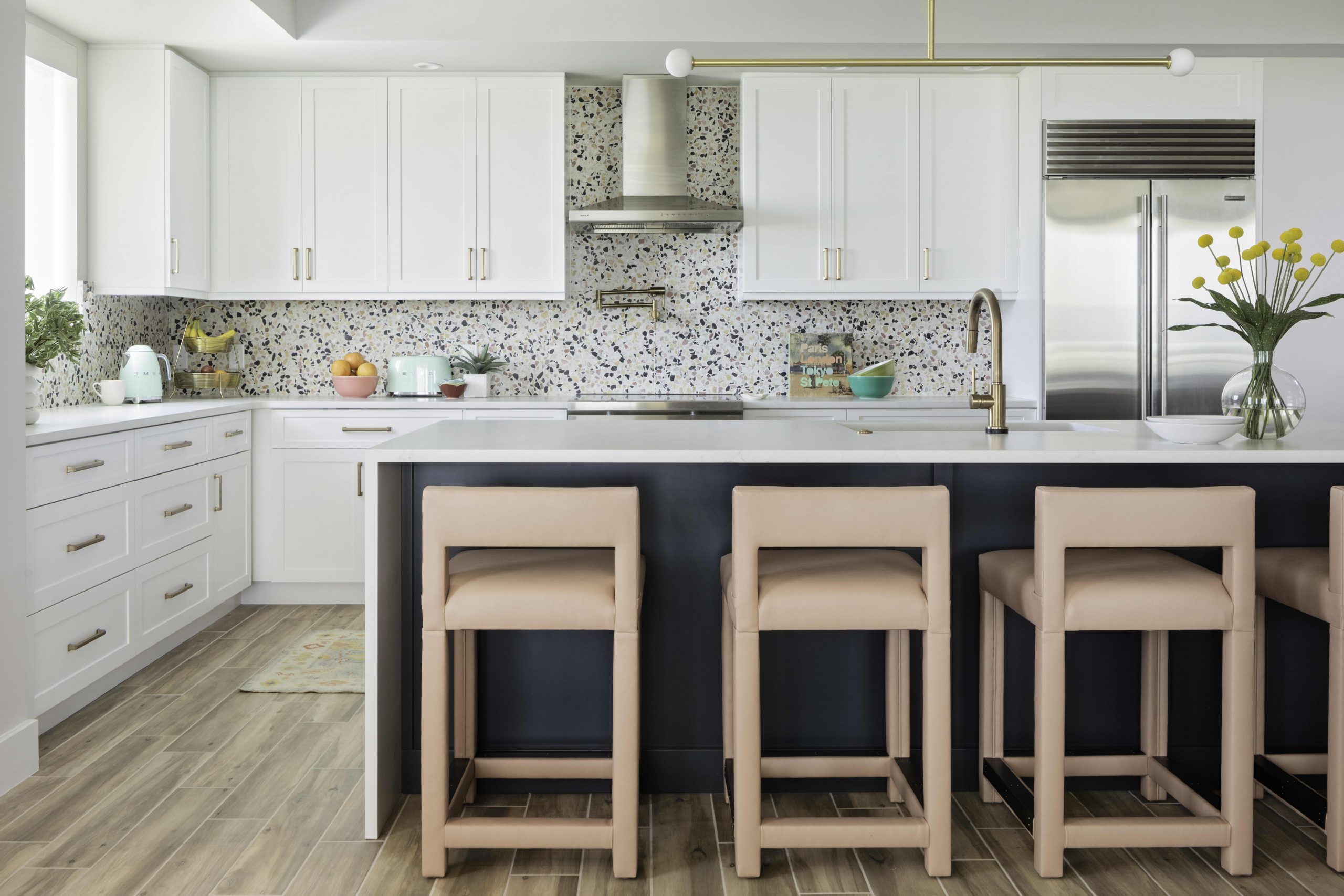
“Some brands have coloured quartz, like red,” she said. But keeping countertops neutral allows you to get creative with the backsplash. “I‘d pull in a terrazzo backsplash or a bold colour like a subway tile in a beautiful shade of green or blush,” Gilmore said. “Make the backsplash a piece of art.”
Suvalsky also leans toward bright and daring––such as checkerboards––for the backsplash. But depending on the kitchen’s design, he’ll go quieter with a double white herringbone [tile] pattern. “Either version works, but it must complement other choices, bold or simple, in the design,” he explained.
Neutral countertops with a bold backsplash, designed by Lisa Gilmore. Native House Photography
Likewise, his flooring choice almost always draws attention. “My tendency is more toward very bold, such as a heavily veined marble or a pattern with highly contrasting tones,” he noted. Yarosh suggested slate and terrazzo as flooring, as these materials can make an excellent backdrop for layering.
Forge a Statement With Vintage Appliances
As consequential as a kitchen’s foundation is, so are the appliances and accoutrements. While stainless steel complements contemporary kitchens, homeowners can push the design envelope with companies like SMEG when making appliance selections for a retro-style kitchen. Although Suvalsky has yet to specify a SMEG fridge, he is looking forward to the project when he can.
“I think they work best when the selected colour is referenced in other parts of the kitchen, which helps to integrate these otherwise ‘look at me’ pieces into the broader design,” he noted. “They are like sculptures unto themselves.”
“For our mid-century-inspired projects, we’ve opted for Big Chill and the GE Cafe Series to bring a vintage look,” Verruto added. Similar to SMEG, Big Chill and GE offer a vintage vibe in a wide selection of colours and finishes, alongside 21st-century performance.
Can’t commit to a full-size appliance? Sometimes, a splash is enough. Gilmore tends to dust her retro kitchens with a coloured kettle or toaster since her clients are likelier to add a tinge with a countertop appliance or two. “Mint green accessories make it pop, and if in five years they are over it, it’s not a commitment,” she said. “It’s a great way to infuse fun and colour without taking a major risk.”
Deck out the Breakfast Nook
Kitchen dining areas present the opportunity to introduce retro lighting, furniture, and accessories to complete the look. Flea markets and antique markets are excellent places to hunt for accompaniments.
“Dome pendants and Sputnik chandeliers are iconic styles that will infuse vintage charm into your kitchen while also easily complementing a variety of other styles,” Verruto said.
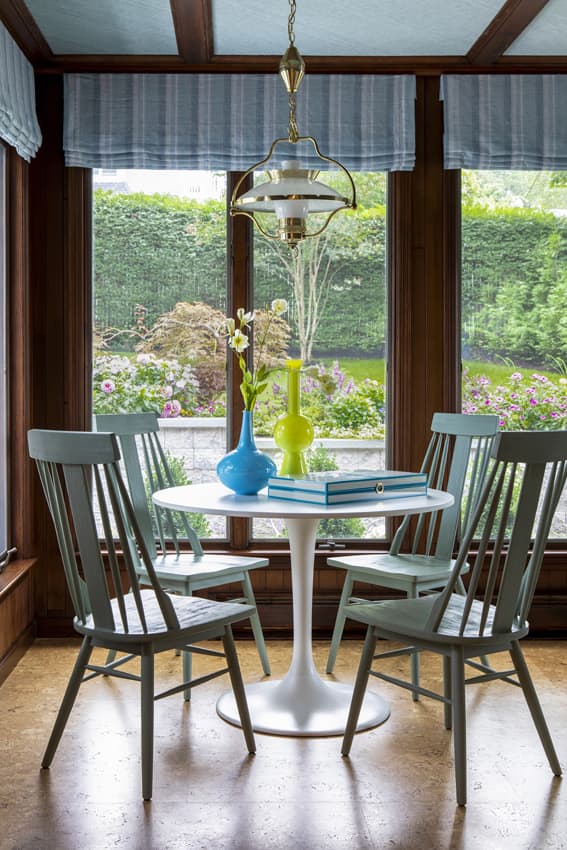
A retro breakfast nook designed by Andrew Suvalsky. DLux Editions
Suspend a vintage light fixture over the classic Saarinen table, and you can’t go wrong.
“Saarinen Tulip Tables are almost always guaranteed to deliver a home run in nearly any interior, especially a 1950s-themed kitchen,” Suvalsky said. “The simplicity of its form, especially in white, makes it nearly impossible to clash with.”
To really channel the vibe of this era, Verruto suggested local vintage stores and brands such as Drexel Heritage and Lexington. Dressing the windows counts, too. “Cafe curtains in a chintz pattern will make for a fabulous finishing touch,” she said.
Meanwhile, Yarosh delights in selecting tabletop items, including novelty stemware and other trappings ubiquitous in the 1950s. “Mid-century kitchens also need to have pedestal cake plates and maybe a cloche to keep a cake,” he mused. “I love the opportunity to curate these details down to the correct fork and serving pieces.”
Copyright 2020, Dow Jones & Company, Inc. All Rights Reserved Worldwide. LEARN MORE
BNW Developments has established a Sydney presence, joining Arada and Sobha Realty among the growing number of UAE developers pursuing Australian buyers and development opportunities.
The Australian leather house has opened an immersive four-day pop-up in Manhattan, unveiling its Bloom Collection and redefining what a product launch can look like.
Related Stories
Lifestyle
How Lego Is Getting More Adults to Tinker With Their Toy Bricks
By Saabira Chaudhuri 19/10/2026
Lifestyle
Apple Joins Nvidia in the $5 Trillion Valuation Club
By Rolfe Winkler 15/10/2026
Lifestyle
AI Agents Are a Threat to Travel Businesses. Airbnb Could Still Be a Winner.
A vibrant 1954 Palm Springs home featuring eight colorful murals by late artist Shawn Savage is on the market for $2.295 million. The 2,237-square-foot property features bold hot-pink doors, three bedrooms, a pool, mountain views and playful interiors blending modern glamour with classic Palm Springs style.
By Chava Gourarie
Mon, Oct 5, 2026 3min
A bold 1950s home in Palm Springs, California, adorned with eight colorful murals by the late artist Shawn Savage, is coming to market ahead of the city’s annual Modernism Week.
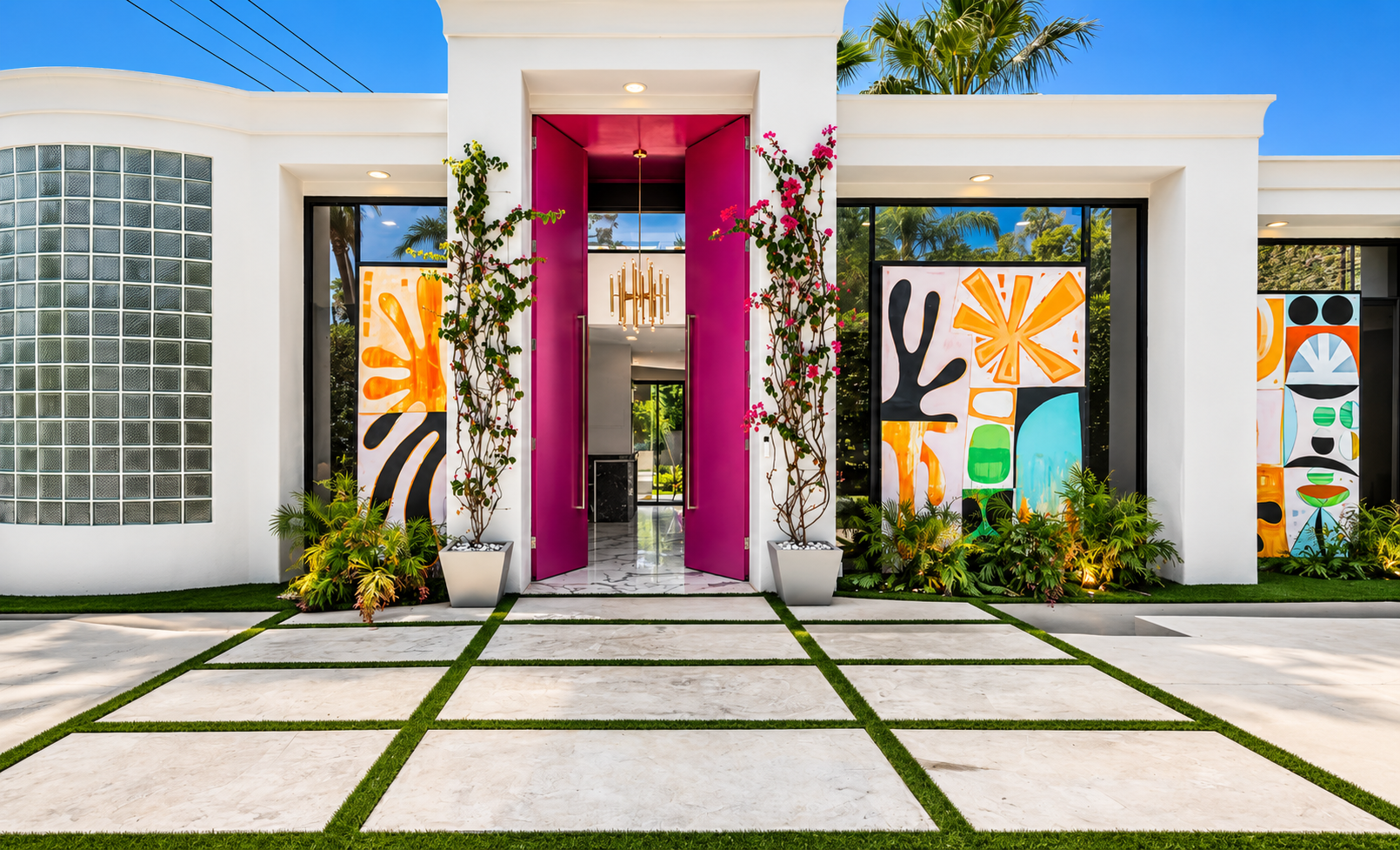
The white stucco home on El Camino Way, built in 1954 and recently renovated, has an asking price of $2.295 million. Its staggered facade features three playfully abstract murals on either side of double-height hot pink doors.
The sellers are Los Angeles-based partners John Freeman and Mathieu Faure, who knew it was “the one” when they saw it after several months of searching in the winter of 2023. “It’s a happy house,” Freeman said. “We really liked the feel of the house: the uniqueness, the openness, the brightness—and the art.”
Located in the Mesa neighborhood of Palm Springs, which backs up to the San Jacinto Mountains, the 2,237-square-foot house features three bedrooms, an angled bonus room and a yard with a pool, desert mountain views and another colorful mural running alongside the pool.
“I never thought in my life I would have a house with pink doors,” said Faure, a producer at Apple TV who is originally from Paris. “It’s so colorful, it’s so different. And so Palm Springs.”
Abstract murals can be found on the facade.Patrick Ketchum
The layout of the home creates a smooth flow from the front doors through the open-plan common area—a foyer, bar, and living and dining room—into the kitchen around a fireplace wall and out to the yard. A corridor leads to a private bedroom wing, where the primary suite has floor-to-ceiling windows and the primary bath is only a tad smaller than the bedroom.
Faure has filled the home with Jonathan Adler furniture, rugs and accessories, riffing on the energetic California vibes of the house to create an aesthetic of “modern American glamour,” he said.
“It was enjoyable for me to play with different types of furniture and make this house ‘happy chic,’ as I describe it,” he said.
“He did a fantastic job,” said Freeman, who is an attorney and consultant. “It does kind of bring a smile to my face whenever I walk into the house.”
Since the furniture and decor were chosen for the particularities of the space, the couple is open to selling them with the home. Their West Hollywood house is already furnished; the collection doesn’t match the vibes of a Houston loft they bought near family; and Faure can’t imagine these pieces in New York—where he’s lived in the past—he said.
The duo bought the Palm Springs house for $1.925 million in 2024, according to property records, and will list the home Monday. They are represented by Stewart Smith, Patrick Jordan and Kevin Stanley of Bennion Deville Homes/Luxury Portfolio International.
The previous owners had purchased the home in 2021 for $975,000 and then spent more than two years and $700,000 on the renovation, according to Realtor.com. They commissioned Savage, a local Palm Springs artist and painter known for his joyful abstract work, to decorate the home.
Savage, who died in 2024, lived in the Coachella Valley from 2003, and his work can be found in various local institutions and is on exhibit at the Illumine Gallery in Palm Springs. “Some artists pass through a place. Shawn Savage became a part of it,” the gallery’s description states.
Unsurprisingly, the murals invite lots of friendly conversations, as well as guided tours and interested lookers, but never to a degree that it disturbed the peacefulness of their home or the neighborhood, the sellers said. “It felt like living in an art gallery, and you have the exterior that you would share with the world,” Faure explained.
The neighborhood also played a role in their decision to buy, because of its access to the hiking trails of the San Jacinto Mountains, the lack of through-roads and the neighborly environment.



 6 min
6 min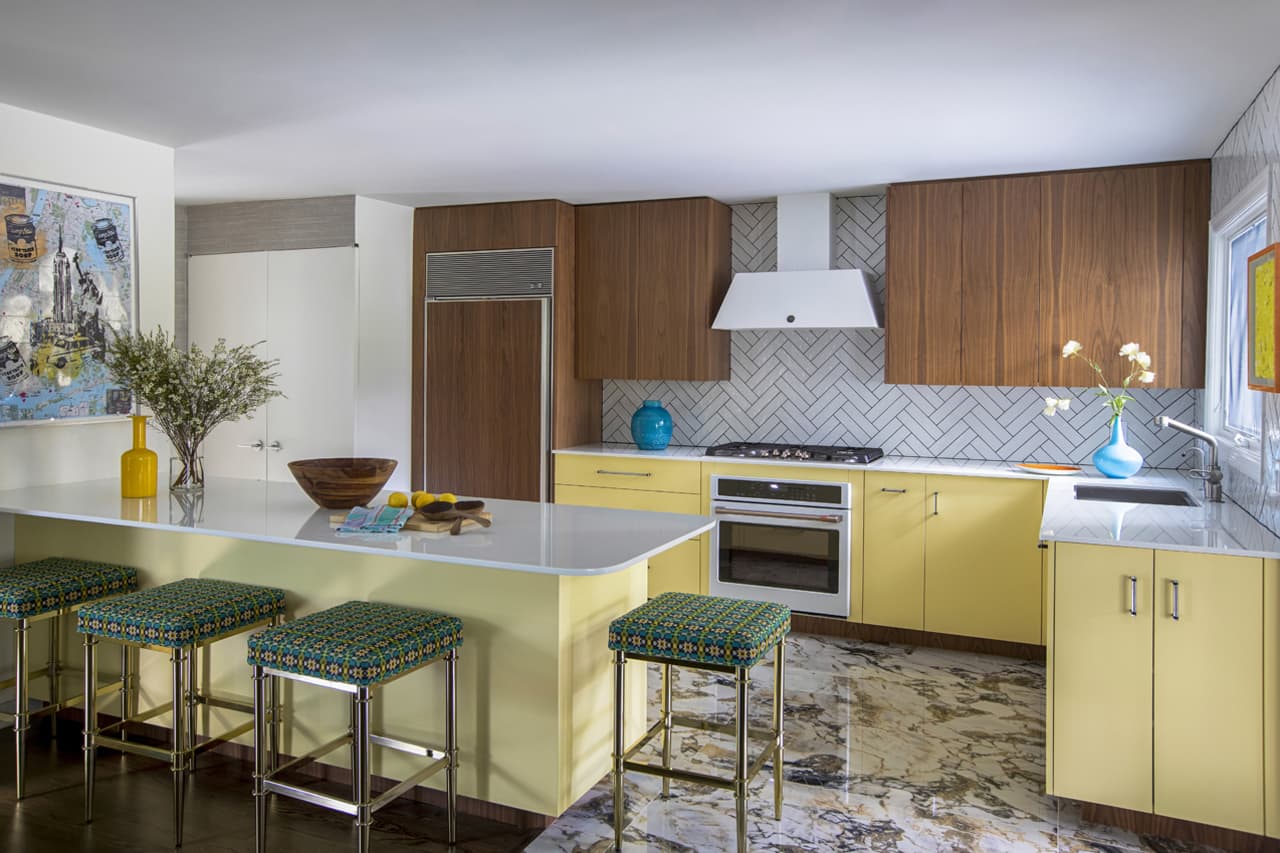
 Copyright 2020, Dow Jones & Company, Inc. All Rights Reserved Worldwide.