
Glamorous Garages and Beautiful Barns: The New Must-Have Amenities

By SHIVANI VORA
Mon, Jul 8, 2024 9:32am 4 min
4 min
4 min

 4 min
4 min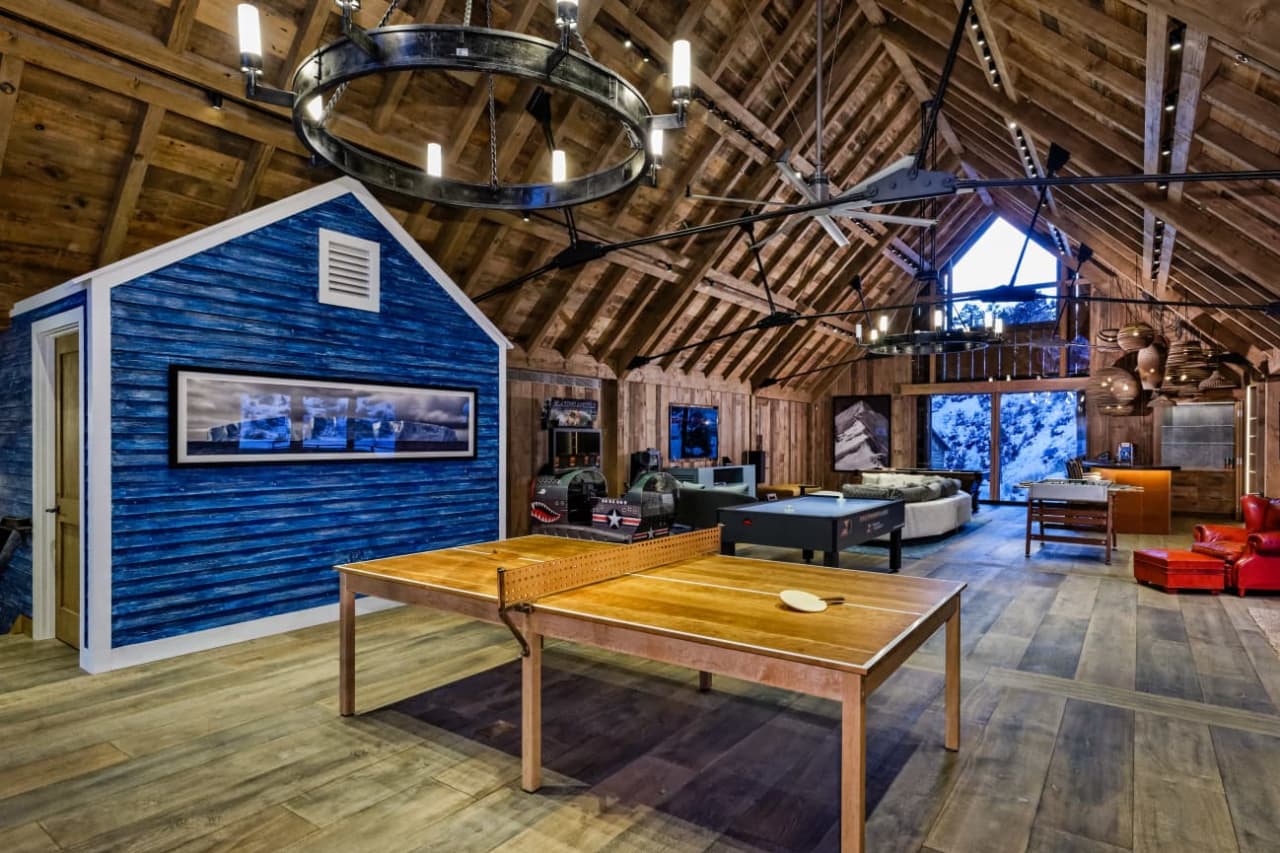
Luxury homes with decked-out family rooms, kitchens, primary bedrooms and bathrooms are standard today and practically a given. The latest mania, however, has owners glamming up their often overlooked garages and barns.
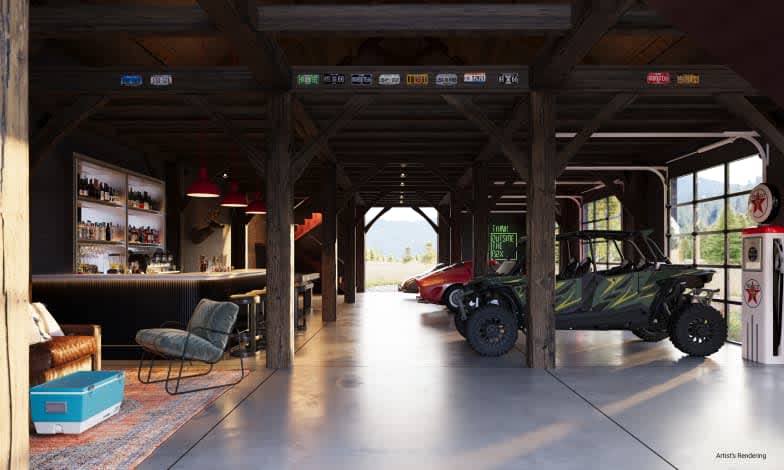
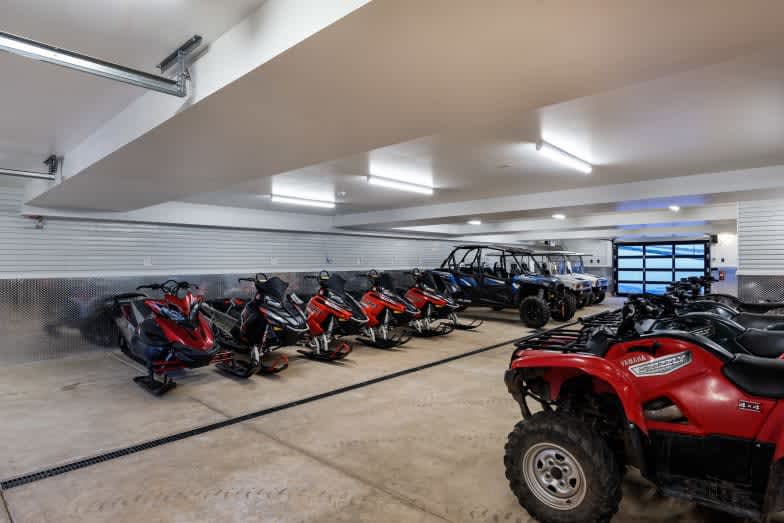
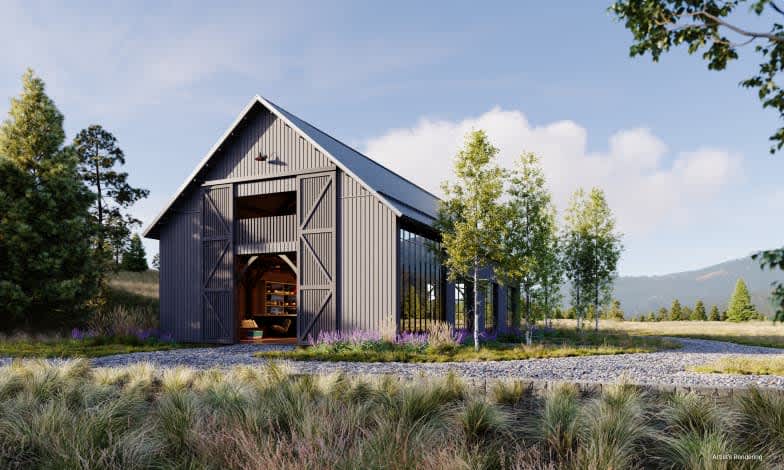
Called “toy barns,” “barndominiums” and “toy garages” in real estate circles and by the amenity-obsessed set, these functional spaces are being repurposed into gleaming showrooms filled with pricey outdoor gear—think ATVs, snowmobiles, electric bikes, boats and more.
Sitting areas, bars and diversions such as pool tables also figure in and turn barns and garages into entertainment venues that become a hub for owners to socialize with family and friends.
Take Jeff Collins, founder of Glennwood Custom Builders in Charlevoix, Michigan, for example. His lakefront home features a 2,500-square-foot barn with a lounging space, sleds, dirt bikes, a card table and a basketball hoop. The back doors open into a yard with a shooting range. “My friends come over a lot, and we hang the whole time in the barn,” Collins said. “We drink beers, play around with the equipment and shoot hoops. I can’t remember the last time we actually went into the house.”
Barndominiums like his are the craze in his town, according to Collins.
“They’re what everyone wants,” he said. “I’m building two for homes in my neighborhood and have inquiries for more.”
An Amenity That’s Gaining Popularity
Real estate agents and brokers who focus on upscale homes also report an increasing interest in toy barns and say that a property that offers one can attract more buyers than a listing with typical amenities such as swimming pools and wine cellars.
Timothy Di Prizito, the CEO of The Di Prizito Group & DPG Estates at Christie’s International Real Estate/AKG in Los Angeles, for instance, said that showpiece barns and garages are becoming a more popular feature in luxury homes, particularly in new construction properties.
“Wealthy owners are investing in turning their homes into resorts. It started with building commercial-sized gyms and onsite spa facilities,” he said. “Today, it’s all about having onsite entertainment annexes and auto galleries. They give a property a distinct edge.”
Di Prizito is currently selling a property called Bella Vista in Montecito for $70 million that features an estimated 32-car collection garage. Originally designed as a helicopter hangar, the space has vaulted ceilings, epoxy flooring and a second level with two studio apartments.
Patrick Nesbitt, the CEO and chairman of the real estate development company Windsor Capital Group, owns the estate with his wife, Ursula, and said his family regularly uses the space. “We’ll have friends over for dinner there and loan it to charities to host events. We even had my son’s wedding party in the garage and transformed it into a beautiful reception ballroom,” he said.
Nesbitt is selling Bella Vista, he said, because his children have moved out, and he wants to downsize.
Another home with a toy space is currently for sale in Honokaa, Hawaii, asking $7.4 million. Its 3,300-square-foot freestanding barn is solar-powered and is where owners Matthew and Susan Russell display their stash of luxury gear such as life-size model airplanes, ATVs and motorcycles.
“We had many happy memories in the barn spending time with our grandchildren and friends,” Matthew said. The couple is selling the home, he said, to settle full-time in Sedona.
A Perk Not Reserved For Houses
Eye-candy barns and garages are also becoming more common in upscale residential developments.
Martis Camp, set on 2,177 acres in Truckee, California, in North Lake Tahoe, has several homes with what Brian Hull, president and broker at Martis Camp Realty, refers to as “activity garages.” They typically house snowmobiles, ATVs, motorcycles, boats and ski equipment. “Our community has access to a 26-mile trail network through national forest land and the mountains, so owners amass a lot of gear,” Hull said.
More developments are highlighting their toy storage areas as an amenity for all residents to enjoy, in the same vein as a fitness centre or clubhouse.
Tributary, a private club community in Teton Valley, Idaho, offers a recreation barn stocked with gear like paddleboards, fishing gear, rafts and snowshoes. And in McCall, Idaho, the still-in-construction Legacy Ranch, set within the existing Whitetail Club, hopes to entice potential buyers by giving them the option and the designs to build homes with toy barns.
“The lots at Whitetail Club are less than two acres, and owners don’t have space on their properties to store all their outdoor equipment, which they are asking for more and more,” said Whitetail Club’s head of development Dan Scott. “Several have told me that they want to upgrade to Legacy Club for the sole purpose of having a toy barn.”
Then there’s Aspen Valley Ranch in Aspen, Colorado, a development with homes starting at $15 million. According to vice president Simon Chen, the 5,000-square-foot two-story toy barn is the heart of the community’s action.
The equipment in the building changes seasonally. During warmer months, that means top-of-the-line dirt bikes, four-wheelers and a fleet of regular and e-mountain bikes. Come winter, the barn is stocked with six snowmobiles, four-wheelers with tracks to navigate through snow, snowshoes and sleds.
Residents can also avail of the barn’s second floor, featuring a games area with ping-pong and pool tables and classic arcade games such as Pac-Man and Skee-Ball. The adjoining bar, lined with premium wine, and spirits such as Macallan 18-year scotch and Clase Azul Ultra tequila, retailing for close to $2,000 a bottle, is a big attraction for residents, Chen said. “Our owners are welcome to enjoy the alcohol for no charge,” he said. “Our development has a gorgeous swimming pool and spa and a massive gym, but the barn is where they most want to be.”
This article originally appeared on Mansion Global.
 Copyright 2020, Dow Jones & Company, Inc. All Rights Reserved Worldwide. LEARN MORE




The Australian leather house has opened an immersive four-day pop-up in Manhattan, unveiling its Bloom Collection and redefining what a product launch can look like.
Following the successful launch of its Palais Collection, MAISON de SABRÉ has unveiled a new modular handbag system offering more than 720 styling combinations.
A five-bedroom Palo Alto home designed by Steven Ehrlich is listed for $44 million, making it the city’s most expensive listing. Built around a dramatic concrete spine, the home features four courtyards and a pool.
3 min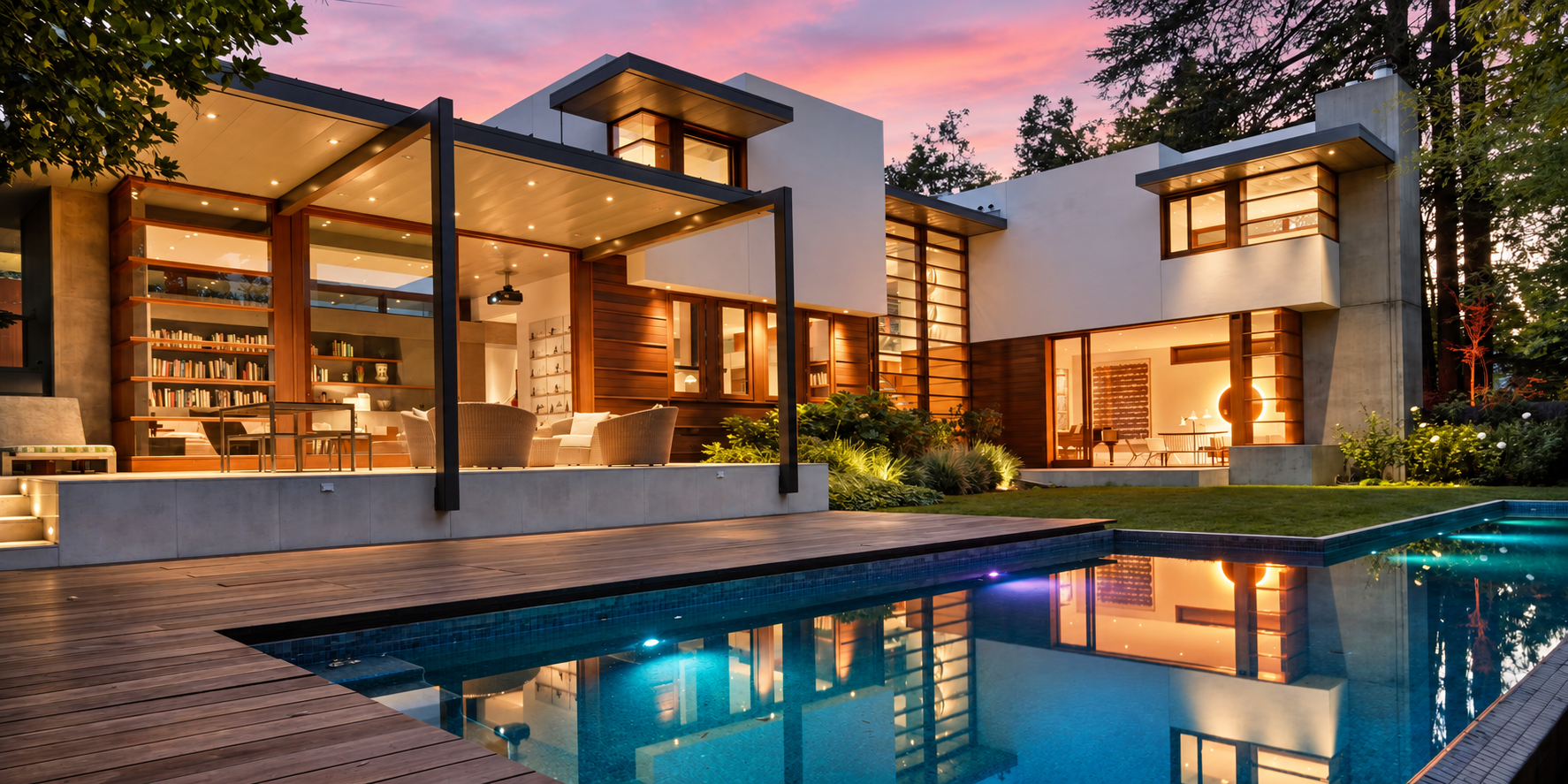
For years, tech entrepreneur Asher Waldfogel and his wife, Helyn MacLean, dreamed of building a modern house in Palo Alto, Calif.
The couple, however, worried about clashing with the Mediterranean-style architecture typically associated with their neighborhood of Old Palo Alto.
So they tapped architect Steven Ehrlich to create a design that paid homage to its surroundings with stucco, mahogany and titanium zinc cladding. They spent $20 million over several years building the house, completed in 2005.
Now looking to be closer to their adult daughter on the East Coast, they are putting the five-bedroom home on the market for $44 million—the most expensive listing in Palo Alto.
Waldfogel is an angel investor who co-founded Redback Networks, a telecommunications-equipment company. MacLean previously had a career in fundraising.
The couple purchased the roughly 0.4-acre site for $7.1 million in 2000 and demolished a circa-1930s Spanish Colonial home. The house they built pinwheels around a central staircase. It has 7,900 square feet of livable space, with four distinct courtyards and a pool.
A key feature of the home is a cast-in-place concrete wall, or spine, that is two stories high and about 80 feet long. “There’s a little bit of controlled chaos in what comes out of the form,” unlike a perfectly uniform surface, Waldfogel said. “If you want that, you do it in plastic.”
Waldfogel said he and his wife are thinking about the next phase of life now that their daughter is grown, although they have not decided where they will move. They also have a home in Sun Valley, Idaho.
“Right now we’re just trying to emotionally let go and decide what to do next,” he said.
Palo Alto, an epicenter of venture capital and tech startups in Silicon Valley, is home to some of the country’s biggest tech titans. Sales volume and prices are rising, with a median sale price of $3.5 million for the three months ending in August, up 5.8% year-over-year, according to real-estate brokerage Redfin.
Arthur Sharif of Sotheby’s International Realty—San Francisco Brokerage has the listing.


