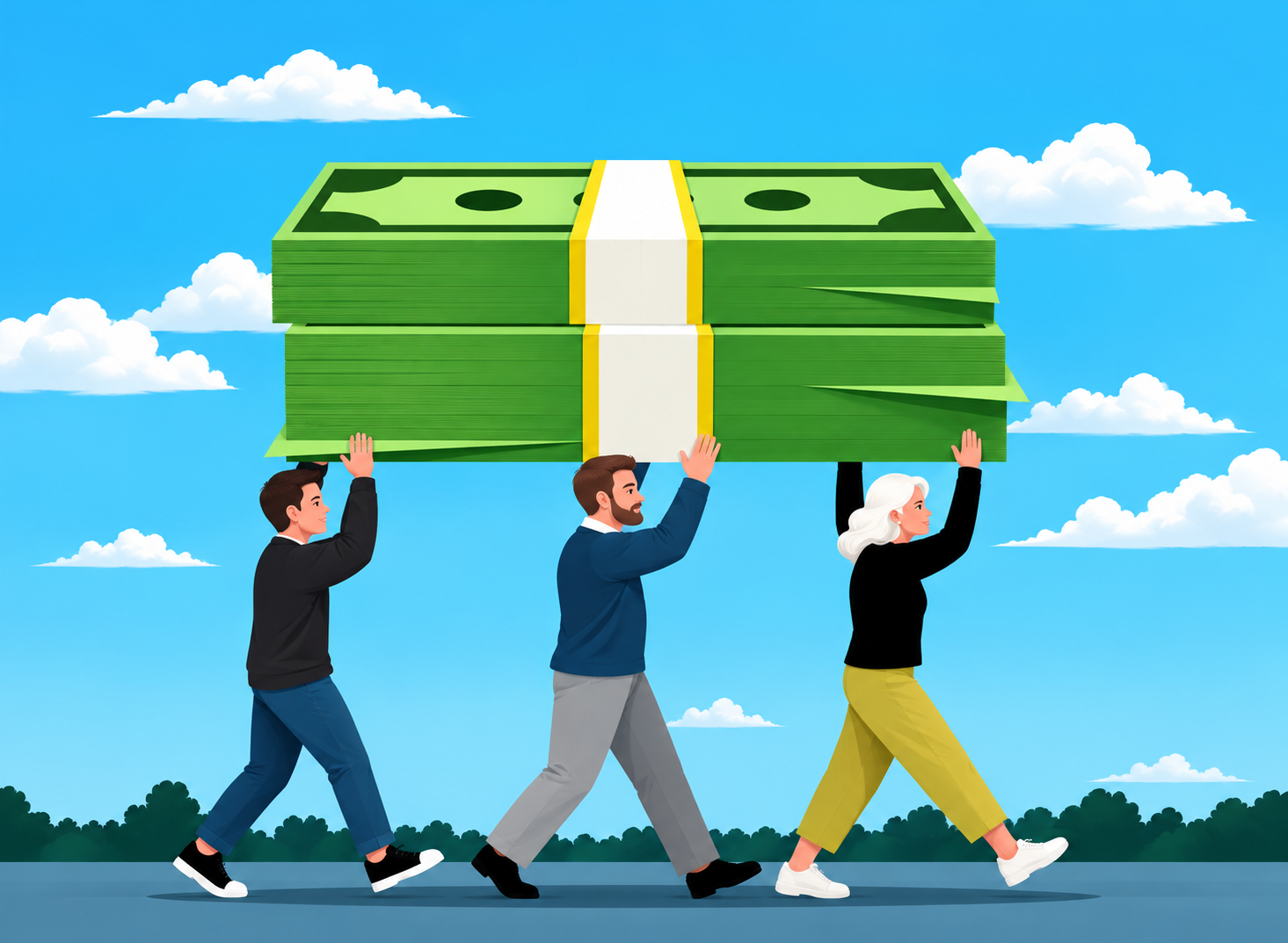
Stop dwelling on what you’ve lost thanks to rising interest rates and take advantage of the opportunities they present.
High rates are expected to linger for a while and they are having a corrosive impact on some parts of our finances. Taking out a $500,000 mortgage to buy a home today will cost you about $400 more a month than it would have a year ago in a standard 30-year mortgage. That is not to mention higher rates on credit cards, personal loans and other products for borrowers.
The high-rate periods can also bring juicy, high yields on savings accounts, certificates of deposit and Treasury bills—that is, banks are paying you to let your money sit there. And anyone can take advantage, regardless of income.
Dena Bashri opened a SoFi savings account last fall. It now yields 4.5% a year. She wanted a higher return than she was getting at her local credit union.
Bashri, 25 years old, is a senior director at a fundraising firm and makes roughly $92,500 a year. She saves money on rent by living with her parents in Virginia so she’s able to contribute about $4,900 each month to her savings account. She’s already earned close to a few hundred dollars in interest and hopes to continue building her rainy-day fund, she said.
“Emergency savings offers me the flexibility to take risks but also financially anticipate any life changes that may happen,” Bashri said.
Here’s a financial road map for making the most of great yields while staying on track with your short- and long-term money goals.
Level 1: Nothing to spare
Living paycheck to paycheck is now the norm for most Americans.
Financial advisers urge those holding large amounts of debt to first pay down high-interest balances. About half of people carrying credit-card debt allow those balances to roll over into the next month, according to a recent Bankrate survey.
Credit-card interest rates are at record highs, making that debt even more expensive to maintain. Putting money in a savings account with a 4.5% rate will help little if you haven’t paid down your Visa balance with the current average rate of 22.16%.
“Although you may be able to set aside a certain amount of money in a savings account, if you’re potentially offsetting that with not paying off higher debt, that’s an important consumer consideration,” said Courtney Mitchell, head of consumer deposits, products and payments at TD Bank.
For avid debit-card users, high-yield checking accounts are worth consideration, financial advisers say. These accounts can be found at credit unions and online banks and are yielding up to 6%. That interest can then be linked to a high-yield savings account. This is a good option for debit-card users who want to get a start on their emergency fund.
But try not to keep more than one month’s worth of expenses sitting in a checking account, said Rob Williams, managing director of financial planning and wealth management at Charles Schwab. Research shows money sitting in a checking account is more likely to be spent than money in a savings account.
Level 2: $0—$1,000
For those who can sock away at least a little bit each month, even putting $25 in a high-yield account can make a difference, said Mitchell.
If you contribute $25 a month to a savings account yielding 4.5%, you will have roughly $300 in a year including interest.
Putting that money toward emergency savings? Liquidity is key so that when something unexpected happens, like a flat tire, you can get the money quickly. High-yield savings accounts are the best places for emergency savings because they allow easy withdrawals, financial advisers say.
“You really need emergency savings to be in something you can get at as soon as possible and also without a penalty,” said Mark Hamrik, senior economic analyst at Bankrate.
Financial advisers recommend building up six months to one year of expenses in an emergency-savings account. Homeowners should save a little more for unexpected repairs.
Level 3: $1,000+
Once you’re comfortable with your emergency savings, you can set aside money for holiday gifts, vacations and other short-term goals such as a down payment on a car.
The run of interest rate increases has made certificates of deposit popular again. If you are comfortable locking money away for a period of time, consider a CD for some of these short-term goals. Many six-month to one-year CDs are offering yields above 5%.
It can be helpful to divvy up your high-yield savings for coming expenses.
Erin Confortini, 24, is a freelance marketing consultant based in Pennsylvania who made about $120,000 last year. She has three high-yield savings accounts for her short-term savings goals.
Each month, Confortini puts $150 aside for car insurance, $300 for coming vacations and $200 toward Christmas and birthday gifts, she said.
“It’s really great that now that rates are increasing, we do have an option to earn a little bit of money,” Confortini said.
Level 4: Investing for long term
You’ve got at least one month of expenses in your checking account, you’ve beefed up emergency savings and you’ve set aside buckets of money for anticipated expenses.
Maybe it’s time to get more money out of high-yield savings. Keeping all of your money in savings isn’t a strategy for wealth building because the interest gained on high-yield accounts likely won’t outpace inflation in the long run, said Kyle McBrien, a certified financial planner at Betterment.
One simple way to take advantage of rates and get out of high-yield savings is Treasurys.
Take Victor Cipolla, a 33-year-old entrepreneur in New York.
Cipolla moved $30,000 from his high-yield savings account into a Treasury bill after he noticed that rates were going up. The bill currently yields more than 4% and he reinvests the money in another Treasury bill every six months when it matures, he said. The average yield on a six-month Treasury bill is 5.3%.
“We’ve always had this low interest rate environment, so this is a new area to navigate,” said Cipolla.



 4 min
4 min
 Copyright 2020, Dow Jones & Company, Inc. All Rights Reserved Worldwide.