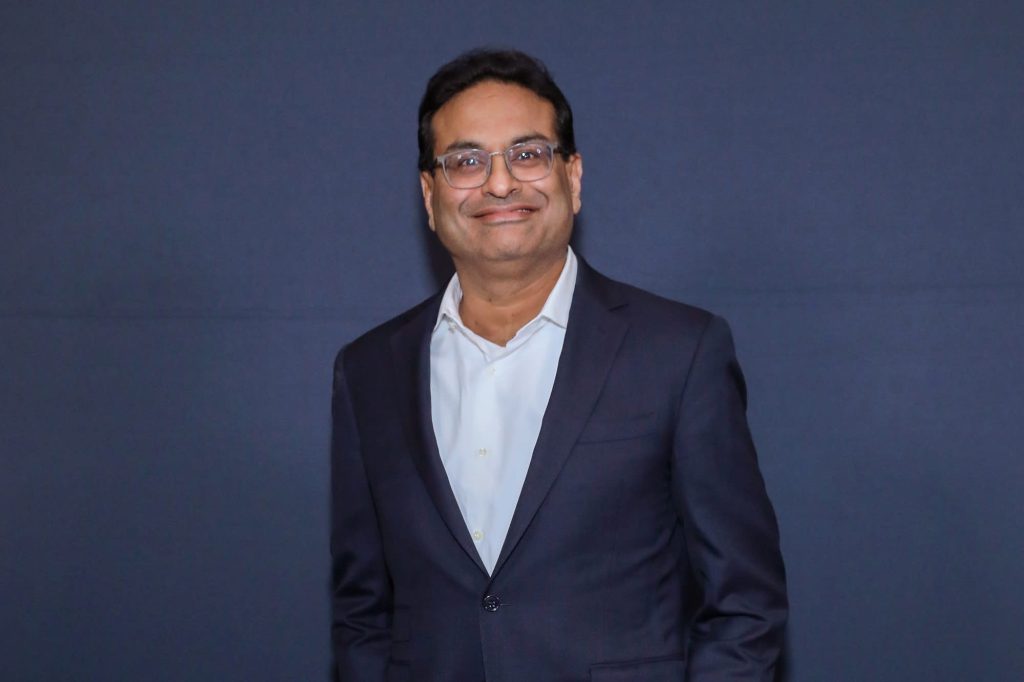
Investors got a long-awaited glimpse of Starbucks’ future under CEO Laxman Narasimhan Thursday, when the company unveiled an updated strategic plan.
The so-called “Triple-Shot Reinvention Strategy,” which the company announced at an investor event in New York, comes nearly eight months after Narasimhan took the company’s reins from former CEO Howard Schultz.
The event was the first time many investors heard from Narasimhan about his long-term vision for the company. Those who feared a drastic about-face now that Schultz has stepped away can rest easy: Narasimhan describes his new plan as relying “on the foundation” of the reinvention plan laid out by Schultz in September 2022.
“This huge focus on my part, on my team’s part, over the last year to build the foundations—that is continuing,” Narasimhan said in an interview with Barron’s. “All we’ve done here is to say ‘Hey, there’s further stuff [to do] about the store, there are things to do in innovation that we can bring in.’”
Triple-Shot will focus on three areas intended to propel the next stage of the company: improving the store experience, scaling its digital capabilities, and expanding its global footprint. The plan also seeks to increase efficiency and reinvest in its employees.
The company believes the strategy paves the way for long-term revenue growth of 10% or greater, and earnings per share growth of 15% or greater. Long-term guidance issued in 2022 called for revenue to grow between 10% to 12% annually through 2025, and earnings per share to increase between 15% and 20% in that time. Same-store sales will grow by at least 5%, Starbucks said Thursday. Last year, the company forecast they would grow between 7% and 9% annually.
Starbucks also announced a $3 billion cost savings plan, set to be implemented over the next three years.
The company’s store expansion plan is largely unchanged. Starbucks is reiterating its aim to operate 55,000 stores by 2030, an increase of 45% from its current tally of about 38,000. Most of these new store openings will be outside North America, Starbucks added.
Starbucks rewards members are expected to double from the current 79 million within the next five years.
Here are more takeaways from Thursday’s event.
Narasimhan Sees Better, More Efficient Stores.
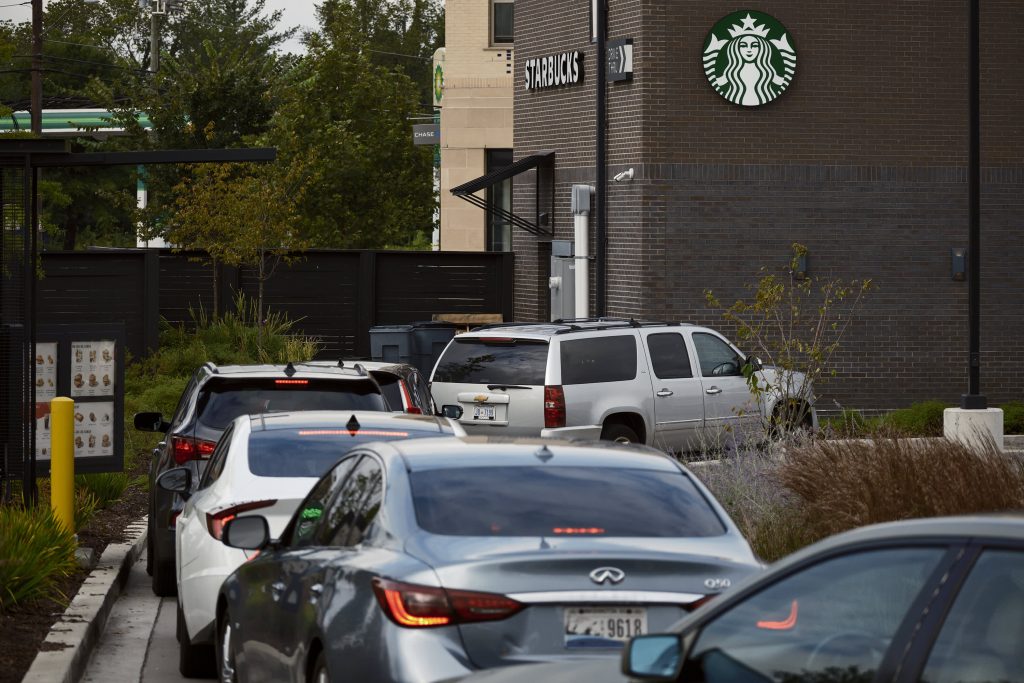
The pandemic was hard on Starbucks stores, Narasimhan told Barron’s. The early stages of the lockdown snarled supply chains and closed off cafes. Many locations pivoted to drive-through and mobile-order only formats—and in the process, trained customers to drink their coffee on the go, analysts say.
Although grab-and-go is typically a more profitable business model than the company’s traditional sit-down cafe model, it comes with a new set of challenges. Perhaps the biggest is the impact on baristas. Some baristas told Barron’s that their jobs have gotten more stressful with the rise of mobile ordering and delivery, as they now have to juggle an onslaught of orders that, in some cafes, have turned every hour into rush hour.
“A lot of things didn’t go the way that they normally do for a company that was focused on human connection,” Narasimhan said.
Triple-Shot aims to streamline baristas’ work every step of the way—from overhauling back-end procedures, such as recording inventory, to improving daily minutiae, like the way customers pick up their orders. Part of this effort includes opening stores with new layouts, like drive-through only or delivery only, to better serve the needs of the local market. Starbucks is planning on increasing the number of take-out only or delivery-only stores, both of which comprise 1% or less of the current store portfolio. By 2025, Starbucks aims to redirect 40% of delivery orders to delivery-only stores.
Through its investment in efficiencies, the company says it can cut more than $3 billion in costs over the next three years up and down the supply chain. It plans to reinvest those funds in the business and to deliver shareholder returns.
Investments in Employees Will Continue
Starbucks announced plans to invest $1 billion in employee initiatives, including installing new technology in stores, raising wages, boosting benefits, and improving scheduling. Since 2020, hourly total cash compensation has increased by nearly 50%. By 2025, the company plans to double hourly incomes compared with 2020 through more hours and higher wages.
This is the second round of workforce investment Starbucks has rolled out since it started dealing with a rise in unionisation activity two years ago. The first billion-dollar round was announced in May 2022, and was funneled into pay raises, additional training, and better technology in stores.
Some union members and politicians have criticised the way Schultz and the company handled the company’s early stages of unionisation. They point to dozens of complaints the National Labor Relations Board has filed against the company, and Schultz’s public comments that unions were contrary to his vision for Starbucks. A month after Narasimhan took control of the company, a group of more than 40 of the union’s allies sent him a letter, urging him to “create and build a healthy working relationship with unionised partners.”
Close to half a year later, Narasimhan’s stance on unionisation is still a bit of a mystery, investors say. When Barron’s asked him how the employee investments factored into his and the company’s perspective on unionisation, he said he would only talk about the partner investments. The company has long emphasised the investments made in its workforce when asked about unionisation efforts.
“We have a holistic view of the kind of bridge that we provide our partners to a better future and it is grounded in the idea of a strong operating culture,” he told Barron’s. “It is grounded in the idea of human connection. If you look even at our mission, every word in that mission is about giving the barista agency.”
Global Expansion and China
China has become Starbucks’ second largest market after the U.S. On Thursday, the company reaffirmed its commitment to growing in the country despite rising operational challenges.
“I’m really bullish on China, in the long run,” Narasimhan said in an interview.
He added that the company was also planning on expanding even further in other international markets. Three out of four new stores over the near term will be opened in markets outside the U.S., including in Southeast Asia and Latin America.By 2030, the company plans to have 35,000 stores outside of North America. As of Oct. 1, it had a little over 21,000 international stores.
Starbucks stock closed 9.5% higher Thursday, buoyed by a stronger-than-expected fiscal fourth quarter. Shares were largely unchanged in after-hours trading, up 0.2%.


 4 min
4 min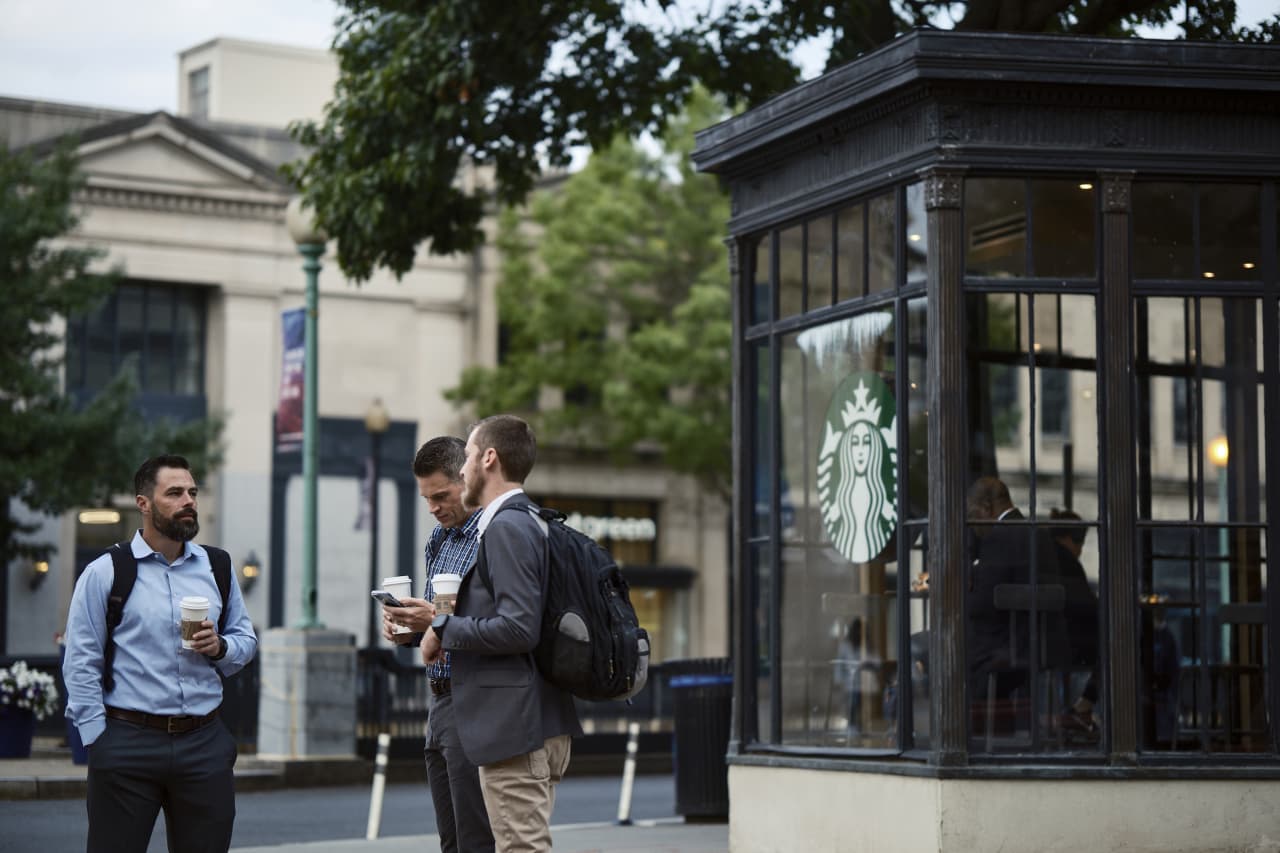
 Copyright 2020, Dow Jones & Company, Inc. All Rights Reserved Worldwide.