AI stocks roar back as Jensen Huang returns to Nvidia - Kanebridge News
Share Button

AI stocks roar back as Jensen Huang returns to Nvidia

Nvidia shares jumped more than 30% and the Nasdaq rose almost 7% after the board unanimously reinstated Jensen Huang as CEO, 11 days after he resigned.

By Ruba Jaajaa
Tue, Nov 24, 2026 8:26amGrey Clock 2 min

Nvidia’s board has reversed course and brought its co-founder back. The decision sparked Wall Street’s best day in more than 18 months.

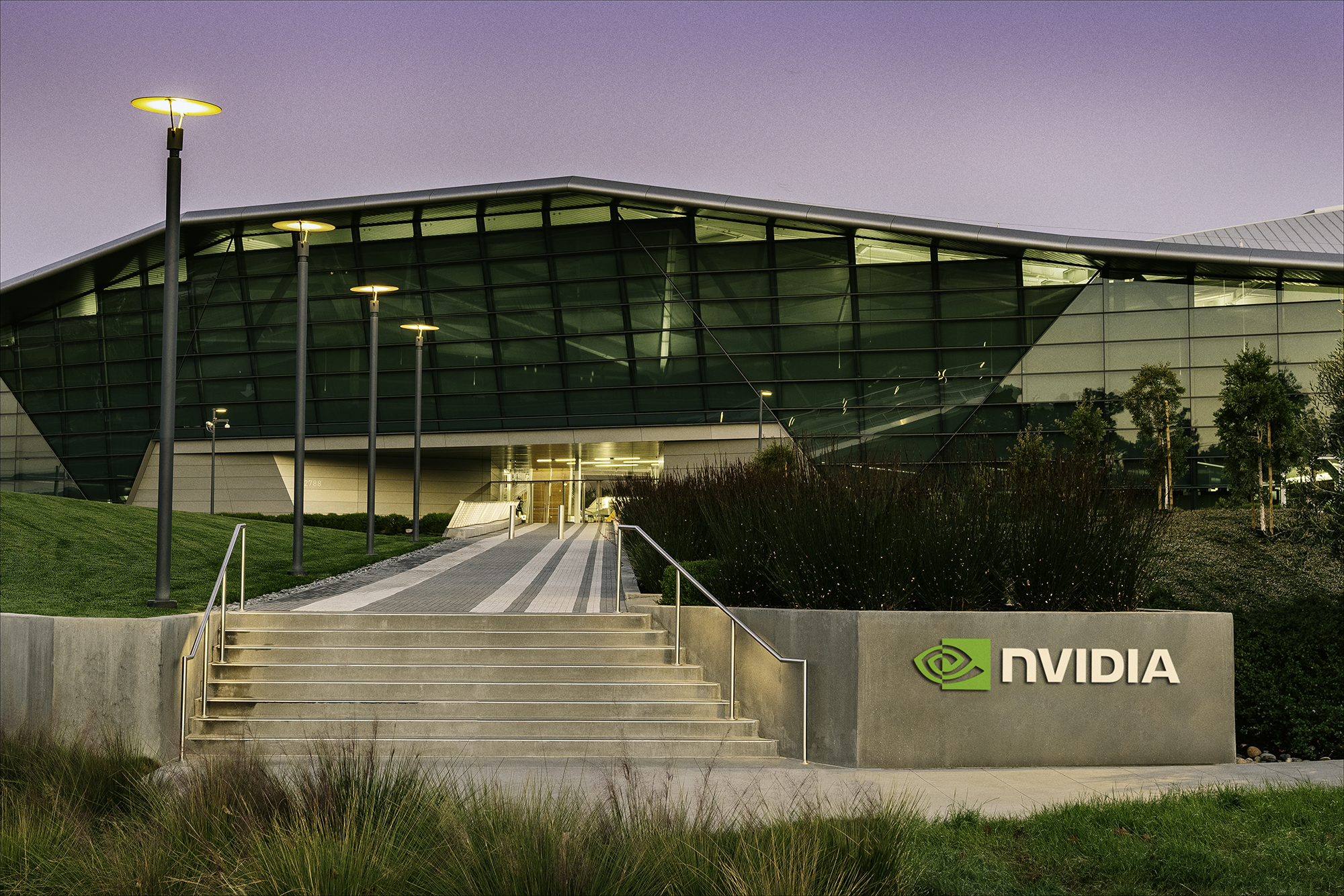
Less than a fortnight after Jensen Huang resigned, Nvidia has put him back in charge. On Monday US time, the chipmaker said its board had voted unanimously to reinstate Huang as president, chief executive and a board director, effective immediately.

The market’s response was immediate. Nvidia shares were up more than 30 per cent in pre-market trading and kept climbing, recovering nearly all the ground lost since his resignation. The rally spread across the AI trade: the Nasdaq Composite closed up 6.9 per cent, and Micron and CoreWeave each gained roughly 20 per cent. All three major US indexes had finished the previous week in correction territory.

Eleven days that shook the AI trade

Huang resigned on 12 November, after revelations of extramarital affairs that included one with a businesswoman US authorities suspected of spying for China. Beijing denied the spying allegations. CFO Colette Kress stepped in as interim CEO and Harvey C. Jones became the board’s first chair. Nvidia shares fell nearly 23 per cent in the week that followed, and the board had ruled out his return only days before reversing course.

In its statement, Nvidia said the board was satisfied with Huang’s candour and ability to lead after a series of meetings with him. It also said it had taken input from senior levels of the US government and, based on that input, was confident his return poses no national security risk.

“I take this responsibility with the greatest humility and renewed commitment,” Huang said.

Governance strings attached

The return comes with conditions. A committee of independent directors, with its own counsel, will keep investigating reports that Huang was the target of a foreign intelligence effort, and Huang has said he will cooperate. The board is also setting up a National Security and Export Control Committee, and is recruiting a new chief compliance officer who will report to the board’s governance committee. Kress goes back to being CFO, and Jones stays as chair.
The politics are messier. President Donald Trump said he had spoken to the board and “convinced” it to act. Democrats Elizabeth Warren and Raja Krishnamoorthi criticised the decision, and Republican senator John Cornyn questioned the basis of the national security assurance. Separately, the SEC and the Department of Justice are investigating the company over possible accounting issues and alleged chip smuggling.

What it means for investors

The last fortnight showed how much of the AI trade rests on one company, and how much of that company’s value rests on one person. The rebound removes the most immediate question of who leads Nvidia. It doesn’t settle the investigations or the governance concerns.

Australian investors have exposure through global tech ETFs, super funds’ international equity holdings and ASX-listed data centre and AI infrastructure plays, so expect a lift in local trade today. Whether it lasts depends on whether last week’s sell-off was about Huang alone, or about broader nerves over AI valuations.


MOST POPULAR

BNW Developments has established a Sydney presence, joining Arada and Sobha Realty among the growing number of UAE developers pursuing Australian buyers and development opportunities.

The Australian leather house has opened an immersive four-day pop-up in Manhattan, unveiling its Bloom Collection and redefining what a product launch can look like.

Related Stories
Money
Demand for Chinese Goods Is Soaring but Economic Momentum Slows at Home
By Hannah Miao 16/11/2026
Money
Japan Spent Record $50 Billion in Single Day to Bolster Yen
By Megumi Fujikawa 09/11/2026
Money
How Families Can Beat 7% Mortgage Rates and Lower Their Tax Bills
By Laura Saunders 09/10/2026

China’s trade surplus surpassed $1 trillion in the first 10 months of 2026, driven by a 35% annual surge in exports in October. However, the export boom contrasts with weakening domestic demand, as retail sales growth slowed to 0.4%, fixed-asset investment fell 8.1% and property investment dropped nearly 22%, highlighting growing challenges for the world’s second-largest economy.

By Hannah Miao
Mon, Nov 16, 2026 2 min

China’s trade surplus surged past $1 trillion last month, but at home, its economy is losing steam.

The world’s second-largest economy weakened on several fronts in October, reflecting the country’s split-screen growth. Soaring exports mask tepid consumer spending, falling investment and a real estate slump with no end in sight.

Retail sales, a gauge of household consumption, rose 0.4% last month from a year ago, slowing from 1.1% in September, according to government data released Monday. Fixed-asset investment fell 8.1% in the first 10 months of the year. Property investment alone dropped nearly 22% during the same period.

“The data continue to depict a two-speed economy,” Société Générale economists Michelle Lam and Wei Yao wrote in a report Monday.

External demand has driven much of China’s economic growth this year. Exports rose 35% from a year earlier in October in dollar-denominated terms, according to official data released last week. The country’s trade surplus for the first 10 months of the year reached $1.04 trillion.

The deluge of exports risks further stoking tensions with Beijing’s trade partners, particularly in Europe, where officials increasingly say that competition from China is hollowing out their local industrial sectors. The European Union and Beijing last month agreed to cap shipments of Chinese hybrid vehicles.

Still, global demand for Chinese goods—especially for tech products that power artificial intelligence—appears to show no signs of slowing. China’s exports of integrated circuits more than doubled in value in the first 10 months of the year, government data show.

That reduces the pressure on Beijing to step up support for the economy. China remains on track to hit its growth target for the year of between 4.5% and 5% gross domestic product growth, making it unlikely Beijing would rush to unleash new stimulus.

“Policymakers are likely to continue doing just enough to meet the growth target,” Macquarie economists Larry Hu and Yuxiao Zhang wrote in a report Monday.

Despite the export momentum, China’s industrial production growth decreased to 4.8% last month, from 5.5% growth in September.

The property market remains a drag on the economy. Home sales fell 14.1% in the January to October period from a year ago, widening from a 13.7% decline in the first nine months.

Meanwhile, China’s headline surveyed urban unemployment rate stood at 5.1% last month, roughly in line with September’s 5.2%.