This year’s stock market volatility has turbocharged a favourite strategy among individual investors: buying the dip. The dramatic plunge in major indexes will test their resolve.
On Thursday, when the stock market had one of its worst days of the year, individuals rushed in, setting a one-day buying record. In March, they invested the largest-ever monthly sum, according to Vanda Research data beginning in 2014, and continued to pour money into the markets in April.
Investors followed suit on Tuesday in a volatile session, a day after the S&P 500 fell to its lowest level this year. The broad stock-market gauge swung before edging up 0.2%, snapping a three-session losing streak.
Individuals’ willingness to backstop markets throughout this year’s selloff demonstrates that the group—for now—has been more resilient than analysts and trading professionals anticipated. Few were surprised when individual investors pounced on small dips as the market churned higher last year, helping the S&P 500 cruise to 70 records and rewarding those who waded in.
This year, the S&P 500 has fallen 16%, its worst start to a year in nearly a century, and the Nasdaq Composite has dropped 25%. Inflation is at a 40-year high, and the Federal Reserve has embarked on an aggressive monetary tightening cycle, enacting this month its biggest rate increase since 2000. That has fanned worries about a recession—periods when stocks have on average fallen as much as 29%, according to Dow Jones Market Data.
Some of the wildly popular trades of the past two years have already crumbled. Many investors have soured on richly valued technology stocks. Newly minted public companies, which soared last year, have come back down to earth. Highly speculative corners of the market, such as Cathie Wood’s flagship ARK Innovation exchange-traded fund, have plummeted.
Despite the turning tides, many individual investors said they have relished the chance to buy stocks at a discount. Many said the calculation is simple: History has shown that stocks eventually go up.
Small investors ploughed US$114 billion into U.S. stock funds through March as the S&P 500 tumbled into a correction, falling at least 10% from its high, according to Goldman Sachs Group. That marks a sharp shift in the group’s strategy for much of the past two decades. Typically, individual investors have sold about $10 billion in the 12 weeks after a market peak when the S&P 500 has tumbled that much.
In the month of March alone, individual investors bought about $28 billion of U.S.-listed stocks and exchange-traded funds on a net basis—the total amount after subtracting the amount sold—the largest monthly sum on record, according to Vanda, and another net $24.4 billion in April. On Thursday, when the S&P 500 tumbled 3.6%, individual investors bought a net total of nearly $2.6 billion of stocks and ETFs, a one day record, according to Vanda.
John Case, a 71-year-old retired engineer in Las Vegas, said he has tried to follow famed investor Warren Buffett’s advice to be “greedy only when others are fearful” and to hold stocks for long periods of time.
He said he has often stepped into the market during times of volatility and learned this lesson the hard way when he sold some of his shares during the 2008 financial crisis. That plunge was followed by an 11-year bull market during which the S&P 500 surged roughly 400%. Now, he said he is more confident in his strategy.
“When the market zigs, I zag,” Mr. Case said.
He has steadily increased his exposure to stocks since he stepped out of the workforce, he said. About two-thirds of his portfolio is in stocks, up from around half when he retired.
Mr. Case recently picked up shares of software company Adobe Inc. and Microsoft Corp., which have both recorded double-digit losses this year. Since he bought the shares, though, they have fallen even further, weighing on a retirement portfolio that has already slid in value this year.
Many individual investors who bought the stock-market dip are sitting on losses. Through April, the S&P 500 fell an average 0.2% during the session after it notched a loss, according to Jason Goepfert at Sundial Capital Research, making 2022 one of the worst years for buying the dip since 1974.
Unlike the crash of early 2020, which lasted just 23 trading days, investors are weathering a more prolonged selloff that could worsen as recession risks grow. The Fed’s move to raise rates and shrink its $9 trillion asset portfolio has already triggered a selloff in the government-bond market, sending the yield on the benchmark 10-year U.S. Treasury note jumping past 3% to its highest level since 2018. Higher yields typically chip away at the stock market’s allure by giving investors another attractive place to park their cash.
Individual investors’ appetite for stocks diverges from the behaviour of professional investors, who have collectively sold stocks during the turbulence. JPMorgan Chase & Co. estimates that institutional investors have pulled $199 billion out of the stock market this year, according to an analysis of public order flow data through Friday. Meanwhile, pros keep ramping up bearish bets against major U.S. equity indexes through the futures market, analysis from Citi Research shows.
That hasn’t stopped many individual investors from wading in. Their allocation of stocks in their portfolios crept up to nearly 70% last month, hovering around the highest levels since early 2018, according to a survey by the American Association of Individual Investors. Many individual investors whittled their exposure to bonds, sending fixed-income allocations to a 14-year low.
Some market strategists say that retail investors’ appetite for buying could continue to help support stocks, blunting the impact of severe down days. Goldman analysts forecast that U.S. households will buy $150 billion in stock in 2022, following last year’s record of roughly $390 billion.
Demand could deteriorate if the economy sours. Households have pulled around $35 billion from stock funds since early April, as the selloff accelerated, the firm said.
The rising value of their stockholdings and homes over the past two years has made some investors feel more comfortable taking bigger risks, financial advisers said. Home prices logged a record jump in 2021, while the S&P 500 has still soared almost 80% from its March 2020 low, thanks in part to the Federal Reserve’s Covid-19 stimulus measures that led to a boom in asset prices world-wide.
Pandemic-era stimulus checks and a reprieve from student-loan payments also helped some people stockpile cash. Some are also beginning to reap the benefits of the greatest wealth transfer in modern history, with older generations expected to hand down trillions of dollars in the coming decades.
“They just have more money,” said David Sadkin, a partner at Bel Air Investment Advisors, who oversees about $4.6 billion for high net-worth clients. “We did not see the kind of ‘hit the exit, hit the eject button’ that we’ve seen in the past.”
Mr. Sadkin said his clients have seemed concerned about the latest leg of the selloff but that there hasn’t been any “panic selling.”
Concerns about inflation and Fed policy have already led to sharp stock plunges this year. So far, several of those selloffs have been followed by some of the most dramatic rebounds of the past decade.
On Feb. 24, investors dumped stocks as the Ukraine crisis intensified, sending the Nasdaq Composite down by more than 3% intraday. As stocks hit their lows during the session, a familiar pattern emerged: Investors piled in, helping the index claw back its losses and sending it up to close 3.3% higher than the previous day.
Investors purchased nearly $1.5 billion of U.S. stocks and ETFs that day on a net basis, according to Vanda, higher than the 2022 daily average of nearly $1.3 billion. This year, individual investors’ 10 biggest buying days by dollar volume have occurred when the S&P 500 has fallen rather than risen.
The strategy of picking up stocks and other investments on sale has grown so popular that the term “buy the dip” has mushroomed into an online sensation, garnering millions of mentions on social-media platforms. The growing entanglement of investing and social media means that even sharp plunges can bring on calls of FOMO—fear of missing out.
In January, when stocks suffered their worst month since the early days of the Covid-19 pandemic, and prices of assets including stocks, bonds and bitcoin slid, many investors turned to platforms such as Twitter and Reddit to tout the strategy, leading to more than 200,000 mentions across social media, according to social-media management company Hootsuite. That’s more than 30 times the figure three years ago.
On Monday, as the S&P 500 finished its worst three-day stretch since March 2020, the term started trending on Twitter again.
Chris Johnson, a 30-year-old individual investor who runs an online trading community called The Wealth Squad, has been among those encouraging small traders to remain steadfast. “Every asset class has a down cycle,” he tweeted in April, on a day when the S&P 500 dropped 1%. “Those who survive the down cycles come out of the cycle much wealthier.”
Mr. Johnson, an army veteran turned full-time trader who splits his time between Houston and Las Vegas, has taken advantage of recent market swings to scoop up shares of companies he plans to hold for the long haul. That has helped him amass large positions in companies such as Roblox Corp., Coinbase Global Inc. and Shopify Inc.
Each of the stocks has fallen much further than the broader market, with all three down at least 70% this year. His Roblox and Coinbase positions are now worth about $185,000 and $30,000, respectively. Still, he said he isn’t worried because he believes the companies are industry leaders and the stocks will eventually rebound.
He said he has used the more recent market turmoil to double down on cryptocurrencies, which have tumbled alongside stocks, to help bring down the average cost of tokens in his portfolio. At the moment, he said, “I see opportunities in crypto that I’m not seeing in the stock market.”
Mr. Johnson said he has been trying to be more diligent in taking profits in his own portfolios. In addition to stocks and cryptocurrencies, he said he also has a portfolio of real-estate properties.
Some strategists say buying the dip is a risky way to invest because it is so difficult to gauge whether the market is going to keep falling. Vanda estimates the average individual investor portfolio peaked late last year and has since tumbled, giving the average individual a paper loss of about 28%.
This year’s turmoil has spurred some individual investors to pull back on trades that have soured. After years of investing in index funds, Do Kim, a 45-year-old accountant near Philadelphia, began actively investing in stocks and options in spring 2020, pouring hundreds of thousands of dollars into the market. He won big through options trades and buying dips in technology stocks, and he said his portfolio swelled.
The wild swings in the market this year have tested his belief in the strategy. He has sold some of his losing bets, which include personal-finance company SoFi Technologies Inc. and insurance firm Lemonade Inc., which have both lost more than half of their value this year. At times, he bought the dip in stocks only to have them tumble further.
He said he has recently backed away from the strategy, wary that stocks could fall much further and that there may be a recession on the horizon. “I’ve had a lot of sleepless nights for sure,” he said. For now, he is still holding his Tesla Inc. and Nvidia Corp. shares.
Online brokerages including Robinhood Markets Inc. have reported a slowdown in customer trading activity in recent weeks.
Chief Executive Vlad Tenev said on the firm’s April earnings call that it faced a “challenging macro environment, one most of our customers have never experienced in their lifetimes,” noting that for most of its history, “Robinhood has operated in a period of low interest rates, low inflation and rising markets.” He said that while larger customers are still remaining active, many other customers have become more cautious with their portfolios and are trading less frequently.
Some traders are still looking to make bold bets. At brokerage Webull Financial, traders are flocking to some of the riskiest products designed to profit from market volatility. Trading in exchange-traded funds offering leverage, or turbocharged exposure to stocks and other assets, makes up around half of all ETF trading on the platform, Chief Executive Anthony Denier said.
Matt Wyskiel, who manages money for several individuals at Skill Capital Management in Baltimore, has sought to magnify his exposure to the stock market in his personal portfolio through derivatives and ETFs that profit if volatility edges lower, he said. Those bets stand to win big if stocks rise and volatility falls—and they can also backfire if market turbulence rises.
“I’m calling it a stocks-plus strategy,” Mr. Wyskiel said. He said market volatility this year hasn’t triggered a shift in his strategy. “The best course of action often is to buy and hold and ride it out.”
Reprinted by permission of The Wall Street Journal, Copyright 2021 Dow Jones & Company. Inc. All Rights Reserved Worldwide. Original date of publication: May 10, 2022.



 8 min
8 min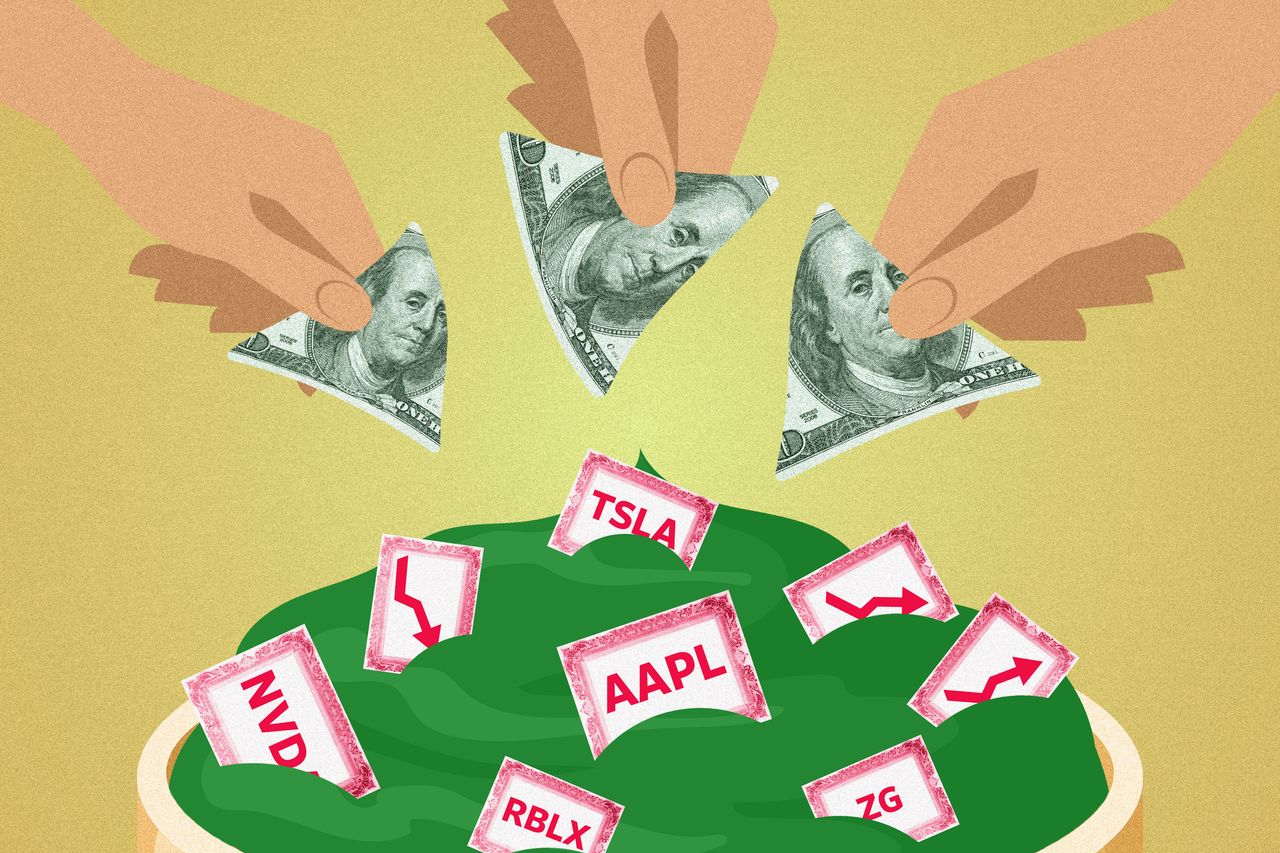
 Copyright 2020, Dow Jones & Company, Inc. All Rights Reserved Worldwide.