
How Can Companies Push Back on China? Be Like Australia.

By Isaac Stone Fish
Thu, Dec 3, 2020 1:39am 3 min
3 min
3 min

 3 min
3 min
Drinking together has always been a way to show solidarity. And that’s what Australian allies are doing, in response to Beijing’s newest trade sanctions on the country’s wine industry. Taiwanese legislators posted photographs of themselves with bottles of Australian wine, while a Swedish politician urged people to stand up to Beijing by “drinking a bottle or two.” Even the U.S. National Security Council joined in with an unusually punchy tweet. The bandwagoning may be awkward at times, but it contains an important lesson: The best way to push back against Beijing’s coercion is through a unified response.
For more than six months, Beijing has been waging a trade war against Australia. The latest salvo—up to 212% tariffs on Australian wine, announced on Nov. 27—threatens to decimate the country’s roughly $3 billion wine industry, and adds to a crowded list of tariffed items. The total amount targeted is now roughly $20 billion. Beijing has blamed Australia for a “series of wrong moves,” and announced 14 political disputes it expects Canberra to rectify in order to improve the relationship.
This is not a new tactic for Beijing. Since the 1990s, Beijing has made public examples of foreign institutions, people, and countries, and used that to scare others into acquiescence. After the Houston Rockets’ then general manager Daryl Morey tweeted about Hong Kong in October 2019, for example, Beijing froze the NBA out of China for a year, leading to hundreds of millions of dollars of lost revenue for the organisation. Reached for comment, an NBA spokesperson forwarded NBA Commissioner Adam Silver’s recent comments, where he said that the NBA’s response to the China scandal was, “We support freedom of expression.”
The NBA incident wasn’t the first. After the independent Nobel committee’s 2010 decision to award the Nobel Peace Prize to the Chinese dissident Liu Xiaobo, Beijing drastically curtailed Norway’s salmon exports to China. Companies like Marriott and the South Korean conglomerate Lotte have been targeted, too.
The strategy Beijing is using against Australia—coordinated complaints, economic punishment for political crimes, and an insistence that the other party is solely at fault—is remarkably similar to what Beijing did to the NBA. What’s new is Australia’s response.
The crucial difference lies in Australia’s smart insistence in not facing China alone. Since the beginning of its trade war, Canberra has strengthened old alliances and built new ones. It has agreed to develop a supply chain resilience program with Japan and India, signed a free trade deal with Indonesia, and benefitted from political support of countries like France, New Zealand, and especially the United States. Australia has urged its allies to understand that the more it yields to an attack by Beijing, the worse it is for its partners. This is especially true with the countries in the so-called Five Eyes intelligence sharing partnership, whose other members are Canada, the United Kingdom, New Zealand, and the United States.
The other major difference is Canberra’s willingness to publicly criticise Beijing. The NBA’s responses were almost uniformly milquetoast, including from normally outspoken stars, like LeBron James, who called Morey “misinformed.” Compare that to criticism of Beijing across the Australian political spectrum: Prime Minister Scott Morrison has posted criticisms on Chinese social media, while Penny Wong, the leader of the opposition in the senate, called one of Beijing’s recent actions “gratuitous” and “inflammatory.”
Corporations can learn from Australia. When faced with Beijing’s ire, businesses need to partner more closely with their home governments and their global competitors. Organisations like the U.S.-China Business Council already serve as platforms for companies to coordinate and share grievances. But they do so mostly privately, and with an overwhelming desire to maintain positive relationships with Beijing. They argue that staying quiet in public helps companies maintain leverage and keep their China presence. “China can’t make good on its promises to further open its economy if there is no longer anyone there—or that could be there—to open to,” a spokesperson for the council said.
Chambers of commerce need to understand that publicly and privately pushing back against Beijing with American and other home government support when one of their members is targeted is better in the long run for all member companies. In certain cases, Congress should consider an antitrust waiver for firms that are collaborating to challenge Beijing.
Will publicly and multilaterally pushing back against Beijing help Canberra succeed in reducing tensions without showing weakness? It’s difficult to say—in large part because Beijing’s responses to these situations are uneven. Sometimes Beijing holds the grudge for years, and sometimes it calms down in weeks, or even days. The capriciousness of the response is a sign of strength, not weakness—it pushes the adversary to overcompensate, to seek to right the relationship. But standing strong and not yielding is Australia’s best hope for a healthy future relationship with both China and the United States. And Australia’s allies are stepping up. In late November, the Trump administration announced plans to work with Australia to counter Beijing’s economic hostage-taking. “The West needs to create a system of absorbing collectively the economic punishment from China’s coercive diplomacy and offset the cost,” a senior administration official told the Wall Street Journal.
Corporations targeted by Beijing can effectively engage their allies, both in governments, and in the business world, but most don’t. As tensions between the United States and China continue to worsen, it’s imperative that they build support from their home governments—and that they speak out when Beijing targets them.
 Copyright 2020, Dow Jones & Company, Inc. All Rights Reserved Worldwide. LEARN MORE




The Australian leather house has opened an immersive four-day pop-up in Manhattan, unveiling its Bloom Collection and redefining what a product launch can look like.
Following the successful launch of its Palais Collection, MAISON de SABRÉ has unveiled a new modular handbag system offering more than 720 styling combinations.
Wall Street’s hottest momentum trade has reversed sharply, as former winners tumble and heavily shorted stocks surge.
3 min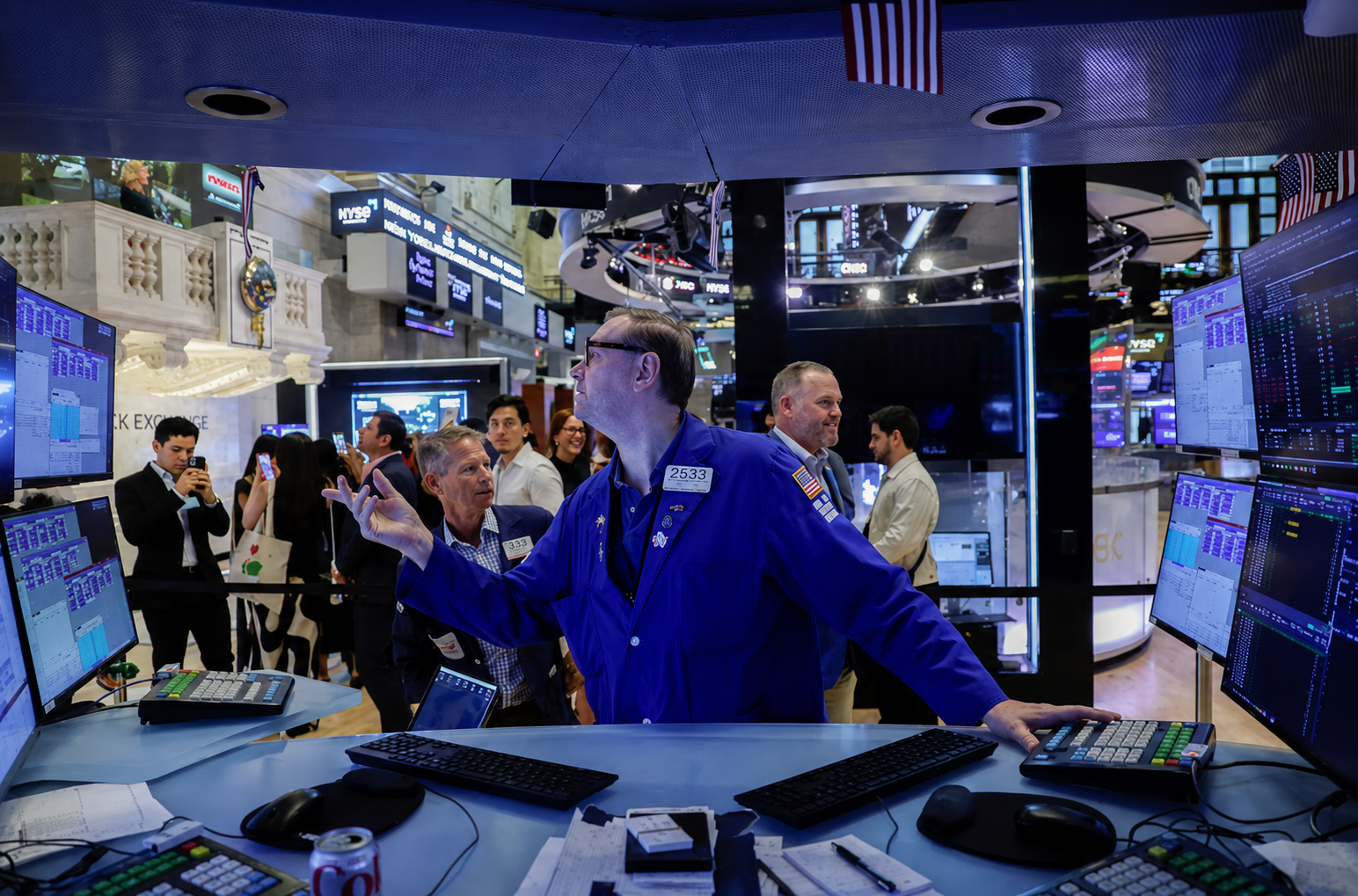
Wall Street’s hottest trade has gone ice cold.
For years, it paid off to buy stocks that were rising in price—and bet against struggling shares. The momentum trade was especially profitable this year, as investors piled into hot stocks including Micron Technology, Nvidia, Advanced Micro Devices and other artificial-intelligence darlings while wagering against those likely to be hurt by the embrace of AI.
The S&P 500 Momentum Index soared 44% in the second quarter, its best quarterly performance on record, and it surged 133% over the past five years, nearly double the broad market’s performance.
Mega funds and rookie investors alike piled into the trade, some using leverage and options contracts in an effort to amplify their returns, propelling the underlying shares higher.
“It is a self-fulfilling prophecy,” said Matthew Tym, managing director at Cantor Fitzgerald, of the trade.
Suddenly, the trade is a loser. The momentum index has tumbled more than 9% since July 1, lagging behind the S&P 500’s 2.8% gain. The index—which tracks stocks in the S&P 500 based on a “momentum score”—is on track for the biggest quarterly underperformance in 25 years. July was the second-worst month for the momentum trade in around 40 years, according to Bank of America estimates; the only month worse was April 2009, in the teeth of the global financial crisis.
Hedge funds that bought momentum shares while shorting low-momentum stocks suffered even more. At the same time, a basket of the most popular stocks held by hedge funds tracked by Goldman Sachs recorded its biggest one-month underperformance in July relative to the S&P 500 in more than 20 years, according to the bank’s analysts.
Momentum trading is based on a rather simple observation: Investments that go up tend to keep outperforming; those that underperform often remain laggards. This kind of trading might seem too simple a stock-picking strategy to work. Yet it often has.
“For decades, it didn’t take a lot of sophistication to run a momentum strategy and make a decent living at it,” says Agustin Lebron, senior researcher at EquiLibre, a trading firm.
Part of the reason: It takes a while for corporate and other information to spread to various investors, so they slowly build positions, producing buying momentum.
“A huge pension fund can’t flip around its positions in a day,” says Lebron. “Behavioral biases also account for some of the effect, as well—people tend to sell their winners too early and hold losers too long.”
Fans of the strategy point to the human tendency to extrapolate from past results—and chase investment returns—noting that momentum patterns have been evident in markets for decades, even centuries. They also say that some of the worst months for momentum strategies are during longer periods of outperformance.
Some have been doing the trade by buying the strongest investments in a sector while shorting the weakest; others lean in to rising markets or asset classes. Still others use a quantitative approach or turn to banks or others who sell ways to make distinct wagers on momentum as a “tradable factor” or a “thematic basket.”
The fans remain believers. “Any strategy has disappointing periods,” says Antti Ilmanen, global co-head of the portfolio solutions group at AQR Capital Management.
The surge in Moderna and other biotech stocks helped crush the momentum trade. These shares were among the most heavily shorted in recent years, but positive news on a cancer vaccine from Moderna and Merck sent those stocks flying, crushing some quant and other hedge funds. Moderna is up around 150% so far this month.
These traders had an especially rough day on Aug. 19, which Goldman Sachs told its clients was the worst day for “systematic long-short managers” in more than two years. About half of the losses were because of momentum trades, the bank said.
Some traders have begun to short, or bet against, the very stocks that propelled the momentum trade earlier this year. Net short positions in futures tied to the Nasdaq-100 index among speculators recently climbed to some of the highest levels of the past two decades, according to data from the Commodity Futures Trading Commission.
The about-face is a sign of how markets have become more treacherous for investors, even as indexes keep climbing. Part of the issue: the recent meltdown of Situational Awareness, a hedge fund that had piled into some of the most popular momentum shares, including chip stocks. After a period of market tumult, Nvidia shares rocketed almost 9% after its earnings, showing how quickly sentiment can shift.
Some investors say the run-up in share prices driving tech stocks higher reminds them at times of the dot-com frenzy decades ago.
Mike Ogborne, the founder of San Francisco-based Ogborne Capital Management, said he has grown more cautious on technology stocks and is keeping more of his portfolio in cash than he typically does.
And he is nervous about the surge in spending by technology giants and quarterly capital expenditures that keep rising.
“It is a little bit like Cinderella and the clock striking midnight. You don’t know when midnight is going to come around,” Ogborne said. “They don’t send a memo around telling you when the capex cycle is over.”
