
Chinese Automaker BYD Shows off a $233,400 Electric Supercar

By Jim Motavalli
Wed, Feb 28, 2024 8:56am 3 min
3 min
3 min

 3 min
3 min
From its inception, Chinese automaker BYD has had a global vision that’s been realized in Asia, Europe, and South America, but the company has had a conspicuously low profile in the U.S., where 25%import duties have so far kept the brand mostly out of the market. Indeed, U.S. lawmakers are urging even higher tariffs on Chinese-made EVs.
The U.S. blockade hasn’t stopped BYD (“Build Your Dreams”) from becoming the world’s biggest producer of EVs, passing Tesla. The company produced 3 million vehicles last year, with exports to 70 countries growing by a remarkable 334%. The company’s website has headlines such as “BYD Seal Launched in Nepal” and “BYD Enters Indonesian Passenger Car Market with three EVs.” Early investment in BYD by Warren Buffett seems to have been rewarded, though he sold some of his stock in 2022.
The EV supercar market has entries such as the Rimac Nevera, Lucid Air Sapphire, Maserati GranTurismo Folgore, and others, but few credible models from China. Now that may be changing with BYD’s sleek two-door US$233,400 Yangwang U9 (“Ultimate 9”) coupe, so far intended only for the Chinese market.
Competitive with those other supercars, it can reach 62 miles per hour in 2.36 seconds and attain a top speed of 192 mph. The U9 has 1,287 horsepower and 1,200 pound-feet of torque. The car was shown in a live launch stream from Shanghai on Saturday, and will reportedly reach customers as early as this summer.
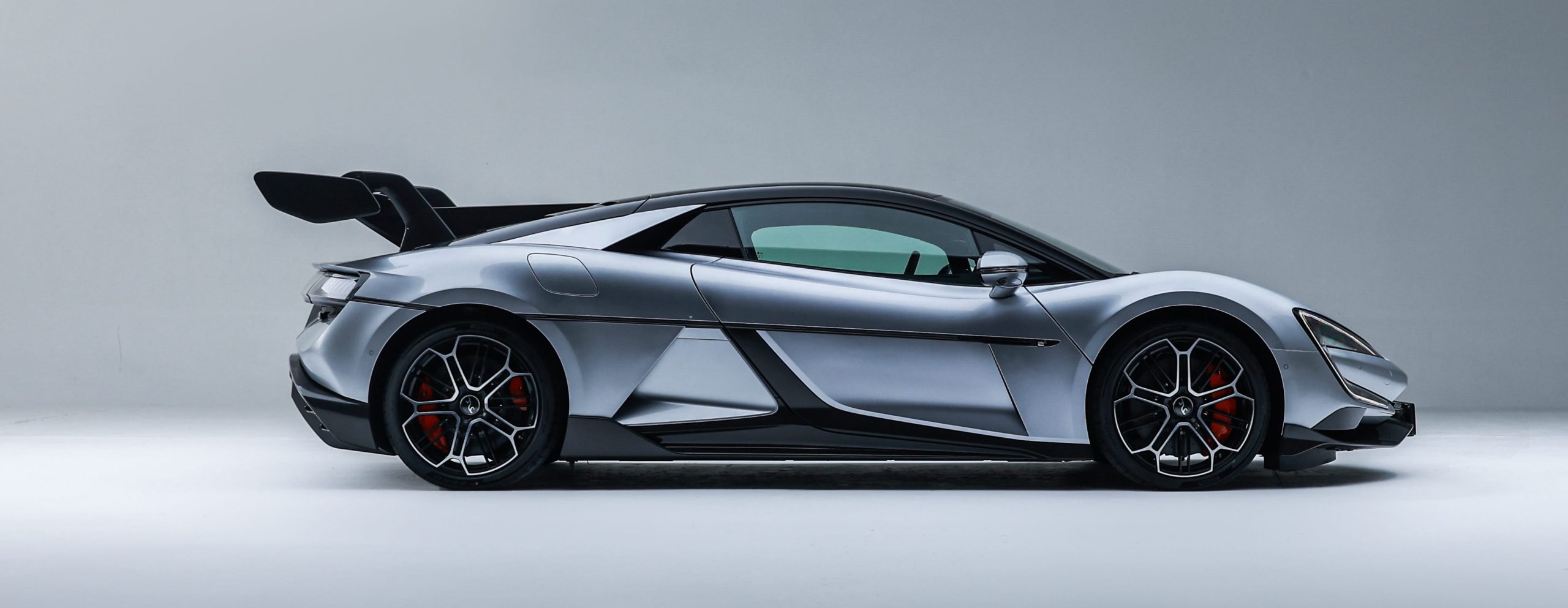
The U9 has an 80-kilowatt-hour lithium iron phosphate, or LFP, battery and 280-mile range on the Chinese Light-Duty Vehicle Test Cycle, which Sam Abuelsamid, principal analyst for transportation and mobility at Guidehouse Insights, says is “notoriously optimistic.” The U9 has an 800-volt architecture and can reportedly use DC fast charging up to 500 kilowatts, with the ability to charge from 30% to 80% in 10 minutes.
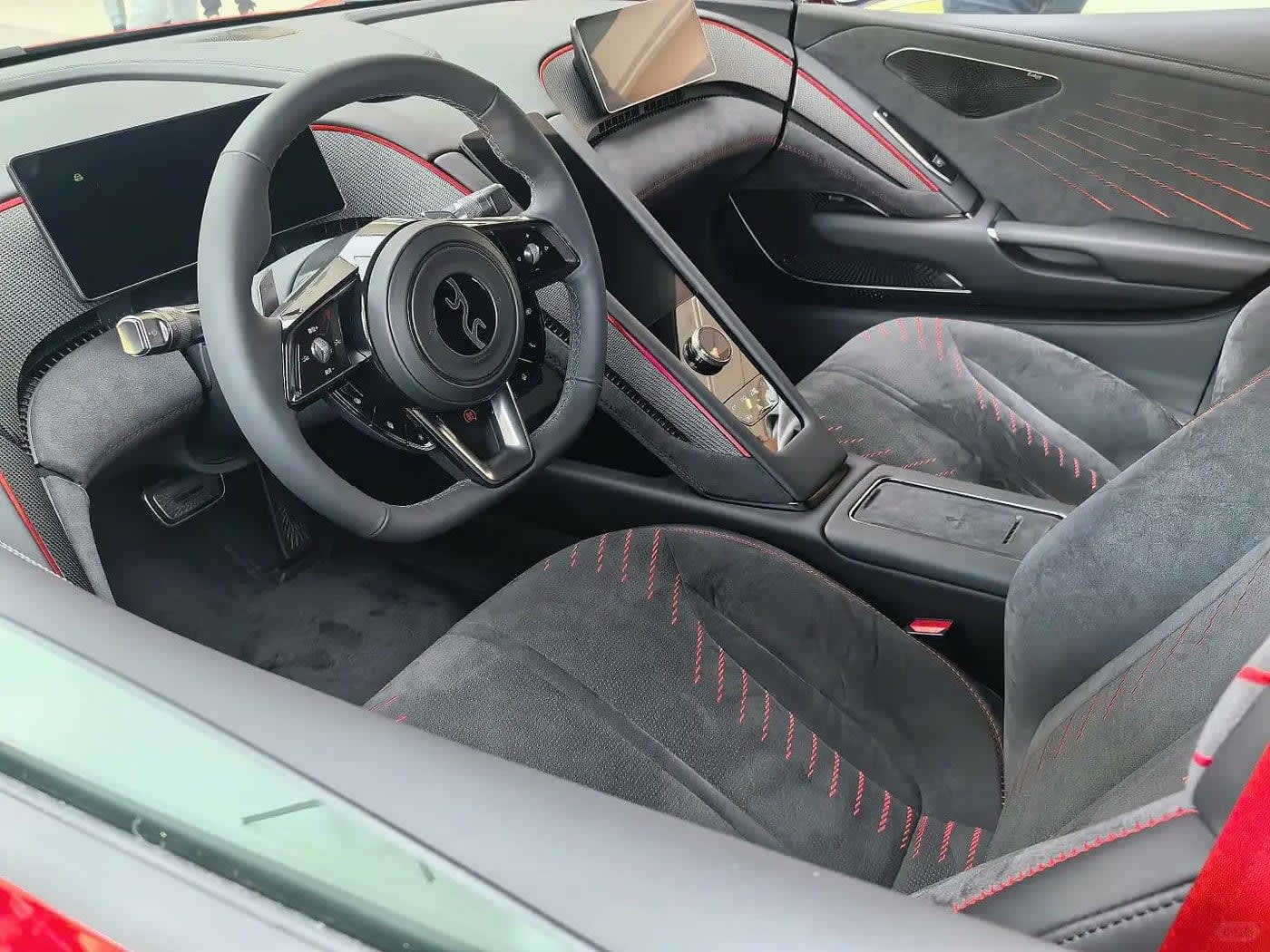
The U9 has familiar supercar styling by the German designer Wolfgang Egger, complete with a pair of upswinging doors. Like other Chinese cars, it has its fanciful side—including four different “dance modes” that make use of its Discus X full active body control. In the event of a flat tire, it can run on three wheels. Other features include an adjustable rear wing and “the smartest supercar cockpit,” with two LCD screens (and provisions for a possible third). The U9 is around 16 feet long, roughly the size of a Lamborghini Aventador.
Yangwang is a new upmarket brand for BYD. The lineup includes the U8, a US$150,000 four-motor plug-in hybrid SUV with 1,184 horsepower and zero to 62 in 3.6 seconds. The U8 can reportedly stay afloat during emergencies. BYD has already delivered more than 3,000 of them. The U7 is a luxury electric four-door sedan, also with four motors, and a reported 1,300 horsepower and up to 500-mile range. The U7 starts at US$140,000.
BYD covers both ends of the market, and offers EVs that sell for less than US$14,000 in the Chinese market. BYD, which has sold some buses in the U.S., is considering production in Mexico, which would potentially be an easy export to the U.S. That prospect is alarming Western automakers. According to a recent report from the Alliance for American Manufacturing: “The introduction of cheap Chinese autos—which are so inexpensive because they are backed with the power and funding of the Chinese government—to the American market could end up being an extinction-level event for the U.S. auto sector.”
Building Chinese cars in Mexico is “an effort to gain backdoor access to American consumers by circumventing existing policies that are keeping China’s autos out of the U.S. market,” the report said. Abuelsamid said that further tariffs are “a distinct possibility,” but not likely until at least 2025 because of Congressional gridlock.
 Copyright 2020, Dow Jones & Company, Inc. All Rights Reserved Worldwide. LEARN MORE




BNW Developments has established a Sydney presence, joining Arada and Sobha Realty among the growing number of UAE developers pursuing Australian buyers and development opportunities.
The Australian leather house has opened an immersive four-day pop-up in Manhattan, unveiling its Bloom Collection and redefining what a product launch can look like.
Strong family financial planning can help reduce taxes and support younger generations. From intrafamily loans and asset gifts to inheritance disclaimers, strategic cooperation can create meaningful financial benefits—when families have the trust and structure to make it work.
4 min
Happy is the family whose members—parents, grandparents and grown children—trust each other enough to cooperate on shared goals, especially financial ones. When that is truly the case, Uncle Sam’s tax rules can help as well.
This matters especially now that mortgage rates are above 7%, and many families are looking for ways to help younger members. If the elders have resources and are confident younger ones can cooperate, a family loan could make homeownership possible while providing the elders with a useful income stream.
Other strategies can actually lower taxes, such as when funding 529 plans or Roth IRAs, or when someone inherits a traditional IRA with required withdrawals larger than they will need.
Here are three strategies useful for functional families.
It is perfectly legal for families to lend money to a relative for a down payment or even a private mortgage.
But it is important not to cut corners, says Ryan McKeown, a CPA with Modern Wealth Enhancement in Minnesota. If the loan is for a down payment, be honest with the mortgage provider and have a formal agreement. The lender owes tax on the interest payments received.
If the loan is for a private mortgage, both sides should have legal representation with a formal written agreement, including payment terms. The lender owes tax on the interest, and the borrower often can deduct it if he or she itemizes.
To avoid IRS trouble, the interest rate shouldn’t be lower than the agency’s Applicable Federal Rate at the time of the loan. Currently that is about 5% for loans longer than nine years; about 4.5% for loans three to nine years; and about 4% for loans three years or less. Currently, traditional mortgage rates are generally above 7%.
In addition, the lender could use the $19,000 annual gift-tax exemption (described below) to forgive some or all of the interest or principal annually. If both lenders and borrowers are married, that is up to $76,000 a year. There is no tax for the borrower on such forgiveness, because it is from a gift.
If you’re going this route, McKeown advises against having a fixed plan to forgive the debt. Instead, do it in one-off letters specifying the amount—and keep careful records. Otherwise the IRS might try to treat the loan as a taxable gift.
Powerful tax-saving moves for families often use gift-tax provisions. Under current law, anyone can give anyone else up to $19,000 of assets annually, free of gift tax. That means a married couple with three grandchildren could give them a total of $114,000 in 2026.
The gifts can be cash or other assets, like stock. For noncash gifts, the cost basis—which is the starting point for measuring taxable gain after a sale—“carries over” to the recipient. So if someone buys $1,000 of stock and gives it away when it is worth $5,000, the recipient’s cost basis is $1,000. If the recipient later sells the shares for $8,000, the taxable gain is $7,000.
Here’s an example showing how gifts could save a family taxes. Grandma is a widow of modest means, while her child and spouse have prospered. The couple has two children, and they want to contribute $5,000 to a 529 college-savings plan for each—but they need to sell stock to do it. Their tax rate on the sale would be 18.8%, and they would need to sell about $11,000 of stock.
However, Grandma’s federal tax rate on the stock sale is 0%. If the couple gives $10,000 of shares to Grandma, she could sell them, pay no tax, and fund the grandchildren’s 529 plans. This saves about $1,000 of tax.
These moves are legal, and they could be used in other ways, such as to help a young person fund a Roth IRA.
But trust among family members is essential: Under the law, givers can’t put conditions on a gift. Grandma could use her stock proceeds to take a cruise, but she makes 529 contributions instead.
Mark Sellner, a retired tax attorney and CPA living in Sarasota, Fla., uses this strategy. His children sell stock he gives them and fund 529 plans for his grandchildren.
The family’s tax savings aren’t huge, but he likes other benefits. The sales by his children don’t boost his adjusted gross income, which in turn could raise his Medicare Irmaa premiums or his 3.8% surtax on net investment income.
Sellner doesn’t worry about his children using the funds for another purpose.
“There can’t be any strings attached to gifts. Of course, it is up to us to decide whether to make them in the future,” he says.
Two caveats: The “kiddie tax” applies to most children under age 24, and it is levied at the parents’ rate on investment income above $2,700 in 2026. Consider this before making gifts to a young person.
Investors who give away stock also forgo the step-up, an important provision that exempts assets held at death from capital-gains tax.
Sellner knows he’s losing a step-up, but says, “The children could use a little more now. Why should they wait 20 years to get it?”
A disclaimer is a highly useful strategy in which one heir renounces an inheritance in favor of another heir. Assuming family members cooperate, this can save taxes.
Here’s one example. Dad died and had a large traditional IRA that he left to Mom. She has enough assets and income to cover her expenses, and she lives in a state with a stiff estate tax. The inherited IRA would put her estate over the threshold.
Also surviving are three young-adult children. If Mom disclaims all or part of Dad’s IRA within nine months of his death, that amount could go directly to the children. They will have 10 years to empty the account, and the family as a whole will likely save estate and income taxes.
Disclaimers have many key details, especially regarding beneficiary documents. Although heirs have great freedom in choosing what assets to disclaim, the rules about who gets disclaimed property are rigid. It is best if the original owner names tiers of heirs so that if one disclaims, the next recipient is clear.
