
To Get What You Want, Try Shutting Up
Silence makes us feel awkward. Deploying it can be a superpower.

By RACHEL FEINTZEIG
Fri, Sep 27, 2024 8:25am 4 min
4 min
4 min


Silence makes us feel awkward. Deploying it can be a superpower.
4 min
To get what you want, try closing your mouth.
A well-deployed silence can radiate confidence and connection. The trouble is, so many of us are awful at it.
We struggle to sit in silence with others, and rush to fill the void during a pause in conversation. We want to prove we’re smart or get people to like us, solve the problem or just stop that deafening, awkward sound of nothing.
The noise of social media and constant opinions have us convinced we must be louder to be heard. But do we?
“I should just shut up,” Joan Moreno , an administrative assistant in Spring, Texas, often thinks while hearing herself talk.
Still, she barrels on, giving job candidates at the hospital where she works a full history of the building and parking logistics. She slips into a monologue during arguments with her husband, even when there’s nothing good left to say. She tries to determine, via a torrent of texts, if her son is giving her the silent treatment. (Turns out he just had a cold.)
“I should have just held it in,” she thinks afterward.
We often talk ourselves out of a win. Our need to have the last word can make the business deal implode or the friend retreat, pushing us further from people we love and things we want.
“Let your breath be the first word,” advises Jefferson Fisher , a Texas trial lawyer who shares communication tips on social media.
The beauty of silence, he says, is that it can never be misquoted. Instead, it can act as a wet blanket, tamping down the heat of a dispute. Or it can be a mirror, forcing the other person to reflect on what they just said.
In court, he’ll pause for 10 seconds to let a witness’s insistence that she’s never texted while driving hang in the air. Sure enough, he says, she’ll fill the void, giving roundabout explanations and excuses before finally admitting, yes, she was on her phone.
For a mediation session, he trained a client to respond in a subdued manner if the other party said something to rile him up. When an insult was lobbed, the client sat quietly, then slowly asked his adversary to repeat the comment. No emotional reaction, just implicit power.
“You’re the one who’s in control,” Fisher says.
To be the boss, “you gotta be quiet,” says Daniel Hamburger , who spent years as the chief executive of education and healthcare technology firms.
He once sat across the negotiating table from an executive who was convinced his company was worth far more than Hamburger wanted to pay to acquire it. What Hamburger desperately wanted to do was explain all the reasons behind his math. What he actually did was throw out a number and then shut his mouth.
Soon they were shaking on a deal.
Hamburger, who retired last year and now sits on three corporate boards, also deployed strategic silence when running meetings or leading teams. If the boss chimes in first, he says, some people won’t speak up with valuable insights.
Days into one CEO job, Hamburger was confronted with two options for rewriting a piece of the company’s software. He didn’t answer, and instead turned the question back on the tech team.
“People were like, ‘Really? Are you really asking?’” he says. By morning, he had a 50-page deck from the team outlining the plan they’d long thought was best. He left them to it, and the project was done in record time, he says.
Staying mum can feel like going against biology. Humans are social animals, says Robert N. Kraft , a professor emeritus of cognitive psychology at Otterbein University, in Ohio.
“Our method of connecting—and we crave it—is talking,” he says, adding that it excites us, raising our blood pressure, adrenaline and cortisol.
For years, Kraft assigned his students a day without words. No talking, no texting. Some of the students’ friends reported later that they’d been unnerved. After all, silence can be a weapon.
Many students also found that when forced to listen, they bonded better with their peers.
When we spend conversations plotting what to say next, we’re focused on ourselves. Those on the receiving end often don’t want to hear our advice or semi related anecdotes anyway. They just want someone to listen as they work through things on their own.
Without pauses, we’re generally worse speakers , swerving into tangents or stumbling over sounds.
Michael Chad Hoeppner , a former actor who now runs a communications training firm, recommends an exercise to get used to taking a beat. Ask one question out loud, then draw a big question mark in the air with your finger—silently.
“That question mark is there to help you live through that fraught moment of, ‘I really should keep talking,’” Hoeppner says.
At a cocktail party or in the boardroom, you can subtly trace a question mark by your side or in your pocket to force a pause.
Fresh out of college, Kyler Spencer struggled through meetings with potential clients. Some sessions stretched to two hours and still didn’t end in a yes.
The financial adviser, based in Nashville, Ill., realised he was rambling for 15-minute stretches, spouting off random economic facts in an attempt to sound savvy and experienced.
“I basically just bulldozed the meeting,” says Spencer, now 27.
He started meditating and doing breathing exercises to calm his nerves before meetings. He now makes sure to stop talking after a minute or two. The other person will jump in, sharing about their life, fears and goals. It’s information Spencer can use to build trust and pitch the right products.
His client list soon started filling up, and happy customers now send referrals his way.
“It’s amazing,” he says, “what you learn when you’re not the one talking.”
 Copyright 2020, Dow Jones & Company, Inc. All Rights Reserved Worldwide. LEARN MORE




The Australian leather house has opened an immersive four-day pop-up in Manhattan, unveiling its Bloom Collection and redefining what a product launch can look like.
Following the successful launch of its Palais Collection, MAISON de SABRÉ has unveiled a new modular handbag system offering more than 720 styling combinations.
Investors are bracing for a bumpier fall stock market due to shifting odds of a Federal Reserve interest-rate increase and other macro challenges.
3 min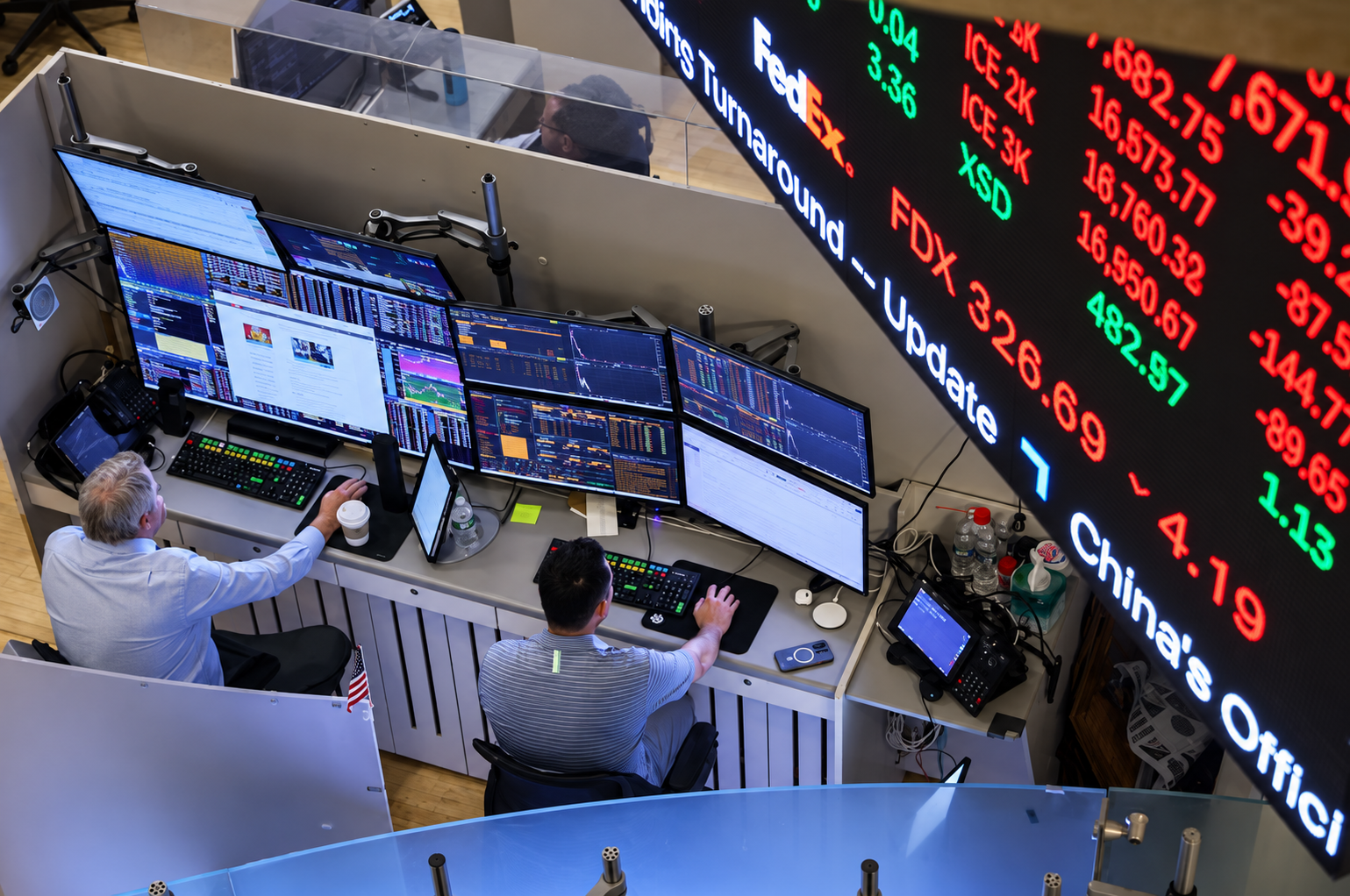
The stock market had a decent summer. Investors are bracing for a bumpier fall.
In the past couple of months, equity investors cheered soaring profits at big companies, shrugged off jitters in the bond market and nudged megacap tech shares back near records.
Now, as the post-Labor Day stretch begins, a number of new challenges lie ahead: ever-shifting odds of an interest-rate increase from the Federal Reserve. Sky-high expectations after a stunning earnings season. The persistent threat of higher consumer prices as fighting in the Middle East drags on.
“You’re moving from this earnings-driven market to this macro-driven market with the Fed, inflation and interest rates in focus,” said Keith Lerner, chief investment adviser for Truist Advisory Services. “It tends to be a choppier period.”
Historically, every major U.S. stock index experiences its worst average return in September. The Dow Jones Industrial Average has slid an average 1.1% in the ninth month of the year, in data that dates back to the 19th century. The S&P 500 has seen the same average decline—and for every September dating back to 1928, the benchmark ends the month lower more than half of the time.
Analysts caution against reading too much into those seasonal patterns. But in recent weeks, new reasons for investor caution have emerged. One of the largest: the looming threat of an interest-rate increase from the Fed, which announces its next policy decision on Sept. 16.
Chairman Kevin Warsh’s decision to ditch forward guidance and take more of his cues from markets has muddied the waters for investors when it comes to monetary policy. That has left traders scouring Fed governor speeches and economic-data reports for clues on the central bank’s next move.
“There’s going to be a lot of eyes on those numbers,” said John Luke Tyner, head of fixed income and portfolio manager at Aptus Capital Advisors.
The past couple of weeks offered just one example of how frequently those expectations can change. After Warsh struck a hawkish tone during remarks on Aug. 28, the odds of a hike at the Fed’s next meeting jumped from 35% before the speech to 58%, according to CME FedWatch data.
On Thursday, Fed governor Christopher Waller made a case for leaving rates where they are. Interest-rate futures showed coin-flip odds between a hike and a hold. Then Friday’s robust jobs report amped up rate-hike bets once more, back to a roughly 60% chance of higher rates after the meeting.
“Rates have really been driving the car for equities the last few weeks,” said Ross Mayfield, an investment strategist at Baird.
That uncertainty comes as an unruly bond market could put pressure on stocks. Treasury yields have marched higher for much of the summer, driven by concerns about rising oil prices, growing U.S. budget deficits and a deluge of tech-company bonds now competing for investors’ cash. Last week, the rout went global, pushing yields to multiyear highs in Japan, Germany and the U.K.
Higher bond yields can drag on stock prices and lift borrowing costs for companies and consumers across the economy.
Rising prices remain the top concern for bond traders, and continued fighting between the U.S. and Iran has done little to ease those worries. The national average price of diesel climbed to a record of $5.850 on Friday, according to AAA. That is up from $3.712 a year ago.
Investors will get more insight on the path of prices this week, with the much-awaited consumer-price index report due Friday and a reading on producer prices Thursday.
With another blockbuster earnings season in the books, some analysts have also warned that any boost from the third-quarter reports due in the coming months could be minimal. Back-to-back quarters of standout profits have raised expectations and made it especially difficult to impress traders. Custom-chip company Broadcom, for example, said Wednesday that it more than tripled its earnings and nearly doubled its revenue. Shares slipped 2.7% the next session.
Many analysts note there are plenty of reasons not to panic. The economy is in impressive shape, thanks to a healthy labor market and the rippling effects of the artificial-intelligence investment boom. Profits are booming at America’s biggest companies. The Cboe Volatility Index has dropped to its lowest levels of 2026. Credit spreads are tight, a sign bond investors aren’t concerned about economic conditions that could hurt companies.
But the mood has shifted from the euphoria that felt tangible when the Nasdaq was notching back-to-back records early this summer. The question, Mayfield said, is whether the fundamentals that have bolstered the bull market so far can stretch the rally into 2027.
“There are more anxieties or uncertainties about the backdrop,” he said. “It does feel like a transitional moment.”
