Freddie Mercury’s London Home Selling for the First Time Since He Lived There - Kanebridge News
Share Button

Freddie Mercury’s London Home Selling for the First Time Since He Lived There

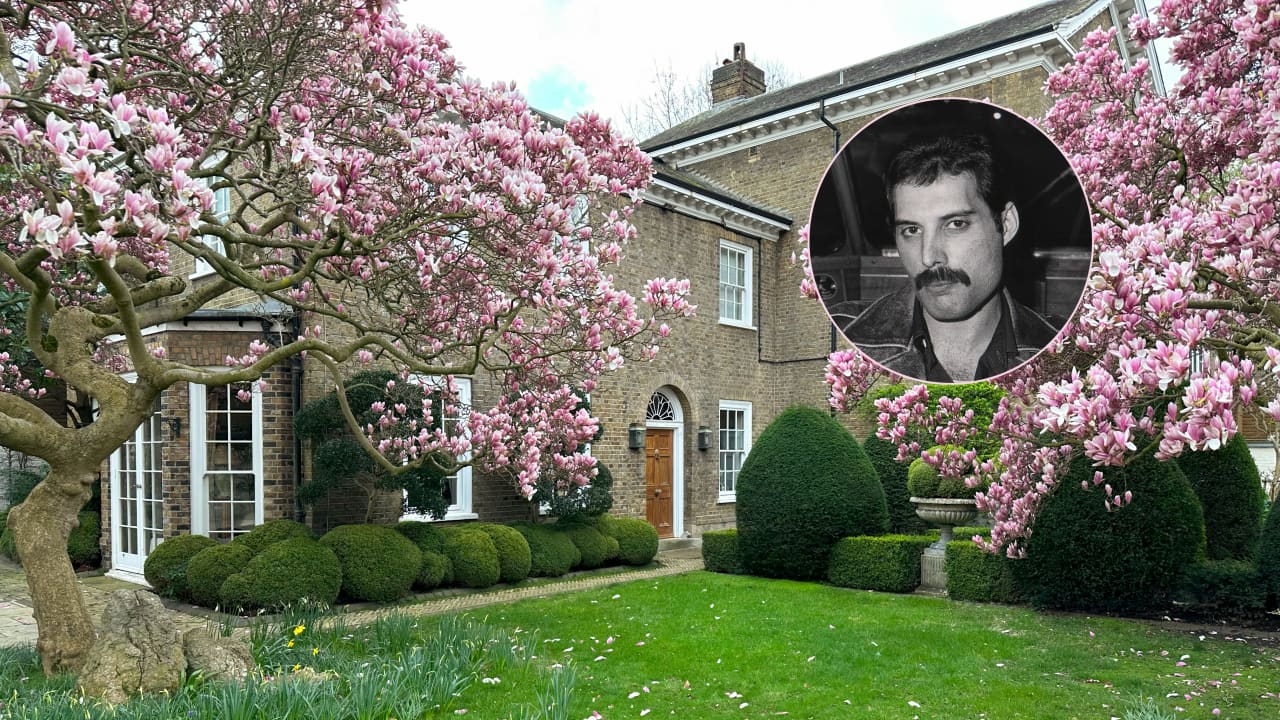
Garden Lodge, in the capital’s posh Kensington, was Mercury’s much-loved home from 1980 until his death in 1991

By LIZ LUCKING
Tue, Feb 27, 2024 8:53amGrey Clock 3 min

The eclectic London home that Freddie Mercury designed to fit his eccentric lifestyle  has hit the market for offers over £30 million (US$38 million).

Garden Lodge, in the capital’s posh Kensington, was Mercury’s much-loved home from 1980—when on a first viewing he decided to buy the property on the spot—until his death in 1991, at which point the Queen frontman’s residence and everything in it was bequeathed to his one-time fianceé and close friend, Mary Austin.

In the 30 years since, Austin has taken “meticulous” care of the home, according to Knight Frank, which listed the walled and private property on Monday.

“This house has been the most glorious memory box, because it has such love and warmth in every room,” Austin, 72, said in a statement. “It has been a joy to live in, and I have many wonderful memories here. Now that it is empty, I’m transported back to the first time we viewed it.”

Knight Frank

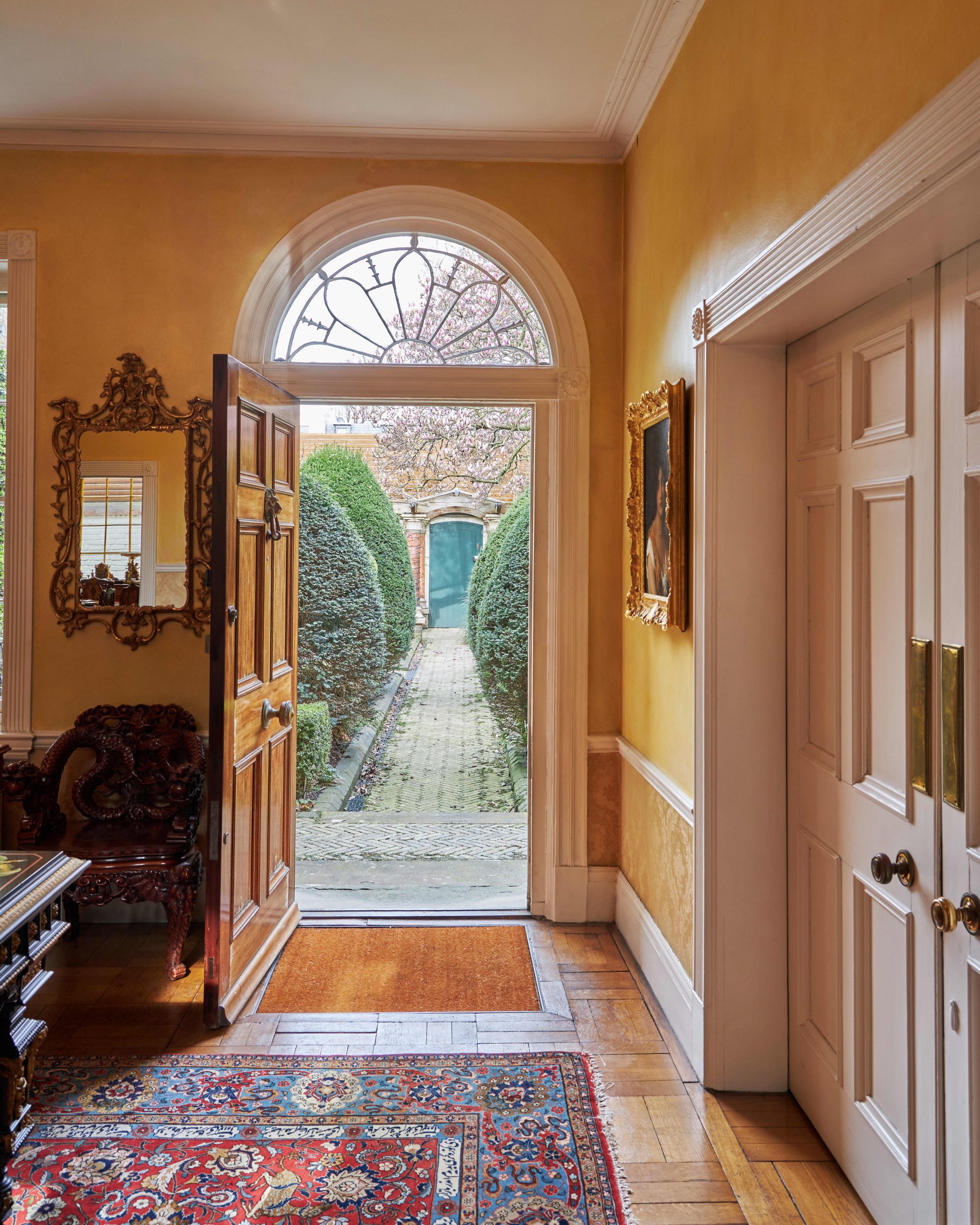
“Ever since Freddie and I stepped through the fabled green door, it has been a place of peace, a true artist’s house, and now is the time to entrust that sense of peace to the next person,” she said.

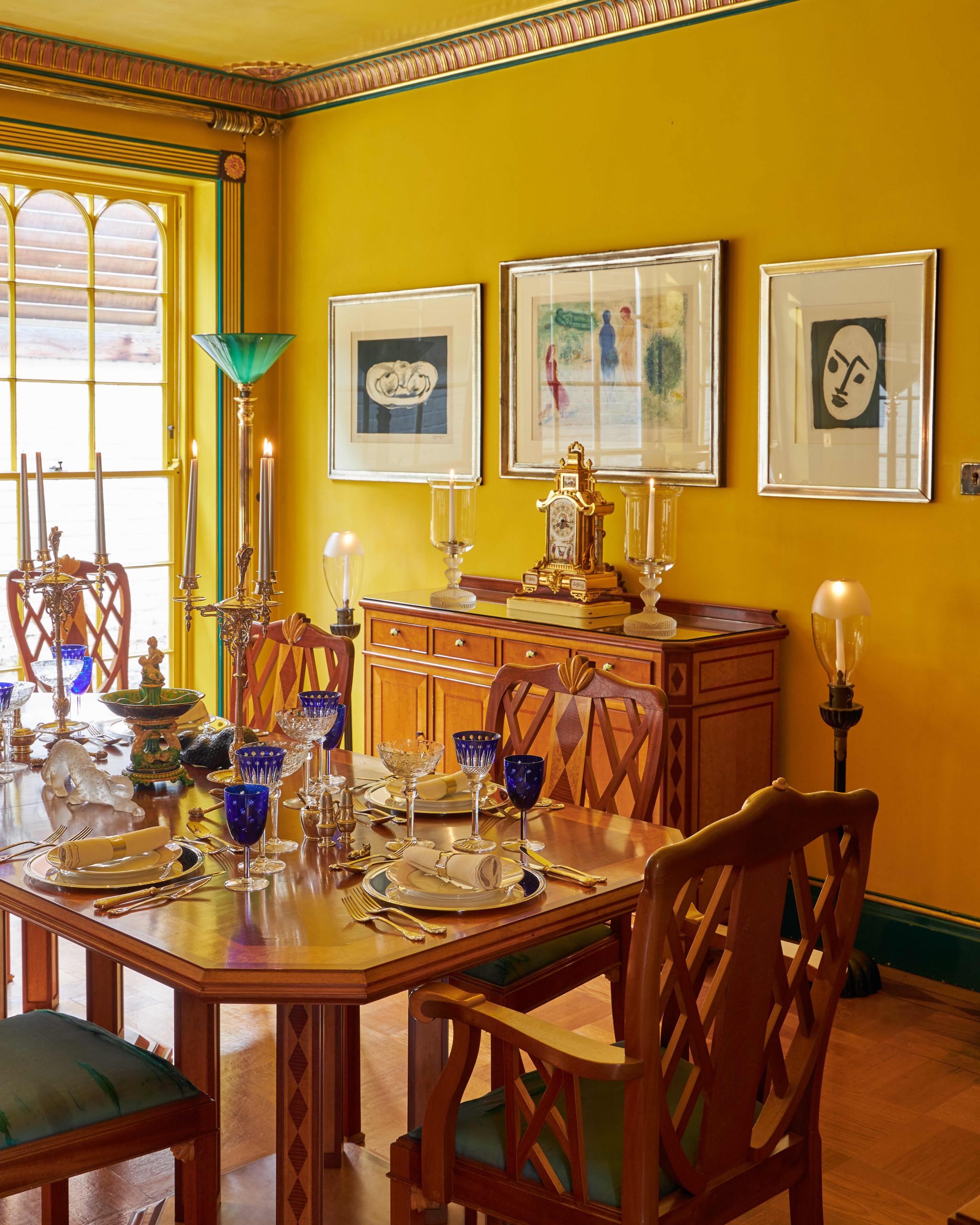
Mercury designed the house to be a memorable, inviting place that reflected his personality, case in point, the dining room, which he painted bright yellow—his favourite colour.

It also served as a place to showcase his collection of beautiful objects and art from around the world— much of which was sold at auction last year .

The home’s most “spectacular” space is the double-height drawing room, complete with a wraparound gallery that serves as a library and bar overlooking the room and Mercury’s grand piano, below.

There’s also the Japanese room, a sitting room that leads out to the home’s Japanese-style garden, which Mercury helped to create, complete with magnolia trees, topiary and water features.

Knight Frank

The primary bedroom suite, meanwhile, is lined with floor-to-ceiling mirrored doors, behind which Mercury stored his clothes and stage costumes.

“The sale of Garden Lodge presents a once-in-a-lifetime opportunity to own a significant property combined with a piece of cultural history, the beloved home of an icon,” said Paddy Dring, Knight Frank’s global head of prime sales and joint head of its private office.

“Having been carefully preserved with love and respect over the last three decades, we expect that the exceptional provenance of the property will be incredibly alluring to buyers across the world,” he said. “Notwithstanding the legacy of the house, it is very rare that unmodernised homes of this scale, set in such beautiful mature gardens come to market, so it is certainly an exciting prospect for any future purchaser.”

Mercury, born Farrokh Bulsara, formed Queen, one of the best-selling bands of all time,  in 1970. Diagnosed with AIDS in 1987, Mercury died from complications from the disease at the age of 45, the day after publicly announcing his diagnosis.


MOST POPULAR

Rugged coastal drives and fireside drams define a slow, indulgent journey through Scotland’s far north.

A haven for hedge-fund titans and Hollywood grandees, Greenwich is one of the world’s most expensive residential enclaves, where eye-watering prices meet unapologetic grandeur.

Related Stories
Property
Wealth on the rise as billionaires reshape Australia’s property landscape
By Staff Writer 23/04/2026
Property
Late Swarovski Billionaire’s Private Island Near Venice, Italy, Asks €24 Million
By Casey Farmer 23/04/2026
Property
INSIDE ONE OF THE WORLD’S MOST EXCLUSIVE POSTCODES
By Jim Motavalli 07/04/2026

Australia’s wealthy class is expanding fast, and Knight Frank says that a surge in billionaires is reshaping the nation’s luxury property market.

By Staff Writer
Thu, Apr 23, 2026 3 min

Australia’s luxury property market is being quietly reshaped by one of the most significant wealth expansions in the world. 

According to Knight Frank’s latest Wealth Report, the country’s billionaire population is set to grow by 77 per cent over the next five years, rising from 48 to 85 individuals. 

That surge sits within a broader wave of wealth creation. Ultra-high-net-worth individuals, those with more than US$30 million, are forecast to increase by nearly 60 per cent to over 26,000 Australians by 2031. 

Globally, the pace is accelerating. The report reveals that 89 new ultra-wealthy individuals are created every day, a figure that underscores a structural shift in capital formation rather than a cyclical upswing. 

For luxury property markets, this is not just a headline number. It is a demand driver. 

Australia’s wealth story is increasingly underpinned by diversification across resources, finance, technology and services, creating a depth of private capital that is both mobile and strategic. 

And mobility is key. The ultra-wealthy are no longer tied to a single market. Instead, they are operating across multiple global hubs, maintaining footholds in cities like London, New York and Singapore, while using Australia as a stable base. 

In this environment, real estate becomes less about shelter and more about positioning. Trophy assets remain desirable, but capital is increasingly being deployed across the full risk spectrum, from long-term holds to value-add opportunities. For Australia, the implications are clear. As wealth expands, so too does the expectation of product, and the locations that can attract it. 

The billionaire effect  

While property remains central to wealth preservation, the latest data shows that capital is increasingly spreading across luxury asset classes, albeit with a more disciplined approach. 

Knight Frank’s Luxury Investment Index recorded a modest 0.4 per cent decline in 2025, signalling a stabilisation phase after several years of correction. 

But beneath that headline number is a more telling shift. Collectors are moving away from speculative buying and toward assets defined by rarity, provenance and cultural significance. 

Impressionist art led the market, rising 13.6 per cent, buoyed by landmark sales including a US$236 million Klimt painting. Watches also performed strongly, up 5.1 per cent, driven by continued demand for brands like Patek Philippe and Rolex. 

At the same time, more volatile categories have corrected. Whisky values fell 10.9 per cent, while parts of the fine wine market have softened following pandemic-era highs. 

Perhaps the most notable trend is behavioural. Younger investors are entering the market through fractional ownership platforms, gaining exposure to high-value assets that were once out of reach. 

For property, the parallels are clear. The same focus on scarcity, narrative and long-term value is increasingly shaping buying decisions at the top end of the residential market. 

Global wealth  

The growth in billionaires is not just increasing demand, it is changing where that demand is directed. 

In Australia, Brisbane has emerged as one of a handful of global cities experiencing rapid change in its luxury positioning. The city’s transformation is being driven by infrastructure investment and the 2032 Olympics, with top-end apartment prices rising from around US$6 million to more than US$10 million in just 12 months. 

Luxury price growth has remained steady, with Brisbane rising 2.1 per cent in 2025, while the Gold Coast recorded 2.8 per cent. 

At the same time, buying power is tightening. US$1 million now buys 5 per cent less in Brisbane than it did five years ago, reflecting the upward pressure on prime markets. 

The trend is not confined to capital cities. Regional lifestyle markets are also capturing attention. Geelong’s waterfront has been identified as one of the world’s hottest luxury residential markets, driven by a combination of coastal amenity, infrastructure and relative value. 

In these markets, pricing is no longer the sole driver. Lifestyle, accessibility and long-term growth are increasingly shaping buyer decisions, particularly among globally mobile wealth. 

Alternative luxury assets  

Beyond residential property, high-net-worth individuals are continuing to diversify into alternative assets that combine lifestyle and investment potential. 

One of the most compelling examples is vineyard investment. Knight Frank’s Global Vineyard Index highlights the Barossa Valley as one of the best-value wine regions globally, where US$1 million can secure more than 18 hectares of land. 

Despite a 10 per cent decline in land values over the past year, the broader outlook remains positive, particularly as the global wine industry shifts toward premiumisation. 

This “trading up” trend is seeing consumers favour higher-quality, provenance-driven wines over mass-market products, reinforcing the long-term appeal of established regions like the Barossa and Eden Valleys. 

For investors, the appeal lies in the intersection of lifestyle and capital preservation. Vineyard assets offer not only production potential, but also a narrative — something increasingly valued in a market where experience and authenticity carry weight.