
Cosmetic Surgeons Are Building L.A. Megamansions
And the results are over the top.

By Katherine Clarke
Mon, May 10, 2021 11:27am 6 min
6 min
6 min


And the results are over the top.
6 min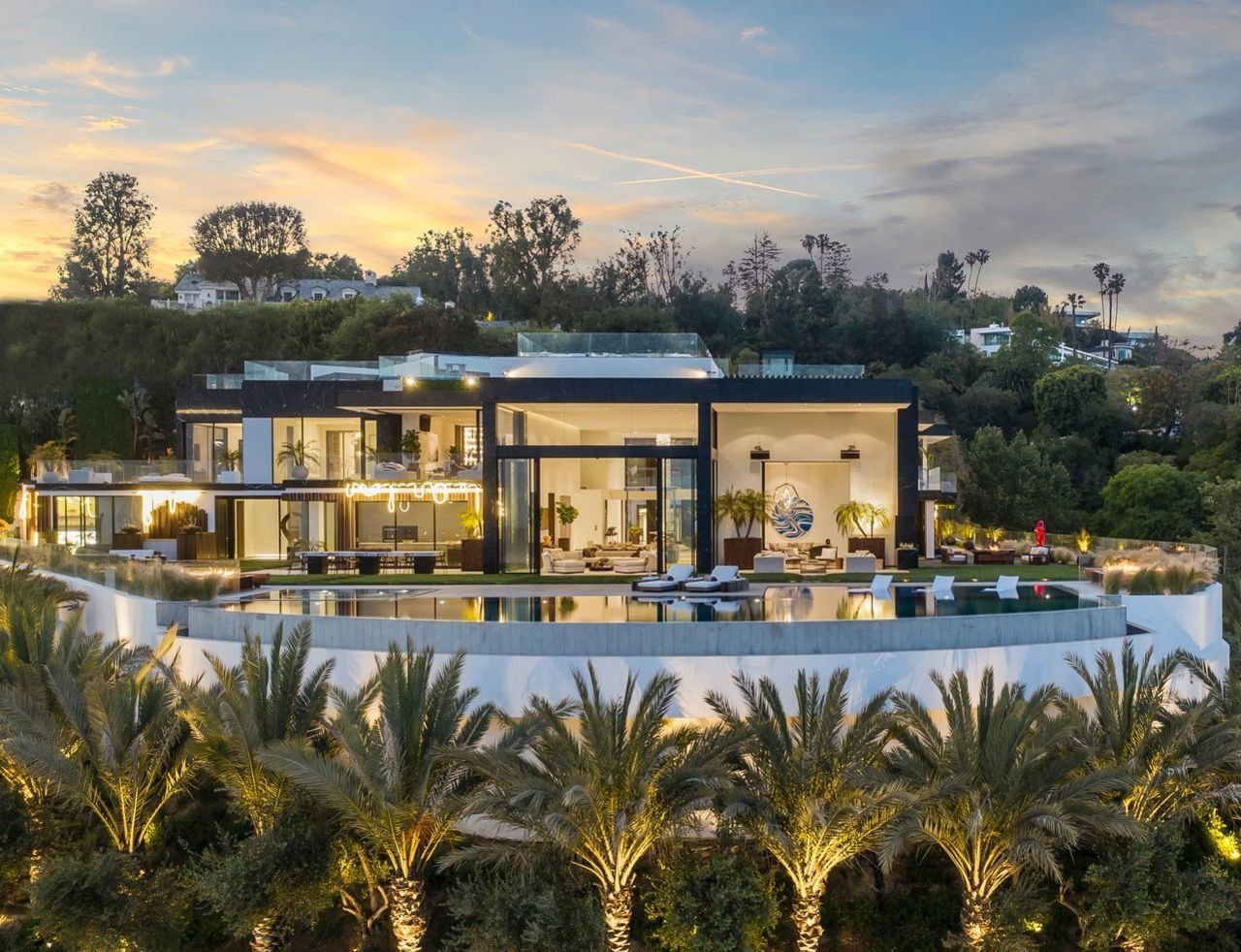
It could only happen in Los Angeles: Celebrity plastic surgeons are getting into the megamansion-building business.
The latest entrant to the market is Alex Khadavi, a 48-year-old dermatologist known for everything from Botox to buttock-enhancement procedures as well as for a clientele that has included singer Lance Bass and actor David Hasselhoff. Dr. Khadavi is listing his recently completed Bel-Air megamansion for $87.777 million, making it one of the highest-priced properties to have gone on the market in recent months.
Dr. Khadavi joins the likes of Raj Kanodia, doctor to the Kardashian clan and so-called “King of L.A. Rhinoplasties,” and Paul Nassif, a facial-plastic surgeon known for his role in the reality-television series “Botched,” in diverting their attention to the high-end development game. Dr. Kanodia first listed his Bel-Air megamansion for $180 million in 2018, while Dr. Nassif is listing a nearly completed mansion in the same area for US$32 million.
Dr. Khadavi—whose jet-black eyebrows, chiselled features and perfectly coiffed hair allows him to seamlessly blend in with his clients on his Instagram account—says he got carried away with the project. He says he paid US$16 million for the existing property in 2013 and had planned to spend roughly $10 million more on a new glassy contemporary home. Instead, he devoted seven years and roughly $US30 million to the more-than-1950-square-metre compound.
“It’s like when you go to a car dealership to buy a Toyota and they show you a Ferrari or a Lamborghini,” he says of choosing the materials and finishes. “It’s like, ‘Hey, I want that one!’ You can’t pass it up.”
The result is over-the-top, even for Los Angeles. Known as “Palazzo di Vista,” the modern seven-bedroom contemporary sits behind enormous mirrored-steel gates on an elevated parcel of land with 360-degree views spanning from the San Gabriel Mountains to the Channel Islands.
In the middle of the grand foyer, a push of a button reveals a surprise: The floor opens up to reveal a DJ platform on a hydraulic lift. Push another button, and smoke machines send fog throughout “the cube”—the surrounding glassed-in living room area that also has a glass-bottomed bridge overlooking the space.
In the pool outside, several powerful jets are set to automatically begin pumping the water in time with music, so guests in the water can feel the bass. The pool also is the setting for a digital show that Dr. Khadavi likens to Disneyland’s elaborate “World of Color” attraction. A rotatable 3-D laser projector on the roof casts light in a rhombic-shape up to 153sqm over the pool.
The purpose of the light show isn’t to project princesses; it is designed to display the latest art-world craze: NFT artwork. An NFT, which stands for “nonfungible tokens,” is a digital asset that serves as a kind of deed to prove ownership of various digital artifacts, like works of art.
In addition to the NFT pool display, the home also includes a “multisensory” NFT art gallery comprising seven indoor large-screen media displays dotted throughout the house. Valued at $7 million, the art collection is also available for sale and includes pieces by Ghost Girl—a 3-D artist who offers visual experiences for “VJing,” a kind of real-time visual performance—and Bighead, a record producer and DJ who worked on the production of the 2017 hit “Gucci Gang” by hip-hop artist Lil Pump.
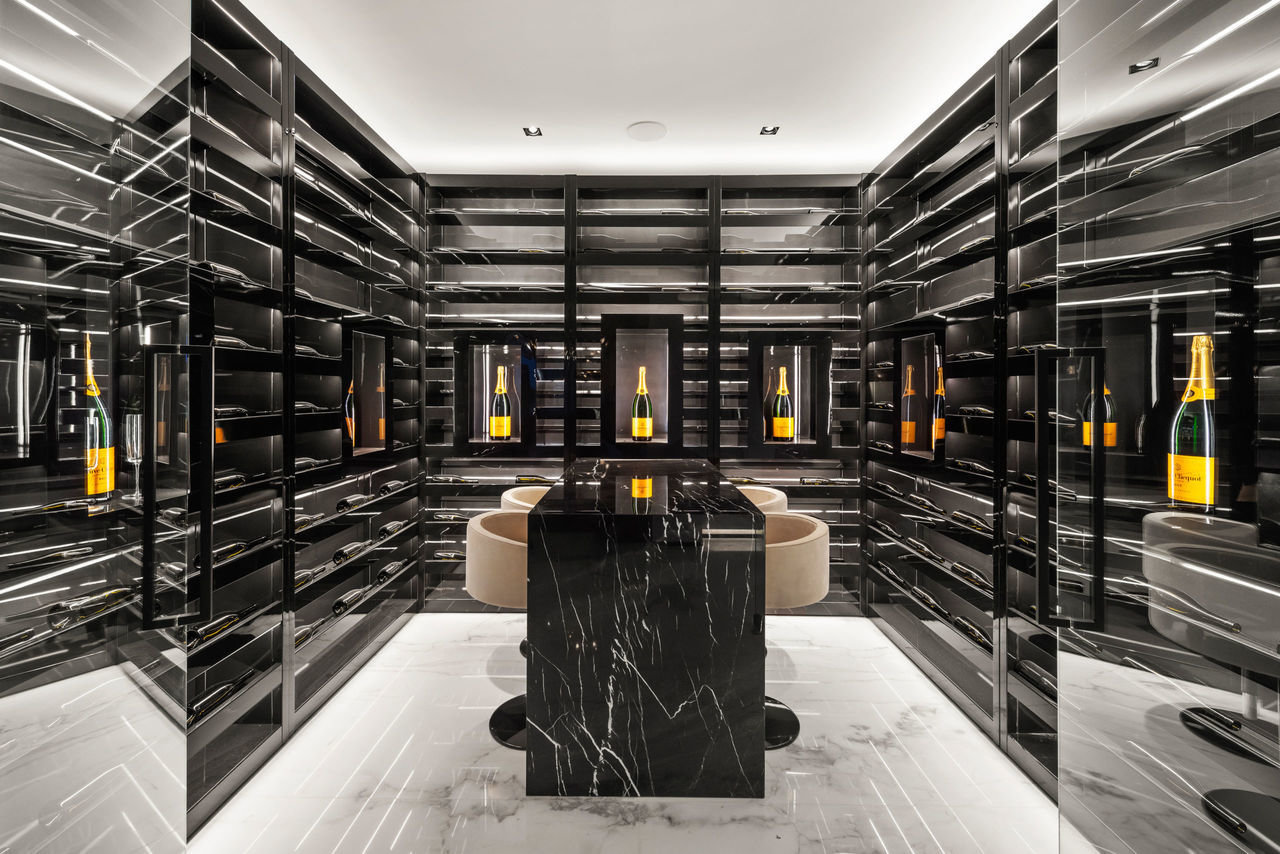
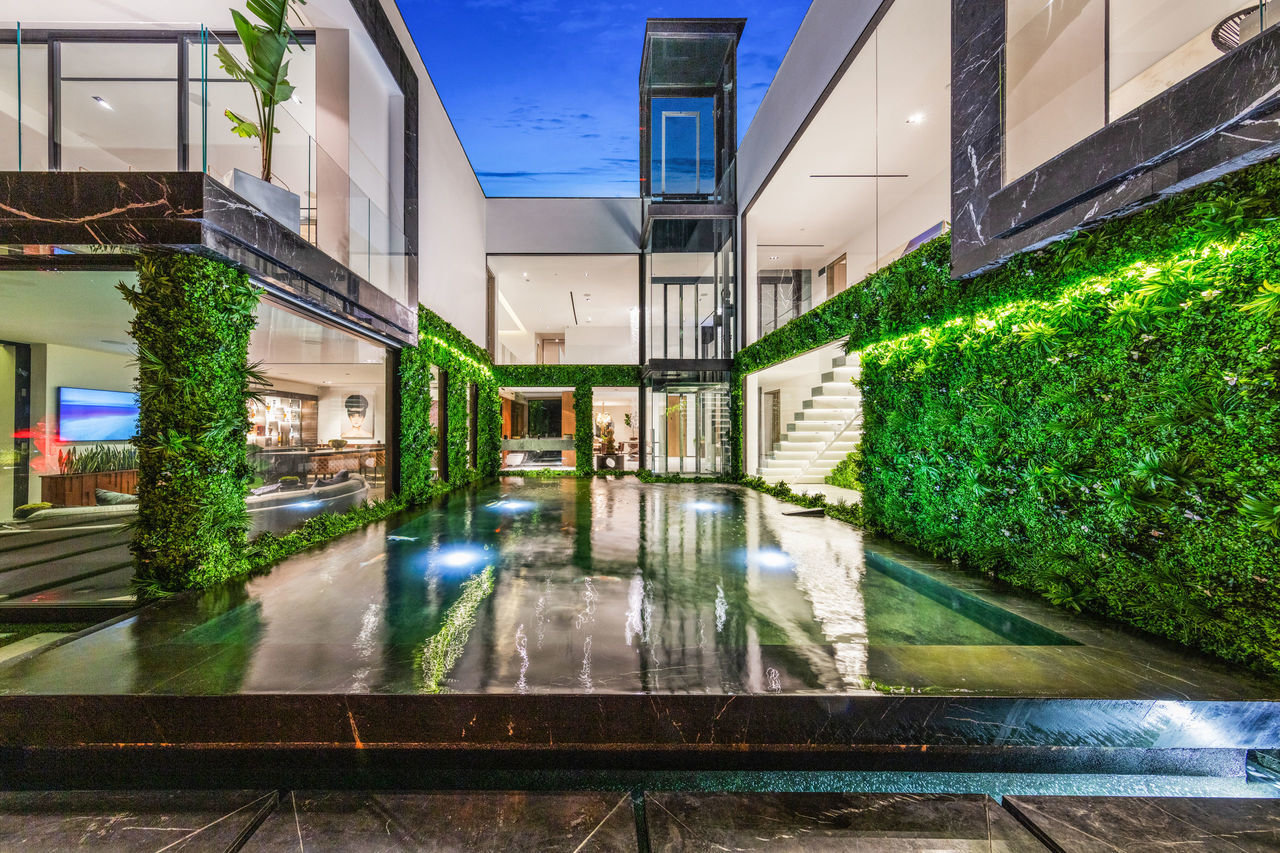
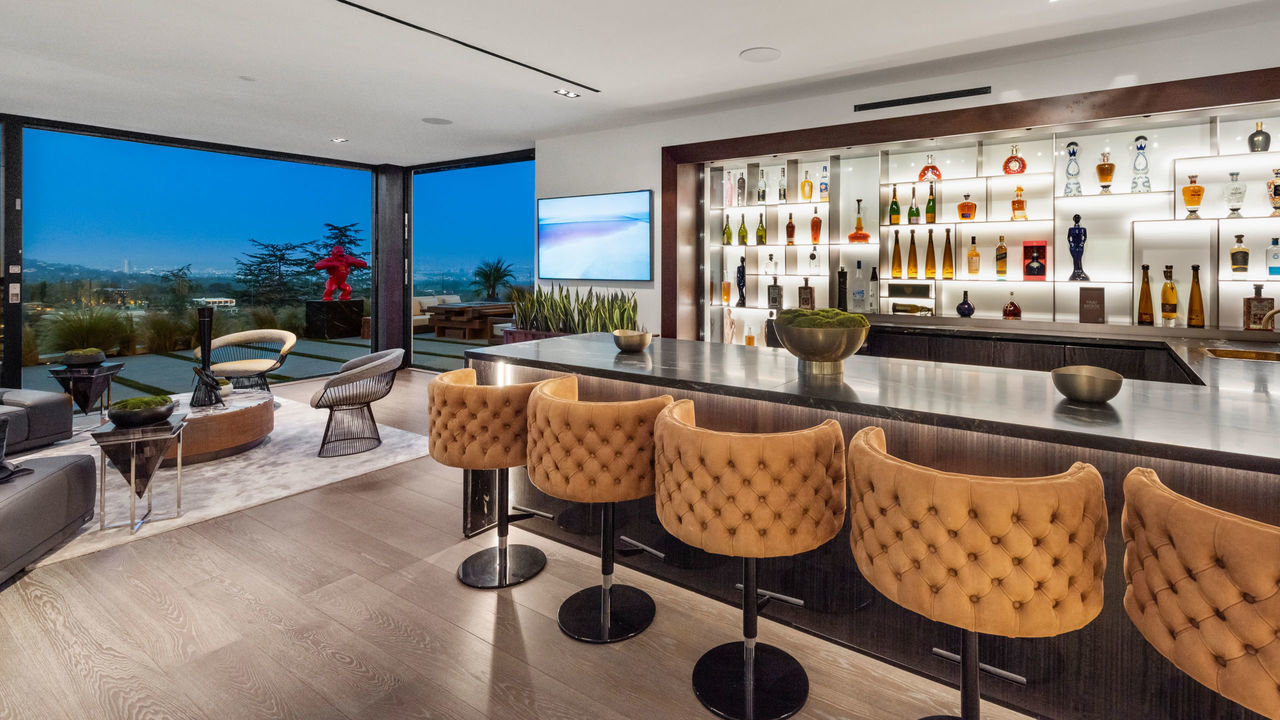
The home also includes a glass elevator that is positioned to look as though it is plunging into a koi pond as it heads to the basement. There is also a formal dining room, a Champagne-tasting room, a movie theatre, a massage room, a car museum and a detached guesthouse with an outdoor tequila bar, according to listing agents Aaron Kirman of Compass and Mauricio Umansky of the Agency. Dr. Khadavi planted 56 Moroccan date palm trees around the perimeter of the property for privacy.
Dr. Khadavi, who oversees two dermatology practices in Los Angeles, says his pursuit of perfection became all-consuming. Within the first year, he had fired his architect. Soon after, he replaced his contractor and got rid of his interior designer. “I’ve pretty much been doing it myself,” he says. “I tell people I got a degree in interior design from Pinterest.”
There were other sources of inspiration. The doctor says the proportions of the house were inspired by the “golden ratio” of Italian mathematician Fibonacci. The sevens in the asking price are a nod to Dr. Khadavi’s favourite number; he and his family moved to the U.S. from Iran when he was 7 to escape the revolution.
No expense was spared. “Instead of going for the $10-a-square-foot marble, I went for the $150 to $200 a square foot marble,” Dr. Khadavi says. “This property deserves the best.”
When it came to refining the aesthetics of the house, the dermatologist says he drew on his work. “When I do injectables in people’s faces… I always look and see what I could do above and beyond to make this person better, “ he says. “Every person is beautiful, you have to make them more beautiful.”
Plastic surgeons like Dr. Khadavi are among a larger group of high-net-worth individuals who piled into Los Angeles’s luxury housing development space over the past few years. With the market heating up in the early 2010s, many wealthy people with well-positioned parcels of land began building properties geared toward foreign buyers and billionaires, says Stephen Shapiro of Westside Estate Agency, who is not involved in the home. Suddenly, everyone was a developer, including those with limited or no real-estate experience. That boom resulted in an oversupply of spec homes.
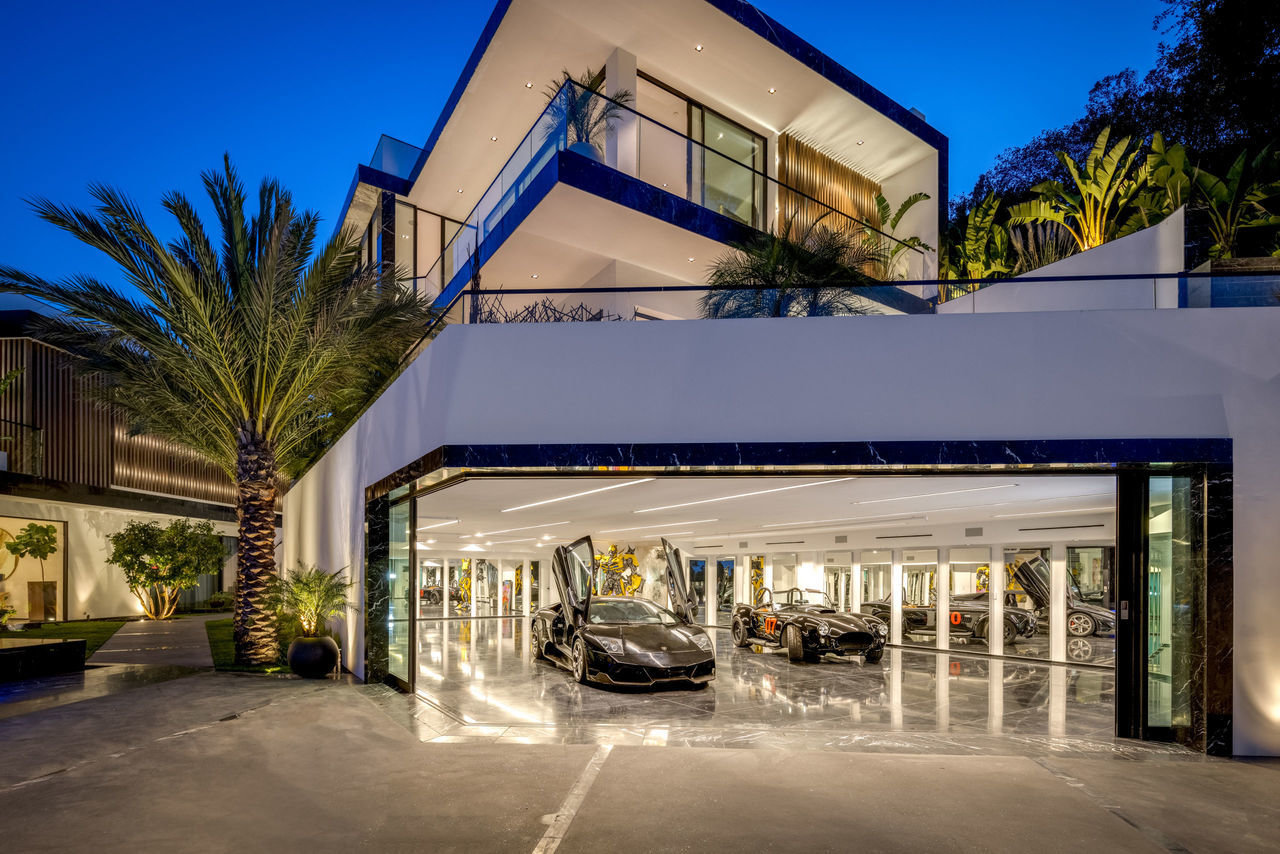
For some of these surgeons, building a distinctive architectural home is a way to express themselves in a new way. “One of the reasons I built [my house] was to express my artistic vision through another medium, in addition to the scarless rhinoplasty and facial enhancement,” Dr. Kanodia says.
For his part, Dr. Nassif says he found that the patience and attention to detail he honed in his surgery work proved useful in real estate. “You have to look at everything with very scrutinous glasses in surgery,” he says. “I’m doing the same thing with the house.”
In real estate, like in surgery, it’s wise to expect the unexpected, Dr. Nassif says. “You’re dealing with problems all the time,” he says. “An issue comes up with a contractor or you can’t get marble into the Port of California because of Covid delays. It’s never as easy as you think it would be.”
The rush of new contemporary spec homes built in the Los Angeles area has put downward pressure on prices. While Dr. Nassif says he’s had significant interest in his home since listing it earlier this year, Dr. Kanodia recently slashed the asking price of his home to US$99 million from US$180 million. Developers like Nile Niami, known widely as the king of Los Angeles spec homes, handed the keys over to his lenders on at least one project and is facing default on others, The Wall Street Journal has reported.
The spiralling costs of Dr. Khadavi’s project also had consequences. While he initially thought he might live in the property, Dr. Khadavi says he is now selling it largely because he can’t afford to keep it. It’s also too large for him, his girlfriend and his Goldendoodle Cheetos. “I don’t have a large family, and I don’t have the financial capability to enjoy the house,” he says. “I borrowed a lot of money to get it to this level, and I can’t afford living in it.”
Anyone living in the mansion would “need to probably have a couple of butlers and a couple of maids,” he says.
Mr. Umansky says the house is an entertainer’s paradise, and he is confident he will find a buyer looking for that party lifestyle.
“In order to be great you have to dare to be bad. You have to take risks,” Mr. Umansky says, noting that cookie-cutter houses don’t stand out in a crowded market. “There are these tech and cryptocurrency guys who are still young and who want to have fun.”
Reprinted by permission of The Wall Street Journal, Copyright 2021 Dow Jones & Company. Inc. All Rights Reserved Worldwide. Original date of publication: May 8, 2021.
 Copyright 2020, Dow Jones & Company, Inc. All Rights Reserved Worldwide. LEARN MORE




BNW Developments has established a Sydney presence, joining Arada and Sobha Realty among the growing number of UAE developers pursuing Australian buyers and development opportunities.
The Australian leather house has opened an immersive four-day pop-up in Manhattan, unveiling its Bloom Collection and redefining what a product launch can look like.
A vibrant 1954 Palm Springs home featuring eight colorful murals by late artist Shawn Savage is on the market for $2.295 million. The 2,237-square-foot property features bold hot-pink doors, three bedrooms, a pool, mountain views and playful interiors blending modern glamour with classic Palm Springs style.
3 min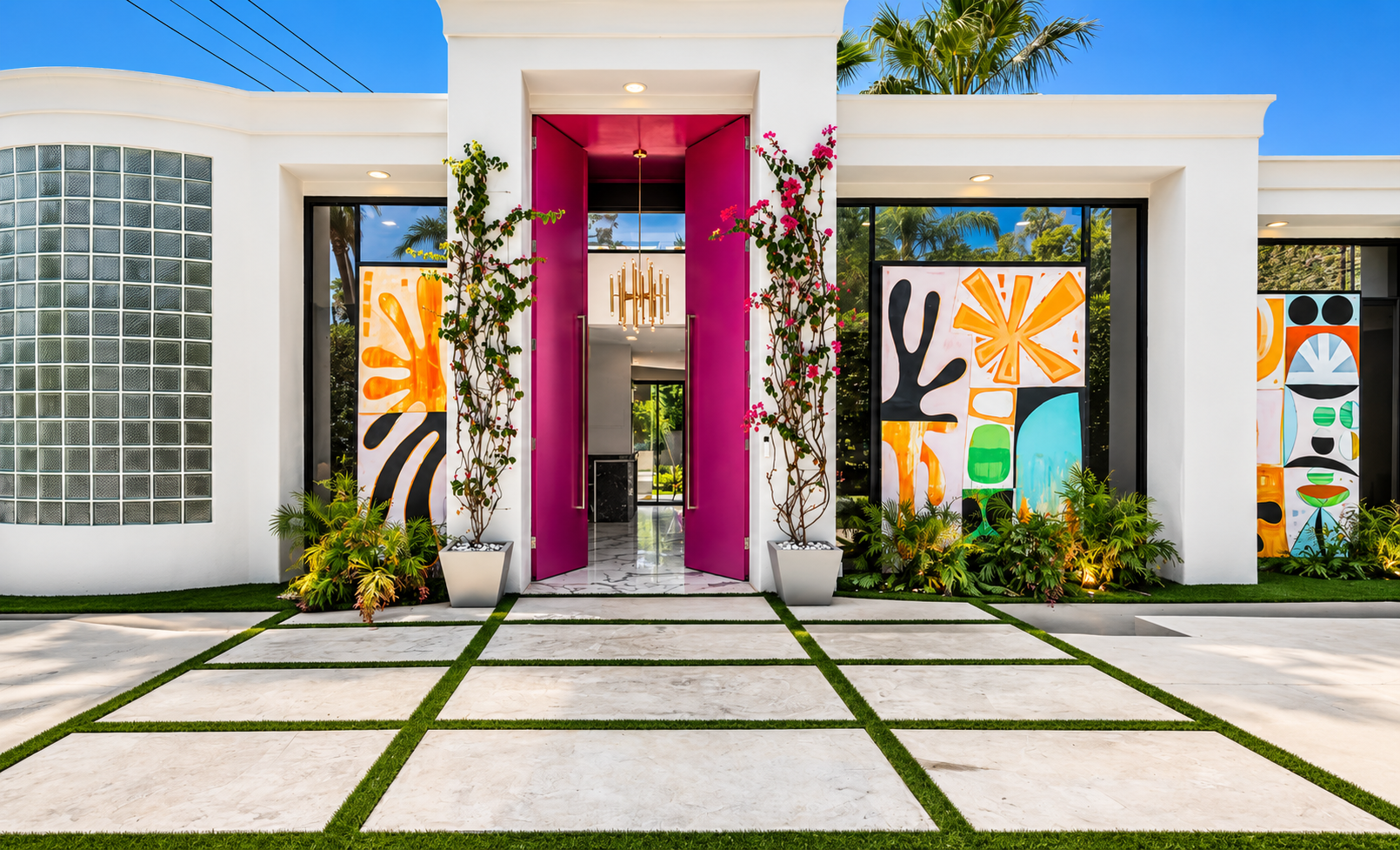
A bold 1950s home in Palm Springs, California, adorned with eight colorful murals by the late artist Shawn Savage, is coming to market ahead of the city’s annual Modernism Week.
The white stucco home on El Camino Way, built in 1954 and recently renovated, has an asking price of $2.295 million. Its staggered facade features three playfully abstract murals on either side of double-height hot pink doors.
MORE: Megamansion Outside Princeton, N.J., With a Pub and Two-Story Library Heads to Auction
The sellers are Los Angeles-based partners John Freeman and Mathieu Faure, who knew it was “the one” when they saw it after several months of searching in the winter of 2023. “It’s a happy house,” Freeman said. “We really liked the feel of the house: the uniqueness, the openness, the brightness—and the art.”
Located in the Mesa neighborhood of Palm Springs, which backs up to the San Jacinto Mountains, the 2,237-square-foot house features three bedrooms, an angled bonus room and a yard with a pool, desert mountain views and another colorful mural running alongside the pool.
“I never thought in my life I would have a house with pink doors,” said Faure, a producer at Apple TV who is originally from Paris. “It’s so colorful, it’s so different. And so Palm Springs.”
The layout of the home creates a smooth flow from the front doors through the open-plan common area—a foyer, bar, and living and dining room—into the kitchen around a fireplace wall and out to the yard. A corridor leads to a private bedroom wing, where the primary suite has floor-to-ceiling windows and the primary bath is only a tad smaller than the bedroom.
Faure has filled the home with Jonathan Adler furniture, rugs and accessories, riffing on the energetic California vibes of the house to create an aesthetic of “modern American glamour,” he said.
“It was enjoyable for me to play with different types of furniture and make this house ‘happy chic,’ as I describe it,” he said.
MORE: Beverly Hills Villa of Late Philanthropist Glorya Kaufman Sells for $19.25 Million
“He did a fantastic job,” said Freeman, who is an attorney and consultant. “It does kind of bring a smile to my face whenever I walk into the house.”
Since the furniture and decor were chosen for the particularities of the space, the couple is open to selling them with the home. Their West Hollywood house is already furnished; the collection doesn’t match the vibes of a Houston loft they bought near family; and Faure can’t imagine these pieces in New York—where he’s lived in the past—he said.
The duo bought the Palm Springs house for $1.925 million in 2024, according to property records, and will list the home Monday. They are represented by Stewart Smith, Patrick Jordan and Kevin Stanley of Bennion Deville Homes/Luxury Portfolio International.
The previous owners had purchased the home in 2021 for $975,000 and then spent more than two years and $700,000 on the renovation, according to Realtor.com. They commissioned Savage, a local Palm Springs artist and painter known for his joyful abstract work, to decorate the home.
MORE: Alpine Villa From Lady Gaga Movie ‘House of Gucci’ Lists for €2.9 Million
Savage, who died in 2024, lived in the Coachella Valley from 2003, and his work can be found in various local institutions and is on exhibit at the Illumine Gallery in Palm Springs. “Some artists pass through a place. Shawn Savage became a part of it,” the gallery’s description states.
Unsurprisingly, the murals invite lots of friendly conversations, as well as guided tours and interested lookers, but never to a degree that it disturbed the peacefulness of their home or the neighborhood, the sellers said. “It felt like living in an art gallery, and you have the exterior that you would share with the world,” Faure explained.
The neighborhood also played a role in their decision to buy, because of its access to the hiking trails of the San Jacinto Mountains, the lack of through-roads and the neighborly environment.
“It’s a very friendly place,” Faure said.

