
Stop With the Video Chats Already. Just Make a Voice Call.
Research shows frequent videoconferences can sap your brain and deplete your energy.

By JOANNA STERN
Fri, May 28, 2021 11:13am 4 min
4 min
4 min


Research shows frequent videoconferences can sap your brain and deplete your energy.
4 min
Dear colleague and/or friend:
I’d love to do a call about this. And by “call” I mean absolutely NOT a video call. Let’s do a call-call. You know, those old things where we just hear each other’s beautiful voices. Whatever you do, don’t touch that webcam.
Looking forward to (audio) chatting,
Joanna
The time has come to be bold: Stop the nonstop video calling.
Allow me to remind you of the BPE (you know, the Before-Pandemic Era), a time long ago when every call didn’t require colour-coding your bookshelf background, firing up the webcam and staring into a human tic-tac-toe board for hours on end. Video calls used to be a rare treat. Now, they’re everyday soul suckers.
Really. There’s vampirical—I mean, empirical—proof. A high frequency of video calling can cause general, social, emotional, visual and motivational fatigue, researchers at the University of Gothenburg and Stanford University found in a recent study. Even Zoom’s chief executive, Eric Yuan, says he suffers from the dreaded “Zoom Fatigue.”
Look, I’m not saying all video calling must stop. I love video calling. Instantly see and hear people with little to no delay? It’s miraculous. My mom, who is hearing-impaired, struggled throughout my childhood to hear me on the phone. Now, she can see my son wherever she is, and the visual cues help her tremendously.
I’m just saying audio calls can be more productive—and they can sound better than ever.
But how do you know when to pick voice over video? And how do you make it happen without being the meeting jerk who just refuses to turn on the camera? After talking to researchers and technologists—and cutting back on my own video calls—I present you with five steps to regain your sanity.
Fact: There are too many meetings. So I beg of you, before deciding on the technological format, simply ask: Do we really need to meet at all?
Géraldine Fauville, an assistant professor at the University of Gothenburg in Sweden and the lead researcher on that aforementioned study, mapped out the main reasons video can be so cognitively draining:
• It’s a lot of looking at ourselves, which is unnatural and comes with self-evaluation and scrutiny. Called the mirror effect, this can be particularly intense for women. You can combat this with the self-hide option available in Zoom and Google Meet. Google has just added a number of features to address this specifically. Microsoft Teams’ new Together Mode was built to combat this, too.
• It’s a lot of close-up eye contact. In fact, the brain processes that sort of invasion of space as if it should lead to mating or fighting.
• It’s a lot of sitting and feeling trapped. You can’t get up and walk around during a video call.
• It’s a lot of nodding. “For you to communicate cues to the participant, you need to intensify the cues,” Dr. Fauville said. “So people nod more vigorously than if they were in the same room.”
No wonder we’re exhausted. So yes, limiting the number and length of video calls seems like the obvious answer. And as some of us kick-start the hybrid work life, that will happen naturally.
But voice calls aren’t just table scraps from our work-from-home buffet. They allow you to focus on what’s being said and give you real respite from the screen. I now do my weekly call with my boss on the phone. We reserve video for deeper conversations, like performance reviews.
I also still like to do video calls with colleagues I haven’t caught up with for a while, or for important meetings where reading facial expressions is crucial.
You’ve decided that voice is the way to go for a call, now you’ve got to convey that to others.
Don’t waste precious meeting time having an awkward convo about this; be straight up before the call. “Hey, I’d like to do voice—no video—for this call. Work for you?” You can even put it on me: “I read this wonderful column in The Wall Street Journal about how too many video calls are bad.”
In a survey of employees, the University of California, Berkeley, found that 77% multitask during video calls. I called that out in a recent calendar invite: “Let’s do voice-only for this one,” I wrote to my colleagues. “We’re all going to cover each other’s faces with other windows on the screen anyway!” (Yep, we can see all of you, looking over at your second monitor!)
Even though I made my voice-call preferences known to my colleagues, I’m not just reaching for my phone. In fact, I’ve used all the big videoconferencing services—sans video. Zoom, Google Meet, Slack, FaceTime, WhatsApp and Facebook Messenger all produce stable and clear calls if you have a good connection. Most sound better than cellular—especially if you have a good mic. But the best choice is however you can most easily reach your contact.
Slack has become my go-to for work. Since most of the folks already are there all day, it’s great for mimicking the quick desk drop-by. Hit the phone button and it automatically defaults to a voice call. (To add video, you have to tap the video icon.) With Slack audio use surging in the past year, the company has been piloting new group-audio features, an office variation of Clubhouse and Twitter Spaces.
Slack is also looking at ways to improve audio quality and make it easier to switch between desktop and mobile calls, Ali Rayl, the company’s vice president of product and customer experience, told me.
Call-quality-wise, FaceTime audio consistently sounds the best to me. I often talk to my editor via Apple’s service and he sounds crystal clear. The downside? Apple devices only.
“The responsibility of limiting Zoom fatigue is not just on the individuals,” Dr. Fauville told me. “We hope our findings inspire companies to rethink videoconferencing.”
So far, so good. Citigroup CEO Jane Fraser has started “Zoom-free Fridays,” a day free of internal video calls. The University of California, Berkeley, for the past year, has said no recurring meetings—of any kind—on Friday afternoons.
You may want to try a similar policy. Or at the very least start perfecting those extremely polite “You don’t want to see my face and I don’t want to see your face” emails.
Reprinted by permission of The Wall Street Journal, Copyright 2021 Dow Jones & Company. Inc. All Rights Reserved Worldwide. Original date of publication: May 26, 2021.
 Copyright 2020, Dow Jones & Company, Inc. All Rights Reserved Worldwide. LEARN MORE




BNW Developments has established a Sydney presence, joining Arada and Sobha Realty among the growing number of UAE developers pursuing Australian buyers and development opportunities.
The Australian leather house has opened an immersive four-day pop-up in Manhattan, unveiling its Bloom Collection and redefining what a product launch can look like.
Apple closed above a $5 trillion market valuation for the first time, capping Tim Cook’s 15-year tenure and setting a high bar for incoming CEO John Ternus, as the company faces growing pressure to strengthen its AI capabilities and sustain growth.
3 min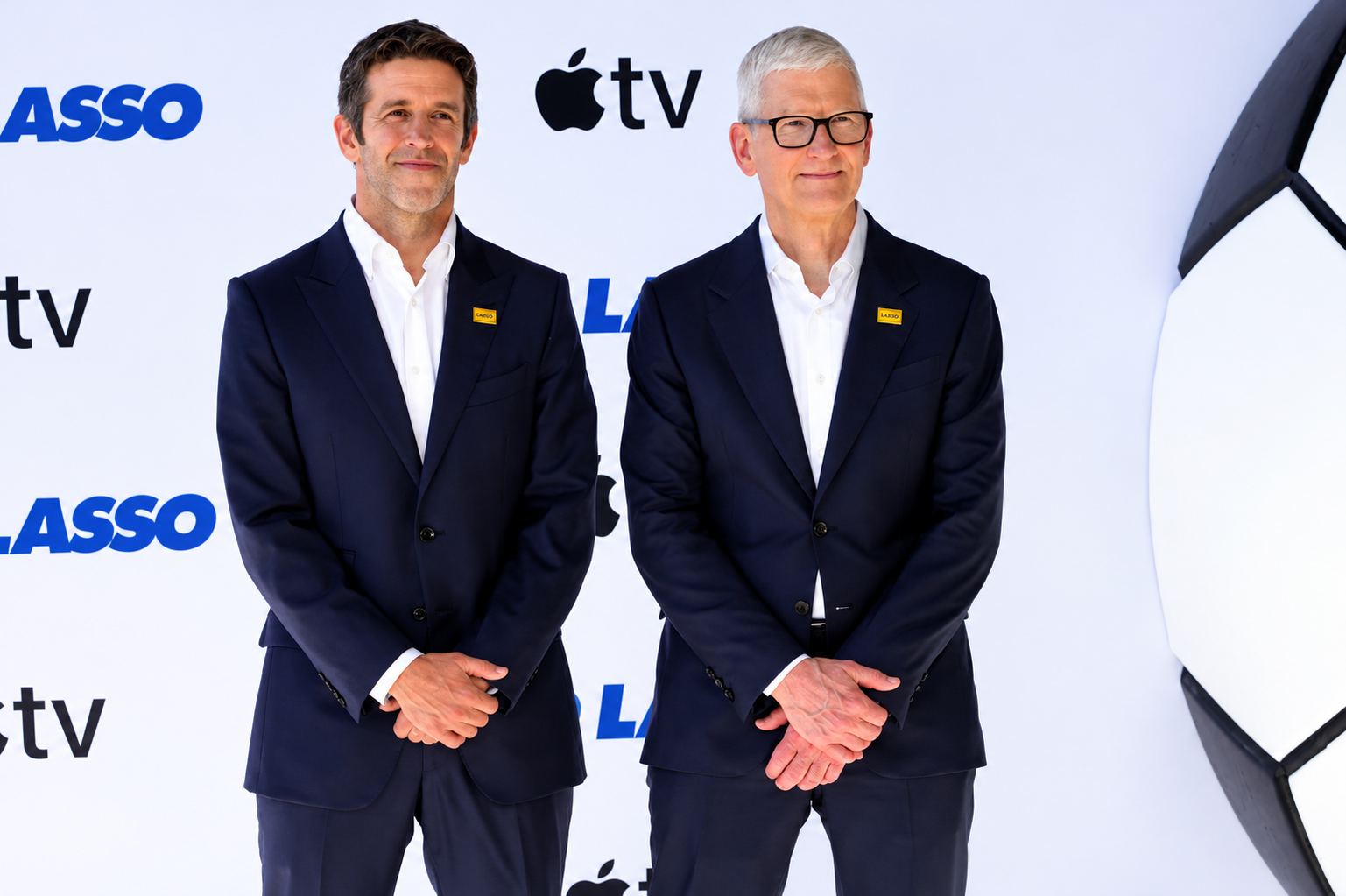
Apple AAPL 0.50%increase; became the second company to close above the $5 trillion mark on Wednesday, capping the Tim Cook era, and posing an implicit challenge to new Chief Executive John Ternus.
The iPhone-maker’s shares closed at a record, just enough to push the company’s market capitalization into territory that only chip colossus Nvidia occupies. Apple’s market value has surpassed $5 trillion six times previously during intraday trading, but it had never closed above that level, which it squeaked past on Wednesday, ending the day at $5.005 trillion according to Dow Jones Market Data.
Cook’s act will be tough to follow. During his 15-year tenure as CEO, which ended Aug. 31, Apple’s market capitalization multiplied by a factor of 13. He nearly quadrupled the number of iPhones sold annually. He grew its highly profitable services business from $10 billion annually to more than $100 billion. He launched the Apple Watch and AirPods, which together generate more than $30 billion a year. He poured Apple’s cash into more than $1 trillion worth of share buybacks and dividends.
Today, Apple shares trade at a premium compared with the overall S&P 500 even though the company’s revenue growth rate is slower than the index’s average. That is because the company’s shares are viewed as safe, and its business predictable, say analysts.
A key to Apple’s success under Cook is how it has limited capital spending, juicing the company’s returns for investors and greatly reducing the risks of its business. That has never been more apparent than during the AI build-out, when big tech rivals have rushed to spend gargantuan sums on data centers while Apple has focused on its core businesses making devices and selling high-margin services for them.
Apple investors are so confident in its business that they have driven up its shares despite big cost increases that threaten profit margins. The cost of memory and storage chips inside iPhones, Macs and iPads has skyrocketed as demand for those chips from data centers has led to shortages. Apple has responded by raising prices across its device lineup, including for older model iPhones that would typically get a price cut.
In theory, such a move could hurt Apple since iPhone buyers might wait longer to upgrade their devices. Yet since the first wave of price increases Apple shares have jumped 25%.
In part, that is because investors think Apple device buyers will pay the higher prices, enabling Apple to generate as much or more in total profits even if margins are down, said Bank of America analyst Wamsi Mohan. He added that Apple’s new foldable iPhone Duo is likely to be popular and that the new Siri AI will prompt iPhone upgrades.
AI has long been viewed as Apple’s Achilles’ heel. The company failed in its efforts to build its own frontier model, and it also allowed its Siri assistant to fall far behind rivals. ChatGPT revolutionized what smartphone users expect from chatbots.
Apple hopes to turn a corner with the new Siri AI. Built with Google’s help, Apple’s redesigned chatbot was released this fall. It still lags behind rival AI systems in key respects, though it has the advantage of being built directly into the device that many people already use, their iPhone. Apple also has access to more personal data, which could theoretically be used for compelling AI features, though new AI agents show the technology is advancing faster than Apple’s ability to keep up.
Tech rivals know how important it is to control the devices that people use to deliver their services. Perhaps most threatening to Apple, OpenAI is planning a family of AI-powered devices. It has poached hundreds of Apple employees to drive its device strategy. Apple responded in July by suing OpenAI, alleging it stole Apple trade secrets.
OpenAI has said it is “not aware of any evidence that this complaint has merit” and alleged in a new legal filing Wednesday that Apple poached one of its own employees who took confidential files with him. Apple said in response that it had found no evidence supporting the new allegation.
AI could be the battleground where Ternus makes his mark, either ushering in a new era of innovation and growth for Apple or finally losing its status as the company that has defined how people interact with computers.
