
CHRISTIE’S RESTRUCTURES CLASSICAL ASIAN SALES TO FOCUS ON THE ARTS OF INDIA

By
Mon, Aug 28, 2023 10:54am 4 min
4 min
4 min

 4 min
4 min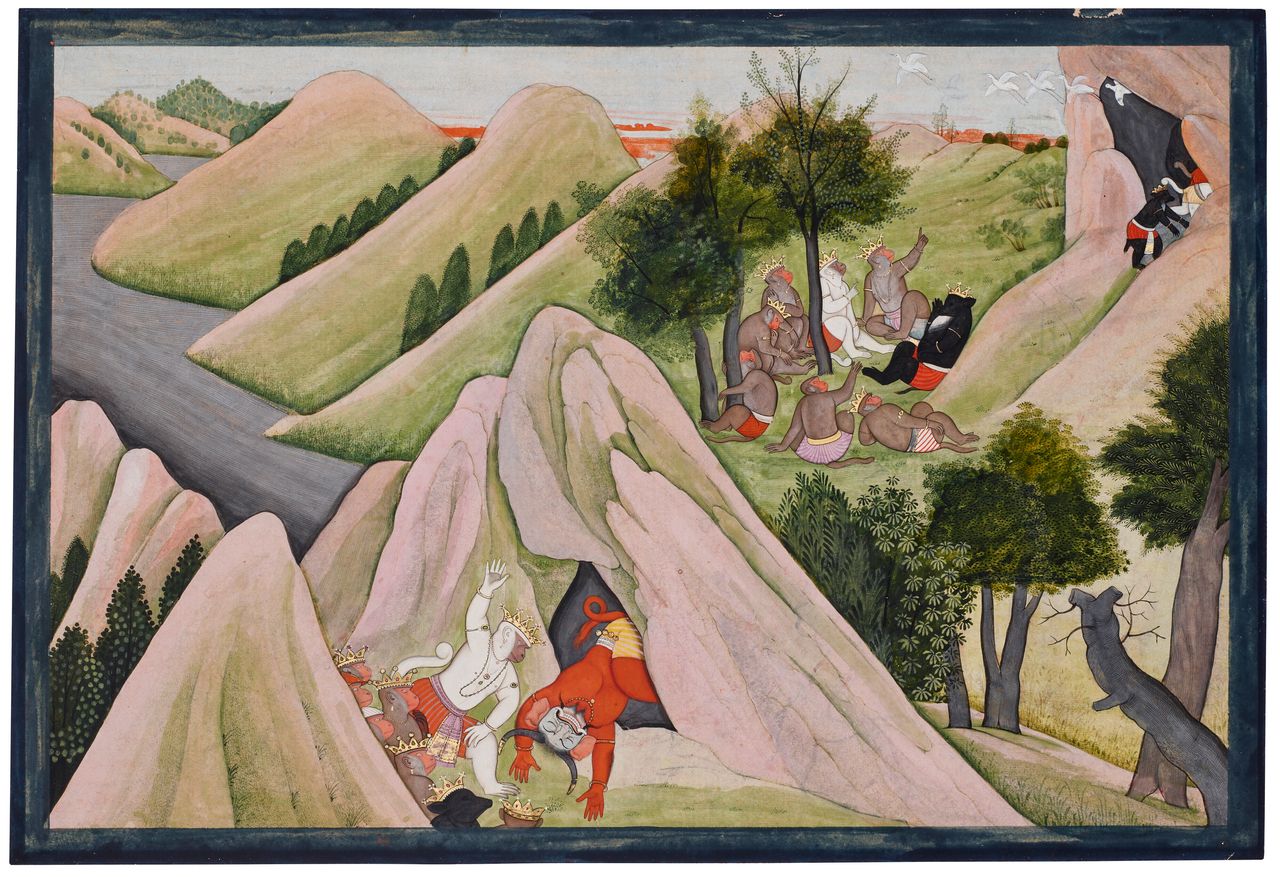
Christie’s will feature classical Indian art created from the third century through the beginning of the 20th century in a standalone sale for the first time this September.
The online auction is a break with the traditional approach of including Indian, Himalayan, and Southeast Asian art in one sale and responds to collectors of modern and contemporary Indian art who are “interested in following art history backwards,” finding links in the art of recent time to the faraway past, says Tristan Bruck, head of sale.
The previous model better suited “an old-fashioned collector who was buying works in all three sub-niches,” Bruck says. “A collector who bought Indian paintings, for instance, was likely to also go out and buy a Tibetan thangka (or tapestry).”
The Arts of India sale, open from 10 a.m. Sept. 13 to 9 a.m. Sept. 27, is paying particular attention to works that transition Indian art from the classical to the modern era, a period that until now hadn’t received close attention, he says.

In the midst of the online offering, on the morning of Sept. 20, Christie’s also will hold a live sale in New York of mostly modern but also contemporary South Asian art, which is predominately from India in addition to Pakistan, Bangladesh, and Sri Lanka.
Christie’s expectation is that collectors who attend, or dial into the modern and contemporary sale via phone or online, might be intrigued to also take a look at the online sale, where earlier Indian works provide inspiration for colours, style, and themes by 20th-and 21st-century artists. The auction house will also display the works together in its Rockefeller Center galleries in New York.
Collectors “realize that this art wasn’t created in a vacuum,” says Nishad Avari, Christie’s head of South Asian modern and contemporary art. “There’s thousands of years of tradition that modern and contemporary artists in the region drew on and continue to draw from.”
Consider Maqbook Fida Husain’s Untitled (Naga), a massive work of five female figures and a serpent (or naga) painted around 1971. The painting portrays four of the women with breaks at the neck, hips, and knees, alluding to physical forms expressed in temple sculpture of the Gupta Empire from the fourth- to early sixth century, Avari says.
The painting, expected to achieve between US$700,000 and US$1 million, likely was created to commemorate the launch of a monograph of Husain’s work that was published by Harry N. Abrams, who acquired the painting, Christie’s said in a catalog note. Abrams, a vast collector who also published art and illustrated books about Old Masters through artists such as Robert Rauschenberg, had displayed the work in his offices and later in his family’s home for more than 50 years.

Going further back in time within the Arts of India sale is a Pichvai painting of Vishvarupa—a form of the god Krishna—painted in the 18th to 19th century. The work, originally a temple banner, is a traditional Indian form and concept, “but by the 19th century you can see artists are working with different types of perspective,” Bruck says. They are also using a more modern color palette, with vibrant pinks and blues, and the canvas is large—about six by eight feet.
“This could go in a gallery with the modern works, which are on these large canvases,” Bruck says. The painting “tells a great story alongside 20th-century work, being able to see the origin of a lot of these concepts.”
The Pichvai—a term that refers to devotional folk art paintings—is estimated to achieve at least US$120,000.
Another popular category are so-called company-school paintings that came out of India’s princely courts beginning with the imperial Mughal around 1600 through to the 19th century, when they were commissioned by British administrators, Bruck says.
Each court had its own style that may have been influenced by other courts and changed over time, he says. The works, often called miniature paintings because of the small, precise figures and scenes they depicted, were typically created in albums, or series, making them highly collectible.
Until recently, a group of collectors had focused solely on this sector somewhat in isolation, but Bruck says, Christie’s is seeing an “explosion of interest” in court painting albums, such as an illustration from the “Bharany” Ramayan series that is being offered in the upcoming sale.
A collector “can see what the other pages from that album have sold for and sort of put them together as an album in [their] mind and ideally collect more than one or try to get a few from the set,” Bruck says. The fact they exist within series also gives collectors confidence in what to pay, he adds.

The Bharany Ramayan work in the sale, titled The Monkey Army Intruding Upon a Demon’s Cave, from “Punjab Hills, Kangra or Guler, first generation after Nainsukh or Manaku,” from 1775-1780, is being offered for a minimum of US$80,000. A Patna court painting of a marriage procession at night, from around 1810 and painted in a more European style, is being offered for a minimum of US$10,000.
For many collectors, those price points are more accessible than, for example, the estimated US$250,000 they would pay for a work by Sayed Haider Raza, whose Rajasthan, 1983, is included in the modern and contemporary sale. The structure and primary-colour palette of Rajasthan, in fact, is intentionally drawn from court paintings, Avari says.
“The way in which their discrete sections, cells, in which he paints and the way in which he surrounds it with the red border is a direct reference to Pahari or Rajasthani (court) painting,” he says.
When collectors can see the court paintings that inspired a modern work they own, and they can acquire them for far less, “why not hang them side-by-side?” Avari says.
 Copyright 2020, Dow Jones & Company, Inc. All Rights Reserved Worldwide. LEARN MORE




BNW Developments has established a Sydney presence, joining Arada and Sobha Realty among the growing number of UAE developers pursuing Australian buyers and development opportunities.
The Australian leather house has opened an immersive four-day pop-up in Manhattan, unveiling its Bloom Collection and redefining what a product launch can look like.
AI-powered travel agents are challenging online booking platforms, but Airbnb’s exclusive listings and direct customer relationships could give it an edge. Its next challenge: turning repeat guests into loyal customers through stronger rewards and innovation.
3 min
AI agents like Muse can already find you the cheapest hotel room in Paris. But they can’t locate a cheaper version of that Catskills cabin you’ve been eyeing, because it might only be available on Airbnb ABNB -1.43%decrease.
Investors should pay attention to that distinction. When Meta Platforms META 3.38%increase launched its Muse agent last month, travel stocks including Booking Holdings BKNG -1.19%decrease, Expedia and Airbnb all fell sharply.
Airbnb, though, has a real chance to emerge as a winner from the upheaval. The catch: Its stock already reflects above-industry growth. To justify its valuation, Airbnb will need to turn repeat customers into loyal ones.
Online travel companies make much of their money by simplifying search and collecting fees on bookings. AI agents threaten that model.
But not all travel marketplaces are equally exposed. Booking and Expedia largely sell hotel rooms that travelers can also book directly or through competing sites. If an agent can find the same room elsewhere, it has little reason to favor either Booking or Expedia.
Booking and Expedia also sell sponsored listings that steer travelers toward particular properties. Wells Fargo estimates those will account for about 8% of Expedia’s revenue and a much higher percentage of profit next year.
Airbnb has more ways to adapt. More than half its listings are available only on its platform, and more than 90% of its traffic comes directly to its app or website.
The customer relationship doesn’t end after booking, either. Bernstein analyst Richard Clarke notes that 90% of Airbnb guests go on to message their hosts about arrival times, keys or local taxes, giving Airbnb a connection to both sides of the transaction.
How the companies have responded to the possible agentic future is telling.
Expedia quickly signed on as a Muse partner. Airbnb hasn’t, and Chief Executive Brian Chesky says AI chatbots have so far been a boon, sending customers to Airbnb’s website.
Chatbots might work for buying paper towels, he quipped at a Skift conference last month, but people enjoy planning trips. He argued that browsing dozens of homes isn’t something a text-based chatbot is well suited for.
Still, the AI jitters arrived just as Airbnb was persuading investors it deserved its pricey multiple. For years after its 2020 initial public offering, the stock—which trades around 25 to 30 times forward earnings—went nowhere. Investors saw a mature operator trading at a growth premium.
This year, Airbnb growth seems to be accelerating. The stock jumped in August after the company raised its full-year revenue-growth guidance with its second-quarter results. Wells Fargo analyst Ken Gawrelski credits a run of product improvements under a revamped leadership team.
Among the changes: letting guests reserve now and pay later, adding hotels, and a redesigned home page and app. Investors were also betting on what comes next, including thousands more hotels, car rentals and, eventually, advertising.
The irony is that some of those growth drivers push Airbnb closer to the kind of business Booking and Expedia run—the kind of business AI agents could threaten. Even if AI agents capture a large share of travel planning and booking, Airbnb would capture the demand. But it and others would slowly lose control over how customers find and choose properties.
That would undermine the advertising opportunity investors are counting on. The bigger point for Airbnb and other marketplaces is that losing control of customer acquisition could mean surrendering some of their pricing power and margins.
To bulletproof itself, Airbnb might look to another e-commerce giant that has so far kept AI agents at arm’s length: Amazon.
Like Amazon, Airbnb has a loyal customer base and hard-to-match supply. But it has nothing like Prime membership to make customers think twice before taking their business elsewhere.
That is where loyalty comes in. Business travelers stick with Hilton or Marriott because enough nights earn them perks. Leisure travelers rarely accumulate stays with one chain. Airbnb has millions of listings and plenty of repeat customers, but no broad rewards program. It has begun experimenting with credits on hotel stays, but it should make loyalty a priority, not just a promotion.
Airbnb also plans to launch its own AI agent next year. But travelers using an agent might still want it to search Airbnb, Vrbo, Booking and hotel websites alike, rather than limit itself to one company’s inventory.
Eventually, Airbnb might have to strike deals with agent makers, using its unique homes as leverage to negotiate favorable terms, says Gawrelski. Such deals, along with rewards for loyal guests, could over the long term eat into the company’s roughly 13% take rate, he adds. But if they bring in enough additional bookings, the trade-off could be worthwhile.
History offers a reason not to panic. The shift from desktop to mobile unsettled investors in Alphabet and Amazon, but both emerged as major beneficiaries. Companies with valuable assets can come out of a platform shift stronger, if they adapt quickly enough.
Airbnb has homes the bots can’t easily replace. Now it needs to give guests a reason to insist on booking them there.
