
The World’s Biggest Crypto Firm Is Melting Down
‘Every battle is a do-or-die situation,’ Binance co-founder Yi He writes

By PATRICIA KOWSMANN
Wed, Sep 27, 2023 9:05am 4 min
4 min
4 min


‘Every battle is a do-or-die situation,’ Binance co-founder Yi He writes
4 min
After FTX crashed, the world of crypto seemed to belong to the largest exchange, Binance. Less than a year later, Binance is the one in distress.
Under threat of enforcement actions by U.S. agencies, Binance’s empire is quaking. Over the past three months, more than a dozen senior executives have left, and the exchange has laid off at least 1,500 employees this year to cut costs and prepare for a decline in business. And while Binance still looms large in crypto, its dominance is dwindling.
Binance now handles about half of all trades where cryptocurrencies are directly bought and sold, down from about 70% at the start of the year, according to data provider Kaiko.
What happens to Binance will have immense implications for the crypto industry because the exchange is so big. Industry players and watchers say other exchanges would fill the void if Binance were to collapse. But in the short term, liquidity in the market could evaporate, driving the price of tokens sharply down.
One institutional trader told The Wall Street Journal that his company has conducted fire drills to withdraw its assets from Binance quickly in the event of a meltdown.
Yi He, Binance’s co-founder and chief marketing officer, vowed to overcome the troubles in a message to Binance staff last month.
“Every battle is a do-or-die situation, and the only thing that can defeat us is ourselves,” she wrote in the message viewed by the Journal. “We have won countless times, and we need to win this time as well.”
Binance is a frequent investor in third-party crypto projects and beyond. Binance has invested in X, formerly known as Twitter. Binance co-founder Changpeng Zhao—or CZ as his 8.6 million X followers know him—is the biggest face of crypto.
“You just can’t quantify what would happen to the industry if Binance disappeared, given it has been responsible for fostering a huge amount of innovation and growth,” said Anthony Georgiades, a general partner at Innovating Capital, a fund that invests in early-growth companies.
The U.S. Justice Department has undergone a years long investigation that could result in criminal charges for Binance and Zhao as well as billions of dollars of fines, according to people familiar with the probe.
Binance also faces a Securities and Exchange Commission lawsuit that alleges it and Zhao operated illegally in the U.S. and misused customers’ funds. The firm has acknowledged past mistakes but says customer money is safe and it is committed to compliance.
“We have worked tirelessly not just to learn the lessons of the past, but also to continue to invest in the teams and systems that ensure user protection,” a spokesman said.
Binance launched in China in 2017, though it claims to be based nowhere, with staff scattered around the world. Its global website is accessible by traders almost everywhere, but that number is falling as its presence has been forbidden in many countries. In Europe, more countries are shutting their doors to the exchange.
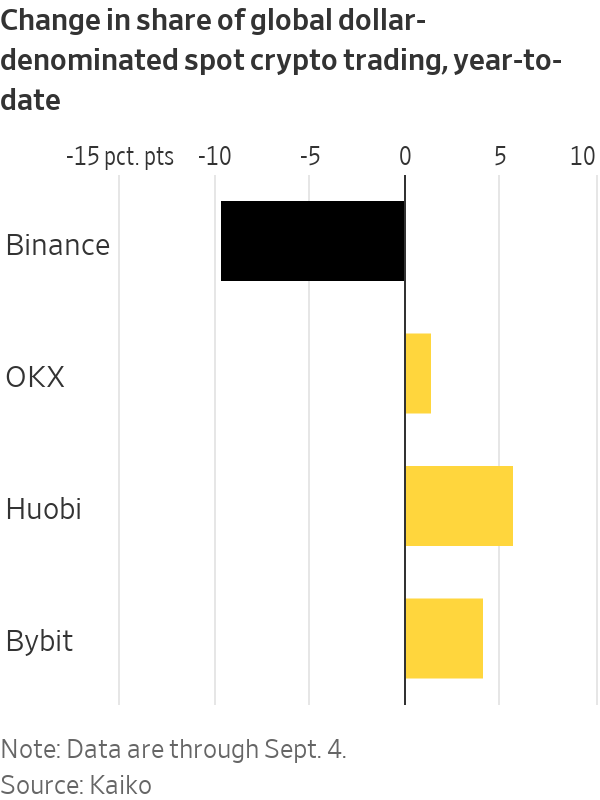
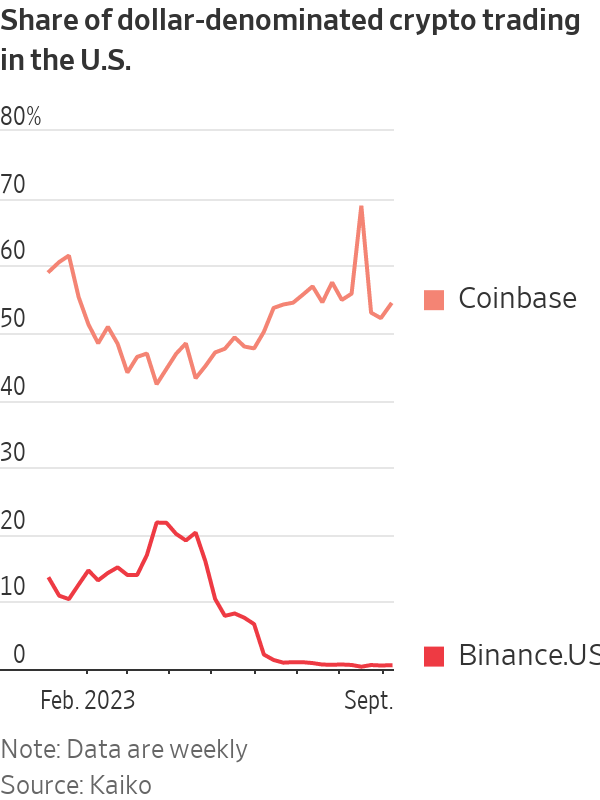
In the U.S., activity at its local exchange, Binance.US, has basically dissipated. Its chief executive officer, legal chief and risk head all left recently.
In a virtual Binance.US meeting days before his departure earlier this month, Binance.US CEO Brian Shroder said revenue at the exchange had fallen 70% year to date, according to a presentation viewed by the Journal. Executives looked on with dismay.
Shroder told employees Zhao would need to resolve “his regulatory matters, put his .US holdings in a blind trust, or sell his shares” in order for the U.S. platform to maintain its growth initiative. Those steps would allow the company to unblock banking relationships and get licenses, he said. Zhao is the majority owner of Binance.US and the global exchange.
A spokeswoman for Binance.US declined to comment.
Binance and the DOJ have been talking for months, according to people familiar with the discussions, and inside Binance, there have been discussions on whether Zhao should step down.
Zhao’s insistence in remaining at the helm of the company has frustrated some executives who believed him leaving would improve the chances of the company surviving, the Journal previously reported.
The company upheaval has also hurt employee morale.
Employees confronted Zhao in a summer meeting following layoffs, according to messages viewed by the Journal, in a rare showing of criticism.
“Some ppl laid off were given 0 days notice and/or found out they got laid off because they couldn’t login to the system anymore. How is that treating them respectfully? Is 2 weeks severance respectful?” one anonymous employee asked Zhao in the all-hands meeting chat. Nine others upvoted that. The question went unanswered.
A further stumbling block for Binance came in late August, when the Journal published an article on Binance customers’ use of sanctioned Russian banks. The DOJ has also been investigating Binance in connection with possible violations of U.S. sanctions on Russia, the Journal has reported.
Following the Journal story, the Justice Department questioned Binance about the banks’ usage, and Binance’s chief compliance officer, Noah Perlman, met with department officials to discuss their concerns, a person with direct knowledge of the matter said.
Pressure from the DOJ was partly responsible for Zhao’s decision to begin winding down Binance’s business in Russia, once one of its most important markets, the person said. Over the following two weeks, Binance barred customers from using the sanctioned banks and forced out the executives managing its Russia business. It said it was considering a full withdrawal from Russia.
Zhao publicly remained defiant. “We are one community,” he wrote on X on the day the Russia executives left. “Keep building!”
But behind closed doors, Zhao has been bringing new lawyers to handle the DOJ case, according to people familiar with the move. And Zhao has been staying put in his home in the United Arab Emirates, which doesn’t have a mutual extradition treaty with the U.S.
 Copyright 2020, Dow Jones & Company, Inc. All Rights Reserved Worldwide. LEARN MORE




BNW Developments has established a Sydney presence, joining Arada and Sobha Realty among the growing number of UAE developers pursuing Australian buyers and development opportunities.
The Australian leather house has opened an immersive four-day pop-up in Manhattan, unveiling its Bloom Collection and redefining what a product launch can look like.
AI-powered travel agents are challenging online booking platforms, but Airbnb’s exclusive listings and direct customer relationships could give it an edge. Its next challenge: turning repeat guests into loyal customers through stronger rewards and innovation.
3 min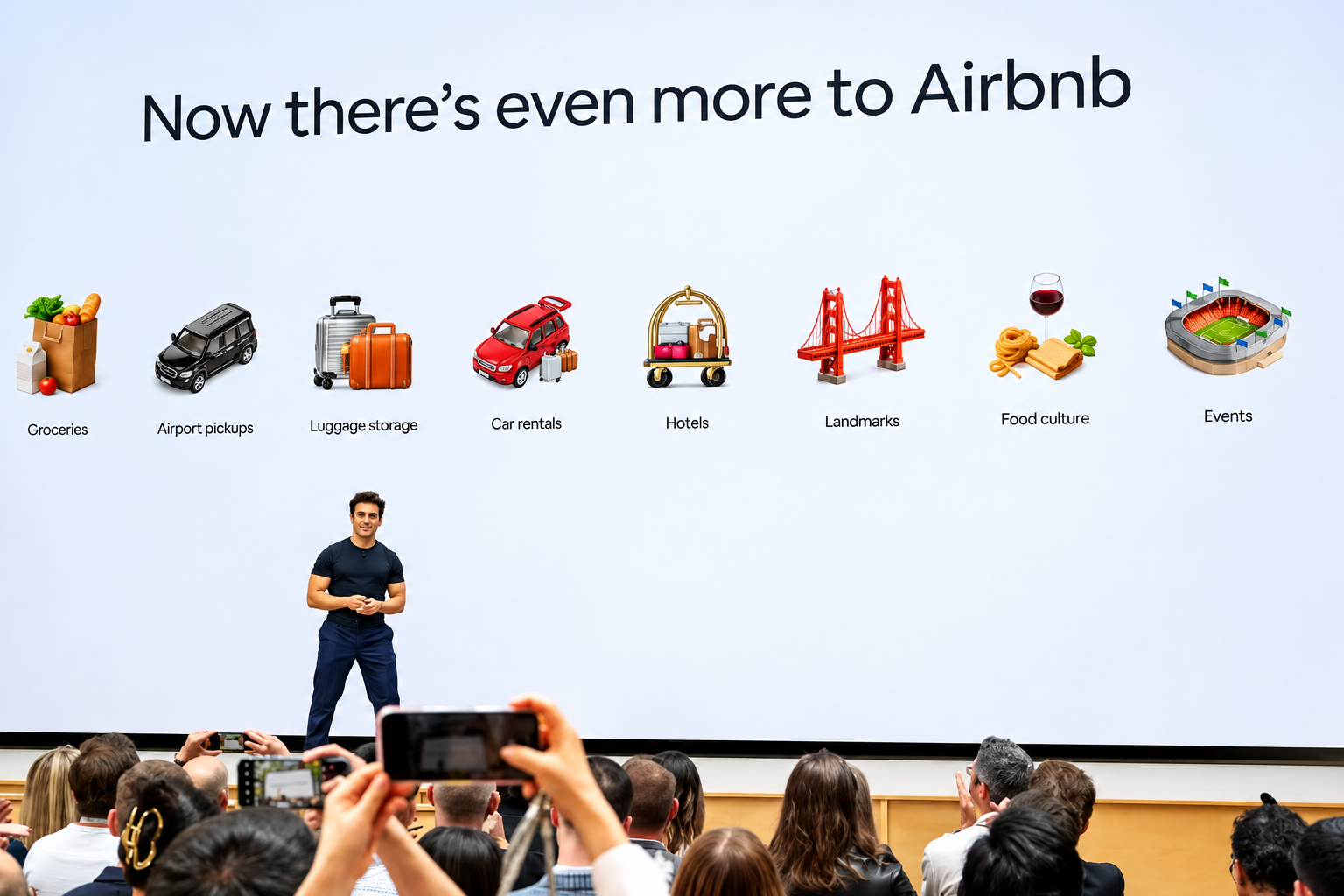
AI agents like Muse can already find you the cheapest hotel room in Paris. But they can’t locate a cheaper version of that Catskills cabin you’ve been eyeing, because it might only be available on Airbnb ABNB -1.43%decrease.
Investors should pay attention to that distinction. When Meta Platforms META 3.38%increase launched its Muse agent last month, travel stocks including Booking Holdings BKNG -1.19%decrease, Expedia and Airbnb all fell sharply.
Airbnb, though, has a real chance to emerge as a winner from the upheaval. The catch: Its stock already reflects above-industry growth. To justify its valuation, Airbnb will need to turn repeat customers into loyal ones.
Online travel companies make much of their money by simplifying search and collecting fees on bookings. AI agents threaten that model.
But not all travel marketplaces are equally exposed. Booking and Expedia largely sell hotel rooms that travelers can also book directly or through competing sites. If an agent can find the same room elsewhere, it has little reason to favor either Booking or Expedia.
Booking and Expedia also sell sponsored listings that steer travelers toward particular properties. Wells Fargo estimates those will account for about 8% of Expedia’s revenue and a much higher percentage of profit next year.
Airbnb has more ways to adapt. More than half its listings are available only on its platform, and more than 90% of its traffic comes directly to its app or website.
The customer relationship doesn’t end after booking, either. Bernstein analyst Richard Clarke notes that 90% of Airbnb guests go on to message their hosts about arrival times, keys or local taxes, giving Airbnb a connection to both sides of the transaction.
How the companies have responded to the possible agentic future is telling.
Expedia quickly signed on as a Muse partner. Airbnb hasn’t, and Chief Executive Brian Chesky says AI chatbots have so far been a boon, sending customers to Airbnb’s website.
Chatbots might work for buying paper towels, he quipped at a Skift conference last month, but people enjoy planning trips. He argued that browsing dozens of homes isn’t something a text-based chatbot is well suited for.
Still, the AI jitters arrived just as Airbnb was persuading investors it deserved its pricey multiple. For years after its 2020 initial public offering, the stock—which trades around 25 to 30 times forward earnings—went nowhere. Investors saw a mature operator trading at a growth premium.
This year, Airbnb growth seems to be accelerating. The stock jumped in August after the company raised its full-year revenue-growth guidance with its second-quarter results. Wells Fargo analyst Ken Gawrelski credits a run of product improvements under a revamped leadership team.
Among the changes: letting guests reserve now and pay later, adding hotels, and a redesigned home page and app. Investors were also betting on what comes next, including thousands more hotels, car rentals and, eventually, advertising.
The irony is that some of those growth drivers push Airbnb closer to the kind of business Booking and Expedia run—the kind of business AI agents could threaten. Even if AI agents capture a large share of travel planning and booking, Airbnb would capture the demand. But it and others would slowly lose control over how customers find and choose properties.
That would undermine the advertising opportunity investors are counting on. The bigger point for Airbnb and other marketplaces is that losing control of customer acquisition could mean surrendering some of their pricing power and margins.
To bulletproof itself, Airbnb might look to another e-commerce giant that has so far kept AI agents at arm’s length: Amazon.
Like Amazon, Airbnb has a loyal customer base and hard-to-match supply. But it has nothing like Prime membership to make customers think twice before taking their business elsewhere.
That is where loyalty comes in. Business travelers stick with Hilton or Marriott because enough nights earn them perks. Leisure travelers rarely accumulate stays with one chain. Airbnb has millions of listings and plenty of repeat customers, but no broad rewards program. It has begun experimenting with credits on hotel stays, but it should make loyalty a priority, not just a promotion.
Airbnb also plans to launch its own AI agent next year. But travelers using an agent might still want it to search Airbnb, Vrbo, Booking and hotel websites alike, rather than limit itself to one company’s inventory.
Eventually, Airbnb might have to strike deals with agent makers, using its unique homes as leverage to negotiate favorable terms, says Gawrelski. Such deals, along with rewards for loyal guests, could over the long term eat into the company’s roughly 13% take rate, he adds. But if they bring in enough additional bookings, the trade-off could be worthwhile.
History offers a reason not to panic. The shift from desktop to mobile unsettled investors in Alphabet and Amazon, but both emerged as major beneficiaries. Companies with valuable assets can come out of a platform shift stronger, if they adapt quickly enough.
Airbnb has homes the bots can’t easily replace. Now it needs to give guests a reason to insist on booking them there.
