
How Much Caffeine You Should Actually Have—and When
Figure out the right amount of caffeine to boost alertness without disrupting your sleep

By SUMATHI REDDY
Thu, Jan 11, 2024 10:49am 3 min
3 min
3 min


Figure out the right amount of caffeine to boost alertness without disrupting your sleep
3 min
Caffeine can give us a boost, but too much can mess with our sleep and make us feel jittery. So how do we know what’s the right amount?
Generally, government and health groups recommend that healthy adults consume no more than400 milligrams of caffeine a day. That comes out to about four, 8-ounce cups of coffee, says Jennifer Temple, a professor of exercise and nutrition sciences at University at Buffalo School of Public Health and Health Professions.
(No, that 20-ounce Starbucks Venti doesn’t count as one cup of coffee.)
And believe it or not, we are doing pretty well on this target. The average American adult consumes about 200 milligrams of caffeine a day and in Europe, it is 270 milligrams, according to a 2017 review study.
But not everyone is optimising their caffeine intake to maximise how it can help them—by sharpening concentration for work or giving them a boost before a run—without hurting their sleep or overall health.
Here’s how to think strategically about getting the most out of your daily dose.
Caffeine can help you focus and keep you alert.
About 100 to 150 milligrams—or one to 1.5 cups of coffee—is a ballpark amount that will deliver a boost, says Astrid Nehlig, an emeritus research director at the French National Institute of Health and Medical Research, who has studied caffeine’s impact on brain activity, though it varies from person to person.
The effects generally kick in about five minutes after consumption and increase to become optimal for between roughly 15 and 120 minutes, Nehlig says.
Caffeine has been linked to physical benefits, too. People walked more on days they drank coffee than on days they didn’t, according to a 2023 study of 100 people in the New England Journal of Medicine. Participants took an average of 1,000 more steps on days when they drank caffeinated coffee than when they didn’t.
Other studies have suggested that caffeine can sometimes help us work out harder, such as when we have it before high-endurance exercise like long runs or swims, or sports that require a sustained effort, like soccer, Nehlig says.
The same boost hasn’t been found with shorter efforts, such as a sprint. Caffeine doesn’t act directly on muscles but rather reduces your rate of perceived exertion and the time it takes you to feel exhausted.
Caffeine’s main negative for your health is that it can disrupt your sleep.
The NEJM study that found that people walk more on days when they drink caffeine also found a downside. On days when study participants could drink as much caffeinated coffee as they wanted, they slept on average 30 minutes less than on days they didn’t drink any.
The impact on sleep varies greatly depending on how fast you metabolize caffeine, says Gregory Marcus, a cardiologist and professor of medicine at University of California, San Francisco and first author of the NEJM study.
On average, it takes about 4.5 hours for half of the caffeine consumed to pass through your system. However, genetic differences make some people metabolise it slowly or quickly, doctors and researchers say. The population is roughly split between fast and slow metabolisers.
The sleeping and walking study tested whether participants were slow or fast metabolisers of coffee. Those that were slow metabolisers slept nearly an hour less on the nights they drank caffeinated coffee, while the fast metabolisers didn’t experience any impact on sleep.
The best source of caffeine is unsweetened coffee or tea, says Dr. Frank Hu, professor of nutrition and epidemiology at Harvard T.H. Chan School of Public Health. These drinks have other beneficial ingredients, such as polyphenols, which have antioxidant effects which reduce inflammation.
The caffeine content in coffee and tea can vary, but soda can’t have more than 71 milligrams per 12 ounces, per Food and Drug Administration regulations.
Adults get most of their caffeine from coffee, but the market for energy drinks is growing. Pay extra attention to the caffeine in these drinks, because some contain very high levels.
Getting caffeine from soda or energy or sports drinks makes it more likely you are also getting a high dose of sugar and empty calories, says Hu.
Kids under 12 should avoid caffeine, while 12- to 18-year-olds should have no more than 100 milligrams a day, according to the American Academy of Pediatrics. Pregnant women are advised to have no more than 200 milligrams of caffeine a day.
People with chronic conditions like high blood pressure, diabetes or heart disease might want to be more cautious about their caffeine consumption, Hu adds. The NEJM study found that on the days when participants consumed caffeine, they had more abnormal heart rhythms in the lower chamber of the heart, which is associated with a greater risk of developing heart failure.
And people who get migraine headaches should try to drink no more than 100 milligrams of caffeine a day, the equivalent of a mug of coffee, says Dr. Amaal Starling, a headache specialist and neurologist at Mayo Clinic in Scottsdale, Ariz. She advises her patients who have daily or severe headaches not to drink any caffeinated beverages or switch to decaffeinated coffee.
 Copyright 2020, Dow Jones & Company, Inc. All Rights Reserved Worldwide. LEARN MORE




BNW Developments has established a Sydney presence, joining Arada and Sobha Realty among the growing number of UAE developers pursuing Australian buyers and development opportunities.
The Australian leather house has opened an immersive four-day pop-up in Manhattan, unveiling its Bloom Collection and redefining what a product launch can look like.
AI-powered travel agents are challenging online booking platforms, but Airbnb’s exclusive listings and direct customer relationships could give it an edge. Its next challenge: turning repeat guests into loyal customers through stronger rewards and innovation.
3 min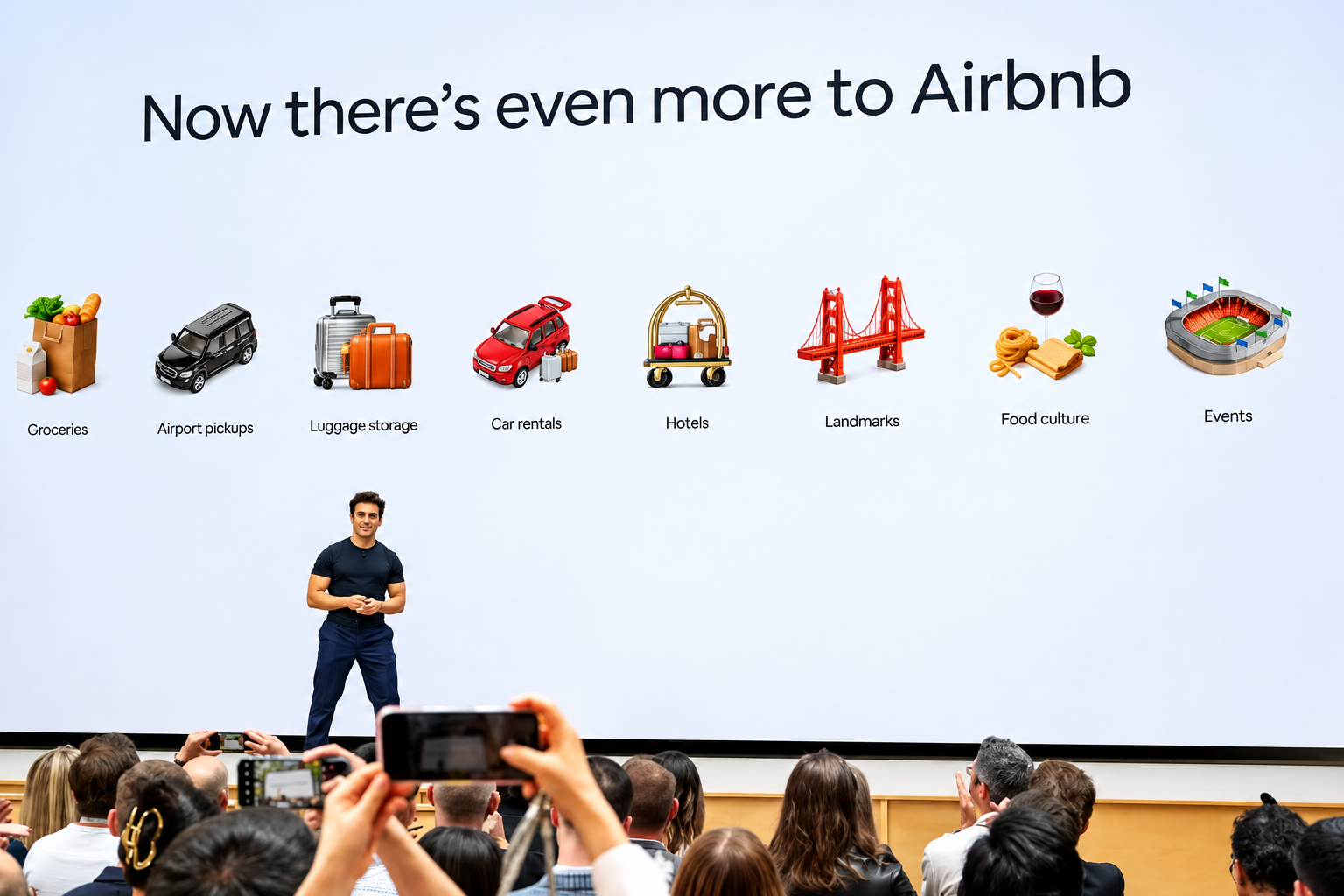
AI agents like Muse can already find you the cheapest hotel room in Paris. But they can’t locate a cheaper version of that Catskills cabin you’ve been eyeing, because it might only be available on Airbnb ABNB -1.43%decrease.
Investors should pay attention to that distinction. When Meta Platforms META 3.38%increase launched its Muse agent last month, travel stocks including Booking Holdings BKNG -1.19%decrease, Expedia and Airbnb all fell sharply.
Airbnb, though, has a real chance to emerge as a winner from the upheaval. The catch: Its stock already reflects above-industry growth. To justify its valuation, Airbnb will need to turn repeat customers into loyal ones.
Online travel companies make much of their money by simplifying search and collecting fees on bookings. AI agents threaten that model.
But not all travel marketplaces are equally exposed. Booking and Expedia largely sell hotel rooms that travelers can also book directly or through competing sites. If an agent can find the same room elsewhere, it has little reason to favor either Booking or Expedia.
Booking and Expedia also sell sponsored listings that steer travelers toward particular properties. Wells Fargo estimates those will account for about 8% of Expedia’s revenue and a much higher percentage of profit next year.
Airbnb has more ways to adapt. More than half its listings are available only on its platform, and more than 90% of its traffic comes directly to its app or website.
The customer relationship doesn’t end after booking, either. Bernstein analyst Richard Clarke notes that 90% of Airbnb guests go on to message their hosts about arrival times, keys or local taxes, giving Airbnb a connection to both sides of the transaction.
How the companies have responded to the possible agentic future is telling.
Expedia quickly signed on as a Muse partner. Airbnb hasn’t, and Chief Executive Brian Chesky says AI chatbots have so far been a boon, sending customers to Airbnb’s website.
Chatbots might work for buying paper towels, he quipped at a Skift conference last month, but people enjoy planning trips. He argued that browsing dozens of homes isn’t something a text-based chatbot is well suited for.
Still, the AI jitters arrived just as Airbnb was persuading investors it deserved its pricey multiple. For years after its 2020 initial public offering, the stock—which trades around 25 to 30 times forward earnings—went nowhere. Investors saw a mature operator trading at a growth premium.
This year, Airbnb growth seems to be accelerating. The stock jumped in August after the company raised its full-year revenue-growth guidance with its second-quarter results. Wells Fargo analyst Ken Gawrelski credits a run of product improvements under a revamped leadership team.
Among the changes: letting guests reserve now and pay later, adding hotels, and a redesigned home page and app. Investors were also betting on what comes next, including thousands more hotels, car rentals and, eventually, advertising.
The irony is that some of those growth drivers push Airbnb closer to the kind of business Booking and Expedia run—the kind of business AI agents could threaten. Even if AI agents capture a large share of travel planning and booking, Airbnb would capture the demand. But it and others would slowly lose control over how customers find and choose properties.
That would undermine the advertising opportunity investors are counting on. The bigger point for Airbnb and other marketplaces is that losing control of customer acquisition could mean surrendering some of their pricing power and margins.
To bulletproof itself, Airbnb might look to another e-commerce giant that has so far kept AI agents at arm’s length: Amazon.
Like Amazon, Airbnb has a loyal customer base and hard-to-match supply. But it has nothing like Prime membership to make customers think twice before taking their business elsewhere.
That is where loyalty comes in. Business travelers stick with Hilton or Marriott because enough nights earn them perks. Leisure travelers rarely accumulate stays with one chain. Airbnb has millions of listings and plenty of repeat customers, but no broad rewards program. It has begun experimenting with credits on hotel stays, but it should make loyalty a priority, not just a promotion.
Airbnb also plans to launch its own AI agent next year. But travelers using an agent might still want it to search Airbnb, Vrbo, Booking and hotel websites alike, rather than limit itself to one company’s inventory.
Eventually, Airbnb might have to strike deals with agent makers, using its unique homes as leverage to negotiate favorable terms, says Gawrelski. Such deals, along with rewards for loyal guests, could over the long term eat into the company’s roughly 13% take rate, he adds. But if they bring in enough additional bookings, the trade-off could be worthwhile.
History offers a reason not to panic. The shift from desktop to mobile unsettled investors in Alphabet and Amazon, but both emerged as major beneficiaries. Companies with valuable assets can come out of a platform shift stronger, if they adapt quickly enough.
Airbnb has homes the bots can’t easily replace. Now it needs to give guests a reason to insist on booking them there.
