
Woman Arrested for Allegedly Stealing $2,500 of Stanley Drinking Cups
Arrest is the latest episode in the viral craze over the water bottles
By SURYATAPA BHATTACHARYA
Wed, Jan 24, 2024 9:30am 2 min
2 min
2 min


Arrest is the latest episode in the viral craze over the water bottles
2 min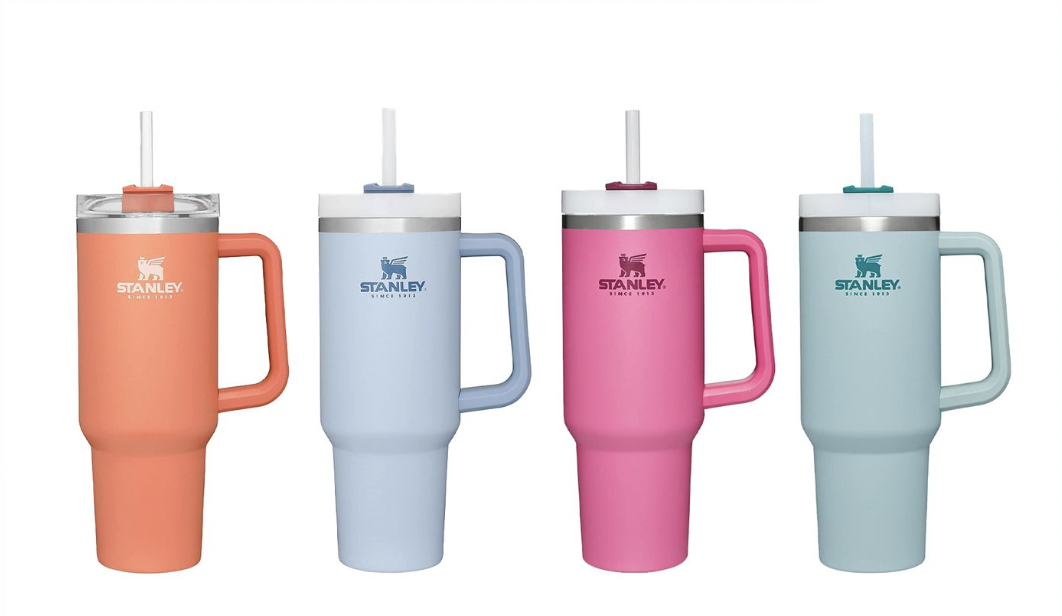
The Stanley cup craze has taken a criminal turn.
A 23-year-old Sacramento, Calif., woman was arrested after allegedly stealing nearly $2,500 worth of Stanley cups from a retail store, local police said. The woman allegedly filled her shopping cart with Stanley Quenchers—the insulated cups that have thrown social-media into a frenzy in recent months—and left without paying.
When police tracked her down, they found her car filled with 65 of the cups, according to Lt. Chris Ciampa of the Roseville Police Department. She was arrested on charges of grand theft and driving under the influence, Ciampa said.
The arrest was the latest episode in the viral craze over the water bottles. The stainless-steel tumblers—the popular, 40-ounce version of which sells for $45—have become a status symbol for many women and teens, sparking chaos at retailers and launching a resale market where certain colours sell for more than $200 apiece. The hashtag #stanleytumbler has more than a billion views on TikTok and has been used more than 180,000 times on Instagram.
Stanley, which has been in business for more than a century, has long been a popular brand for hikers, teachers and construction workers. But as the Quencher’s popularity skyrocketed in recent years, its maker capitalised on the new demand with collaborations and a wider, pastel-driven colour palette.
“We were a brand that was a $70 million brand that appealed to guys with a green bottle that was 107 years old and is one of the greatest products in history,” Stanley’s president, Terence Reilly, said in an interview earlier this month. He added: “There was a big opportunity to reposition the brand and appeal to new consumers. And that’s just what we set out to do in 2020.”
In 2022, the company said there was a 150,000-person long wait list for the Quencher and sales had more than tripled from the prior year.
The cups have sparked a collectors’ craze, with devotees amassing dozens of colours and fighting over limited-edition releases. Ahead of one such release, for the Starbucks x Stanley pink Quencher, shoppers camped overnight outside Target locations to ensure they got a cup. The products sold out in minutes at some stores, and a viral video of frenzied shoppers rushing a display in one location sparked consternation online.
Those limited-edition pink cups, which are currently not available on Target or Stanley’s website, are now retailing for hundreds of dollars on resale sites like eBay and StockX.
Ciampa, the police lieutenant, said he believes the woman likely intended to resell online the 65 cups that were in her car. The department warned any potential thieves against repeating her behaviour.
“While Stanley Quenchers are all the rage, we strongly advise against turning to crime to fulfil your hydration habits,” it said in a statement.
BNW Developments has established a Sydney presence, joining Arada and Sobha Realty among the growing number of UAE developers pursuing Australian buyers and development opportunities.
The Australian leather house has opened an immersive four-day pop-up in Manhattan, unveiling its Bloom Collection and redefining what a product launch can look like.
AI-powered travel agents are challenging online booking platforms, but Airbnb’s exclusive listings and direct customer relationships could give it an edge. Its next challenge: turning repeat guests into loyal customers through stronger rewards and innovation.
3 min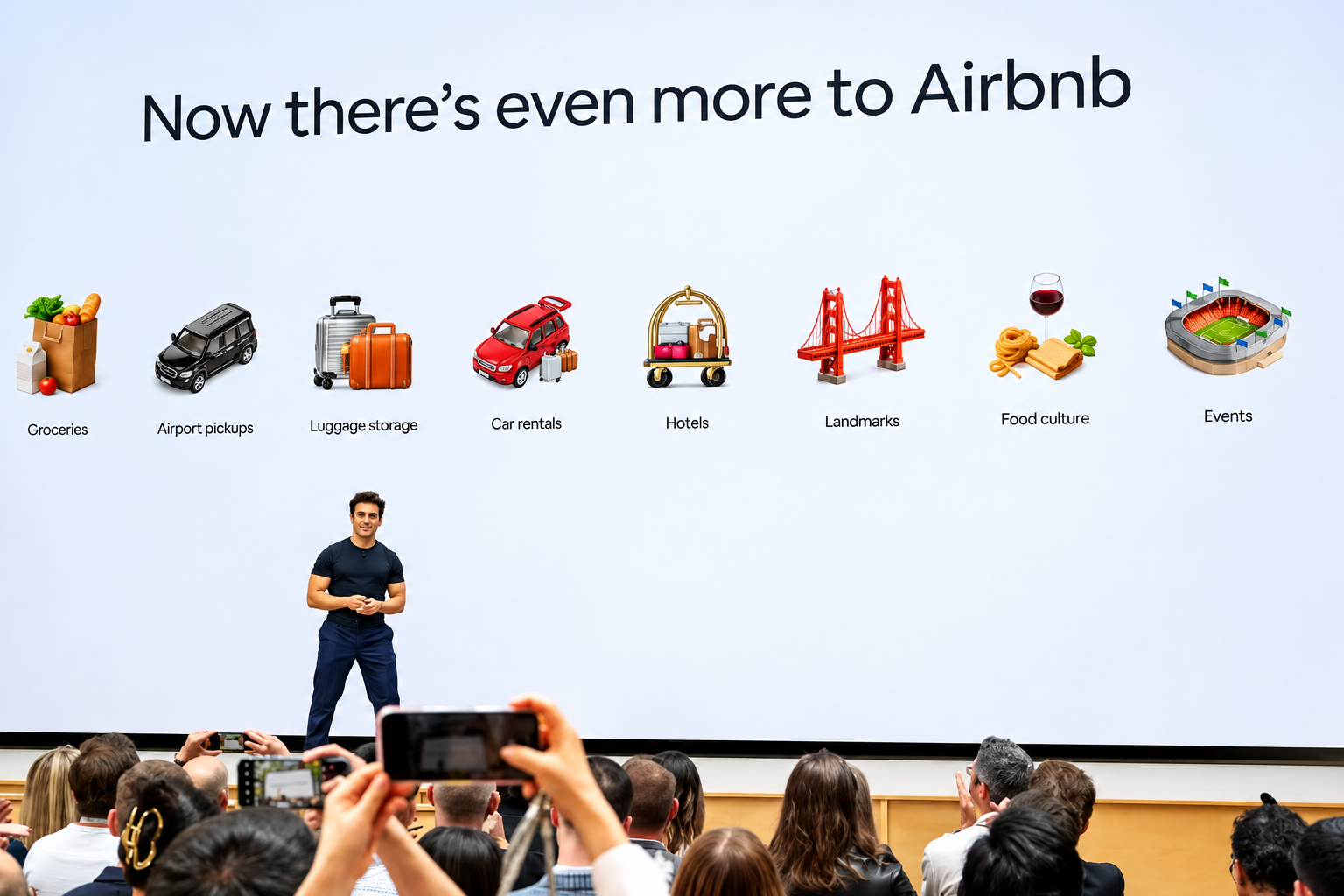
AI agents like Muse can already find you the cheapest hotel room in Paris. But they can’t locate a cheaper version of that Catskills cabin you’ve been eyeing, because it might only be available on Airbnb ABNB -1.43%decrease.
Investors should pay attention to that distinction. When Meta Platforms META 3.38%increase launched its Muse agent last month, travel stocks including Booking Holdings BKNG -1.19%decrease, Expedia and Airbnb all fell sharply.
Airbnb, though, has a real chance to emerge as a winner from the upheaval. The catch: Its stock already reflects above-industry growth. To justify its valuation, Airbnb will need to turn repeat customers into loyal ones.
Online travel companies make much of their money by simplifying search and collecting fees on bookings. AI agents threaten that model.
But not all travel marketplaces are equally exposed. Booking and Expedia largely sell hotel rooms that travelers can also book directly or through competing sites. If an agent can find the same room elsewhere, it has little reason to favor either Booking or Expedia.
Booking and Expedia also sell sponsored listings that steer travelers toward particular properties. Wells Fargo estimates those will account for about 8% of Expedia’s revenue and a much higher percentage of profit next year.
Airbnb has more ways to adapt. More than half its listings are available only on its platform, and more than 90% of its traffic comes directly to its app or website.
The customer relationship doesn’t end after booking, either. Bernstein analyst Richard Clarke notes that 90% of Airbnb guests go on to message their hosts about arrival times, keys or local taxes, giving Airbnb a connection to both sides of the transaction.
How the companies have responded to the possible agentic future is telling.
Expedia quickly signed on as a Muse partner. Airbnb hasn’t, and Chief Executive Brian Chesky says AI chatbots have so far been a boon, sending customers to Airbnb’s website.
Chatbots might work for buying paper towels, he quipped at a Skift conference last month, but people enjoy planning trips. He argued that browsing dozens of homes isn’t something a text-based chatbot is well suited for.
Still, the AI jitters arrived just as Airbnb was persuading investors it deserved its pricey multiple. For years after its 2020 initial public offering, the stock—which trades around 25 to 30 times forward earnings—went nowhere. Investors saw a mature operator trading at a growth premium.
This year, Airbnb growth seems to be accelerating. The stock jumped in August after the company raised its full-year revenue-growth guidance with its second-quarter results. Wells Fargo analyst Ken Gawrelski credits a run of product improvements under a revamped leadership team.
Among the changes: letting guests reserve now and pay later, adding hotels, and a redesigned home page and app. Investors were also betting on what comes next, including thousands more hotels, car rentals and, eventually, advertising.
The irony is that some of those growth drivers push Airbnb closer to the kind of business Booking and Expedia run—the kind of business AI agents could threaten. Even if AI agents capture a large share of travel planning and booking, Airbnb would capture the demand. But it and others would slowly lose control over how customers find and choose properties.
That would undermine the advertising opportunity investors are counting on. The bigger point for Airbnb and other marketplaces is that losing control of customer acquisition could mean surrendering some of their pricing power and margins.
To bulletproof itself, Airbnb might look to another e-commerce giant that has so far kept AI agents at arm’s length: Amazon.
Like Amazon, Airbnb has a loyal customer base and hard-to-match supply. But it has nothing like Prime membership to make customers think twice before taking their business elsewhere.
That is where loyalty comes in. Business travelers stick with Hilton or Marriott because enough nights earn them perks. Leisure travelers rarely accumulate stays with one chain. Airbnb has millions of listings and plenty of repeat customers, but no broad rewards program. It has begun experimenting with credits on hotel stays, but it should make loyalty a priority, not just a promotion.
Airbnb also plans to launch its own AI agent next year. But travelers using an agent might still want it to search Airbnb, Vrbo, Booking and hotel websites alike, rather than limit itself to one company’s inventory.
Eventually, Airbnb might have to strike deals with agent makers, using its unique homes as leverage to negotiate favorable terms, says Gawrelski. Such deals, along with rewards for loyal guests, could over the long term eat into the company’s roughly 13% take rate, he adds. But if they bring in enough additional bookings, the trade-off could be worthwhile.
History offers a reason not to panic. The shift from desktop to mobile unsettled investors in Alphabet and Amazon, but both emerged as major beneficiaries. Companies with valuable assets can come out of a platform shift stronger, if they adapt quickly enough.
Airbnb has homes the bots can’t easily replace. Now it needs to give guests a reason to insist on booking them there.
