
From Singapore to Porto: why designer Gabriel Tan upped stakes for Europe
By Robyn Willis
Fri, Mar 22, 2024 10:54am 6 min
6 min
6 min

 6 min
6 min
While the rest of the world was hunkering down in 2020 as the reality of COVID set in, Gabriel Tan was moving house — halfway around the world.
The Singaporean designer and his heavily pregnant wife Cherie Er relocated with their five-year-old son to Porto, on the coast of Portugal. It was a bold move given Tan had an established studio in Singapore, but the couple decided it was worth the risk to be in the heart of the design centres in Europe and the US.
“It was difficult because we had a good business in Singapore and my wife had a really good job — she was running the Asia Pacific sales for Credit Suisse,” he says. “We threw everything in the basket and moved to Portugal.
“We decided that this design business has to work.”
For more stories like this, order your copy of Kanebridge Quarterly magazine here.
By the time Tan, who decided on a career in design while doing his national service in the navy, left for Portugal, he was already a name in Singapore and Japan, first with Outofstock, which he started with two friends, then his own studio before working with Japanese brand Ariake.
“I met them when they were still doing contract manufacturing and they were a local brand that wasn’t even known in Tokyo,” he says. “Originally the plan was just for me to design a few products for them. I told them that’s not going to move the needle for them if you are just going to add my products to your current collection so I suggested something more ambitious.
“I kind of appointed myself as the creative director.”
Origin story
The experience with Ariake spurred Tan onto build his own brand, Origin Made, designing products and taking on interior design projects, but he was keen to continue to extend himself.
Over time, living and working in a country of 5.5 million people was beginning to feel limiting.
With more of his time and attention being directed towards brands in Italy, Scandinavia and the United States, it made sense for Tan to make a permanent move to a location with easier access to Europe as well as North America. It was also an opportunity for a fresh start in design terms.
“I felt I was getting pigeon holed a little bit before COVID because people felt my work was very minimalist Japanese/Scandinavian, but it was because I was designing for Japanese clients,” he says. “When you work with a company, it is 50 percent them and 50 percent you. You bring part of yourself but at the same time, you can’t ignore the brand, their culture and their customers.”
Life in lockdown
Like much of the rest of the world, Portugal was in lockdown when Tan and Er arrived and their rental accommodation was not entirely comfortable for the family. As some work dried up in Singapore, Tan found himself with time to think.
“We were spending a lot of time in front of the TV and we were all wishing we had a more comfortable couch in our apartment,” he says.
“I was still waiting for my home to be finished construction so we were in a very uncomfortable spot.
“I really prioritised comfort when I was designing this sofa so I really went for it and tried to think ‘what is the craziest, most comfortable form we could get’.”
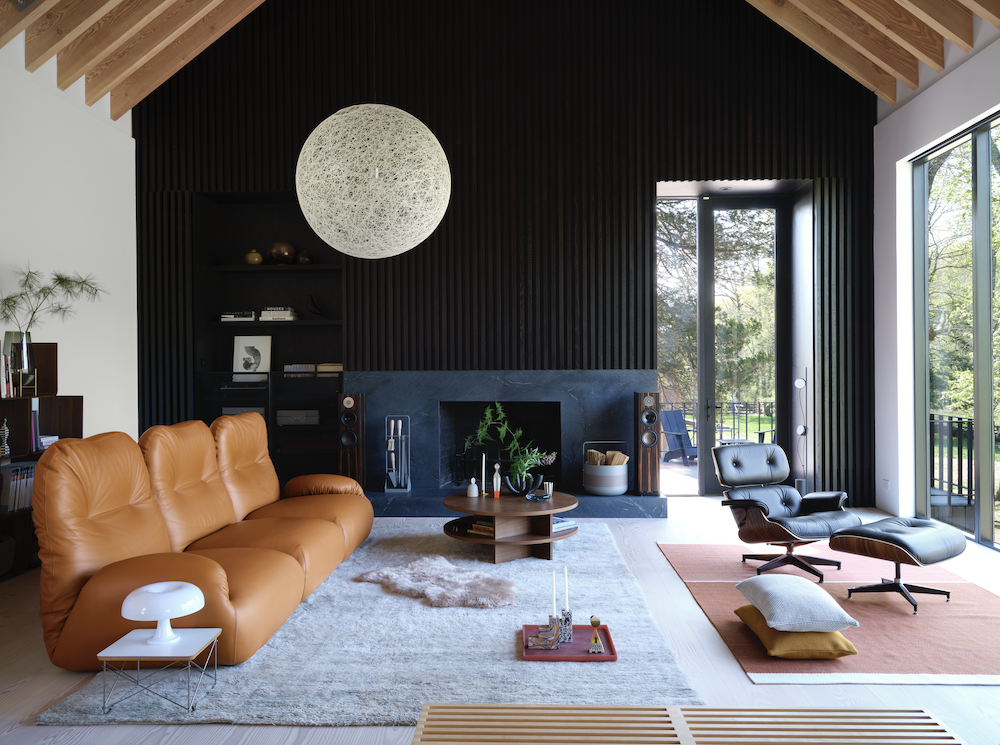
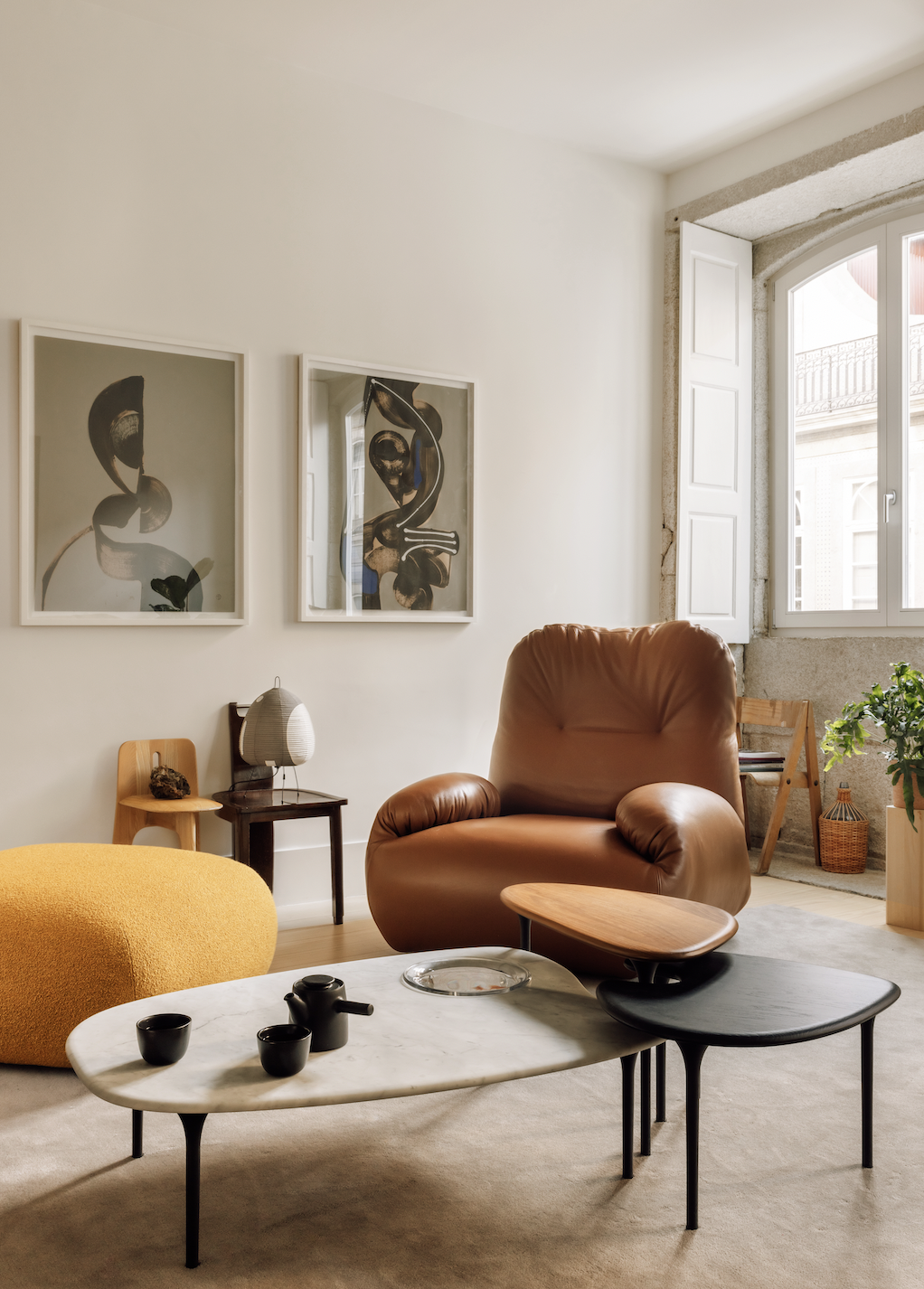
The sofa is the Luva (Portuguese for glove), a modular design taking its inspiration from Japanese futon beds and western boxing gloves. The backrest has the ability to extend for full lounging or to fold down to create a ‘fist’ for more support. It’s a deliberate attempt at cross cultural pollination.
“You have the eastern influence of the futon and the western sport of boxing and I tried to get an aesthetic that different cultures would be familiar with whether they are from Asia, Europe or the US,” he says. “You will find this shape is familiar to you and you will be naturally drawn to it.”
Build your own
While the lounge is in keeping with a contemporary aesthetic and comfort levels, it also embodies the practicality that is an integral part of Tan’s approach. Each piece is available individually, allowing the user to ‘build’ the lounge to suit their needs, whether they live in a large house or a small apartment.
“I have lived in apartments all my life,” he says. “You can see how narrow the stairwells can be, and you have to carry the sofa up.
“Whenever we are doing interior design for clients we know the consideration when you’re buying a sofa. If it’s modular, if you can get it through doorways and narrow hallways, it’s going to be much easier to convince the client to buy.”
It’s also a design that the user can add to over time, extending the usefulness and longevity of the sofa. Tan took it to product design director at Herman Miller, Noah Schwarz, who was quick to recognise its applications.
“He would often ask what I was working on so I showed him this sofa and immediately he was like ‘this could be something for us’,” says Tan.
“He thought it might be something for the MillerKnoll group but which brand he couldn’t tell yet.
“But he said ‘definitely don’t show it to other people’.”
The Luva has since been joined by the Cyclade tables, a trio of coffee and occasional tables designed to work equally well together or singularly. Other collaborations have followed, including work with major European brands such as B+B Italia, Menu, Abstracta and Design Within Reach while still maintaining his Singaporean office.
Cutting down travel times has meant more time on the ground.
“Here I travel quite a lot to meet with different companies I am working with and that helps because to me these distances are super short,” he says. “For designers living in Europe they might not want to go to Denmark because it’s a 3.5 hour flight but to me, even if I have to transit, five hours is no problem.”
Leap of faith
Although the move to Europe was risky, Tan has no regrets. While he admits his Portuguese is still a work in progress, his two sons (Er delivered a baby boy not long after arriving in Portugal) are quickly learning the language and the family has now moved into a traditional townhouse, which Tan has renovated, and where their office is based.
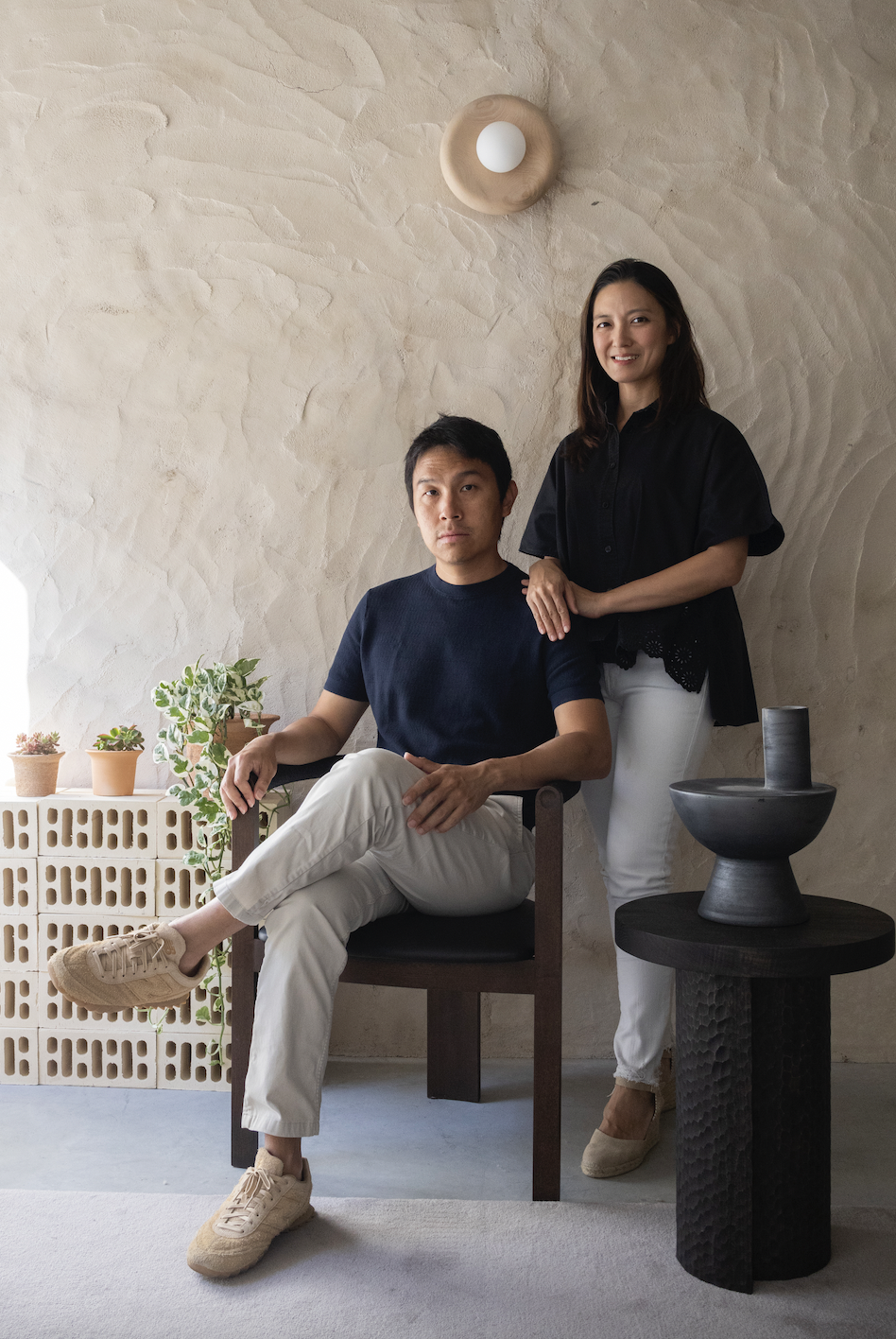
Being in the heart of Europe has opened up a world of opportunity for Tan that has been both invigorating and challenging.
“I am designing for companies of different countries and I get to learn more about other ways of life and how people from other countries see design and see their homes and their spaces and how people do business in different parts of the world,” he says. “Coming from Singapore, it can be very stifling because it is so small. It’s really such a joy to experience these different cultures through design collaborations.”
Moving away from family and friends was a leap of faith but it gave him the push he needed. For a designer whose work is all about comfort, he is not one taking the safe path and staying home.
“It’s a good business model for revenue but you are not going to leave a mark on design history, you are not going to touch the lives of that many people if you are working with regional brands,” he says. “I really wanted to work with the international brands that have the reach with customers worldwide and I think if I hadn’t moved I would not have had that clarity of mind and that focus to really go for it.”
The Australian leather house has opened an immersive four-day pop-up in Manhattan, unveiling its Bloom Collection and redefining what a product launch can look like.
Following the successful launch of its Palais Collection, MAISON de SABRÉ has unveiled a new modular handbag system offering more than 720 styling combinations.
Georgetown agent Jamie Peva blends history and real estate on Instagram, turning local stories into a powerful sales strategy.
5 min
On a recent morning in Georgetown—Washington, D.C.’s oldest neighborhood—real-estate agent Jamie Peva strode down leafy N Street, brimming with historical tidbits.
Jackie Kennedy once lived on the street, he said. So did Ben Bradlee, former executive editor of the Washington Post, along with a former Miss America and a powerful U.S. Senator. Bradlee’s widow, author Sally Quinn, and Eric Schmidt, former CEO of Google, own stately homes there.
“I’ve seen a picture of Lyndon Johnson coming out of this house,” said Peva, passing a Federal-style brick mansion. “Also, the Beatles went to a lawn party here.”
Peva, a 60-year-old agent with Washington Fine Properties, has sold Georgetown real estate for over three decades, often traversing the neighborhood by bicycle. Of the roughly 2,500 houses in the historic neighborhood, he has been involved in the sale of 460, he estimated. A self-styled historian of the neighborhood, he knows stories behind its houses and their owners going back generations.
With a knack for lively storytelling, he shares his knowledge with some 37,500 Instagram followers, who have made Peva—sporting the bow ties he has worn since boarding school—an unlikely social-media influencer. Many of his followers are locals, and most have no plans to buy or sell real estate—until they do. It is then, according to Peva, that his spirited reels bring him to mind.
“It’s the digital version of a refrigerator magnet,” he said.
After Peva’s first video in November 2023, his eponymous Instagram account sparked a 10% increase in sales volume in the first year, and another 20% the next, he estimated. “It’s been very good for business, there is no question about it,” he said.
But Peva’s posts have also made him a local celebrity. As he walked down N street, the driver of a Mercedes station wagon slowed down to honk and wave. A lady walking a large dark gray dog stopped to ask what he was filming that day (a reel about a Colonial-era bottling plant.) Peva knew the dog from walking his two springers, Jumpy and Peggy-O, in the neighborhood.
“I need to make a video about the pooches of Georgetown,” he mused.
A growing number of real-estate agents now use social media to sell, and some have millions of followers with reels featuring ultraluxury pads, selling tips or reality TV-style reports on their daily lives. While Peva posts about his listings—and sometimes those of other agents—he mostly focuses on Georgetown history, local businesses and community events, saying his goal is to benefit both his business and the neighborhood.
“If we don’t find something genuinely interesting and worth sharing, we won’t do it,” said Peva’s daughter, Violet Peva, a New York social-media strategist who films, edits and posts his reels. “We cover many topics, not just real-estate information.”
Peva is originally from Connecticut, but has lived in Georgetown for over 30 years, currently in a cottage-style house with a white picket fence. Over the years, Georgetown has changed. The Georgetown Set, a powerful group of Cold War-era residents whose Sunday-night potluck dinners are said to have swayed U.S. policy, has long faded away. The community is still home to high-profile Washingtonians, including a Republican senator and several cabinet members. But it increasingly also attracts technology and finance executives, according to Peva. He now routinely signs nondisclosure agreements, ensuring privacy for wealthy clients. The shift has made him rethink his marketing approach.
“For years, a big part of our Georgetown business was made up of people who maintained a low profile,” he said. Real-estate agents were similarly low-key. Today, curb appeal is more important, he said, and agents are promoting themselves more. “As this change was underfoot, I was thinking that I needed to evolve myself too,” he said.
Though his own social-media use is mostly limited to following sailing accounts, he asked his daughter to help him post his listings online. Violet, now 26, started coming to D.C. once a month to film his reels. After an early video, on a condominium building called the Elliott, her sister Fern called her to report: “Daddy’s blowing up on Instagram,” Violet recalled. The reel got over 50,000 views. The next two each drew over 300,000. Peva’s most popular post ever, with over 838,000 views, was about the Grateful Dead playing in Georgetown. Sometimes, Peva interviews Georgetowners such as Quinn, the author, or Jamie Stachowski, the owner of a local butcher shop.
Peva, who majored in history in college, now spends up to two hours a day on research, usually in the morning while on his stationery bike. Online, he pores over old newspapers or the Library of Congress website, and he has a collection of articles and books—in and out of print—about Georgetown.
Companies often approach Peva for promotional posts, he said, but he turns them down, feeling that followers would lose interest in constant commercials. One exception is a recent paid post on Mount Vernon, the former home of George Washington. Peva wanted to share its history, he said, and didn’t want to lose the opportunity to another Instagrammer.
Anthony Arend, a professor at Georgetown University, has lived in his current home for 19 years without any plans to sell or buy real estate. But he follows Peva and often likes his posts.
“He is very charismatic, he is energetic, and he obviously knows a lot about the community,” said Arend, who has referred house-hunting friends to Peva.
One of Peva’s biggest deals—the $10.5 million sale of a 19th-century Italianate mansion—came after he made two 2024 reels featuring the property. In March, he sold the longtime O Street home of Tim and Jane Matz for $5.8 million after featuring it on his Instagram. Peva had showed them the home 25 years earlier, with Violet in a baby carrier on his back.
Last year, Kate Watts, 49, a digital consultant, called Peva to sell her late father’s three-bedroom house on Q Street; her husband had seen Peva on Instagram. In an October reel, Peva praised the architecture of the house, designed by modernist Hugh Newell Jacobsen. Halfway through, he mentioned an open house the next day, ending with an upbeat: “Did I also mention this house is for sale? $3.75 million!” The reel got 27,000 views, the open house was packed, and the buyers made an offer at the list price on the same day.


