SpaceX and Tesla Are Joined at the Hip. A Merger Would Make It Formal. - Kanebridge News
Share Button

SpaceX and Tesla Are Joined at the Hip. A Merger Would Make It Formal.

Elon Musk is exploring a potential merger between Tesla and SpaceX, a deal that could reshape the future of AI, robotics, autonomous vehicles and space technology. With a combined valuation potentially reaching $3.5 trillion, the move could bring Musk’s vision of an interconnected technology ecosystem closer to reality, although a deal remains uncertain.

By Becky Peterson and Corrie Driebusch
Thu, Oct 22, 2026 9:32pmGrey Clock 5 min

Elon Musk has engineered ties between Tesla TSLA 3.41%increase; up pointing triangle and SpaceX SPCX 7.79%increase; up pointing triangle that are hard to break, and now he wants to fuse them together permanently.

Musk has run both Tesla and SpaceX concurrently over the past two decades, using a schedule that dictated which days he spent focused on each business.

The companies have often shared resources and personnel, signaling their close ties. Last year, SpaceX looked into creating a spacesuit for Tesla’s humanoid robot Optimus, a person familiar with the matter said. Tesla last week showed off its new Roadster, a vehicle featuring SpaceX rocket thrusters that it hopes to soon bring to market.

And in recent months, Musk has repositioned both companies by expanding beyond their core operations toward a shared mission centered on artificial intelligence.

The world’s richest man on Tuesday signaled his interest in tying up SpaceX and Tesla, marking what would be the biggest corporate merger of all time. Because he serves as chief executive of SpaceX and Tesla, Musk said committees of independent directors at both companies are evaluating a possible deal, adding that a transaction might not come to fruition.

The committees will likely evaluate, with lawyers and bankers, how each company would fare in a potential deal and how a deal might best be structured. They then present their conclusions to their respective boards, who typically vote on whether to proceed.

“It’s an odd Kabuki dance where two groups of people are talking and I can’t be in the conversation,” Musk told SpaceX investors on Tuesday in response to an analyst’s question about a potential deal.

For Musk, the merger supports his vision of a world full of autonomous cars, humanoid robots and weekly rocket launches, as well as the data centers and satellites required to keep the whole thing running.

Some investors and analysts said they expect a transaction would be structured as an all-stock deal, with SpaceX potentially paying a modest premium for Tesla shares.

SpaceX, which has a market value of about $2 trillion, said it is seeing sharp growth in revenue across its businesses, which include operating data centers, launching rockets and operating satellite networks such as the internet service Starlink. Tesla is valued at about $1.5 trillion and is expanding its operations beyond its automotive and energy business. Shares in both companies traded higher following the news Tuesday.

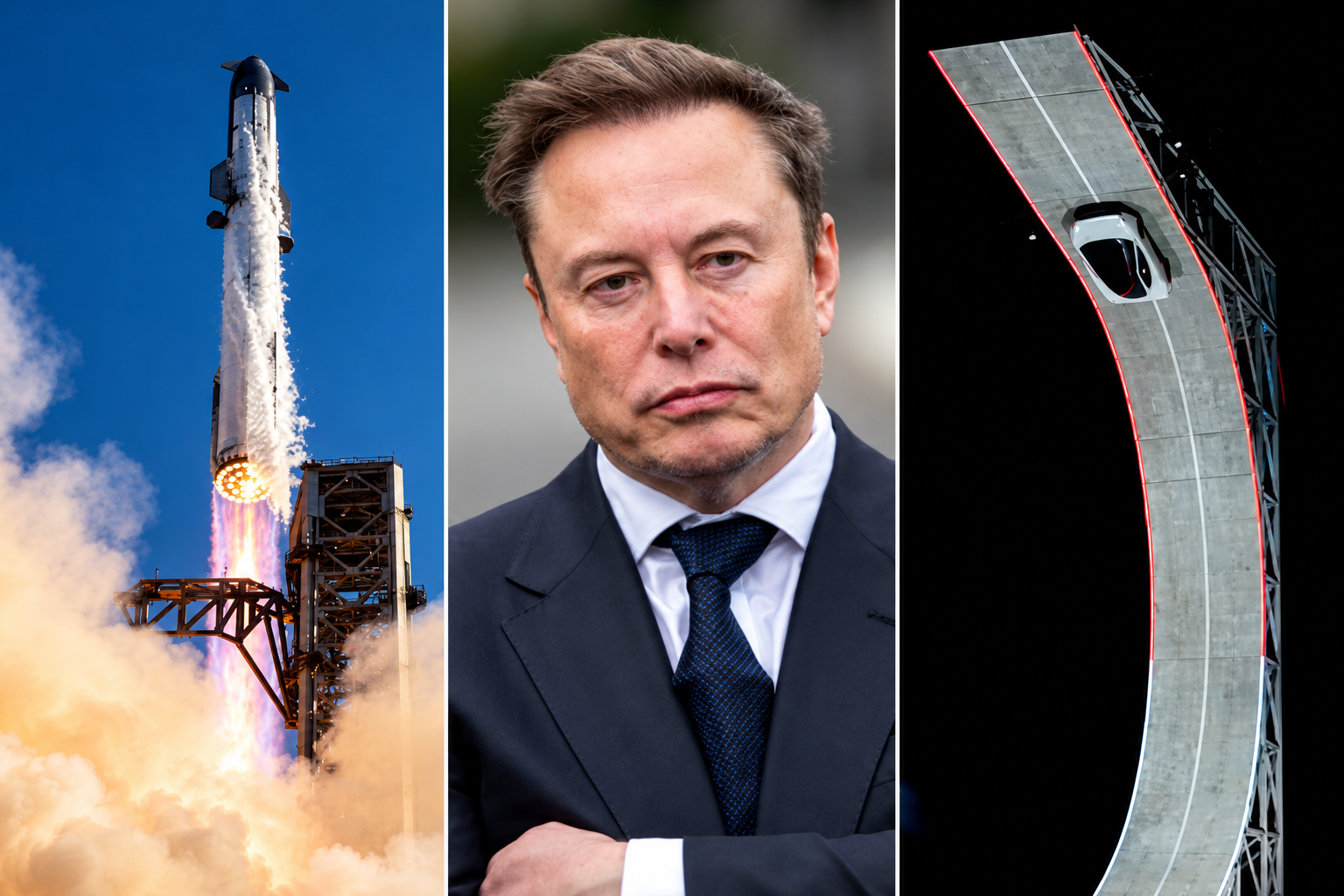
The SpaceX Starship and Super Heavy v3 Booster lift off from the launch complex in Starbase, Texas, framed by silhouetted plants in the foreground.
A test flight from the SpaceX launch complex in Starbase, Texas. Steve Nesius/Reuters

Musk’s substantial ownership stakes in both companies, along with voting control at SpaceX, has enabled him to set the deal in motion. Analysts and investors said the deal will probably face regulatory scrutiny internationally, though some see Musk’s close relationship with the Trump administration as an asset to getting approval.

Blurred lines

The companies haven’t said which directors are on the special committees evaluating a potential deal. Several SpaceX and Tesla board members have either personal or business ties to Musk. And like Musk, venture capitalist Ira Ehrenpreis sits on both boards.

In a filing this week, Tesla outlined millions of dollars in business agreements with SpaceX and its subsidiaries last year, including $143 million in car sales to SpaceX, $3.3 million in advertising that it bought on the social-media platform X and $430 million in revenue from the sale of Megapack batteries for SpaceX’s data centers.

The companies also split the cost of resources including the use of Musk’s SpaceX jet and the bill for his personal security, which he runs through a private company.

Employees at both companies routinely move between companies to work on special projects, and some executives have dual roles, including Charles Kuehmann, vice president of materials engineering at both SpaceX and Tesla, and Ashok Elluswamy, the vice president of AI software at Tesla who runs a joint venture with SpaceX called Digital Optimus.

Over the years, Musk has launched new startups within his empire, including brain-implant company Neuralink, underground-tunnel developer the Boring Company and xAI, the AI startup that merged with SpaceX in February.

It is that AI business that Musk thinks can serve a market worth tens of trillions of dollars, justifying the need for a merger.

The business case goes like this: Tesla is developing robotaxis and robots, which it calls “physical AI.” SpaceX is working on the back end of physical AI: the data-center capacity and internet connection required for those robotaxis and robots to operate continuously.

Tesla Optimus humanoid robots and a Cybercab autonomous vehicle on display.
A Tesla Cybercab autonomous driverless vehicle and Optimus humanoid robots. Benjamin Girette/Bloomberg News

“I don’t see what the value of Tesla is if it’s not merged with SpaceX,” said investment adviser Ross Gerber, a former Tesla bull turned critic invested in both companies. “If they don’t merge, the brains of everything that runs Tesla is owned by another company.”

On top of it all, both companies face constraints on the supply chains they need to make this world a reality, particularly when it comes to chips. To address this, Musk earlier this year announced a joint venture between Tesla, SpaceX and Intel to design and manufacture chips in Texas. “The most epic chip-building exercise by far,” he has said.

Musk at the wheel

For Musk, a merger would also solve two problems: demands on his attention and his lack of control at Tesla.

Tesla for years was Musk’s only public company, a status that came with greater scrutiny. There, Musk reports to a public board, as well as individual investors who make up around 30% of Tesla’s voting power, according to FactSet.

The question of Musk’s attention became a particular focus for investors and the board in recent years after he acquired Twitter in 2022 and launched xAI in 2023, and again in 2025 as he spent time in Washington, D.C., running the Department of Government Efficiency in the early months of President Trump’s second term.

As Tesla’s car business suffered in 2025, Musk threatened to take his AI ambitions outside the company if he wasn’t granted 25% voting control. Last November, Tesla shareholders approved a new pay package for Musk, which created a path for him to vastly expand his stake.

As of Sept. 30, Musk owned a roughly 20% stake in Tesla, according to the company’s proxy filing.

The SpaceX IPO gave Musk a different path. When SpaceX went public in June, the deal’s structure enabled him to have more than 80% voting power at the company—so much that he can’t be fired and decisions can’t be made without his support.

If SpaceX acquires Tesla, he will likely stay in control.


MOST POPULAR

BNW Developments has established a Sydney presence, joining Arada and Sobha Realty among the growing number of UAE developers pursuing Australian buyers and development opportunities.

The Australian leather house has opened an immersive four-day pop-up in Manhattan, unveiling its Bloom Collection and redefining what a product launch can look like.

Related Stories
Lifestyle
The Parents Suing Schools Because Their Kids Got Bad Grades
By Zusha Elinson 10/11/2026
Lifestyle
How to Leave Your Career While Keeping the Door Open to a Comeback
By Callum Borchers 05/11/2026
Lifestyle
Apple’s Growth Machine Is Slowing. High Prices Might Not Save It.
By Rolfe Winkler 03/11/2026

Grade disputes are increasingly taking U.S. parents from the classroom to the courtroom. A growing number are challenging teachers’ assessments, with some cases escalating into lawsuits over report card comments, academic performance and even accusations of AI use.

By Zusha Elinson
Tue, Nov 10, 2026 4 min

When Weiwei Luo saw the report card saying her son needed to work on “cooperating with others,” the Silicon Valley mom demanded it be changed. When the school district declined, she called her lawyer.

What began last fall as a playground spat between third-graders has now escalated into a courtroom brawl: In a lawsuit filed in October, Luo calls the teacher’s comments “inaccurate and unsubstantiated,” and is asking a judge to order the district to rehear her case.

Time was when parents disciplined children for bringing home bad marks. Today, they often take a more adversarial approach, educators say, leaning on teachers and administrators to change grades in disputes that can even spill into court.

Ever since remote learning brought classrooms into living rooms during the pandemic, U.S. parents have grown more involved in and less enchanted with schools, according to numerous surveys. That includes scrutinizing how teachers evaluate their children.

Four in 10 American teachers report facing pressure from moms and dads to change grades, according to a 2024 EdWeek survey of a nationally representative sample of 1,500 educators. Affluent parents, teachers noted, were more likely to complain.

Esther Wojcicki, a retired Palo Alto teacher and author of “How to Raise Successful People,” said parents have a newfound sense of self-righteousness in protecting their children. “Especially if they get a bad grade,” she added, “the parents go to battle for them.”

That pushback is pushing some teachers over the edge. In Nashville, Tenn., Samira Hardcastle, a teacher of the year, became an internet sensation this year when she quit. Her resignation letter accused district officials of fabricating a grade to “appease an irate parent” whose child had repeatedly failed to turn in an art assignment in Hardcastle’s class at John F. Kennedy Middle School.

“There’s no accountability, so they learn that it doesn’t matter what their work ethic is,” Hardcastle told The Wall Street Journal. “That’s going to be a tough lesson when they get into the real world and realize it doesn’t work that way.”

A spokesman for Metropolitan Nashville Public Schools said it wasn’t “accurate to characterize this as the district simply changing a student’s grade at a parent’s request.” Sean Braisted said administrators stepped in to give the student another chance to finish the assignment, and independently graded the project.

Fueling this friction is the narrow path into a top U.S. university, argues Rowena Chiu, a Palo Alto school board member and mother of four. “To get your child into an elite university these days seems more impossible than ever,” she said. “I think that does trickle down into nervousness about a particular grade.”

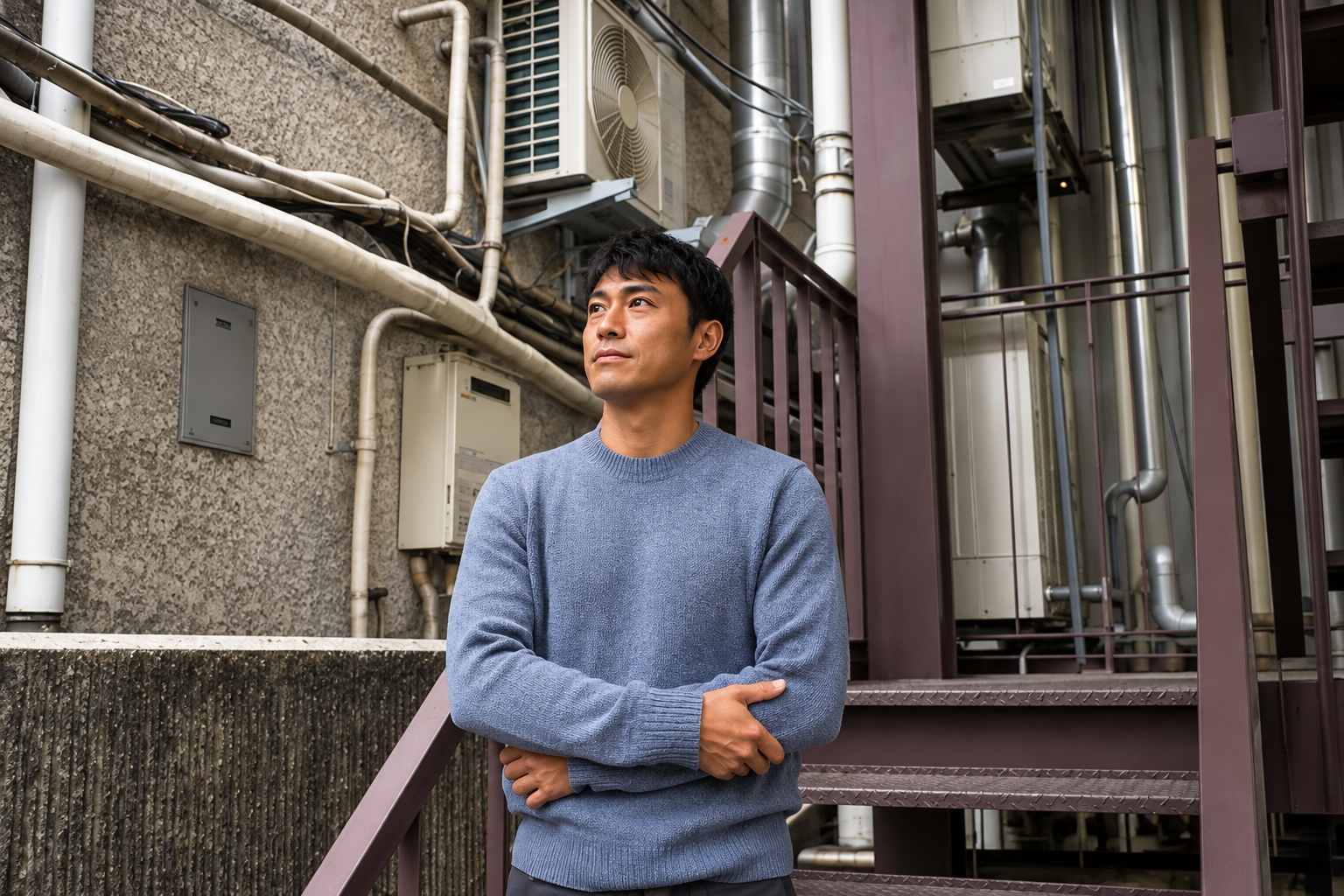
Takashi Kato poses on stairs.
Takashi Kato, shown in 2019, sued his son’s school district over an essay flagged as ‘76% AI.’ Kentaro Takahashi/Bloomberg News

In one recent case, Takashi Kato, the founder and CEO of a Silicon Valley artificial-intelligence startup, sued the Palo Alto Unified School District in federal court after AI-detection software flagged an essay his son turned in as “76% AI.” The tenth-grade English teacher let him redo the assignment, on Arthur Miller’s “The Crucible,” but she gave him a D on the retake, bringing his final grade down to a C.

Kato fought back. He submitted to the district a 1,162-page packet showing the sophomore’s “drafting and revision process,” which he argued proved his son had done nothing wrong, the suit said. The suit said that detection software can be biased against non-native English writers. He offered to accept a B to resolve the dispute.

The district wasn’t persuaded and in March, Kato hired a lawyer. In his lawsuit, he argued that an “academic dishonesty” record could affect college admissions and more. After months of litigation, Kato dropped the suit in September. Kato declined to comment.

“If you’re going to accuse a student of using AI you need to understand the impact it has on the student and give them the proper due process,” said Evan Nelson, Kato’s attorney. “It was never about the grade and it was never about the money, it was all about trying to fix this.”

Lynette White, a spokeswoman for Palo Alto schools, said the district doesn’t comment on litigation, but added there was no settlement.

Also in Palo Alto, the Walter Hays Elementary School strife included a game of tag at recess. A third-grade boy stuck out his tongue at another student who kicked him, and then grew frustrated when his teacher didn’t believe the kick was intentional, according to court filings.

On his report card, the teacher wrote that the boy was “working on his responses to peers when he is frustrated” and “developing his ability to listen to others’ perspectives and collaborate with humility.”

The mom, Luo, hired a lawyer and complained to the school board that the incident didn’t justify the comments. The board disagreed, saying the remarks “reflected the teacher’s observations, were within her competence, were substantiated, and were not misleading,” according to the suit.

But Luo claims the hearing wasn’t fair because her attorney was disconnected from the video call. She didn’t respond to requests for comment and her lawyer declined to comment.

White, the district spokeswoman, said there is a process for parents to challenge grades. “The district follows that process and will respond to the petition in court,” White said.