The Beleaguered Chip Sellers Getting Their Revenge on Apple - Kanebridge News
Share Button

The Beleaguered Chip Sellers Getting Their Revenge on Apple

Surging demand from AI data centres has driven flash memory prices up fivefold over the past year, giving suppliers such as Kioxia greater leverage over Apple. The shift is increasing storage costs for the iPhone maker, putting pressure on profit margins and contributing to higher prices across its product lineup.

By Rolfe Winkler
Thu, Oct 29, 2026 6:47pmGrey Clock 3 min

During a ride in a Southern California desert, sales executive Scott Nelson stopped his dirt bike, pulled out a rifle and shot his old iPod.

Nelson sold flash storage to Apple AAPL -0.94%decrease; down pointing triangle and hated feeling like he always got the worst end of the deal. His Japan-based manufacturer, Kioxia, had little leverage. Apple was the world’s biggest buyer of flash—the chips in iPhones that store photos, music and apps—and used its position to squeeze every cent from suppliers. Apple bullied flash makers into opening their books so it could monitor sales, making sure no one else got a better deal.

Kioxia and other flash makers stewed as Apple paid them pennies for flash storage that the iPhone maker resold to customers for dollars. The disparity in bargaining power had galled Nelson, who used Android phones in protest.

Nelson kept the broken pieces of his iPod, the first Apple device to use flash. They sit on his desk and hold a special reverence now that the tables have turned.

In the past year, demand by AI hyperscalers has quintupled prices for flash, according to research firm TechInsights, opening a new era for Kioxia and other suppliers. Two years ago, Apple bought nearly twice the flash storage of Microsoft, Amazon, Meta and Google combined, according to TechInsights estimates. Hyperscalers are now buying double Apple’s share.

Flash memory suppliers and their sales teams privately expressed their glee at Apple’s comeuppance during chitchat at the industry’s largest conference this summer in Santa Clara, Calif. AI deals have given Kioxia sales executives and other flash suppliers new leverage to charge Apple higher prices.

Meta, Microsoft and Amazon signed contracts with Kioxia this year to secure long-term supply by committing to higher prices. The contracts protect Kioxia’s profits if the market turns. The company declined to comment.

Hyperscalers can afford to pay more. Flash storage is a smaller part of building a data center than making an iPhone, and accounting rules allow companies to spread the cost over years.

Apple is expected to spend $25 billion on flash storage this year for about the same amount it bought for $6 billion in 2025, according to estimates by TechInsights. Tim Cook, Apple’s executive chairman, compared escalating memory chip prices to a “100-year flood.”

Yet Apple had ignored analysts’ warnings and was caught off guard, said people familiar with the company’s procurement practices.

Company executives believed they knew the market better than anyone else, the people said. Flash that cost $68 a gigabyte in 2005 had fallen to a nickel by 2023. Now, demand by the AI industry has lifted the price to more than 30 cents a gigabyte, a 550% jump, threatening Apple’s steep profit margins from selling extra storage.

Buyers of the iPhone 17 Pro paid Apple $200 last year for double the storage of its 256-gigabyte base model. The extra storage at the time cost Apple $15 and has since shot up to $66, according to an analysis by The Wall Street Journal.

Storage upgrades for iPhone 17 Pro (2025) versus iPhone 18 Pro (2026)

“Apple has historically driven a very hard bargain with memory suppliers,” said Walt Coon, an analyst at TechInsights. “And there’s no shortage of satisfaction among suppliers now that the balance of power is shifting.”

“We’ve worked with many of our suppliers for decades, and we deeply value their partnership over the years,” Apple said in statement. “We look forward to continuing our important work together.”

A buyer at the Apple store on Fifth Avenue in New York City last month.
A buyer at the Apple store on Fifth Avenue in New York City last month. Vanessa Carvalho/ZUMA Press

Apple recorded an average gross profit of more than 80 cents for every dollar it charged iPhone and iPad buyers for extra storage since it first released those devices through 2025, the Journal found. For Mac computers sold since 2010, it averaged nearly 80 cents.

In recent months, Apple raised prices for nearly all of its products. Prices rose an average of 13% for iPhones, an increase that included older models which typically get a price cut.

Price, change from Fall 2025 to 2026

The question for Apple is whether consumers will react to the higher prices by keeping their iPhones longer or whether they will continue to buy at their usual pace. For flash-storage makers, the question is when—or if—Apple will regain its flash-market leverage.

“It’s been a love-hate relationship between Apple and the flash industry,” said Mark Newman, an analyst with Bernstein Research. Apple has sustained the manufacturers for years, he said, but its power to cap prices, while beneficial to shareholders, left suppliers feeling “screwed.”

Commitment-phobe

In 2001, engineers at Kioxia, then called Toshiba, showed two Apple executives a 1.8-inch-diameter, 5-gigabyte hard drive they had developed but didn’t yet know what to do with.


MOST POPULAR

BNW Developments has established a Sydney presence, joining Arada and Sobha Realty among the growing number of UAE developers pursuing Australian buyers and development opportunities.

The Australian leather house has opened an immersive four-day pop-up in Manhattan, unveiling its Bloom Collection and redefining what a product launch can look like.

Related Stories
Lifestyle
Robert Pattinson Wins the Race to Be the Next James Bond
By John Jurgensen and Esther Zuckerman 17/11/2026
Lifestyle
The Global Economy Looks Vulnerable to an AI Bust
By Jason Doughlas 12/11/2026
Lifestyle
The Parents Suing Schools Because Their Kids Got Bad Grades
By Zusha Elinson 10/11/2026

Robert Pattinson has been cast as the next James Bond, becoming the seventh actor to portray Agent 007 and the first selected under Amazon MGM Studios’ ownership. He will make his debut in the 26th official Bond film, directed by Denis Villeneuve and written by Steven Knight.

By John Jurgensen and Esther Zuckerman
Tue, Nov 17, 2026 4 min

The next James Bond to serve Britain—and the first selected under new corporate owner Amazon—has been assigned to the mission, bringing closure to a casting race that has gone on for more than a decade.

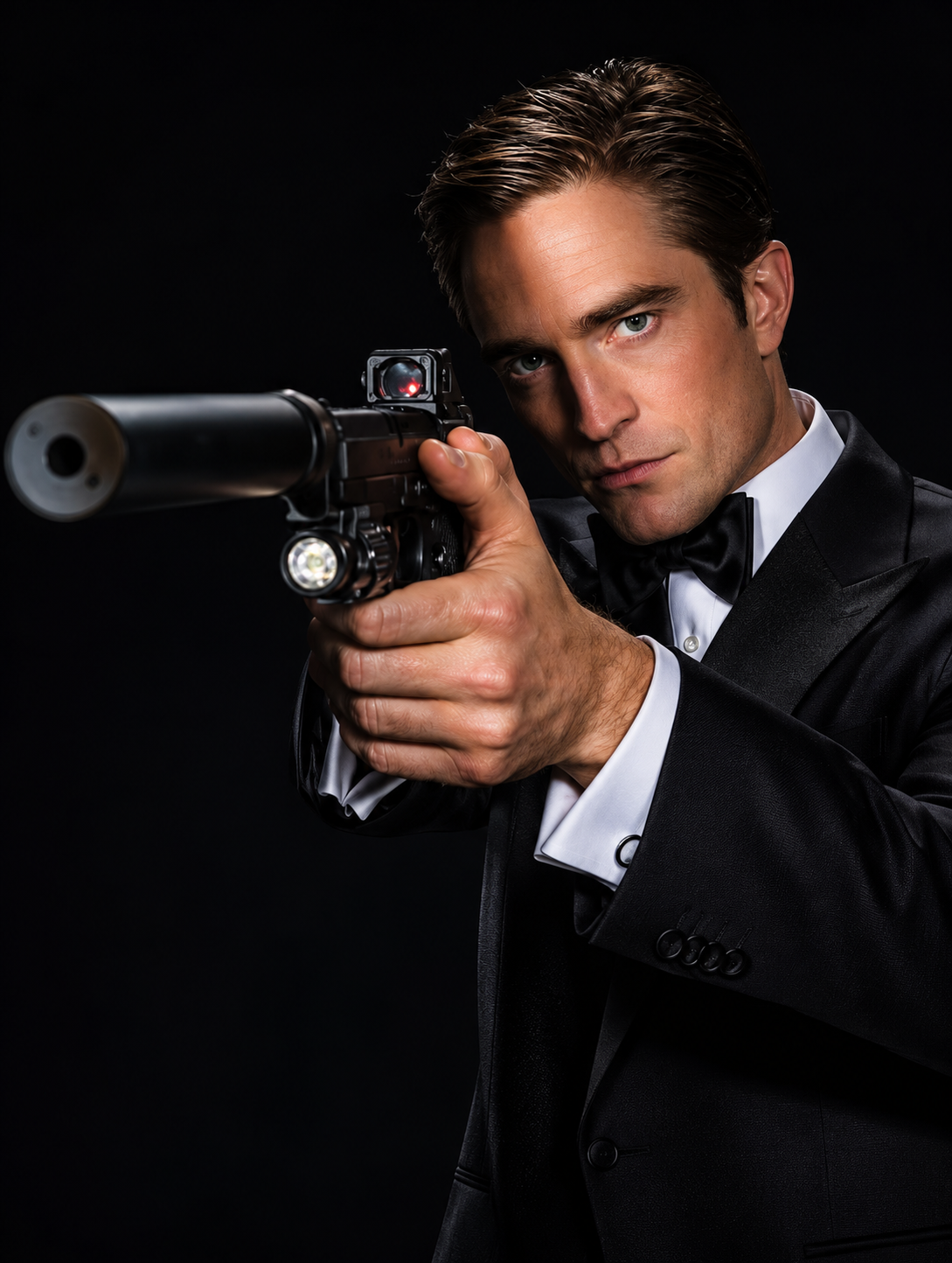
Robert Pattinson will play Agent 007 starting with the 26th official Bond movie being directed by “Dune” filmmaker Denis Villeneuve. Pattinson’s casting was revealed in an Instagram post which featured him emerging from the shadows, gun in hand, while Bond’s signature theme music played.

In a statement, Pattinson called the role an “honour of a lifetime.”

“To say this role is a dream come true is an understatement,” he said.

Pattinson, 40, first shot to fame as a vampire in the “Twilight” series and his second Batman film is currently in the works. His casting is the clearest signal yet of the strategy Amazon MGM Studios has for one of the most famous movie heroes of all time. As the first major movie star to get picked for the role that has often gone to less famous actors, Pattinson can help bring his existing fan base to Bond along with experience handling blockbuster pressure both on and off screen.

Robert Pattinson starred in the ‘Twilight’ series.
Robert Pattinson starred in the ‘Twilight’ series. Alamy

It’s highly unusual for an actor who has already anchored a tentpole franchise like Batman to also get the call to play Bond. In the past, producers have aimed for their Bonds to be linked primarily to that property.

Pattinson in ‘The Batman.’
Pattinson in ‘The Batman.’ ©Warner Bros/Everett Collection

The studio, formed by Amazon’s 2022 purchase of MGM, needs to reintroduce the international superspy for a new era following a clash over the storied franchise with the producing family who controlled it for more than 60 years. The stalemate over Bond’s direction contributed to the character’s longest-ever absence from the screen.

The issue of who was the right fit for Bond’s tuxedo loomed over the most drawn-out casting cycle yet for the movie series. In recent weeks, rumors gave way to reports by Hollywood trade publications that official screen tests were taking place.

Daniel Craig’s five-film run ended with his Bond perishing in 2021’s ‘No Time to Die.’
Daniel Craig’s five-film run ended with his Bond perishing in 2021’s ‘No Time to Die.’ ©Sony Pictures/Courtesy Everett Collection

These trade reports indicated a narrowing field of actors that included Jack Lowden, who has experience playing a spy in the Apple TV series “Slow Horses”; Josh O’Connor, best known for playing a young Prince Charles in Netflix’s “The Crown”; and Callum Turner, whose credits include “Masters of the Air,” an Apple TV series about World War II pilots.

Then came other trade reports of actors with more established names in the mix: Pattinson and Nicholas Hoult, who is currently Lex Luthor in the latest Superman movies.

Each of these apparent candidates was met with a frenzy of internet discussion over their respective levels of star power, charisma and other qualifications. Yet debate over Craig’s replacement has flared for years around other names, starting more than a decade ago when Idris Elba was among the actors rumored to be in contention, raising the possibility of a Black man playing Bond. (The actor has repeatedly said he only discussed the role with the franchise’s producer.)

The casting issue was the last big obstacle left over from a rough stretch of uncertainty for the franchise. After Amazon bought Metro-Goldwyn-Mayer for $6.5 billion, along with Bond as the crown jewel in the studio’s library, the tech company’s film executives found themselves at odds with the family who still held the power to decide when and how the next Bond film would move forward.

Producers Barbara Broccoli and Michael Wilson, her stepbrother, had steered the property for 30 years, having inherited control from Broccoli’s father, Albert “Cubby” Broccoli, whose Eon Productions first brought Bond to the big screen in 1962’s “Dr. No.”

Barbara Broccoli, who had been at the helm since Pierce Brosnan’s debut in 1995’s “GoldenEye,” was skeptical of the tech company’s qualifications to steer Bond, seeing Amazon as being driven more by data than storytelling, The Wall Street Journal reported. But then, in February 2025, she and Wilson closed a deal that gave Amazon full creative control over Bond.

When it was announced that Amazon had full control, company founder Jeff Bezos posted on social media, “Who’d you pick as the next Bond?”

The deal put the pending Bond movie and the ultimate casting decision fully in the hands of Amazon MGM Studios executives Mike Hopkins and Courtenay Valenti, along with veteran film producers Amy Pascal and David Heyman.

Pattinson is the seventh actor to officially play novelist Ian Fleming’s creation since Sean Connery in 1962. He inherits the role from Daniel Craig, whose five-film run ended with his Bond perishing in 2021’s “No Time to Die.”

Pattinson is one of the industry’s busiest stars. This year alone he played villains in “The Odyssey” and Villeneuve’s upcoming “Dune: Part Three,” and also appeared in smaller, edgier films released by the indie studio A24, “Primetime” and “The Drama.”

While Pattinson got his start as a heartthrob, he’s recently gravitated to stranger roles that show his range and his more unnerving qualities which stand in counter to Bond’s typical self-possession. His unique line readings have recently become the subject of memes.

The London native, whose most famous characters have been American, now faces the challenge of embodying a hero who is iconically British but one over which movie fans worldwide feel ownership.

Villeneuve, who will direct the Bond film being written by “Peaky Blinders” creator Steven Knight, acknowledged the lengthy search in a statement, saying, “We were surrounded by extraordinary talent, but there can only be one 007.”