
The Longevity Vacation: Poolside Lounging With an IV Drip
The latest trend in wellness travel is somewhere between a spa trip and a doctor’s appointment

By ALEX JANIN
Tue, Apr 16, 2024 4:48pm 4 min
4 min
4 min


The latest trend in wellness travel is somewhere between a spa trip and a doctor’s appointment
4 min
For some vacationers, the ideal getaway involves $1,200 ozone therapy or an $1,800 early-detection cancer test.
Call it the longevity vacation. People who are fixated on optimising their personal health are pursuing travel activities that they hope will help them stay healthier for longer. It is part of a broader interest in longevity that often extends beyond traditional medicine . These costly trips and treatments are rising in popularity as money pours into the global wellness travel market.
At high-end resorts, guests can now find biological age testing, poolside vitamin IV drips, and stem-cell therapy. Prices can range from hundreds of dollars for shots and drips to tens of thousands for more invasive procedures, which go well beyond standard wellness offerings like yoga, massages or facials.
Some longevity-inspired trips focus on treatments, while others focus more on social and lifestyle changes. This includes programs that promise to teach travellers the secrets of centenarians .
Mark Blaskovich, 66 years old, spent $4,500 on a five-night trip last year centred on lessons from the world’s “Blue Zones,” places including Sardinia, Italy, and Okinawa, Japan, where a high number of people live for at least 100 years. Blaskovich says he wanted to get on a healthier path as he started to feel the effects of ageing.
He chose a retreat at Modern Elder Academy in Mexico, where he attended workshops detailing the power of supportive relationships, embracing a plant-based diet and incorporating natural movement into his daily life.
“I’ve been interested in longevity and trying to figure out how to live longer and live healthier,” says Blaskovich.
When Christy Menzies noticed nurses behind a curtained-off area at the Four Seasons Resort Maui in Hawaii on a family vacation in 2022, she assumed it might be Covid-19 testing. They were actually injecting guests with vitamin B12.
Menzies, 40, who runs a travel agency, escaped to the longevity clinic between trips to the beach, pool and kids’ club, where she reclined in a leather chair, and received a 30-minute vitamin IV infusion.
“You’re making investments in your wellness, your health, your body,” says Menzies, who adds that she felt more energised afterward.
The resort has been expanding its offerings since opening a longevity centre in 2021. A multi-day treatment package including ozone therapy, stem-cell therapy and a “fountain of youth” infusion, costs $44,000. Roughly half a dozen guests have shelled out for that package since it made its debut last year, according to Pat Makozak, the resort’s senior spa director. Guests can also opt for an early-detection cancer blood test for $1,800.
The ozone therapy, which involves withdrawing blood, dissolving ozone gas into it, and reintroducing it into the body through an IV, is particularly popular, says Makozak. The procedure is typically administered by a registered nurse, takes upward of an hour and costs $1,200.
Longevity vacationers are helping to fuel the global wellness tourism market, which is expected to surpass $1 trillion in 2024, up from $439 billion in 2012, according to the nonprofit Global Wellness Institute. About 13% of U.S. travelers took part in spa or wellness activities while traveling in the past 12 months, according to a 2023 survey from market-research group Phocuswright.
Canyon Ranch, which has multiple wellness resorts across the country, earlier this year introduced a five-night “Longevity Life” program, starting at $6,750, that includes health-span coaching, bone-density scans and longevity-focused sessions on spirituality and nutrition.
The idea is that people will return for an evaluation regularly to monitor progress, says Mark Kovacs, the vice president of health and performance.
Doctors preach caution, noting many of these treatments are unlikely to have been approved by the Food and Drug Administration, producing a placebo effect at best and carrying the potential for harm at worst. Procedures that involve puncturing the skin, such as ozone therapy or an IV drip, risk possible infection, contamination and drug interactions.
“Right now there isn’t a single proven treatment that would prolong the life of someone who’s already healthy,” says Dr. Mark Loafman, a family-medicine doctor in Chicago. “If it sounds too good to be true, it probably is.”
Some studies on certain noninvasive wellness treatments, like saunas or cold plunges , do suggest they may help people feel less stressed, or provide some temporary pain relief or sleep improvement.
Linda True, a policy analyst in San Francisco, spent a day at RAKxa, a wellness retreat on a visit to family in Thailand in February. True, 46, declined the more medical-sounding offerings, like an IV drip, and opted for a traditional style of Thai massage that involved fire and is touted as a “detoxification therapy.”
“People want to spend money on things that they feel might be doing good,” says Dr. Tamsin Lewis, medical adviser at RoseBar Longevity at Six Senses Ibiza, a longevity club that opened last year, whose menu includes offerings such as cryotherapy, infrared sauna and a “Longevity Boost” IV.
RoseBar says there is good evidence that reducing stress contributes to longevity, and Lewis says she doesn’t offer false promises about treatments’ efficacy . Kovacs says Canyon Ranch uses the latest science and personal data to help make evidence-based recommendations.
Jaclyn Sienna India owns a membership-based, ultra luxury travel company that serves people whose net worth exceeds $100 million, many of whom give priority to longevity, she says. She has planned trips for clients to Blue Zones, where there are a large number of centenarians. On one in February, her company arranged a $250,000 weeklong stay for a family of three to Okinawa that included daily meditation, therapeutic massages and cooking classes, she says.
India says keeping up with a longevity-focused lifestyle requires more than one treatment and is cost-prohibitive for most people.
Doctors say travellers may be more likely to glean health benefits from focusing on a common vacation goal : just relaxing.
Dr. Karen Studer, a physician and assistant professor of preventive medicine at Loma Linda University Health says lowering your stress levels is linked to myriad short- and long-term health benefits.
“It may be what you’re getting from these expensive treatments is just a natural effect of going on vacation, decreasing stress, eating better and exercising more.”
 Copyright 2020, Dow Jones & Company, Inc. All Rights Reserved Worldwide. LEARN MORE




BNW Developments has established a Sydney presence, joining Arada and Sobha Realty among the growing number of UAE developers pursuing Australian buyers and development opportunities.
The Australian leather house has opened an immersive four-day pop-up in Manhattan, unveiling its Bloom Collection and redefining what a product launch can look like.
AI-powered travel agents are challenging online booking platforms, but Airbnb’s exclusive listings and direct customer relationships could give it an edge. Its next challenge: turning repeat guests into loyal customers through stronger rewards and innovation.
3 min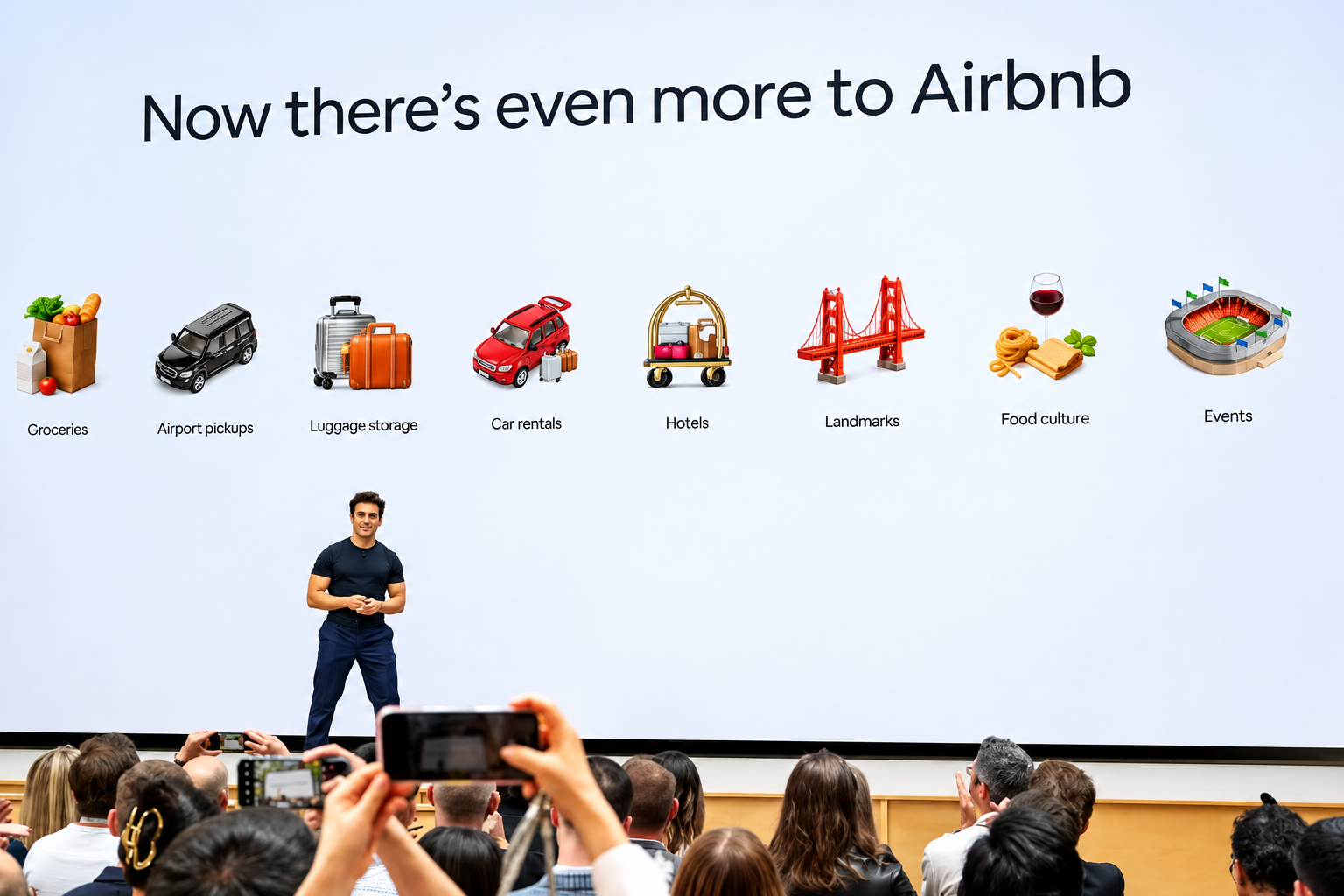
AI agents like Muse can already find you the cheapest hotel room in Paris. But they can’t locate a cheaper version of that Catskills cabin you’ve been eyeing, because it might only be available on Airbnb ABNB -1.43%decrease.
Investors should pay attention to that distinction. When Meta Platforms META 3.38%increase launched its Muse agent last month, travel stocks including Booking Holdings BKNG -1.19%decrease, Expedia and Airbnb all fell sharply.
Airbnb, though, has a real chance to emerge as a winner from the upheaval. The catch: Its stock already reflects above-industry growth. To justify its valuation, Airbnb will need to turn repeat customers into loyal ones.
Online travel companies make much of their money by simplifying search and collecting fees on bookings. AI agents threaten that model.
But not all travel marketplaces are equally exposed. Booking and Expedia largely sell hotel rooms that travelers can also book directly or through competing sites. If an agent can find the same room elsewhere, it has little reason to favor either Booking or Expedia.
Booking and Expedia also sell sponsored listings that steer travelers toward particular properties. Wells Fargo estimates those will account for about 8% of Expedia’s revenue and a much higher percentage of profit next year.
Airbnb has more ways to adapt. More than half its listings are available only on its platform, and more than 90% of its traffic comes directly to its app or website.
The customer relationship doesn’t end after booking, either. Bernstein analyst Richard Clarke notes that 90% of Airbnb guests go on to message their hosts about arrival times, keys or local taxes, giving Airbnb a connection to both sides of the transaction.
How the companies have responded to the possible agentic future is telling.
Expedia quickly signed on as a Muse partner. Airbnb hasn’t, and Chief Executive Brian Chesky says AI chatbots have so far been a boon, sending customers to Airbnb’s website.
Chatbots might work for buying paper towels, he quipped at a Skift conference last month, but people enjoy planning trips. He argued that browsing dozens of homes isn’t something a text-based chatbot is well suited for.
Still, the AI jitters arrived just as Airbnb was persuading investors it deserved its pricey multiple. For years after its 2020 initial public offering, the stock—which trades around 25 to 30 times forward earnings—went nowhere. Investors saw a mature operator trading at a growth premium.
This year, Airbnb growth seems to be accelerating. The stock jumped in August after the company raised its full-year revenue-growth guidance with its second-quarter results. Wells Fargo analyst Ken Gawrelski credits a run of product improvements under a revamped leadership team.
Among the changes: letting guests reserve now and pay later, adding hotels, and a redesigned home page and app. Investors were also betting on what comes next, including thousands more hotels, car rentals and, eventually, advertising.
The irony is that some of those growth drivers push Airbnb closer to the kind of business Booking and Expedia run—the kind of business AI agents could threaten. Even if AI agents capture a large share of travel planning and booking, Airbnb would capture the demand. But it and others would slowly lose control over how customers find and choose properties.
That would undermine the advertising opportunity investors are counting on. The bigger point for Airbnb and other marketplaces is that losing control of customer acquisition could mean surrendering some of their pricing power and margins.
To bulletproof itself, Airbnb might look to another e-commerce giant that has so far kept AI agents at arm’s length: Amazon.
Like Amazon, Airbnb has a loyal customer base and hard-to-match supply. But it has nothing like Prime membership to make customers think twice before taking their business elsewhere.
That is where loyalty comes in. Business travelers stick with Hilton or Marriott because enough nights earn them perks. Leisure travelers rarely accumulate stays with one chain. Airbnb has millions of listings and plenty of repeat customers, but no broad rewards program. It has begun experimenting with credits on hotel stays, but it should make loyalty a priority, not just a promotion.
Airbnb also plans to launch its own AI agent next year. But travelers using an agent might still want it to search Airbnb, Vrbo, Booking and hotel websites alike, rather than limit itself to one company’s inventory.
Eventually, Airbnb might have to strike deals with agent makers, using its unique homes as leverage to negotiate favorable terms, says Gawrelski. Such deals, along with rewards for loyal guests, could over the long term eat into the company’s roughly 13% take rate, he adds. But if they bring in enough additional bookings, the trade-off could be worthwhile.
History offers a reason not to panic. The shift from desktop to mobile unsettled investors in Alphabet and Amazon, but both emerged as major beneficiaries. Companies with valuable assets can come out of a platform shift stronger, if they adapt quickly enough.
Airbnb has homes the bots can’t easily replace. Now it needs to give guests a reason to insist on booking them there.
