A&K Unveils a New Era of Tailormade Luxury in Africa
From gorilla encounters in Uganda to a reimagined Okavango retreat, Abercrombie & Kent elevates its African journeys with two spectacular lodge transformations.
By Sponsored Post
Wed, Nov 26, 2025 3:10pm 5min
Abercrombie & Kent has strengthened its position as the world’s leading experiential travel company with two newly transformed lodges in Africa, signalling a new era of tailormade luxury for guests seeking deeply personal, once-in-a-lifetime journeys on the continent that shaped the brand more than 60 years ago.
For A&K, Africa is not just another destination; it is the birthplace of the company and the foundation of its pioneering approach to responsible luxury travel.
Tailormade journeys allow guests to explore this vast continent entirely on their own terms, supported by a global network of destination experts, specialist guides, and on-the-ground “guardian angels” available around the clock.
Every tailormade itinerary is a fully customised experience, interweaving iconic highlights with hidden wonders. Whether guests dream of tracking wildlife on remote plains, discovering ancient cultures, or reconnecting with family in one of Africa’s most inspiring landscapes, each journey is designed to be as unique as the traveller themselves.
Abercrombie & Kent’s African portfolio has entered a new chapter with the reveal of two extensively rebuilt Sanctuary lodges in Uganda and Botswana, each designed to elevate the experience of Tailormade travel, the luxury company’s signature approach to deeply personal, fully customised journeys.
For more than 60 years, A&K has drawn on its roots in East Africa to craft exceptional, high-touch adventures for travellers seeking privacy, immersion and meaning.
With the reopening of Gorilla Forest Lodge in Uganda and Baines’ Lodge in Botswana’s Okavango Delta, the brand is doubling down on the blend of design, wildlife access and sustainability that has long set it apart.
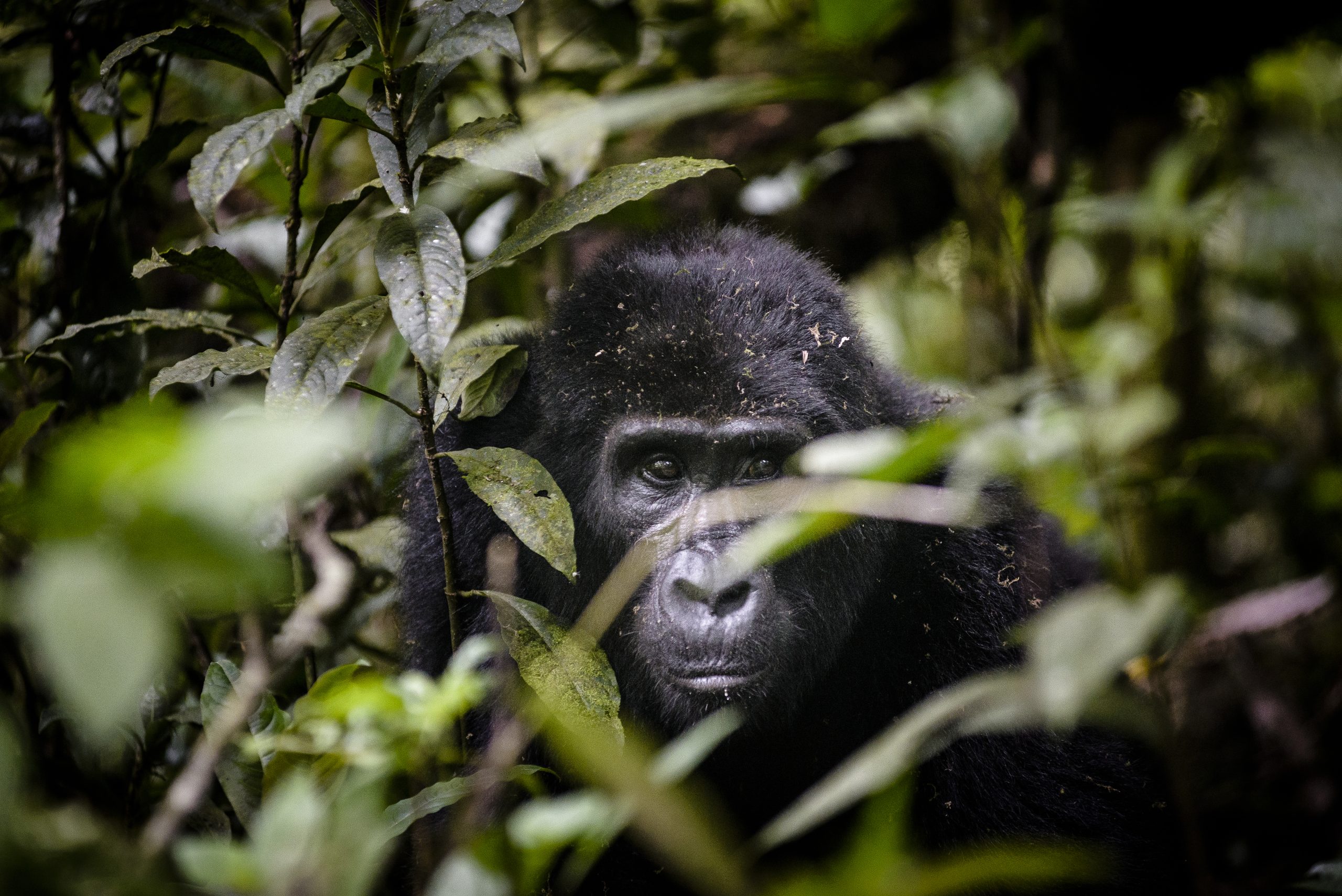
A rare mountain gorilla in the wilds surrounding Sanctuary Gorilla Forest Lodge, deep within Uganda’s Bwindi Impenetrable Forest.
Gorilla Forest Lodge: A New Benchmark
Tucked inside one of the world’s most biologically rich regions, Gorilla Forest Lodge, an A&K Sanctuary, has long had a singular claim: it is the only luxury lodge located within the actual boundaries of Bwindi Impenetrable National Park.
Already extraordinary in location, the lodge has now undergone a complete transformation — and the result is a deeply refined, fully immersive sanctuary designed with both sensitivity and ambition.
Design that draws from the forest, not against it
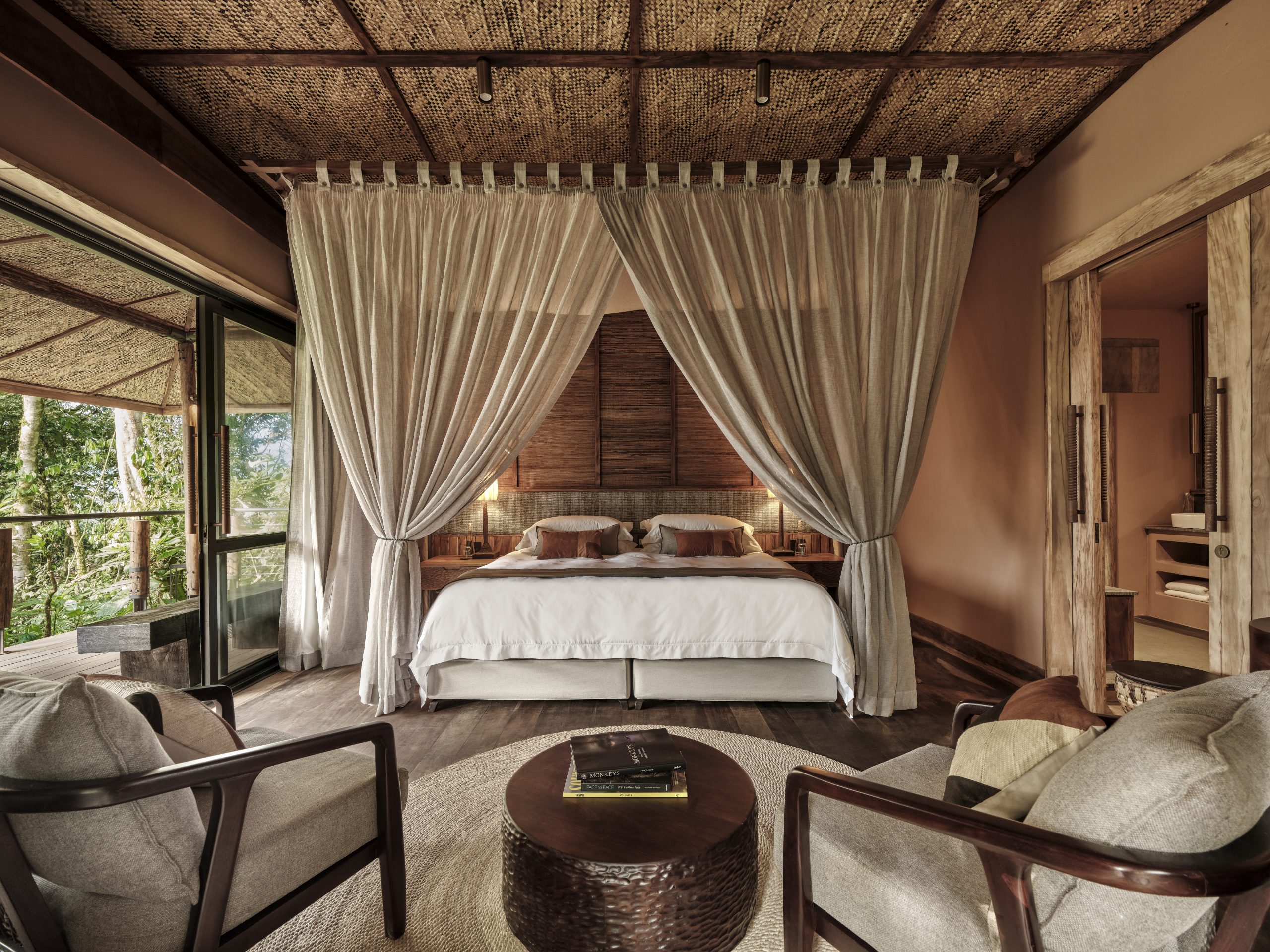
The rebuild significantly expands each of the ten guest suites, creating generous private sanctuaries suspended in the rainforest canopy. Interiors draw directly from local craft traditions — banana-fibre ceilings, handwoven textiles, reclaimed woodwork and artisanal detailing made in nearby communities. The effect is layered, tactile and unmistakably Ugandan.
Bathrooms have been reimagined as spa-like retreats, with freestanding bathtubs positioned for forest views and rain showers opening to private decks. Each suite now includes its own lounge, an oversized bed, and an elevated deck where guests often spot the region’s famed mountain gorillas at dawn.
A newly transformed suite at Gorilla Forest Lodge in Uganda’s Bwindi Impenetrable Forest. Photo: Damian Russell.
Conservation and culture at the centre
The lodge’s redesign continues A&K’s decades-long commitment to Uganda’s local communities. Every stay contributes to A&K Philanthropy projects, including education initiatives and healthcare access for villages bordering the park.
Geoffrey Kent’s deep history in Uganda, stretching back more than 40 years, is woven into the property’s ethos. Guests can participate in conservation-oriented activities, guided by expert trackers who work directly with the Uganda Wildlife Authority.
An experience shaped by rarity
Gorilla trekking remains one of the most extraordinary wildlife experiences on the planet. Being based inside the park means trekking groups can depart directly from the lodge, often reaching gorilla families in shorter times than guests staying outside the gates.
The result is an experience that feels both exclusive and unhurried, exactly what A&K’s Tailormade travellers value.
Lounge at Baines’ Lodge, Okavango Delta, Botswana. Photo: Damian Russell.
Baines’ Lodge: A Six-Suite Masterpiece Reborn in the Okavango Delta
Botswana’s Okavango Delta is one of Africa’s most iconic landscapes — a shifting world of floodplains, lagoons and wildlife-rich islands. Within this UNESCO World Heritage Site, Baines’ Lodge, an A&K Sanctuary, has emerged from a top-to-bottom rebuild that elevates it into one of the most intimate and design-driven lodges in the Delta.
A River Pavilion in the Wilderness
Set on the banks of the Boro River, the new Baines’ Lodge is constructed on stilts, lifting the six suites high above the floodplains. The architecture embraces an “African pavilion gallery” concept: column-lined walkways, soaring ceilings and open-sided lounges that dissolve the barrier between interior and wilderness.
The colour palette draws from the Delta itself — muted greens, reeds, sun-washed timber, handwoven ceilings and raw natural textures that give the lodge a sculptural quietness.
Six suites, each a private retreat
Every suite has been reimagined with: • Deep soak tubs with uninterrupted water views • Private decks and outdoor seating for birdwatching and stargazing • Contemporary African art and artisanal pieces • Expansive indoor-outdoor bathrooms • King beds with mosquito-net canopies • Soft, indirect lighting that mirrors the Delta’s shifting tones
Despite its refined interiors, the lodge remains deeply committed to environmental sensitivity. Lunawood, a lightweight timber material, forms much of the structure, ensuring minimal environmental impact and allowing the lodge to be removed without damaging the landscape, which is an unusually progressive approach for a luxury property.
Wildlife at your doorstep
Because the lodge is located on a permanent channel of the Delta, game viewing is exceptional year-round. Guests can explore by: • Mokoro (traditional dugout canoe) • Motorboat • Guided walking safaris • 4×4 game drives • Private river cruises • Sundowner excursions along the floodplains
The area is known for elephant herds, wild dogs, lions, leopards, hippos and rare birdlife, all often visible directly from the lodge’s deck.
Tailormade Africa: The Signature Advantage
While many safari operators offer luxury, A&K’s Tailormade approach is built around something rarer: absolute personalisation.
Guests receive access to: • Private guides and handpicked specialists • Seamless logistics across remote areas • Behind-the-scenes experiences not open to the public • 24/7 on-the-ground support • Carefully choreographed transfers between lodges, parks and cities • Exclusive conservation and community activities
A New African Chapter
The reopening of Gorilla Forest Lodge and Baines’ Lodge marks a significant investment in Africa by Abercrombie & Kent, reinforcing its mission to offer world-leading luxury experiences that honour place, elevate culture and maintain a light environmental footprint.
Both properties are now open, with bookings available as part of fully Tailormade itineraries crafted exclusively by A&K’s global network of experts.
BNW Developments has established a Sydney presence, joining Arada and Sobha Realty among the growing number of UAE developers pursuing Australian buyers and development opportunities.
The Australian leather house has opened an immersive four-day pop-up in Manhattan, unveiling its Bloom Collection and redefining what a product launch can look like.
Related Stories
Lifestyle
AI Agents Are a Threat to Travel Businesses. Airbnb Could Still Be a Winner.
By David Wainer 13/10/2026
Lifestyle
Amazon in Talks to Buy AI Startup Decart for Around $7 Billion
By Kate Clark and Lauren Thomas 12/10/2026
Lifestyle
Dolly Parton’s Onetime Hollywood Hills Home Lists for the First Time in a Generation Asking $7.95M
AI-powered travel agents are challenging online booking platforms, but Airbnb’s exclusive listings and direct customer relationships could give it an edge. Its next challenge: turning repeat guests into loyal customers through stronger rewards and innovation.
By David Wainer
Tue, Oct 13, 2026 3min
AI agents like Muse can already find you the cheapest hotel room in Paris. But they can’t locate a cheaper version of that Catskills cabin you’ve been eyeing, because it might only be available on AirbnbABNB -1.43%decrease.
Airbnb, though, has a real chance to emerge as a winner from the upheaval. The catch: Its stock already reflects above-industry growth. To justify its valuation, Airbnb will need to turn repeat customers into loyal ones.
Online travel companies make much of their money by simplifying search and collecting fees on bookings. AI agents threaten that model.
But not all travel marketplaces are equally exposed. Booking and Expedia largely sell hotel rooms that travelers can also book directly or through competing sites. If an agent can find the same room elsewhere, it has little reason to favor either Booking or Expedia.
Booking and Expedia also sell sponsored listings that steer travelers toward particular properties. Wells Fargo estimates those will account for about 8% of Expedia’s revenue and a much higher percentage of profit next year.
Airbnb has more ways to adapt. More than half its listings are available only on its platform, and more than 90% of its traffic comes directly to its app or website.
The customer relationship doesn’t end after booking, either. Bernstein analyst Richard Clarke notes that 90% of Airbnb guests go on to message their hosts about arrival times, keys or local taxes, giving Airbnb a connection to both sides of the transaction.
How the companies have responded to the possible agentic future is telling.
Expedia quickly signed on as a Muse partner. Airbnb hasn’t, and Chief Executive Brian Chesky says AI chatbots have so far been a boon, sending customers to Airbnb’s website.
Chatbots might work for buying paper towels, he quipped at a Skift conference last month, but people enjoy planning trips. He argued that browsing dozens of homes isn’t something a text-based chatbot is well suited for.
Still, the AI jitters arrived just as Airbnb was persuading investors it deserved its pricey multiple. For years after its 2020 initial public offering, the stock—which trades around 25 to 30 times forward earnings—went nowhere. Investors saw a mature operator trading at a growth premium.
This year, Airbnb growth seems to be accelerating. The stock jumped in August after the company raised its full-year revenue-growth guidance with its second-quarter results. Wells Fargo analyst Ken Gawrelski credits a run of product improvements under a revamped leadership team.
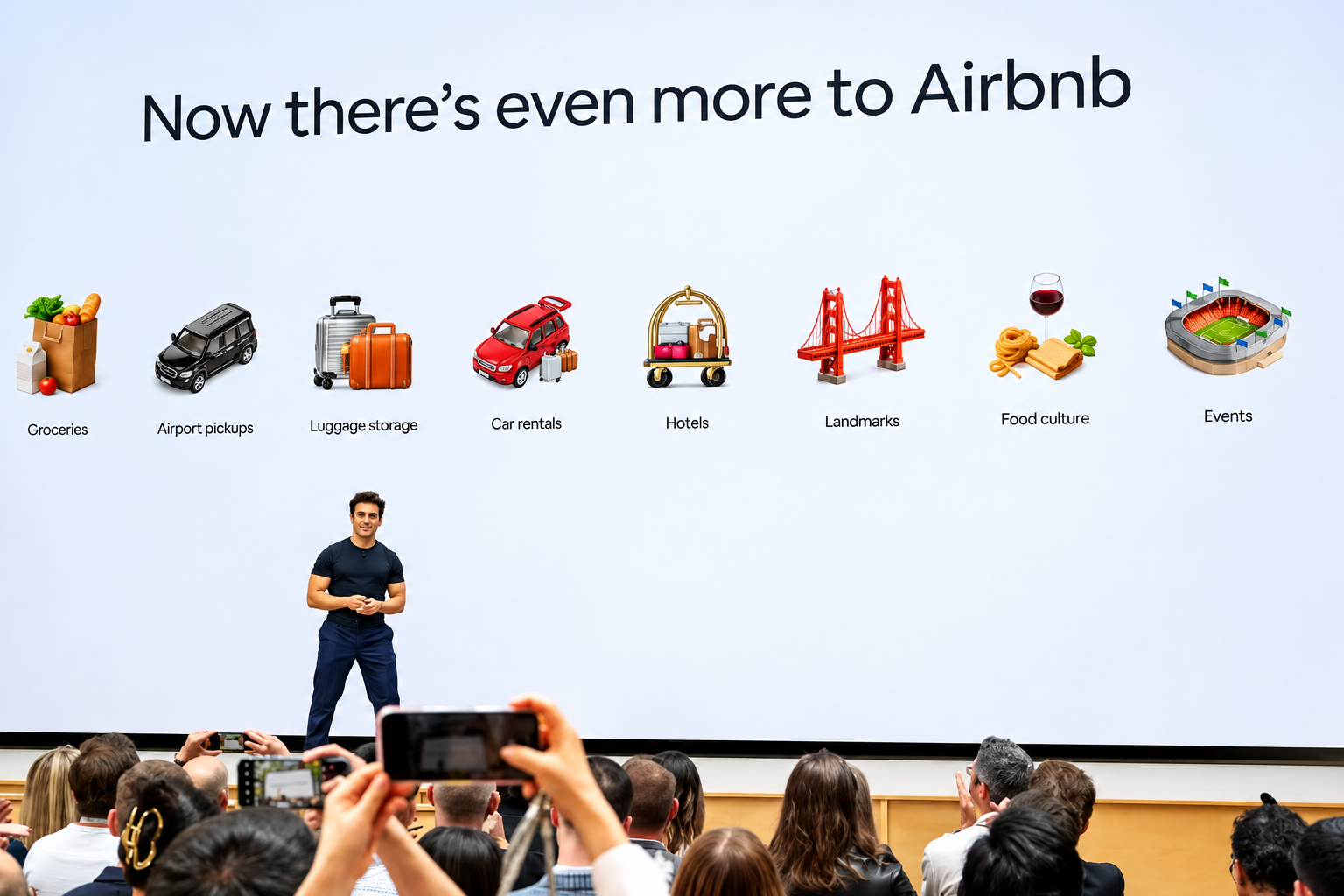
Among the changes: letting guests reserve now and pay later, adding hotels, and a redesigned home page and app. Investors were also betting on what comes next, including thousands more hotels, car rentals and, eventually, advertising.
The irony is that some of those growth drivers push Airbnb closer to the kind of business Booking and Expedia run—the kind of business AI agents could threaten. Even if AI agents capture a large share of travel planning and booking, Airbnb would capture the demand. But it and others would slowly lose control over how customers find and choose properties.
That would undermine the advertising opportunity investors are counting on. The bigger point for Airbnb and other marketplaces is that losing control of customer acquisition could mean surrendering some of their pricing power and margins.
To bulletproof itself, Airbnb might look to another e-commerce giant that has so far kept AI agents at arm’s length: Amazon.
Like Amazon, Airbnb has a loyal customer base and hard-to-match supply. But it has nothing like Prime membership to make customers think twice before taking their business elsewhere.
That is where loyalty comes in. Business travelers stick with Hilton or Marriott because enough nights earn them perks. Leisure travelers rarely accumulate stays with one chain. Airbnb has millions of listings and plenty of repeat customers, but no broad rewards program. It has begun experimenting with credits on hotel stays, but it should make loyalty a priority, not just a promotion.
Airbnb also plans to launch its own AI agent next year. But travelers using an agent might still want it to search Airbnb, Vrbo, Booking and hotel websites alike, rather than limit itself to one company’s inventory.
Eventually, Airbnb might have to strike deals with agent makers, using its unique homes as leverage to negotiate favorable terms, says Gawrelski. Such deals, along with rewards for loyal guests, could over the long term eat into the company’s roughly 13% take rate, he adds. But if they bring in enough additional bookings, the trade-off could be worthwhile.
History offers a reason not to panic. The shift from desktop to mobile unsettled investors in Alphabet and Amazon, but both emerged as major beneficiaries. Companies with valuable assets can come out of a platform shift stronger, if they adapt quickly enough.
Airbnb has homes the bots can’t easily replace. Now it needs to give guests a reason to insist on booking them there.


 5 min
5 min