An 18th-Century Barbados Villa Built Over a Network of Ancient Caves Lists for $22.5 Million
Kit Braden, an executive at French beauty empire L’Occitane, has spent every winter for the past 13 years at the stone vacation home.
By
CHAVA GOURARIE
Mon, May 11, 2026 10:57am 2 min
2 min
A historic Barbados estate with a 300-year-old villa and 11 acres overlooking the Caribbean Sea is now for sale with a guide price of $22.5 million.
The seller is Kit Braden, chairman of the U.K. branch of French beauty empire L’Occitane Group, whose family has spent every winter for the last 13 years at the island property, known as Fustic Estate.
“It’s very much a family house,” Braden said. “We love having a lot of people there. It’s a collection point to keep everyone together.”
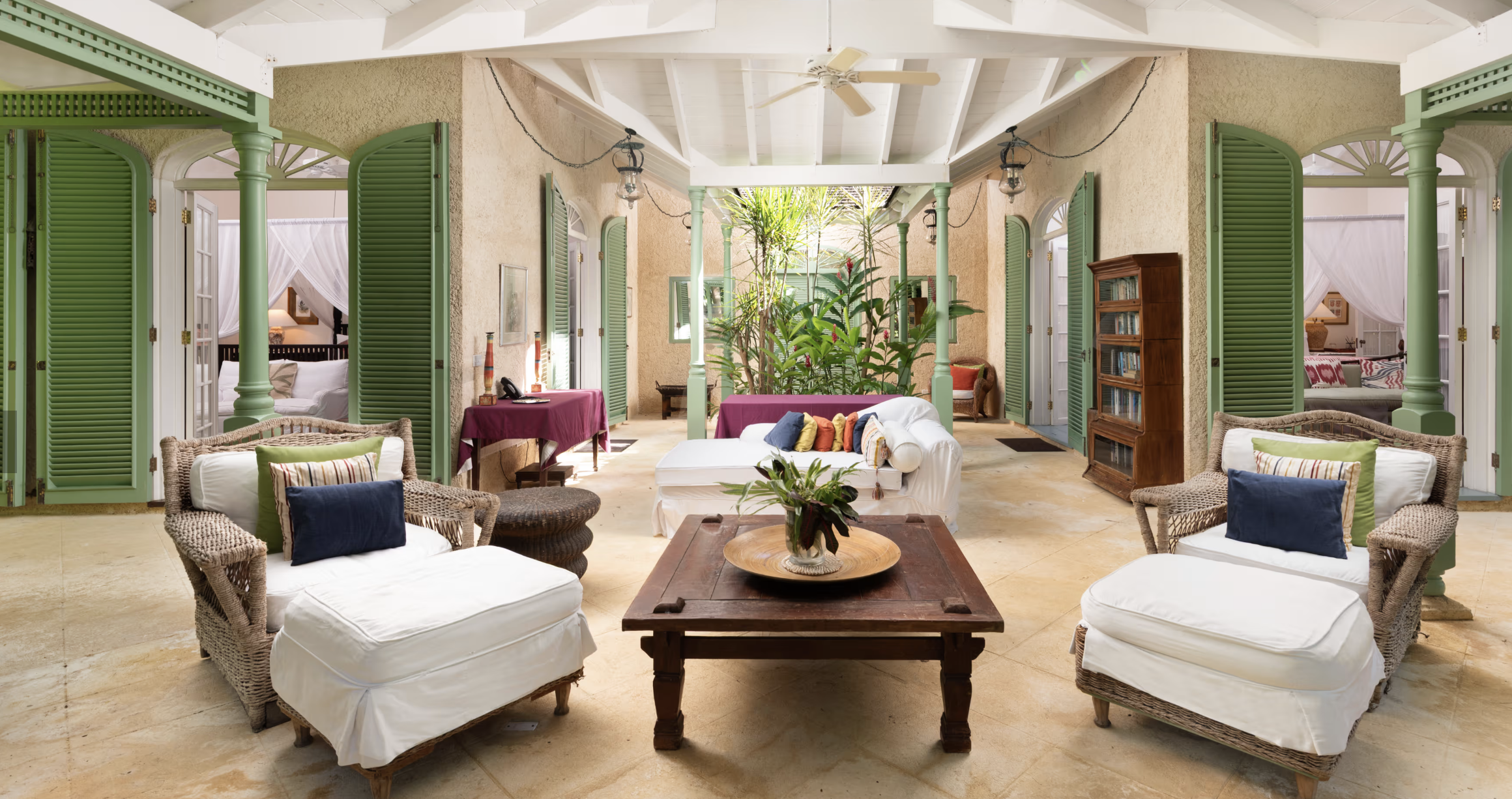
The main villa dates to 1712, though it’s been reimagined and expanded substantially over the years.
It spans 13,000 square feet and features seven en suite bedrooms across three wings, as well as expansive verandas, stone courtyards and rows of louvered doors in gay Caribbean pastels.
In the 1970s, when the home was owned by Charles Graves—brother of British poet Robert Graves—it was reimagined by stage designer Oliver Messel, one of the foremost theater designers of the last century. Messel expanded the home, added a lagoon pool with a natural waterfall and other theatrical features, according to Braden.
“The whole place is a little bit magical,” he said.
The home sits about 350 feet above the water, and surrounded by lush gardens that slope towards the water.
“We look down through our garden—which is about 12 acres of tropical gardens and palm trees and wonderful old mahogany trees—onto the Caribbean,” Braden said.
He and his wife first saw the property on New Year’s Eve 2013, during a quick trip from where they were staying in Grenada.
The couple spent an hour walking the perimeter, some of it still untouched jungle, in the pouring rain.
“By the time we got back, I had fallen in love with it,” Braden said.
His wife, however, wasn’t so sure. But in Braden’s telling, a second visit in sunnier weather with two of their children brought her around.
“She had to be talked into that it was a jolly good idea; now she absolutely loves it,” he said.
When they bought the property, the edge that runs along the waterfront was a jungle, so they cleared the ridge and transformed it into gardens.
They also bought an additional sea-level parcel with two beach cottages, giving the property direct access to the water and the town below via a five-minute walk.
The property also has a 15-person staff, a reflecting pond, an outdoor pavilion suitable for yoga and a commercial grade kitchen that can serve more than 100 guests, according to a brochure from Knight Frank, which posted the listing in March. They did not provide further comment.
For Braden, the property is special because of its natural beauty, its proximity to the town of Saint Lucy and its history—which dates way way back to when the island of Barbados was first formed via tectonic activity.
“It was basically tectonic plates that collided about a million years ago so the seabed is the top of the hill,” Braden said. “We’re on coral rock.”
As a result, Fustic Estate includes an extensive network of caves that were likely used by the Arawaks, a Venezuelan fishing tribe that followed the fish to these islands about a thousand years ago.
“If the fish were good they’d camp here,” Braden said. “There’s evidence that they stayed there in those caves, they lived there in good winters.”
Now it’s someone else’s turn to live on the land shared by Arawaks, the plantation owners of 1712, Charles Graves and the Braden brood.



 Copyright 2020, Dow Jones & Company, Inc. All Rights Reserved Worldwide.