When planning a trip, or seeking a venue for a special celebration, prospective travellers often look at social-media photos of people enjoying possible destinations.
Such selfies can actually make the destinations seem less appealing, according to a recently published study . More specifically, if consumers are considering a place for a self-defining experience such as a wedding, proposal or special vacation, they won’t like it if they see other people pictured there.
The reason, researchers say, is that when a human is featured in a website picture or social-media post of a destination, it can give the viewer a sense that the person pictured has or is signalling ownership of the place.
“We want to stand out by being a little different,” says Zoe Y. Lu , an assistant professor of marketing at Tulane University and the lead author of the paper. “If my cousin saw a picture of my husband proposing to me at a particular national park, for example, my cousin would worry that choosing that same spot to propose to his loved one would be perceived as him being a boring person, lacking a sense of self.”
The ‘experience venues’
Across six studies, Lu and two colleagues looked at when and why human presence in online photos lowers viewers’ preference for what she calls “experience venues”—that is, destinations that serve not only as physical spaces but as symbolic arenas that provide a way for people to define themselves.
In one experiment, Lu and her team asked 416 online participants to look at images of two hiking trails, labeled A and B, and to imagine they were picking one for their New Year’s Day hike. Participants liked trail A better than trail B when no person was shown. If there was a hiker present in the photo of trail A but not trail B, viewers preferred trail A significantly less than when no human was shown. “Our theory is that the hiker in the image offers kind of a territorial signal,” says Lu. “It says to our self-identity, ‘Someone else has been here, don’t try their hike, try a hike that seems like nobody has done.’ ”
In another experiment, participants were asked to imagine the photos they were being shown were of two potential wedding locations for themselves. Fifty-three percent of participants chose location A if neither picture included another couple tying the knot. But if another couple was shown in a photo of location A, and not in location B, only 27% of the participants chose location A.
By contrast, in another experiment, participants were told to imagine they were planning a wedding for someone else. As planners, they didn’t mind whether or not a couple was shown in the photo. “Wedding planners aren’t seeking self-identity the way their clients are,” Lu says.
Online-marketing lesson
Lu says that her research may have some implications for online marketers. “They might encourage previous customers not to post selfies of special experiences if they want new customers to try those experiences at the same location, which seems counterintuitive, I know,” she says.
Hotels and destinations, too, might reconsider including images of clearly visible guests and visitors in their marketing materials. And social-media influencers might want to skip the selfie in paid posts for destinations, so as not to seem territorial. One exception, Lu notes, is when the person in the photo has an identity that is distinct from that of the viewer, such as the owner of the venue, “but you might want to acknowledge that the person shown is the owner,” she says.
The oldest members of Gen X are turning 60 next year. Many can’t afford to stop working any time soon.
Born between 1965 and 1980, Gen Xers launched their careers at the start of a massive shift in how Americans work. Companies moved from pensions that promise steady income after years of service, to plans such as 401(k)s that place employees’ retirement destiny in their own hands.
Some Gen Xers were hit hard in their prime working years during the 2008 financial crisis. Others are still paying off student debt. Their children are increasingly living at home well into adulthood, while their own aging parents often require care. Few believe they can rely on Social Security to make ends meet later in life.
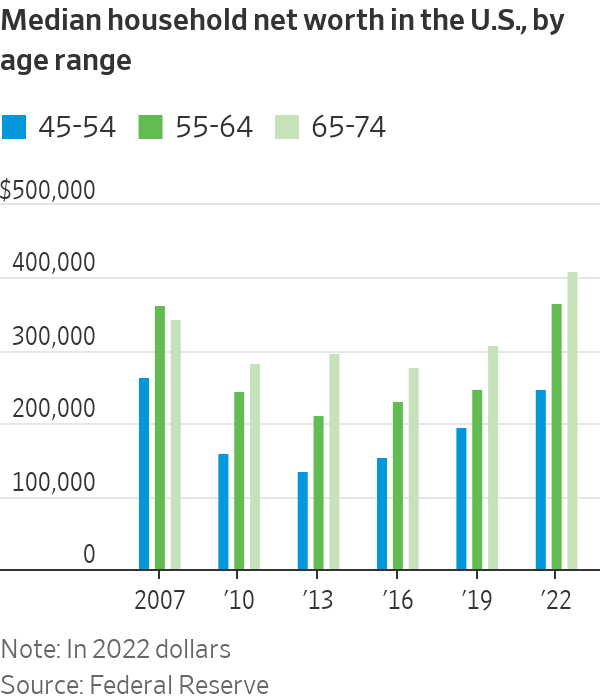
By some measures, Gen Xers are worse off financially than their baby boomer predecessors. The median household net worth of Gen Xers between 45 and 54 years old was about $250,000 in 2022, about 7% lower than that of baby boomers at the same age in 2007, according to inflation-adjusted Federal Reserve data. That was the only age group that experienced a drop in median wealth over the 15-year period.
David Bryan, 55, earns about $35,000 a year as a school-bus driver and lives on Tybee Island, Ga. He doesn’t own property and has about $100,000 in retirement savings from his previous jobs as a railroad conductor and a researcher at a college foundation.
It’s a different life than that of his parents, who worked for decades for the sheriff’s department and the post office and received steady pension checks when they retired.
“As long as my body will let me, it’s better I keep working,” said Bryan.
“As long as my body will let me, it’s better I keep working,” said David Bryan.
The roughly 65 million Americans in Gen X are sometimes referred to as the “forgotten generation,” sandwiched between the larger and louder baby boomer and millennial generations. They are also called the “latchkey generation,” often coming home from school as children to an empty house. Goldman Sachs Asset Management in a recent report called Gen X the “‘401(k) experiment’ generation.”
For decades, employers often supported loyal workers in old age through traditional pensions with set payouts for life. The advent of the 401(k) system pushed the responsibility on to the individual—and Gen X was caught squarely in the transition.
“Gen X is the first generation where they were mostly expected to figure out their retirement on their own,” said Jeremy Horpedahl , an economics professor at the University of Central Arkansas and director of the Arkansas Center for Research in Economics.
The early champions of the 401(k) never thought that it would become the dominant way most Americans save for retirement. It is named for a line in the tax code changed in 1978 that gave executives a tax-free way to defer compensation from bonuses or stock options. Human-resources executives and economists jumped on the 401(k) as a way to encourage saving for rank-and-file employees.
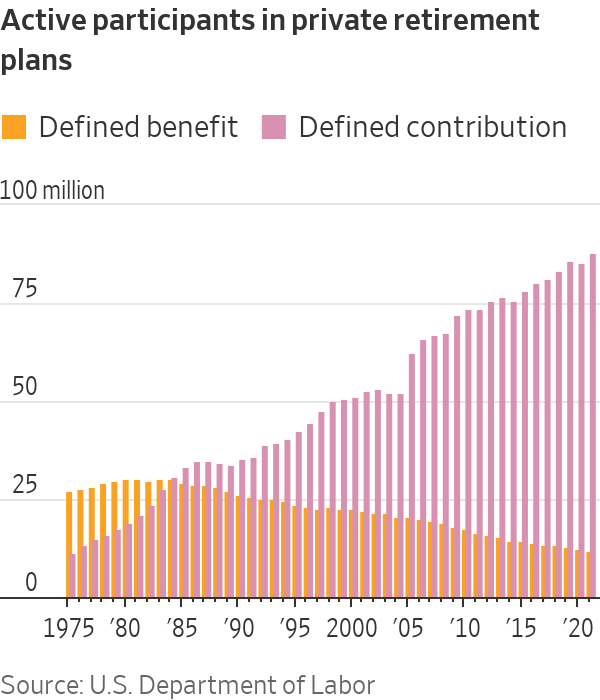
By the mid-1980s, the number of active participants in defined-contribution retirement plans—such as 401(k)s—overtook those in defined-benefit plans—such as traditional pension plans—in the private sector. Now, private pensions are rare.
When Gen Xers entered the workforce, the 401(k) was a new concept. Features such as automatically enrolling employees in a workplace plan and automatically increasing contributions every year didn’t become commonplace until later.
Other common private retirement savings tools were also introduced in the last half-century. The individual retirement account—a tax-deferred investment vehicle—was authorised in 1974, while the Roth IRA—funded with posttax money, but tax-free when withdrawn—was established in 1997.
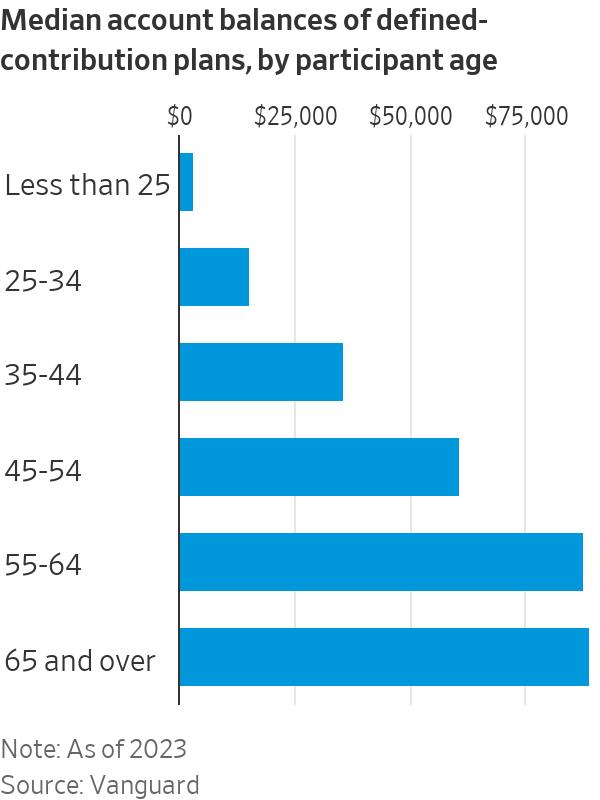
Gen Xers between 45 and 54 years old had a median account balance of roughly $60,000 in defined-contribution retirement plans at Vanguard Group in 2023, according to the firm. For most Americans, that is well below the target some financial experts recommend of having roughly six times one’s salary saved for retirement by age 50.
John Kotrides, a 54-year-old living near Charlotte, N.C., had contributed to 401(k)s ever since he started his career in banking about three decades ago. But whenever he moved to a different employer, he usually cashed out his 401(k) because there was a more urgent expense, such as a home repair or moving costs.
Keeping the money invested in the stock market didn’t seem worth it after witnessing crashes like the bursting of the dot-com bubble. Retirement seemed far away.
“You no longer have a generation of people whose employer took you from your first job into your retirement,” he said. “When we were offered 401(k)s, I don’t think that was a great deal.”
Kotrides says he doesn’t have much in retirement assets, besides the home he owns, where he lives with his wife and two daughters, who are 12 and 20 years old. After quitting his job as a mortgage lender during the pandemic, he now works as a bartender part-time and earns most of his money making social-media content, mostly nostalgic videos about the 1970s through 1990s. He likes having more time to spend with his family.
“This is basically my retirement plan,” he said. “I truly assume that I’ll continue to work to provide for my family as long as I need to.”
Even those who have benefited from the 401(k) system say it hasn’t been easy.
Scott Zibel, a 56-year-old in Leominster, Mass., started putting money in a 401(k) when he began working at a grocery store at 15. His father encouraged him to contribute. The account grew as he continued working at the store through college and became a manager. In his early 30s, he became an English teacher and expects to receive a pension after retiring.
When the stock market crashed in 2020 at the onset of the Covid pandemic, he and his wife pulled the money in his wife’s 401(k) out of the market and into a money-market fund. Now they have reinvested the money, but put a greater portion of it into bonds than before.
“I’m grateful for the 401(k), but there’s no guarantees as well,” he said, estimating his household retirement savings at a little over $1 million.
Zibel feels prepared for retirement but says he has to live frugally to save. He has driven the same car for 12 years and has avoided pricey expenses such as new carpeting for his 30-year-old home.
“My wife and I have done so much planning for the future with our money, it’s made living in the now difficult,” he said.
For some Gen Xers, the 2008 financial crisis was a hit that took years to recover from.
Around 2007, Darling “Diva” Moore was at the peak of her career as a managing partner at a title company in West Palm Beach, Fla. Then the housing market collapsed and her company went under. She couldn’t make rent on her apartment and had to crash with her significant other at the time, sometimes turning to sleeping on the beach or in the car.
“The Great Recession changed everything for us,” said Moore, who is 57. “After that, I don’t know how many Gen Xers trusted that system.”
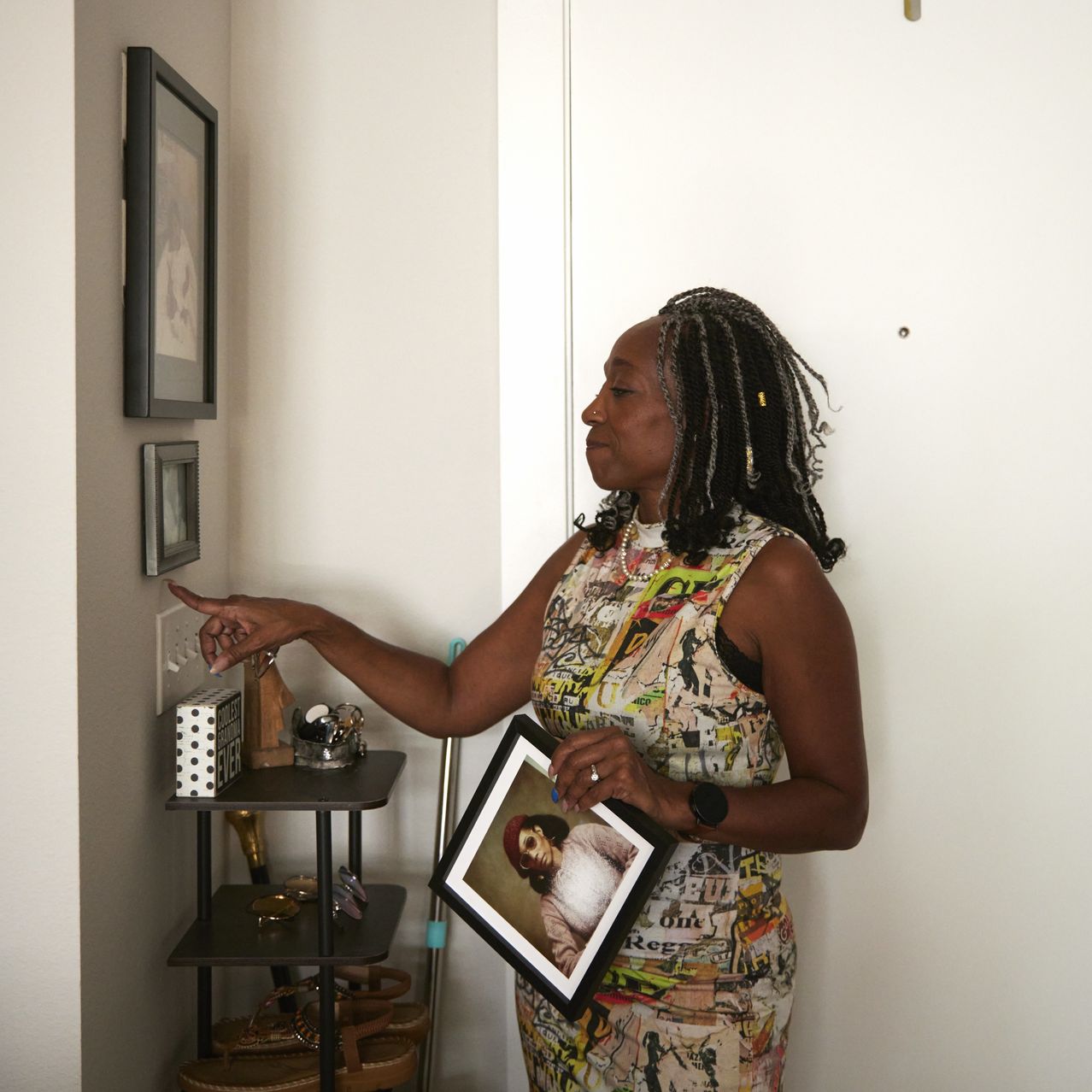
Darling “Diva” Moore was at the peak of her career when the housing market collapsed.
After settling in Denver, more than two years went by before she landed a new job. She went back to school, getting an online bachelor’s degree in business management and master’s degree in human relations and organisation development. Now she is self-employed as a career counsellor.
As she is approaching her 60s, Moore is trying to locate money she contributed to various 401(k)s from jobs earlier in her career. Whenever she switched jobs, she didn’t rollover her balance to an IRA or new 401(k), so those accounts are scattered across plan providers. “In the ‘90s, they didn’t make it easy to find out where that money is,” she said.
She is also contending with student debt from a for-profit associates-degree program she completed in her 20s that has swelled to nearly $90,000 from around $27,000 due to interest.
More than a quarter of U.S. households led by Gen Xers between the ages of 45 and 54 had education loans in 2022, compared with about 15% of baby boomers at the same age in 2007, according to Fed data.
Soaring tuition costs, sky-high rents and other inflationary pressures for Gen Z are also Gen X’s problem. Many Gen Xers have forked over tens of thousands of dollars for their children to attend college. Young people are also increasingly living with parents, or relying on them for financial support, well into adulthood .
Pamela Likos’s 21-year-old son lives at home with her in the suburbs of Madison, Wis., while another son and daughter are at college.
“My kids are still definitely not grown and flown,” Likos said.
Some Gen Xers are simultaneously caring for aging parents, who are living longer than previous generations.
Likos isn’t in that situation yet, but her stepmother, who has Alzheimer’s, and her father are in their 80s.
“I need my parents to hang on healthwise for another five to 10 years because we are not ready to help financially, really,” she said.
Likos, who is 54, was the first person in her family to go to college, but didn’t work for about two decades after she got married and became a stay-at-home mom. When she got divorced about seven years ago, she found herself with no savings of her own and no resume to apply for jobs. She got a license to work as an esthetician for a few years and now is remarried. From her divorce, Likos received about half of her ex-husband’s 401(k), which comprises most of her plan for retirement.
The youngest members of Gen X are in their mid-40s, offering more time to boost savings ahead of retirement. Tyler Bond, the research director at the National Institute on Retirement Security, wonders if there will be diverging retirement experiences between the older and younger ends of the cohort.
“The older Gen Xers simply may not have time,” he said.
Avery Nesbitt, a 44-year-old operations manager in the Atlanta area, isn’t waiting for retirement to go on nice vacations or buy a new car because he wants to enjoy them now—and he doesn’t expect to be able to save up a cushy nest egg for later in life. If the Covid pandemic taught him anything, it was that anything can happen.
He and his wife have contributed modestly to employer-sponsored retirement accounts but didn’t feel like they could afford to save more. They own a home, where they live with their two children. That makes up the bulk of their wealth. He said he has put more money into life-insurance policies than in retirement accounts.
“I fully expect to work until I die,” Nesbitt said. “It is what it is.”
SYDNEY—Australia’s unemployment rate rose in July to its highest level since late 2021 even as employment jumped by much more than expected over the month, with a record number of people participating in the labor market.
The unemployment rate rose to 4.2% in July from 4.1% in June, the Australian Bureau of Statistics said Thursday.
The economy created a further 58,200 jobs over the month, with full-time employment rising by 60,500, the ABS said. The employment creation was about three times that expected by economists.
The apparent mismatch in the data is explained by a rise in the labour market participation rate to a record high 67.1% in July from 66.9% in June.
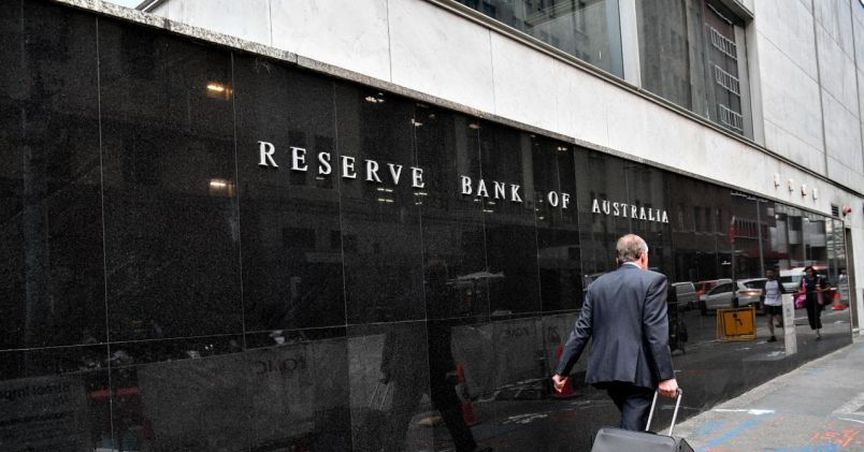
Overall, the data suggests the job market remains tight, which will feed the Reserve Bank of Australia’s fears about the availability of labor, wage pressures and sticky core inflation over the coming quarters.
RBA Gov. Michele Bullock ruled out an interest-rate cut over the next six months citing concerns that inflation remains stubbornly high, while firms are reporting the job market is still tight.
The employment-to-population ratio rose by 0.1 percentage point to 64.3%, indicating employment growth was faster than population growth, the ABS said.
“Although the unemployment rate increased by 0.1 percentage point in each of the past two months, the record high participation rate and near record high employment-to-population ratio show that there continues to be a high number of people in jobs, and looking for and finding jobs,” the ABS said in a statement.
The number of people unemployed increased to 637,000 in July, the highest it has been since November 2021, but it remains around 70,000 below its pre-pandemic level, ABS added.
Seasonally adjusted monthly hours worked rose by 0.4%, in line with the 0.4% increase in employment, the ABS said.
Sweden’s central bank cut its key interest rate for the second time this year and indicated it is likely to lower borrowing costs again as a faltering economy threatens to push inflation further below its target.
The Riksbank cut its key rate to 3.5% from 3.75%, in line with a poll of economists conducted by The Wall Street Journal ahead of the decision.
“If the inflation outlook remains the same, the policy rate can be cut two or three more times this year, which is somewhat faster than the Executive Board assessed in June,” the Riksbank said.
At its last meeting in June, the central bank suggested it could cut the policy rate two or three times during the second half of the year as long as the outlook for inflation holds.
After peaking at over 10% at the end of 2022, the pace of inflation in Sweden has slowed sharply, with the bank’s target measure dropping below the 2% target in both June and July. At the same time, the economy contracted by 0.8% in the three months through June, while household consumption remains weak and the labor market continues to deteriorate.
In its statement Tuesday, the Riksbank said inflation is now stabilising close to the target and the risk of inflation becoming too high again has declined significantly. At the same time, it said wage increases are moderate, while the growth outlook in Sweden and abroad is somewhat weaker than expected.
“The overall picture of the economy is worrisome and warrants more easing,” says Bartosz Sawicki, market analyst at Conotoxia. “Consumption remains in the doldrums, and GDP growth is set to account for about 0.5% year-on-year in 2024.”
Policymakers have been especially concerned about lowering borrowing costs too quickly over concerns that it would weaken the Swedish currency further and contribute to a bounce in inflation, but those risks are also dissipating as interest rates have declined abroad, easing depreciatory pressure on the krona.
Conotoxia expects the krona will continue to recover in the remainder of the year on the back of improving global risk sentiment. “Hefty market pricing of looming rate cuts should limit the downside for the currency,” Sawicki says.
The European Central Bank began its easing cycle in June, and although it took a wait-and-see approach at its most recent meeting, it kept the door open for further rate cuts this year.
In the U.S., the Federal Reserve has so far held off making its first move and last month held interest rates steady in a range between 5.25% and 5.5% for an eighth consecutive meeting.
However, weaker-than-forecast U.S. nonfarm payroll data earlier this month sparked recession concerns and prompted markets to ramp up bets for interest rate cuts. These rate cut expectations have since been trimmed following stronger data, but a September cut is largely expected by markets and Fed Chair Jerome Powell ’s speech at the Jackson Hole Symposium on Friday will be closely watched for clues.
SYDNEY—The Reserve Bank of Australia has ruled out the prospect of near-term interest rate cuts as it remains wary of upside risks to inflation which has proved more resilient than expected.
The central bank Gov. Michele Bullock told a parliamentary committee Friday that while money markets were anticipating an interest-rate cut before the end of the year, the probability of that was low.
The RBA’s board’s message after its recent policy meeting “was that it is premature to be thinking about rate cuts,” she said.
“Inflation is still too high and, in underlying terms, is not expected to be back in the top of the band until the end of next year,” Bullock said.
While circumstances could change, the outlook was uncertain, and based on what the board knows at present, it doesn’t expect to be in a position to cut rates in the near term, Bullock said.
Bullock’s comments are expected to disappoint home buyers who are struggling under the weight of elevated interest rates and immense debt.
The remarks also suggest that the RBA will lag well behind its global counterparts in cutting interest rates.
The RBA has held the official cash rate at 4.35% since November, having begun an aggressive tightening cycle back in May 2022, when the OCR was sitting at an emergency low of 0.10%.
Still, the RBA adopted a much gentler approach to raising interest rates than most of its G-10 counterparts, arguing that protecting employment was a key policy goal.
“I understand that this is not what many households want to hear. Those with mortgages are feeling the squeeze on their cash flows from the increase in interest rates over the past couple of years. Businesses too are facing higher borrowing costs. But the alternative of higher inflation for longer is much worse,” Bullock added.
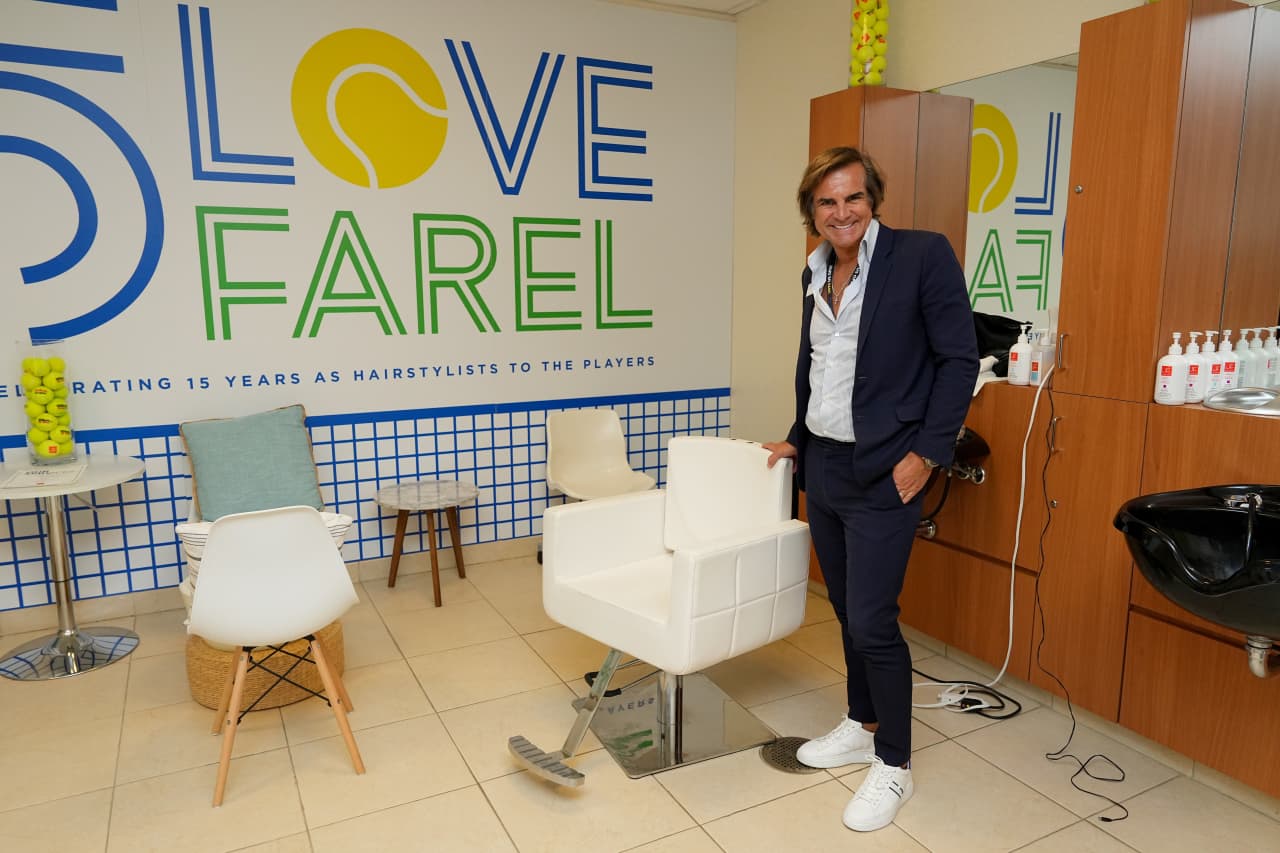
Julien Farel, with a regular clientele that includes Catherine Deneuve, Kate Moss, Brooke Shields, Sienna Miller, Liam Neeson, and countless other high-profilers, is among the most sought-after hairstylists today. His haircuts command a rate of US$1,250, and an appointment to see him is considered a coveted “get.”
But Farel’s role as the official stylist for the U.S. Open may be his biggest calling card, at least according to Farel himself, who’s had the gig since 2007.
“I approached the Open about having an onsite salon for players at the tournament, and it took me five years of pitching to finally get the contract,” Farel, a native of France, says during an interview at his eponymous salon at the Loews Regency New York hotel on Manhattan’s Upper East Side. (He has a second salon in Palm Beach, Fla.)
The position has Farel and seven employees creating a temporary salon at Arthur Ashe Stadium in Queens, N.Y., on the penthouse level in a secure area where players can freely walk around without being surrounded by spectators.
The roughly 250-square-foot space is a perk for the 500 or so stars who participate in the Open and offers haircuts, blow-dries, hairstyling, and makeup sessions, manicures and pedicures, Farel says. It debuts for the season two days before the tournament begins and is open from 9 a.m. to 6 p.m. throughout the event. The official dates for the 2024 U.S. Open are Aug. 26 to Sept. 8.
Over the years, his salon has hosted several hundred players, according to Farel, including Roger Federer, Serena Williams, Coco Gauff, and Novak Djokovic. Retired players, including Billie Jean King, whose moniker is part of the official name of the U.S. Open venue—the USTA Billie Jean King National Tennis Center—have also stopped in, Farel says.
“The players make appointments, but if an A-Lister like [Rafael] Nadal or Djokovic walks in, we try to make it work,” Farel says. “We’re busy all day for the entire Open.”
Patrick McEnroe, a retired professional player and an ESPN tennis commentator of the U.S. Open, is a client of Farel’s at his Manhattan salon. McEnroe says that Farel is also a friend, and he visits him at his Arthur Ashe salon whenever he can.
“It’s a hot spot and where all the players hang out and socialise,” McEnroe says. “They love coming to the salon, and it’s a great amenity for them.”
On-site salons for players at major tennis tournaments aren’t uncommon, but Farel was the first to introduce the concept to the U.S. Open, he says. (A representative for the U.S. Open is unable to confirm if this is the case.)
Farel’s experience as a tournament stylist was the impetus for bringing his salon to the Open.
“I worked at Roland-Garros in Paris at the French Open for a decade under my mentor Jacques Dessange, who had an on-site salon there,” Farel says. “I did haircuts and styling for all the big players at the time, including Pete Sampras, Andre Agassi, John McEnroe, and Monica Seles.”
Eric Butorac, the director of player relations for the U.S. Open, says that the tournament’s executives offer the salon as a benefit to players because they recognise that they’re under the public eye and need to look their best. “We understand they’re under scrutiny, and we understand the challenge of life on the road, where they’re living out of a suitcase,” Butorac says. “Julien’s salon is well-used and an amenity that isn’t related to a player’s tennis performance the way our fitness centre or nap rooms are.”
Croatian player Donna Vekic, who is fresh off winning a silver medal at the Olympics, takes full advantage of the perk. The star says that she frequents the salon throughout the tournament for blow dries, manicures, and pedicures and also visits the Manhattan location for colour jobs.
“It’s very convenient to have it at the stadium,” Vekic says. “I want to look and feel good when I’m playing.”
And if they don’t hit up the salon during the tournament, some players will stop by when the matches are finished, Farel says. “Many of the players are so busy during the Open that they only get time to pamper themselves when the tournament is over.”
Do you get unsolicited text messages from people you don’t know? Be forewarned: If you respond, you could be falling for a particularly dangerous online scam that has found victims around the world. Some unfortunate individuals have lost millions of dollars.
There is even a name for it. Pig butchering. Victims are fattened up, made to trust the scammer and think they are making tons of money, until they are mercilessly taken—sometimes for everything they have.
On June 6, at the WSJ Tech Live: Cybersecurity conference in New York City, two cybercrime experts sat down with Wall Street Journal reporter Robert McMillan to discuss how pig butchering works and what is being done about it. The participants were Troy Gochenour, an investigator with the Global Anti-Scam Organization, a nonprofit that helps victims and raises public awareness of scams, and Jamil Hassani, a supervisory special agent with the Federal Bureau of Investigation. An edited transcript of their conversation follows.
How the scam works
WSJ: Why “pig butchering”?
GOCHENOUR: It’s not our term. In Chinese, it is shā zū pán , or pig-killing plate. What makes this scam so effective is they want to build trust so that you might think they could be a potential love interest or a business partner. Once they built that trust, then they will start talking about how they’ve made a lot of money in cryptocurrencies and how the victim could, too.
WSJ: It’s a variation on the romance scam. Instead of asking for money to buy a plane ticket, they propose to make money together?
HASSANI: Absolutely. The rise in cryptocurrency has opened the door for these scammers to take your money instantaneously. There are no third parties doing the reconciliation. If you do a regular wire transfer and you contact the FBI within 72 hours, chances are we can get that money back for you. But with crypto, it’s almost immediate and it’s gone.
WSJ: Are you seeing more pig butchering because of the rise of crypto?
HASSANI: Absolutely. The rise since 2019 for victimisation is almost 2,000%.
WSJ: Why does it work?
GOCHENOUR: The social-engineering aspect is very powerful. I have stories that are very sad: folks who have been warned that they’re getting scammed, and yet, because they’ve been socially engineered so much, they actually continue to invest.
They’re looking for everybody, but they prefer people with titles—doctor, dentist, IT professional, CEO. I follow them on the communications platform Telegram, so I have a lot of their training documents, manuals on how they build those relationships. This is an entire industry tied to largely Chinese organised crime.
The victim’s psychology
WSJ: Jamie, psychologically speaking, why does this work?
HASSANI: I remember arresting a hacker out of Tunisia. A 19-year-old kid that was able to bypass levels of security within the Department of Defense, took down a few banks and was wreaking havoc across the world. He explained to me: “Hackers are stupid. They go after the systems, when human beings have way more vulnerabilities. They have the keys to the treasure chest. And it’s so easy to turn off their mental firewall.”
Try to think of a time you were in a relationship where the threat of your spouse or significant other leaving caused you to do pretty much anything to keep them around. Every scam evokes an emotion. It could be love, fear, panic. Your ability to critically think is shut off.
WSJ: Sometimes when I’ve talked to scam victims, it’s like the more they have invested, the harder it is for them to believe they have been taken.
HASSANI: It’s the stigma. The victims can’t fathom that they could have been so stupid, quote unquote. So they hold on to this hope that it had to have been real, the love had to have been there, or the trust, because they’re texting every day, 30 to 100 times. The scammers use information they glean from your communications and social media to validate you in a way that no one else can.
WSJ: If you suspect or know somebody is a victim, is there something you can say that will snap them out of it?
GOCHENOUR: Unfortunately, people are people. We’ve had victims we’ve warned more than once, and they continued to give.
The United Nations Office on Drugs and Crime says there could be as many as a couple hundred thousand of these scammers operating throughout Southeast Asia.
HASSANI: A lot of these scammers are trafficked human beings. When a human being is subjected to that kind of circumstance, their will to succeed is intense, because their life, or their family’s life, depends on it. They are constantly fine-tuning strategies, and trying to stay one step ahead of whoever is closest on their tail. These scammers contribute something like half of their country’s GDP, so the local government’s not going to do much.
WSJ: The FBI knows who’s running these scams, largely?
HASSANI: Yes, absolutely.
WSJ: Can you get them?
HASSANI: There are no treaties between those specific countries and the U.S. We’ve taken steps. We work with multiple organizations, including the Secret Service, Department of Homeland Security, and we’re applying pressure on these countries to start to take action.
The first approach
WSJ: There are different layers of operators; some do the texting, others do the talking and then there are the video calls.
GOCHENOUR: Sure. So if you get that wrong number, the text to your phone, you respond, saying wrong number. I’m not Paul. Jane. Whoever. They say, oh, so sorry. Uh, my assistant gave me your number. I hope I’m not bothering you.
Sometimes they even send you a picture. That sounds interesting. So you continue to talk. Oh, what’s your name? Where do you live? What do you do?
They’re looking for a weakness. Are you single? Oh, weakness might be romance. Oh, you’re in business. I could be your business partner. But they also want to know what kind of assets they can take from you.
On their Telegram pages, I’ve seen screenshots of their chats. They can chat in Chinese, and it shows up to you as your native language. And when you chat back it shows up to them in Chinese. At the top, it would say your first name, maybe your age, two homes, 401(k).
As you continue to chat, you’re actually being sent to multiple people chatting with you on this one account. You may not even recognize it. They are all in the compound. Everything they do is monitored. So if that person is there against their will, if they don’t chat with you to lure you in, they could get beaten.
What can be done?
WSJ: This scam involves legitimate organizations as well, right? Cryptocurrency companies, the messages come on legitimate apps. What can be done to mitigate this?
HASSANI: Until a collective strategy is put together, you need to be aware of the red flags. And the first one is unsolicited contact. We’ve all gotten that text message, “hi.” That message has a fundamentally different feeling to somebody who is elderly and widowed and lonely. When they see “hi,” that has a profound impact on them.
If you get an unsolicited contact, ask questions. If they want you to invest in cryptocurrency, do a little research on the site. Is this website legit? Some are legitimate and registered with, say, the Treasury Department’s Financial Crimes Enforcement Network or the Securities and Exchange Commission.
WSJ: Some of the scam sites actually register.
HASSANI: True. Most of them aren’t registered with the SEC, but a lot are.
GOCHENOUR: In 2021, 2022, they were using apps like MetaTrader 5 or 4, a foreign-exchange trading app. It’s legitimate. You could go on this app and think you’re doing something legitimate, but you’re sending money to their scam broker website.
WSJ: Why can’t you stop these guys?
HASSANI: They’ll have one major domain with multiple subdomains, so to speak. So as soon as we take that website down, another one pops up. Our strategy is to go after the kingpin.
WSJ: Have you hit any kingpins yet?
HASSANI: We have. The indictments, a lot of them are still under seal. But tech-support scams are a big part of this. We took down three tech-support buildings near Kolkata less than a year ago.
WSJ: All connected to pig butchering?
HASSANI: Yes, and they do the same thing—traffic human beings to scam.
WSJ: Scammers use services like WhatsApp, and the money gets sent to them often through a legit crypto company. Could the tech companies be doing more here?
GOCHENOUR: The tech companies and the exchanges are doing more. And I know that because when I follow the scammers on their chats, they talk about, “Why can’t I get this money? The victim put it in the account, but I can’t get it. What’s going on?”
A newly built home on a golf course in Boca Raton, Florida, that promises to be hurricane-proof hit the market on Tuesday with a $6.85 million price tag.
The house, which was completed this year, is entirely made up of steel supports and poured concrete and was constructed with insulated concrete forms, which allows the home to withstand winds stronger than 200 miles per hour, said the home’s developer Meir Kroll.
“There’s this picture [of the west coast of Florida after Hurricane Michael in 2018] of all these homes on the beach totally decimated, and then there’s this one house that’s standing. That house was an [insulated concrete form] home,” Kroll said.
The pool overlooks the golf course.
Legendary Productions
Senada Adzem of Douglas Elliman, who brought the home to market on Tuesday with her colleague Brian Ross, said the potential environmental impact on a property has become increasingly important to her clients.
“They want to know that they’re safe. They want to know that if they’re travelling in the summer, … their home is going to be there when they come back,” she said.
Kroll moved to Boca Raton in 2021 from Los Angeles, where he worked as a luxury developer and built homes for sports agent Rich Paul and MLS player Javier Hernandez. Kroll bought the property to build his first Florida project in 2022 for $840,000, according to public records.
Legendary Productions
With its contemporary-style white exterior and dark wood accents, the nearly 7,000-square-foot home stands out in the country club community of Boca Grove, where many homes were built in the 1980s and ’90s and sport tiled roofs and a Mediterranean-inspired style.
Instead, working with Spanish architect Jorge Bibiloni Studio, this home draws inspiration from the villas of Mallorca, where Bibiloni is based.
“His design aesthetic is warm contemporary but minimalist,” Kroll said. “There are a lot of spec projects in Florida that are eccentric and over-designed. I think there’s beauty sometimes in subtlety.”
Legendary Productions
The sleek style with wood accents continues inside the two-storey home, which has five bedrooms, seven full bathrooms and one half-bath. The primary suite has two large walk-in closets and a separate formal sitting room.
Sliding-glass doors on the first level lead out to a covered patio with a full summer kitchen, an outdoor dining area, and a heated pool and spa. A sundeck runs along the length of the second level, overlooking the golf course.
A fury of fast and frequent bidding appeared to take auctioneer Kody Frederick by surprise at June sale of Princess Diana’s dresses and other memorabilia from the royal family
At one point, the bidding for a Catherine Walker evening gown worn by the late Princess of Wales blew past an original estimate of US$100,000 to US$200,000, topping out at US$450,000 with Frederick ultimately calling it “a moment of moments.”
“You have to give people a minute to breathe when you’re talking about hundreds of thousands of dollars per bid,” he says about the auction.
That event continued to rack up records, including the US$910,000 sale of another dress, and it demonstrated not only a rise in the relevance of cultural memorabilia as a category, but Frederick’s quick ascent among auctioneers.
Although on the younger side of the current auctioneer crop, at age 40, and with just two years of experience with gavel in hand, Frederick is finding himself running sales in new categories and welcoming in a new set of auction buyers.
“So much of this stuff has never come to auction, so it really is a first time [opportunity],” he says.
Frederick, who is based in Los Angeles, is not a career showperson. Prior to attending auctioneering school in Indiana, he was working in production for Disney+, and didn’t even have auctioneering on his radar until a colleague suggested he check out the profession while looking for work. He joined Julien’s in April 2020.
“My start date was supposed to be the day California went into lockdown, but it was delayed a month because of that,” he says.
Frederick ran his first auction in September 2021, selling low-value music memorabilia in a largely empty room where the top-selling item (a commemorative guitar) went for US$2,880.
“Ninety percent of our bidding takes place online, so being able to communicate to online bidders in the moment is always the challenge,” he says. “Creating the sense of excitement is challenging, and the personality is more important than the medium.”
He would continue to work his way up through various Julien’s sales until he found himself selling a signed Banksy painting in March 2023. The item was the marquee lot of a larger contemporary art sale, and had an original estimate of US$600,000 to US$800,000. The hammer price topped out at just over US$2 million.
“We had bidders in the room and put an event around it,” he says.
Frederick says it’s important to see in the room who’s bidding and in which order the bids are coming in, especially in high-value, high-volume sales.
Frederick leads a sale of music memorabilia at the Hard Rock Cafe in New York. Courtesy of Julien’s Auctions
“I have to keep things as close to real time as possible, and make sure there’s no disconnect between bidding and the auctioneer,” he says.
Much of what Julien’s sells falls into new or emerging auction categories—music memorabilia, pop culture artefacts, or modern art pieces that newer buyers connect to in ways that traditional areas (like classic art or wine) don’t.
Frederick will run an auction this fall featuring original Star Trek items and a separate event selling a significant guitar played in 1993 by the late Eddie Van Halen. Both sales could potentially resonate with those who haven’t spent much time in the auction world.
“It’s easier to convey value when an item has strong cultural significance,” he says. “A lot of what we sell has stories.”
SINGAPORE—Singapore’s economic outlook seems brighter, as resilience in external demand and a recovery in the key electronics sector helps guard against headwinds elsewhere, the trade ministry said as it adjusted the city-state’s growth forecast for the year.
The Singapore economy grew 2.9% in the second quarter from a year earlier, according to revised data from the Ministry of Trade and Industry released on Tuesday. That matched the advance estimate compiled in July and compared with growth of 3.0% in the first quarter.
For the first half of the year, growth averaged 3.0%, the data showed.
Taking into account the performance of the Singapore economy in the first half, as well as global and domestic economic factors, MTI updated its full-year growth forecast to 2.0% to 3.0% from 1.0% to 3.0%.
Expansion in the April-to-June period was driven mainly by the wholesale trade, finance & insurance, and information & communications sectors, the ministry said. The manufacturing sector—a key engine of the economy—shrank in the quarter, largely due to a sharp fall in the volatile pharmaceuticals segment, the data showed. On the bright side, electronics returned to growth, backed by strong demand for smartphones, PCs and AI-related chips, it added.
“Singapore’s external demand outlook is expected to be resilient for the rest of the year. However, downside risks in the global economy remain,” the MTI said.
How other global trading partners fare is key for the trade-reliant economy of Singapore, which is well-placed to benefit from the global tech cycle upturn but exposed to downturns abroad.
A potential headwind could come from a slight slowdown in the U.S. economy, where MTI expects consumption growth to ease as the labor market softens. Growth in other advanced economies like the European Union and Japan is tipped to pick up, however.
Among Singapore’s major trading partners in Asia, MTI sees a slight slowdown in China in the second half of the year as investment growth tapers but thinks the property market will stabilize as government support measures kick in, boosting consumer sentiment. Growth in key Southeast Asian economies is projected to pick up slightly in the second half of the year as domestic demand strengthens, aided further by recoveries in global electronics and tourism demand.
Risks that could put the brakes on Singapore’s economic momentum include geopolitical and trade conflicts, which could hurt business sentiment and drive up production costs. Disruptions to the global disinflation process meanwhile could lead to higher for longer rates and trigger market volatility, MTI said.
“Against this backdrop, Singapore’s manufacturing sector is expected to see a gradual recovery in the second half of the year,” MTI said, expecting electronics to recover strongly.
Singapore’s GDP grew 0.4% on a quarter-over-quarter seasonally adjusted basis in the second quarter, the revised data showed. That matched both the advance estimate for the quarter, and was steady from the 0.4% expansion seen in the first quarter.
Meanwhile, data in a separate release from Enterprise Singapore showed that the city-state’s total merchandise trade expanded by 10% on the year in the second quarter, surging from the 4.8% growth seen in the first quarter.
Non-oil domestic exports slid 6.4% in the second quarter from a high base a year ago, widening the 3.4% decrease seen in the previous quarter, the data showed. Shipments of pharmaceuticals dragged on the results, but electronics grew for the first time in eight quarters.
Enterprise Singapore expects total trade to be supported by high oil prices, and the electronics recovery in the latter half of the year to boost exports, driven by demand in AI servers and consumer devices. Key downside risks for the NODX forecast remain, including a weaker-than-expected recovery in the final months of the year.
“Taking the above into consideration, the 2024 growth forecasts are narrowed to +5.0% to +6.0% for total merchandise trade and to +4.0% to +5.0% for NODX, from the earlier forecasts of +4.0% to +6.0% for both,” it said.