Jennifer Lopez and Ben Affleck have officially put their massive Los Angeles mansion on the market for $68 million.
The lavish Beverly Hills property hit listing sites on Thursday, months after rumours began that the couple, who are reportedly estranged , were shopping the home around only a year after buying it for nearly $61 million.
The roughly 5-acre property—which is in a gated community and spans a massive 38,000 square feet—includes an indoor sports court with an adjacent gym and games room, according to the listing with Santiago Arana of the Agency. The firm declined to comment.
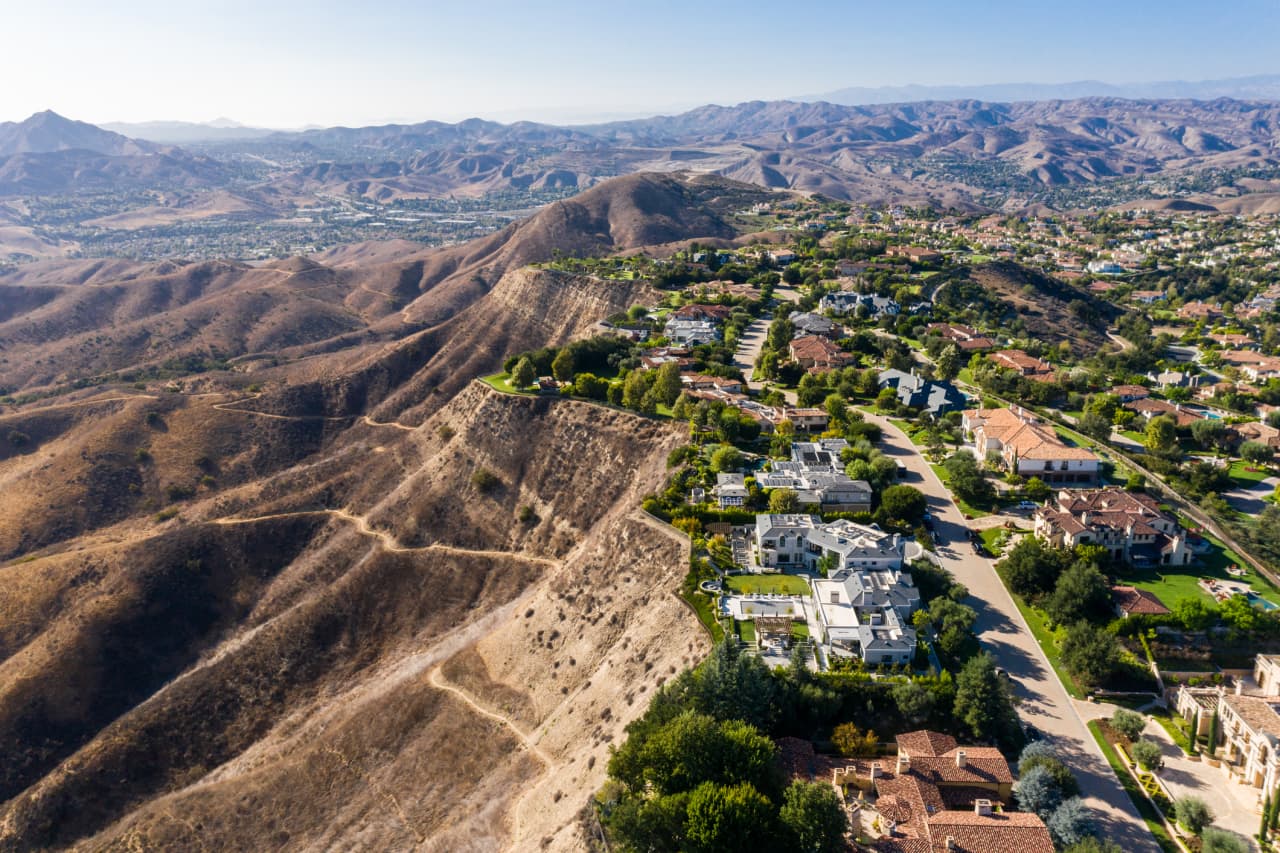
Lopez and Affleck paid $60.8 million for the compound in 2023. Google Maps
Built in 2000, the house has 12 bedrooms and a whopping 24 bathrooms. The resort-sized property has the amenities to match, including a V-shaped pool with views over the surrounding hills, a detached two-bedroom guardhouse and a 5,000-square-foot guest penthouse, according to the listing.
Listing images of the house show that Lopez and Affleck have spent the past year warming up what were fairly white-washed interiors when they purchased the home. There’s now a rich, green-painted dining room, hardwood floors and carpeted over cold, polished-stone flooring.
The couple, who got married in 2022 after reuniting some 20 years after they called off their engagement in the early 2000s, purchased the megamansion following a house hunt that went on for several months, The Wall Street Journal reported at the time.
Representatives for Lopez, 54, and Affleck, 51, did not immediately respond to requests for comment.
Ruben Roy isn’t a guy who tends to beat himself up, but he’s still chagrined about what he said on an earnings call last month.
A managing director at Stifel Financial , Roy dialled in to hear the chief executive of a healthcare company discuss its latest results. During the Q&A, Roy asked the speaker to elaborate on his remarks about investment opportunities.
“I wanted to double-click a bit on some of the commentary you had,” Roy said, instantly cringing.
One of the fastest-spreading corporate buzzwords in recent years, “double-click” is both polarising and pervasive. Particularly on Wall Street, the figure of speech is now being used as a shorthand for examining something more fully, akin to double-clicking to see a computer folder’s contents. Some, like Roy, find the idiom obnoxious or twee. Double-click defenders say the phrase encourages deeper thinking.
Either way, it’s become a verbal tic du jour. Executives and analysts dropped double-click 644 times in corporate conference calls and events during the first half of the year, according to VIQ Solutions, up from 139 times in the same period of 2020.
“It’s almost like a joke. People are like, oh here we go with double-click,” says Roy, who’d been trying to avoid using the term when he accidentally let it slip. Colleagues, he says, haven’t let him forget it.
Annie Mosbacher, a Los Angeles-based marketer, recalls snapping to attention last year when she heard an executive use the phrase during a strategy meeting. Afterward, she and colleagues discussed it: “It was like, oh my gosh, double-click? I guess this is a thing now?”
The new jargon makes her roll her eyes. “Can’t we just say ‘this is an area we need to focus on?’” she says. “We regurgitate this sort of lingo as though it means something, and usually it’s about trying to be impressive more than anything else.”
Not so, says Ruben Linder, who’s owned a small audio and video production business in San Antonio for 25 years. These days, with the rise of technology and a more hectic corporate life, Linder says people need reminders to stop and examine what matters—to double-click, if you will.
“The term is simple, but it’s really profound,” he says. He tries to carve out time to go to a cafe twice monthly with a notebook and engage in reflection.
“I’ll double-click on my business, double-click on my life,” he says. “I double-click on everything now.”
Double-click lingo has leapfrogged beyond corporate America. While CEOs including Walmart’s Douglas McMillon and Nvidia ’s Jensen Huang have deployed the term, so, too, have congressional representatives, influencers and authors such as parenting guru Dr. Becky Kennedy.
The phrase is “innovative,” says Beth DelGiacco, a vice president of corporate communications at biotech company Argenx , who praises its efficiency.
“It’s only a few syllables. Everyone knows what you mean when you say it,” says DelGiacco, who regularly trots it out with peers.
Tech-inflected buzzwords are especially apt to gain traction—think “network,” “bandwidth” or “take offline”—because they can sound smart or cutting-edge, says Doug Guilbeault, an assistant professor at UC Berkeley’s Haas School of Business who has studied corporate jargon.
The inventor of the literal double-click, former Apple designer Bill Atkinson, isn’t convinced. Reached while boating on a recent weekday, Atkinson, now retired, says he’s never heard anyone use double-click as a metaphor and would steer clear of such usage himself, preferring more straightforward language.
He adds that since inventing the function in 1979, he’s come to regret it. He now thinks an extra “Shift” button on the mouse would have been more user-friendly.
“The double-click was a mistake,” says Atkinson, who left tech in 1995 to pursue nature photography. Personally, he double-clicks less frequently these days, given the rise of mouseless devices like tablets and smartphones.
“I double-tap, or I tap,” he says. “I long-press.”
Buzzwords tend to come and go, says HR consultant Nancy Settle-Murphy, noting that other tech-inspired jargon, such as “RTFM”—or read the f—ing manual—are less commonly used today than they once were.
“There are fewer manuals now,” says Settle-Murphy, who recently installed a video doorbell at her home and notes it didn’t come with any pictures or diagrams.
Corporate jargon can be alienating. At a conference, Settle-Murphy was thrown when an audience member asked the speaker to double-click on a point they’d made.
“I thought, ‘these are slides, there’s no link, how can they double-click?’” she says, admitting she later searched online to find the new meaning.
Double-click has a long pedigree in the sales world. Matt Sunshine, head of the Center for Sales Strategy, which trains salespeople, says when he sold ad spots for a local radio station in Dallas in the 1990s, peers commonly used the term.
“Sales leaders would say, ‘Hey, you need to make sure you double-click on that’ with your prospects,” Sunshine says, meaning delve more deeply into any issues customers might raise, as in “Tell me more.”
While he doesn’t know exactly when it first took off, he says the phrase neatly encapsulates a core principle in effective sales strategy, in which salespeople seek to identify and address customers’ needs and concerns, instead of defaulting to one-size-fits-all pitches.
Double-clicking can help identify new business prospects, says Scott Bond, vice president of consumer services at Canadian real-estate company Rennie, which recently opened a U.S. location in Seattle.
Not long ago, Bond was on a Zoom call with his boss and some new business contacts based in southern California. The group hit it off, and afterward, Bond found himself mulling possibilities.
“I looked at my boss and said, hold on, I think we’re being presented with an opportunity here,” he says. “Why don’t we dive in and learn a little more?” His boss agreed, and the company is now planning to open its second American location in the Palm Springs area.
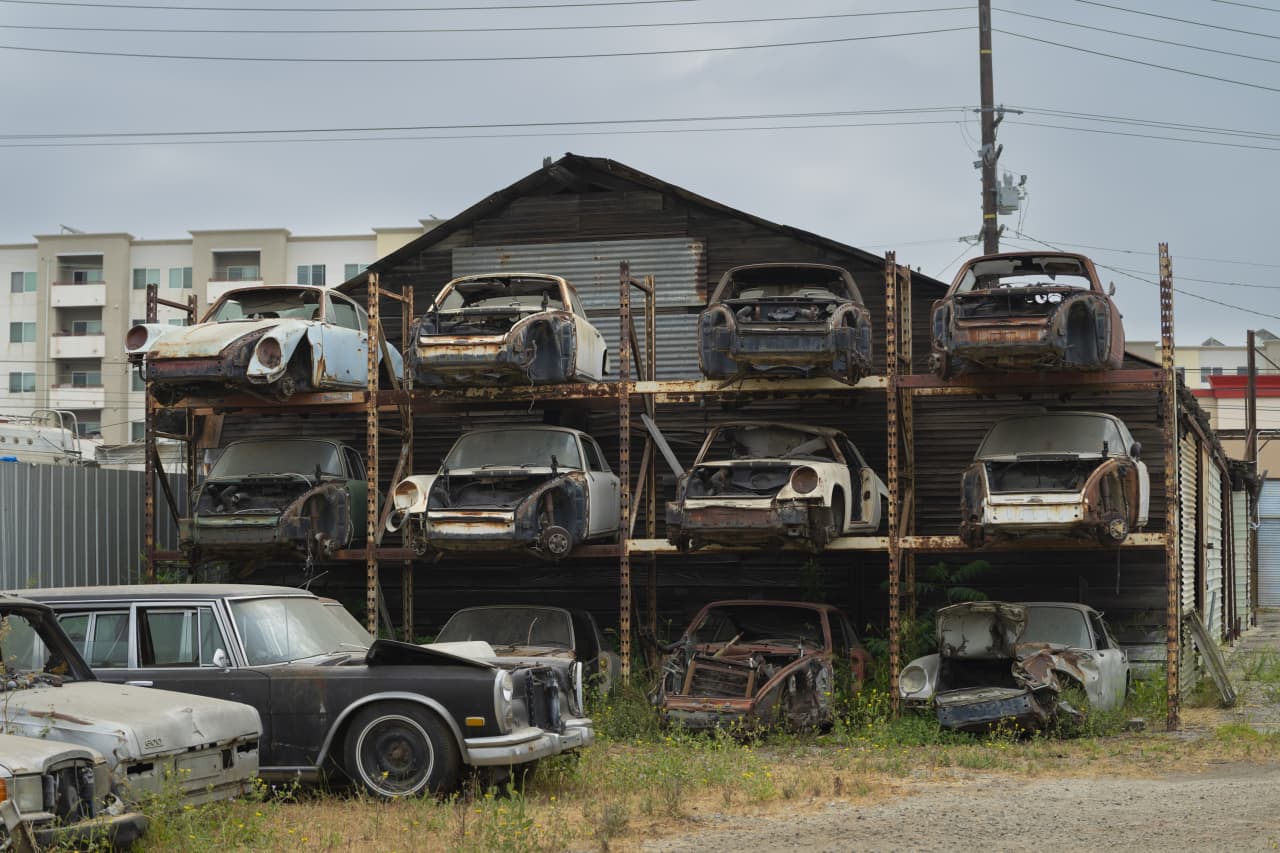
The 24-year-old actor James Dean died in a car accident, colliding with a college student at a California intersection on the evening of Sept. 30, 1955. The car he was driving was a Porsche, but not an ordinary 356. It was a very streamlined 550 Spyder, nicknamed “Little Bastard” by the race-crazy Dean.
The 550 Spyder was an out-and-out racer, but the kind that owners could register and drive to and from the track in those days. The open-topped Porsche was made for only three years, from 1953 to 1956, and although they were very successful in competition, only 90 were produced. The mid-mounted “Carrera” engine in the 550 had four overhead camshafts and dual ignition. With twin Solex carburetors, it produced 110 horsepower. That wasn’t a lot, but the 550 Spyder was a very light car, just 590 kilograms (1,300 pounds).
An example of the 550 Spyder, from 1955 with colourful racing history, is one of the cars that will be sold by RM Sotheby’s in an auction by Lake Tegernsee, about 40 minutes south of Munich, on July 27. Also on the block is a pair of modern Bugattis, a rare Mercedes-Benz SLR McLaren Stirling Moss, and a 2006 Porsche Carrera GT. The auction is taking place in partnership with the new Concours of Elegance Germany in Bavaria, held July 22-27.
The only one: This 2010 Bugatti Veyron 16-4 Grand Sport “Soleil de Nuit” to be auctioned by RM Sotheby’s was built for the royal family of Kuwait. RM Sotheby’s
This Porsche 550 Spyder, with coachwork by Wendler (which also had its hand in the 718 sport racing cars), was delivered to Portugal and competed in European racing circuits. Originally white with burgundy accents, the car was first owned by Fernando Mascarenhas, who achieved class podium positions in races at Barajas and Monsanto in 1955. The 550 then went to Germany that summer for the Nürburgring 500 Kilometers, but the race was cut short because of an accident.
The second owner was Cypriano Flores in 1958. Flores’ son eventually returned the car to Porsche, which did the mechanical work while Wendler restored the body.
Despite the racing, which often results in swapped engines and other components, the 550 still boasts its original chassis, four-cam Carrera motor, and gearbox. The car was restored by Porsche and its original coachbuilder, Wendler, in the early 1990s—and not driven since then. During the restoration, the car’s colour was changed to silver, and the interior from beige vinyl to black leather. The pre-auction estimate is €3.5 million to €4.2 million (US$3.78 million to US$4.54 million).
Also to be auctioned at Tegernsee is the aforementioned 2010 Mercedes SLR McLaren Stirling Moss, a virtually unused example with just 45 kilometres on the odometer. First shown in 2009, it was a tribute to the late racing driver’s win in a 300 SLR Mercedes at the 1955 Mille Miglia.
The auction SLR features a lightweight carbon-fibre structure and a supercharged, 5.4-litre V8 with 641 horsepower. A mere 75 Stirling Moss cars were built, and only offered to customers who already owned an SLR McLaren. Without a roof or windshield, the Moss edition was 200 kilograms lighter than the standard car. It could reach 62 miles per hour in 3.5 seconds. The pre-sale estimate is €3.2 million to €3.8 million.
The modern Bugattis include a 2019 Chiron Sport “110 Ans Bugatti” edition, one of 20. The odometer reads only 1,461 kilometres. It’s estimated at €3.3 million to €3.8 million. The other one is the 2010 Veyron 16.4 Grand Sport “Soleil de Nuit,” a one-off Veyron in two-tone black/blue metallic sold new to the royal family of Kuwait. The estimate is €1.5 million to €2 million.
The 2006 Porsche Carrera GT, one of just 1,270 of these race-derived high-performance cars, is also a low-mileage example in silver metallic with 35,698 kilometres showing. It’s powered by a 5.7-litre V10 engine and could reach 62 miles per hour in 3.57 seconds and had a top speed of 205 mph. This one was supplied to Porsche in Leipzig, and a succession of owners barely used it. In 2001, the Porsche benefitted from a major €27,000 service that included a clutch replacement. It’s estimated at €975,000 to €1.275 million.
Porsche collectors might also want to visit the Bonhams|Cars Quail auction during Monterey Car Week starting Aug. 16. The lots include a one-of-62 1971 Porsche 911 S/T (estimated between US$900,000 and US$1.2 million); and a 1993 959 “Komfort” model, one of six, estimated at US$1.5 million to US$2 million.
When it comes to France’s turbulent politics , the current impasse is probably the best investors could have hoped for.
The second round of French legislative elections delivered a widely expected hung parliament, but not its predicted makeup: Rather than coming in first, Marine Le Pen ’s far-right and anti-immigrant National Rally finished third. In a shock twist , the leftist New Popular Front alliance emerged victorious, with the party of President Emmanuel Macron and its allies in second place.
This is because leftists and centrists ended up coordinating. In many local races, candidates dropped out to avoid dividing the vote against the far right. Still, no party has an outright majority, which plunges the country into political gridlock. This was, counterintuitively, the preferred outcome for financial markets.
The CAC 40 initially tumbled when the elections were called in June, driven by fears of a potential National Rally government challenging the European Union with fiscally expansive plans. Then the French stock benchmark perked up, as the first-round results suggested that the far-right wouldn’t get a majority.
Yet markets remained volatile because the rise of the New Popular Front raised even greater concerns. The policies of this coalition, in which leftist firebrand Jean-Luc Mélenchon is a key leader, also include more public spending, on top of widespread tax increases. Indeed, the CAC 40 closed down 0.6% Monday, probably reflecting investors’ concerns about these parties potentially managing to form a new government. Mélenchon has stated that there will be no deals with the centrists.
These worries seem overblown. Yes, there are doubts about how France will handle its budget deficit, which amounted to 5.5% of gross domestic product in 2023 and has forced the EU to launch an “excessive deficit procedure” against the country. Macron may need to accept the reversal of reforms such as a higher retirement age.
Still, a fiscal crisis isn’t in the cards, because the European Central Bank is ultimately in control of France’s bond market.
As for economic growth, it is unclear how much impact Macron’s policies have had in the first place, particularly given resistance from unions and swaths of the public, which resulted in the famous “yellow vest” protests in 2018 and 2020.
What matters for sectors battered in the stock market, including banks, energy firms and infrastructure operators, is that the risk of widespread tax increases, nationalisations and a prolonged standoff with Brussels seems smaller now than a few weeks ago. Whatever Mélenchon says, the left will either have to compromise or else form a minority government that might scare investors but wouldn’t be able to pass laws.
So there isn’t much justification for the lower valuation of lenders such as Société Générale and especially BNP Paribas —one of Europe’s most interesting banks that now trades at 0.65 times tangible book value. The same is likely true for firms such as energy utility Engie and infrastructure-concessions leader Vinci , which have lost 8% of their market value since the end of May.
These elections are more a symptom of Macron’s weakness than its cause. After a chaotic month, French politics is back where it has been for years, with a rising far right forcing the left to back a centrist platform that can achieve little because few people actually like it. Macron himself became president on an anti-Le Pen ticket, but in seven years has failed to rally broad support for his pro-business vision.
This could eventually make Le Pen’s victory inevitable, as she claimed after initial results came in. For now, though, it is more or less what markets ordered.
Christian Dior struck gold when it found a supplier willing to assemble a €2,600 handbag, equivalent to around $2,816, for just €53 a piece—or did it? Cleaning up the reputational damage may not come cheap.
A Milan court named LVMH -owned Dior and Giorgio Armani as two brands whose products were made in sweatshop-like conditions in Italy. Images of an unkempt facility where designer handbags were produced, which was raided as part of an investigation into Italy’s fashion supply chain , are worlds apart from those the luxury industry likes to show its customers.
To keep up with the strong demand for their goods, some high-end brands rely on independent workshops to supplement their in-house factories. Sales at LVMH’s leather goods division have almost doubled since 2019.
While more outsourced manufacturing is understandable in a boom, brands may also have taken cost-saving measures too far in a push to juice profits. Some of Dior’s production was contracted out directly to a Chinese-run factory in Italy, where workers assembled the bags in unsafe conditions, according to a translated court order. In other instances, Dior’s suppliers subcontracted work out to low-cost factories that also used irregular labour.
Nipping the problem in the bud would require hundreds of millions of dollars worth of investment in new facilities to bring more manufacturing in-house. The alternative is for Dior to pay its suppliers more and keep them on a tighter leash. Either way, the result seems likely to be lower profits than shareholders have grown accustomed to.
Top luxury brands such as Christian Dior can have very high margins because consumers are willing to pay steep prices for goods they see as status symbols. They also can spread high fixed costs, such as expensive advertising campaigns over a large volume of sales.
For the LVMH group overall, the cost of making the products it sells—everything from Champagne to watches to cosmetics—amounted to 31% of sales in 2023. But the margins on big-brand handbags are probably at the high end of the spectrum.
Bernstein analyst Luca Solca estimates that a €10 billion luxury fashion label, roughly Dior’s size, may spend just 23% of its sales on the raw materials and labour that go into its products. This implies a €2,600 Dior purse would cost €598 to make, equivalent to $647 for a roughly $2,800 product at current exchange rates.
In reality, the cost may be even lower, based on the results of the Italian investigation. The €53-a-piece assembly price it cited, equivalent to around $57, didn’t include the cost of the leather and hardware, but that would add only another €150 or so, according to one Italian supplier.
Advertising fees are a further €156 per handbag, according to Bernstein’s analysis, and depreciation of the company’s assets is €156. Running the brand’s stores—including paying the rent on some of the most exclusive shopping streets in the world—and head-office costs come to an additional €390. This leaves €1,300 of pure operating profit for Dior, or a 50% margin.
“This is the reality of the business,” says Solca. “The retail price for the goods of major luxury brands is typically between eight and 12 times the cost of making the product.”
LVMH hasn’t commented on the investigation, which first made headlines nearly a month ago. Meanwhile, a public-relations storm is brewing. Luxury influencers on social media are asking what exactly people are paying for when they shell out for a fancy purse. Recent price increases also make the cheap manufacturing costs hard to stomach. A mini Lady Dior bag that cost $3,500 in 2019 will set shoppers back $5,500 today, a 57% increase.
A dozen other luxury labels that remain unnamed are under investigation for similar issues in their Italian supply chains, so this may be a much wider problem.
Profits will take a hit if the industry decides to clean up its act. But the cost of doing nothing might be higher. Luxury brands that charge customers thousands of dollars and rely on a reputation for quality can’t afford to be cheap.
With its 1997 launch as a name-your-own-price site, Priceline helped usher in the era of online travel booking―and the growth of a trillion-dollar category. Priceline itself has mushroomed into a global business with 1,500 full-time employees; along with global airline bookings, the site claims to offer 1.2 million accommodations in 116 countries.
Now, the Connecticut-based company is focusing on generative AI, and CEO Brett Keller is behind the leap. It’s just the latest technology push from Keller, a 25-year veteran of the company who has also served as CMO and COO. Under Keller, Priceline launched the travel industry’s first full-service mobile app in 2009; he also helped conceive the hugely popular William Shatner-fronted “Negotiator” ad campaign.
Keller, 56, talked to Penta about how AI is changing travel planning, what luxury travellers do to save money, and why Japan blows his mind.
Penta: Much of Priceline’s marketing is about value. Do you see luxury travellers in your customer mix along with budget-conscious travellers?
Brett Keller: High-net-worth consumers take a significantly higher number of trips than the average leisure traveller. For a high-end vacation like a safari in Tanzania, they’ll work with experts. But for the other 30 trips they book that year, either for themselves or family members, they don’t always reach for the stars. They want to manage money effectively. And as they’re moving around the country and the world, they need a fast, easy way to book travel that accommodates their needs. Priceline is a great platform for that kind of trip. And if you’re taking a quick weekend trip to Miami, and want to stay in the Four Seasons, we’ve negotiated with them. Even high-net-worth individuals seek value.
Priceline made headlines last year for partnering with both Google and OpenAI on Penny, your AI assistant. How has Penny evolved?
She’s gone from, “I can answer questions about the hotel you’re looking at” to actually servicing the customer through more complicated scenarios. If you need to cancel a hotel that’s fully refundable, you can do it with one click. But if there are issues, like a reservation that’s not fully cancelable, Penny can walk through those steps for you.
Penny’s also helping people find, search, and book properties. For example, if the customer tells her, “I’m looking for a great resort with these features, anywhere warm”—she’ll present recommended properties that meet those requirements. You can continue with Penny on the site, or go with the traditional experience.
Has there been any pushback from consumers about Penny and generative AI?
There has been none. Customers still have access to phone agents. Anyway, the younger generation doesn’t want to talk to anyone. And with traditional chat agents, live agents, or even messaging apps, there’s typically a delay. Penny answers immediately and in real time.
What’s the future of generative AI and online travel booking?
The future is a highly personalised shopping experience. It’s hard to achieve, because we don’t know about the consumer when they come in. But generative AI lets us dramatically improve personalisation. As you work with Penny, and tell us your preferences, the way you interact lets us find and book the best products and services every time you return. The ability to customise and personalise increases exponentially.
Is the travel experience even more bifurcated between elite, ultra-high-net-worth travellers and everyone else?
Consumers seem to be a little less sensitive in some areas. On planes, first-class and comfort-plus seats are the first to go, most of the time, and people are burning through points to sit in the front because they’re tired of not having legroom. But seats are packed in economy, too, so people are flying.
Hotel bookings are more economically driven in the U.S. Higher-income people are not as affected by interest rates or the cost of living, so they spend more freely than economy-minded consumers. There is a bit of bifurcation there. The low end is not filling, but the high end is.
It’s been reported Europe’s going to get even more crowded this summer. Does Priceline ever suggest alternatives to over-touristed or overpriced destinations?
We’re not in the business of telling you where you shouldn’t travel. We market popular destinations because that’s where people want to go. As much as we could tell people, “Las Vegas is overcrowded, don’t go,” people will want to go.
Social media is highlighting some overpopulated destinations and suggesting alternatives, so that comes back to us. But price is the No. 1 motivator. Vegas is a great value. There are so many hotel rooms available that you can go in a non-peak period and get a room in a four-star hotel for US$120. Try doing that in New York City.
What destinations are going to pop over the next year or two?
Asia will continue to be exciting and interesting to people. Bangkok is a great place to move in, then travel throughout Southeast Asia. As the region gets more popular, people will keep trying to find more remote and more unique destinations. People love Europe, but it was the hot spot in 2022 and ’23. Some travellers are saying, “I’ve had enough, and I’m moving on.” Japan is also amazing, for so many reasons. It’s easy to navigate. English is not a challenge. It’s safe. It feels like a different world, but completely first-world. The strength of the dollar is also driving some of that―again, price plays a role.
Beyond that, Mexico and the Caribbean took a real hit in 2022 and ’23 after a boom in 2021. They’re coming back now. A lot of people don’t want to travel far—“I just want to go to a beach and not think of anything.” And because not everyone wants to travel overseas, unique and relaxing cities like Nashville, Tennessee; Houston; and Austin, Texas, will be popular, especially into the fall.
Every day brings more headlines about airline woes. Who gets blamed if a Priceline customer has a bad flying experience, you or the airline?
When you have a bad experience traveling, you want to blame everybody. No matter what happened, the online travel agency takes blame and the airline takes the blame. It could be your seat, the person sitting next to you, whatever. We get the complaint, and we take on that responsibility and that role. We have leverage because of the amount of business we drive to partners. They want to work with us to make sure the customer has the best experience. Something goes wrong almost every time you take a trip. That’s just the reality.
What are your favourite places to travel?
My favourite destination, and a place where I spend a lot of time every summer, is [resort town] McCall, Idaho, one of the most beautiful towns in the West, with hiking, trails, and mountain biking. Outside of the country, it’s Japan, absolutely. Tokyo is the most exciting city in the world. It’s mind-blowing.
This interview has been edited for length and clarity.
A historic home in an Unesco World Heritage Site on the Spanish island of Ibiza has come to the market €10.8 million (US$11.7 million).
Dating to the 16th century, Palacio XI is in Dalt Vila—the oldest quarter in Ibiza Town, the island’s capital—which was designated a heritage site in 1999. The fortified enclave is a labyrinth of narrow, cobbled streets, ancient buildings and stunning views.
Charles Marlow
The four-storey home was acquired by the seller when it was in ruins and they embarked on a thorough restoration between 2014 and 2018, according to a spokesperson for the listing agency Charles Marlow Ibiza.
Mansion Global couldn’t identify the seller, or when or for how much they acquired the property.
Charles Marlow
Today, the house is a “blend of historic Ibiza charm and contemporary luxury,” said Tim Stacey, head of sales and rentals at Charles Marlow Ibiza. There are details like stone walls, tall beamed ceilings and grand stone arches, alongside features including an integrated sound system, comfort cooling and underfloor heating.
Charles Marlow
There’s a modern kitchen with a wine cooler, a dining room that opens out to the large main terrace, the pool area and a covered outdoor dining area, ideal for al-fresco entertaining.
There are also multiple living spaces, a roof terrace, a for-vehicle carport with EV charging, six bedrooms and “superb 360-degree views of Ibiza Town, the island, and Formentera [that] are truly breathtaking,” Stacey said.
Charles Marlow
Ibiza is considered one of the top luxury residential destinations globally, according to Knight Frank’s Prime International Residential Index, released earlier this year, which found prime property prices on the island rose 12% in 2023.
“Ibiza’s strength lies in its ability to provide an escape from metropolitan life,” said Jack Harris, a partner in Knight Frank’s International Residential team . “It’s a place where one can recharge the batteries (yoga is a staple on the island), enjoy world-class cuisine and reconnect with nature—whether on the beach or in the heart of the island’s countryside.”
Luxury homes with decked-out family rooms, kitchens, primary bedrooms and bathrooms are standard today and practically a given. The latest mania, however, has owners glamming up their often overlooked garages and barns.
Called “toy barns,” “barndominiums” and “toy garages” in real estate circles and by the amenity-obsessed set, these functional spaces are being repurposed into gleaming showrooms filled with pricey outdoor gear—think ATVs, snowmobiles, electric bikes, boats and more.
Sitting areas, bars and diversions such as pool tables also figure in and turn barns and garages into entertainment venues that become a hub for owners to socialize with family and friends.
Take Jeff Collins, founder of Glennwood Custom Builders in Charlevoix, Michigan, for example. His lakefront home features a 2,500-square-foot barn with a lounging space, sleds, dirt bikes, a card table and a basketball hoop. The back doors open into a yard with a shooting range. “My friends come over a lot, and we hang the whole time in the barn,” Collins said. “We drink beers, play around with the equipment and shoot hoops. I can’t remember the last time we actually went into the house.”
A rendering of a toy barn in the still-in-construction Legacy Ranch in McCall, Idaho. Courtesy Whitetail Club
Barndominiums like his are the craze in his town, according to Collins.
“They’re what everyone wants,” he said. “I’m building two for homes in my neighborhood and have inquiries for more.”
An Amenity That’s Gaining Popularity
Real estate agents and brokers who focus on upscale homes also report an increasing interest in toy barns and say that a property that offers one can attract more buyers than a listing with typical amenities such as swimming pools and wine cellars.
Timothy Di Prizito, the CEO of The Di Prizito Group & DPG Estates at Christie’s International Real Estate/AKG in Los Angeles, for instance, said that showpiece barns and garages are becoming a more popular feature in luxury homes, particularly in new construction properties.
“Wealthy owners are investing in turning their homes into resorts. It started with building commercial-sized gyms and onsite spa facilities,” he said. “Today, it’s all about having onsite entertainment annexes and auto galleries. They give a property a distinct edge.”
Di Prizito is currently selling a property called Bella Vista in Montecito for $70 million that features an estimated 32-car collection garage. Originally designed as a helicopter hangar, the space has vaulted ceilings, epoxy flooring and a second level with two studio apartments.
Patrick Nesbitt, the CEO and chairman of the real estate development company Windsor Capital Group, owns the estate with his wife, Ursula, and said his family regularly uses the space. “We’ll have friends over for dinner there and loan it to charities to host events. We even had my son’s wedding party in the garage and transformed it into a beautiful reception ballroom,” he said.
The outdoor gear changes with the season at Aspen Valley Ranch. Courtesy Aspen Valley Ranch
Nesbitt is selling Bella Vista, he said, because his children have moved out, and he wants to downsize.
Another home with a toy space is currently for sale in Honokaa, Hawaii, asking $7.4 million. Its 3,300-square-foot freestanding barn is solar-powered and is where owners Matthew and Susan Russell display their stash of luxury gear such as life-size model airplanes, ATVs and motorcycles.
“We had many happy memories in the barn spending time with our grandchildren and friends,” Matthew said. The couple is selling the home, he said, to settle full-time in Sedona.
A Perk Not Reserved For Houses
Eye-candy barns and garages are also becoming more common in upscale residential developments.
Martis Camp, set on 2,177 acres in Truckee, California, in North Lake Tahoe, has several homes with what Brian Hull, president and broker at Martis Camp Realty, refers to as “activity garages.” They typically house snowmobiles, ATVs, motorcycles, boats and ski equipment. “Our community has access to a 26-mile trail network through national forest land and the mountains, so owners amass a lot of gear,” Hull said.
More developments are highlighting their toy storage areas as an amenity for all residents to enjoy, in the same vein as a fitness centre or clubhouse.
Tributary, a private club community in Teton Valley, Idaho, offers a recreation barn stocked with gear like paddleboards, fishing gear, rafts and snowshoes. And in McCall, Idaho, the still-in-construction Legacy Ranch, set within the existing Whitetail Club, hopes to entice potential buyers by giving them the option and the designs to build homes with toy barns.
“The lots at Whitetail Club are less than two acres, and owners don’t have space on their properties to store all their outdoor equipment, which they are asking for more and more,” said Whitetail Club’s head of development Dan Scott. “Several have told me that they want to upgrade to Legacy Club for the sole purpose of having a toy barn.”
Then there’s Aspen Valley Ranch in Aspen, Colorado, a development with homes starting at $15 million. According to vice president Simon Chen, the 5,000-square-foot two-story toy barn is the heart of the community’s action.
The equipment in the building changes seasonally. During warmer months, that means top-of-the-line dirt bikes, four-wheelers and a fleet of regular and e-mountain bikes. Come winter, the barn is stocked with six snowmobiles, four-wheelers with tracks to navigate through snow, snowshoes and sleds.
A rendering of a toy barn in the still-in-construction Legacy Ranch. Courtesy Whitetail Club
Residents can also avail of the barn’s second floor, featuring a games area with ping-pong and pool tables and classic arcade games such as Pac-Man and Skee-Ball. The adjoining bar, lined with premium wine, and spirits such as Macallan 18-year scotch and Clase Azul Ultra tequila, retailing for close to $2,000 a bottle, is a big attraction for residents, Chen said. “Our owners are welcome to enjoy the alcohol for no charge,” he said. “Our development has a gorgeous swimming pool and spa and a massive gym, but the barn is where they most want to be.”
This article originally appeared on Mansion Global.
Dubai’s Burj Al Arab hotel is regarded as one of the most extravagant properties in the world, and its sail-shaped architectural design has become an icon of the city and the region. One of the people making the magic happen behind the scenes for such an over-the-top luxurious outpost is its chief concierge, Roger Geadah.
Any hotel concierge must be prepared to cater to and meet the needs of their guests, fostering long-term relationships and turning first-time visitors into repeat clients by delivering memorable moments. But at Burj Al Arab, the bar is perhaps even more difficult to clear than it is elsewhere.
“Delivering on the expectations of our guests at the Burj Al Arab is not just about meeting their high standards—it’s about consistently exceeding them,” Geadah says. “To achieve this, I place myself on the same level as our guests, seeing the world through their eyes. This involves a great deal of emotional intelligence, storytelling, and fun.”
At a hotel regarded as one of the world’s most opulent, Geadah’s tasks are different from those of a concierge at a more typical city hotel. Guests make use of around the clock butler service and stay in gilded two-story suites bedecked in enough marble and gold as to border on the palatial, after entering the property through a world-record, almost 600-foot high atrium. Expectations are even higher.
Geadah, who’s been in Dubai for a decade and with the Jumeirah Burj Al Arab team for the past three years, strives to connect with his guests, think outside the box, and stay up to date with a city amid constant evolution. There may be no better person to offer his handpicked recommendations for what to experience in and around the city.
Geadah, 48, spoke with Penta about his top tips and insider recommendations for a memorable visit to Dubai. undefined
Stay
Beyond the swanky confines of his offices at the Burj Al Arab, Geadah’s top choice elsewhere in town is the XVA Art Hotel in Bur Dubai.
One of the people making the magic happen behind the scenes for such an over-the-top luxurious outpost is its chief concierge, Roger Geadah. Courtesy of Burj Al Arab
“It’s a true hidden gem that beautifully combines heritage, art, and tranquility,” he says. The property is set within a traditional Emirati house in the heart of the Al Fahidi historical neighborhood, and guests enjoy the area’s charming traditional architecture, heritage sites, and history, along with the artistic touches of its 15 individually designed rooms.
“What I love most about XVA is how it fosters conversations around art, culture, heritage, and creativity,” Geadah says. For those looking to escape the city for a night or two, head to Bab Al Shams Desert Resort.
“It’s a luxurious oasis hidden away in the Arabian desert, just about an hour’s drive from the lively city,” Geadah says. “Bab Al Shams offers breathtaking desert views that make for a truly unique getaway, and the resort beautifully combines traditional Arabian design with modern comforts, and also offers unique activities like camel rides, adding a touch of adventure to your stay.”
Adjacent to the Burj Al Arab is the Madinat Jumeirah, the largest resort in Dubai at about 100 acres in size. It’s a destination to itself featuring a handful of different hotels and hideaways sharing an expansive property interconnected with walkways and boat canals, including a huge lagoon-style resort pool, a lengthy stretch of private beach, and a staggering lineup of about 50 dining and drinking venues.
Shop
Dubai is home to every luxury brand and retailer on the planet, including at Dubai Mall, one of the largest in the world. Finding smaller, local purveyors for a more authentic shopping experience may be more rewarding. “When it comes to immersing yourself in the vibrant culture and sensory delights of Dubai, the city’s souks [marketplaces] are an absolute must-visit,” Geadah says.
Different souks are focused on different types of goods, and Geadah recommends a few in particular. “First up is the Dubai Spice Souk, nestled in the heritage area; this colourful market is a sensory feast, brimming with aromatic herbs and spices that fill the air with their tantalising scents,” he says.
From there, the Gold Souk is close by, as well as the Perfume Souk, another of his top picks. “It is a fragrant paradise in its own right, and here you will encounter some of the most authentic and enticing scents Dubai has to offer: Oud, a signature fragrance derived from resin is beloved by both Emirati men and women for its earthy allure.”
Explore
The most difficult ticket in Dubai right now is the Museum of the Future.
“Delivering on the expectations of our guests at the Burj Al Arab is not just about meeting their high standards-it’s about consistently exceeding them,” Roger Geadah, chief voncierge, said. Courtesy of Burj Al Arab
“It’s quickly become a must-visit destination and it’s easy to see why, as the building itself is an architectural marvel, featuring a stunning torus-shaped structure adorned with Arabic calligraphy across 1,024 stainless steel panels,” Geadah says. Visitors enter an experiential space that transports them to the year 2071. “It is a captivating experience for anyone interested in what the future might hold.”
A more off-the-beaten-path pick is the Al Shindagha Museum in the historical neighbourhood of the same name, which takes people on a journey through time in the other direction. “Visitors explore the meticulously restored heritage houses along the serene Dubai Creek, houses which aren’t just structures, but living museums, each telling its own story of traditional crafts and bustling commercial activities from bygone eras,” he says.
Another choice is the Coffee Museum. “Lose yourself in a treasure trove of antique items that trace the rich history of coffee, from its humble beginnings to its global significance,” Geadah says. “For a dose of authentic culture, head to the Sheikh Mohammed Centre for Cultural Understanding where locals offer hands-on explorations of traditional ways of life while showcasing hospitality and serving a traditional meal. The arts district at Alserkal Avenue, meanwhile, features contemporary galleries, studios, and exhibition spaces.
Visit the Al Farooq Omar Bin Al Khattab Mosque for a glimpse at a splendorous structure inspired by Istanbul’s Blue Mosque. “Beyond its architectural marvel, the mosque embodies a deeper purpose — to foster understanding, harmony, and unity,” Geadah says. “Within its walls, words like moderation, peace, and tolerance reverberate, echoing local values and serving as a bridge between Arabic civilization and the world beyond. Non-Muslims are welcome to visit the mosque outside of praying times.”
The most popular choice for an excursion outside the city is a desert safari to the Dubai Desert Conservation Reserve. Ride in a heritage vehicle across the dunes and enjoy activities such as falconry, wildlife viewing, and a Bedouin-style barbecue feast. For a different take, Geadah recommends starting the adventure with a sunrise hot air balloon ride.
The terraforming marvels of Palm Jumeirah should be seen and explored by every visitor. There are several viewpoints to consider, and Geadah also suggests taking to the water with a yacht trip or jet ski tour to gain an additional perspective. And of course, the iconic Burj Khalifa remains one of Dubai’s signature sights. The best way to soak it all in is via the At The Top experience, sending visitors to the 152nd floor along with a series of viewing points and lounges on different floors.
“To achieve this, I place myself on the same level as our guests, seeing the world through their eyes. This involves a great deal of emotional intelligence, storytelling, and fun,” Geadah says. Courtesy of Burj Al Arab
Eat & Drink
“Dubai’s culinary scene is incredibly diverse, offering everything from Michelin-starred restaurants to authentic street food,” Geadah says. Many of the world’s most well known culinary fixtures have locations in the city, from Massimo Bottura and Gordon Ramsay to Daniel Boulud , Nobu Matsuhisa, Jamie Oliver, and scores of others. When possible, though, Geadah prefers arranging for a more unique experience, once putting together a secret culinary tour for a food-loving family with the help of a local historian and guide.
“The older part of town boasts a rich culinary heritage, with influences from India, Persia, and the Arab world, and it’s home to some of the most unique and charming eateries,” Geadah says.
Geadah has no shortage of restaurant recommendations, though, many of which come with particular vantage points. He suggests Shimmers for an on-the-beach taste of Greek fare with a view of the Burj Al Arab; Coucou offers “festive French” from atop Palm Tower, offering a 360 degree view of Palm Jumeirah; and in downtown Dubai, Urla offers Aegean dining with a view of The Dubai Fountain Show and Burj Khalifa.
At Burj Al Arab, consider L’Olivo at al Mahara, an outpost of Capri’s only two Michelin-starred restaurant. The restaurant is immersed within an enormous coral reef aquarium providing a captivating scene.
Always one to look for a local touch, Geadah also suggests Orfali Bros. “Three brothers, Mohammad, Wassim, and Omar Orfali, bring culinary magic to life, blending tradition and innovation inspired by their cultural roots and adventurous spirit,” he says. “Their small bistro offers a sensory experience where flavors dance and ingredients shine, reflecting their culinary journey.”
On a recent trip to the new Manhattan flagship for Stòffa, a menswear brand, Colin King made a beeline for the back of the store. The 36-year-old stylist and artistic director had booked a made-to-measure appointment—but not for a suit. Instead, he chose a cotton-silk shirt, relaxed pants in a classy wool, and a drapey, chocolate-brown shirt-jacket, all for his everyday wardrobe. He also snapped up slipperlike suede loafers. “They’re so handsome,” he said.
Lately, the way men like King dress has undergone a subtle shift. Those in the know have been embracing a more refined and considered, if not quite formal, style. “There’s a real move toward relaxed elegance,” said London designer and tailor Charlie Casely-Hayford. “It looks effortless, there’s a nonchalance, but it projects power and confidence.” Stòffa, a newly buzzy, 10-year-old label embodies the look.
Despite a few modern tweaks, we’re talking about the kind of get-ups that Cary Grant might have worn to lounge about—polished yet unstuffy, and with a certain old-timey appeal. The look is linked to the much-talked-about “quiet luxury” movement, but it often has “more personality than quiet luxury,” said David Telfer, creative director at British brand Sunspel. Think flowy, pleated pants, bold polos, souped-up chore jackets and loafers with waferish soles.
Lots of men who now crave easy elegance were stocking up on streetwear a year ago, according to Dag Granath, co-founder of Saman Amel, a Stockholm brand known for its tasteful tailoring. “What we’re seeing is that a 28-to-38-year-old customer is swapping out [streetwear from] high-end fashion labels for a bit of tailoring to anchor the rest of their wardrobe on,” said Granath.
Jon Gorrigan, 43, a fashion photographer in London, used to live in casual streetwear. But he’s “dressing smarter now,” he said, “more like my grandfather, who was a real sharp dresser. He wasn’t a rich man, but he always looked elegant.” He’s swapped sweatshirts for striped polos from London brand King & Tuckfield, and the odd fun piece like a faded Gitman Vintage Hawaiian shirt. Dressing “with more consideration,” as he put it, “makes you feel more grown-up.”
A pair of Saint Laurent loafers were Gorrigan’s entrée into elegance. “They are lower profile, which feels more streamlined, with a subtle monogram,” he said. Indeed, slim-soled shoes, from moccasins to sneakers, help define the modern Cary Grant look. “Men want slimmed-down shoes to go with the new, smarter, classic look,” said Tim Little, creative director and CEO at Grenson, a British shoemaker. The chunky, lug-sole bases that have reigned for years appear to have undertaken a juice cleanse. Current hot, refined styles include leather slippers by Lemaire, Saman Amel’s suede moccasins, and super-lean sneakers like Dries Van Noten’s suede style and Miu Miu’s interpretation of the New Balance 530. A finer shoe “feels a bit more dressy and chic, and won’t dominate the whole outfit in the way a chunky boot would,” said Granath.
Such streamlined kicks go nicely with flowy linen trousers, dark denim and polo shirts—whether preppy buttoned styles or “Johnny collar” polos , a sexier, buttonless take. Sunspel reports that sales of its Riviera polo, a trim design sported by Daniel Craig in “Casino Royale” (2006), have increased by 51% in the U.S. in the last four months, year on year. On the brand’s website, this polo is most often bought with an unstructured linen blazer, noted Telfer.
Those who want a tad less formality than a blazer will appreciate how the humble chore jacket is being reworked in luxe fabrics. The results feel easy yet urbane. See Zegna ’s floppy, silk-linen take, or upcoming fall designs from Scotland’s Johnstons of Elgin made from premium merino and Scottish tweed.
Though elegant dressing reads as expensive, you can score the look at reasonable prices. Accessible labels like Madewell, Percival and Cos sell sophisticated polos and roomy, pleated trousers. Meanwhile, you can find streamlined loafers at OG brand G.H. Bass for $175.
Elegant needn’t be boring, noted Bryan O’Sullivan, 42, a design-studio founder who’s based in both London and New York. His workday uniform consists of high-waist pants and taupe knit polos, “which does feel quite Cary Grant,” he said. But he’ll occasionally add “a splash of flair” with choice items like Bode cream pants embellished with quilted cats.
He said the confidence that this pulled-together, slightly offbeat look projects is good for business. “When you’re trying to convince a client of your creative vision, it does help if you look the part.”
The Wall Street Journal is not compensated by retailers listed in its articles as outlets for products. Listed retailers frequently are not the sole retail outlets.