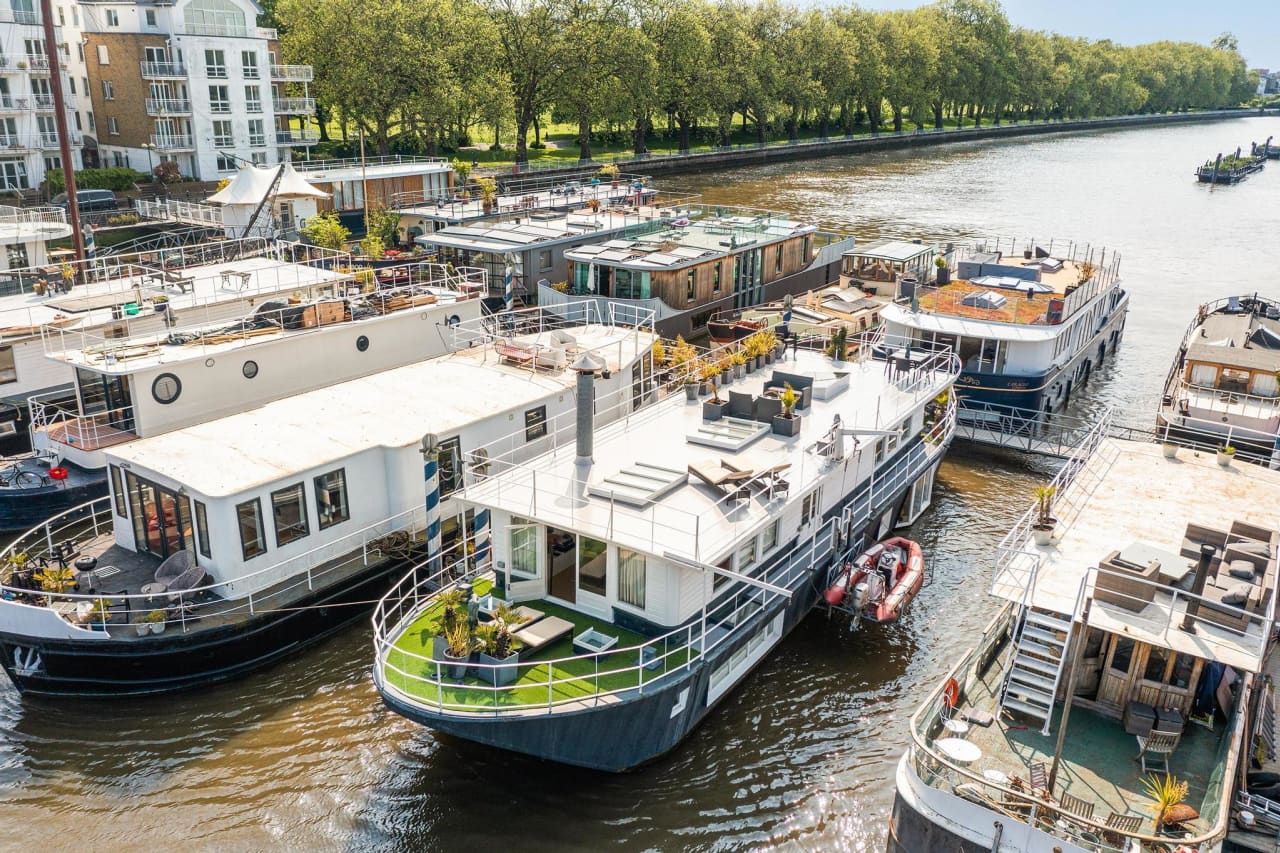
For nautically inclined house hunters, this London houseboat that’s floating just off the south bank of the River Thames, might be the ideal investment.
On the market for £1.65 million (US$2.1 million), the three-bedroom vessel is moored just next to Wandsworth Park, according to the listing with Knight Frank, which brought the unorthodox home to the market at the beginning of this month.
The boat has three decks.
Knight Frank
Houseboats “rarely appear on the market, but when they do they attract a specific buyer who is after a unique way of living,” said Sarah Bennett, associate in Knight Frank’s Battersea and Riverside office. “This houseboat comes to market in excellent condition and contrary to any stereotypes, it is very spacious.”
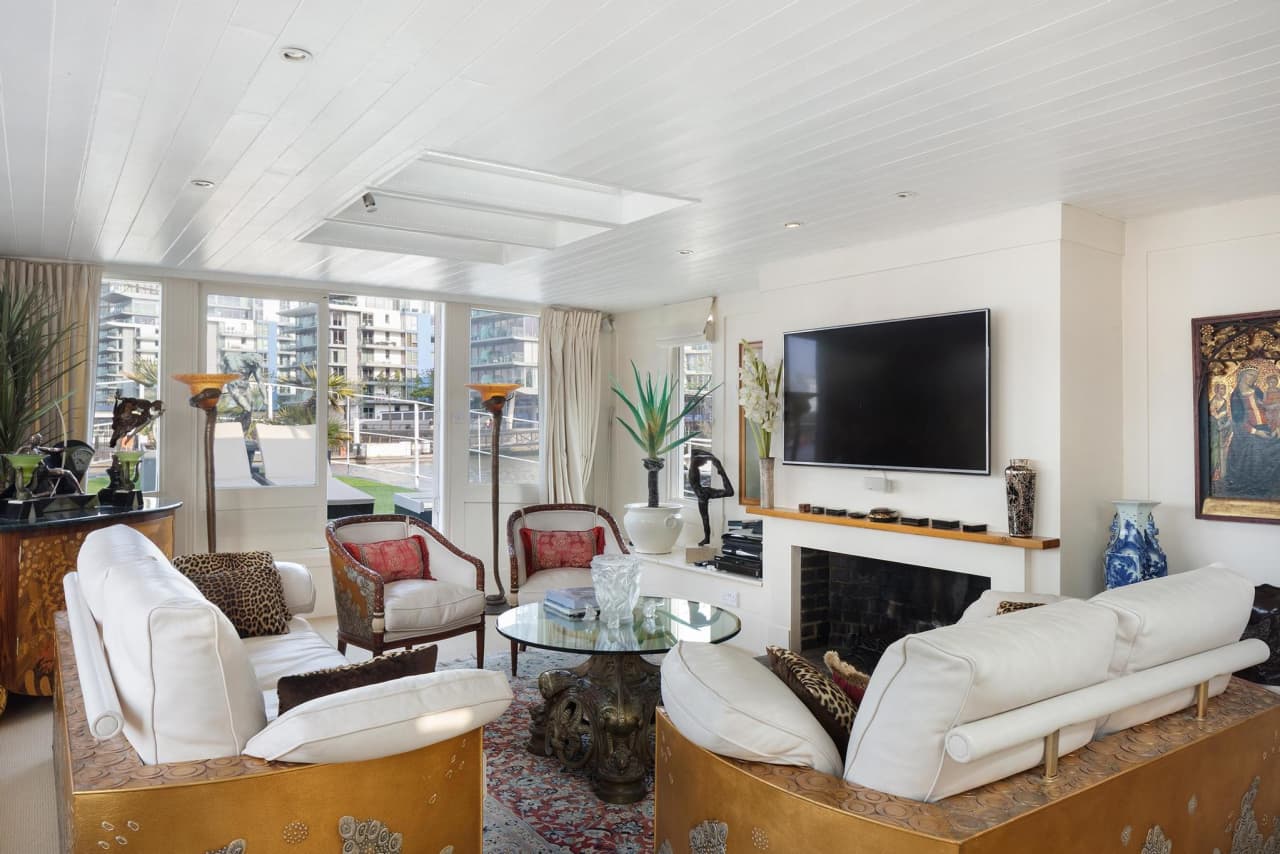
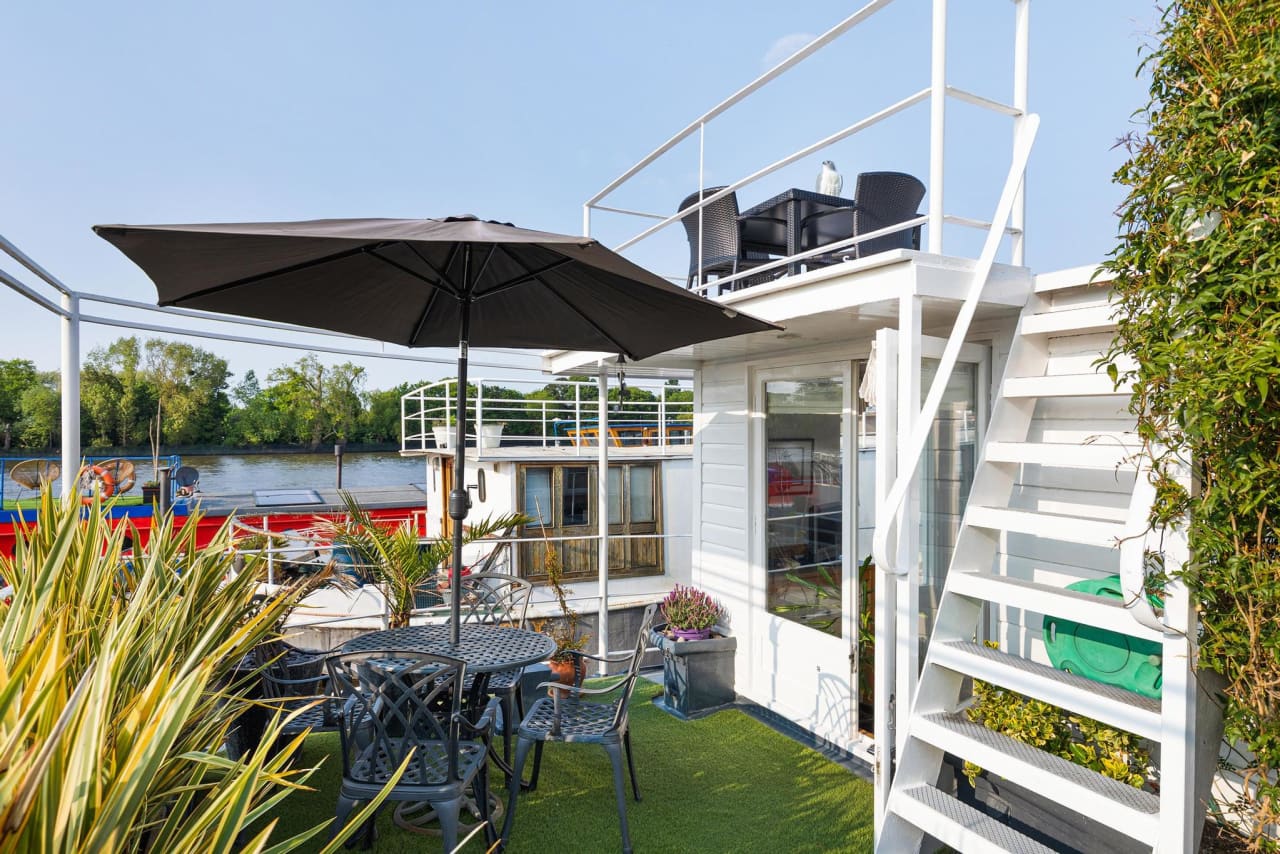
At almost 2,000 square feet of living space, the houseboat is roughly twice the size of the average London dwelling, which, according to government statistics, is about 904 square feet. The two-story home has a light-filled reception room, a fully equipped kitchen and dining room, and three decks, including a sprawling roof terrace with city and water views.
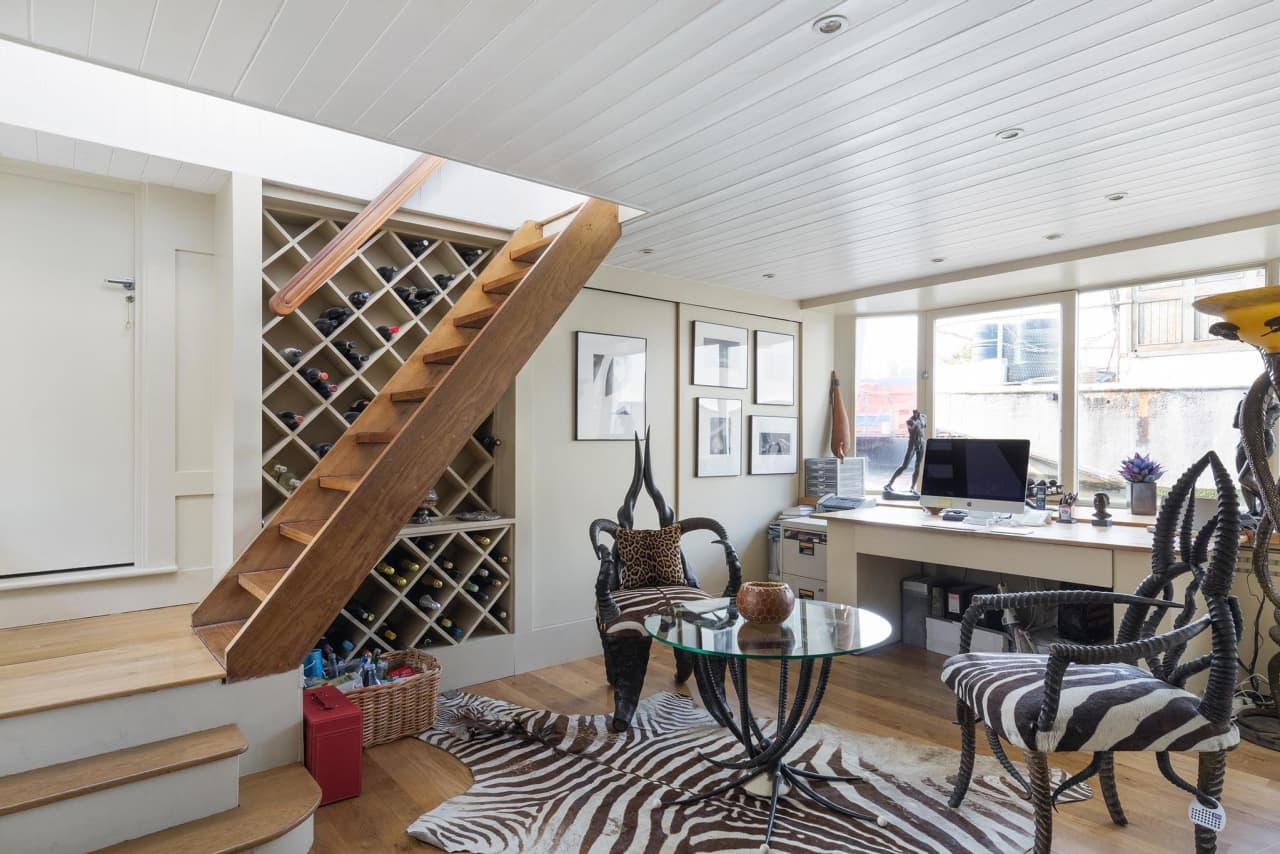
The office has wine storage.
Knight Frank
The bedrooms are on the lower level, and include a primary suite with a walk-in wardrobe and an en-suite bathroom—both of the boat’s two bathrooms are large enough to accommodate bathtubs—and a study, complete with wine storage, could easily be converted into a fourth bedroom, according to the listing.
Mansion Global couldn’t determine who owns the property, or when it last changed hands.
Other amenities include an automatic boat launcher, “offering ease of access for aquatic adventures,” and the mooring is securely gated and privately owned “so the houseboat comes with a share of the freehold of the mooring,” the listing said.
The boat has three decks.
Knight Frank
Owning a share of the mooring gives greater security of tenure, unlike cruising licenses, where you have to move your boat regularly, Mansion Global previously reported.
Residents can also “enjoy external facilities that come with mooring rights such as access to the gym and swimming pool at [nearby] Prospect Quay,” Bennett said.
In London, houseboats “offer the remarkable experience of living right next to the action of city life whilst also being amongst nature, truly the best of both worlds,” she added.
It’s the kind of edgy design trend you might have scrolled past on a social media feed: homes bearing beautifully charred facades or feature walls, a charcoal patina that seems as if it emerged from fire itself—in fact, that’s exactly how it came into being.
Shou sugi ban, also known as yakisugi, is a Japanese wood-burning method with roots that run deep. The craft emerged during Japan’s Edo period, from 1603 to 1868, as a way to clad cedar buildings to withstand temperature fluctuations between seasons and render them fire retardant and insect repellant. Aside from its practical benefits, the look has exploded in the West as a way to give homes—mostly luxury ones—a brooding, dramatic exterior that fits with an earthy minimalist aesthetic as much as texture-rich maximalist one.
The preservation technique, which can be achieved by hand or machine, involves burning wood until the surface is charred, cooling and cleaning it to remove soot and dust and finishing it with natural oils to reinforce its durability and aesthetic appeal.
Dark and charred and decidedly grained, the look of shou sugi ban is altogether distinctive.
“When you burn the clean wood, it creates a textural surface that highlights the beauty of the wood grain and colour,” said Mia Jung, director of interiors at Ike Kligerman Barkley in New York and San Francisco.
Depending on the degree of charring and finishing, the wood can produce a range of looks from deep black with pronounced grain patterns to a more subtle dark brown or grey with a smoother finish, said Jiun Ho, founder of Jiun Ho Inc., a multi-disciplinary interior and furnishings design firm in San Francisco.
Defining Detail
Unlike the purely functional role of the shou sugi ban technique of the past, today, it’s most commonly used for decorative purposes—both inside and outside the home.
“It has a modern yet earthy aesthetic,” said Stephanie Hobbs, design principal at Marmol Radziner in Los Angeles. “Clean lines and details help this naturally textured and rough material feel modern and luxurious.”
The old-world application can, ironically, have a very contemporary vibe. “The simplicity of the wood offers a beautiful and natural look that honours the Japanese aesthetic of wabi-sabi, which embraces imperfections,” said Teresa Boyd and Helena Finkelstein, co-owners and lead designers of Verona, New Jersey-based Olive Hill Design Company.
While traditionally rendered in cedar, modern variations of the art utilise different types of woods, such as Douglas fir, cypress, pine or oak, creating many diverse looks. The cost of shou sugi ban varies widely based on factors such as the type of wood used, the degree of charring and the finish applied.
“It can be more expensive than untreated wood due to the labor-intensive process,” Ho said. Typically, prices range from $15 to$20 per square foot on average.
What’s Old Is New Again
There’s no denying the technique is having a moment, and it aligns with so many other trends, such as the growing emphasis on artisan-made things as well as biophilic design, a concept that aims to connect people with nature, in part, through natural materials.
“In this age of fast everything, there is a growing respect and appreciation for traditional craftsmanship,” Kornak said. “Shou sugi ban is a great example of that—it has a rich and beautiful history, especially in architecture and design. In addition, it’s both modern and rustic, which is aesthetically intriguing.”
The wood retains the carbon-dioxide absorbed during the tree’s growth, making it more durable and expanding the life of the wood, said Philip Consalvo, principal of PJCArchitecture in New York City.
Tom Stock, Stock Studios Photography
The matte finish and distinctive wood graining create a striking impression that is different from what people are used to seeing, Hobbs said, noting how it balances with a natural landscape.
“People love the warmth and natural qualities of wood siding, but it often comes with a large commitment to maintenance. This method of finishing ages naturally and beautifully over time and requires less maintenance than a typical wood siding application,” she said.
What makes shou sugi ban even more relevant is that it’s eco-friendly. The wood retains the carbon-dioxide absorbed during the tree’s growth, making it more durable and expanding the life of the wood, said Philip Consalvo, principal of PJCArchitecture in New York City. It also naturally protects the wood from the elements, eliminating the need for harsh chemicals.
“As darker home exteriors continue to trend, we will likely see this material becoming increasingly popular for cladding,” he said.
Fresh Ways to Play With Fire
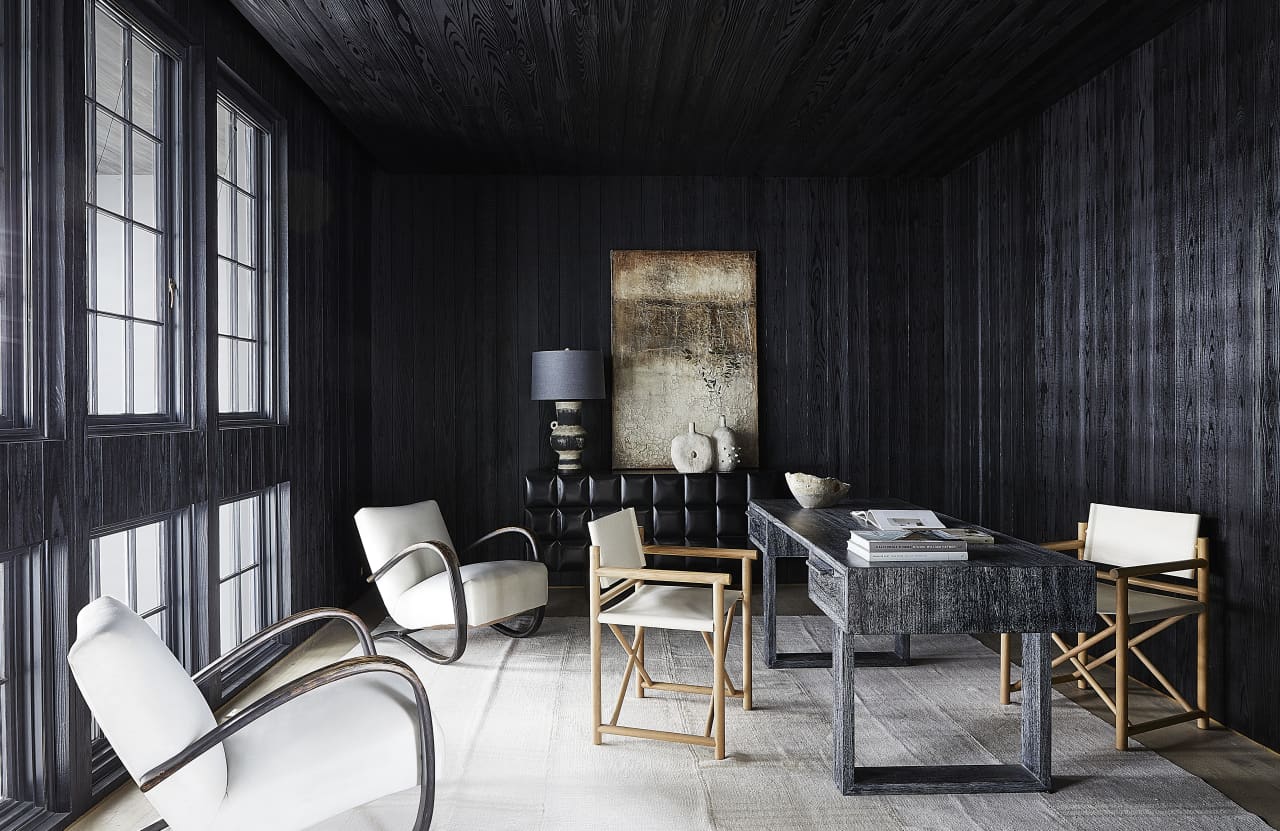
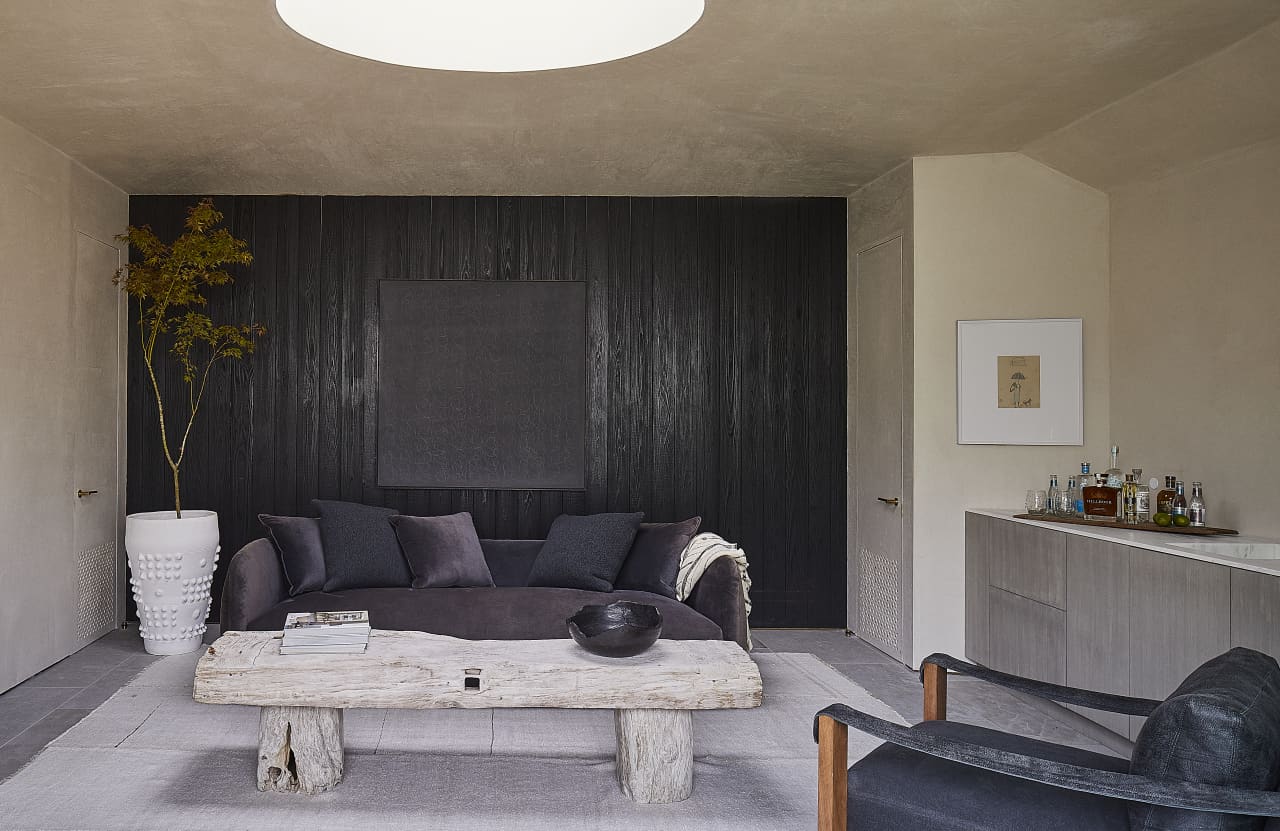
These days, shou sugi ban, in all of its smoky glory, is showcased in a multitude of ways—as siding and fencing, decking, interior and feature walls and furniture.
Ho loves using shou sugi ban for wall cladding because “it adds a multi-dimensional texture making the interior feel rich and warm.” For a new restaurant he’s designing called Enclos, which is opening later this summer in Sonoma, California, he covered the dining room’s walls and ceiling with shou sugi ban. “This created a dark black texture that serves as a blank canvas, allowing everything in the room, including the guests and the food, to stand out,” he said.
Jeffrey Dungan, founder and creative director at Jeffrey Dungan Architects in Mountain Brook, Alabama, prefers to apply the technique inside a home for a dark and moody vibe. While Hobbs tends to add the charred wood as a finishing material to connect interior walls with exterior siding.
Interiors created with shou sugi ban by Jeffrey Dungan.
William Abranowicz
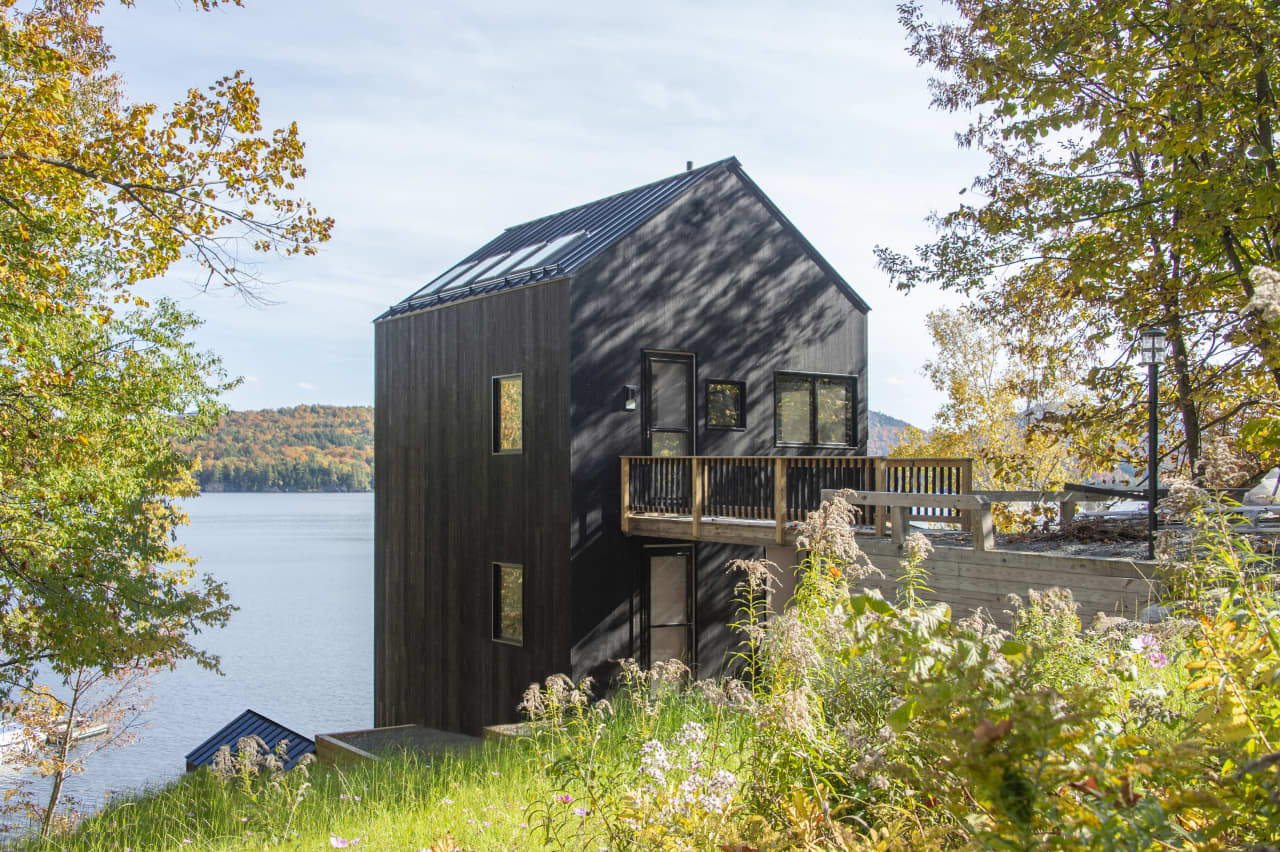
Siding is the most common way to showcase the Japanese technique. Consalvo used the material as siding because of its “eco-friendly nature and seamless integration with the home’s natural surroundings,” for a recently completed lake house in the Adirondacks.
“The unique appearance of shou sugi ban enhanced the modern aesthetic we desired for the house. By incorporating this traditional craftsmanship in a modern way, we aimed to honour the Japanese wood preservation technique,” he said.
However, Consalvo noted that since the charring process is unfamiliar to many builders and contractors, “proper training and understanding of the technique are essential to achieving the desired results and maintaining its integrity and benefits.”
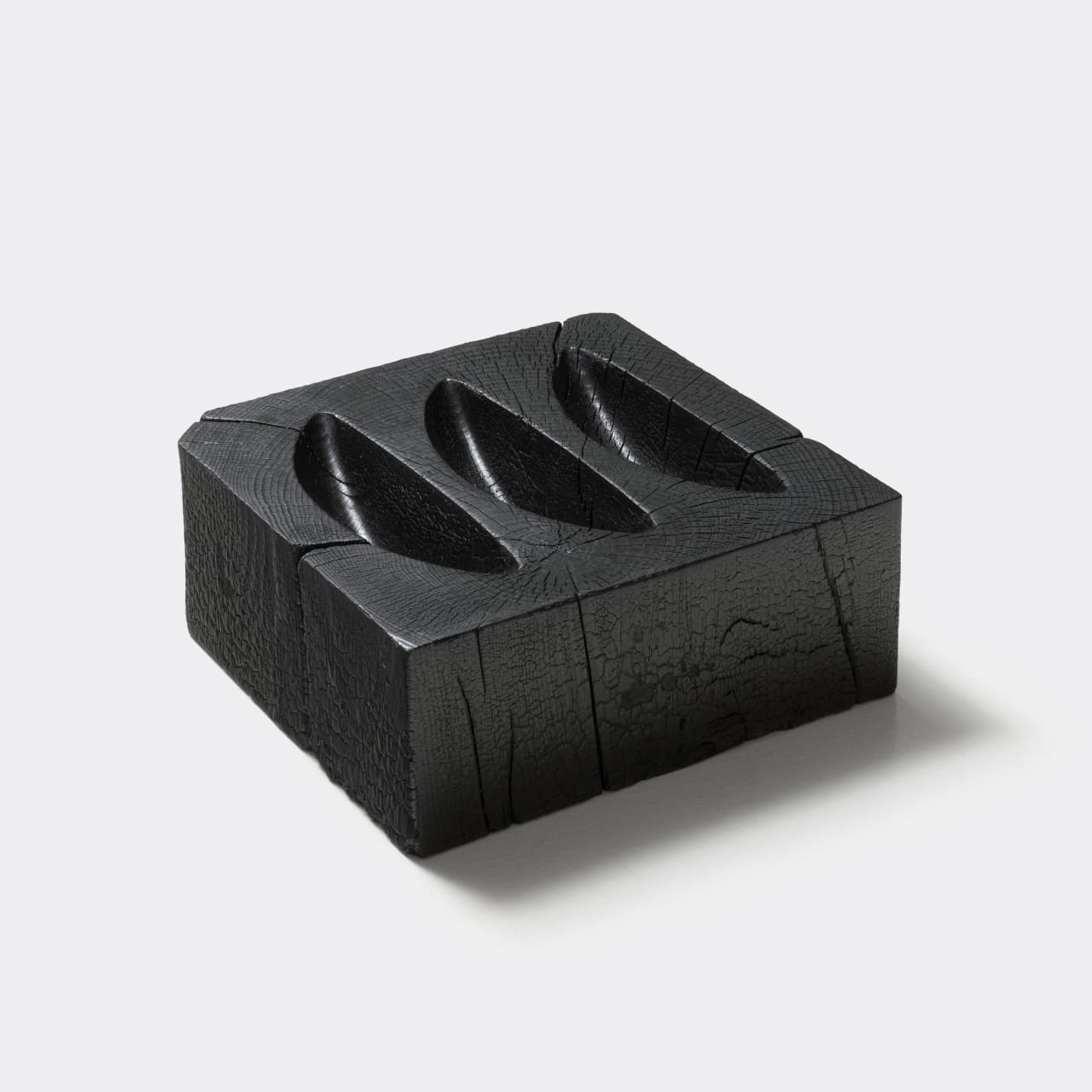
Carved bowls by A Space.
Courtesy of Holly Hunt
Aside from walls and siding, Shou Sugi Ban can be used to fashion bespoke items such as furniture, light fixtures or objets d’art. Design firm Holly Hunt has used geometric figurines by Martha Sturdy called “Reflections” as well as hand-carved solid cedar bowls from A Space.
“For both of these, the ashen black finish and minimalist lines are a graceful yet robust accent for interiors,” said Jo Annah Kornak, senior vice president and executive creative director of Chicago-based Holly Hunt.
Homeowners who are curious about the look but don’t want to commit to decorating large expanses can add a small side table or console crafted with the shou sugi ban technique for a natural and minimalist addition to their décor, Boyd and Finkelstein suggested.
Italian carmaker Automobili Pininfarina’s next production car, a luxury SUV based on the radical Pura Vision concept shown at the Pebble Beach concours event in California last year, will likely not be a battery EV, but is envisioned with plug-in hybrid power.
“We’re looking at all technologies,” CEO Paolo Dellachà tells Penta . “Our commitment to electric will stay—it’s the future—but we’re also investigating hybrid power.”
The CEO won’t yet comment on which internal-combustion engine might reside under the hood of the new SUV, but he says such a luxury car would ideally have up to 50 miles of EV-only range. “We want to maximise the range, but we also don’t want the battery to take up too much interior space or add too much weight,” he says.
Inside the B95 Gotham. Pininfarina Photo
The Pura Vision SUV could be toned down by the time it morphs into a production car, but in concept form, it displays a wide range of design innovation—and is as visually striking as the Tesla Cybertruck.
Dellachà has been in the lead role for a year and a half. But before that he was the company’s chief product and engineering officer, deeply involved in the building of the flagship Battista EV, and had previous appointments at Ferrari and Maserati. He is, in short, a very hands-on CEO.
The B95 Gotham: Would Bruce Wayne buy one? Pininfarina Photo
The brief for the Battista, he says, was “to create the most powerful car ever built, with great handling that ensured it could do more than accelerate in a straight line. Reaching that goal was only possible with an electric powertrain—we showed what the Battista could do with four electric motors.” The US$2.2 million Battista supercar, featuring an electric powertrain developed with Croatia-based Rimac, achieved its brief—with up to 1,900 horsepower on tap.
There’s no date on the SUV yet, and Dellachà declines to comment on how many Battistas have been delivered, but the U.S. remains the company’s biggest market. And Pininfarina should be very visible during Monterey Car Week, with a rally planned that will feature at least 10 of the company’s Battistas (including all five of the special-edition Anniversario anniversary cars).
The Pininfarina B95 Gotham (foreground) complemented by the Tumbler, a Batman movie car. Pininfarina Photo
On Pininfarina’s stand at the Quail: A Motorsports Gathering on Aug. 16 will be the world debut of a concept for the one-of-a-kind Pininfarina B95 Gotham, one of four cars being built in collaboration with Warner Brothers Discovery Global Consumer Products’ Wayne Enterprises Experience, which develops curated luxury products. Warner Bros. works with DC Entertainment on Batman films, and Dellachà says the B95 Gotham is “something Bruce Wayne [Batman’s civilian persona] would want to have in his garage. It’s as if he were one of our clients asking us to build a unique project.”
The actual finished B95 Gotham, a variation on the open electric €4.4 million (about US$4.8 million) B95 Barchetta shown last year in an edition of 10, will be delivered to a customer by the end of 2025, Dellachà says. The other three cars in the Warner/Bruce Wayne series, all one-offs, are the Battista Gotham, the Battista Dark Knight, and the B95 Dark Knight.
Dellachà says that the creation of unique cars like the Batman-themed vehicles “will always be part of our business model.”
Venture capitalists’ appetite for energy and artificial-intelligence investments is putting Europe’s venture sector on a hot streak.
European governments’ focus on energy security amid heightened geopolitical tensions has helped spur a capital rush, investors and analysts say. That coupled with the emergence of Europe-based AI startups, which can be less expensive than their U.S. counterparts, is also drawing investors.
European startups raised $15.5 billion in the second quarter, up 14% from the first quarter and up 12% from the same quarter of last year, according to Europe-based analytics firm Dealroom.co. Meanwhile, the amount invested into North American startups rose 9.6% in the second quarter from the prior quarter while Asia deal value rose 6.4% over the same period.
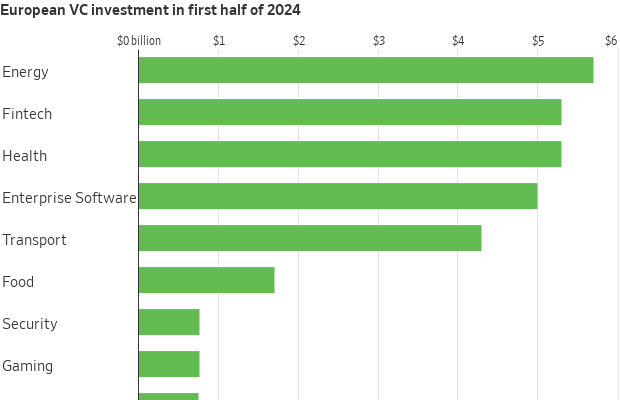
Energy was the most funded sector in Europe in the first half of the year, netting $5.7 billion, while funding raised by AI startups accounted for a record 18% of venture funding in Europe, up from about 11% in 2021, Dealroom.co said. Before last year, energy startups typically raised less capital than fintech, health and enterprise software startups.
Russia’s invasion of Ukraine spurred European governments—which were historically dependent on Russian fossil fuels—to develop greater energy security. Support has reached startups in the form of grants and other government-backed investment opportunities.
“It has been a major shift,” said Orla Browne , head of insights at Dealroom.co. “The exposure of energy-security issues with the invasion of Ukraine has filtered down to startups.”
Large AI deals have also drawn capital to Europe. In May, Wayve, a U.K.-based developer of autonomous driving software, raised $1 billion from investors including SoftBank Group , chip maker Nvidia and Microsoft . In June, French startup Mistral AI raised $646 million from investors including the venture arm of software giant Salesforce , General Catalyst and Lightspeed Venture Partners.
In Europe, investors say they can scoop up shares of startups for less money compared with the prices that their counterparts in the U.S. command. Meanwhile, Europe’s technical universities are supplying promising entrepreneurs, particularly in the AI field.
“We have hired a world-class team at salaries that cost 30% or less than you would get for a similar team in [Silicon Valley] with the caliber being as good,” said Dominic Vergine , chief executive of Monumo in Cambridge, England, which uses AI to make electric motors more efficient.
Europe’s climate regulations have also helped attract funding for energy startups, for example the European Commission’s Innovation Fund.
Danijel Višević, co-founder of Berlin-based World Fund, said funding from countries like Germany and France as well as from the European Union helped push more capital into climate startups. “Europe has started to reap the rewards of the fruits it sowed with climate tech R&D,” said Višević.
He added that given the long-term effects of climate change, funding in the sector is likely to be stable, both from venture-capital firms and governments, for years to come.
Even so, Europe’s venture sector faces some headwinds. In the second quarter, the continent saw $2.2 billion in exits, a third fewer than in the same quarter a year ago and 93% under the second quarter of 2021, a banner year for exits worldwide, according to a report by professional-services firm KPMG. Exits include initial public offerings and mergers and acquisitions and are the primary way venture investors cash out of their startup investments.
High interest rates, which typically encourage investors to divert capital away from venture to fixed-income strategies, have also hurt the industry. European startups’ second-quarter haul is far below the record $34.6 billion they netted during the same quarter of 2021.
Investors are eager for a turnaround. Last year, Planet First Partners, which has offices in London and Luxembourg, raised a €450 million fund, equivalent to $485 million, in part on the thesis that Europe’s favorable climate regulations are a financial tailwind for energy startups.
In March, the firm invested in Sunfire, a German startup developing hydrogen energy technology aimed at reducing reliance on fossil-based energy from oil, gas and coal. The investment came as part of a €215 million Series E equity funding round and included an additional term loan of up to €100 million from the European Investment Bank.
Sergio Carvalho , a partner and head of sustainability at Planet First Partners, said the firm has invested in Sunfire in part for its potential to help Europe become more energy independent. PFP’s first investment in Sunfire was before the invasion of Ukraine. “Europe has been pushing decarbonization systematically,” Carvalho said.
Last year, Sunfire received €169 million from a European Union initiative that funds projects that address EU-wide challenges.
In July, Index Ventures, which was founded in Europe and has offices in London, San Francisco and New York, raised $2.3 billion in new funds—an $800 million venture fund and a $1.5 billion growth fund. Hannah Seal , an Index partner in London who focuses on enterprise AI deals, among other sectors, said she expects roughly half of the venture fund to be used to invest in startups that are based in Europe.
“The first half of this year was one of the busiest we’ve ever had,” Seal said about AI dealmaking in Europe. “We’re seeing a general stabilisation in the global economy which is obviously impacting sentiment.”
Wealthy individuals remain just as interested in travelling as they were last year, but costs have become a larger factor in their plans, according to a Global Travel Study conducted by WSJ Intelligence between June 27-July 19.
Of the 879 Wall Street Journal readers surveyed—who had an average age of 56, were 79% male, and had an average net worth of about US$3.5 million—94% intend to travel for leisure in the next 12 months, down just 1% from 2023. Additionally, 64% plan to travel internationally, up from last year’s 60%.
Travellers are most concerned about costs amid ongoing inflation and other economic challenges, even as 80% of respondents say they plan to increase or maintain their travel spend compared to last year.
The cost of flights and hotels is the top factor of importance for WSJ readers, with 78% concerned about prices, a nine-point increase from 2023.
“Travel is still on the up—our readers are still really enthusiastic,” says Carolyn Romano, associate director of Luxury Lifestyle Intelligence at The Wall Street Journal. “But at the same time, it’s yet another year of market volatility and inflation, so I just think they’re being a little bit more thoughtful about the way that they’re traveling.”
Availability of flights and hotels is the second-biggest issue for travellers, with 76% of readers responding that it is a factor of importance for them.
Notably, as factors of importance, both loyalty programs and discounts and deals are up 10 percentage points year over year. Romano says this increase is “pretty significant.”
“Our reader approaches every purchase as an investment of some sort, and even our reader is still taking all of these factors into consideration,” she says.
Despite rising costs, the post-Covid enthusiasm for travel remains, with 70% of respondents traveling more than they have in the past. Over the next 12 months, WSJ readers’ average anticipated spend on leisure travel is US$18,305, up from last year’s US$18,250.
As for destinations, 86% of respondents are considering traveling to Europe, down just 1% from last year. Italy is the top European country of choice—superseding the U.K.—seeing a 9% annual increase in interest.
Though most destinations, both international and domestic, included in the survey saw similar interest as last year, traveling to Asia is up 10 points from 2023, with 40% of respondents considering booking a trip to the continent. Japan ranks the highest, with 61% of respondents considering traveling there, up 6% from last year.
When making travel plans, 72% of WSJ readers say they go to family and friends for recommendations. Only 13% report consulting a travel agent, though people taking cruises are much more likely to use a travel agent.
ByAehra, the company that calls itself “Italy’s first pure EV brand,” has two uncommonly attractive vehicles in the works, the Impeto SUV and the Estasi sedan. The designs were first shown in 2022 and 2023 , then unnamed. Pricing for both vehicles is expected to be in the vicinity of US$170,000.
Aehra has some private resources, but is also awaiting government funding. It has submitted a €1.2 billion (US$1.3 billion) development plan to Italy’s Ministry of Industry (controller of the country’s Automotive Fund) to underwrite construction of a 200,000-square-metre plant, which it plans to build at Mosciano Sant’Angelo, in the Abruzzo region of eastern Italy. Aehra says it will create 540 jobs in the region, and 110 more at its headquarters in Milan.
The Estasi with its doors open
Courtesy of Aehra
Hazim Nada, Aehra’s U.S.-born but Italy-raised CEO and founder, tells Penta he expects the Automotive Fund to be capitalised with €2.5 billion next year.
“The government is quite enthusiastic about this project, and we don’t see anyone else with significant production plans,” he says, adding that automotive start-ups are thin on the ground “in Europe, not just in Italy.”
Nada says the company had originally planned to build its cars via an existing contract manufacturer such as Magna Steyr in Austria, but he says finding a plant that could handle the special carbon-fibre process Aehra plans to use proved difficult. “It’s been a busy year, focusing on the location for our assembly line,” he says. “I hope to move soon to working on consolidating our dealer network and sales process.”
The company likes Abruzzo because it’s not only the centre of Italy’s lightweight carbon-fibre industry, but also a hive of EV expertise at the University of L’Aquila. As its plans changed, Aehra has had to push back its start date. Nada says the company aims to be through the building-permit process by the end of the year or early 2025, then start construction of the plant—a 1.5- to two-year process.
A rendering of the Aehra Estasi interior.
Courtesy of Aehra
Cars should start issuing from the plant in 2027, Nada says. The plan is to eventually scale up to 50,000 vehicles annually. He says Aehra does not intend to produce anything but battery EVs.
“Our focus is to build cars you can’t create with a thermal engine,” he says. “That’s our core. We couldn’t achieve the same results with hybrids.”
The designer of the cars was Filippo Perini, a veteran of Audi and Lamborghini. The cars are certainly beautiful, and closely related in their very streamlined designs. Nada says “the platforms are identical below the beltline.” The vehicles have frameless upward-opening doors (the company calls them Dihedral Facing Doors) that leave a large opening and ease entry and exit. The target is for them to have a very low coefficient of drag, 0.21, which means they should slip easily through the air.
Aehra’s modified styling for its Impeto SUV.
Courtesy of Aehra.
The announced statistics are impressive, with a 500-mile range (close to certain versions of the Lucid Air) via 120-kilowatt-hour Miba Battery Systems packs and a top speed of around 165 miles per hour from the 800-horsepower powertrain. Zero to 62 miles per hour should take less than three seconds in the Estasi sedan, aided by a target curb weight of around 4,850 pounds (low for an EV with that size battery pack). A 10% to 80% fast charge should take 15 minutes.
Like the aforementioned Lucid, the Aehras are intended to be roomy inside. The SUV “will effortlessly accommodate four full-size National Basketball Association players while leaving room for a 6-foot adult in the middle of the rear-seat row,” the company says.
Aehra is targeting North America, Europe, and the Gulf States as markets for its cars. Nada thinks the Impeto SUV might have a sales edge.
“The SUV is easiest in the current market, but we expect to see some surprises with the sedan,” he says.
A Beverly Hills mega mansion that singer Mariah Carey once rented hit the market Monday asking $31.99 million.
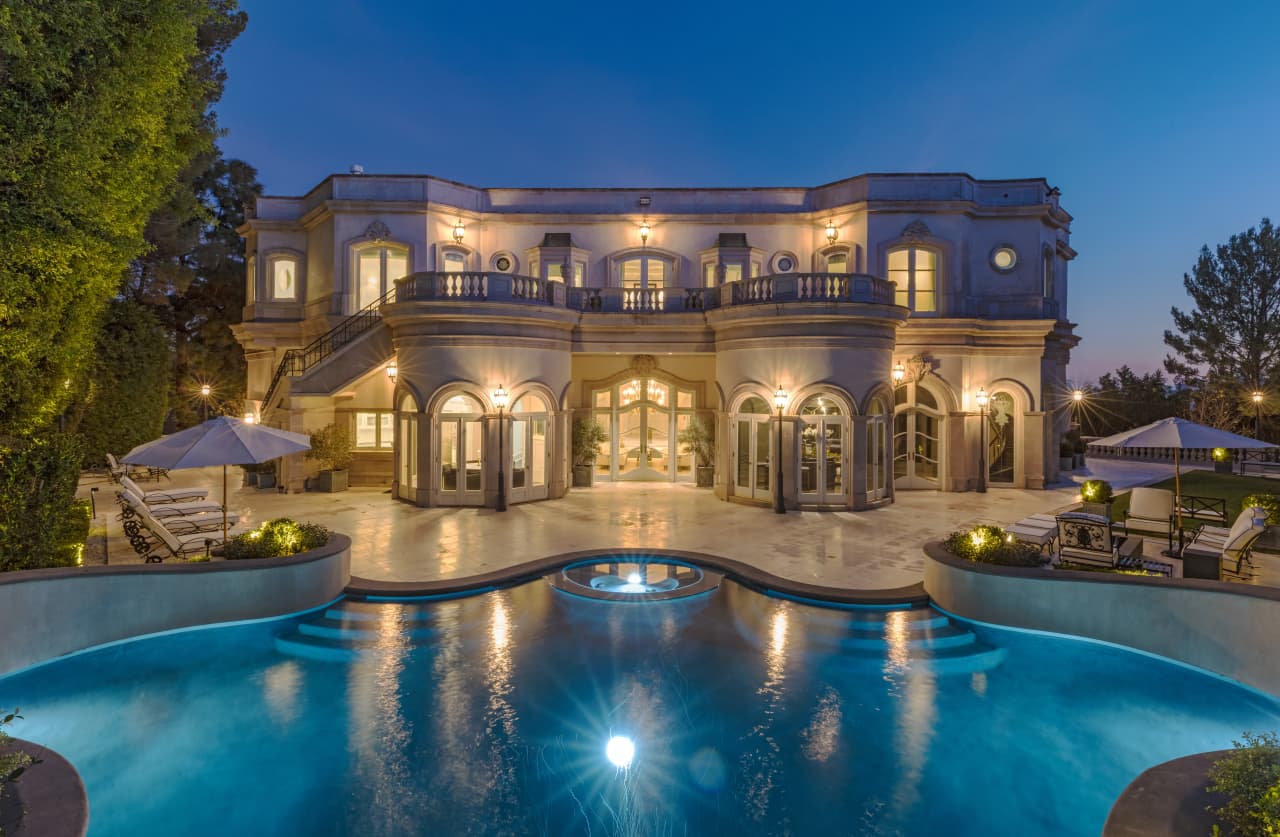
The 15,000-square-foot residence, inspired by a mashup of European architectural styles from Baroque to Louis XV, is located on a 0.6-acre lot on Laurel Way. The three-story home includes eight bedrooms, and an entryway that features a 30-foot rotunda and not one, but two imposing double stairways, one outdoors and one indoors.
It was built by a Russian couple who immigrated in the 1970s, and set about building their dream home, much to their neighbours’ consternation . “I used all of what Europe has to offer,” Natalie Glosman, whose husband Leonid is a dentist, told Today.com in 2014.
The Glosmans purchased the land for $2.2 million in 1988 and sold the home in 2019 for $30 million. The buyer was a California entity, BHLW LLC, according to property records. The manager for the entity could not immediately be reached for comment.
Last year, Mariah Carey rented the house for three months in the spring, which was asking for $125,000 in monthly rent at the time. The Queen of Christmas then partnered with Booking.com, which offered visitors a special two-night “ritzy summer reprieve” at the house, with a Carey-curated itinerary, including reservations to her favourite restaurants, according to marketing material from the booking platform.
Mariah Carey rented the Beverly Hills home in a promotion for Booking.com. Photo by RB/Bauer-Griffin/GC Images
“One of my Lambs has the opportunity to experience L.A. in true Mimi fashion by staying in the same home and visiting all my favourite places in the area!” Carey said in the Booking.com news release at the time .
The house has some additional Hollywood elan, as it served as filming location on several occasions. Danny DeVito and one of the cast members of the “Real Housewives of Atlanta” have been filmed there, according to Today, and in the second season of “True Detective,” it stood in for the “incredibly gaudy” home of the corrupt and alcoholic mayor Austin Chessani, according to Curbed.
In addition to its grand entryway, the home features arched doorways, French windows, coffered ceilings, wainscotting and Rococo wall mouldings, in a blend of Art Deco and Art Nouveau styles. Outside, there is a broad green lawn with a shaded sitting area, and a back patio with a glamorous pool to match the home’s style.
Alla Furman and David Kramer of Hilton & Hyland/Forbes Global Properties are marketing the property. They were not immediately available for comment.
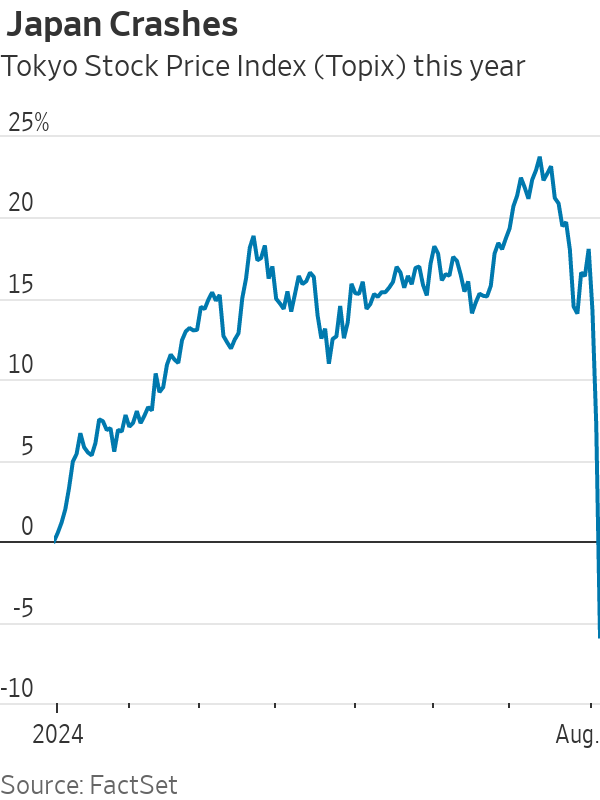
Financial markets are supposed to capture the wisdom of the crowd, but on Monday the crowd ran in all directions waving its hands in the air screaming. Japan’s stock market fell the most in 37 years with a 12% plunge that wiped out all its gains for the year, while in the U.S. the VIX index of implied stock volatility briefly had its biggest rise ever. Panic hit.
The selloff was triggered by Friday’s jobs data prompting a sudden switch in the economic narrative from soft landing to hard landing. Add to the mix a period of deflating hype about artificial intelligence and a Bank of Japan rate rise designed to strengthen the yen. News that Warren Buffett’s Berkshire Hathaway had sold half its Apple shares and boosted its cash pile added to the pain.
But the triggers couldn’t possibly justify the scale of the moves. When a new trigger arrived, in the form of better-than-expected data on the service sector, markets partially rebounded and the Vix fell sharply — again, far more than the data could justify.
The selloff—which at one point had chip maker Nvidia down 15%—was so big because investors had been all-in betting that things would work out well. Now things have calmed a bit, the question is whether the unwind of these bets, and the leverage behind them, is done. If it resumes, will the selloff feed back into higher savings and a weaker economy or, worse, hit the financial system?
The extreme examples of past effects from big market falls are 1987’s crash, 1998’s Long-Term Capital Management blowup and 2008’s global financial crisis. History is never perfect, but so far this looks more like a (much milder) version of 1987 than it does the other two.
In 1987, the stock market had its biggest one-day fall ever, with the S&P 500 down more than 20% on Black Monday in October. Investors had built up excessive leverage after a stunning 39% gain in the year to August’s high, and the crash led both to big margin calls and to badly designed automated trading that exacerbated the selling. But the Federal Reserve poured liquidity into the banks, brokers didn’t default and the market made back all its losses within two years. The economy was fine.
The good news was that 1987 was all about markets: They went up, they went back down, no one else was hurt. The S&P made 36% in the eight months to its August 1987 peak, similar to the 33% it rose in the eight months to the end of June this year. As in 1987, this year’s gains came in spite of tight monetary policy and higher bond yields. Just like today, in 1987 investors were on edge and ready to sell to lock in the unexpected profit. The losses are smaller so far, but lucrative trades have reversed , just as they did for the market as a whole in 1987.
In 1998, the situation was much worse, although stocks recovered more quickly. Highly levered hedge fund LTCM was crushed when Russia’s domestic debt default created a flight to safety. LTCM was big enough that it threatened to bring down Wall Street institutions. The Fed cut rates three times and pulled together a group of banks to rescue the firm and wind down its trades slowly. Stocks took just four months to recover, but the easy money helped stoke the dotcom bubble, which popped two years later and led to a mild recession—and gigantic losses for investors in tech stocks.
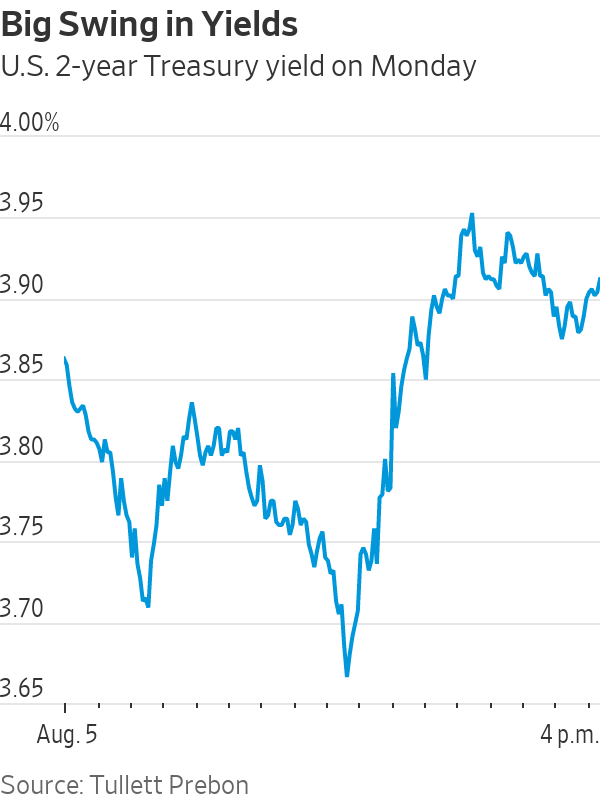
We don’t know yet if any hedge funds have been taken out by the big moves in markets, which have brought heavy losses for those engaged in the “ carry trade ” of borrowing cheaply in yen and buying higher-yielding currencies such as the Mexican peso or dollar. Large swings in Treasurys on Monday might also have hurt, given the large positions hedge funds hold. Traders are betting that the Fed will slash rates, with a super-sized cut of 0.5 percentage points priced into futures for the September meeting (and far more earlier in the day).
The really bad outcome would be a repeat of 2008, but it seems highly unlikely. True, some large U.S. banks failed last year, due to bad bets on government bonds. But banks are much less leveraged than they were, and the system is less exposed to a liquidity crisis, as private lenders have taken on much of the risk that used to sit in banks. Big losses are entirely possible, and private funds could hit trouble, but that would take time and wouldn’t create the same system-wide crisis.
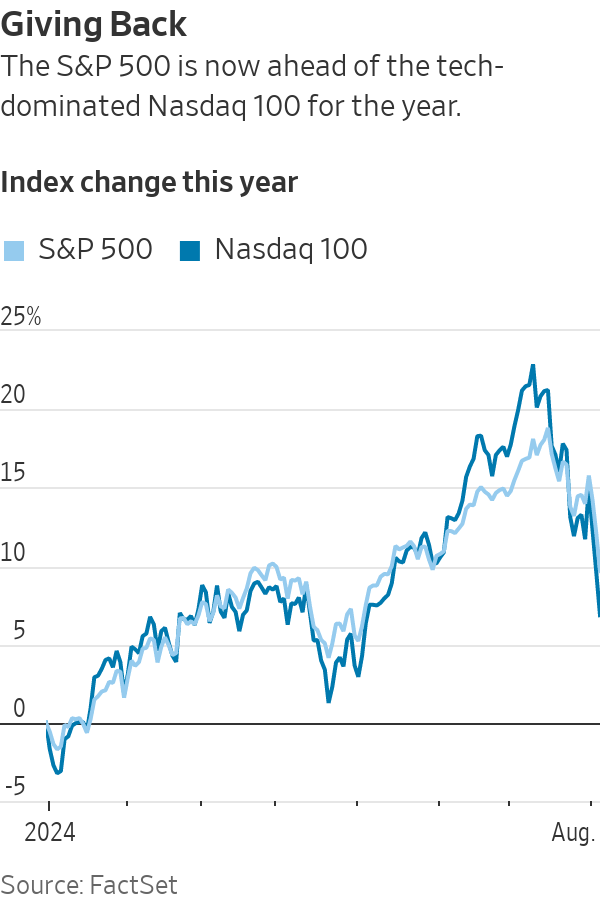
The ideal would be that excess in the stock market unwinds as in 1987 without creating wider trouble, hopefully more gradually than in 1987. AI enthusiasm could deflate stock prices much more—even after falling 30% from its June high, Nvidia has still doubled in price this year. But the market is already much closer to normal, with Monday’s falls leaving the Nasdaq 100 index up only 6% this year, and the S&P 7%.
If panic continues to abate, the Fed cuts and nothing breaks in the financial system, we should count ourselves lucky. But it would be good if investors could remember the sinking feeling they had on Monday morning, and try to be a bit wiser and less speculative.
Group travel has taken on new meaning for some wealthy consumers, who increasingly are taking over entire hotels.
In an experience-obsessed era, those who can are going beyond just a stay at a five-star hotel to having it all to themselves alongside family and friends. Luxury travel advisors report an uptick among their deep-pocketed clients who book accommodations in their entirety for both large and small groups.
Andrew Steinberg, an advisor with the Ovation Network in New York City, says that his buyout business is up 50% this year compared with 2023.
“From a dozen, I have more than double now. The prices for these weekend stays can start at US$500,000 and easily top US$1 million,” he says. “People love them because they can manage every aspect of the experience and extend their event.”
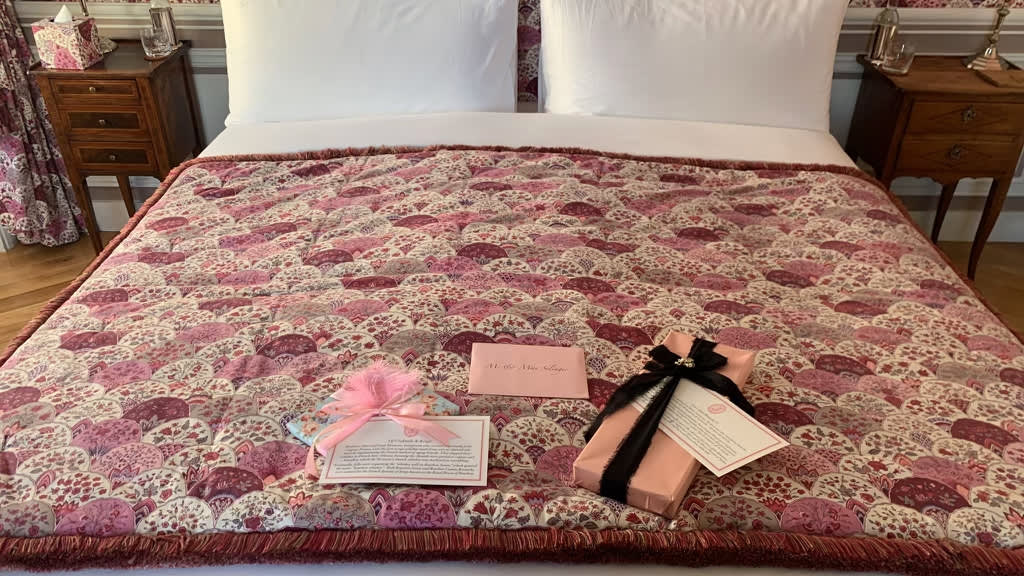
As an example, Steinberg planned a lavish 50th birthday last year in Versailles, France, for a client who took over Airelles Château de Versailles, Le Grande Controle, located on the grounds of Versailles, for a weekend. The extravaganza cost well into the seven figures, he says, and included elements such as a scavenger hunt on the palace grounds and a five-course dinner party prepared by the renowned chef Alain Ducasse, where guests donned 17th-century costumes provided by the host.
Entertainment included fire breathers and Cirque du Soleil-style dancers. Steinberg notes that guests also received a different gift each day such as silk scarves and pricey wines. “By having the property to ourselves, we were able to manage every touchpoint,” Steinberg says. “We had napkins for every meal with the host’s initial and amenities such as a personalised cookie station.”
Andrew Steinberg, an advisor with the Ovation Network in New York City, says that his buyout business is up 50% this year compared with 2023.
Andrew Steinberg
Stacy Fischer-Rosenthal, the president of the New York-based Fischer Travel, which charges a US$150,000 membership fee, is also planning more buyouts than ever before for occasions such as weddings, birthdays, and “just because” get-togethers.
“Takeovers offer complete privacy, safety, and flexibility. The client does not have to adhere to a set schedule and can make theirs up as they go along,” Fischer-Rosenthal says. “There is a dedicated team catering to all of their wants and needs.”
The membership-based travel company Andrew Harper is another brand that has seen a jump in buyouts. Colin Housley, vice president of member experience, says the increase in demand led the company to launch an initiative called Exclusive Experiences, which focus on immersive and private trips such as luxury hotel buyouts and private island stays.
“Our members who plan these trips receive access to unique activities and excursions that we have negotiated with our partners,” Housley says. “We also leverage our relationships to make buyouts happen for properties that normally wouldn’t offer it.”
Andrew Harper has seen a “flood of requests” for private stays since Exclusive Experiences launched, he says.
Steinberg planned a lavish 50th birthday last year in Versailles, France, for a client. The extravaganza cost well into the seven figures, he says,
Andrew Steinberg
Meanwhile, another New York-based travel company Black Tomato had a client who bought out Aman Venice to throw a US$1 million party for his wife’s 50th birthday.
“We arranged performances by opera singers, an orchestra, and a rock band, and the celebration ended with a treasure hunt on the rooftop of the Gritti Palace in the penthouse suite,” says Black Tomato travel expert Sunil Metcalfe , who also notes the uptick in such buyouts.
In addition to travel companies, representatives from several upscale hotels, including the Ranch at Rock Creek in Philipsburg, Mont., and Cal-a-Vie Health Spa in Vista, Calif., say that takeovers of their properties are on the rise. Many, particularly smaller hotels, offer buyout-specific packages.
Cali Mykonos, located on the namesake island’s Kalafati Beach, has created a package for a cost of between US$57,000 and US$75,000 that allows guests to book its 40 villas, each with a pool and large terrace, and enjoy amenities such as the large main pool, yoga classes, boat fleet, beach and restaurants exclusively with others in their group.
Sir Richard Branson ’s Necker Island in the British Virgin Islands has a buyout package starting at US$118,500 a night for 24 rooms that’s consistently booked throughout the year, according to a property representative. The rate includes meals and most activities, such as water skiing, snorkelling, and pickleball.
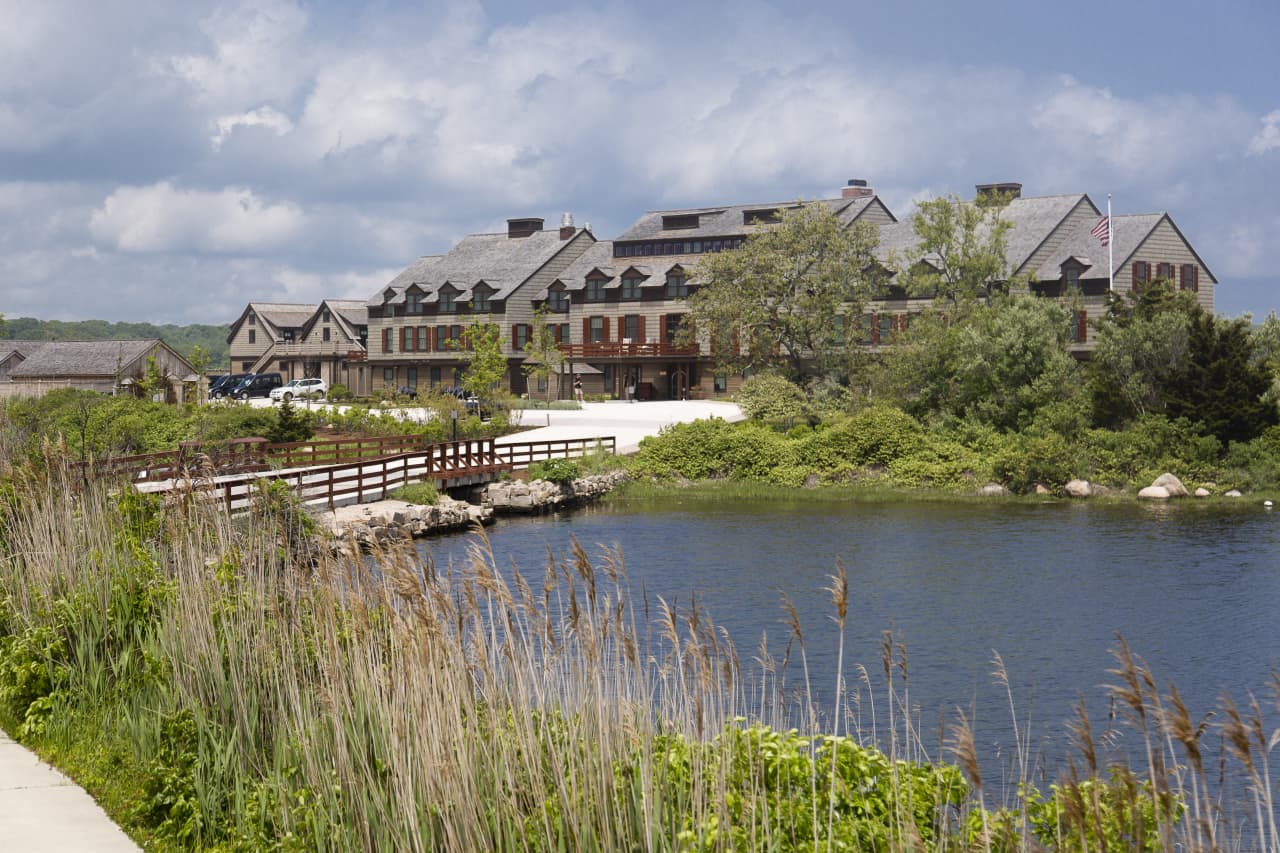
Weekapaug Inn, located in Westerly, R.I., introduced a buyout experience to commemorate its 125th anniversary this year. Called the Milestone Getaway, it encompasses the use of the hotel’s 33 rooms for two nights, meals and activities; the price is US$125,000.
Tom Parisi, an investment banker, and Adriana Destefanis, an asset manager, who live in Darien, Conn., bought out Weekapaug Inn for their wedding last October.
In addition to the wedding events, the couple’s more than 150 guests stayed busy by participating in diversions such as bike riding, birdwatching, stargazing, and s’mores by the fire pit.
“Having a private element is very unique in our view,” Parisi says. “We felt like we were in our own massive house and able to spend quality time with our family and friends. And we could be loud without worrying about other guests. We didn’t want to just have a wedding. We wanted an experience, and the buyout gave us that.”
Christie’s is partnering with U.K.-based ocean protection charity Blue Marine Foundation to raise funds through a sale of works by leading contemporary artists during an October week of major London sales.
“Blue: Art for the Ocean” will include works from more than 20 artists, including Serbian performance artist Marina Abramović, Japanese painter Yoshitomo Nara, English artist Lydia Blakeley, English potter and author Edmund de Waal, and German painter Jonas Burgert.
Christie’s announced the first three pieces to be auctioned, including a photograph of Abramović from a May 2024 filming of a separate project that shows the artist on the shores of Fire Island, N.Y.
“My Performance for the Oceans artwork for the auction blends my artistic vision with environmental consciousness,” Abramović said in a news release. The image is one of three from the film that Christie’s will sell for between £50,000 and £70,000 (US$64,012 and US$89,617), according to Blue Marine, citing the Sunday Times of London.
The other two pieces are an underwater painting by Blakeley titled The Hunters and an illustration by Nara titled Walk On .
The foundation works toward ocean health by putting a spotlight on overfishing and efforts to protect critical marine ecosystems around the world.
Christie’s expects to announce a full lineup of lots and price estimates in the coming weeks, according to a company spokesperson. The auction will be held during Christie’s annual Frieze Week sales of 20th- and 21st-century art.