Though golf courses offer long acres of lush grass, tall trees and rippling ponds, they’re not the most popular venues among environmentalists. Citing their effect on wildlife and the potential impact on a venue’s water table, those worried about conservation and sustainability find much to dislike on any 18-hole tract.
For more than a decade, 1995 U.S. Open champion Corey Pavin has worked to improve golf’s relationships with the world hosting it. Known as one of the more amiable and self-effacing players on the PGA Tour (and, currently, the Champions Tour), the 64-year-old native of Southern California remains one of the leading proponents of sustainability in golf.
During preparations to play the 2024 Senior PGA Championship at Michigan’s Harbor Shores—a course built on a reclaimed industrial dumping ground in Benton Harbor—Pavin explored what brought him into the sustainability movement and why he continues to push more environmentally responsible golf courses.
Penta: You claimed a Major Championship, won 15 times on the PGA Tour and captained a Ryder Cup team during four decades of professional golf. How did you find an interest in sustainability along the way?
Corey Pavin: I grew up in California, so recycling was always a big deal there before the movement expanded across the United States and around the world. So, I came into golf already aware of the need to recycle and look after the environment.
What brought you into a leadership position working toward environmental sustainability in golf?
I do most of this work due to my association with Dow Chemical. I’ve been with them for 15 years now, and they started a big program for sustainability and recycling. They’ve done a lot to make me aware of what needs to be done and helped me to reduce my own carbon footprint. … I also worked with the nonprofit GEO Foundation for Sustainable Golf, which is dedicated to making golf and the golf community ecologically friendly.
Have you found there to be tension between the sport of golf and the environmentalist movement?
I knew growing up the environmental effects of golf and golf courses was a huge concern and a cause of a lot of conversation. There were debates over the chemicals used on a course and how they can affect groundwater and other elements.
I think a lot of strides are being made with what materials get used on a golf course with an eye toward what effect they could have on the environment. There’s been a lot of work in the last two decades to make courses less harmful.
What advancements have golf operations made in course design, building, and management?
First of all, there’s been a push for years now with course designers to avoid bringing in any outside species such as grass or other plants that could change the ecology of an area. You’re seeing so many more courses now that use only native elements. There’s also been a lot of strides made on how courses are maintained, what grasses they use, and how the greens crews treat the grasses.
Is it difficult to balance environmental factors with efforts to provide a quality golf course?
You want to design and build a quality course and keep it in good shape, but we have the means now to eliminate negative environmental impact from a golf course being built or operating. For example, concepts such as using recycled, non-potable water for the grass or choosing salt-resistant grasses that can be fed with brackish seawater keep fresh water preserved and entirely off the course.
Beyond water usage, what positive effects can a modern golf course have on the environment?
You also have to consider the adjacent land near a course. The presence of golf near a forest or marshland can lead to an effort to preserve that space that wasn’t a priority earlier.
Are you seeing efforts to update or reimagine golf courses built before the environmental movement came to the fore?
Yes, there are so many modification ideas a golf course can use to limit or reduce the amount of grass that needs to be watered. I’m seeing courses add natural waste areas of plants that require very little water or more sandy areas that require no water at all. Over the last decade, I’ve seen courses all around the world shifting to those designs. Beyond saving water, those ideas also reduce the amount of necessary maintenance and save energy.
Way back when, crews used to just bulldoze everything and transform an area into a course without giving thought of what that could do. Once it became clear that we could build golf courses that can involve more of the natural habitat and disturb much less of the natural environment that was already in place, I think it became obvious there was no reason to design or build courses any other way.
As a player, does it just make you happy seeing these sustainable changes?
I love seeing it, not just because I’m aware of how important clean water is, but because I’ve always liked golf courses that have a natural look to them.
The 2024 Senior PGA Championship was at Harbor Shores this year—a course developed on wetlands reclaimed from an industrial waste site. Could we see golf actually restoring the environment in cases like we find in Benton Harbor, Mich.?
I think that’s a great example of responsible course building and management. Initially, [Harbor Shores] was more a case of recycling and reclamation, but it operates now within those wetlands as a sustainable model. We can see more cases of dump sites becoming courses because you’re dealing with land that can’t really be used for much else. Once the ground is cleaned and treated, I can’t think of any better place to build a golf course because just the act of creating the venue cleans that garbage from the land.
We can now make golf courses that look like they were always supposed to be there from the beginning.
This interview has been edited for length and clarity.
Luxury watch collectors showed ongoing strong demand for Patek Philippe, growing interest in modern watches and a preference for larger case sizes and leather straps at the June watch sales in New York, according to an analysis of the major auctions.
Independent and neo-vintage categories, meanwhile, experienced declines in total sales and average prices, said the report from EveryWatch, a global online platform for watch information. Overall, the New York auctions achieved total sales of US$52.27 million, a 9.87% increase from the previous year, on the sale of 470 lots, reflecting a 37% increase in volume. Unsold rates ticked down a few points to 5.31%, according to the platform’s analysis.
EveryWatch gathered data from official auction results for sales held in New York from June 5 to 10 at Christie’s, Phillips, and Sotheby’s. Limited to watch sales exclusively, each auction’s data was reviewed and compiled for several categories, including total lots, sales and sold rates, highest prices achieved, performance against estimates, sales trends in case materials and sizes as well as dial colours, and more. The resulting analysis provides a detailed overview of market trends and performance.
The Charles Frodsham Pocket watch sold at Phillips for $433,400.
“We still see a strong thirst for rare, interesting, and exceptional watches, modern and vintage alike, despite a little slow down in the market overall,” says Paul Altieri, founder and CEO of the California-based pre-owned online watch dealer BobsWatches.com, in an email. “The results show that there is still a lot of money floating around out there in the economy looking for quality assets.”
Patek Philippe came out on top with more than US$17.68 million on the sale of 122 lots. It also claimed the top lot: Sylvester Stallone’s Patek Philippe GrandMaster Chime 6300G-010, still in the sealed factory packaging, which sold at Sotheby’s for US$5.4 million, much to the dismay of the brand’s president, Thierry Stern. The London-based industry news website WatchPro estimates the flip made the actor as much as US$2 million in just a few years.
At Christie’s, the top lot was a Richard Mille Limited Edition RM56-02 AO Tourbillon Sapphire Richard Mille
“As we have seen before and again in the recent Sotheby’s sale, provenance can really drive prices higher than market value with regards to the Sylvester Stallone Panerai watches and his standard Patek Philippe Nautilus 5711/1a offered,” Altieri says.
Patek Philippe claimed half of the top 10 lots, while Rolex and Richard Mille claimed two each, and Philippe Dufour claimed the No. 3 slot with a 1999 Duality, which sold at Phillips for about US$2.1 million.
“In-line with EveryWatch’s observation of the market’s strong preference for strap watches, the top lot of our auction was a Philippe Dufour Duality,” says Paul Boutros, Phillips’ deputy chairman and head of watches, Americas, in an email. “The only known example with two dials and hand sets, and presented on a leather strap, it achieved a result of over US$2 million—well above its high estimate of US$1.6 million.”
In all, four watches surpassed the US$1 million mark, down from seven in 2023. At Christie’s, the top lot was a Richard Mille Limited Edition RM56-02 AO Tourbillon Sapphire, the most expensive watch sold at Christie’s in New York. That sale also saw a Richard Mille Limited Edition RM52-01 CA-FQ Tourbillon Skull Model go for US$1.26 million to an online buyer.
Rolex expert Altieri was surprised one of the brand’s timepieces did not crack the US$1 million threshold but notes that a rare Rolex Daytona 6239 in yellow gold with a “Paul Newman John Player Special” dial came close at US$952,500 in the Phillips sale.
The Crown did rank second in terms of brand clout, achieving sales of US$8.95 million with 110 lots. However, both Patek Philippe and Rolex experienced a sales decline by 8.55% and 2.46%, respectively. The independent brand Richard Mille, with US$6.71 million in sales, marked a 912% increase from the previous year with 15 lots, up from 5 lots in 2023.
The results underscored recent reports of prices falling on the secondary market for specific coveted models from Rolex, Patek Philippe, and Audemars Piguet. The summary points out that five top models produced high sales but with a fall in average prices.
The Rolex Daytona topped the list with 42 appearances, averaging US$132,053, a 41% average price decrease. Patek Philippe’s Nautilus, with two of the top five watches, made 26 appearances with an average price of US$111,198, a 26% average price decrease. Patek Philippe’s Perpetual Calendar followed with 23 appearances and a US$231,877 average price, signifying a fall of 43%, and Audemars Piguet’s Royal Oak had 22 appearances and an average price of US$105,673, a 10% decrease. The Rolex Day Date is the only watch in the top five that tracks an increase in average price, which at US$72,459 clocked a 92% increase over last year.
In terms of categories, modern watches (2005 and newer) led the market with US$30 million in total sales from 226 lots, representing a 53.54% increase in sales and a 3.78% increase in average sales price over 2023. Vintage watches (pre-1985) logged a modest 6.22% increase in total sales and an 89.89% increase in total lots to 169.
However, the average price was down across vintage, independent, and neo-vintage (1990-2005) watches. Independent brands saw sales fall 24.10% to US$8.47 million and average prices falling 42.17%, while neo-vintage watches experienced the largest decline in sales and lots, with total sales falling 44.7% to US$8.25 million, and average sales price falling 35.73% to US$111,000.
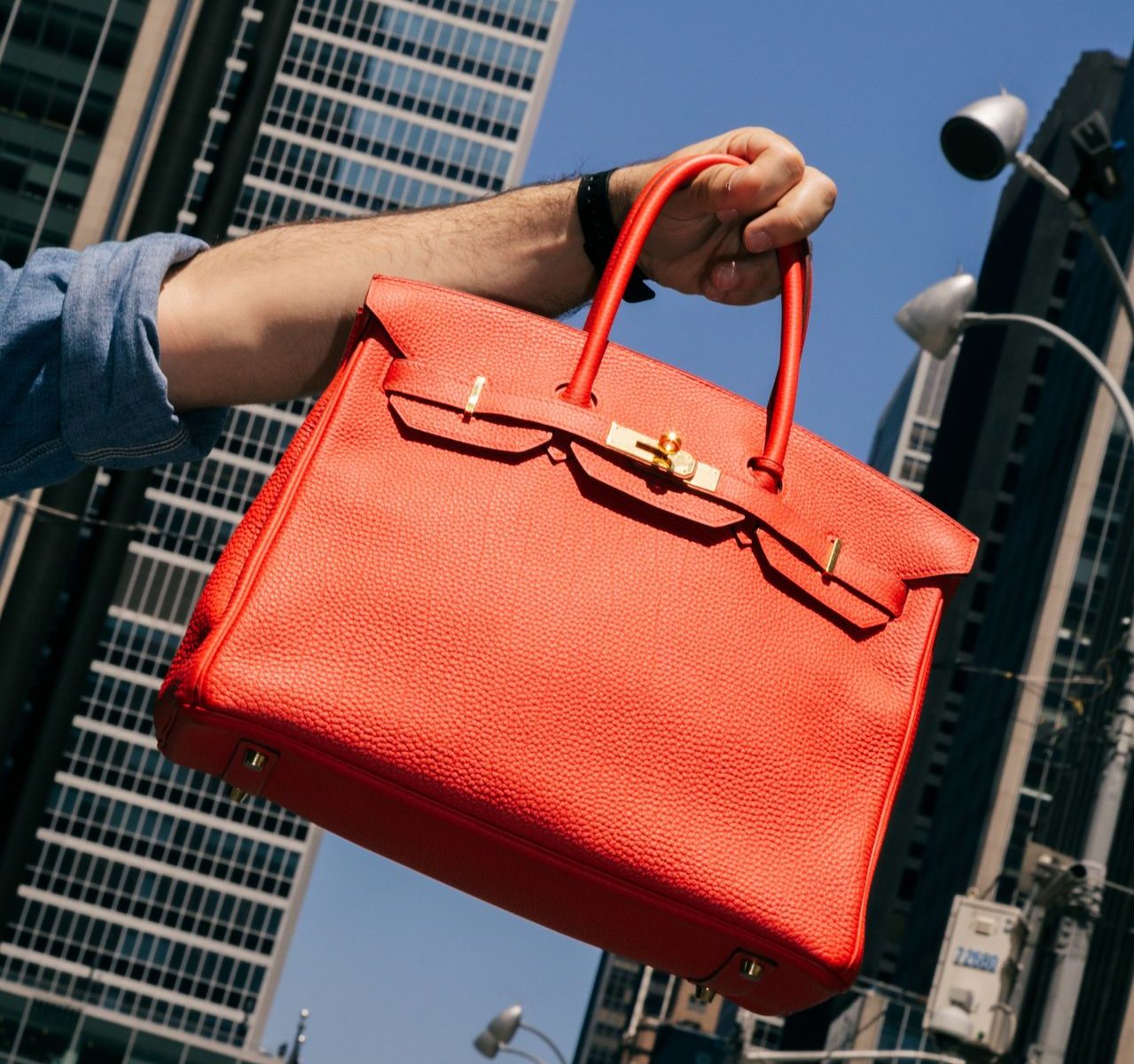
You could double your money in five minutes by buying a Birkin handbag at your local Hermès boutique and then flipping it. But getting your hands on the world’s most sought after purse is a lot more complicated than it sounds.
A basic black leather Birkin 25 costs $11,400 before tax at the Hermès store. Buyers can walk out and immediately give it to a handbag reseller like Privé Porter in exchange for $23,000 in cash. Privé Porter will then sell the Birkin on Instagram or at its Las Vegas pop-up store, possibly on the same day—box fresh, with receipt—for up to $32,000. All this for a bag that analysts estimate costs Hermès around $1,000 to make.
The unusual economics of the Birkin have upended the normal balance of power between shopper and store worker. At the Hermès boutique, it is the buyer who kowtows. Some of the wealthiest women in the world have brought homemade cookies to the store to cozy up to their sales assistant. They have offered tickets for Beyoncé concerts, trips to the Cannes Film Festival in a private jet and even envelopes stuffed with cash—all to get their hands on a Birkin.
Shoppers also spend tens of thousands of dollars on Hermès products they might not particularly want, such as an $87,500 canoe, to be in the running for a rare purse.
The Birkin turns 40 this year and is maturing into a phenomenon. To carry one is to signal that the wearer can afford to drop anywhere from $10,000 to $100,000 on a handbag. It appeals to the limelight-seeking Kardashians, who own extensive collections, but also to European Central Bank President Christine Lagarde , who is often photographed on her way to meetings carrying a Birkin.
The purse anchors the Hermès founding family’s $150 billion fortune. But they aren’t the only ones getting rich: An army of unofficial flippers all over the world profit from reselling the purse.
The Birkin first hit shelves in 1984, a couple of years after the late actress Jane Birkin and Jean-Louis Dumas, then chief executive of Hermès, met on a flight to London. After complaining that she couldn’t find the right-size handbag, the two sketched out a design together—on a drink napkin or an Air France sick bag, depending on the retelling. In return for lending her name to the new product, Hermès paid Birkin an annual royalty.
The story about the bag’s creation is part of its appeal and one of the reasons why competitors have found it hard to replicate its success. “It’s a great narrative,” said David Dubois, associate professor of marketing at the business school Insead. Shoppers like the “serendipity of the meeting” and that a woman who was admired for her style had a direct hand in its design.
The purse didn’t take off right away. During the early 1990s, shoppers could walk into an Hermès boutique and buy one off the shelf. Birkins weren’t reselling for more than their original price tag back then.
But something shifted in the years after the 2008-09 financial crisis, according to Matthew Rubinger, now chief commercial officer at the online marketplace 1stDibs and one of the first people to recognise the Birkin’s resale potential. Rock-bottom interest rates meant more money was sloshing around, and it began to find its way into alternative assets.
It also became bad taste to wear a new “it bag” every season when the economy was on the ropes. This played to the strength of no-logo designs like the Birkin. Rubinger established the handbag departments of both Heritage Auctions and Christie’s and built them into multimillion-dollar businesses. When rare Himalaya Birkins began to set records at auction, people took notice.
“Once they started getting above $100,000, things got more serious,” he said.
Today, shoppers who want a Birkin at the Hermès store must jump through hoops. First, they need to establish a good rapport with one of the brand’s sales assistants. The next step is to spend serious cash on other goods, such as silk scarves, watches and shoes, to “qualify” for a bag, according to Birkin collectors.
When a shipment of Birkins arrives at an Hermès store from France, the leather-goods manager assigns the purses to individual sales assistants, all of whom have a list of wealthy clients waiting to be offered a bag. The sales assistant must make a case for which individual on that list deserves to be offered a Birkin and get the manager’s approval.
This has created a perception among Hermès shoppers that the biggest spenders get access to Birkins first. Hermès is being sued in a California court by two wounded shoppers who allege that the brand only sells Birkins to “worthy” customers and makes purchases of the bag conditional on buying other items at the store. Hermès said in a recent court filing that it doesn’t require customers to buy other products before getting one of the coveted bags.
Just how much do shoppers need to drop to be offered a bag? Birkin collectors say that there is no hard rule but that most people can expect to shell out $10,000 or more on Hermès scarves, shoes and clothes before they will be offered a basic Birkin. To get a rare bag like the Himalaya Birkin, they might need to spend $200,000 or more.
This is known as the Hermès “prespend” or the “spend ratio” in Birkin-collecting circles. Hermès never spells this out explicitly, nor has it ever used these terms. But Birkin hopefuls say they have been told by their sales assistants that they need to visit the store more often. Resellers say that Hermès sales assistants don’t make commissions on Birkins, but that they can leverage hunger for the bag to sell other products for which they are rewarded.
Even after spending tens of thousands of dollars, Birkin hunters might not be offered the size or colour bag they want. This creates a golden opportunity for resellers.
Say a woman who shops regularly with the brand wants a red Birkin but is offered green. Rather than appearing ungrateful—because it is important to keep the sales assistant on her side in the Birkin-hunting game—she will buy the bag, knowing it can be sold to a reseller for a profit and hope to get the red later.
Hermès knows its top clients are flipping the bags. Read the fine print on a Birkin receipt, and the company asks that its customers will not, “directly or indirectly, resell Hermès products purchased in our boutiques for commercial purposes.” No Hermès shopper was willing to go on the record for this article about the experience of flipping the bags to a reseller, out of concern over being blacklisted by the brand.
The resale market has become a kind of “buy-now button” for Birkins, said Michelle Berk, founder of Privé Porter. Some shoppers are willing to pay a big premium to get their hands on a Birkin immediately, in the exact colour they want. They might not have the patience for the steps needed to secure one of the bags at the Hermès store.
In the past, resellers recruited flight attendants or polished overseas students to buy Birkin bags in Hermès stores all over the world in return for a fee. Now, the flippers get most of their supply from Hermès’s VIP customers. They also get Birkins by trading with their peers on WhatsApp. If clients are looking for a size or colour that one seller doesn’t have in stock, they can put out a call on the resellers’ group chat to see if anyone has that model.
One way Birkin hunters can accelerate an in-store purchase is by splashing out on the brand’s furniture or fine jewellery, said Judy Taylor, founder of Madison Avenue Couture and a handbag reseller for 15 years.
They can pick up an $8,000 paper basket for the home office, a $70,000 gold bracelet or a $140,000 sofa. Taylor said Hermès’s sales in categories like fine jewellery or watches, where the brand isn’t known for its expertise, are at least partially driven by Birkin hunters.
“No offence to Hermès, but if you can buy a necklace from Van Cleef for the same price as Hermès, you’ll likely go to Van Cleef,” she said.
Really big spenders are offered bespoke goods. Hermès does a sideline in special-order skis, skateboards and fishing gear for superwealthy clients and can customise the interior of a yacht or chopper. Privé Porter’s Berk received a message from a customer who was offered an $87,500 canoe. These buyers get access to the rarest Birkins.
An unusually large amount of new Hermès inventory ends up for sale in the secondhand market—another sign that Birkin mania might be driving sales of products that customers don’t really want. Of all the non-handbag Hermès items on The RealReal , 35% are in pristine condition, according to data supplied by the luxury resale website. The average for other designers on The RealReal, including Louis Vuitton, Gucci, Prada, Bottega Veneta and Saint Laurent, is 20%.
The Birkin’s popularity is very flattering for Hermès and might also help the company to keep its marketing budget low. It doesn’t need to promote itself when celebrities can be relied upon to freely splash photos of their bags on social media. In 2023, Hermès reinvested 4% of its sales back into promotions, compared with 12% at crosstown rival LVMH Moët Hennessy Louis Vuitton.
But the circus does cause problems for Hermès. Last year, the company had to fire staff at its Miami Design District store after some customers got more than their official allocation of Birkins, according to sources. Collectors say Hermès only allows two bags a year per individual, but employees might have been helping shoppers to get around this.
Shoppers and resellers have tried to bribe their way to Birkins. Hermès has strict rules about what customers can and can’t give sales assistants as gifts. Well-behaved Birkin hunters give goods that can be handed over openly at the store and shared among employees—hence the home-baked cookies. Trays of baklava are another go-to.
Hermès doesn’t like the flipping, but stamping out the resellers would harm the brand’s own interests. The company raised prices of its exotic-skin Birkins by around 20% in January. Resellers think the move was aimed at squeezing profits in the secondhand market, but it hasn’t worked. Dealers passed on the increase to their customers without a hitch.
Hermès could increase production and flood the market with new bags. This would end the financial incentive to resell Birkins, but it would also destroy their mystique.
Why are women— and increasingly men , too—so hungry for the Birkin? One justification for spending huge sums on a handbag is that the Birkin is a good investment. Except, it isn’t really. Any profit on reselling a bag purchased in store will be lower after factoring in the thousands of dollars spent on other goods to qualify.
A bag sourced from a reseller or on the block at Christie’s has limited upside because a hefty markup is factored into the price. A Birkin bought at auction in 2010 would sell for around 50% more today, according to Art Market Research data. Contemporary art, watches and classic cars have all performed better. Hermès’s own stock has been a much smarter investment than the Birkin, rising more than 20-fold since 2010.
Shoppers seem to lust after the Birkin because it is rare, expensive and well made. There is no better status symbol for those who want to display their wealth. And the hunt involved in getting one might be the whole point. Wealthy shoppers tolerate waiting at the Hermès store in a way that wouldn’t be acceptable in other areas of their lives.
Even how a person treats the Birkin has turned into a kind of code. Some collectors store them in glass display cabinets, hardly ever using them. This preserves their resale value.
But the supermodel Irina Shayk was photographed last year carrying her dog in a black crocodile Birkin. According to Sasha Skoda, The RealReal’s vice president of merchandising, the subtext to the “messy Birkin” trend is that you have to be seriously rich to treat a $40,000 handbag this casually. Jane Birkin was also hard on her bags, covering them with political stickers and tying charms around the handles. One of her weathered black Birkins sold at auction for £119,000 in 2021, around $150,000 at current exchange rates.
Rival luxury brands are trying to come up with challengers. Louis Vuitton recently launched a $1 million handbag. Chanel has almost doubled the price of its classic flap purse in four years to make it more exclusive.
For now, though, the reign of the Birkin looks secure. If you want to own one, better dig deep at the Hermès store.
Savvy travellers who plan their trips around dining at their destination’s most in-demand restaurants know that securing a reservation at a top Paris eatery isn’t an easy proposition on any given day.
Come the Olympics in July, when the city is flooded with tourists, one would expect the jockey sport to snag a table to be that much more intense. But that’s not necessarily shaping up to be the case. As of mid-May, Parisian insiders such as hotel managers, restaurant owners, and local luxury concierges reported that inquiries at sought-after spots were no higher than usual, foretelling a potential opportunity for visitors looking for a fine-dining experience during the games.
The time to book falls over the next few weeks given that many top spots don’t take reservations until one month before the dining date.
The Michelin-starred Jean Imbert Au Plaza Athenee and Le Relais Plaza, both at Hotel Plaza Athenee and helmed by the renowned French chef Jean Imbert, are two examples.
Francois Delahaye, the COO of the Dorchester Collection, a hospitality company that includes the Plaza Athenee and a second Paris property, Le Meurice, says that his regular guests who are visiting for the games and Parisians who frequent the restaurants know not to call too far in advance of when they want to dine.
Further, he doesn’t foresee reservations being a challenge at either venue or at Le Meurice’s two-Michelin-starred Restaurant Le Meurice Alain Ducasse.
“Booking for the restaurants won’t be an issue because people are planning meals at the last minute,” Delahaye says. “Also, the people who are in Paris specifically for the Olympics are here for the games, not to eat at restaurants. They’re not the big-spending clientele that we usually get.”
Delahaye doesn’t expect the kinds of peak crowds that descend on fine dining during Fashion Week each spring and autumn, for example, when trying to land a seat at the three eateries is nearly impossible. “People are fighting to get in,” he says. “You need to book through your hotel’s concierge, have an inside source, or be a hotel or restaurant regular.”
Several Paris luxury concierge companies echoed Delahaye’s perspective
Manuel de Croutte, the founder of Exclusive & Private, says that Paris regulars probably aren’t planning a trip when the Olympics transpire—from July 26 to Aug. 11—because they want to avoid the tourist rush. “We’ve gotten some reservation requests from people who’ve heard about us but not nearly as many as we usually get when the very wealthy travellers are here,” he says.
During peak periods like the French Open or Fashion Week, de Croutte says that his job entails making bookings for travellers who don’t have any other way to get into buzzy or Michelin-starred establishments.
“You’re unlikely to get a table at a see-and-be-seen place without knowing someone,” de Croutte says. “No one picks up the phone or answers email.” He says his team has established relationships with managers and owners of many of the hot spots in Paris and often visits them in person to land tables.
Exclusive & Private’s Black Book of Paris restaurant recommendations for Olympic visitors span a broad range, from casual bistros to fine-dining.
Michelin eateries include the three-star Le Gabriel at La Reserve, the two-star Le Clarence near the Champs-Elysee, and the two-star Le Taillevent.
Spots without a Michelin star but equally notable are also on de Croutte’s list: L’ Ami Jean offers traditional and flavourful southwestern French cuisine, Allard is a brasserie from Alain Ducasse, and Laurent serves French food to a fashionable set.
“My favourite neighbourhood for restaurants is Saint Germain de Pres,” de Croutte says. “You’ll find unassuming but chic names with excellent food and a great vibe. You can book with these places directly if you’re here for the Olympics, but don’t wait until the last minute because they will get filled.”
He also cautions that some Paris eateries are asking for nonrefundable prepayments for reservations during the Olympics.
“Be sure you want to go before committing and ask about the refund policy if you are charged,” he says.
Stephanie Boutet-Fajol, the founder of Sacrebleu Paris, says her bespoke travel company charges a lump sum of about US$750 to make all the restaurant bookings for the Olympic period, though the price varies depending on the dates and the number of restaurants that a client requests. “Reservations around the closing ceremony are harder to come by because that’s when more elite travelers are coming to Paris and want the chic restaurants that are always difficult to get a table at,” she says.
Meanwhile, chefs at some Michelin-starred restaurants share that they have tables available during the Olympics and welcome travellers to their establishments.
Thibaut Spiwack, for one, behind the Michelin-starred Anona, serving modern French cuisine, and the culinary consultant for the popular Netflix series Emily in Paris , says that he is open for reservations.
“My team and I look forward to sharing a culinary experience with new clientele that I hope will remain in their memory,” he says.
Spiwack suggests that travellers check out other worthwhile restaurants where he himself dines. For terrific wine, there’s Lava, and for Italian, he likes Epoca where the pastas are “divine.” Janine is the best bistro in town, and Prima wins for a pizza fix, he says.
“You have a lot of restaurants in Paris to pick from,” Spiwack says. “You just need to determine where you want to go, and book as soon as you can.”
Milestone birthdays and anniversaries, weddings, and graduations are momentous life occasions that some like to mark with large and elaborate celebrations.
And the deep-pocketed set are still in catch-up mode after a party-throwing standstill during the pandemic that went on for many months during the height of the lockdowns and social distancing. Bashes since then have become ever more extravagant and experiential—mere get-togethers, they’re not.
Hosts are also seeking any excuse to throw an event and having parties with the same “wow” factor for far less significant reasons, or for micro-occasions as they’re called, and even “just because,” according to luxury event planners who work with this elite set.
Colin Cowie, a planner based in New York and Miami who regularly orchestrates multimillion-dollar gatherings and was behind Jennifer Lopez’s and Ben Affleck’s wedding, calls it the “event revolution.”
“Large-scale events have become the norm,” Cowie says. “The wealthy, who are used to celebrating their life moments in a big way couldn’t do anything during the pandemic and are now going all out for anything they host.”
His company, Colin Cowie Lifestyle, plans 30% more events today than pre-Covid and has a lineup booked for the next two years. An example includes an upcoming million-dollar dinner party in the Hamptons simply to socialise with friends. It’s an affair with free-flowing Dom Perignon, centre-cut filet mignons, and unlimited caviar.
Colin Cowie Lifestyle plans 30% more events today than pre-Covid Calen Rose
Other high-end planners also attribute the rise of over-the-top celebrations to a “live life to the fullest” attitude that’s become prevalent in the last few years. But they say that these parties aren’t necessarily about spending more than before—rather, they’re increasingly creative, thoughtful, and, with respect to weddings, longer.
Lynn Easton, a Charleston-based planner, says that her typical wedding used to span two days and entailed a rehearsal dinner plus the wedding itself. “Now, it’s a five-day bonanza with events like a groomsman lunch,” Easton says.
Easton also plans glitzy milestone birthdays such as one for a 60th where the host flew 60 friends and family to a private island. Dinners were multi-hour affairs in various locations around the isle with the showpiece being a five-course meal where the food was presented on dishes that were hand-carved in ice.
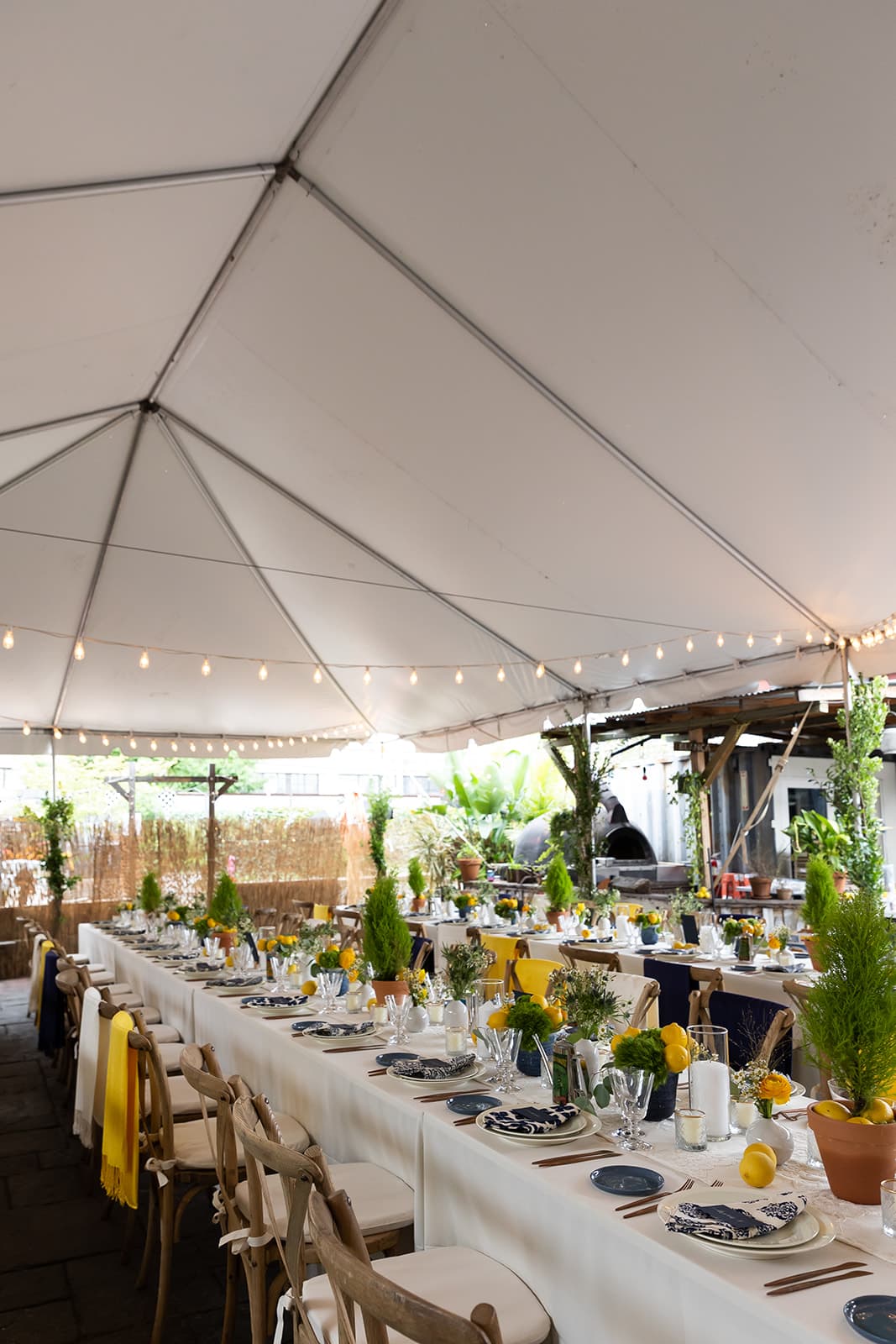
Another planner, Victoria Dubin, based in New York and Miami, says that, in a new precedent, the weddings she’s tapped to design kick off with striking welcome meals. She recently planned an al fresco rehearsal dinner at the Brooklyn pizzeria Roberta’s that recreated a Tuscan garden. Elements included potted herbs, lemon trees, vintage olive oil cans, ceramic plates, and table cards presented with palm leaves in limoncello cans.
Another planner, Victoria Dubin, recently planned an al fresco rehearsal dinner at the Brooklyn pizzeria Roberta’s that recreated a Tuscan garden. Aletiza Photo
Pashmina shawls hung from chairs to keep guests warm, and freshly baked pizzas and Aperol spritzes were in ready supply throughout the evening.
Stacy Teckin, the groom’s mother, hosted the party with her husband, Ian, and says she sought to pull off a dinner that made an impression on their guests. “The wedding was delayed because of Covid, and now that we had the chance to celebrate, we wanted to go all out,” Teckin says. “I’m not sure we would have done that before.”
In another example, acclaimed planner Norma Cohen threw a wild safari-themed bar mitzvah for a client.
A four-day wedding in Paris where the ceremony was in a historic chateau and the host paid for guests to stay at Hotel Crillon Norma Cohen Productions
The memorable occasion transpired at Spring Studios in downtown Manhattan and saw 400 guests be transported to the African plains: Details included mammoth replicas of wildlife such as giraffes and elephants, servers in safari themed attire, and entertainment dressed like giraffes. The event was one of several over-the-top parties Cohen’s arranged recently.
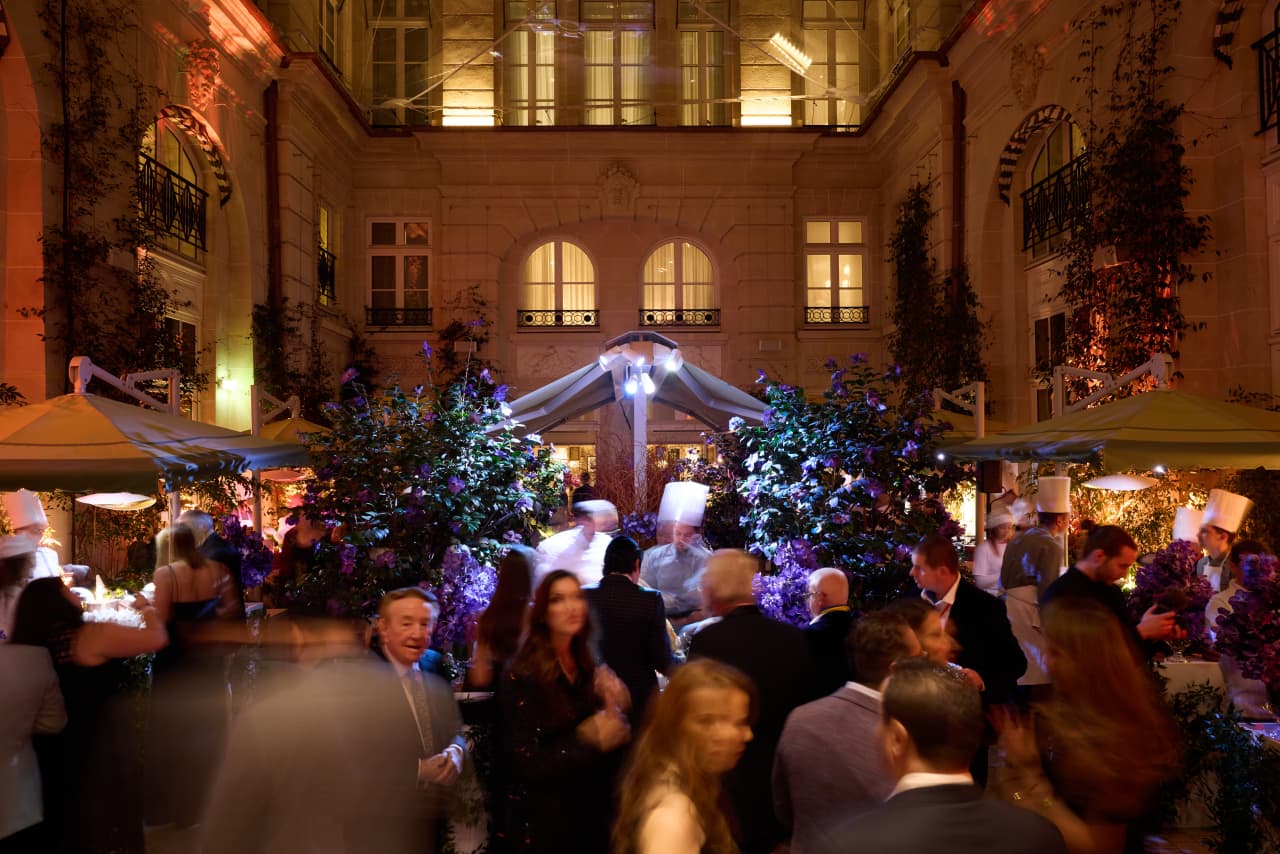
A four-day wedding in Paris where the ceremony was in a historic chateau and the host paid for guests to stay at Hotel Crillon, one of the city’s most luxurious properties, also ranks high in Cohen’s memory.
Then there’s a destination party in London that Cohen planned for a client who was turning 40. It as a six-day affair with dinners at swanky spots such as Cipriani, the Arts Club, and Cecconi’s at Soho House. The finale was Lancaster House, a mansion in St. James, where guests were entertained by cabaret dancers from the famed Ibiza club Lio Ibiza and feasted on prime rib and lamb chops and imbibed on Krug champagne.
“People today don’t want to host events,” Cohen says. “They want experiences that take you away to a different place and make you forget that the real world exists.”
If you get further on charm than skill and carry a workload light enough to float atop your bubbly demeanor, then you might be a “personality hire.”
Charismatic employees lay the foundations of positive corporate cultures—or leave teammates to pick up the slack. While some people proudly advertise themselves as personality hires on LinkedIn, others roll their eyes.
“It’s annoying,” says Lauren Gomes Atwood , a project manager in upstate New York. “They always have time to hang out in the hallway, but when do they sit down and work?”
Atwood, 39 years old, says she worked with a personality hire in a previous job. Though fun to be around, the person eventually generated resentment and, after winning a promotion , prompted several co-workers to quit, she says.
Atwood started a remote job last month and says her search took longer than expected, partly because interviewers seemed as interested in her vibe as they were in her experience. She describes herself as matter-of-fact and says she doesn’t give off the effervescence some employers appeared to be looking for.
Bosses want the warm-and-fuzzies as the mood at work is generally sour . One-third of U.S. employees say they’re engaged in their jobs—near an all-time low, according to Gallup’s annual report on the state of the workforce, released this month. Half of workers say they feel a lot of stress, and 49% are interested in new job opportunities or actively applying.
With so many lonely, unhappy charges, bosses are desperate for good workplace energy. They say camaraderie is hard to build on hybrid schedules, so they prize upbeat employees whose energy is (hopefully) infectious.
Michael Zachary , a security manager at Pratt & Whitney, says he learned the value of a winning disposition in the Navy. He noticed qualities like collegiality and willingness to learn often proved more critical to new recruits’ success than natural talent.
Certain roles at the defence contractor where he works now are highly specialized and must be filled by the most technically qualified candidates, he says. But others, like data-entry clerks, could be performed adequately by dozens of applicants.
“In that case, I’m going to hire the nicest person to be part of the group,” says Zachary, 38.
Meme to management strategy
The concept of a personality hire—like quiet quitting and lazy-girl jobs before—crystallised on social media. Few have captured the essence better than comedian Vienna Ayla , who plays a Miss Congeniality type in skits that have been viewed tens of millions of times on TikTok and Instagram.
The running joke is that her all-style-no-substance character contributes nothing, until she becomes a hero through schmoozing. In one bit, she gets her team a deadline extension by buttering up the chief executive . In another, she calls in a favour from the mayor , who happens to be her workout partner in an “ass and abs” exercise class.
Ayla, 27, tells me she hears from viewers who work with people like her character. Many feel frustrated, while others concede that personality hires can prove their worth in key moments, despite their lack of hustle.
“I kind of admire that type of person who doesn’t get so worked up but still manages to save the day,” says Ayla, who describes her real-life persona as type A.
Businesses don’t want caricatures, but many judge applicants differently than they did during hiring sprees a couple of years ago, says Brian Vesce , co-founder and CEO of RefAssured, a candidate-reference startup.
Skill was king during the talent war of 2021 and 2022, but recent layoffs suggest a lot of companies believe they have enough, or even too many, capable employees.
“We are seeing more employers looking for the right personality when a role opens up,” Vesce says.
Sensing the shift, he launched RefAssured last year in an attempt to measure characteristics in job candidates that are often called “intangibles.” Using the company’s software, references answer a series of questions about how an applicant communicates, handles stress, takes feedback and manages conflict. The responses yield a candidate’s soft-skill rating on a five-point scale.
Customers include 10 of the country’s 100 largest staffing agencies, Vesce says, and he expects to triple that total by year-end.
Red flag or badge of honour
Personality hires are a growing presence in tech, as efficiency-minded companies seek engineers who can also make time with customers, says Lorde Astor West , founder of RadHash, which makes back-end software for startups. But people who excel at gabbing about technology products usually aren’t the best coders, in her experience.
“The life of the party might be an individual who isn’t as capable, and now you have other team members who are having to make up the difference and fix mistakes,” she says.
Astor, 49, leads a team of about 100 employees and contractors and says she’s developed an appreciation for the snippy or introverted people who get things done. Give her a pricklebush over a personality hire any day.
Others wear the personality-hire label proudly. They say keeping their energy up takes effort and makes people around them better.
Danielle Norris calls herself a “personality hire meets hard work” on LinkedIn. She tells me emotional intelligence is among the top qualities she brings to her role as a marketing manager at the Jonus Group, a recruiting firm for insurance and finance companies. In meetings, she says she’s able to sense when a colleague is hesitant to share an idea and can help put that person at ease with a smile or encouraging word.
That leads to greater collaboration and results, according to Norris, 32.
“I bring the vibes,” she says. “I’m always looking to have a good time, but I’m still able to drive my team to success.”
Not long ago, designer Jonathan Anderson attended a music festival where he surveyed the crowd and thought, Now this is where all the fashion has been lurking.
“I saw more people dressing more in high fashion than actually what was happening in fashion,” said Anderson , who designs the British clothing brand JW Anderson, as well as LVMH’s Loewe.
The free expression of these festival goers stuck with Anderson as it clashed with the risk-shy attitude that has guided much of luxury fashion in recent years. “I wonder,” said Anderson this past weekend in Milan, “has fashion become so conservative whereas what’s happening out there is actually way more avant-garde?”
Just a couple of years ago in Milan, “quiet luxury” was on the tip of everyone’s tongue. This collocation was a simplistic shorthand for where fashion was going: pricey but prim; light on logos but heavy on the wallet; all cashmere everything in gray, beige, navy.
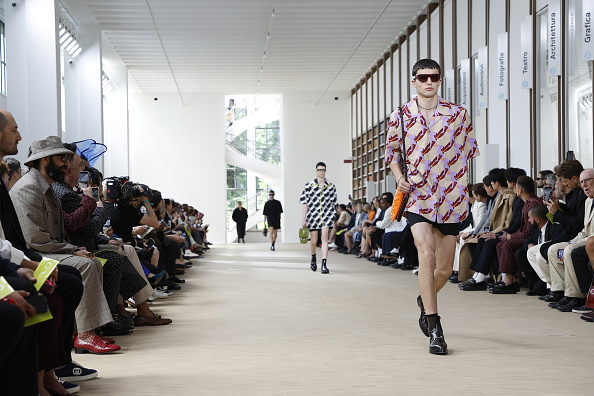
Fashion is a creative industry and designers can only cup their mouths for so long. At the latest edition of Milan men’s fashion week, shouts in the form of new, notice-me clothes broke out from the runways.
“People want uniqueness, maybe they want something which is challenging somehow,” said Anderson, speaking after the latest JW Anderson show, which was widely held up as the most successful collection of a muddled Milanese sprint.
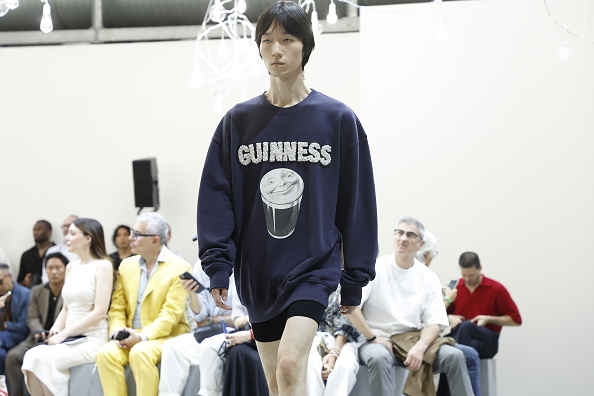
Highlights included winsome cardigans with children’s book depictions of London terrace houses, leather jackets contorted by ski-slope-like hems and a kitschy sweater showing a smirking pint of Guinness—an upmarket riff on a Dublin tourist souvenir.
The day after Anderson’s show, came the surprise online release of a bulging 171-outfit lookbook from Valentino, the first stab from the label’s new creative director Alessandro Michele, who helped lift Gucci to a more than $10-billion brand before leaving in 2022.
At Gucci, Michele ushered in a maximalist fashion moment, and based on this initial showing, his taste for theatrics is intact. Against a backdrop of winter-mint curtains, feather-haired models (often wearing gigundo nerd glasses and hoops of pearls) sported floppy dog-ear ties, Kermit-green suits and tapestry prints. Flipping through the collection, all the tired but fitting Michele comparisons came rushing back: Wes Anderson films, kooky grandmothers and leopard-clad psych-rock bands.
Model on the runway at the Gucci fashion show during Milan Fashion Week Menswear Spring/Summer 2025 held at Triennale di Milano on June 17, 2024 in Milan, Italy. (Photo by Aitor Rosas Sune/WWD via Getty Images)
Valentino, which is part-owned by Kering, also made its commercial intentions clear by sending out 93 close-up photos spotlighting easy-to-buy accessories like V-logoed sandals and rectangular handbags.
Notably, Sabato de Sarno, the still newish creative director who replaced Michele at Gucci, seemed to be shrugging off his own restraints. Neither De Sarno nor François-Henri Pinault, CEO of Gucci parent company Kering, spoke to the press after the show, but the collection was a departure from the brand’s recent strategy of focusing on classic, trend-agnostic pieces that cater to older, wealthier clients.
De Sarno’s surf-inspired offering bounded between skin-revealing mesh polo shirts, skimpy thigh-high shorts and camp-collared shirts with blooming hibiscus flowers prints. It would be hard to imagine much of it on anyone over 29. (Actor Paul Mescal, 28, was already in the front row in a pair of those shorty shorts.)
Youthful abandon was the theme at Gucci’s mightiest Milanese competitor, Prada. “Sometimes when you get older you start to overthink a lot and you limit yourself,” said Raf Simons, who is co-creative of the brand with Miuccia Prada , the grand doyenne of Italian fashion. “When you are young, you just go. We like that spirit.”
Models wore navel-exposing shrunken sweaters and pre-wrinkled sportcoats, a seeming nod to teens who haven’t yet learned the wonders of ironing. A lurid palette of hot pink and electric blue spoke to juvenile fashion experimentation.
Throughout the long weekend in Milan, the feeling settled in that this new, shoutier tone was a necessary course correction during an unsteady period for the apparel industry, and really, Europe at large.
The chatter of the front row centred on this month’s European Union elections which saw a surge in support for right-wing candidates, catching pundits and leaders like French President Emmanuel Macron by surprise. Inflation also remains stubbornly high.
Pressingly, for the fashion world, some of the world’s largest luxury labels have been reporting a glut of unsold products and a dearth of shoppers. Past strategies don’t seem to be working and one could tell that brands were ready to try anything to spur shoppers to spend a bit more.
Even at Zegna, a label so synonymous with quiet luxury that the cast of “Succession” wore it on that money-mad show, the clothes were more conspicuous. In between its Learjet-bound sotto voce suits, one found vivacious coral patterned jackets in blue and yellow.
“For sure playing more with colors and prints, we had fun,” said Zegna’s artistic director Alessandro Sartori following his show. “It’s a sense of freedom that I wanted to express.”
Many people dream of becoming social-media stars like YouTube’s MrBeast or TikTok’s Charli D’Amelio . But for most who pursue careers as content creators, just making ends meet is a lofty goal.
Clint Brantley has been a full-time creator for three years, posting videos on TikTok, YouTube and Twitch where he comments on news and trends related to the online game “Fortnite.” Despite having more than 400,000 followers, and posts that average 100,000 views, his income last year was less than the median annual pay for full-time U.S. workers in 2023—$58,084, based on Bureau of Labor Statistics data.
Clint Brantley, a full-time creator, draws an average of 100,000 views for his ‘Fortnite’-related videos on TikTok, YouTube and Twitch. PHOTO: RAJAH BOSE FOR THE WALL STREET JOURNAL
The 29-year-old is hesitant to commit to an apartment lease because the money he gets, mainly from online tips and sponsorship deals, arrives randomly and could vanish at any moment. For now, he’s living with his mom in Washington state.
“I’m vulnerable,” he says.
Earning a decent, reliable income as a social-media creator is a slog—and it’s getting harder. Platforms are doling out less money for popular posts and brands are being pickier about what they want out of sponsorship deals. The real possibility of TikTok potentially shutting down in 2025 is adding to creators’ anxiety over whether they can afford to stick with the job for the long haul.
Few overnight sensations
Hundreds of millions of people around the globe regularly post videos and photos to entertain or educate social-media users. About 50 million earn money from it, according to a 2023 report from Goldman Sachs . The investment bank expects the number of creator-earners to grow at an annual rate of 10% to 20% through 2028, crowding the field even further. The Labor Department doesn’t track wages for these creators, also known as influencers.
It can take months or years to earn money as a creator, often through a combination of direct revenue from social-media platforms, sponsorship deals, merchandise sales and affiliate links. But those who stick with it eventually see some returns, surveys show. Creators say that’s because you can learn what kind of posts most resonate with an audience, which can lead to more followers and, in turn, more moneymaking opportunities.
But money doesn’t mean big bucks . Last year, 48% of creator-earners made $15,000 or less, according to NeoReach, an influencer marketing agency. Only 13% made more than $100,000.
The gap reflects multiple factors, including whether creators work full- or part-time, the kind of content they put out and when they started. People who jumped into the space during the height of Covid-19 lockdowns—and who focused on a niche such as fashion, investing or lifestyle hacks—say they benefited from the surge in social-media use during that time.
A small number of creators shot to fame, propelling the occupation to the top of career wish lists for many teens (and adults). But behind the scenes, creators say the job is gruelling. They need to constantly produce compelling posts or risk losing momentum. They spend their days planning, filming and editing posts while also working to make inroads with advertisers and interacting with fans.
“It is a lot more work than most people realise,” says Emarketer analyst Jasmine Enberg. “Creators who make a living doing it have been at it for many years. Most are not overnight sensations.”
Like other self-employed professionals, creators don’t get paid time off, healthcare benefits, retirement contributions and other perks that companies typically provide for their workers. That reality, coupled with stubbornly high inflation and mortgage rates , is making it more difficult to get by as a creator.
Brantley works on editing a coming video. The online tips and sponsorship deals that make up his income can be erratic, so for now the 29-year-old continues to live with his mom in Spokane, Wash. PHOTO: RAJAH BOSE FOR THE WALL STREET JOURNAL
“Everything is more expensive, especially groceries,” says Jason Cooper of Mobile, Ala.
A few years ago, Cooper dreamed up a sassy sock puppet named Sock Cop, who cracks dad jokes in live and recorded videos for TikTok and Twitch. He currently makes $500 to $600 a month, almost entirely from tips.
He thinks he could probably haul in a lot more if he went full-time. But with no guarantee, the 37-year-old father doesn’t want to quit his marketing job and risk losing health coverage. He now spends a few hours in the evening and on weekends on Sock Cop. If he had more time, he would feel the need to constantly make videos.
“You’ve got to feed the beast,” says Cooper.
Shrinking platform payouts
TikTok’s $1 billion creator fund, which ran from 2020 to 2023, doled out money to eligible creators for posting to the platform. Others joined in. YouTube’s TikTok competitor, Shorts, allowed creators to earn anywhere from $100 to $10,000 a month with its temporary fund. Instagram’s Reels Play bonus program rewarded creators with fluctuating payouts. Snapchat ’s Spotlight rewards program gave $1 million a day to the platform’s top creators.
Today, the platforms have revamped or completely changed how they pay creators—doing away with their funds.
Qualifications for TikTok’s current rewards program include having an account with at least 10,000 followers with a minimum of 100,000 views in the past month. Instagram is currently testing a seasonal, invitation-only program that rewards creators for sharing Reels and photos.
YouTube debuted an ad-revenue share model last year, in which qualifying creators with more than 1,000 subscribers and 10 million public Shorts views in the past 90 days receive 45% of revenue from ads that occur between posts. Snapchat has a program that gives creators who meet certain criteria, such as having at least 50,000 followers and 25 million monthly views, a portion of the ad revenue that appears between Stories. Its Spotlight program also continues to dole out money to creators.
Creators who opt into these programs or bonuses aren’t guaranteed a significant payday.
Yuval Ben-Hayun originally became popular on TikTok in 2020 because of his posts about the word-puzzle game Wordle. The 29-year-old New Yorker eventually expanded into linguistic and other education content, and by early 2023, was able to support himself and his bills of over $4,000 a month.
TikTok had closed its fund by then but was testing its creator rewards program. Ben-Hayun said in March he received about $200 to $400 per million views, and it’s steadily declined since then—even as his follower count reached 2.9 million.
The followers are still there, but the money isn’t. He recently hit a new low, receiving only $120 for a video with 10 million views.
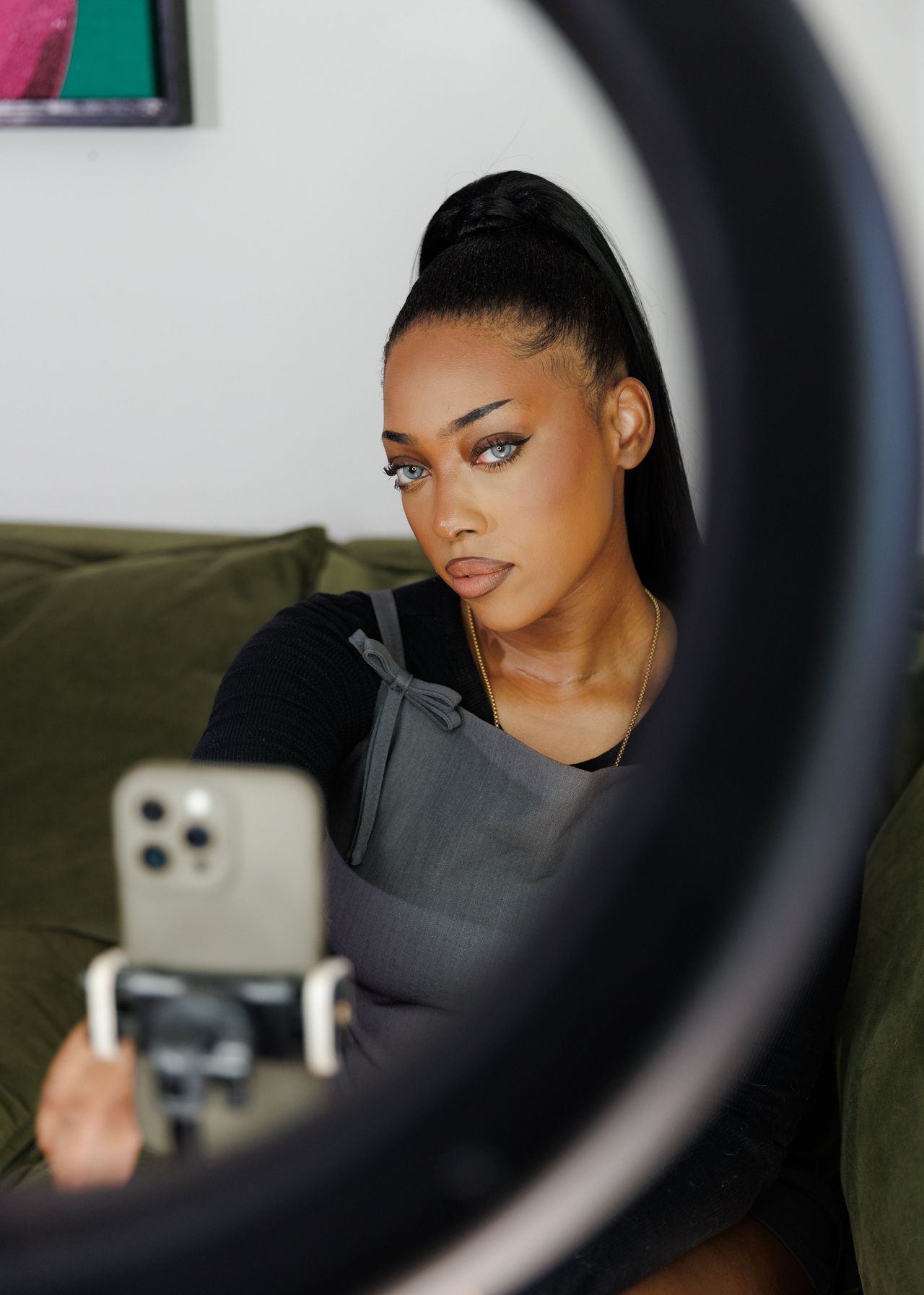
Danisha Carter uses her phone and a ring light to create content for her TikTok channel, where she has 1.8 million followers. PHOTO: JESSICA PONS FOR THE WALL STREET JOURNAL.
Danisha Carter is frustrated that TikTok and other platforms sold the idea of content creation as a job, but later withdrew the financial incentives. Thanks to creators’ efforts, she says, consumers are now hooked on social feeds, bringing the platforms billions of dollars in annual revenue.
The 26-year-old has 1.8 million TikTok followers, and her posts about beauty and exercise, along with opinions on topics ranging from dating to online bullying, regularly receive hundreds of thousands of views. TikTok has paid her a total of $12,000, Carter says. She sells merchandise for additional income, bringing in about $5,000 last year.
“Creators should be paid a fair percentage based on what the apps are making off creators,” says Carter. “There should be more transparency into how we’re paid, and it should be consistent.”
A TikTok spokeswoman declined to comment.
YouTube said it paid more than $70 billion to creators, artists and media companies in the past three years, and more than 25% of channels in the ad-revenue share model are now making money through it. “We remain committed to putting our full energy into what matters most for our creators, viewers and advertisers,” a spokeswoman said.
A future without TikTok?
Many creators and advertisers credit TikTok, which pioneered the short-form video genre, with driving stronger engagement than its industry peers. TikTok has gained more than 170 million users in the U.S. since its launch in 2016—including, Pew Research Center says, a third of American adults. They spend an average of 78 minutes a day on the app, according to market-intelligence firm Sensor Tower.
TikTok may not be available in the U.S. for much longer, at least not in its current form. In April, President Biden signed a bill into law that will force a sale or ban of the app by Jan. 19, 2025. U.S. lawmakers have expressed worries that TikTok poses a national security risk. TikTok’s parent company, Beijing-based ByteDance, has said it can’t and won’t sell its U.S. operations by the deadline.
ByteDance sued the U.S. government, alleging the new law violates its First Amendment rights. Several U.S. creators also sued. The U.S. Court of Appeals for the District of Columbia Circuit will hear arguments in September for both cases.
“To lose TikTok would be kind of devastating,” says Brandon Granberg , a 31-year-old creator from Bayville, N.J., known for interacting with strangers in public places in silly ways.
Granberg struggled for years to attract viewers on the app before one viral post two years ago took his follower count from 5,000 to more than one million. Recently he made $1,000 from a TikTok program that launched last year called TikTok Creative Challenge, which allows creators to earn money by making video ads for brands that don’t appear on their personal profiles. He also earned $2,800 for producing four TikTok videos promoting a website for people with foot fetishes. Granberg says he found it creepy, but did it because he needed the money.
While he hasn’t landed many other sponsored posts, he’s grown his income significantly by making marketing videos for small businesses over the past year. Most clients find Granberg on TikTok. “If it gets banned, it will definitely hurt me,” he says.
Changing tastes and algorithms
This year, U.S. social-media creators as a whole are expected to make $13.7 billion, according to Emarketer. The research firm projects the majority of that—$8.14 billion, or 59%—will come from brand sponsorships.
Advertisers have always led in compensating creators, paying out far more money than the social-media platforms and fans who buy merchandise or dole out tips. But these days, advertisers expect more from creators than just large followings, according to agency and talent representatives. They want to see evidence of strong engagement in the form of saved and shared posts, plus the demographics of creators’ audiences.
“Brands are looking at metrics that are far less predictable for creators and also very difficult to price yourself on,” says Sarah Peretz, a business-strategy consultant in Los Angeles who helps creators negotiate partnerships and deals with advertisers.
Some brands are more controlling than in the past, says Sarah Steele , a 34-year-old creator in Tulsa, Okla., who started making TikTok videos about being a working mom in 2020. “Now it’s, ‘We’re paying you and this is what we want you to say.’ ”
Earlier this year, Steele says an advertiser insisted she cite legal disclaimers in a series of sponsored Instagram posts. “It felt like I was reading off a teleprompter,” she says. “As a consumer it even turned me off to the brand a little bit.”
Creators, meanwhile, are having a tougher time attracting viewers, thanks to algorithm changes and other factors beyond their control. And while more advertisers are looking to partner with creators than in the past, “increased activity leads to increased competition,” says Peretz.
Another change is that advertisers now prefer to work with just a handful of creators on long-lasting deals rather than experiment with several on one-off projects, says Jess Hunichen, of Shine Talent Group.
Hunichen co-founded the talent-management agency in 2015, when TikTok didn’t exist and influencer marketing was still relatively new. Back then, an average deal size between an influencer and brand was usually below $1,000. Now, the average deal per campaign is around $10,000, she says.
Worth the hustle
Ronit Halmos of Los Angeles began making TikTok videos earlier this year that she describes as quick-reviews of restaurants, bars and more “with some sass and attitude.”
The 27-year-old, a full-time technology recruiter, recently landed her first advertiser deal. A kombucha brand asked her to make a 30-second post featuring her take on a line of flavors. Though it ended up getting less attention from viewers than her usual fare, she made $1,500 from about 30 minutes of work.
Tyler Haven , a 27-year-old traveling around the Pacific Northwest, charges $250 to $300 to make promotional videos that brands can post to their own social channels, and around $1,200 for posts that appear on either his Instagram account with more than 41,000 followers or his TikTok account with more than 10,000 followers.
Since January, he’s been posting videos documenting his “van-life” with his wife, Oak Haven: Their primary residence is a fully paid, fully decked-out 2004 Mercedes Sprinter T1N.
Haven said it’s been easy to grow his following organically. He believes it’s because his posts don’t depict some unattainable, picture-perfect life.
He quit his job in June to pursue full-time content creation.
“Even if I were to make $2,000 a month, which is absolutely nothing—that’s less than most people’s rent—I could live on that,” Haven says.
With the van fully paid off, the 27-year-old says he and his wife, Oak Haven, can get by with even a small income from his videos. PHOTO: TODD MEIER FOR THE WALL STREET JOURNAL
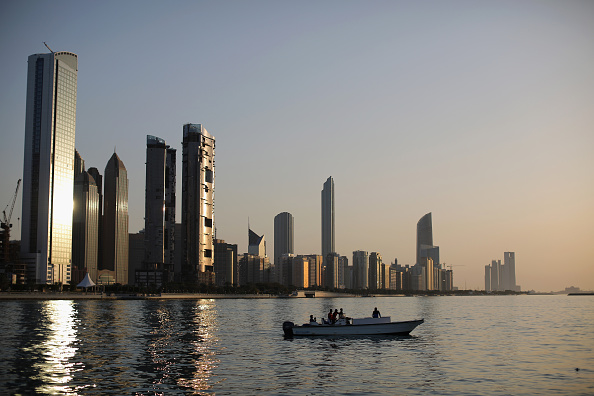
Saudi Arabia’s fledgling advertising industry and continued growth in the sector in the United Arab Emirates are helping to make the marketing business in the Middle East the fastest-growing in the world.
Ad spending in the Middle East is projected to increase 8.1% to $6.6 billion this year, up from 3.5% last year, according to advertising research firm WARC.
That expansion is building from a much smaller base than in many other ad markets. The Netherlands alone will generate $6 billion in ad spending in 2024, up about 2.3%, WARC said. But it is also enough to outpace every other region in 2024, the firm said.
“It reminds me almost of the gold rush,” said Reda Raad , chief executive of TBWA\Raad Group, an ad agency based in Dubai, in the United Arab Emirates, that is part of the U.S.-based ad holding company Omnicom Group . “I don’t think we’re going to see this type of growth again in our lifetime.” TBWA\Raad has won eight new clients over the past year, with an increase in head count of 17% to accommodate the new work, Raad said.
Some international brands have long maintained a presence in the region. PepsiCo has considered the area a strategic market for decades, said Karim Elfiqi , senior vice president and chief marketing officer at PepsiCo Africa, Middle East and South Asia. Sponsorship deals with local stars such as Mohamed Salah , a soccer player from Egypt, “are a testimony of how over time, we have been part of the cultural fabric of the region,” Elfiqi said.
Other major brands have formed a more recent focus on the Middle East. The Lego Group opened a Middle East and Africa headquarters in Dubai in 2019, citing the size of the region’s young population. That office has developed work such as a Ramadan-themed campaign that ran in the U.A.E. and Saudi Arabia, among other locations.
‘Massive growth’
The Middle East’s ad market has lagged behind regions such as North America and Europe partly because of stricter cultural norms and regulations that affected business, as did a more limited media landscape and economic instability, according to Raad.
But marketing growth in the region is now being driven in part by newfound marketing interest in Saudi Arabia, where ad spending this year is expected to reach $2.1 billion, nearly double its level in 2019, according to WARC. Growth is also coming from the U.A.E., whose ad market is expected to reach $1.7 billion in 2024. Smaller contributors include Qatar and Kuwait.
The landscape has changed now because of economic diversification, increased connectivity and a move into the digital world, leading international brands to enter and invest in campaigns tailored to the region, Raad said.
Four years ago, Saudi Arabia made up a small proportion of business at Lightblue, a creative experience and tech agency based in Dubai. These days, 40% of its business comes from the country, says co-founder David Balfour , who opened an office in Riyadh last month as a result.
“The conversation used to be, ‘We’re going to do this in Dubai.’ Now, it’s ‘We’re going to do this in Dubai—and in Saudi.’” Balfour said. “We’re seeing massive growth in that region.”
There have been speed bumps. As government spending reaches huge levels , Saudi Arabia experienced a rare economic contraction in 2023.
But the country’s efforts to expand its economic pursuits beyond oil have led to the creation of new brands, which are seeking the help of marketing agencies to get the word out.
Marketers in the region are seeking help to stay on-trend in areas such as generative artificial intelligence and social media, said Greg Paull , principal of R3, a consulting firm that helps match advertisers with agencies.
“U.A.E. has been a magnet for the region for 20 years as more investment has come in—but with the new leadership in Saudi since 2017 [when Mohammed bin Salman was named crown prince ], this market has gone through remarkable growth,” Paull said.
Saudi Arabia has faced criticism for its human-rights record under the crown prince, the day-to-day ruler of the kingdom, especially over the 2018 killing of dissident journalist Jamal Khashoggi and the more recent jailing of women’s rights activists.
Mohammed has outlasted the international isolation that followed Khashoggi’s killing, however, and continues to pursue an economic diversification plan dubbed Vision 2030. The country last year unveiled plans for a new international airline called Riyadh Air, is investing billions of dollars to build its tourism and video game industries, and in March hosted a golf tournament in Jeddah under the auspices of LIV Golf, the Saudi-backed league that has both challenged the PGA Tour and struck a deal to unify with it.
Changing tides
Vision 2030 also calls women’s empowerment a top social priority and seeks to increase the country’s employment rate of women.
Nada Hakeem , CEO and co-founder of Saudi creative agency Wetheloft, said the perceptions of hardships for women in the marketing and advertising industry are outdated and inaccurate.
“As a Saudi woman who founded my company in 2012, I’ve always felt supported by the creative community and the industry as a whole,” Hakeem said. “While every society may have its challenges, I can confidently say that these challenges have not hindered our growth.”
A progression of new laws, policies and incentives are making the industry in Saudi Arabia more inclusive and supportive for women, she added.
In certain parts of the Middle East, “absolutely, it’s still challenging, but they are making the right strides, and they have the right quotas and ambitions in place,” said Rebecca Bezzina , CEO for the EMEA region at R/GA, an agency owned by Interpublic Group of Cos.
“They’ve got wealth, they’ve got world-class ambition, world-class budget. They’re not shy of doing things in the right way,” Bezzina added, speaking of the region overall. “But they still have a talent shortage, especially from a creative and design and product point of view. So often what we’ve found our success has been that they’ve come to us and said, ‘Oh, we want a world-class agency to help us launch this new venture or do this new brand.’”
R/GA said it sees 69% more requests for agency work from marketers in the region today than it did five years ago. It recently handled a brand redesign for Banque Saudi Fransi, which wanted to reaffirm its Saudi roots with a modern identity, and created Weyay, the brand for a new digital bank from the National Bank of Kuwait.
The agency hasn’t notably increased its regional workforce, but it has made changes to facilitate working across Europe and the Middle East.
Other Western players are making moves to capture a piece of the growth. Advertising giant WPP has long worked in Saudi Arabia through units such as Ogilvy and GroupM, but in 2021 established a joint venture with a local company to create ICG Saudi Arabia, a communications and media company based in Saudi Arabia. Ad holding company Stagwell opened new offices for its media agency Assembly in Riyadh in 2021 and in Cairo in 2022.
Regional hospitality
Some executives said certain facets of business dealings in the Middle East are different than in other parts of the world.
Bertrand Morin, a group account director for R/GA who is based in London and works often with Middle Eastern clients, said he spends much more time speaking about personal lives and families with those clients than those in the U.K. or U.S. He has been invited to Middle Eastern clients’ homes to join their families for dinner, something that has never happened with clients elsewhere.
But others say it can feel surprisingly familiar.
Balfour, the Lightblue co-founder, said he was struck by the number of ad-agency workers recently having dinner at the Riyadh location of steakhouse chain Beefbar, and the scene’s similarity to far-off locations.
“The staff are from everywhere in the world. The service and the food is unbelievable. There’s a DJ playing,” Balfour said. “Apart from not having alcohol, you could be anywhere in the world.”
China’s broken housing market isn’t responding to some of the country’s boldest stimulus measures to date—at least not yet.
The Chinese government has been stepping up support for housing and other industries in recent months as it tries to revitalize an economy that has continued to disappoint since the early days of the pandemic.
But fresh data for May showed that businesses and consumers remain cautious. Home prices continue to fall at an accelerating rate, and fixed-asset investment and industrial production, while growing, lost some momentum.
“China’s May economic data suggest that policymakers have a lot to do to sustain the fragile recovery,” Yao Wei, chief China economist at Société Générale, wrote in a client note on Monday.
The worst pain is in the property sector, which has been struggling to deal with oversupply and weak buyer sentiment since 2021, when a multiyear housing boom ended . The market still doesn’t appear to have found a floor, even after Beijing rolled out its most aggressive stimulus measures so far in mid-May in hopes of restoring confidence.
In major cities, new-home prices fell 4.3% in May compared with a year earlier, worse than a 3.5% decline in April, according to data released Monday by China’s National Bureau of Statistics. Prices in China’s secondhand home market tumbled 7.5%, compared with a 6.8% drop in April.
Home sales by value tumbled 30.5% in the first five months of this year compared with the same months last year.
“This data was certainly on the disappointing side and may ring some alarm bells, as May’s policy support package has not yet translated to a slower decline of housing prices, let alone a stabilisation,” said Lynn Song, chief China economist at ING.
Economists had also been hoping to see a wider recovery this month after Beijing started rolling out a planned issuance of 1 trillion yuan, the equivalent of $138 billion, in ultra-long sovereign bonds in May. The funds are designed to help pay for infrastructure and property projects backed by the authorities. Investors gobbled up the first batch of these bonds.
Monday’s bundle of economic data, however, underlined how the country still isn’t firing on all cylinders.
Retail sales, a key metric of consumer spending, rose 3.7% in May from a year earlier, compared with 2.3% in April, according to the National Bureau of Statistics. While the trend is heading in the right direction, it is still a relatively subdued level of growth, and below what most economists believe is needed to kick-start a major revival in consumer spending.
The expansion in industrial production—5.6% in May compared with a year earlier—was down from April’s 6.7% increase. Fixed-asset investment growth, of which 40% came from property and infrastructure sectors, also decelerated, to 3.5% year-over-year growth in May from 3.6% in April.
Key to the sluggish economic activity data in May—and China’s outlook going forward—is the crisis in the property market, which has proven hard for policymakers to address.
The property rescue package in May included letting local governments buy up unsold homes, removing minimum interest rates on mortgages, and reducing payments for potential home buyers. It also included as its centerpiece a $41 billion so-called re-lending program launched by the People’s Bank of China, which would provide funding to Chinese banks to support home purchases by state-owned firms.
The hope was that by stepping in as a buyer of last resort for millions of properties, the government would manage to mop up unsold housing inventory and persuade wary home buyers to re-enter the market. In turn, Chinese consumers, who have most of their wealth tied up in real estate, would feel more confident about spending again, thereby lifting the overall economy.
But the size of the re-lending program wasn’t big enough to convince home buyers, said Larry Hu , chief China economist at Macquarie Group. “Meanwhile, their income outlook also stays weak given the current economic condition,” he said.
For the property market to bottom out and reach a new equilibrium, mortgage rates, which stand at around 3-4% in China, need to be as low as rental yields, which are currently below 2% in major cities, said Zhaopeng Xing, a senior China strategist at ANZ. He said that a large mortgage rate cut will need to happen eventually.
The other key part of China’s push to revive growth revolves around the manufacturing sector, with leaders funnelling more investment into factories to boost output and reduce the country’s reliance on foreign suppliers of key technologies.
The result has been a surge in production. But with domestic consumption not strong enough to absorb all those goods, many factories have been forced to cut prices and seek out more overseas buyers.
Data released earlier this month showed that Chinese exports rose faster in May than the month before.
However, the export push is butting into resistance as governments around the world worry about the impact of cheap Chinese competition on domestic jobs and industries. The European Union last week said it would impose new import tariffs on Chinese electric vehicles, describing China’s auto industry as heavily subsidised by the government, to the point where other countries’ automakers can’t fairly compete.
The U.S. has also hit Chinese cars and some other products with hefty duties, while countries including Brazil, India and Turkey have opened antidumping investigations into Chinese steel, chemicals and other goods.
Beijing says such moves are protectionist and that its industries compete fairly with global rivals.