Christian Dior struck gold when it found a supplier willing to assemble a €2,600 handbag, equivalent to around $2,816, for just €53 a piece—or did it? Cleaning up the reputational damage may not come cheap.
A Milan court named LVMH -owned Dior and Giorgio Armani as two brands whose products were made in sweatshop-like conditions in Italy. Images of an unkempt facility where designer handbags were produced, which was raided as part of an investigation into Italy’s fashion supply chain , are worlds apart from those the luxury industry likes to show its customers.
To keep up with the strong demand for their goods, some high-end brands rely on independent workshops to supplement their in-house factories. Sales at LVMH’s leather goods division have almost doubled since 2019.
While more outsourced manufacturing is understandable in a boom, brands may also have taken cost-saving measures too far in a push to juice profits. Some of Dior’s production was contracted out directly to a Chinese-run factory in Italy, where workers assembled the bags in unsafe conditions, according to a translated court order. In other instances, Dior’s suppliers subcontracted work out to low-cost factories that also used irregular labour.
Nipping the problem in the bud would require hundreds of millions of dollars worth of investment in new facilities to bring more manufacturing in-house. The alternative is for Dior to pay its suppliers more and keep them on a tighter leash. Either way, the result seems likely to be lower profits than shareholders have grown accustomed to.
Top luxury brands such as Christian Dior can have very high margins because consumers are willing to pay steep prices for goods they see as status symbols. They also can spread high fixed costs, such as expensive advertising campaigns over a large volume of sales.
For the LVMH group overall, the cost of making the products it sells—everything from Champagne to watches to cosmetics—amounted to 31% of sales in 2023. But the margins on big-brand handbags are probably at the high end of the spectrum.
Bernstein analyst Luca Solca estimates that a €10 billion luxury fashion label, roughly Dior’s size, may spend just 23% of its sales on the raw materials and labour that go into its products. This implies a €2,600 Dior purse would cost €598 to make, equivalent to $647 for a roughly $2,800 product at current exchange rates.
In reality, the cost may be even lower, based on the results of the Italian investigation. The €53-a-piece assembly price it cited, equivalent to around $57, didn’t include the cost of the leather and hardware, but that would add only another €150 or so, according to one Italian supplier.
Advertising fees are a further €156 per handbag, according to Bernstein’s analysis, and depreciation of the company’s assets is €156. Running the brand’s stores—including paying the rent on some of the most exclusive shopping streets in the world—and head-office costs come to an additional €390. This leaves €1,300 of pure operating profit for Dior, or a 50% margin.
“This is the reality of the business,” says Solca. “The retail price for the goods of major luxury brands is typically between eight and 12 times the cost of making the product.”
LVMH hasn’t commented on the investigation, which first made headlines nearly a month ago. Meanwhile, a public-relations storm is brewing. Luxury influencers on social media are asking what exactly people are paying for when they shell out for a fancy purse. Recent price increases also make the cheap manufacturing costs hard to stomach. A mini Lady Dior bag that cost $3,500 in 2019 will set shoppers back $5,500 today, a 57% increase.
A dozen other luxury labels that remain unnamed are under investigation for similar issues in their Italian supply chains, so this may be a much wider problem.
Profits will take a hit if the industry decides to clean up its act. But the cost of doing nothing might be higher. Luxury brands that charge customers thousands of dollars and rely on a reputation for quality can’t afford to be cheap.
With its 1997 launch as a name-your-own-price site, Priceline helped usher in the era of online travel booking―and the growth of a trillion-dollar category. Priceline itself has mushroomed into a global business with 1,500 full-time employees; along with global airline bookings, the site claims to offer 1.2 million accommodations in 116 countries.
Now, the Connecticut-based company is focusing on generative AI, and CEO Brett Keller is behind the leap. It’s just the latest technology push from Keller, a 25-year veteran of the company who has also served as CMO and COO. Under Keller, Priceline launched the travel industry’s first full-service mobile app in 2009; he also helped conceive the hugely popular William Shatner-fronted “Negotiator” ad campaign.
Keller, 56, talked to Penta about how AI is changing travel planning, what luxury travellers do to save money, and why Japan blows his mind.
Penta: Much of Priceline’s marketing is about value. Do you see luxury travellers in your customer mix along with budget-conscious travellers?
Brett Keller: High-net-worth consumers take a significantly higher number of trips than the average leisure traveller. For a high-end vacation like a safari in Tanzania, they’ll work with experts. But for the other 30 trips they book that year, either for themselves or family members, they don’t always reach for the stars. They want to manage money effectively. And as they’re moving around the country and the world, they need a fast, easy way to book travel that accommodates their needs. Priceline is a great platform for that kind of trip. And if you’re taking a quick weekend trip to Miami, and want to stay in the Four Seasons, we’ve negotiated with them. Even high-net-worth individuals seek value.
Priceline made headlines last year for partnering with both Google and OpenAI on Penny, your AI assistant. How has Penny evolved?
She’s gone from, “I can answer questions about the hotel you’re looking at” to actually servicing the customer through more complicated scenarios. If you need to cancel a hotel that’s fully refundable, you can do it with one click. But if there are issues, like a reservation that’s not fully cancelable, Penny can walk through those steps for you.
Penny’s also helping people find, search, and book properties. For example, if the customer tells her, “I’m looking for a great resort with these features, anywhere warm”—she’ll present recommended properties that meet those requirements. You can continue with Penny on the site, or go with the traditional experience.
Has there been any pushback from consumers about Penny and generative AI?
There has been none. Customers still have access to phone agents. Anyway, the younger generation doesn’t want to talk to anyone. And with traditional chat agents, live agents, or even messaging apps, there’s typically a delay. Penny answers immediately and in real time.
What’s the future of generative AI and online travel booking?
The future is a highly personalised shopping experience. It’s hard to achieve, because we don’t know about the consumer when they come in. But generative AI lets us dramatically improve personalisation. As you work with Penny, and tell us your preferences, the way you interact lets us find and book the best products and services every time you return. The ability to customise and personalise increases exponentially.
Is the travel experience even more bifurcated between elite, ultra-high-net-worth travellers and everyone else?
Consumers seem to be a little less sensitive in some areas. On planes, first-class and comfort-plus seats are the first to go, most of the time, and people are burning through points to sit in the front because they’re tired of not having legroom. But seats are packed in economy, too, so people are flying.
Hotel bookings are more economically driven in the U.S. Higher-income people are not as affected by interest rates or the cost of living, so they spend more freely than economy-minded consumers. There is a bit of bifurcation there. The low end is not filling, but the high end is.
It’s been reported Europe’s going to get even more crowded this summer. Does Priceline ever suggest alternatives to over-touristed or overpriced destinations?
We’re not in the business of telling you where you shouldn’t travel. We market popular destinations because that’s where people want to go. As much as we could tell people, “Las Vegas is overcrowded, don’t go,” people will want to go.
Social media is highlighting some overpopulated destinations and suggesting alternatives, so that comes back to us. But price is the No. 1 motivator. Vegas is a great value. There are so many hotel rooms available that you can go in a non-peak period and get a room in a four-star hotel for US$120. Try doing that in New York City.
What destinations are going to pop over the next year or two?
Asia will continue to be exciting and interesting to people. Bangkok is a great place to move in, then travel throughout Southeast Asia. As the region gets more popular, people will keep trying to find more remote and more unique destinations. People love Europe, but it was the hot spot in 2022 and ’23. Some travellers are saying, “I’ve had enough, and I’m moving on.” Japan is also amazing, for so many reasons. It’s easy to navigate. English is not a challenge. It’s safe. It feels like a different world, but completely first-world. The strength of the dollar is also driving some of that―again, price plays a role.
Beyond that, Mexico and the Caribbean took a real hit in 2022 and ’23 after a boom in 2021. They’re coming back now. A lot of people don’t want to travel far—“I just want to go to a beach and not think of anything.” And because not everyone wants to travel overseas, unique and relaxing cities like Nashville, Tennessee; Houston; and Austin, Texas, will be popular, especially into the fall.
Every day brings more headlines about airline woes. Who gets blamed if a Priceline customer has a bad flying experience, you or the airline?
When you have a bad experience traveling, you want to blame everybody. No matter what happened, the online travel agency takes blame and the airline takes the blame. It could be your seat, the person sitting next to you, whatever. We get the complaint, and we take on that responsibility and that role. We have leverage because of the amount of business we drive to partners. They want to work with us to make sure the customer has the best experience. Something goes wrong almost every time you take a trip. That’s just the reality.
What are your favourite places to travel?
My favourite destination, and a place where I spend a lot of time every summer, is [resort town] McCall, Idaho, one of the most beautiful towns in the West, with hiking, trails, and mountain biking. Outside of the country, it’s Japan, absolutely. Tokyo is the most exciting city in the world. It’s mind-blowing.
This interview has been edited for length and clarity.
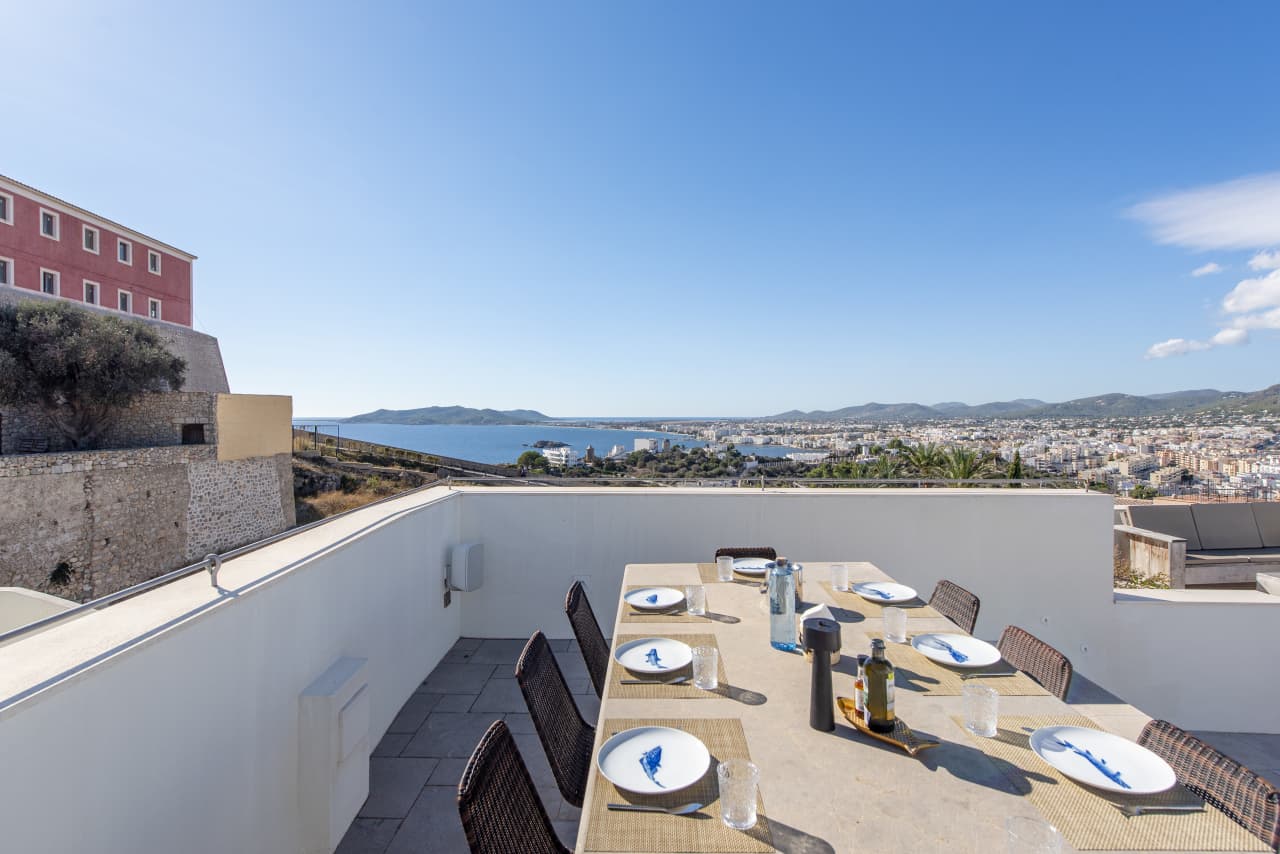
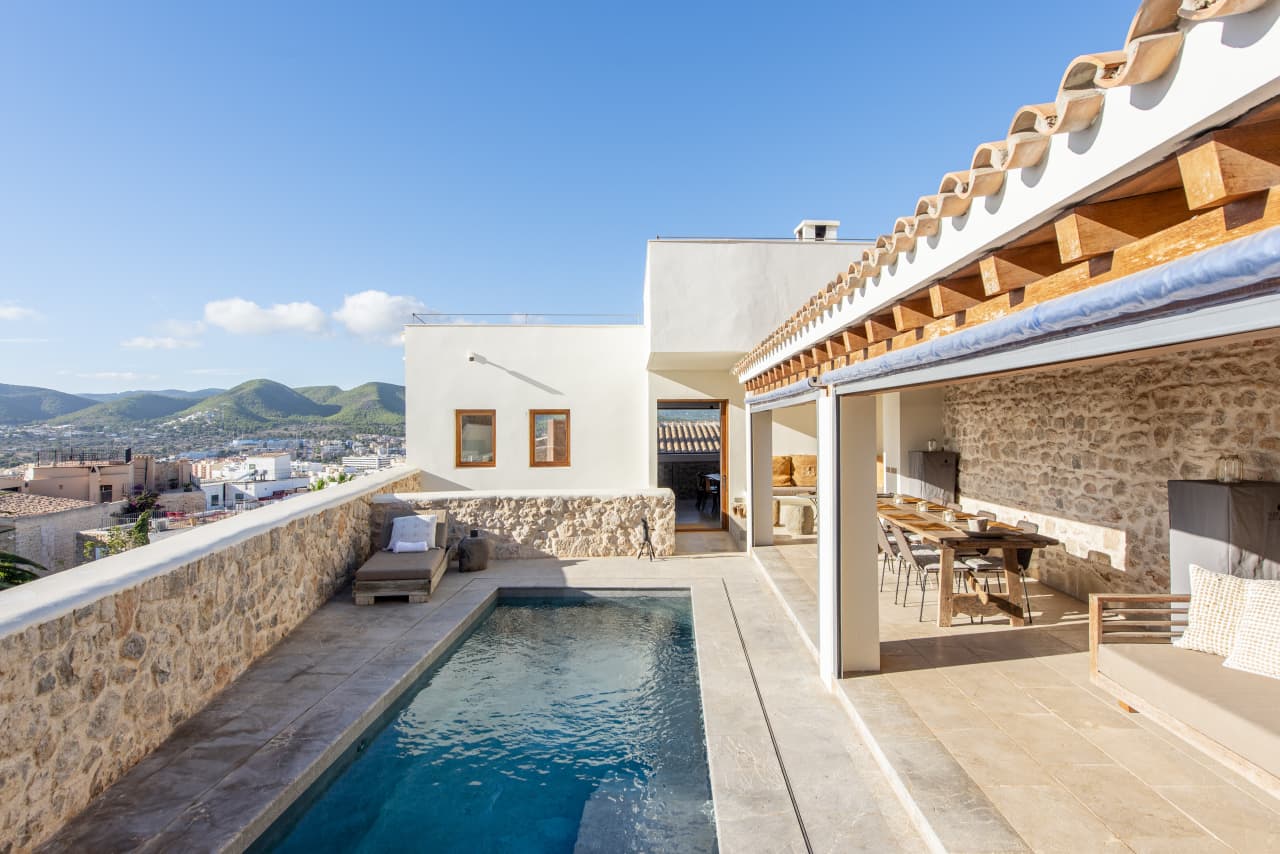
A historic home in an Unesco World Heritage Site on the Spanish island of Ibiza has come to the market €10.8 million (US$11.7 million).
Dating to the 16th century, Palacio XI is in Dalt Vila—the oldest quarter in Ibiza Town, the island’s capital—which was designated a heritage site in 1999. The fortified enclave is a labyrinth of narrow, cobbled streets, ancient buildings and stunning views.
Charles Marlow
The four-storey home was acquired by the seller when it was in ruins and they embarked on a thorough restoration between 2014 and 2018, according to a spokesperson for the listing agency Charles Marlow Ibiza.
Mansion Global couldn’t identify the seller, or when or for how much they acquired the property.
Charles Marlow
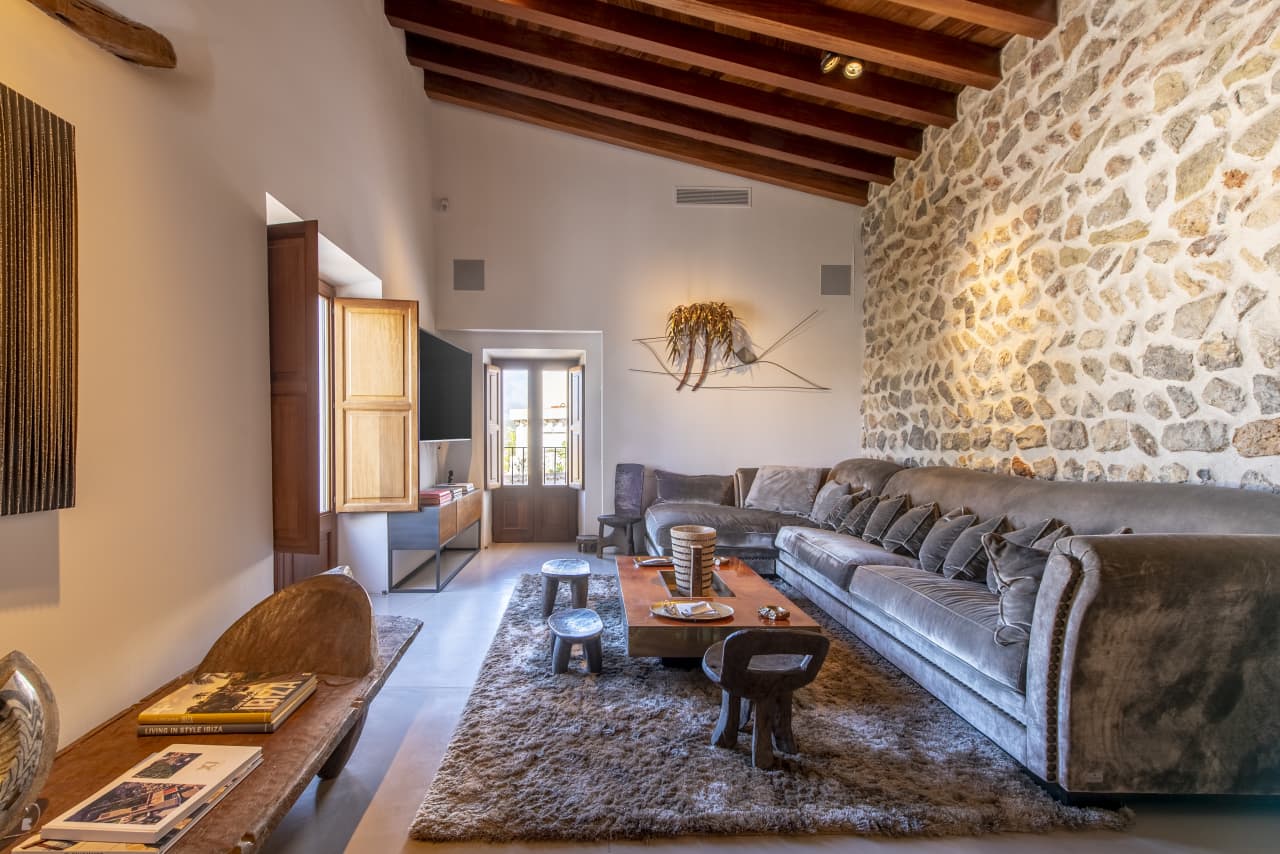
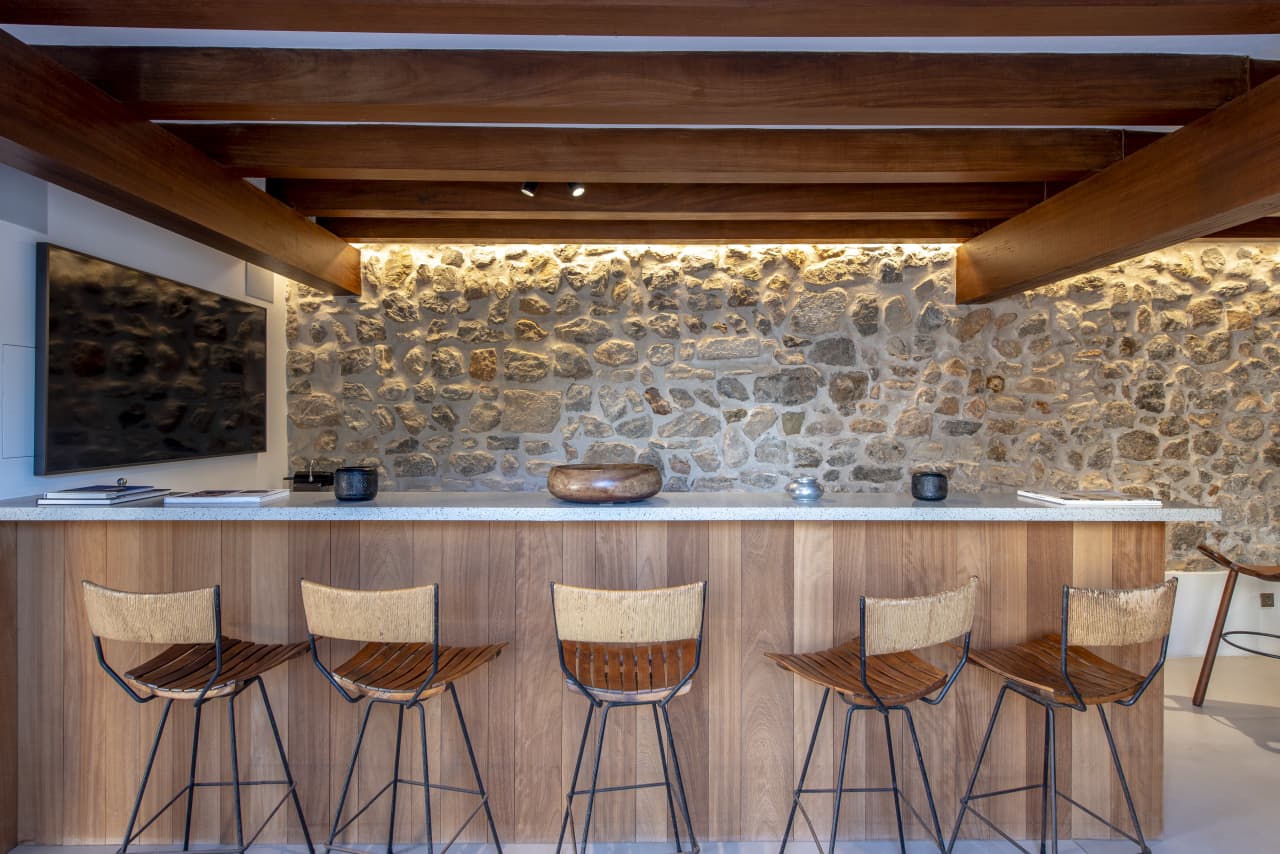
Today, the house is a “blend of historic Ibiza charm and contemporary luxury,” said Tim Stacey, head of sales and rentals at Charles Marlow Ibiza. There are details like stone walls, tall beamed ceilings and grand stone arches, alongside features including an integrated sound system, comfort cooling and underfloor heating.
Charles Marlow
There’s a modern kitchen with a wine cooler, a dining room that opens out to the large main terrace, the pool area and a covered outdoor dining area, ideal for al-fresco entertaining.
There are also multiple living spaces, a roof terrace, a for-vehicle carport with EV charging, six bedrooms and “superb 360-degree views of Ibiza Town, the island, and Formentera [that] are truly breathtaking,” Stacey said.
Charles Marlow
Ibiza is considered one of the top luxury residential destinations globally, according to Knight Frank’s Prime International Residential Index, released earlier this year, which found prime property prices on the island rose 12% in 2023.
“Ibiza’s strength lies in its ability to provide an escape from metropolitan life,” said Jack Harris, a partner in Knight Frank’s International Residential team . “It’s a place where one can recharge the batteries (yoga is a staple on the island), enjoy world-class cuisine and reconnect with nature—whether on the beach or in the heart of the island’s countryside.”
Luxury homes with decked-out family rooms, kitchens, primary bedrooms and bathrooms are standard today and practically a given. The latest mania, however, has owners glamming up their often overlooked garages and barns.
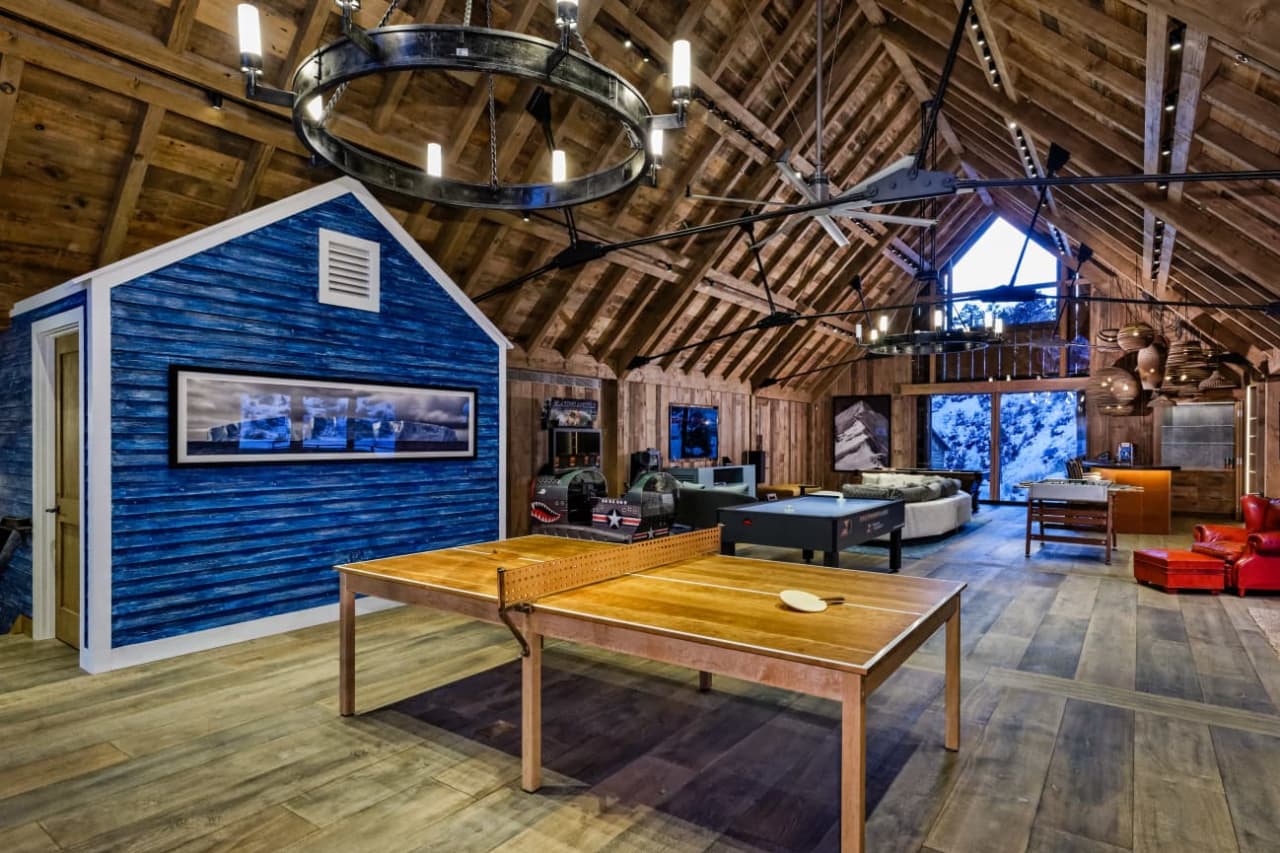
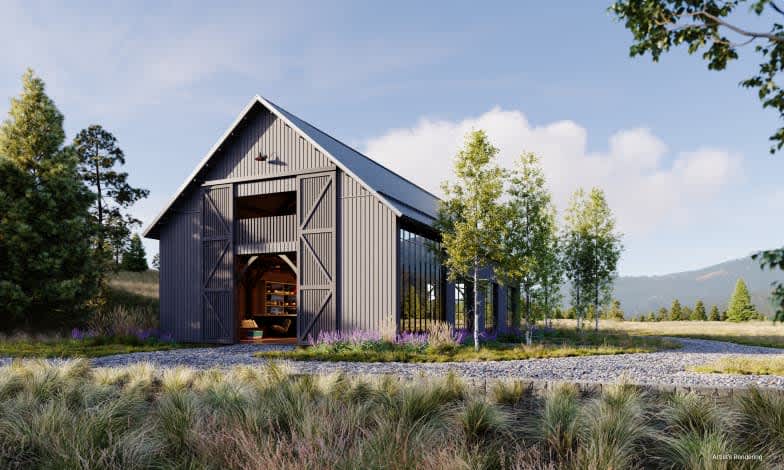
Called “toy barns,” “barndominiums” and “toy garages” in real estate circles and by the amenity-obsessed set, these functional spaces are being repurposed into gleaming showrooms filled with pricey outdoor gear—think ATVs, snowmobiles, electric bikes, boats and more.
Sitting areas, bars and diversions such as pool tables also figure in and turn barns and garages into entertainment venues that become a hub for owners to socialize with family and friends.
Take Jeff Collins, founder of Glennwood Custom Builders in Charlevoix, Michigan, for example. His lakefront home features a 2,500-square-foot barn with a lounging space, sleds, dirt bikes, a card table and a basketball hoop. The back doors open into a yard with a shooting range. “My friends come over a lot, and we hang the whole time in the barn,” Collins said. “We drink beers, play around with the equipment and shoot hoops. I can’t remember the last time we actually went into the house.”
A rendering of a toy barn in the still-in-construction Legacy Ranch in McCall, Idaho. Courtesy Whitetail Club
Barndominiums like his are the craze in his town, according to Collins.
“They’re what everyone wants,” he said. “I’m building two for homes in my neighborhood and have inquiries for more.”
An Amenity That’s Gaining Popularity
Real estate agents and brokers who focus on upscale homes also report an increasing interest in toy barns and say that a property that offers one can attract more buyers than a listing with typical amenities such as swimming pools and wine cellars.
Timothy Di Prizito, the CEO of The Di Prizito Group & DPG Estates at Christie’s International Real Estate/AKG in Los Angeles, for instance, said that showpiece barns and garages are becoming a more popular feature in luxury homes, particularly in new construction properties.
“Wealthy owners are investing in turning their homes into resorts. It started with building commercial-sized gyms and onsite spa facilities,” he said. “Today, it’s all about having onsite entertainment annexes and auto galleries. They give a property a distinct edge.”
Di Prizito is currently selling a property called Bella Vista in Montecito for $70 million that features an estimated 32-car collection garage. Originally designed as a helicopter hangar, the space has vaulted ceilings, epoxy flooring and a second level with two studio apartments.
Patrick Nesbitt, the CEO and chairman of the real estate development company Windsor Capital Group, owns the estate with his wife, Ursula, and said his family regularly uses the space. “We’ll have friends over for dinner there and loan it to charities to host events. We even had my son’s wedding party in the garage and transformed it into a beautiful reception ballroom,” he said.
The outdoor gear changes with the season at Aspen Valley Ranch. Courtesy Aspen Valley Ranch
Nesbitt is selling Bella Vista, he said, because his children have moved out, and he wants to downsize.
Another home with a toy space is currently for sale in Honokaa, Hawaii, asking $7.4 million. Its 3,300-square-foot freestanding barn is solar-powered and is where owners Matthew and Susan Russell display their stash of luxury gear such as life-size model airplanes, ATVs and motorcycles.
“We had many happy memories in the barn spending time with our grandchildren and friends,” Matthew said. The couple is selling the home, he said, to settle full-time in Sedona.
A Perk Not Reserved For Houses
Eye-candy barns and garages are also becoming more common in upscale residential developments.
Martis Camp, set on 2,177 acres in Truckee, California, in North Lake Tahoe, has several homes with what Brian Hull, president and broker at Martis Camp Realty, refers to as “activity garages.” They typically house snowmobiles, ATVs, motorcycles, boats and ski equipment. “Our community has access to a 26-mile trail network through national forest land and the mountains, so owners amass a lot of gear,” Hull said.
More developments are highlighting their toy storage areas as an amenity for all residents to enjoy, in the same vein as a fitness centre or clubhouse.
Tributary, a private club community in Teton Valley, Idaho, offers a recreation barn stocked with gear like paddleboards, fishing gear, rafts and snowshoes. And in McCall, Idaho, the still-in-construction Legacy Ranch, set within the existing Whitetail Club, hopes to entice potential buyers by giving them the option and the designs to build homes with toy barns.
“The lots at Whitetail Club are less than two acres, and owners don’t have space on their properties to store all their outdoor equipment, which they are asking for more and more,” said Whitetail Club’s head of development Dan Scott. “Several have told me that they want to upgrade to Legacy Club for the sole purpose of having a toy barn.”
Then there’s Aspen Valley Ranch in Aspen, Colorado, a development with homes starting at $15 million. According to vice president Simon Chen, the 5,000-square-foot two-story toy barn is the heart of the community’s action.
The equipment in the building changes seasonally. During warmer months, that means top-of-the-line dirt bikes, four-wheelers and a fleet of regular and e-mountain bikes. Come winter, the barn is stocked with six snowmobiles, four-wheelers with tracks to navigate through snow, snowshoes and sleds.
A rendering of a toy barn in the still-in-construction Legacy Ranch. Courtesy Whitetail Club
Residents can also avail of the barn’s second floor, featuring a games area with ping-pong and pool tables and classic arcade games such as Pac-Man and Skee-Ball. The adjoining bar, lined with premium wine, and spirits such as Macallan 18-year scotch and Clase Azul Ultra tequila, retailing for close to $2,000 a bottle, is a big attraction for residents, Chen said. “Our owners are welcome to enjoy the alcohol for no charge,” he said. “Our development has a gorgeous swimming pool and spa and a massive gym, but the barn is where they most want to be.”
This article originally appeared on Mansion Global.
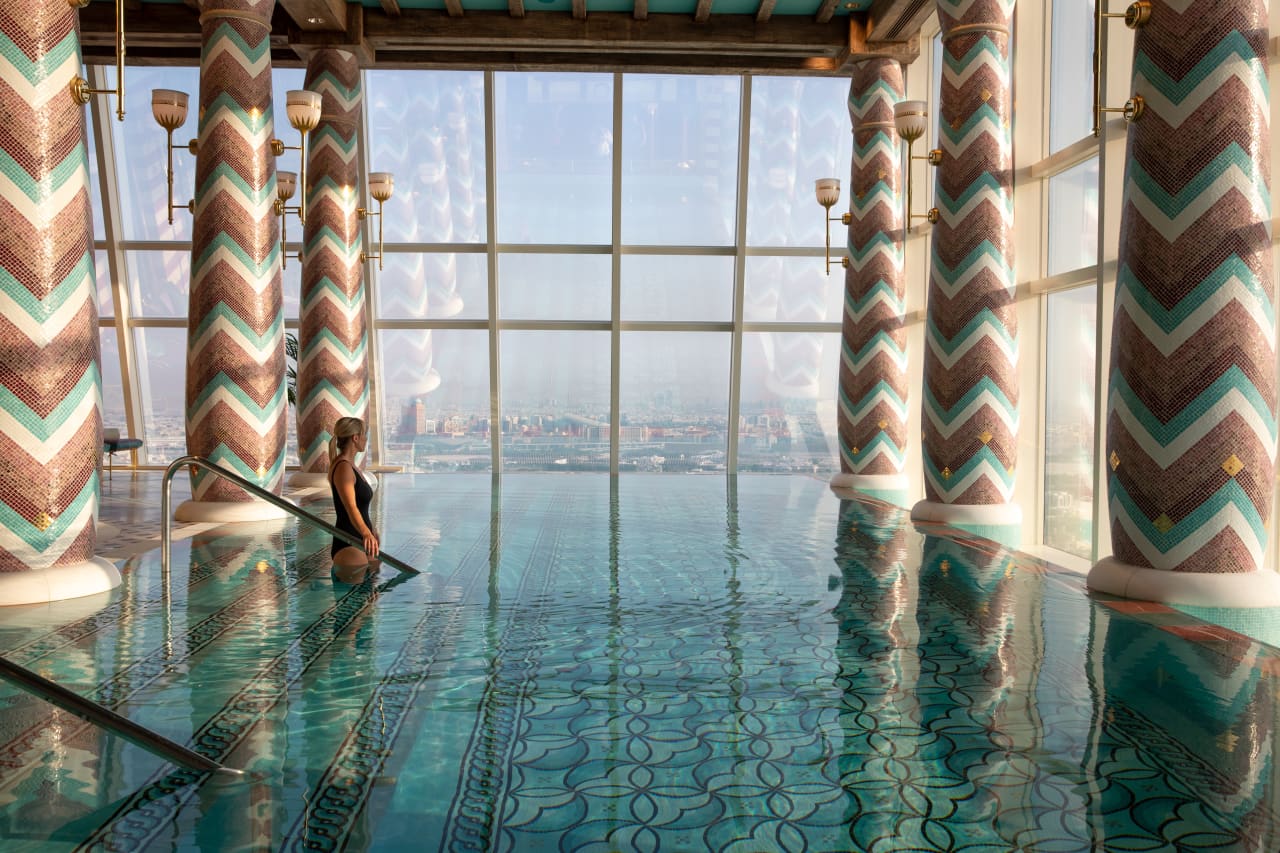
Dubai’s Burj Al Arab hotel is regarded as one of the most extravagant properties in the world, and its sail-shaped architectural design has become an icon of the city and the region. One of the people making the magic happen behind the scenes for such an over-the-top luxurious outpost is its chief concierge, Roger Geadah.
Any hotel concierge must be prepared to cater to and meet the needs of their guests, fostering long-term relationships and turning first-time visitors into repeat clients by delivering memorable moments. But at Burj Al Arab, the bar is perhaps even more difficult to clear than it is elsewhere.
“Delivering on the expectations of our guests at the Burj Al Arab is not just about meeting their high standards—it’s about consistently exceeding them,” Geadah says. “To achieve this, I place myself on the same level as our guests, seeing the world through their eyes. This involves a great deal of emotional intelligence, storytelling, and fun.”
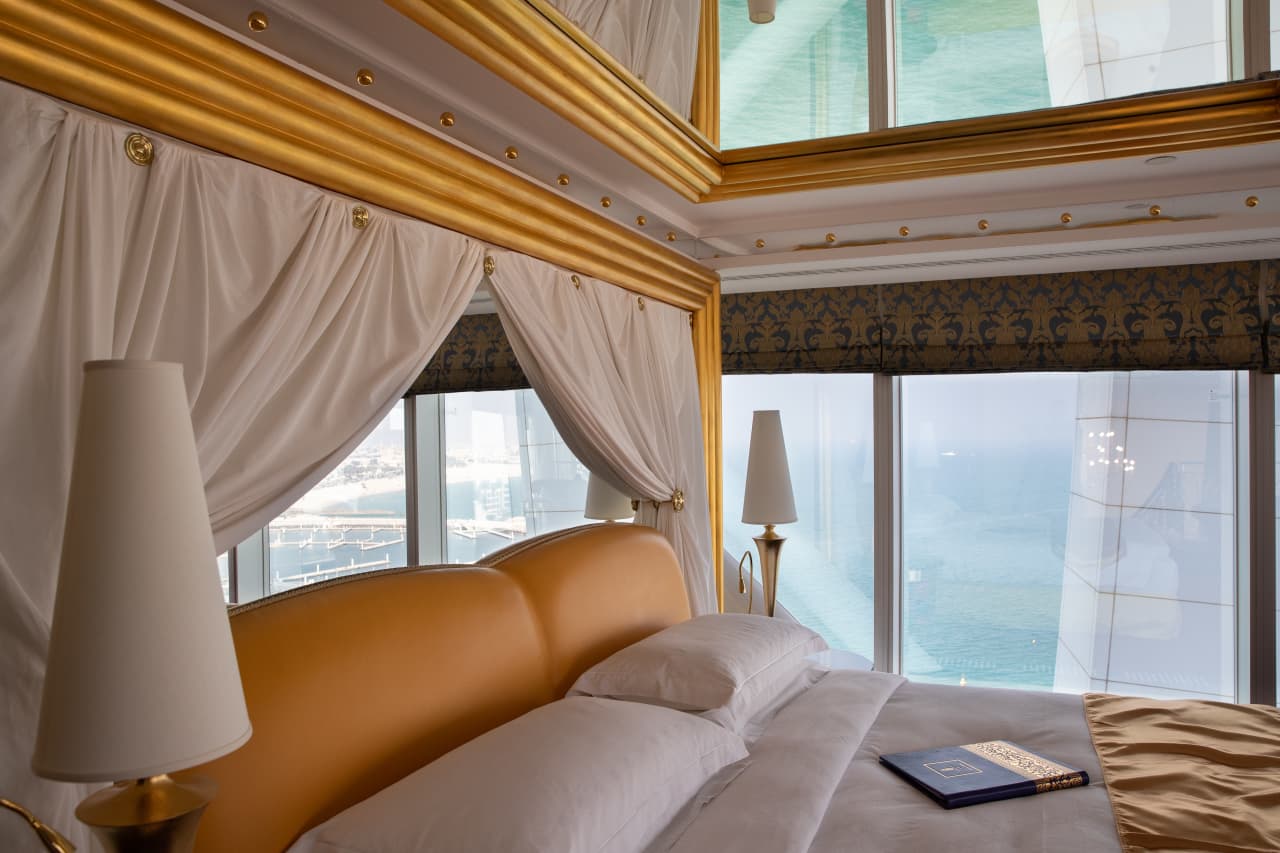
At a hotel regarded as one of the world’s most opulent, Geadah’s tasks are different from those of a concierge at a more typical city hotel. Guests make use of around the clock butler service and stay in gilded two-story suites bedecked in enough marble and gold as to border on the palatial, after entering the property through a world-record, almost 600-foot high atrium. Expectations are even higher.
Geadah, who’s been in Dubai for a decade and with the Jumeirah Burj Al Arab team for the past three years, strives to connect with his guests, think outside the box, and stay up to date with a city amid constant evolution. There may be no better person to offer his handpicked recommendations for what to experience in and around the city.
Geadah, 48, spoke with Penta about his top tips and insider recommendations for a memorable visit to Dubai. undefined
Stay
Beyond the swanky confines of his offices at the Burj Al Arab, Geadah’s top choice elsewhere in town is the XVA Art Hotel in Bur Dubai.
One of the people making the magic happen behind the scenes for such an over-the-top luxurious outpost is its chief concierge, Roger Geadah. Courtesy of Burj Al Arab
“It’s a true hidden gem that beautifully combines heritage, art, and tranquility,” he says. The property is set within a traditional Emirati house in the heart of the Al Fahidi historical neighborhood, and guests enjoy the area’s charming traditional architecture, heritage sites, and history, along with the artistic touches of its 15 individually designed rooms.
“What I love most about XVA is how it fosters conversations around art, culture, heritage, and creativity,” Geadah says. For those looking to escape the city for a night or two, head to Bab Al Shams Desert Resort.
“It’s a luxurious oasis hidden away in the Arabian desert, just about an hour’s drive from the lively city,” Geadah says. “Bab Al Shams offers breathtaking desert views that make for a truly unique getaway, and the resort beautifully combines traditional Arabian design with modern comforts, and also offers unique activities like camel rides, adding a touch of adventure to your stay.”
Adjacent to the Burj Al Arab is the Madinat Jumeirah, the largest resort in Dubai at about 100 acres in size. It’s a destination to itself featuring a handful of different hotels and hideaways sharing an expansive property interconnected with walkways and boat canals, including a huge lagoon-style resort pool, a lengthy stretch of private beach, and a staggering lineup of about 50 dining and drinking venues.
Shop
Dubai is home to every luxury brand and retailer on the planet, including at Dubai Mall, one of the largest in the world. Finding smaller, local purveyors for a more authentic shopping experience may be more rewarding. “When it comes to immersing yourself in the vibrant culture and sensory delights of Dubai, the city’s souks [marketplaces] are an absolute must-visit,” Geadah says.
Different souks are focused on different types of goods, and Geadah recommends a few in particular. “First up is the Dubai Spice Souk, nestled in the heritage area; this colourful market is a sensory feast, brimming with aromatic herbs and spices that fill the air with their tantalising scents,” he says.
From there, the Gold Souk is close by, as well as the Perfume Souk, another of his top picks. “It is a fragrant paradise in its own right, and here you will encounter some of the most authentic and enticing scents Dubai has to offer: Oud, a signature fragrance derived from resin is beloved by both Emirati men and women for its earthy allure.”
Explore
The most difficult ticket in Dubai right now is the Museum of the Future.
“Delivering on the expectations of our guests at the Burj Al Arab is not just about meeting their high standards-it’s about consistently exceeding them,” Roger Geadah, chief voncierge, said. Courtesy of Burj Al Arab
“It’s quickly become a must-visit destination and it’s easy to see why, as the building itself is an architectural marvel, featuring a stunning torus-shaped structure adorned with Arabic calligraphy across 1,024 stainless steel panels,” Geadah says. Visitors enter an experiential space that transports them to the year 2071. “It is a captivating experience for anyone interested in what the future might hold.”
A more off-the-beaten-path pick is the Al Shindagha Museum in the historical neighbourhood of the same name, which takes people on a journey through time in the other direction. “Visitors explore the meticulously restored heritage houses along the serene Dubai Creek, houses which aren’t just structures, but living museums, each telling its own story of traditional crafts and bustling commercial activities from bygone eras,” he says.
Another choice is the Coffee Museum. “Lose yourself in a treasure trove of antique items that trace the rich history of coffee, from its humble beginnings to its global significance,” Geadah says. “For a dose of authentic culture, head to the Sheikh Mohammed Centre for Cultural Understanding where locals offer hands-on explorations of traditional ways of life while showcasing hospitality and serving a traditional meal. The arts district at Alserkal Avenue, meanwhile, features contemporary galleries, studios, and exhibition spaces.
Visit the Al Farooq Omar Bin Al Khattab Mosque for a glimpse at a splendorous structure inspired by Istanbul’s Blue Mosque. “Beyond its architectural marvel, the mosque embodies a deeper purpose — to foster understanding, harmony, and unity,” Geadah says. “Within its walls, words like moderation, peace, and tolerance reverberate, echoing local values and serving as a bridge between Arabic civilization and the world beyond. Non-Muslims are welcome to visit the mosque outside of praying times.”
The most popular choice for an excursion outside the city is a desert safari to the Dubai Desert Conservation Reserve. Ride in a heritage vehicle across the dunes and enjoy activities such as falconry, wildlife viewing, and a Bedouin-style barbecue feast. For a different take, Geadah recommends starting the adventure with a sunrise hot air balloon ride.
The terraforming marvels of Palm Jumeirah should be seen and explored by every visitor. There are several viewpoints to consider, and Geadah also suggests taking to the water with a yacht trip or jet ski tour to gain an additional perspective. And of course, the iconic Burj Khalifa remains one of Dubai’s signature sights. The best way to soak it all in is via the At The Top experience, sending visitors to the 152nd floor along with a series of viewing points and lounges on different floors.
“To achieve this, I place myself on the same level as our guests, seeing the world through their eyes. This involves a great deal of emotional intelligence, storytelling, and fun,” Geadah says. Courtesy of Burj Al Arab
Eat & Drink
“Dubai’s culinary scene is incredibly diverse, offering everything from Michelin-starred restaurants to authentic street food,” Geadah says. Many of the world’s most well known culinary fixtures have locations in the city, from Massimo Bottura and Gordon Ramsay to Daniel Boulud , Nobu Matsuhisa, Jamie Oliver, and scores of others. When possible, though, Geadah prefers arranging for a more unique experience, once putting together a secret culinary tour for a food-loving family with the help of a local historian and guide.
“The older part of town boasts a rich culinary heritage, with influences from India, Persia, and the Arab world, and it’s home to some of the most unique and charming eateries,” Geadah says.
Geadah has no shortage of restaurant recommendations, though, many of which come with particular vantage points. He suggests Shimmers for an on-the-beach taste of Greek fare with a view of the Burj Al Arab; Coucou offers “festive French” from atop Palm Tower, offering a 360 degree view of Palm Jumeirah; and in downtown Dubai, Urla offers Aegean dining with a view of The Dubai Fountain Show and Burj Khalifa.
At Burj Al Arab, consider L’Olivo at al Mahara, an outpost of Capri’s only two Michelin-starred restaurant. The restaurant is immersed within an enormous coral reef aquarium providing a captivating scene.
Always one to look for a local touch, Geadah also suggests Orfali Bros. “Three brothers, Mohammad, Wassim, and Omar Orfali, bring culinary magic to life, blending tradition and innovation inspired by their cultural roots and adventurous spirit,” he says. “Their small bistro offers a sensory experience where flavors dance and ingredients shine, reflecting their culinary journey.”
On a recent trip to the new Manhattan flagship for Stòffa, a menswear brand, Colin King made a beeline for the back of the store. The 36-year-old stylist and artistic director had booked a made-to-measure appointment—but not for a suit. Instead, he chose a cotton-silk shirt, relaxed pants in a classy wool, and a drapey, chocolate-brown shirt-jacket, all for his everyday wardrobe. He also snapped up slipperlike suede loafers. “They’re so handsome,” he said.
Lately, the way men like King dress has undergone a subtle shift. Those in the know have been embracing a more refined and considered, if not quite formal, style. “There’s a real move toward relaxed elegance,” said London designer and tailor Charlie Casely-Hayford. “It looks effortless, there’s a nonchalance, but it projects power and confidence.” Stòffa, a newly buzzy, 10-year-old label embodies the look.
Despite a few modern tweaks, we’re talking about the kind of get-ups that Cary Grant might have worn to lounge about—polished yet unstuffy, and with a certain old-timey appeal. The look is linked to the much-talked-about “quiet luxury” movement, but it often has “more personality than quiet luxury,” said David Telfer, creative director at British brand Sunspel. Think flowy, pleated pants, bold polos, souped-up chore jackets and loafers with waferish soles.
Lots of men who now crave easy elegance were stocking up on streetwear a year ago, according to Dag Granath, co-founder of Saman Amel, a Stockholm brand known for its tasteful tailoring. “What we’re seeing is that a 28-to-38-year-old customer is swapping out [streetwear from] high-end fashion labels for a bit of tailoring to anchor the rest of their wardrobe on,” said Granath.
Jon Gorrigan, 43, a fashion photographer in London, used to live in casual streetwear. But he’s “dressing smarter now,” he said, “more like my grandfather, who was a real sharp dresser. He wasn’t a rich man, but he always looked elegant.” He’s swapped sweatshirts for striped polos from London brand King & Tuckfield, and the odd fun piece like a faded Gitman Vintage Hawaiian shirt. Dressing “with more consideration,” as he put it, “makes you feel more grown-up.”
A pair of Saint Laurent loafers were Gorrigan’s entrée into elegance. “They are lower profile, which feels more streamlined, with a subtle monogram,” he said. Indeed, slim-soled shoes, from moccasins to sneakers, help define the modern Cary Grant look. “Men want slimmed-down shoes to go with the new, smarter, classic look,” said Tim Little, creative director and CEO at Grenson, a British shoemaker. The chunky, lug-sole bases that have reigned for years appear to have undertaken a juice cleanse. Current hot, refined styles include leather slippers by Lemaire, Saman Amel’s suede moccasins, and super-lean sneakers like Dries Van Noten’s suede style and Miu Miu’s interpretation of the New Balance 530. A finer shoe “feels a bit more dressy and chic, and won’t dominate the whole outfit in the way a chunky boot would,” said Granath.
Such streamlined kicks go nicely with flowy linen trousers, dark denim and polo shirts—whether preppy buttoned styles or “Johnny collar” polos , a sexier, buttonless take. Sunspel reports that sales of its Riviera polo, a trim design sported by Daniel Craig in “Casino Royale” (2006), have increased by 51% in the U.S. in the last four months, year on year. On the brand’s website, this polo is most often bought with an unstructured linen blazer, noted Telfer.
Those who want a tad less formality than a blazer will appreciate how the humble chore jacket is being reworked in luxe fabrics. The results feel easy yet urbane. See Zegna ’s floppy, silk-linen take, or upcoming fall designs from Scotland’s Johnstons of Elgin made from premium merino and Scottish tweed.
Though elegant dressing reads as expensive, you can score the look at reasonable prices. Accessible labels like Madewell, Percival and Cos sell sophisticated polos and roomy, pleated trousers. Meanwhile, you can find streamlined loafers at OG brand G.H. Bass for $175.
Elegant needn’t be boring, noted Bryan O’Sullivan, 42, a design-studio founder who’s based in both London and New York. His workday uniform consists of high-waist pants and taupe knit polos, “which does feel quite Cary Grant,” he said. But he’ll occasionally add “a splash of flair” with choice items like Bode cream pants embellished with quilted cats.
He said the confidence that this pulled-together, slightly offbeat look projects is good for business. “When you’re trying to convince a client of your creative vision, it does help if you look the part.”
The Wall Street Journal is not compensated by retailers listed in its articles as outlets for products. Listed retailers frequently are not the sole retail outlets.
A global financial watchdog has censored Monaco and Venezuela for not doing enough to strengthen their anti-money-laundering and counterterrorist financing systems.
The Financial Action Task Force, a Paris-based intergovernmental body that sets anti-money-laundering law standards, met this week in Singapore and added the two countries to its “grey list” of nations requiring increased monitoring. The FATF said it would work with the two countries to address the deficiencies identified in their anti-money-laundering systems.
The FATF also removed Jamaica and Turkey from the grey list, saying the two nations had made significant progress in improving their anti-money-laundering and counterterrorism financing regimes.
There has been speculation for some time that Monaco would be added to the gray list, according to news reports earlier this year.
Wealthy people from around the world have in recent years flocked to Monaco, one of the smallest sovereign states, because of its favorable tax policies, forking over millions for luxury rental apartments . Some real-estate agents in Monaco said before Friday’s announcement that they expect little impact on the residential market from the principality being added to the grey list.
The FATF said Monaco has made some improvements to its anti-money-laundering regime since December 2022, including through the establishment of a new combined financial intelligence unit and anti-money-laundering supervisor. But the principality still needs to improve in six areas, including its understanding of the risks related to money laundering and income-tax fraud committed abroad, and its implementation of penalties for violations of anti-money-laundering and beneficial ownership requirements, the FATF said.
For Venezuela, the FATF said the country needs to work on issues such as its investigation and prosecution of money laundering and terrorist financing, as well as ensuring its measures to prevent the misuse of nonprofit organizations for terrorism financing aren’t disrupting or discouraging legitimate humanitarian efforts.
Representatives for Monaco’s embassy in Washington and Venezuela’s mission to the United Nations didn’t immediately respond to requests for comment.
The FATF’s plenary also marked the end of T. Raja Kumar of Singapore as president of the organization. Elisa de Anda Madrazo of Mexico will take over as FATF president on July 1.
Ellisha Caplan has exercised , maintained a healthy diet and gotten sleep to manage stress. Lately she’s found something that makes her feel even better: Zillow.
In spare moments, the 47-year-old consultant in Delaware searches real-estate websites for homes in her price range in Philadelphia, where she went to college, and in the small German town where her family has spent several idyllic summers. She looks up nearby restaurants and bike trails, too, imagining her life if she retired there.
“It’s calming, like a massage for my brain,” Caplan says. “I get to let my mind run awhile and just go with the flow.”
Rising prices, few options and high mortgage rates have made home buying uniquely painful right now. But make-believe house hunts are different. They transport people out of their current problems into a fantasy of a better future, a relaxing habit one fantasiser likens to a “digital glass of wine.” I call it Zillow therapy.
Trawling Zillow for alternate versions of your life isn’t the same thing as gawking at real-estate porn, memorably captured in this “ Saturday Night Live ” skit. People using Zillow for therapeutic reasons tend to focus on a specific place, perusing homes they think they can afford and imagining life there. Down the rabbit hole, they cruise Google Maps and local websites for bars, hiking trails or—guilty as charged—bookstores and libraries.
“The fantasy is sustaining,” says Giulia Poerio, a lecturer at the University of Sussex, in the U.K., who studies how daydreaming can help regulate our emotional well-being. “Even if you can’t get what you need right now, you can Zillow it and get a little bit of energy or hope to keep you going.”
Walking trails, room to write
In reporting this column, I heard from people whose Zillow fantasies focus on homes with large backyards, where kids and dogs can romp outside unsupervised, and on places with a detached studio for writing or drawing. Nostalgia powers lots of people’s searches: They look at homes in a childhood town or another place they lived when life seemed simpler. Others use their daydreams to identify what’s missing from their current lives, such as community or nature.
My Zillow therapy sessions centre on Seattle . It’s far from hurricane season in Miami, where I live. I have a close friend there. And there’s plenty of water where I can sail . I search for (and imagine renovating) homes near walking trails and marinas, with a room where I can write with a view of some magnificent trees. Instant Zen.
Looking at worse houses rather than better ones is a balm for some people. Unattractive or cramped homes make them feel better about where they currently live, especially if their own home is less expensive. Psychologists call this phenomenon downward social comparison.
“If you want to see the 900 square feet that $1.8 million can get you, just put in a San Francisco ZIP Code,” says Hooria Jazaieri, an assistant professor of management at Santa Clara University’s business school who studies how people regulate their emotions. “It’s a great way to make you feel grateful.”
Zillow is helping Bill Marklein, 39, get through an expensive kitchen remodel—he and his wife have a baby daughter and have been doing dishes in the bathtub for months. He browses listings in his price range within a 30-mile radius of his home in Plymouth, Wis., lingering on the kitchens. Nice ones make him feel good about his investment. But hideous ones with 1970s avocado-green cabinets or battered white refrigerators sticking out into the room cheer him up, too.
“It’s like having a digital glass of wine,” says the business owner. “It shows you that life isn’t so bad.”
The limits of Zillow therapy
Zillow’s user data suggests that plenty of us are doing this. The company’s real-estate websites and apps, which include Trulia and StreetEasy, have a combined 217 million average unique monthly users. Yet just slightly more than four million existing homes were sold in the U.S. last year, according to the National Association of Realtors.
Zillow is “not a replacement for therapy,” says the company’s home trends expert Amanda Pendleton, though it can give people an emotional boost.
“It’s a judgment-free zone,” she says. “Unlike on social media, no one is going to comment on the home you’re looking up and tell you it’s a terrible choice.”
Still, there are drawbacks to spending too much time in our imagination.
“The fantasies zap your energy,” says Gabriele Oettingen, a professor of psychology at New York University, who studies the psychology of motivation. Her research shows that while people who have positive fantasies about the future feel better in the moment, they often don’t achieve the goals they’re dreaming about. “Your attention is away from your current reality,” Oettingen says.
The solution, if you want to make your dream come true, is to identify the obstacle in the way of achieving your goal, she says. If you can’t move right now, accept that and choose a more immediate goal. Can’t buy a house in the seaside town your family vacationed in as a child? Plan a trip to the beach.
And if you’re serious about a future move, take steps to make it a reality down the road.
Elizabeth Uslander, 42, lives in San Diego but enjoys perusing house listings in small towns in the Colorado mountains to help her cope with the pressures of running a business and blending her family with her new husband’s. She looks for homes with direct access to nature and enough bedrooms for all, then researches how close they are from the ski slopes, shops and the local bar.
She shares her favourite listings with her husband, which she says is “like making drip castles in the sandbox with your bestie.” Recently, they found a home they like so much near Steamboat Springs that they visited it—and then bought it.
They have no plans to move right now but plan to visit often. Uslander says that just owning it makes her feel that her current stressors are temporary.
“I actually made the fantasy come to life,” she says.
“Nobody really needs couture, to be honest,” said Demna after his Balenciaga haute couture show this week in Paris. No, most people do not need a bespoke gown that costs six figures and takes highly trained petites mains thousands of hours to make by hand. And yet.
Partaking in the official haute couture fashion week in Paris—which is rife with arcane rules about how the clothes are made—can pay off handsomely for the few designers left in the club. For the 15 or so brands that invest in the game, including Dior and Chanel, couture can multiply press and red-carpet opportunities, and have a trickle-down effect on sales of ready-to-wear and beauty and fragrance.
Then there are the orders, which can total in the millions for a single client. Wealthy couture diehards fly in for the shows and then quickly convene in cosseted showrooms to make their selections while munching macarons. Competition can be fierce, especially when a stylist nabs a gown early on for, say, Cardi B. When you’re paying this much to look unique, no one wants a duplicate.
Couture is famously over-the-top, and this season was no exception, with rampant feathered capes, obscuring hoods and trailing trains. But philanthropist, creative director and avid couture client Fredrik Robertsson told me he found the looks very wearable this season: “less PR showstoppers and more things people actually want.” He pointed to the calmer suits and cocktail dresses at Schiaparelli, which has in the past paraded out looks such as one bearing a faux lion’s head .
Couture can sag somewhat under the weight of its history. Craftsmanship, fashion’s favourite buzzword, can be a burden too, with designers feeling the need to embellish every gown with hand-embroidered butterflies and panoplies of pearls. But the following five looks show how a range of designers are making couture relevant today.
Balenciaga’s Sculptural Chaos
Demna, who goes by a mononym, is perhaps the contemporary designer most intent on bringing couture into the future. While he’s never far from Cristóbal Balenciaga’s archive—with its dramatic shapes and volumes—he’s also a student of streetwear. So the subcultures he reveres, from goth to skate kids, were present in his deceptively casual designs. Would the founder of the house turn in his grave at metal-band T-shirts masquerading as couture? Maybe not once he realised they were in fact hand-painted over a period of several days.
This top and skirt ensemble is made from unstitched cotton-jersey elements, which are then assembled and sewn together, and knotted on the model. It is a wearable sculpture, with the casual look of a pile of T-shirts.
Chanel’s Sublime Sweatsuit
Chanel, which is between creative directors after the departure of Virginie Viard, showed its haute couture collection at the Opéra Garnier. While many of the looks echoed the vibe of the classic theatre—including a sumptuous pink silk opera coat—some of the most successful moments were surprisingly dressed down. Robertsson, the Swedish couture client, exclaimed, “Chanel even had sweatpants!”
Shown on model-du-jour Amelia Gray Hamlin, the black Chanel sweatsuit was not technically a sweatsuit. It was a wool crepe jersey set trimmed in duchesse satin ruffles and organza. It was also shown in cream, and it will sell.
Dior’s Deceptively Simple Column
Maria Grazia Chiuri, one of the only female designers making couture, showed an elegantly restrained collection in a room filled with shimmering artwork by Faith Ringgold, who died earlier this year. Nodding to an Olympic year without being too heavy-handed, Chiuri presented Grecian-inspired draped dresses, flat lace-up sandals, and sporty tanks and bodysuits.
This long asymmetrical dress in cream-coloured silk jersey over a tank top is almost sporty, and a refreshing break from some of the more hobbling ensembles on display this past week. But that’s no ordinary tank top: It’s embroidered with silver-coloured micro-tube beads that have hematite-clawed jewels on them.
Schiaparelli’s Faux Feathers
Daniel Roseberry, the charming Texan who’s revamped a dusty Parisian couture house, is a true believer in the art of couture. But he’s also savvy about its press potential, so this season, the show didn’t start until paparazzi magnets Kylie Jenner and Doja Cat had arrived.
The house’s founder, Elsa Schiaparelli, was a surrealist innovator who collaborated with her friend Salvador Dalí on one of the first trompe l’oeil garments . Roseberry continues his predecessor’s taste for trickery in his work. This jacket is embroidered all over with what appear to be small white feathers, but are in fact 10,500 silk-organza snippets. Because each “feather” is handmade, the jacket takes over 7,000 hours of work to create. Worn over a pair of smart black cropped pants, it’s almost work appropriate.
Jean Paul Gaultier’s Undressed Dress
Jean Paul Gaultier, which maintains a healthy and bustling couture business, has adopted the clever strategy of inviting buzzy non-couture designers to collaborate on its collections. Simone Rocha, Glenn Martens, Olivier Rousteing and Chitose Abe of Sacai have all worked it out on the remix with Gaultier. Nicolas Di Felice, the artistic director behind Courrèges’s Pinault-backed renaissance, was up this season.
Di Felice, whose friends span Paris’s creative industries, brought his cool-kid approach to Gaultier. Many pieces featured couture details like rows of hook-and-eye closures, and partially hidden tulle corsets. But there were Di Felice signatures, too: koala-pouch front pockets, narrow trousers, tiny party dresses. This cheeky gown is carefully constructed to look like the top slip is falling away to reveal a bustier.
While nearly half of U.S. investors surveyed by Morgan Stanley want to invest in companies led by or making products and services for the LGBTQ community, these investments are difficult to find unless you know where to look.
Several LGBTQ-focused ETFs failed in recent years due to lack of investment, though stock investors can still put money in firms with openly queer leadership, such as Tim Cook at Apple. While opportunities for LGBTQ investments stretch across asset classes—startups attract the most attention.
For an answer as to whether this strategy can be successful, look at Grindr. One of the most prominent LGBTQ startups, the social networking app went public in 2022 and has a US$1.78 billion market cap today.
“Almost in every industry that exists, there is an LGBTQ person building [a company],” says Jackson Block, CEO of New York-based LGBT+ VC, a nonprofit addressing investment in the LGBTQ community. This means wide-ranging opportunities to invest in privately-held LGBTQ companies.
Identifying such investments often centres on two key criteria, says William Burckart, co-founder of Colorful Capital, a venture capital firm that invests in early-stage LGBTQ startups: Investors want to know whether someone in the community leads the company or if they are the target market for products and services.
Individuals and families can invest directly in companies getting off the ground or in a growing number of niche funds. Colorful Capital and Gaingels are among several firms that have formed specifically to address a longstanding lack of opportunities for LGBTQ startup founders. Others, like Backstage Capital or Elevate Capital, focus on underserved founders more broadly, including those who are LGBTQ.
According to research from StartOut, a San Francisco-headquartered LGBTQ entrepreneurship nonprofit, only 0.5% of venture funding goes to LGBTQ founders, yet they create 44% more exits, where equity investors earn capital gains through the sale or stock listing of the company, and 114% more patents than the average founder.
Colorful Capital chose to invest in seed- and early-stage funding after determining it was the “glaring gap” that needed to be filled based on conversations with LGBTQ founders, says Burckart.
Backstage Capital and Gaingels, which are syndicates with multiple investors, will support companies at several stages of development. Meanwhile, Elevate Capital, which counts 7% of founders it supports as LGBTQ, offers three funds for investors depending on what stage of investment and type of business they are interested in.
There are economic reasons to consider LGBTQ investments: Multiple studies show correlations between diversity among firm leadership and company performance as measured by internal rates of return, risk management factors, and firm valuations. “From a purely financial benefits perspective, there’s real value in beginning to embrace and integrate that kind of diverse thinking,” Burckart says.
Gaingels, whose members have invested more than US$800 million since 2019, principally invests in health, fintech, and enterprise software, according to Dealroom.co. Recent deals include taking part in a post-seed, series A funding round for San Francisco-based social care platform Grayce and a seed-funding round for Menlo Park, Calif.-based financial community platform AfterHour.
More than 70 unicorns—firms that have reached US$1 billion valuations—have been funded at different stages by Gaingels. These include Seattle-based, goal-oriented telehealth platform Ro and Dapper Labs, a Vancouver-based digital games and entertainment firm.
Block, whose organisation has a mission to educate, train, and mobilize 10,000 LGBTQ and ally investors by 2030, suggests wealthy investors enter the venture capital fray by becoming a limited partner in a fund. This allows investors to get involved with less risk and comparatively steady return expectations compared to angel investing.
Geographically, many LGBTQ companies attracting investment are North American, though regional funds exist in Europe and Latin America, Block says.
For wealthy families, investing in LGBTQ-related businesses can be a strategy to engage the next generation, as products and investment strategies that advance LGBTQ equity and inclusion are in high demand among younger investors (56% of millennials and 67% of Gen Z, according to Morgan Stanley). This is unsurprising, given that Gallup polling suggests more than one in five Gen Z adults and one in 10 millennials identify as LGBTQ.
Morgan Stanley’s Institute for Sustainable Investing estimates that those interested in LGBTQ investments control about one-third, or US$20 trillion of U.S. wealth managers’ assets under management. With the impending generational wealth transfer, the bank says control of interested investors could grow to nearly half of the assets under management at all wealth managers. Block expects that creating opportunities for LGBTQ fund managers will also help grow LGBTQ investments, and will create a “natural pipeline” for them to find roles with major investment banks.
In identifying investments, Morgan Stanley offers strategies that screen-out certain companies, says Emily Thomas, head of Investing with Impact, Morgan Stanley Wealth Management, the bank’s platform featuring funds and other investment vehicles for values-based investing.
“Per our survey, 76% of investors interested in LGBTQ impact objectives are also interested in the ability to exclude companies that don’t explicitly include protections for LGBTQ people in their labor rights policies,” Thomas says.
There are also companies owned or run by individuals with family and friends who are LGBTQ and want to make sure their company helps support and gives back to the community.
Recently, a banking executive spoke about their experience being raised by lesbian parents at an LGBT+ VC ally event. Morgan Stanley reports 76% of heterosexual investors with an LGBTQ household member want such investment options, more than the general population.
The biggest barrier to finding LGBTQ investment strategies is being able to gather data on the community, Thomas says.
Individuals can have reservations about sharing information regarding sexual orientation or gender identity—54% of LGBTQ individuals in the U.S. live in areas without state-level protections. Ongoing stigma against the community also prevents some people from openly identifying as LGBTQ.
“Only with more data can we know the extent of inclusion in, and exclusion from, the structures that make up the foundation upon which the U.S. economy is built,” Colorful Capital said in a May report.
(There are forces trying to change this. Earlier this year, the U.S. Census Bureau’s monthly American Community Survey announced it is looking into asking about sexual orientation and gender identity.)
Because of the sensitive nature of data and laws around personally identifiable information, there isn’t readily available data on the percent of employees who identify as LGBTQ or what representation looks like at senior levels, unlike for gender diversity. Comparably more data is available on corporate policies on LGBTQ matters, so some asset managers use that to identify companies as investments, Thomas says.
“For example, [an] asset manager can tilt portfolios toward companies that offer domestic partner benefits to same-sex couples,” she says. Other strategies could include screening for companies that offer LGBTQ diversity training or have not faced Equal Employment Opportunity Commission disciplinary actions. Investors can also use benchmarks such as the Human Rights Campaign Corporate Equality Index, which scores about 1,400 publicly and privately held firms on several areas of LGBTQ policies and practices, including whether they offer domestic partner and transgender-inclusive benefits,
Institutional Allocators for Diversity, Equity, & Inclusion, a nonprofit group of asset owners aiming to promote those principles within investment management, has a publicly available diverse manager database, which allows funds to self-report LGBTQ affiliation, Thomas says.