Revealed: Australia’s most expensive houses & the records they’re smashing
Records keep falling in 2025 as harbourfront, beachfront and blue-chip estates crowd the top of the market.
By Staff Writer
Tue, Oct 14, 2025 9:34am 5min
Australia’s luxury property market is once again reaching dizzying heights. After a brief slowdown, national home values have surged to new records in 2025, and nowhere is that more evident than at the top end of town.
While median prices are rising across most capital cities, the ultra-prestige segment is seeing even sharper growth, with trophy homes fetching never-before-seen sums.
Demand for harbourfront, beachfront, and blue-chip inner-city estates remains intense, driven by a mix of local billionaires, global buyers and intergenerational wealth.
This year alone, Australia’s residential record has been rewritten, with sales surpassing $130 million, and even an apartment now holding the crown as the nation’s most expensive dwelling.
From Sydney’s Point Piper to Melbourne’s Toorak, Brisbane’s riverfronts to Perth’s Golden Triangle, these exclusive enclaves continue to define the country’s property elite.
We’ve taken a closer look at the most expensive houses across Australia’s largest capitals, the landmark sales that have set new benchmarks, and the homes that could challenge those records if they ever hit the market.
Elaine Gardens
Sydney
House Price Record: $130 million Residential Record: $141.5 million
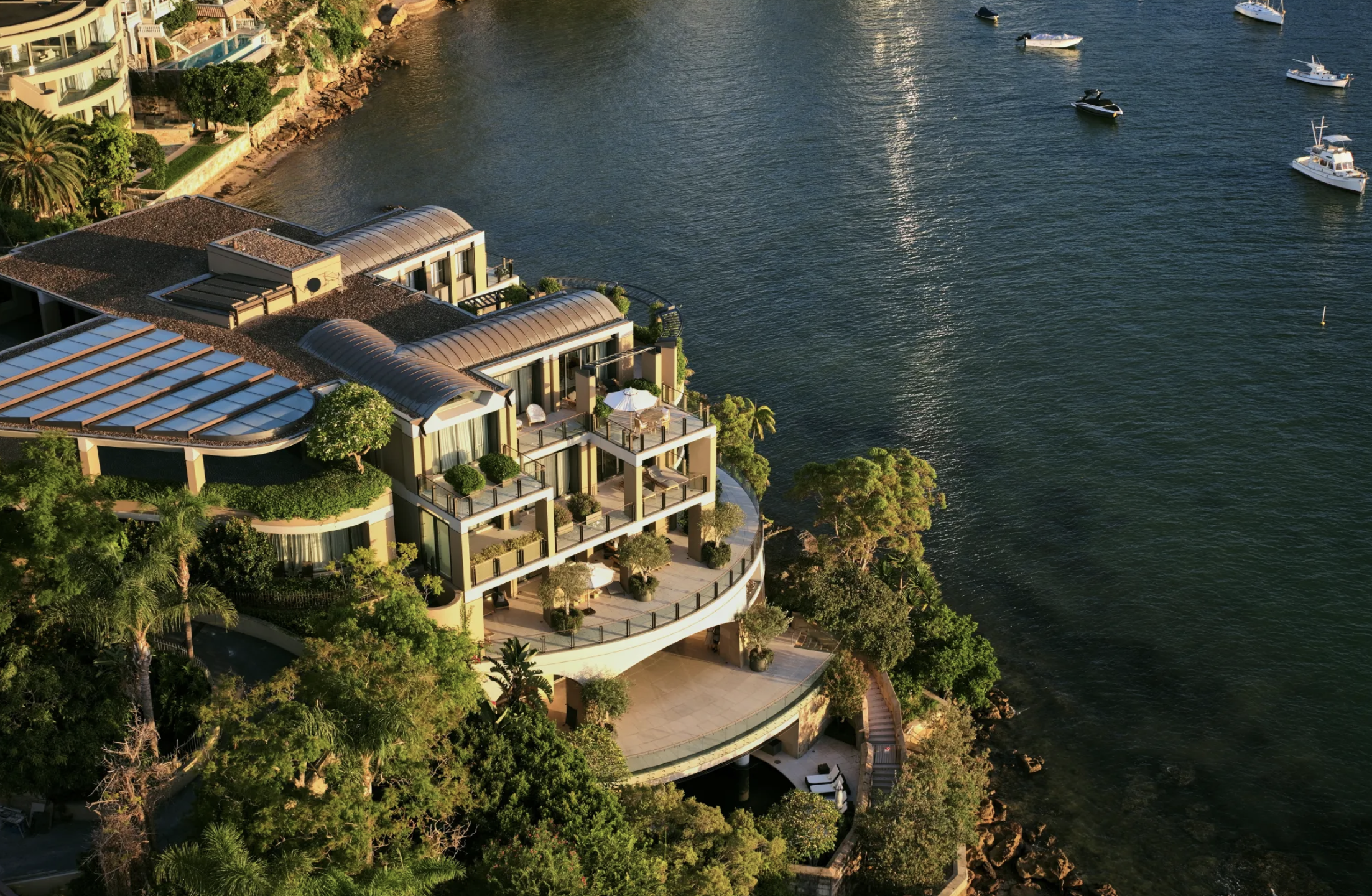
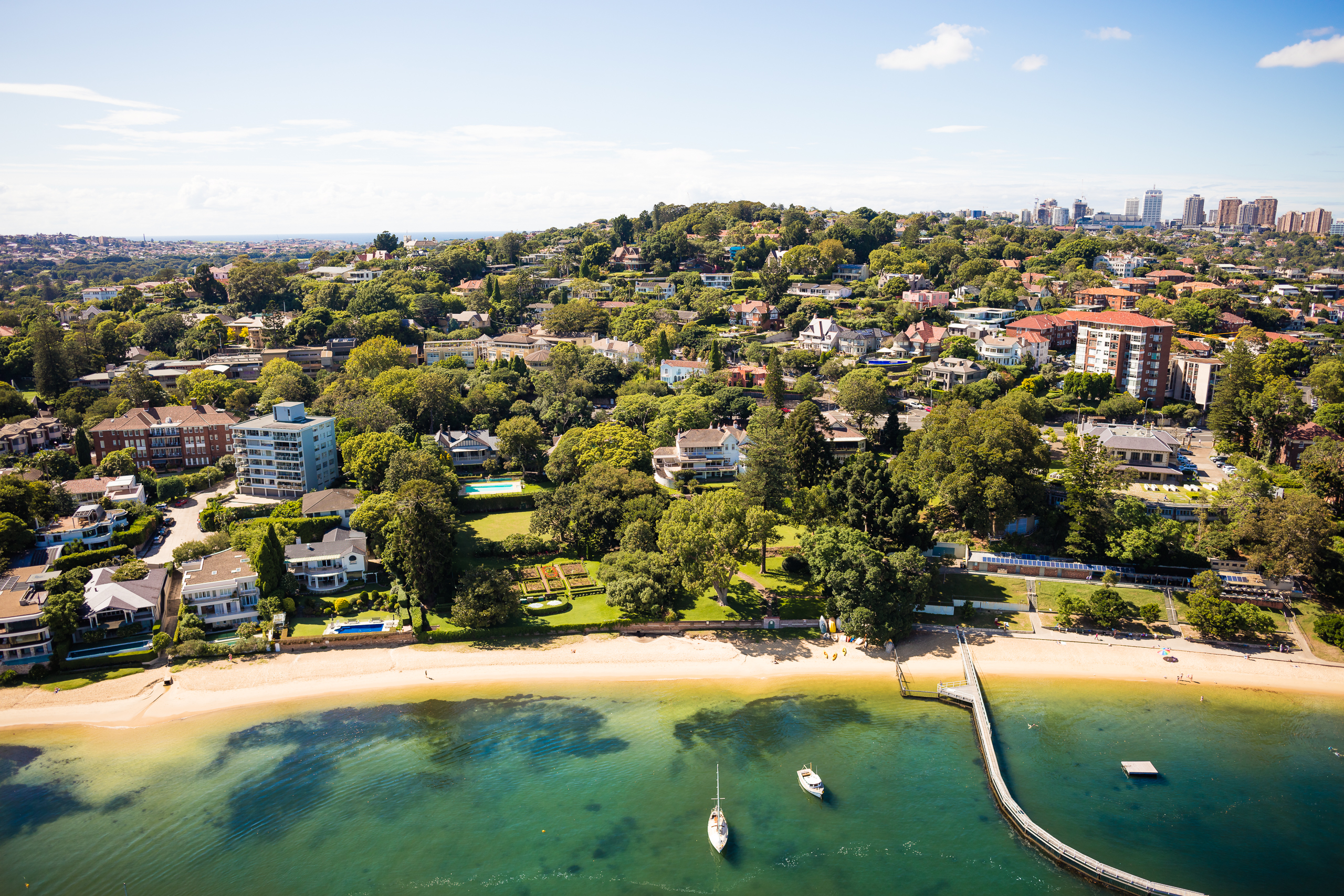
Sydney’s harbour has always commanded the city’s highest price points, with Point Piper the main epicentre.
For years, the residential house price record was held in Point Piper. First, Atlassian billionaire Scott Farquhar spent a record $71 million on Elaine, the Seven Shillings beachfront estate that had been in the Fairfax family for generations.
That 2017 sale held the top spot until the following year, when Farquhar’s Atlassian co-founder Mike Cannon-Brookes spent $100 million on Fairwater next door, following the death of Lady Mary Fairfax.
The grand heritage-listed mansion dates back to the early 1880s and sits on 1.12 hectares, far larger than Elaine, which is just shy of 7,000 sqm.
The Fairwater sale has only been topped twice. Last year, Farquhar purchased Uig Lodge for $130 million, one of the highest homes in Point Piper, with sweeping views of the harbour.
In turn, he sold Elaine for the same amount to a consortium led by tech entrepreneur Patrick Shi, CEO of Acce Investments Group. The group reportedly intends to subdivide the 7,000 sqm parcel into four blocks for new trophy homes.
There are several harbourfront properties that could challenge the record should they ever transact. This year, Aussie John Symond reportedly turned down offers exceeding $200 million for his home, colloquially known as “Aussie Stadium.”
The four-level residence, one of only three on Wolseley Road’s Windmill Point, took eight years to build and features six bedrooms, an eight-car garage, a 22-seat theatre, and a 2,500-bottle wine cellar.
Another contender is the Vaucluse waterfront compound owned by Menulog founder Leon Kamenev. Kamenev spent $80 million on the land alone in 2016, four amalgamated blocks totalling 4,200 sqm, before demolishing the existing homes to create a mega-mansion that cost more than $30 million to construct.
Meriton founder Harry Triguboff’s Wentworth Road property, also in Vaucluse, would likely compete for top spot. He first bought a block on the prized waterfront street in 1983 and acquired the adjacent property in 1998 to create over 5,200 sqm.
The Packer family compound could return the record to Bellevue Hill if it ever sold. Sir Frank Packer began assembling the estate, Cairnton, in 1935; his son Kerry added further titles through the 1980s and 1990s. The property now spans 1.1 hectares across Kambala and Victoria Roads.
The aforementioned Fairwater would almost certainly exceed $130 million today, given its larger harbourside footprint compared to Elaine.
Sydney’s highest property price, however, isn’t a house, it’s a penthouse. The One Sydney Harbour penthouse in Barangaroo sold off the plan in 2019 for $141.55 million. The three-level residence spans over 1,600 sqm and includes nine bedrooms, a private rooftop pool, spa, and gym.
Blair House, Toorak
Melbourne
House Price Record: $130 million+
In Melbourne, Toorak is the equivalent of Point Piper. The rich-lister suburb home to the nation’s highest concentration of billionaires, including Lindsay Fox, John Gandel, and Solomon Lew.
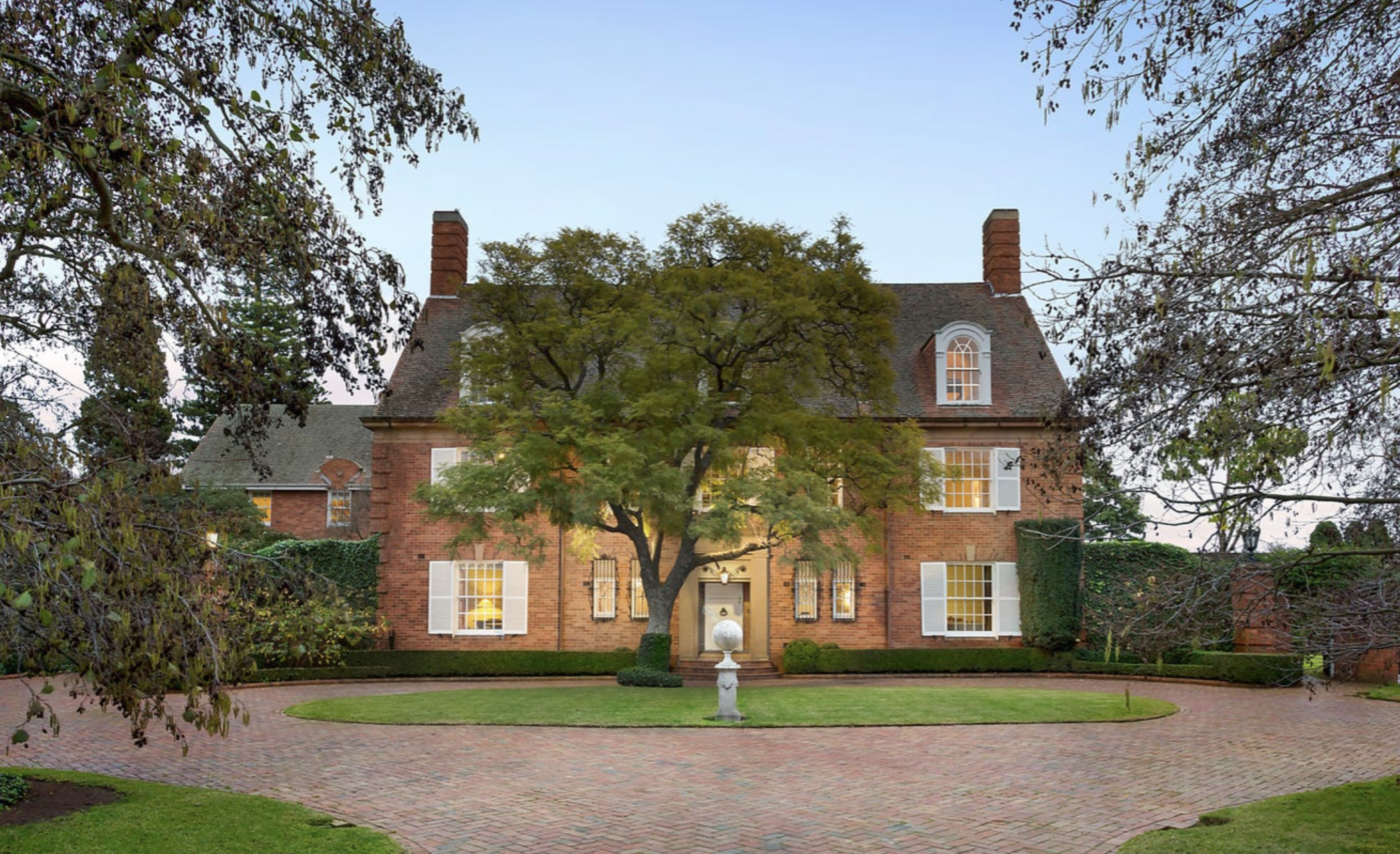
The highest price achieved, though yet to settle, is for Coonac, the 1867-built mansion reportedly sold earlier this year for around $130 million. It was the longtime home of billionaire developer Paul Little and his wife, University of Melbourne Chancellor Jane Hansen.
While Coonac sits on Clendon Road, alongside the Myer family’s Cranlana compound, currently seeking around $100 million, Toorak’s most consistently expensive street is St Georges Road.
It previously held the Victorian record when crypto billionaire Ed Craven bought the long-abandoned “Ghost Mansion” for $80 million in 2022. He has since demolished the structure and is set to build a new luxury residence on the vast 7,187 sqm site.
Other notable St Georges Road sales include Blair House, which fetched $74.5 million in 2022 when purchased by tech entrepreneur Grant Rule.
Outside Toorak, billionaire Anthony Pratt’s Raheen estate in Kew remains one of the state’s most valuable homes. The heritage-listed Italianate mansion, built in the 1870s for Edward Latham of Carlton Brewery, has been in the Pratt family since 1981 and was recently refurbished by Anthony following his father Richard’s passing in 2016.
Sutherland Ave, Ascot
Brisbane
House Price Record: $23 million
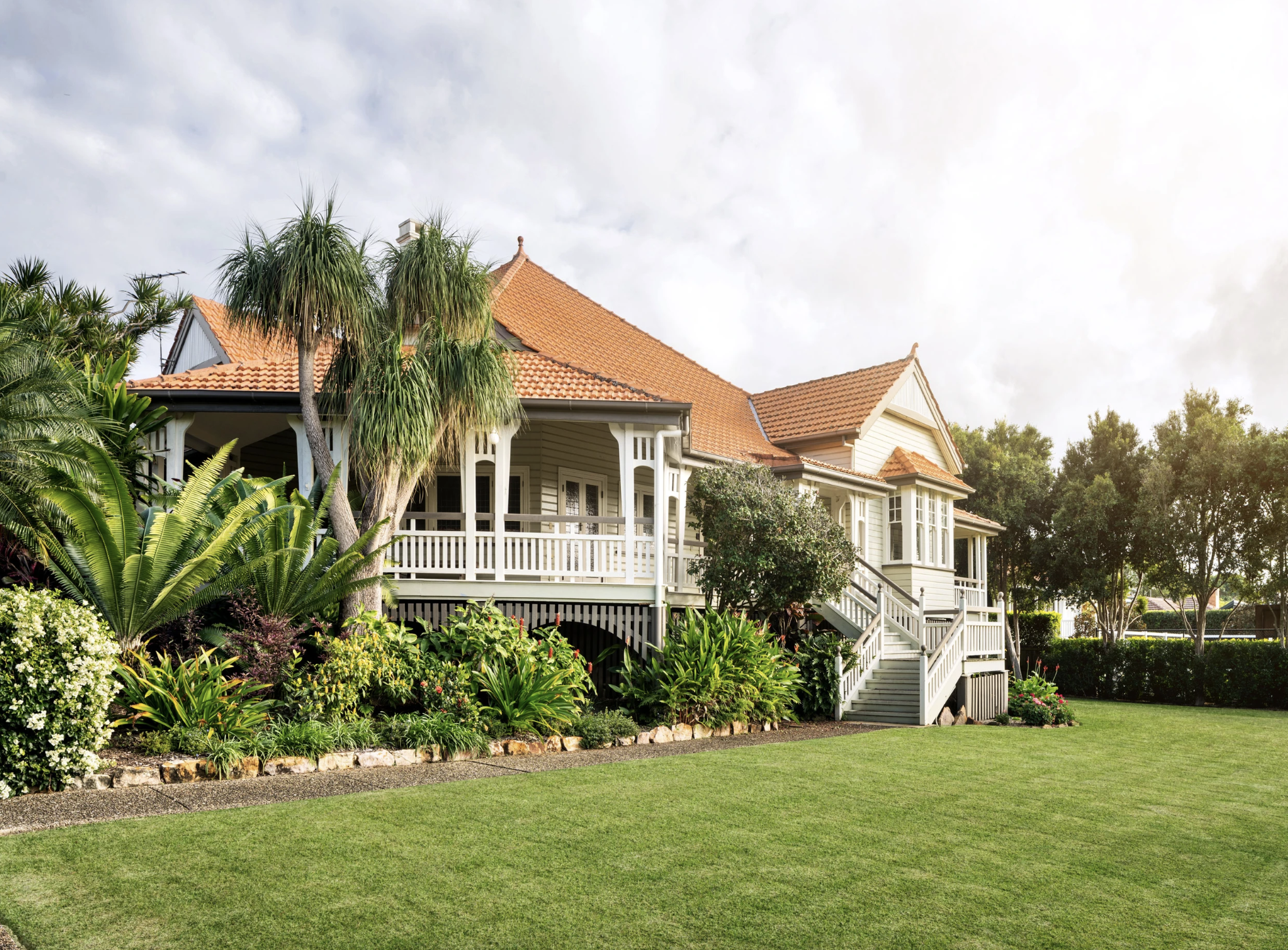
The Brisbane record was set earlier this year when BWC Group construction boss Brett Walker sold his Ascot home for $23 million.
Walker had bought the 1930s Queenslander from Ray White Chairman Brian White in 2021 for $10 million and spent another $7 million on extensive upgrades.
The 1920s home with six bedrooms sits on a private 3,035 sqm block with a championship-size floodlit tennis court, swimming pool, and cricket pitch.
The sale comfortably surpassed the previous record, set in 2023 when the 1890s waterfront Amity House in New Farm sold for $20.5 million.
New Farm also holds the city’s apartment record, set this year when coal baron Matthew Latimore, founder of M Resources, spent $17.5 million on a two-level penthouse atop the Cutters Landing building on Refinery Parade. The 740 sqm residence includes a sauna, steam room, ice bath, and spa.
There had been suggestions the penthouse atop the Pier building in Newstead would sell for $20 million, but it ultimately settled for $16 million.
Queensland’s priciest homes, however, sit beyond Brisbane. The state record was set earlier this year when DISSH fashion owners Lucy Henry-Hicks and Mitchell Lau purchased three adjoining beachfront properties for $40 million on Palm Beach’s Jefferson Lane.
Some don’t consider it a record, given it was an amalgamation. If it wasn’t to be a record, the highest price is $34 million, in Sunshine Beach. Webb House was bought by Peter Tighe, Non-Executive Chairman of AuKing Mining and part-owner of champion mare Winx, in 2021.
Western Australia
House Price Record: $56 million
Western Australia’s luxury market has surged. According to Knight Frank’s Prime Global Cities Index, Perth ranked 16th globally in Q1 2025 for luxury property price growth, rising 3.8 per cent over the year to March.
The priciest homes typically cluster in Dalkeith, Mosman Park, and Peppermint Grove. The state’s record was set when Mineral Resources co-founder Chris Ellison purchased a Mosman Park residence on Saunders Street for $56 million.
That same street saw another notable sale this year, a 2016-built luxury home with dual Gaggenau and Sub-Zero kitchens, a solar-heated magnesium pool, 600-bottle wine cellar, 13-person lift, and panoramic river views, for $22.75 million.
Many of Perth’s top-end sales occurred in the post-GFC mining boom, though some values later softened.
In 2011, Mineral Resources co-founder Steve Wyatt paid $39 million for a Dalkeith mansion; it resold in 2020 for $27.5 million to entrepreneur Danny Pavlovich and his wife, Suza.
BNW Developments has established a Sydney presence, joining Arada and Sobha Realty among the growing number of UAE developers pursuing Australian buyers and development opportunities.
The Australian leather house has opened an immersive four-day pop-up in Manhattan, unveiling its Bloom Collection and redefining what a product launch can look like.
Related Stories
Property
Dopamine Design: A Couple Lists Their 1950s ‘Happy House’ in Palm Springs Ahead of Modernism Week
By Chava Gourarie 05/10/2026
Property
Dubai and Abu Dhabi’s Trophy-Home Developers Are Doubling Down on Waterfront Living
By Jake Emen 01/10/2026
Property
BNW joins growing wave of UAE developers targeting Australia
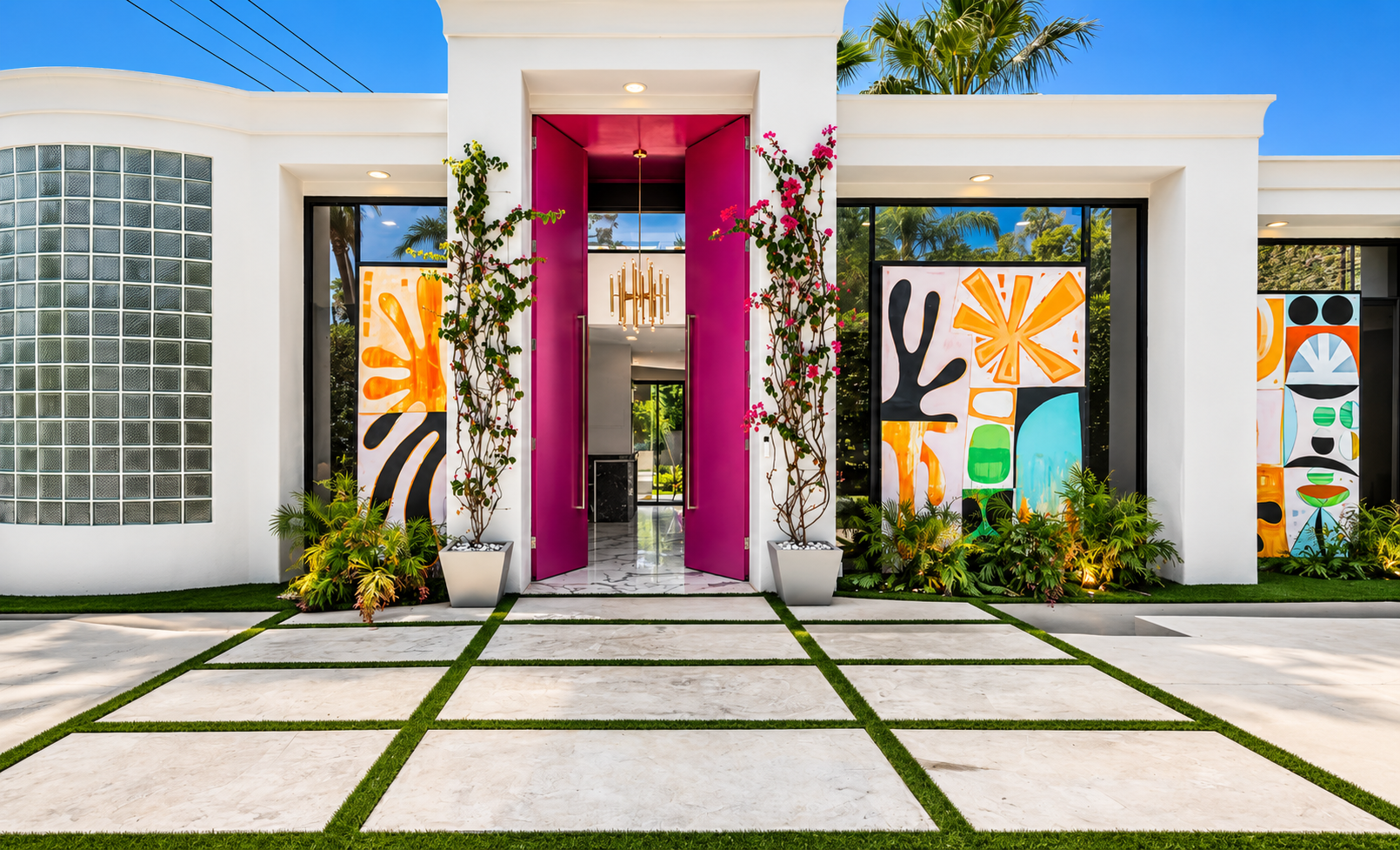
A vibrant 1954 Palm Springs home featuring eight colorful murals by late artist Shawn Savage is on the market for $2.295 million. The 2,237-square-foot property features bold hot-pink doors, three bedrooms, a pool, mountain views and playful interiors blending modern glamour with classic Palm Springs style.
By Chava Gourarie
Mon, Oct 5, 2026 3min
A bold 1950s home in Palm Springs, California, adorned with eight colorful murals by the late artist Shawn Savage, is coming to market ahead of the city’s annual Modernism Week.
The white stucco home on El Camino Way, built in 1954 and recently renovated, has an asking price of $2.295 million. Its staggered facade features three playfully abstract murals on either side of double-height hot pink doors.
The sellers are Los Angeles-based partners John Freeman and Mathieu Faure, who knew it was “the one” when they saw it after several months of searching in the winter of 2023. “It’s a happy house,” Freeman said. “We really liked the feel of the house: the uniqueness, the openness, the brightness—and the art.”
Located in the Mesa neighborhood of Palm Springs, which backs up to the San Jacinto Mountains, the 2,237-square-foot house features three bedrooms, an angled bonus room and a yard with a pool, desert mountain views and another colorful mural running alongside the pool.
“I never thought in my life I would have a house with pink doors,” said Faure, a producer at Apple TV who is originally from Paris. “It’s so colorful, it’s so different. And so Palm Springs.”
Abstract murals can be found on the facade.Patrick Ketchum
The layout of the home creates a smooth flow from the front doors through the open-plan common area—a foyer, bar, and living and dining room—into the kitchen around a fireplace wall and out to the yard. A corridor leads to a private bedroom wing, where the primary suite has floor-to-ceiling windows and the primary bath is only a tad smaller than the bedroom.
Faure has filled the home with Jonathan Adler furniture, rugs and accessories, riffing on the energetic California vibes of the house to create an aesthetic of “modern American glamour,” he said.
“It was enjoyable for me to play with different types of furniture and make this house ‘happy chic,’ as I describe it,” he said.
“He did a fantastic job,” said Freeman, who is an attorney and consultant. “It does kind of bring a smile to my face whenever I walk into the house.”
Since the furniture and decor were chosen for the particularities of the space, the couple is open to selling them with the home. Their West Hollywood house is already furnished; the collection doesn’t match the vibes of a Houston loft they bought near family; and Faure can’t imagine these pieces in New York—where he’s lived in the past—he said.
The duo bought the Palm Springs house for $1.925 million in 2024, according to property records, and will list the home Monday. They are represented by Stewart Smith, Patrick Jordan and Kevin Stanley of Bennion Deville Homes/Luxury Portfolio International.
The previous owners had purchased the home in 2021 for $975,000 and then spent more than two years and $700,000 on the renovation, according to Realtor.com. They commissioned Savage, a local Palm Springs artist and painter known for his joyful abstract work, to decorate the home.
Savage, who died in 2024, lived in the Coachella Valley from 2003, and his work can be found in various local institutions and is on exhibit at the Illumine Gallery in Palm Springs. “Some artists pass through a place. Shawn Savage became a part of it,” the gallery’s description states.
Unsurprisingly, the murals invite lots of friendly conversations, as well as guided tours and interested lookers, but never to a degree that it disturbed the peacefulness of their home or the neighborhood, the sellers said. “It felt like living in an art gallery, and you have the exterior that you would share with the world,” Faure explained.
The neighborhood also played a role in their decision to buy, because of its access to the hiking trails of the San Jacinto Mountains, the lack of through-roads and the neighborly environment.


 5 min
5 min