
Interview: Architect Koichi Takada
“We want to make Sydney the greenest city in the world.”
By Terry Christodoulou
Thu, May 13, 2021 11:00am 4 min
4 min
4 min


“We want to make Sydney the greenest city in the world.”
4 min
Architect Koichi Takada has never taken the easy option.
Born in Tokyo, at 16 he held dreams of pursuing life as a fashion designer or an artist – aimed at realising a firm desire to live in Manhattan.
He eventually came to architecture – a combination of art and engineering – as a pathway to appease such wants and those of his parents.
It didn’t quite work out – his father offering an easy life and generous role in the family engineering business so long as he remained in Tokyo.
Takada instead chose New York.
Cut to now and the 48-year-old is a force within global architecture, having set up an eponymous Australian-based firm while securing various awards across projects that have transformed urban landscapes here as well as in Asia, America, the Middle East and beyond.
Kanebridge News: Most people would take the path of least resistance – why were you so set on going it alone and moving to New York?
KT: This was definitely a leap of faith. I had this gut feeling that I’m going to survive there, that somehow everything would work out including communications [a language barrier] and making friends – you know Japanese people are very homogenous and very singular, and I’d thrown myself into this melting pot. But it had been a dream of mine.
KN: Did first impressions of the city stack up?
KT: When I arrived my first impression was just disbelief – and the way you come out of the Lincoln Tunnel, I was just,‘wow’. But it was overwhelming, it was noisy and very competitive and cold and I didn’t get the pampering I had with my parents in Japan. I had sold everything to be there and I got sick of it.
RR: You eventually left New York to study in London, how did those times influence you and your work?
KN: After leaving New York, to continue my studies at the AA [Architectural Association School of Architecture] I met and learned from the likes of Zaha Hadid and Rem Koolhas, and that’s where I really learnt to push the boundaries, and create the point of difference, the uniqueness within this monotonous repetition of all this regulation … And the cultural component is definitely an important part too. When I was in New York, my favourite part was going to Central Park. And the same in London – I craved breathing space. I discovered a feeling that I connected with when in Japan, because nature is respected and there’s an effort to try and blend in [with nature] and find harmony.
KN: Nature is a central part of much of your work.
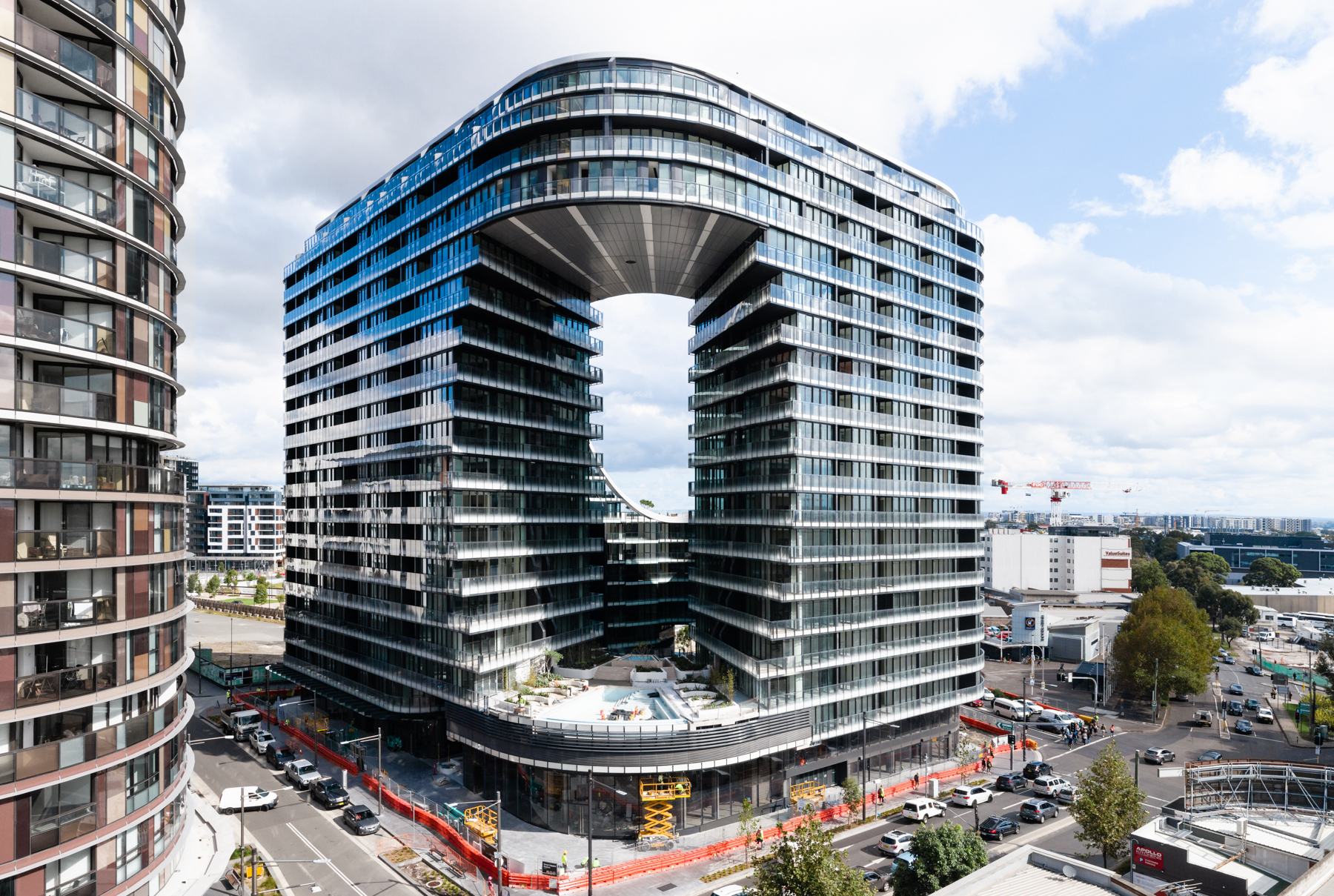
KT: Yeah. With Infinity [Sydney’s Infinity Tower], when we were competing for the project we were given the volumes, but I thought it would actually overshadow the courtyard which was meant for public use. I thought to myself, ‘why would you create a courtyard that doesn’t receive any daylight?’ So, we opened a hole to let the light in. It’s very simple, but then all of a sudden you have a breeze, light and a way to interact with nature.
KN: Why did you settle in Sydney?
KT: When I moved to Sydney in 1997, I just instantly felt something wonderful about the city, and now I’ve been here more than 20 years. I call it my home. It’s city and nature trying to balance. It’s one of the best cities in the world.
KN: Do you feel your style of melding nature and urban living was a natural fit for Sydney?
KT: Yeah, I think our product is very Sydney, it’s definitely not New York. Definitely not London. Definitely not Tokyo. But also fits what we want to make Sydney – the greenest [plant-filled] city in the world.
KN: The ‘greening’ of cities by architects and urban planners is imperative as we move forward.
KT: For the next generation of architects, they’re very much part of this and have massive challenges to bring awareness to climate change – though it’s also very a globalised challenge for everyone.
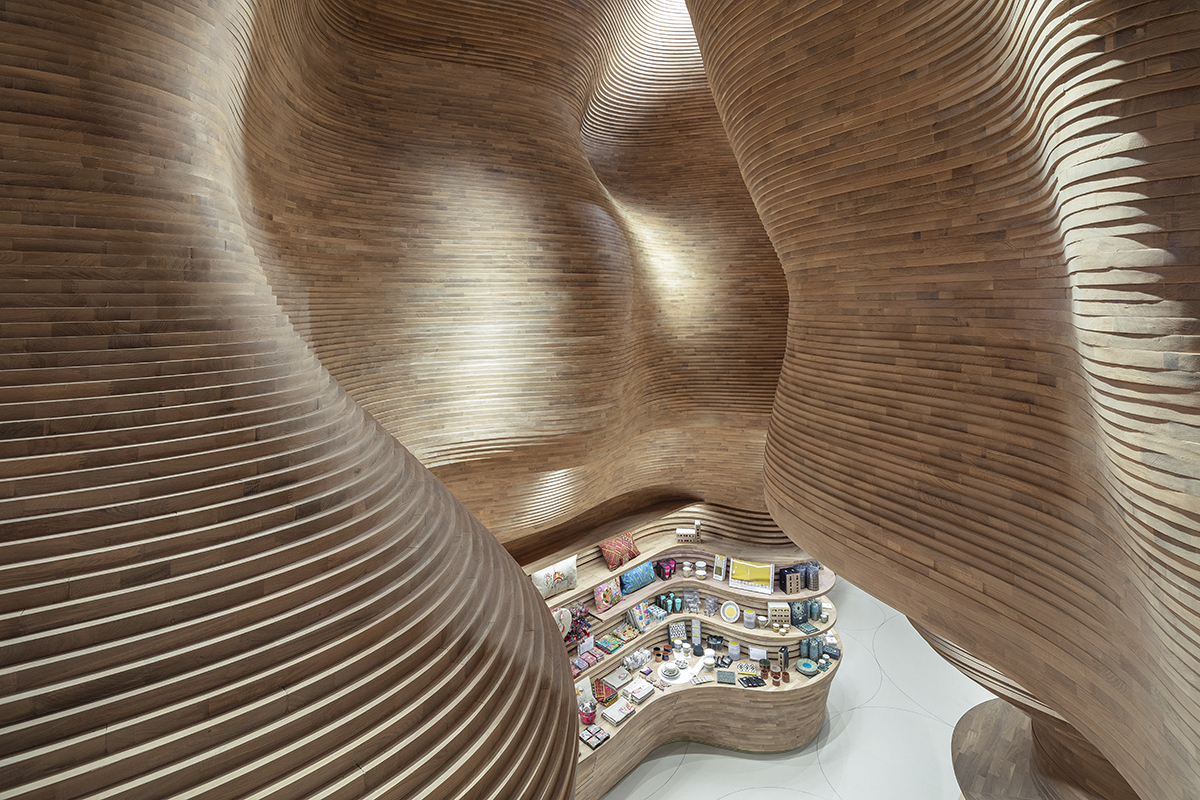
KN: Well before Infinity Tower you were designing restaurants in Sydney’s suburbs – and then you went from, say, Sushi Train Maroubra, to Qatar’s Natural Museum. How much pressure came with such a high-profile role?
KT: Well, it was the best project in the world. And yeah, I did feel extra pressure. I think as an architect when you get a sense of freedom and liberation it turns into confidence, but in this instance, you are against all the greats, like Jean Nouvel, and I thought look who we are against, I’m no one.
KN: You’re quite the sartorial gent – fair to say fashion is a firm creative outlet away from architecture?
KT: Yes, definitely, and I remember seeing Alexander Wang, who I’ve come to admire. You know we went to a grand opening party for Qatar and what I noticed is that I, naively followed the dress code, and these guys just did their own thing. It’s much more interesting than architecture.
KN: Seeing such appealed to the rule-breaker within?
KT: I wish I had figured it out when I was 18 in New York, and I’m not saying break every rule, but growing up in Japan, everything is telling you to conform. But it’s ok to think outside the box, to push a little bit. But it’s not so much his [Wang’s] work, it’s his spirit I’m inspired by. I know what it’s like being Asian in Manhattan, let’s just call it racist, or political, or whatever, but to be in that position and with that creativity and to prevail – I suddenly looked up to him.
BNW Developments has established a Sydney presence, joining Arada and Sobha Realty among the growing number of UAE developers pursuing Australian buyers and development opportunities.
The Australian leather house has opened an immersive four-day pop-up in Manhattan, unveiling its Bloom Collection and redefining what a product launch can look like.
Apple closed above a $5 trillion market valuation for the first time, capping Tim Cook’s 15-year tenure and setting a high bar for incoming CEO John Ternus, as the company faces growing pressure to strengthen its AI capabilities and sustain growth.
3 min
Apple AAPL 0.50%increase; became the second company to close above the $5 trillion mark on Wednesday, capping the Tim Cook era, and posing an implicit challenge to new Chief Executive John Ternus.
The iPhone-maker’s shares closed at a record, just enough to push the company’s market capitalization into territory that only chip colossus Nvidia occupies. Apple’s market value has surpassed $5 trillion six times previously during intraday trading, but it had never closed above that level, which it squeaked past on Wednesday, ending the day at $5.005 trillion according to Dow Jones Market Data.
Cook’s act will be tough to follow. During his 15-year tenure as CEO, which ended Aug. 31, Apple’s market capitalization multiplied by a factor of 13. He nearly quadrupled the number of iPhones sold annually. He grew its highly profitable services business from $10 billion annually to more than $100 billion. He launched the Apple Watch and AirPods, which together generate more than $30 billion a year. He poured Apple’s cash into more than $1 trillion worth of share buybacks and dividends.
Today, Apple shares trade at a premium compared with the overall S&P 500 even though the company’s revenue growth rate is slower than the index’s average. That is because the company’s shares are viewed as safe, and its business predictable, say analysts.
A key to Apple’s success under Cook is how it has limited capital spending, juicing the company’s returns for investors and greatly reducing the risks of its business. That has never been more apparent than during the AI build-out, when big tech rivals have rushed to spend gargantuan sums on data centers while Apple has focused on its core businesses making devices and selling high-margin services for them.
Apple investors are so confident in its business that they have driven up its shares despite big cost increases that threaten profit margins. The cost of memory and storage chips inside iPhones, Macs and iPads has skyrocketed as demand for those chips from data centers has led to shortages. Apple has responded by raising prices across its device lineup, including for older model iPhones that would typically get a price cut.
In theory, such a move could hurt Apple since iPhone buyers might wait longer to upgrade their devices. Yet since the first wave of price increases Apple shares have jumped 25%.
In part, that is because investors think Apple device buyers will pay the higher prices, enabling Apple to generate as much or more in total profits even if margins are down, said Bank of America analyst Wamsi Mohan. He added that Apple’s new foldable iPhone Duo is likely to be popular and that the new Siri AI will prompt iPhone upgrades.
AI has long been viewed as Apple’s Achilles’ heel. The company failed in its efforts to build its own frontier model, and it also allowed its Siri assistant to fall far behind rivals. ChatGPT revolutionized what smartphone users expect from chatbots.
Apple hopes to turn a corner with the new Siri AI. Built with Google’s help, Apple’s redesigned chatbot was released this fall. It still lags behind rival AI systems in key respects, though it has the advantage of being built directly into the device that many people already use, their iPhone. Apple also has access to more personal data, which could theoretically be used for compelling AI features, though new AI agents show the technology is advancing faster than Apple’s ability to keep up.
Tech rivals know how important it is to control the devices that people use to deliver their services. Perhaps most threatening to Apple, OpenAI is planning a family of AI-powered devices. It has poached hundreds of Apple employees to drive its device strategy. Apple responded in July by suing OpenAI, alleging it stole Apple trade secrets.
OpenAI has said it is “not aware of any evidence that this complaint has merit” and alleged in a new legal filing Wednesday that Apple poached one of its own employees who took confidential files with him. Apple said in response that it had found no evidence supporting the new allegation.
AI could be the battleground where Ternus makes his mark, either ushering in a new era of innovation and growth for Apple or finally losing its status as the company that has defined how people interact with computers.
