
How Reflective Paint Brings Down Scorching City Temperatures
Communities fight urban heat islands with technologies shielding roofs and pavement

By ERIC NIILER
Wed, Sep 6, 2023 9:03am 3 min
3 min
3 min


Communities fight urban heat islands with technologies shielding roofs and pavement
3 min
Cities across the U.S. have found relief from this summer’s record-setting heat with the help of technologies that shield roofs, pavement and other surfaces from the sun’s scorching rays.
Some of these technologies have been around for more than a decade but are experiencing greater demand as global temperatures rise. Washington, D.C., for example, has built more than 3,200 green roofs covering 9 million square feet—up from about 300,000 square feet in 2006, according to federal and city officials.
Other technologies, such as super-reflective coatings for pavement, streets and windows, are just now becoming effective and affordable enough for widespread use.
The Los Angeles neighbourhood of Pacoima, a densely packed location sandwiched between freeways and an industrial area, has created a partnership with GAF, a New Jersey-based roofing manufacturer, to paint a basketball court, local park and neighbourhood streets with a reflective coating.
“There’s a lot of asphalt and lack of investment for tree canopies,” said Melanie Paola Torres, 24 years old, a community organiSer with the group Pacoima Beautiful. “Given the fact that we are in an industrial zone, that contributes to the urban heat-island effect.”
The reflective coating has reduced air temperatures in the test area at 6 feet above ground by 3.5 degrees Fahrenheit during extreme heat days, and surface temperatures by 10 degrees, according to Jeff Terry, GAF’s vice president of corporate social responsibility and sustainability.
Sweltering conditions are worse in urban heat islands, which can be 10 degrees hotter than surrounding suburbs and occur as buildings, roads and other infrastructure absorb and re-emit the sun’s energy.
Cooling technologies mitigate this. Green roofs absorb heat before it penetrates the buildings beneath. Super-reflective coatings reflect the sun’s visible light and invisible infrared radiation away from surfaces to keep them cooler. And an ultra-white paint developed at Purdue University promises even more protection, although the product isn’t commercially available yet. Each strategy helps reduce energy use.
“The important thing is to help people cool their homes and workplaces affordably,” said Jane Gilbert, chief heat officer for Miami-Dade County, which experienced a record 46 straight days of a 100-degree-plus heat index this summer. “The more efficient we can make both the buildings and the AC systems themselves, the less we’re contributing both to greenhouse gases and also waste heat that goes to our urban heat islands.”

Miami is one of the most vulnerable cities to the urban heat-island effect, along with San Francisco, New York, Chicago and Seattle, according to an analysis by Climate Central, a New Jersey-based nonprofit that researches the effects of climate change. Its analysis found that 41 million people living in 44 cities face an urban heat-island effect of at least 8 degrees. Nine U.S. cities had at least one million people exposed to urban heat of 8 degrees or higher because of the local built environment.
To fight the heat, some cities are leveraging federal money and other incentives to persuade local builders to turn office buildings greener and cooler.
In Miami-Dade County, officials used federal funds to outfit 1,700 public housing units with new low-energy air-conditioning units. Local officials also offered a successful amendment to the Florida state building code requiring cool reflective roofs on all new commercial buildings beginning in 2024, and enrolled 150 structures in a voluntary energy-audit program to track improvements to cut energy use and keep temperatures down.
New York, Chicago, Philadelphia, Toronto and other cities are pushing green roofs with tax breaks and other incentives in an effort to lower energy bills and reduce ambient temperatures, according to Steven Peck, president of Green Roofs for Healthy Cities, a Toronto-based green-roof and -wall industry association. Peck said green roofs can be 30 to 40 degrees cooler than a similar-size blacktop roof, while also cutting waste heat from air-conditioning units.
In the Los Angeles neighbourhood of Pacoima, Torres says residents tell her the streets and playgrounds feel cooler since the reflective coating was completed in August 2022.
“The number-one thing that always comes up is the heat waves when you’re looking down the street,” Torres said. “They don’t see those anymore.”
The next step is to install reflective roofing material on a handful of homes as part of the neighborhood cooling effort. “We want to keep stacking the solutions to overall create a cool community with multiple strategies,” Torres said.
Altering the urban landscape to adapt to extreme heat requires money and technical know-how, according to city leaders and academic experts. But they also acknowledge the need to keep people safe as global temperatures rise.
“Any one solution is not going to necessarily be able to address the entire problem, but by systematically applying solutions that work in each individual location, we can make a dent in the urban heat-island effect,” said David Sailor, professor of geographical sciences and urban planning at Arizona State University.
 Copyright 2020, Dow Jones & Company, Inc. All Rights Reserved Worldwide. LEARN MORE




BNW Developments has established a Sydney presence, joining Arada and Sobha Realty among the growing number of UAE developers pursuing Australian buyers and development opportunities.
The Australian leather house has opened an immersive four-day pop-up in Manhattan, unveiling its Bloom Collection and redefining what a product launch can look like.
AI-powered travel agents are challenging online booking platforms, but Airbnb’s exclusive listings and direct customer relationships could give it an edge. Its next challenge: turning repeat guests into loyal customers through stronger rewards and innovation.
3 min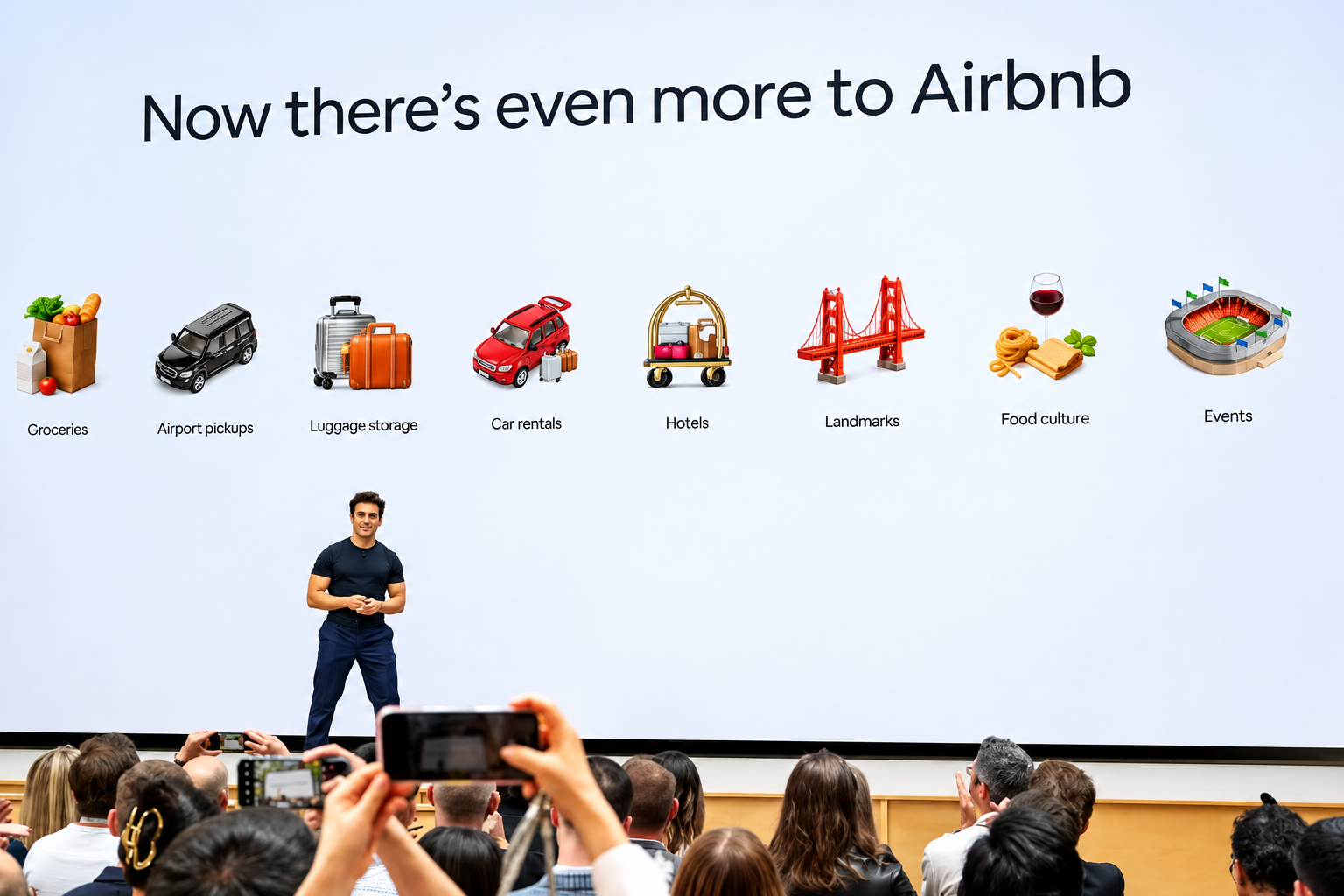
AI agents like Muse can already find you the cheapest hotel room in Paris. But they can’t locate a cheaper version of that Catskills cabin you’ve been eyeing, because it might only be available on Airbnb ABNB -1.43%decrease.
Investors should pay attention to that distinction. When Meta Platforms META 3.38%increase launched its Muse agent last month, travel stocks including Booking Holdings BKNG -1.19%decrease, Expedia and Airbnb all fell sharply.
Airbnb, though, has a real chance to emerge as a winner from the upheaval. The catch: Its stock already reflects above-industry growth. To justify its valuation, Airbnb will need to turn repeat customers into loyal ones.
Online travel companies make much of their money by simplifying search and collecting fees on bookings. AI agents threaten that model.
But not all travel marketplaces are equally exposed. Booking and Expedia largely sell hotel rooms that travelers can also book directly or through competing sites. If an agent can find the same room elsewhere, it has little reason to favor either Booking or Expedia.
Booking and Expedia also sell sponsored listings that steer travelers toward particular properties. Wells Fargo estimates those will account for about 8% of Expedia’s revenue and a much higher percentage of profit next year.
Airbnb has more ways to adapt. More than half its listings are available only on its platform, and more than 90% of its traffic comes directly to its app or website.
The customer relationship doesn’t end after booking, either. Bernstein analyst Richard Clarke notes that 90% of Airbnb guests go on to message their hosts about arrival times, keys or local taxes, giving Airbnb a connection to both sides of the transaction.
How the companies have responded to the possible agentic future is telling.
Expedia quickly signed on as a Muse partner. Airbnb hasn’t, and Chief Executive Brian Chesky says AI chatbots have so far been a boon, sending customers to Airbnb’s website.
Chatbots might work for buying paper towels, he quipped at a Skift conference last month, but people enjoy planning trips. He argued that browsing dozens of homes isn’t something a text-based chatbot is well suited for.
Still, the AI jitters arrived just as Airbnb was persuading investors it deserved its pricey multiple. For years after its 2020 initial public offering, the stock—which trades around 25 to 30 times forward earnings—went nowhere. Investors saw a mature operator trading at a growth premium.
This year, Airbnb growth seems to be accelerating. The stock jumped in August after the company raised its full-year revenue-growth guidance with its second-quarter results. Wells Fargo analyst Ken Gawrelski credits a run of product improvements under a revamped leadership team.
Among the changes: letting guests reserve now and pay later, adding hotels, and a redesigned home page and app. Investors were also betting on what comes next, including thousands more hotels, car rentals and, eventually, advertising.
The irony is that some of those growth drivers push Airbnb closer to the kind of business Booking and Expedia run—the kind of business AI agents could threaten. Even if AI agents capture a large share of travel planning and booking, Airbnb would capture the demand. But it and others would slowly lose control over how customers find and choose properties.
That would undermine the advertising opportunity investors are counting on. The bigger point for Airbnb and other marketplaces is that losing control of customer acquisition could mean surrendering some of their pricing power and margins.
To bulletproof itself, Airbnb might look to another e-commerce giant that has so far kept AI agents at arm’s length: Amazon.
Like Amazon, Airbnb has a loyal customer base and hard-to-match supply. But it has nothing like Prime membership to make customers think twice before taking their business elsewhere.
That is where loyalty comes in. Business travelers stick with Hilton or Marriott because enough nights earn them perks. Leisure travelers rarely accumulate stays with one chain. Airbnb has millions of listings and plenty of repeat customers, but no broad rewards program. It has begun experimenting with credits on hotel stays, but it should make loyalty a priority, not just a promotion.
Airbnb also plans to launch its own AI agent next year. But travelers using an agent might still want it to search Airbnb, Vrbo, Booking and hotel websites alike, rather than limit itself to one company’s inventory.
Eventually, Airbnb might have to strike deals with agent makers, using its unique homes as leverage to negotiate favorable terms, says Gawrelski. Such deals, along with rewards for loyal guests, could over the long term eat into the company’s roughly 13% take rate, he adds. But if they bring in enough additional bookings, the trade-off could be worthwhile.
History offers a reason not to panic. The shift from desktop to mobile unsettled investors in Alphabet and Amazon, but both emerged as major beneficiaries. Companies with valuable assets can come out of a platform shift stronger, if they adapt quickly enough.
Airbnb has homes the bots can’t easily replace. Now it needs to give guests a reason to insist on booking them there.
