
From Tesla to Porsche, New EVs Revealed at Germany’s International Motor Show

By Jim Motavalli
Tue, Sep 12, 2023 9:04am 5 min
5 min
5 min

 5 min
5 min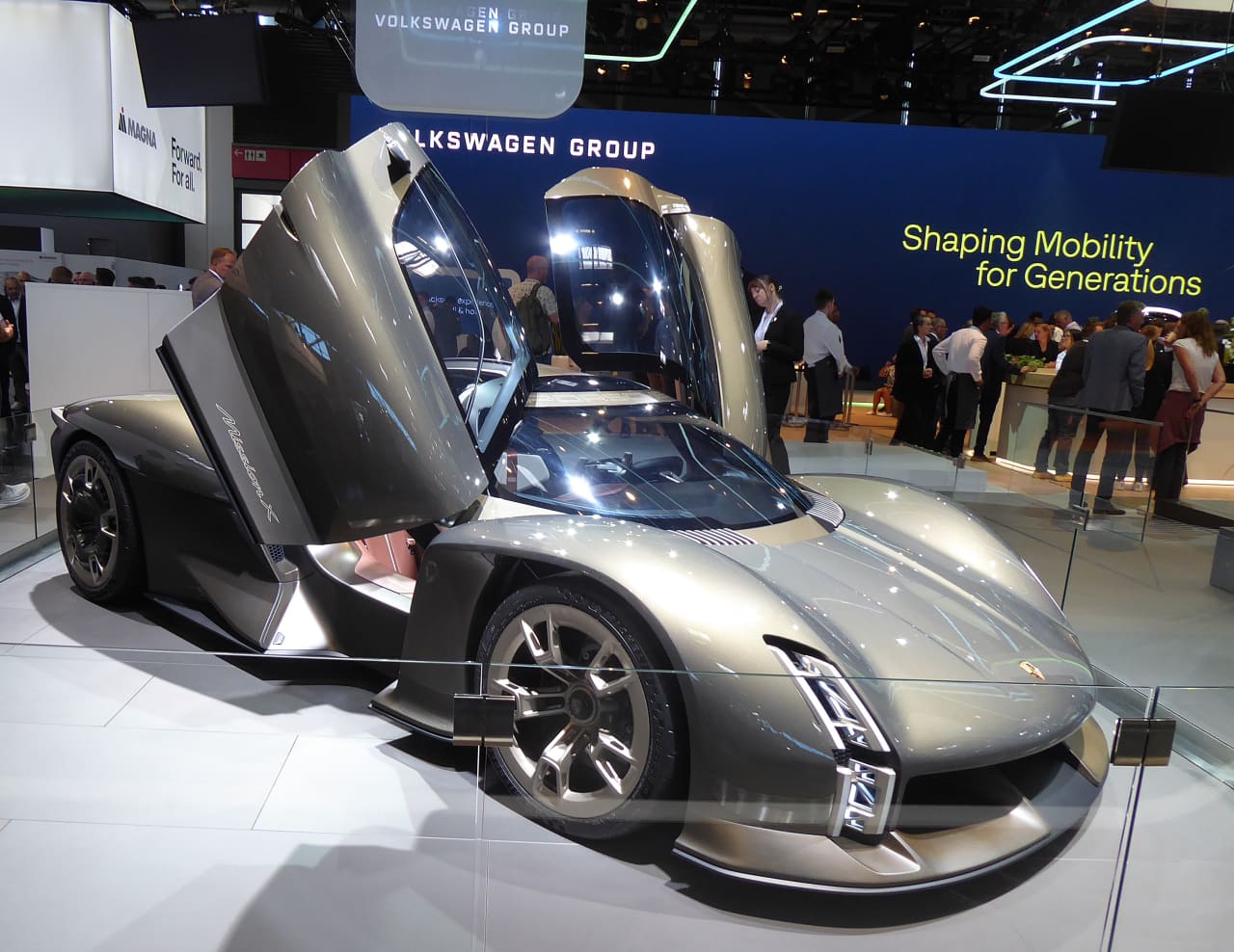
Roped off on the Volkswagen Group stand at the IAA Mobility auto show in Germany was perhaps the sexiest car present, the Porsche Mission X concept. The supercar is aimed at being the fastest road-legal vehicle at the Nürburgring race track’s Nordschleife loop. The inspiration, on Porsche’s 75th anniversary, was the legendary 1985 959, the fastest series-production car of its time, capable of traveling 196 miles per hour. A more modern ancestor was the 918 Spyder of 2013.
Of late, Porsche, Rimac, and Tesla have been battling back and forth over the electric record at the German track. Rimac took the title Aug. 18 via its Nevera, but the Tesla Model S Plaid Edition with Track Pack has also been a contender, beating Porsche’s Taycan Turbo S.
Despite its racing mission, the Mission X will be a production car and appears totally ready for road work, with a luxurious leather-clad interior. The steering wheel looks like a video game controller, though, and the passenger-side stopwatch is for timing events—with both an analog and digital display. The road version seems likely to become a limited-edition special edition, and if so it should sell out quickly—even at what is likely to be a pretty high price.
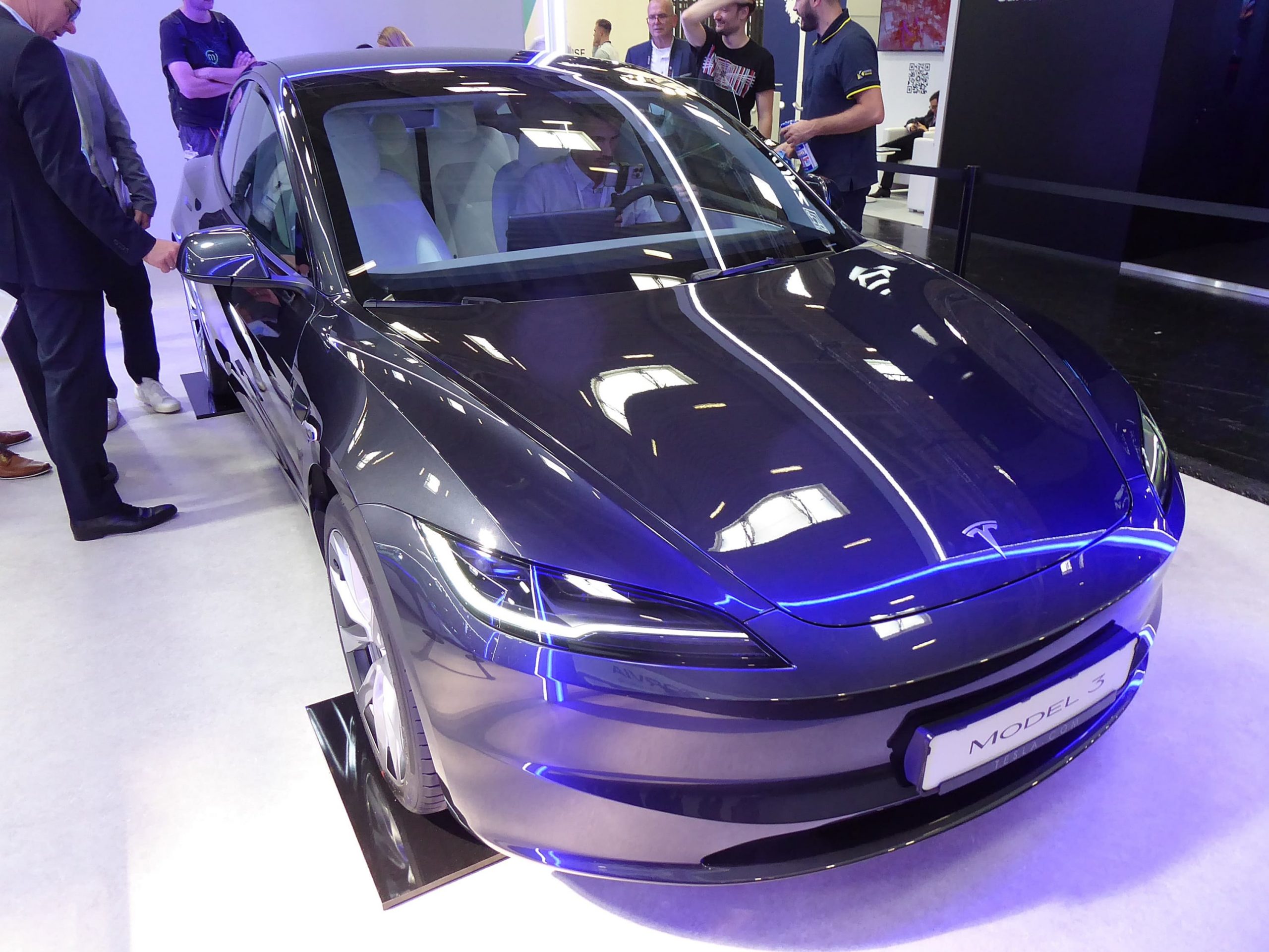
Over at the Tesla booth was the revamped Model 3, which now has a much kinder and more aerodynamic built-to-be-electric nose. It no longer appears to be missing its grille.
Other Model 3 improvements in 2023 include new head and tail lamps, new wheels, fresh aluminium, and textile trim on the interior, customisable ambient lighting and ventilated seats, a quieter cabin thanks to sound-deadening materials and acoustic glass, dual wireless phone charging, available 17-speaker audio and, a somewhat dubious achievement, delete of the turn-signal stalk. Instead, in the name of decluttering the interior, there are a pair of touch-sensitive buttons on the steering wheel. Unfortunately, the wheel turns around so the buttons are not always in the same place. It seems confusing and unnecessary.
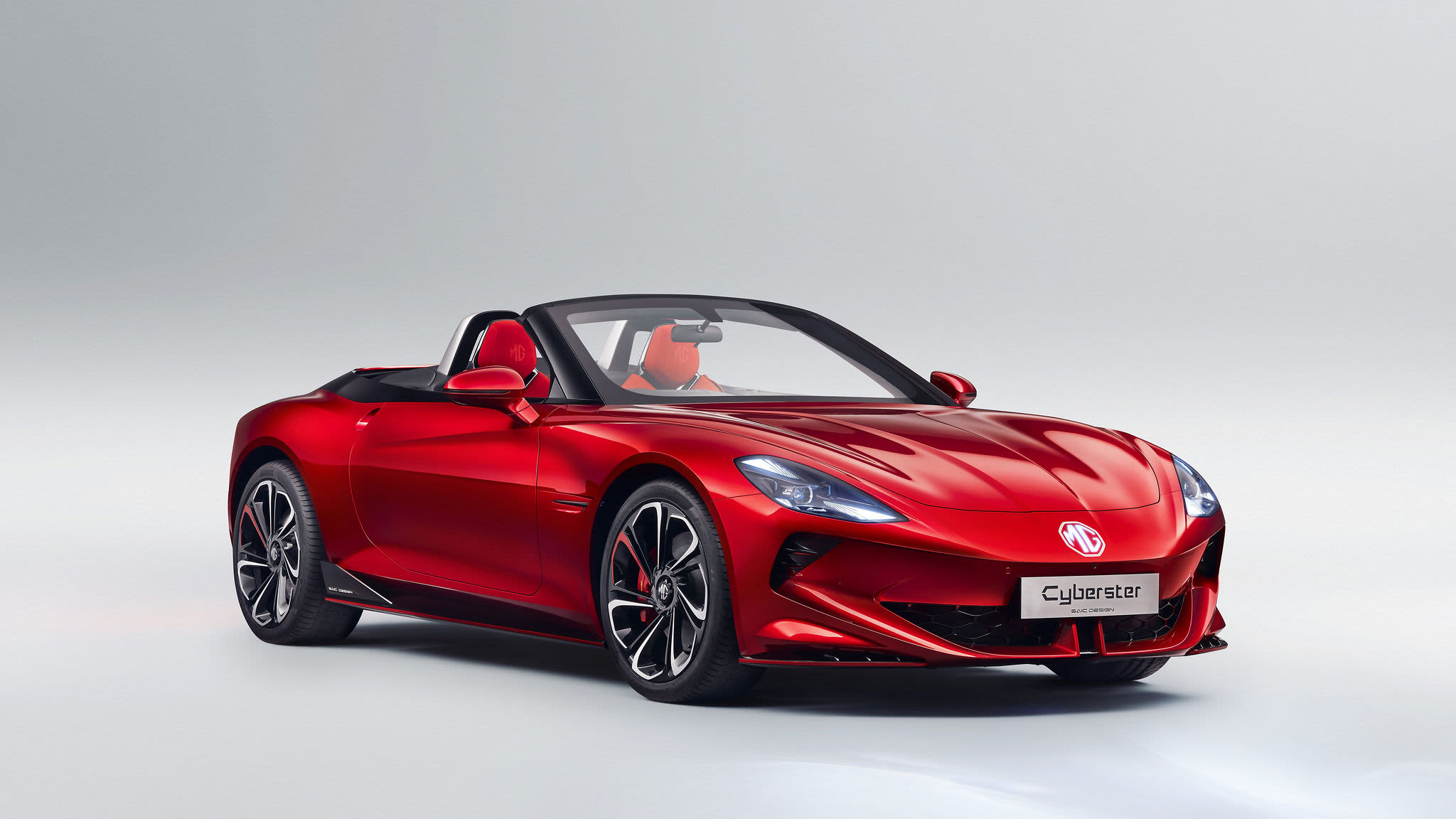
BMW’s most striking exhibit was the Vision Neue Klasse sedan, reviving a name the company used to introduce its winning line of cars in the 1960s. The car sits on a new EV platform that will support six or seven Neue Klasse models between 2025 and 2027. Combining that platform with the sixth-generation BMW eDrive powertrain and more efficient batteries is said to yield a 30% range and 25% efficiency gain over previous models. The concept shown is striking and uncluttered, managing to be futuristic and slightly retro at the same time. The cabin on view was very airy, with large windows and a panoramic sunroof, an interior-dominating central screen, and seats with avocado inserts.
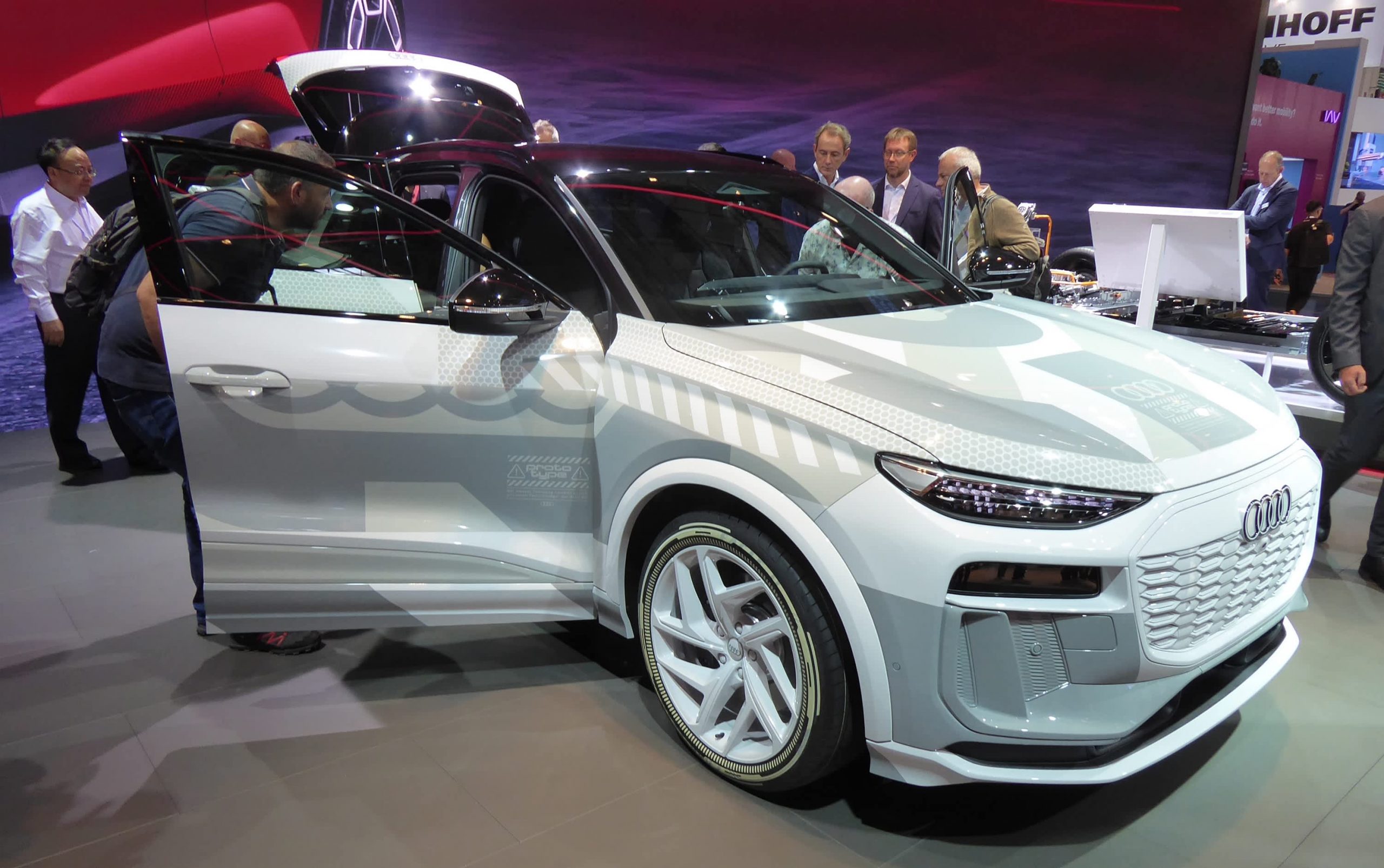
From Audi came the 2025 Q6 e-tron, which is slotted between the Q4 and Q8, and has been tested in 373 and 479 horsepower variants.
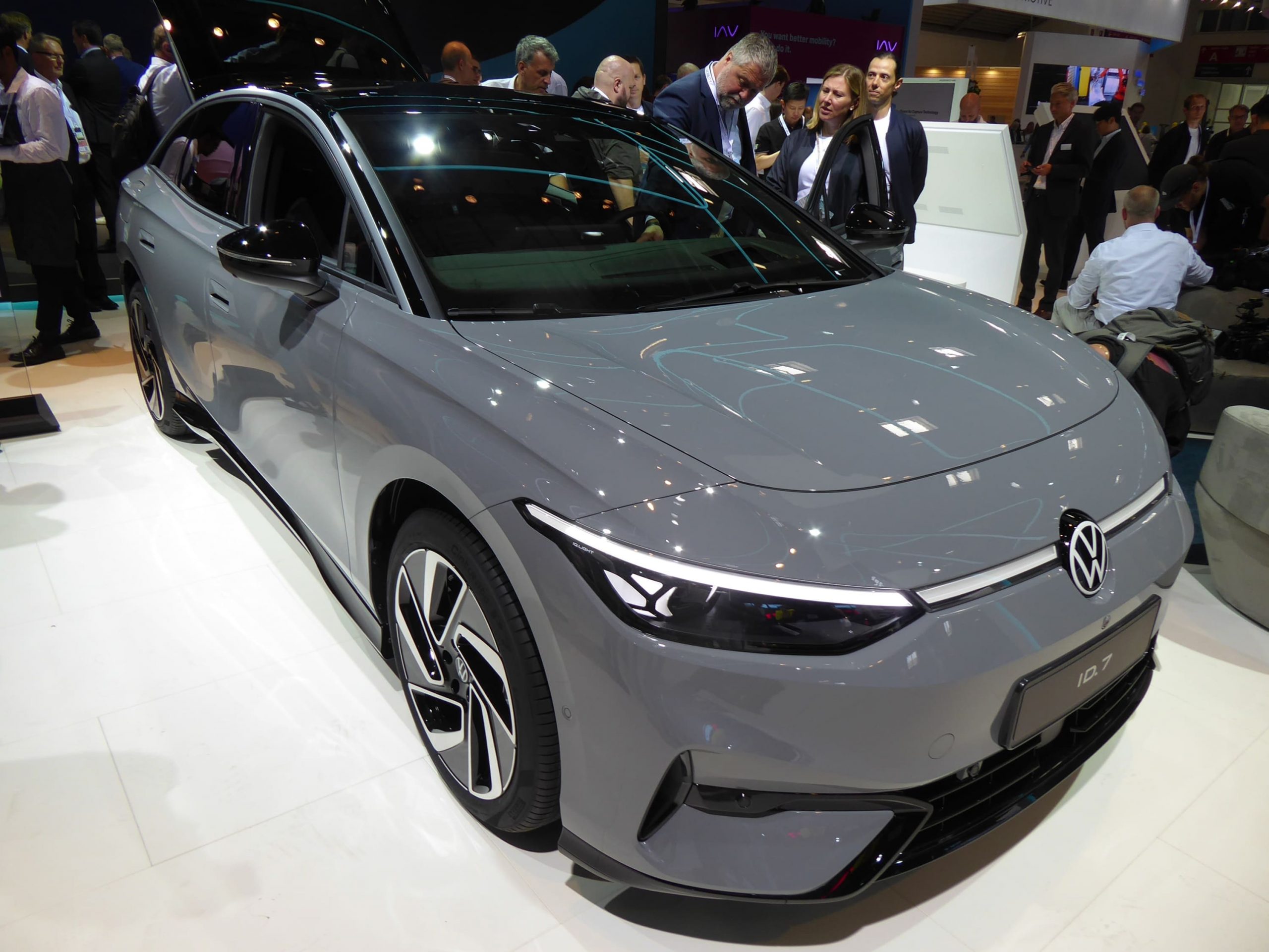
Volkswagen itself showcased another electric, the ID. GTI “hot hatch” concept based on the ID.2 (an entry-level EV we didn’t get in the U.S.) The GTI model has always been welcomed by American buyers, so this one could be too. The European price when it goes on sale in 2026 will be approximately US$32,000. VW also displayed the ID.7, a larger EV sedan aimed at executives with a 77-kilowatt-hour battery and a US$67,000 price as shown.
Chinese brands haven’t penetrated the American market yet, but they were out in force in Munich. BYD, the best0selling brand in China, has a large dealer network in Germany already, and showed off its marine mammal-themed Dolphin and Seal models. The Seal is an electric sedan, and its new Seal U variant is a small SUV that uses its technology. The Seal U will have both 71- and 87-kilowatt-hour battery options, and 218 horsepower. That’s not hugely impressive, but the affordable price ($48,000 in Europe) will be a convincer for many buyers. Both Seals had impressive fit and finish, auguring that—if the road performance matches the appearance—BYD is probably ready for U.S. competition.
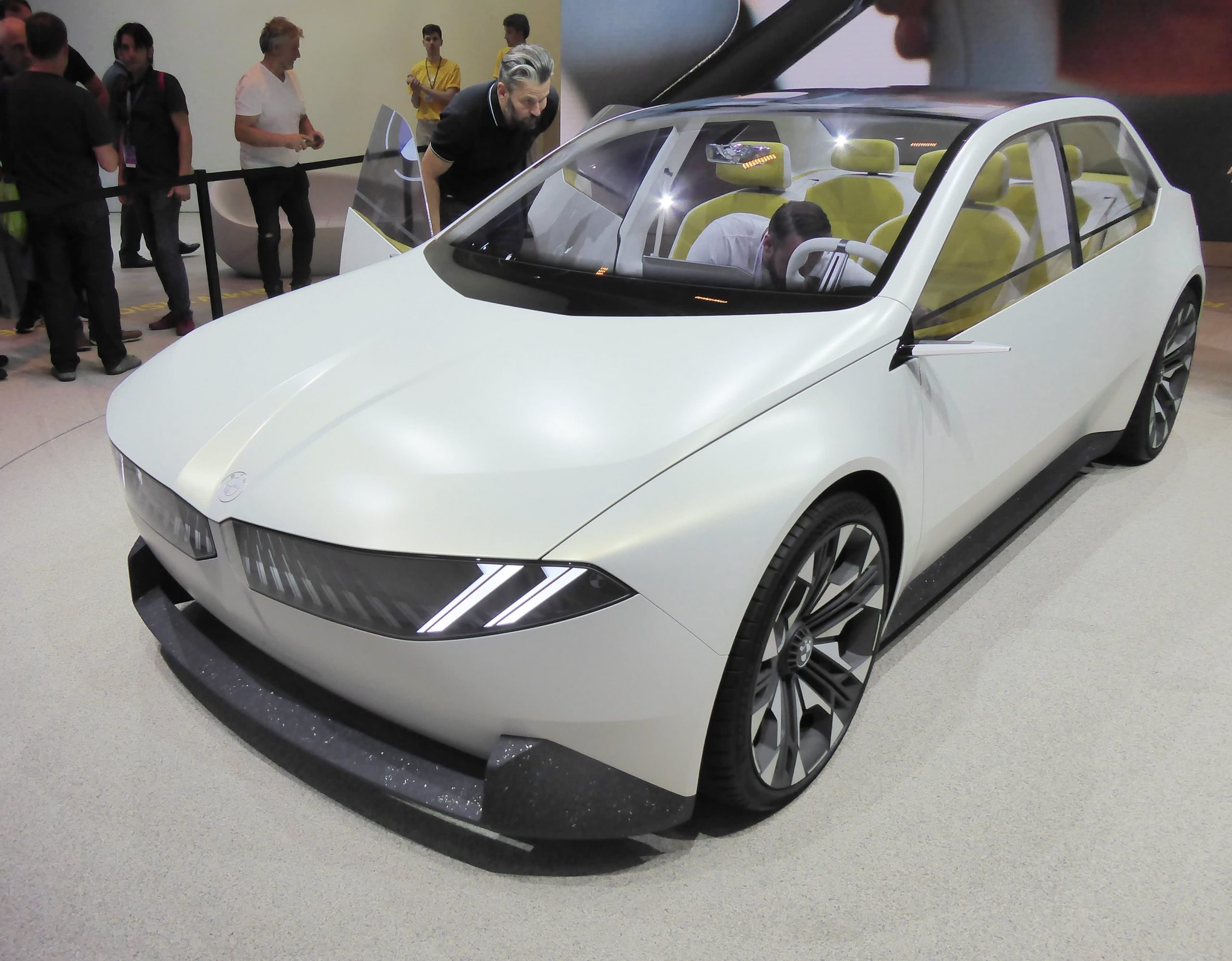
The venerable British sports car brand MG (an abbreviation of “Morris Garages”) is now Chinese-owned, like Volvo and Polestar. MG has been selling gas, hybrid, and electric SUVs in Europe (16 countries), but at Munich it showed the new Cyberster, a pretty two-seat roadster concept with an electric powertrain. It resembles a beefier Miata more than it does a classic MGB, but it’s definitely attractive. U.S. sales of what was once a popular brand could happen in five to eight years.
Many suppliers were at the show hoping to catch the attention of major automakers. Rimac, which makes its Nevera supercar in tiny numbers, had a stand offering its cutting-edge electric components to other manufacturers. Michigan-based Gentech, a leading maker of the world’s rear-view mirrors, was there showing how technology—from cameras to driver monitoring systems and back-seat kid detection—can be embedded in what was once a simple device. Gentech announced a stake in Israel’s Adasky, which makes tiny thermal cameras that fit just about anywhere.
Israel-based Mobileye and Canadian parts supplier Magna International demonstrated their technology for automated driving. Massachusetts-based Nodar revealed its stereo cameras’ ability to see objects in the road at great distances. New York-based J.P. Morgan Chase’s offering was an all-in-one plan for mobility payments—loans, car subscriptions, parking, tolling, and electric vehicle charging. It debuts later this year. And SAE, the standards agency, announced a move into Europe and work on a Battery Passport that will trace the origins of minerals used in their production. “Just as we don’t want blood diamonds, we don’t want blood batteries,” said Fabian Koark, chief operating officer of SAE Europe.
 Copyright 2020, Dow Jones & Company, Inc. All Rights Reserved Worldwide. LEARN MORE




BNW Developments has established a Sydney presence, joining Arada and Sobha Realty among the growing number of UAE developers pursuing Australian buyers and development opportunities.
The Australian leather house has opened an immersive four-day pop-up in Manhattan, unveiling its Bloom Collection and redefining what a product launch can look like.
AI-powered travel agents are challenging online booking platforms, but Airbnb’s exclusive listings and direct customer relationships could give it an edge. Its next challenge: turning repeat guests into loyal customers through stronger rewards and innovation.
3 min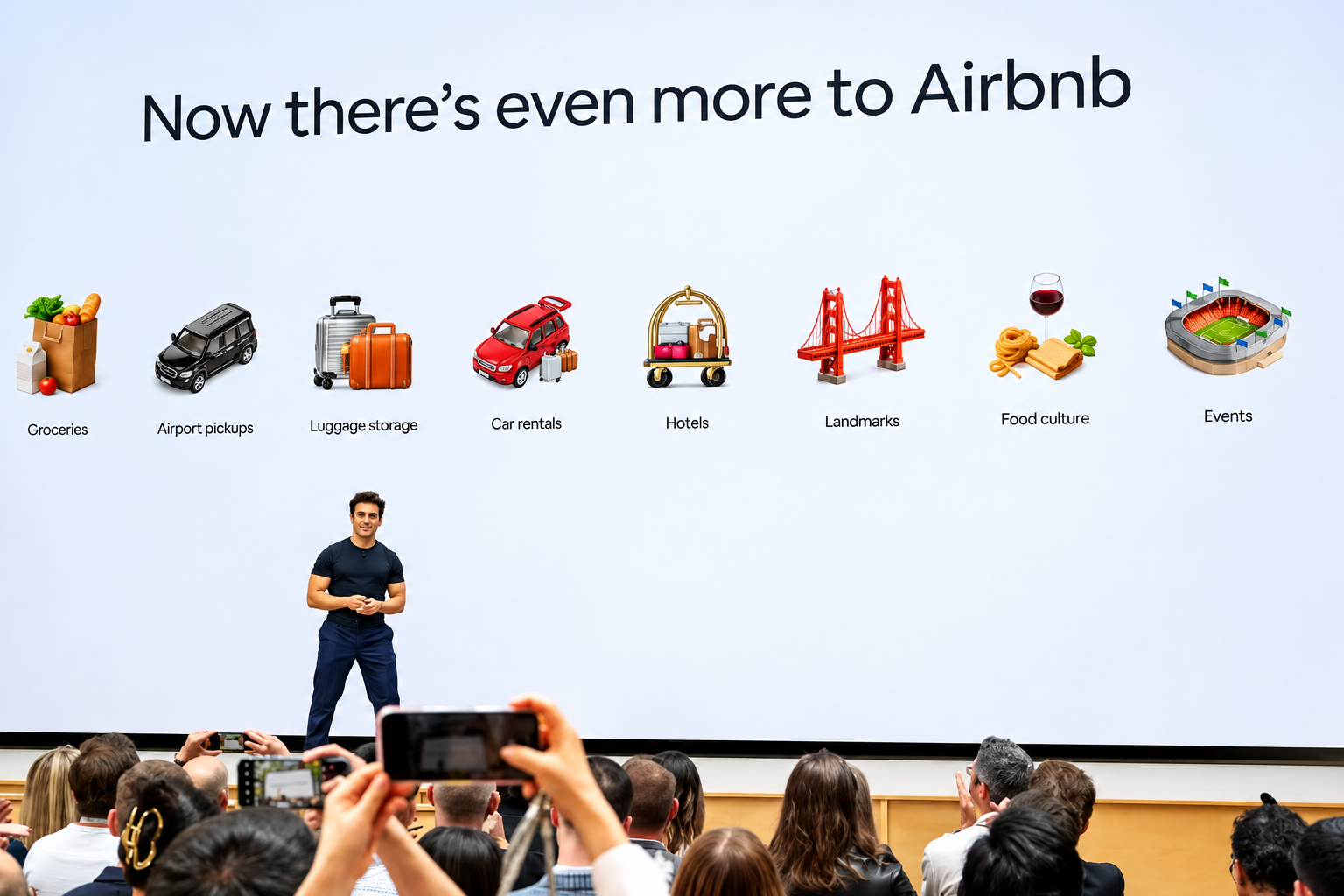
AI agents like Muse can already find you the cheapest hotel room in Paris. But they can’t locate a cheaper version of that Catskills cabin you’ve been eyeing, because it might only be available on Airbnb ABNB -1.43%decrease.
Investors should pay attention to that distinction. When Meta Platforms META 3.38%increase launched its Muse agent last month, travel stocks including Booking Holdings BKNG -1.19%decrease, Expedia and Airbnb all fell sharply.
Airbnb, though, has a real chance to emerge as a winner from the upheaval. The catch: Its stock already reflects above-industry growth. To justify its valuation, Airbnb will need to turn repeat customers into loyal ones.
Online travel companies make much of their money by simplifying search and collecting fees on bookings. AI agents threaten that model.
But not all travel marketplaces are equally exposed. Booking and Expedia largely sell hotel rooms that travelers can also book directly or through competing sites. If an agent can find the same room elsewhere, it has little reason to favor either Booking or Expedia.
Booking and Expedia also sell sponsored listings that steer travelers toward particular properties. Wells Fargo estimates those will account for about 8% of Expedia’s revenue and a much higher percentage of profit next year.
Airbnb has more ways to adapt. More than half its listings are available only on its platform, and more than 90% of its traffic comes directly to its app or website.
The customer relationship doesn’t end after booking, either. Bernstein analyst Richard Clarke notes that 90% of Airbnb guests go on to message their hosts about arrival times, keys or local taxes, giving Airbnb a connection to both sides of the transaction.
How the companies have responded to the possible agentic future is telling.
Expedia quickly signed on as a Muse partner. Airbnb hasn’t, and Chief Executive Brian Chesky says AI chatbots have so far been a boon, sending customers to Airbnb’s website.
Chatbots might work for buying paper towels, he quipped at a Skift conference last month, but people enjoy planning trips. He argued that browsing dozens of homes isn’t something a text-based chatbot is well suited for.
Still, the AI jitters arrived just as Airbnb was persuading investors it deserved its pricey multiple. For years after its 2020 initial public offering, the stock—which trades around 25 to 30 times forward earnings—went nowhere. Investors saw a mature operator trading at a growth premium.
This year, Airbnb growth seems to be accelerating. The stock jumped in August after the company raised its full-year revenue-growth guidance with its second-quarter results. Wells Fargo analyst Ken Gawrelski credits a run of product improvements under a revamped leadership team.
Among the changes: letting guests reserve now and pay later, adding hotels, and a redesigned home page and app. Investors were also betting on what comes next, including thousands more hotels, car rentals and, eventually, advertising.
The irony is that some of those growth drivers push Airbnb closer to the kind of business Booking and Expedia run—the kind of business AI agents could threaten. Even if AI agents capture a large share of travel planning and booking, Airbnb would capture the demand. But it and others would slowly lose control over how customers find and choose properties.
That would undermine the advertising opportunity investors are counting on. The bigger point for Airbnb and other marketplaces is that losing control of customer acquisition could mean surrendering some of their pricing power and margins.
To bulletproof itself, Airbnb might look to another e-commerce giant that has so far kept AI agents at arm’s length: Amazon.
Like Amazon, Airbnb has a loyal customer base and hard-to-match supply. But it has nothing like Prime membership to make customers think twice before taking their business elsewhere.
That is where loyalty comes in. Business travelers stick with Hilton or Marriott because enough nights earn them perks. Leisure travelers rarely accumulate stays with one chain. Airbnb has millions of listings and plenty of repeat customers, but no broad rewards program. It has begun experimenting with credits on hotel stays, but it should make loyalty a priority, not just a promotion.
Airbnb also plans to launch its own AI agent next year. But travelers using an agent might still want it to search Airbnb, Vrbo, Booking and hotel websites alike, rather than limit itself to one company’s inventory.
Eventually, Airbnb might have to strike deals with agent makers, using its unique homes as leverage to negotiate favorable terms, says Gawrelski. Such deals, along with rewards for loyal guests, could over the long term eat into the company’s roughly 13% take rate, he adds. But if they bring in enough additional bookings, the trade-off could be worthwhile.
History offers a reason not to panic. The shift from desktop to mobile unsettled investors in Alphabet and Amazon, but both emerged as major beneficiaries. Companies with valuable assets can come out of a platform shift stronger, if they adapt quickly enough.
Airbnb has homes the bots can’t easily replace. Now it needs to give guests a reason to insist on booking them there.
