
Dubai’s Top Hotel Concierge Provides an Insider’s Glimpse to the Glitzy City

By JAKE EMEN
Mon, Jul 8, 2024 9:25am 6 min
6 min
6 min

 6 min
6 min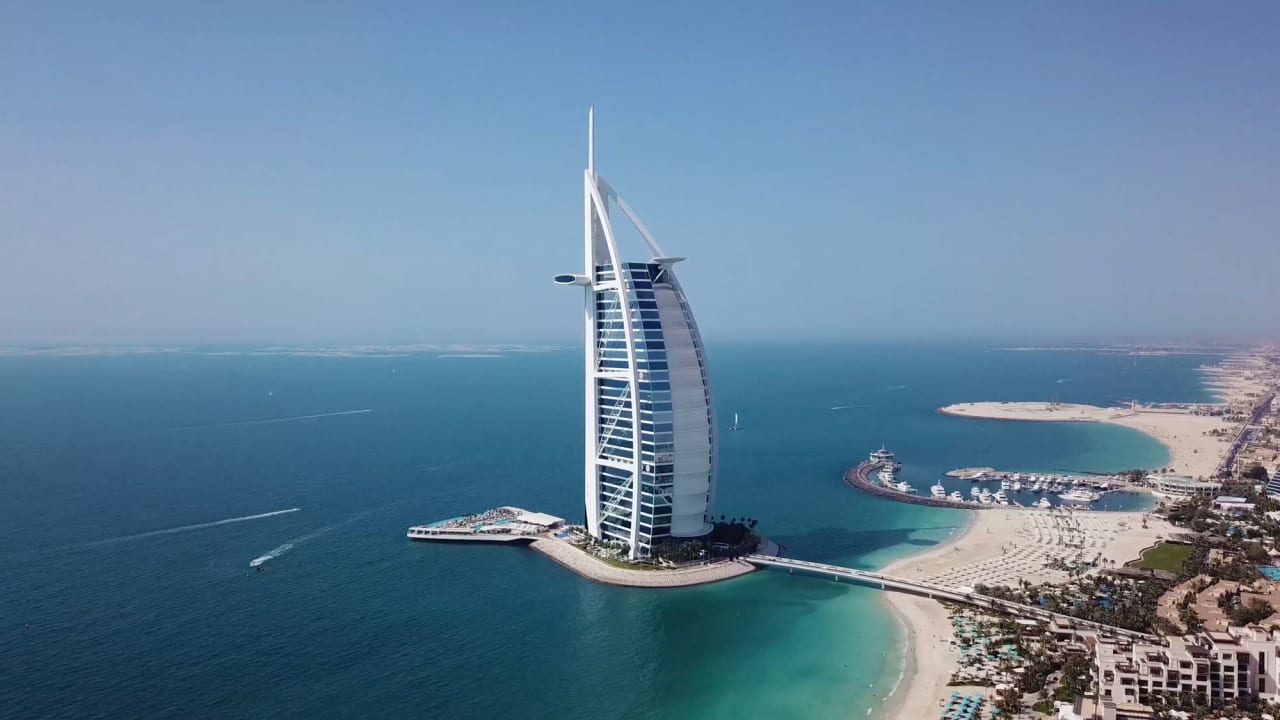
Dubai’s Burj Al Arab hotel is regarded as one of the most extravagant properties in the world, and its sail-shaped architectural design has become an icon of the city and the region. One of the people making the magic happen behind the scenes for such an over-the-top luxurious outpost is its chief concierge, Roger Geadah.
Any hotel concierge must be prepared to cater to and meet the needs of their guests, fostering long-term relationships and turning first-time visitors into repeat clients by delivering memorable moments. But at Burj Al Arab, the bar is perhaps even more difficult to clear than it is elsewhere.
“Delivering on the expectations of our guests at the Burj Al Arab is not just about meeting their high standards—it’s about consistently exceeding them,” Geadah says. “To achieve this, I place myself on the same level as our guests, seeing the world through their eyes. This involves a great deal of emotional intelligence, storytelling, and fun.”
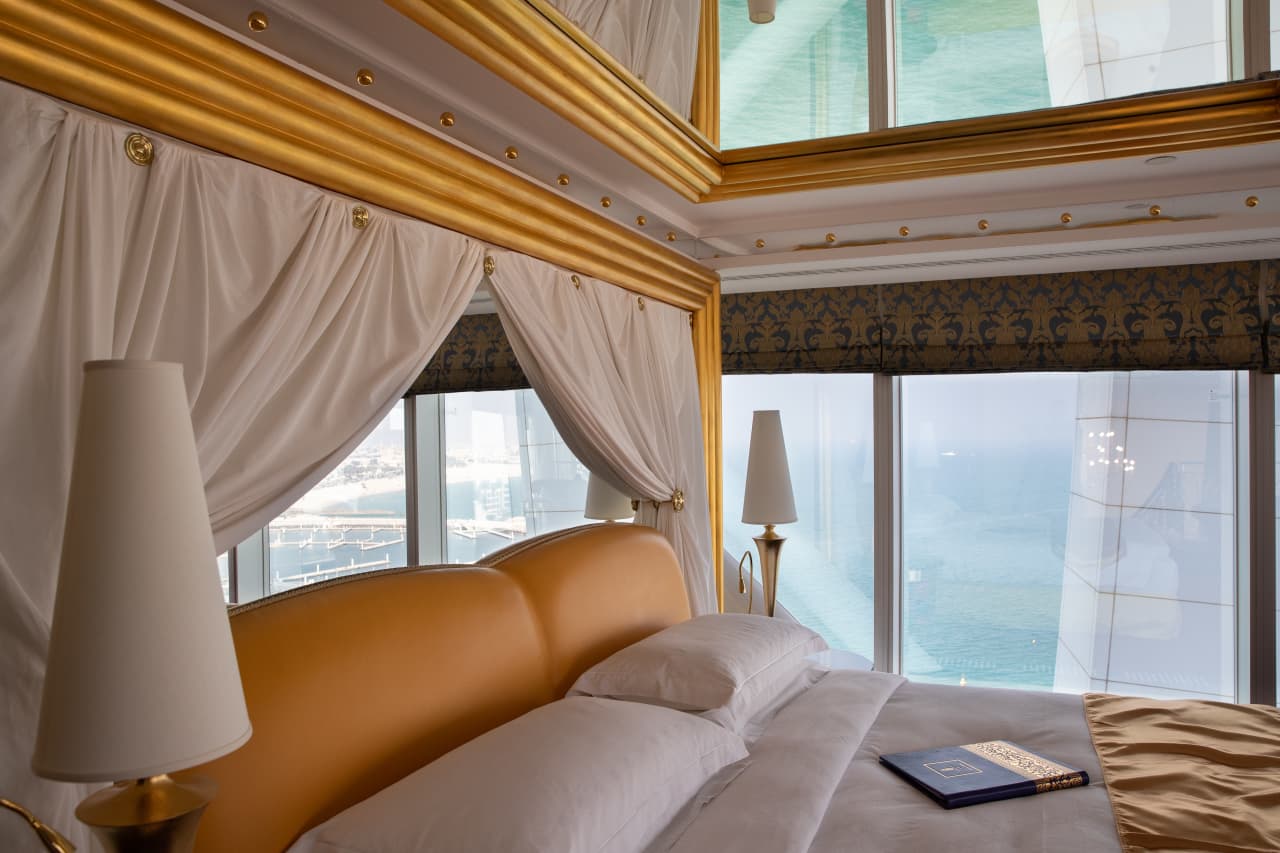
At a hotel regarded as one of the world’s most opulent, Geadah’s tasks are different from those of a concierge at a more typical city hotel. Guests make use of around the clock butler service and stay in gilded two-story suites bedecked in enough marble and gold as to border on the palatial, after entering the property through a world-record, almost 600-foot high atrium. Expectations are even higher.
Geadah, who’s been in Dubai for a decade and with the Jumeirah Burj Al Arab team for the past three years, strives to connect with his guests, think outside the box, and stay up to date with a city amid constant evolution. There may be no better person to offer his handpicked recommendations for what to experience in and around the city.
Geadah, 48, spoke with Penta about his top tips and insider recommendations for a memorable visit to Dubai. undefined
Stay
Beyond the swanky confines of his offices at the Burj Al Arab, Geadah’s top choice elsewhere in town is the XVA Art Hotel in Bur Dubai.
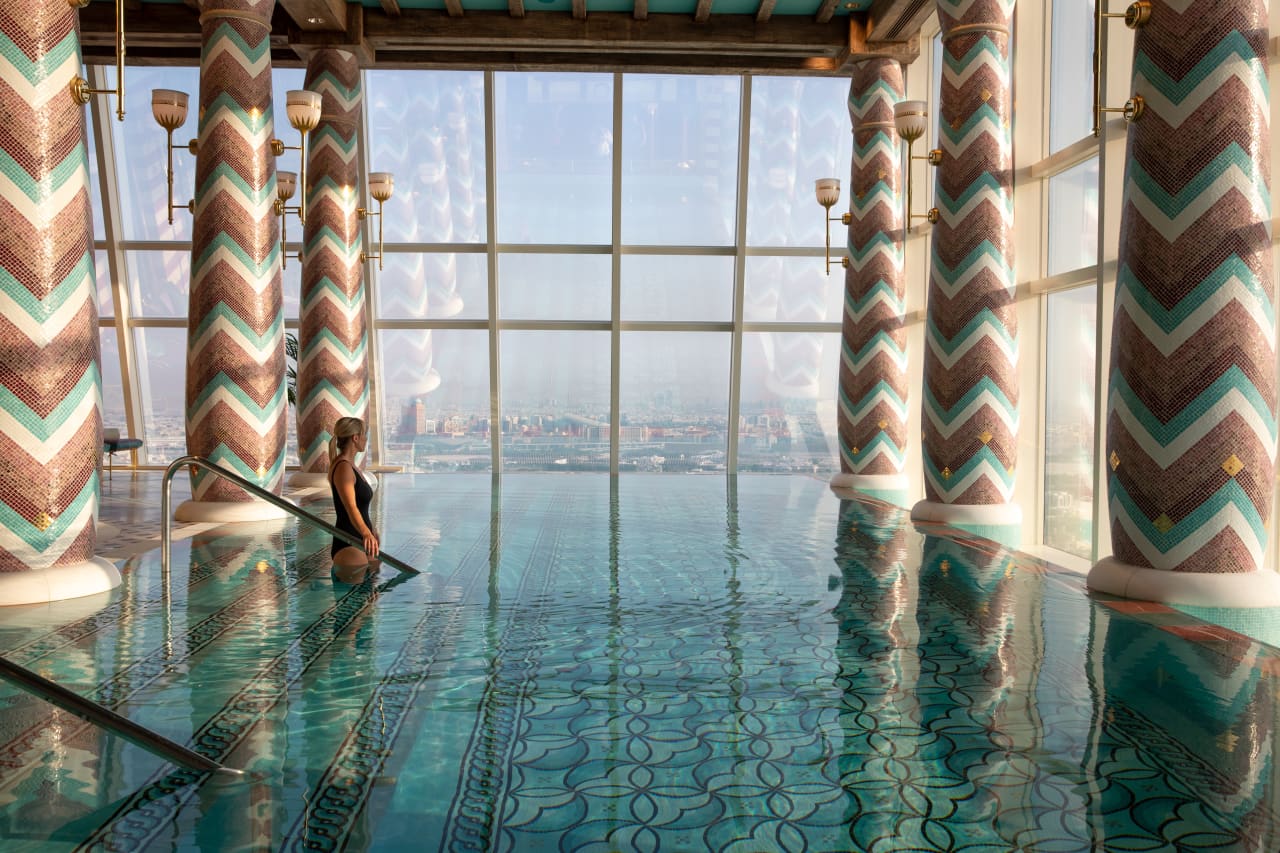
“It’s a true hidden gem that beautifully combines heritage, art, and tranquility,” he says. The property is set within a traditional Emirati house in the heart of the Al Fahidi historical neighborhood, and guests enjoy the area’s charming traditional architecture, heritage sites, and history, along with the artistic touches of its 15 individually designed rooms.
“What I love most about XVA is how it fosters conversations around art, culture, heritage, and creativity,” Geadah says. For those looking to escape the city for a night or two, head to Bab Al Shams Desert Resort.
“It’s a luxurious oasis hidden away in the Arabian desert, just about an hour’s drive from the lively city,” Geadah says. “Bab Al Shams offers breathtaking desert views that make for a truly unique getaway, and the resort beautifully combines traditional Arabian design with modern comforts, and also offers unique activities like camel rides, adding a touch of adventure to your stay.”
Adjacent to the Burj Al Arab is the Madinat Jumeirah, the largest resort in Dubai at about 100 acres in size. It’s a destination to itself featuring a handful of different hotels and hideaways sharing an expansive property interconnected with walkways and boat canals, including a huge lagoon-style resort pool, a lengthy stretch of private beach, and a staggering lineup of about 50 dining and drinking venues.
Shop
Dubai is home to every luxury brand and retailer on the planet, including at Dubai Mall, one of the largest in the world. Finding smaller, local purveyors for a more authentic shopping experience may be more rewarding. “When it comes to immersing yourself in the vibrant culture and sensory delights of Dubai, the city’s souks [marketplaces] are an absolute must-visit,” Geadah says.
Different souks are focused on different types of goods, and Geadah recommends a few in particular. “First up is the Dubai Spice Souk, nestled in the heritage area; this colourful market is a sensory feast, brimming with aromatic herbs and spices that fill the air with their tantalising scents,” he says.
From there, the Gold Souk is close by, as well as the Perfume Souk, another of his top picks. “It is a fragrant paradise in its own right, and here you will encounter some of the most authentic and enticing scents Dubai has to offer: Oud, a signature fragrance derived from resin is beloved by both Emirati men and women for its earthy allure.”
Explore
The most difficult ticket in Dubai right now is the Museum of the Future.
“It’s quickly become a must-visit destination and it’s easy to see why, as the building itself is an architectural marvel, featuring a stunning torus-shaped structure adorned with Arabic calligraphy across 1,024 stainless steel panels,” Geadah says. Visitors enter an experiential space that transports them to the year 2071. “It is a captivating experience for anyone interested in what the future might hold.”
A more off-the-beaten-path pick is the Al Shindagha Museum in the historical neighbourhood of the same name, which takes people on a journey through time in the other direction. “Visitors explore the meticulously restored heritage houses along the serene Dubai Creek, houses which aren’t just structures, but living museums, each telling its own story of traditional crafts and bustling commercial activities from bygone eras,” he says.
Another choice is the Coffee Museum. “Lose yourself in a treasure trove of antique items that trace the rich history of coffee, from its humble beginnings to its global significance,” Geadah says. “For a dose of authentic culture, head to the Sheikh Mohammed Centre for Cultural Understanding where locals offer hands-on explorations of traditional ways of life while showcasing hospitality and serving a traditional meal. The arts district at Alserkal Avenue, meanwhile, features contemporary galleries, studios, and exhibition spaces.
Visit the Al Farooq Omar Bin Al Khattab Mosque for a glimpse at a splendorous structure inspired by Istanbul’s Blue Mosque. “Beyond its architectural marvel, the mosque embodies a deeper purpose — to foster understanding, harmony, and unity,” Geadah says. “Within its walls, words like moderation, peace, and tolerance reverberate, echoing local values and serving as a bridge between Arabic civilization and the world beyond. Non-Muslims are welcome to visit the mosque outside of praying times.”
The most popular choice for an excursion outside the city is a desert safari to the Dubai Desert Conservation Reserve. Ride in a heritage vehicle across the dunes and enjoy activities such as falconry, wildlife viewing, and a Bedouin-style barbecue feast. For a different take, Geadah recommends starting the adventure with a sunrise hot air balloon ride.
The terraforming marvels of Palm Jumeirah should be seen and explored by every visitor. There are several viewpoints to consider, and Geadah also suggests taking to the water with a yacht trip or jet ski tour to gain an additional perspective. And of course, the iconic Burj Khalifa remains one of Dubai’s signature sights. The best way to soak it all in is via the At The Top experience, sending visitors to the 152nd floor along with a series of viewing points and lounges on different floors.
Eat & Drink
“Dubai’s culinary scene is incredibly diverse, offering everything from Michelin-starred restaurants to authentic street food,” Geadah says. Many of the world’s most well known culinary fixtures have locations in the city, from Massimo Bottura and Gordon Ramsay to Daniel Boulud , Nobu Matsuhisa, Jamie Oliver, and scores of others. When possible, though, Geadah prefers arranging for a more unique experience, once putting together a secret culinary tour for a food-loving family with the help of a local historian and guide.
“The older part of town boasts a rich culinary heritage, with influences from India, Persia, and the Arab world, and it’s home to some of the most unique and charming eateries,” Geadah says.
Geadah has no shortage of restaurant recommendations, though, many of which come with particular vantage points. He suggests Shimmers for an on-the-beach taste of Greek fare with a view of the Burj Al Arab; Coucou offers “festive French” from atop Palm Tower, offering a 360 degree view of Palm Jumeirah; and in downtown Dubai, Urla offers Aegean dining with a view of The Dubai Fountain Show and Burj Khalifa.
At Burj Al Arab, consider L’Olivo at al Mahara, an outpost of Capri’s only two Michelin-starred restaurant. The restaurant is immersed within an enormous coral reef aquarium providing a captivating scene.
Always one to look for a local touch, Geadah also suggests Orfali Bros. “Three brothers, Mohammad, Wassim, and Omar Orfali, bring culinary magic to life, blending tradition and innovation inspired by their cultural roots and adventurous spirit,” he says. “Their small bistro offers a sensory experience where flavors dance and ingredients shine, reflecting their culinary journey.”
 Copyright 2020, Dow Jones & Company, Inc. All Rights Reserved Worldwide. LEARN MORE




BNW Developments has established a Sydney presence, joining Arada and Sobha Realty among the growing number of UAE developers pursuing Australian buyers and development opportunities.
The Australian leather house has opened an immersive four-day pop-up in Manhattan, unveiling its Bloom Collection and redefining what a product launch can look like.
AI-powered travel agents are challenging online booking platforms, but Airbnb’s exclusive listings and direct customer relationships could give it an edge. Its next challenge: turning repeat guests into loyal customers through stronger rewards and innovation.
3 min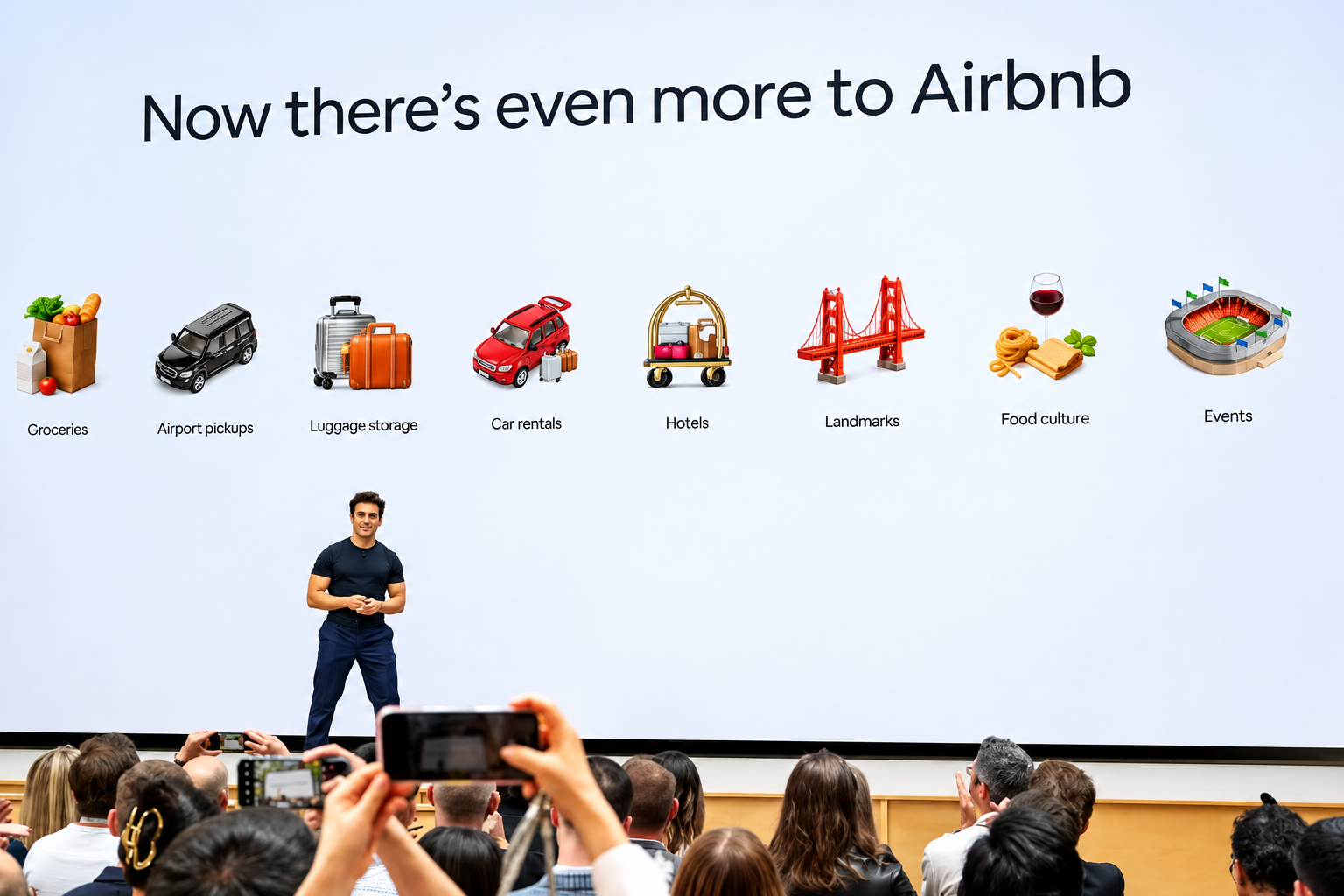
AI agents like Muse can already find you the cheapest hotel room in Paris. But they can’t locate a cheaper version of that Catskills cabin you’ve been eyeing, because it might only be available on Airbnb ABNB -1.43%decrease.
Investors should pay attention to that distinction. When Meta Platforms META 3.38%increase launched its Muse agent last month, travel stocks including Booking Holdings BKNG -1.19%decrease, Expedia and Airbnb all fell sharply.
Airbnb, though, has a real chance to emerge as a winner from the upheaval. The catch: Its stock already reflects above-industry growth. To justify its valuation, Airbnb will need to turn repeat customers into loyal ones.
Online travel companies make much of their money by simplifying search and collecting fees on bookings. AI agents threaten that model.
But not all travel marketplaces are equally exposed. Booking and Expedia largely sell hotel rooms that travelers can also book directly or through competing sites. If an agent can find the same room elsewhere, it has little reason to favor either Booking or Expedia.
Booking and Expedia also sell sponsored listings that steer travelers toward particular properties. Wells Fargo estimates those will account for about 8% of Expedia’s revenue and a much higher percentage of profit next year.
Airbnb has more ways to adapt. More than half its listings are available only on its platform, and more than 90% of its traffic comes directly to its app or website.
The customer relationship doesn’t end after booking, either. Bernstein analyst Richard Clarke notes that 90% of Airbnb guests go on to message their hosts about arrival times, keys or local taxes, giving Airbnb a connection to both sides of the transaction.
How the companies have responded to the possible agentic future is telling.
Expedia quickly signed on as a Muse partner. Airbnb hasn’t, and Chief Executive Brian Chesky says AI chatbots have so far been a boon, sending customers to Airbnb’s website.
Chatbots might work for buying paper towels, he quipped at a Skift conference last month, but people enjoy planning trips. He argued that browsing dozens of homes isn’t something a text-based chatbot is well suited for.
Still, the AI jitters arrived just as Airbnb was persuading investors it deserved its pricey multiple. For years after its 2020 initial public offering, the stock—which trades around 25 to 30 times forward earnings—went nowhere. Investors saw a mature operator trading at a growth premium.
This year, Airbnb growth seems to be accelerating. The stock jumped in August after the company raised its full-year revenue-growth guidance with its second-quarter results. Wells Fargo analyst Ken Gawrelski credits a run of product improvements under a revamped leadership team.
Among the changes: letting guests reserve now and pay later, adding hotels, and a redesigned home page and app. Investors were also betting on what comes next, including thousands more hotels, car rentals and, eventually, advertising.
The irony is that some of those growth drivers push Airbnb closer to the kind of business Booking and Expedia run—the kind of business AI agents could threaten. Even if AI agents capture a large share of travel planning and booking, Airbnb would capture the demand. But it and others would slowly lose control over how customers find and choose properties.
That would undermine the advertising opportunity investors are counting on. The bigger point for Airbnb and other marketplaces is that losing control of customer acquisition could mean surrendering some of their pricing power and margins.
To bulletproof itself, Airbnb might look to another e-commerce giant that has so far kept AI agents at arm’s length: Amazon.
Like Amazon, Airbnb has a loyal customer base and hard-to-match supply. But it has nothing like Prime membership to make customers think twice before taking their business elsewhere.
That is where loyalty comes in. Business travelers stick with Hilton or Marriott because enough nights earn them perks. Leisure travelers rarely accumulate stays with one chain. Airbnb has millions of listings and plenty of repeat customers, but no broad rewards program. It has begun experimenting with credits on hotel stays, but it should make loyalty a priority, not just a promotion.
Airbnb also plans to launch its own AI agent next year. But travelers using an agent might still want it to search Airbnb, Vrbo, Booking and hotel websites alike, rather than limit itself to one company’s inventory.
Eventually, Airbnb might have to strike deals with agent makers, using its unique homes as leverage to negotiate favorable terms, says Gawrelski. Such deals, along with rewards for loyal guests, could over the long term eat into the company’s roughly 13% take rate, he adds. But if they bring in enough additional bookings, the trade-off could be worthwhile.
History offers a reason not to panic. The shift from desktop to mobile unsettled investors in Alphabet and Amazon, but both emerged as major beneficiaries. Companies with valuable assets can come out of a platform shift stronger, if they adapt quickly enough.
Airbnb has homes the bots can’t easily replace. Now it needs to give guests a reason to insist on booking them there.
