
Beefy, Austrian-Made Camper Van Aims to Drive America’s Glampers off the Beaten Path

By JIM MOTAVALLI
Fri, Oct 18, 2024 10:24am 4 min
4 min
4 min

 4 min
4 min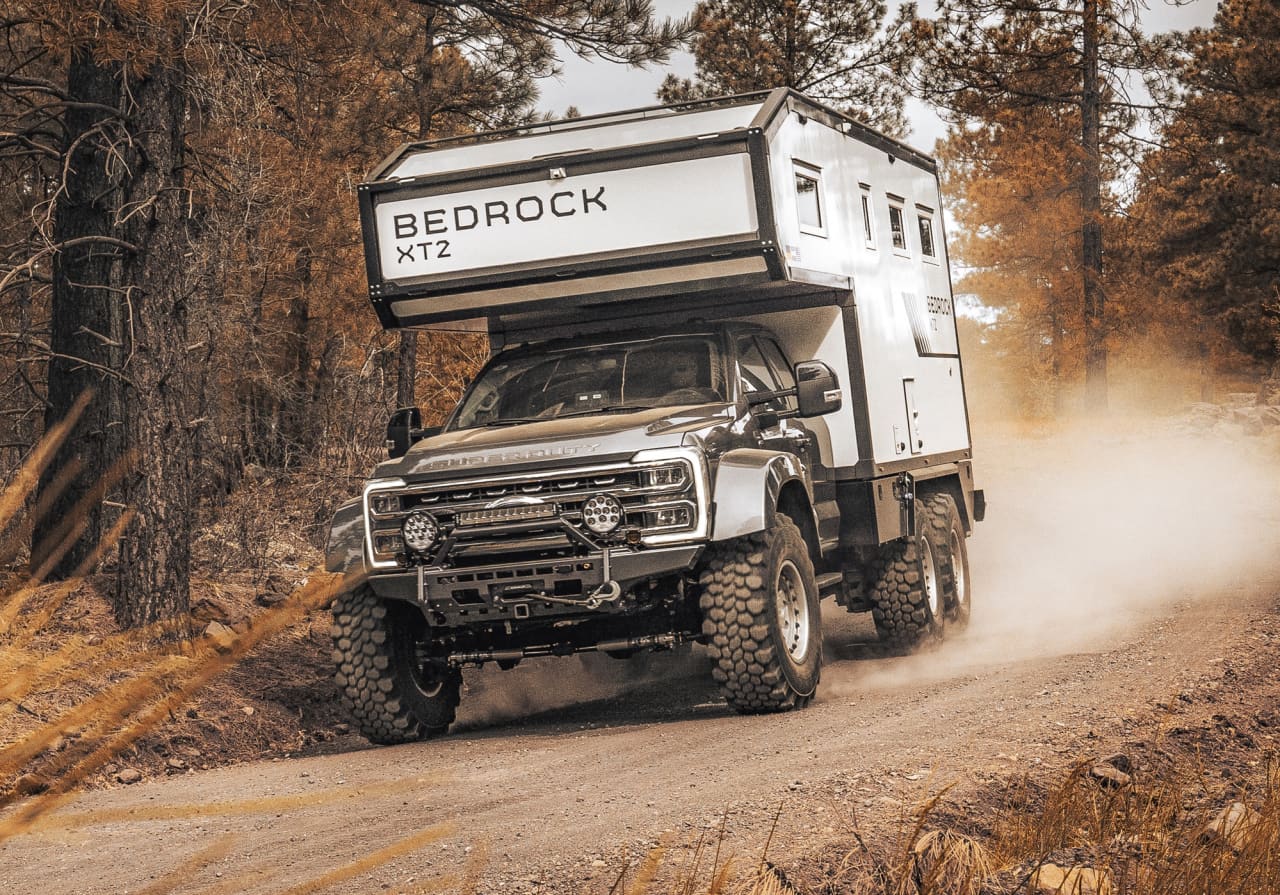
People do like to sit high in their rides, but this high? A ladder would have been helpful to mount the extra-tall Krug Expedition Bedrock XT2, a US$690,000 go-anywhere camper from an Austrian company that wants to conquer the American off-road RV market. This is off-the-beaten-path glamping at its finest.
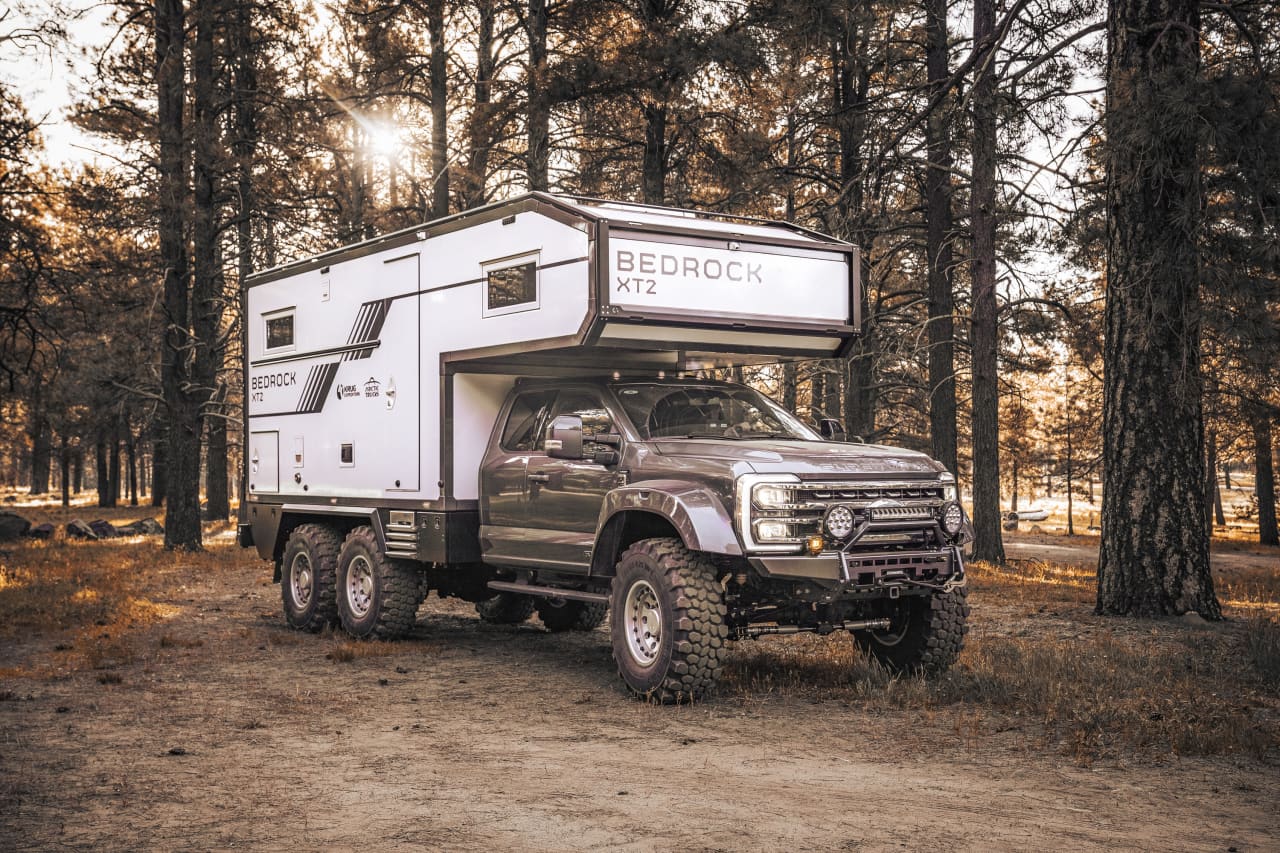
The example tested is, so far, the only one, but Krug has high hopes for the American market, which has a growing appetite for “expedition” off-road vehicles ranging from trucks to beefed-up RVs. The company describes the XT2 as a “6×4 off-road machine converting a luxury variant of the Ford Super Duty F-550 and bringing it to the next level with suspension and chassis frame reliability.” In other words, it’s a rugged three-axle truck with a double bed attached. The camper is a joint production with Iceland-based Arctic Trucks, which specialises in polar expeditions to the Arctic and Antarctic.
One of Arctic’s vehicles set a speed record of 108 hours from the Russian Novolazarevskaya Antarctic research station to the South Pole in 2010. The XT2 might be ideal, then, for a trip through the spectacular scenery of Alaska or for hitting the highway in Canada and driving north. The truck is ready to go off the grid, supported by electric power from a 1,450-watt-peak solar panel array and a 23-kilowatt-hour battery bank.
The founder of Krug, Viktor Ermolov, tried a competitor’s expedition vehicle around 2010 and thought he could do better with a vehicle filling an unmet need for a light (relatively speaking) expedition camper that could drive well in extreme terrain. The first truck came out in 2011.
“Our clients are adventure-seeking individuals with a passion for nature and conservation. They prioritise quality, reliability, and sustainability in their purchasing decisions and are motivated by the desire for unique and meaningful experiences,” Krug Expedition CEO Slawa Knorr said in a statement to Penta .
Asked about the typical client, he said that young couples and families with children are being seen more and more.
On the road, the 9,000 to 10,000-pound XT2, which looks like a normal truck-mounted camper on steroids, was surprisingly easy to drive. Under the hood was a Ford Powerstroke 6.7-litre diesel with direct injection and 330 horsepower, with the weight of the camper yielding something like nine miles per gallon. The assisted steering was fairly light. The brakes felt like they were hauling down considerable weight, which they were. The biggest consideration while driving was considering the width and avoiding contact with cars lining the road. The cab was relatively comfortable, and the visibility good except toward the back, where the big mirrors became extra important.
The third axle decreases ground pressure up to 25%, and the big Continental multi-purpose tires provide a lot of grip. The rear air suspension is adjustable from the cab to accommodate heavy loads and rough terrain.
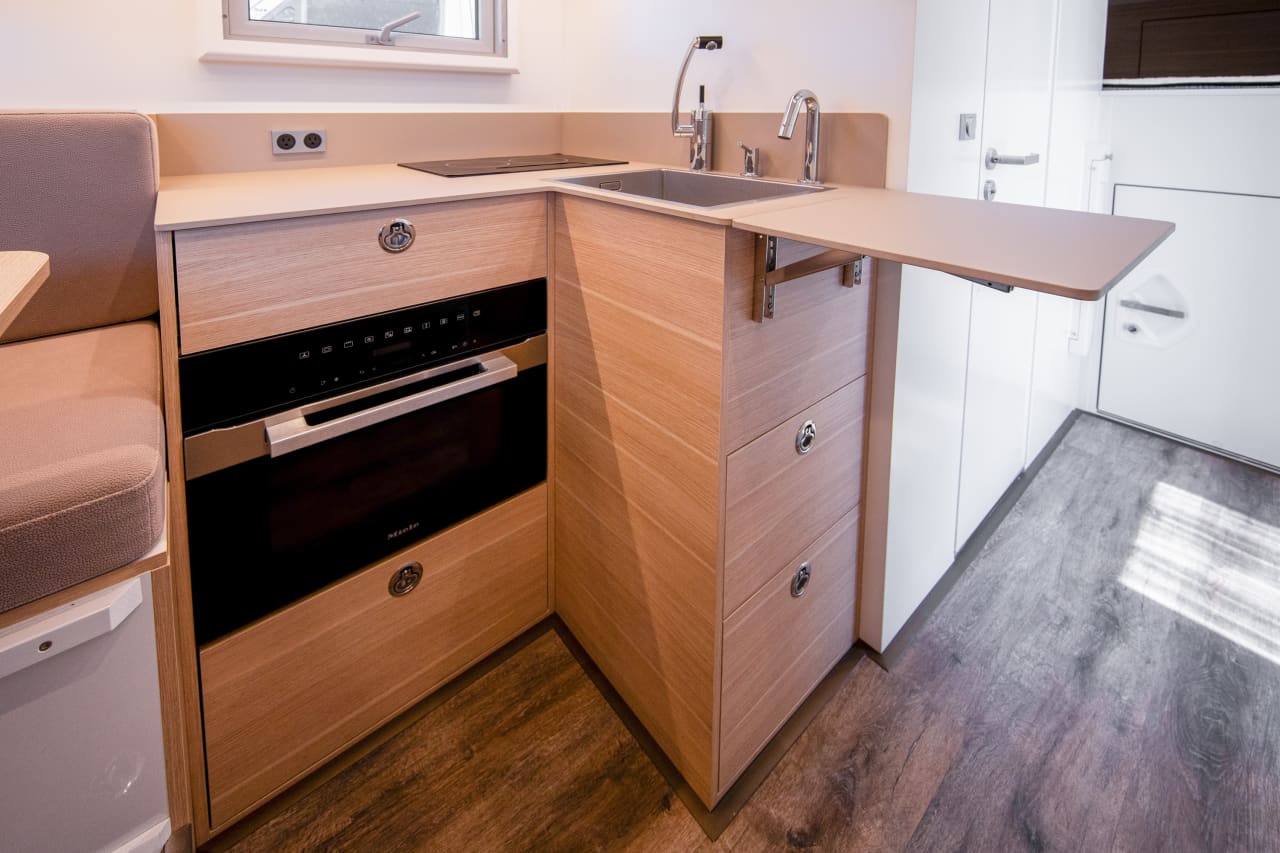
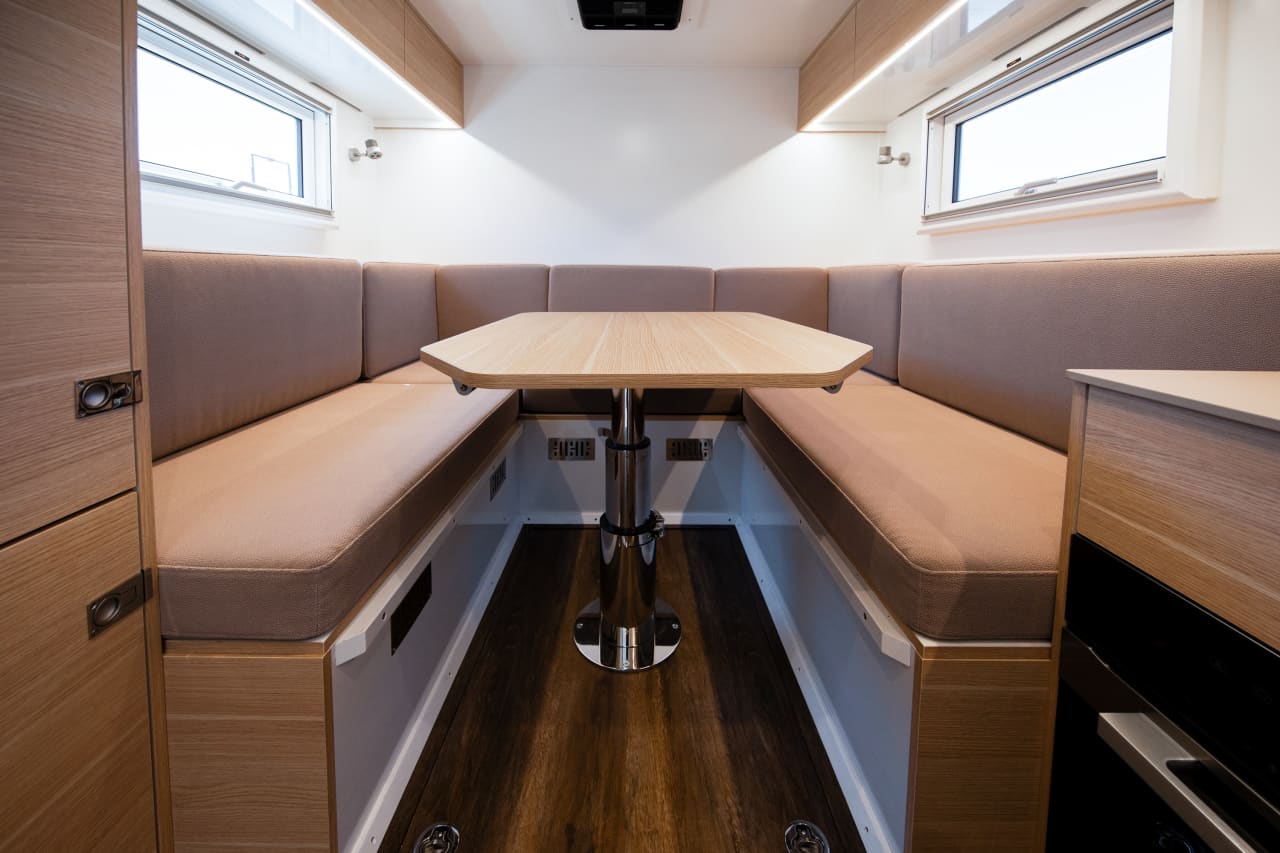
The exterior camper panels are made from a high-grade, glass-reinforced plastic (GRP) laminate that is 70% fibreglass. Inside, the XT2 offers functional luxury. There was a comfortable-looking king bed in its own nook, a kitchenette, a bathroom with walk-in shower supported by a 118-gallon filtered water tank, and a dining area and lounge with a 32-inch TV (with Starlink connectivity) and a table that converted to a second sleeping area. For a week away, it was more than fine, and the buyer can make it as luxurious as they want.
The kitchen’s fresh water uses the General Ecology Seagull IV-X2 system to banish chemicals, bacteria, and viruses. It may be cold where you’re going, so the quiet Truma Combi diesel-powered air heating system is on board, providing cabin heat and hot water. A hydronic system for underfloor heating is also available for colder climates, with automatic frost protection and radiators in the bathroom and dining area radiators. And for hotter weather, there’s the highly energy-efficient Nomadic Cooling air-conditioning system.
If cooking al fresco is desired, a portable outdoor kitchen can be built into the underfloor storage boxes.
For weekend getaways, any number of less-expensive camper solutions are available. The XT2 is aimed at rugged adventurers, who want to be virtually self-sufficient for excursions off the beaten path. It’s not the only vehicle in this expedition category. There’s also the evocatively named Storyteller GXV Epic, priced at a similar US$696,377. This is a big, tough all-wheel drive truck with up to 1,800 miles of range, 18 kilowatt-hours of available power, a built-in washer and dryer, and more.
Or how about the Ford F-250-based US$350,000 27 North Ascender RexRover truck, which sleeps four? Need more room? The cabover Loki Steyr 1491 accommodates six.
 Copyright 2020, Dow Jones & Company, Inc. All Rights Reserved Worldwide. LEARN MORE




BNW Developments has established a Sydney presence, joining Arada and Sobha Realty among the growing number of UAE developers pursuing Australian buyers and development opportunities.
The Australian leather house has opened an immersive four-day pop-up in Manhattan, unveiling its Bloom Collection and redefining what a product launch can look like.
AI-powered travel agents are challenging online booking platforms, but Airbnb’s exclusive listings and direct customer relationships could give it an edge. Its next challenge: turning repeat guests into loyal customers through stronger rewards and innovation.
3 min
AI agents like Muse can already find you the cheapest hotel room in Paris. But they can’t locate a cheaper version of that Catskills cabin you’ve been eyeing, because it might only be available on Airbnb ABNB -1.43%decrease.
Investors should pay attention to that distinction. When Meta Platforms META 3.38%increase launched its Muse agent last month, travel stocks including Booking Holdings BKNG -1.19%decrease, Expedia and Airbnb all fell sharply.
Airbnb, though, has a real chance to emerge as a winner from the upheaval. The catch: Its stock already reflects above-industry growth. To justify its valuation, Airbnb will need to turn repeat customers into loyal ones.
Online travel companies make much of their money by simplifying search and collecting fees on bookings. AI agents threaten that model.
But not all travel marketplaces are equally exposed. Booking and Expedia largely sell hotel rooms that travelers can also book directly or through competing sites. If an agent can find the same room elsewhere, it has little reason to favor either Booking or Expedia.
Booking and Expedia also sell sponsored listings that steer travelers toward particular properties. Wells Fargo estimates those will account for about 8% of Expedia’s revenue and a much higher percentage of profit next year.
Airbnb has more ways to adapt. More than half its listings are available only on its platform, and more than 90% of its traffic comes directly to its app or website.
The customer relationship doesn’t end after booking, either. Bernstein analyst Richard Clarke notes that 90% of Airbnb guests go on to message their hosts about arrival times, keys or local taxes, giving Airbnb a connection to both sides of the transaction.
How the companies have responded to the possible agentic future is telling.
Expedia quickly signed on as a Muse partner. Airbnb hasn’t, and Chief Executive Brian Chesky says AI chatbots have so far been a boon, sending customers to Airbnb’s website.
Chatbots might work for buying paper towels, he quipped at a Skift conference last month, but people enjoy planning trips. He argued that browsing dozens of homes isn’t something a text-based chatbot is well suited for.
Still, the AI jitters arrived just as Airbnb was persuading investors it deserved its pricey multiple. For years after its 2020 initial public offering, the stock—which trades around 25 to 30 times forward earnings—went nowhere. Investors saw a mature operator trading at a growth premium.
This year, Airbnb growth seems to be accelerating. The stock jumped in August after the company raised its full-year revenue-growth guidance with its second-quarter results. Wells Fargo analyst Ken Gawrelski credits a run of product improvements under a revamped leadership team.
Among the changes: letting guests reserve now and pay later, adding hotels, and a redesigned home page and app. Investors were also betting on what comes next, including thousands more hotels, car rentals and, eventually, advertising.
The irony is that some of those growth drivers push Airbnb closer to the kind of business Booking and Expedia run—the kind of business AI agents could threaten. Even if AI agents capture a large share of travel planning and booking, Airbnb would capture the demand. But it and others would slowly lose control over how customers find and choose properties.
That would undermine the advertising opportunity investors are counting on. The bigger point for Airbnb and other marketplaces is that losing control of customer acquisition could mean surrendering some of their pricing power and margins.
To bulletproof itself, Airbnb might look to another e-commerce giant that has so far kept AI agents at arm’s length: Amazon.
Like Amazon, Airbnb has a loyal customer base and hard-to-match supply. But it has nothing like Prime membership to make customers think twice before taking their business elsewhere.
That is where loyalty comes in. Business travelers stick with Hilton or Marriott because enough nights earn them perks. Leisure travelers rarely accumulate stays with one chain. Airbnb has millions of listings and plenty of repeat customers, but no broad rewards program. It has begun experimenting with credits on hotel stays, but it should make loyalty a priority, not just a promotion.
Airbnb also plans to launch its own AI agent next year. But travelers using an agent might still want it to search Airbnb, Vrbo, Booking and hotel websites alike, rather than limit itself to one company’s inventory.
Eventually, Airbnb might have to strike deals with agent makers, using its unique homes as leverage to negotiate favorable terms, says Gawrelski. Such deals, along with rewards for loyal guests, could over the long term eat into the company’s roughly 13% take rate, he adds. But if they bring in enough additional bookings, the trade-off could be worthwhile.
History offers a reason not to panic. The shift from desktop to mobile unsettled investors in Alphabet and Amazon, but both emerged as major beneficiaries. Companies with valuable assets can come out of a platform shift stronger, if they adapt quickly enough.
Airbnb has homes the bots can’t easily replace. Now it needs to give guests a reason to insist on booking them there.
