
Lamborghini Debuts Its First Hybrid Super-SUV

By JOHN SCOTT LEWINSKI
Sun, Nov 3, 2024 7:00am 4 min
4 min
4 min

 4 min
4 min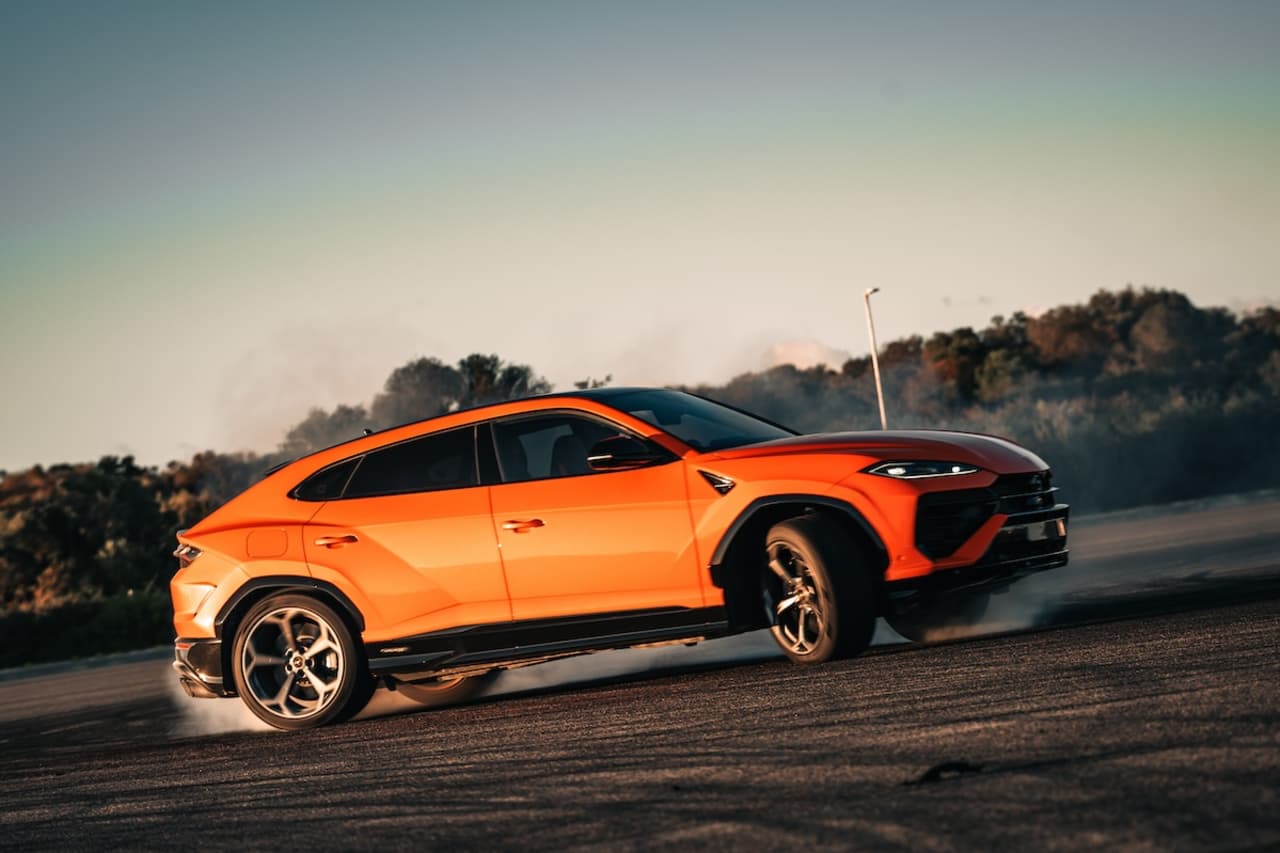
Lamborghini CEO Stephan Winkelmann has made it clear the company, which makes some of the fastest cars in the world, would not speed into the era of electrification.
“Our first steps in that (electrification) direction will be plug-in hybrids throughout the lineup,” he said in a 2022 interview with Penta. “This is all very easily welcomed at Lamborghini. The equations are easy. We always promise more performance than the generation before for all our cars, and we will do so while maintaining sustainability. By 2025, we will be able to cut our overall emissions by 50% with all of the hybrid models added.”
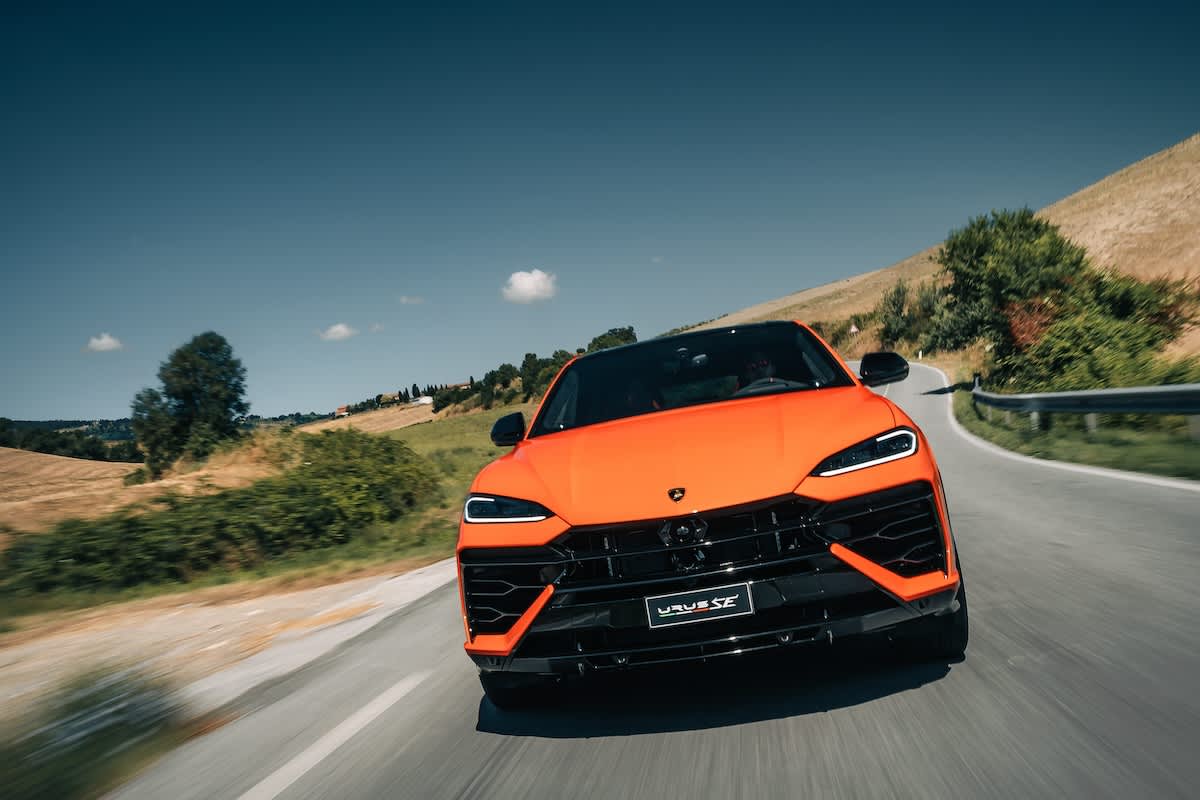
Proving Lamborghini and Winkelmann are as good as their collective word, the time of watts and volts arrived in Bologna, Italy, with the debut of the 2025 Lamborghini Urus SE. The first hybrid super-SUV from the proud Italian firm, which starts at $275,000 marries the familiar internal combustion specs of its growling engines with battery power looking not so much to save the planet as to propel vehicles across it with more alacrity.
The Urus SE is the first hybrid plug-in version of Lamborghini’s SUV, and it’s aimed to outperform its all-internal combustion rivals, such as the Aston Martin DBX707 and the Bentley Bentayga. The PHEV (Plug-in Hybrid Electric Vehicle) Urus SE relies on an 800 CV hybrid powertrain, surpassing any previous Lamborghini SUV model in torque and power numbers.
The machine’s twin-turbo 4.0-litre V-8 engine is reengineered and partnered with an electric powertrain to produce 620 CV. For the uninitiated, CV is the abbreviation of Chevaux-Vapeur and is similar to horsepower. Usually, HP converts to just a little less than CV—at least allowing the automotive enthusiasts from the U.S. and Europe to get a traditional sense of vehicle power for gas-powered or hybrid vehicles without needing a conversion calculator.
To make a long engineering story as quick as the Urus SE, if you add together the internal contrition power plant and the e-motor, the final output is 800 CV. The result is a Lamborghini that cuts its emissions by 80% without sacrificing performance, comfort, or driving excitement.
The thinking process on when and how to release this plug-in hybrid began before the company’s 2021 pledge to cut CO2 emissions, says Stefano Cossalter, the Urus model line director.

“This plan gave momentum to a profound and constant research of opportunities and challenges involved in the transition to electrification,” Cossalter says. “The plan started in 2023 with the launch of the Revuelto [sold out into 2026], our first HPEV (high performance electrified vehicle), and continues with the launch of the hybrid version of our Super SUV Urus SE.”
Cossalter lays out that the slow and steady march to electrification will continue next year with the release of the Temerario, described by Lamborghini as the successor to the popular Huracan and “the first super sports car in the history of the … brand to be equipped with a V-8 twin-turbo engine paired with three electric motors.” Then, the automaker will look to the horizon for its introduction of the Lanzador, the company’s first BEV (battery electric vehicle) in 2028.
The hybrid version offers improved performance over the 100% gas Urus. A magnet synchronous electric motor located inside the SE’s eight-speed automatic transmission tied into the four-wheel-drive system can boost the V-8 engine, offering additional acceleration. Meanwhile, that motor can provide enough power to transform the Urus SE into a totally electric vehicle with a range of about 35 miles in EV mode.
With the new drive system noted, Lamborghini’s engineers could turn to performance specs. They built in a new, centrally located longitudinal electric torque vectoring system with an electro-hydraulic multi-plate clutch. That’s a lot of fancy tech talk to say the vehicle can throw power and grip back and forth between the front and rear axles wherever the onboard system senses it’s needed. A new electronic limited-slip differential on the rear axle helps give the Urus SE oversteering when needed. The end result is an SUV that packs the feel of a Huracan on the road.
That supercar feel in an SUV is the experience Lamborghini refuses to abandon in the Urus SE, Cossalter says.
“We didn’t come to compromises in the hybridisation process,” he says. “We wanted the Urus SE to preserve the DNA of the original project and enhance the experience for the driver. For those reasons, we decided not to downsize. We kept a V-8 engine with its strong character and voice, and then added some spice to the dynamic behavior by changing the all-wheel-drive architecture. The result is we have more power, more torque, more speed, more fun.”
As for external styling on the Urus, Lamborghini takes after its competition at Aston Martin or Ferrari by trying to make an SUV that looks as little like an SUV as possible. The profile is lowered, and the lines sweeping and tapering from nose to tail, as though Lambo’s in-house designers want to hide the size and functionality of an SUV inside the shape of the familiar Lamborghini supercars of the past.
However, driving the Urus does not feel much like a traditional Lamborghini supercar simply because the driving position is higher and more upright compared to, say, an Avantador that puts the driver’s backside close to pavement. Regardless of where one sits, the acceleration, noise, and tight handling lives in a Urus as happily as it does in any other Lambo.
As its first volume consumer step into the hybrid world, the Urus SE tells Italian supercar enthusiasts to keep the faith.
“The Urus SE points to the future with electrification while keeping its heritage intact,” Cossalter says.
 Copyright 2020, Dow Jones & Company, Inc. All Rights Reserved Worldwide. LEARN MORE




BNW Developments has established a Sydney presence, joining Arada and Sobha Realty among the growing number of UAE developers pursuing Australian buyers and development opportunities.
The Australian leather house has opened an immersive four-day pop-up in Manhattan, unveiling its Bloom Collection and redefining what a product launch can look like.
AI-powered travel agents are challenging online booking platforms, but Airbnb’s exclusive listings and direct customer relationships could give it an edge. Its next challenge: turning repeat guests into loyal customers through stronger rewards and innovation.
3 min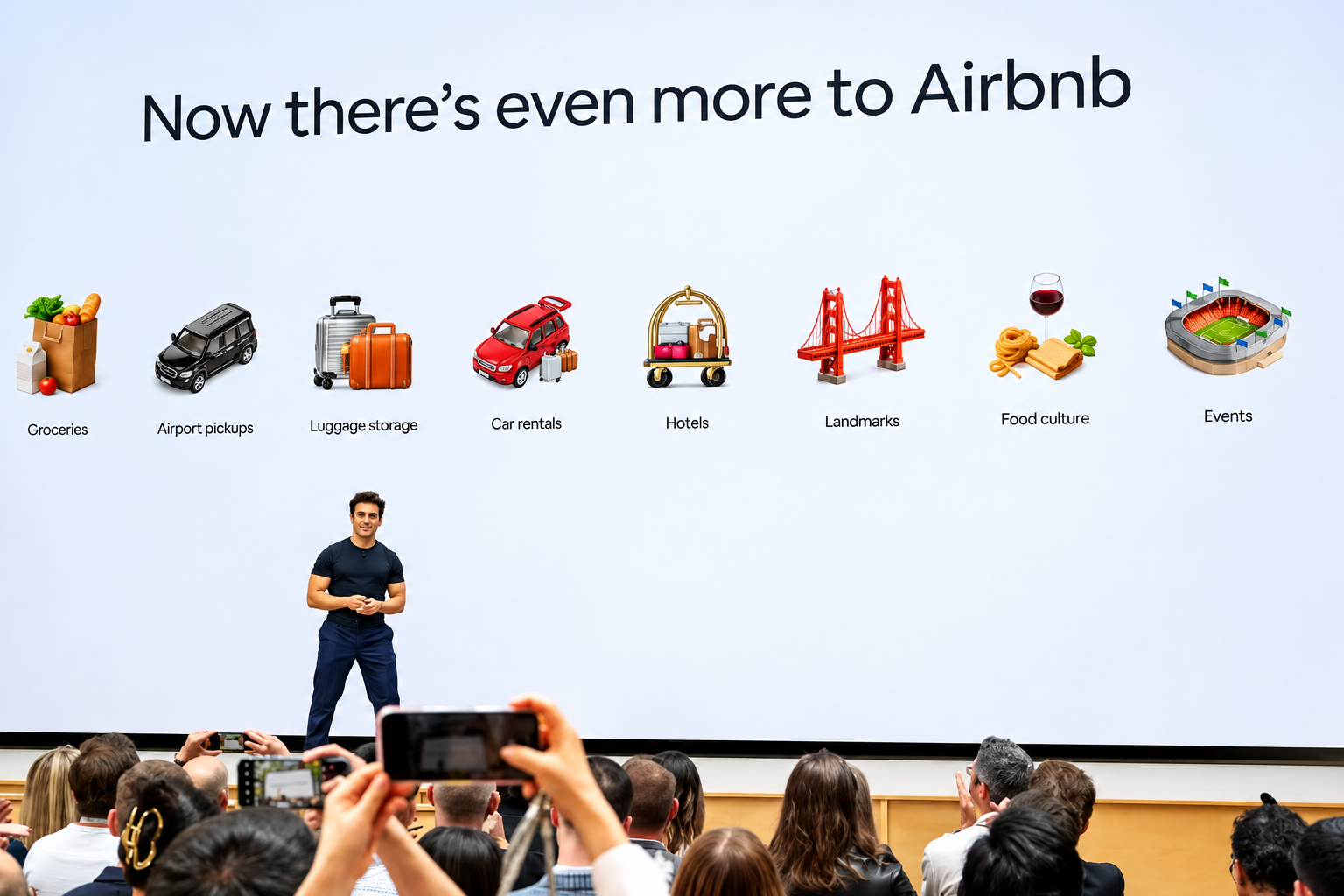
AI agents like Muse can already find you the cheapest hotel room in Paris. But they can’t locate a cheaper version of that Catskills cabin you’ve been eyeing, because it might only be available on Airbnb ABNB -1.43%decrease.
Investors should pay attention to that distinction. When Meta Platforms META 3.38%increase launched its Muse agent last month, travel stocks including Booking Holdings BKNG -1.19%decrease, Expedia and Airbnb all fell sharply.
Airbnb, though, has a real chance to emerge as a winner from the upheaval. The catch: Its stock already reflects above-industry growth. To justify its valuation, Airbnb will need to turn repeat customers into loyal ones.
Online travel companies make much of their money by simplifying search and collecting fees on bookings. AI agents threaten that model.
But not all travel marketplaces are equally exposed. Booking and Expedia largely sell hotel rooms that travelers can also book directly or through competing sites. If an agent can find the same room elsewhere, it has little reason to favor either Booking or Expedia.
Booking and Expedia also sell sponsored listings that steer travelers toward particular properties. Wells Fargo estimates those will account for about 8% of Expedia’s revenue and a much higher percentage of profit next year.
Airbnb has more ways to adapt. More than half its listings are available only on its platform, and more than 90% of its traffic comes directly to its app or website.
The customer relationship doesn’t end after booking, either. Bernstein analyst Richard Clarke notes that 90% of Airbnb guests go on to message their hosts about arrival times, keys or local taxes, giving Airbnb a connection to both sides of the transaction.
How the companies have responded to the possible agentic future is telling.
Expedia quickly signed on as a Muse partner. Airbnb hasn’t, and Chief Executive Brian Chesky says AI chatbots have so far been a boon, sending customers to Airbnb’s website.
Chatbots might work for buying paper towels, he quipped at a Skift conference last month, but people enjoy planning trips. He argued that browsing dozens of homes isn’t something a text-based chatbot is well suited for.
Still, the AI jitters arrived just as Airbnb was persuading investors it deserved its pricey multiple. For years after its 2020 initial public offering, the stock—which trades around 25 to 30 times forward earnings—went nowhere. Investors saw a mature operator trading at a growth premium.
This year, Airbnb growth seems to be accelerating. The stock jumped in August after the company raised its full-year revenue-growth guidance with its second-quarter results. Wells Fargo analyst Ken Gawrelski credits a run of product improvements under a revamped leadership team.
Among the changes: letting guests reserve now and pay later, adding hotels, and a redesigned home page and app. Investors were also betting on what comes next, including thousands more hotels, car rentals and, eventually, advertising.
The irony is that some of those growth drivers push Airbnb closer to the kind of business Booking and Expedia run—the kind of business AI agents could threaten. Even if AI agents capture a large share of travel planning and booking, Airbnb would capture the demand. But it and others would slowly lose control over how customers find and choose properties.
That would undermine the advertising opportunity investors are counting on. The bigger point for Airbnb and other marketplaces is that losing control of customer acquisition could mean surrendering some of their pricing power and margins.
To bulletproof itself, Airbnb might look to another e-commerce giant that has so far kept AI agents at arm’s length: Amazon.
Like Amazon, Airbnb has a loyal customer base and hard-to-match supply. But it has nothing like Prime membership to make customers think twice before taking their business elsewhere.
That is where loyalty comes in. Business travelers stick with Hilton or Marriott because enough nights earn them perks. Leisure travelers rarely accumulate stays with one chain. Airbnb has millions of listings and plenty of repeat customers, but no broad rewards program. It has begun experimenting with credits on hotel stays, but it should make loyalty a priority, not just a promotion.
Airbnb also plans to launch its own AI agent next year. But travelers using an agent might still want it to search Airbnb, Vrbo, Booking and hotel websites alike, rather than limit itself to one company’s inventory.
Eventually, Airbnb might have to strike deals with agent makers, using its unique homes as leverage to negotiate favorable terms, says Gawrelski. Such deals, along with rewards for loyal guests, could over the long term eat into the company’s roughly 13% take rate, he adds. But if they bring in enough additional bookings, the trade-off could be worthwhile.
History offers a reason not to panic. The shift from desktop to mobile unsettled investors in Alphabet and Amazon, but both emerged as major beneficiaries. Companies with valuable assets can come out of a platform shift stronger, if they adapt quickly enough.
Airbnb has homes the bots can’t easily replace. Now it needs to give guests a reason to insist on booking them there.
