When To Give Inheritance Money To Your Kids

When to give Inheritance

Should an inheritance be strictly an inheritance, to be left to children when their parents die? Or should parents use at least some of that money while they’re still alive to help out their adult children financially? And if parents give while they’re alive, how much should they give and when?

Of course, every family is different—both in terms of what they can afford and what brings them joy. But there are some things every family should consider when deciding how to pass wealth from one generation to the next. The Wall Street Journal invited three financial advisers to discuss those issues: Michael Garry, founder of Yardley Wealth Management in Yardley, Pa.; Jacqueline B. Roessler, certified divorce financial analyst at the Center for Financial Planning in Southfield, Mich.; and Tony Walker, a retirement-planning specialist in Louisville, Ky.

Here are edited excerpts of the discussion.

WSJ: How do you advise clients on the topic of the timing of inheritance?

MR. GARRY: I believe strongly that parents should dole out money while they are alive and not stockpile it any more than they need to for their own financial security. The people who make gifts during their lifetimes are able to help their children, and maybe grandchildren, at the exact time they likely most need the money, and not based on the random date of their death. They also get to see the benefit of the gift to their children and grandchildren. The extent of the gifts depends on how much the parents can afford.

MS. ROESSLER: It depends on their personal goals, tax situation and current financial needs, as well as the financial needs and tax situation of their heirs. First, they need to make sure they have enough resources to cover their own financial needs, including any potential long-term-care expense. Once that’s established, they should discuss gifting strategies with their adviser, keeping in mind the parents’ ultimate goals, such as minimising income taxes and capital-gains taxes during their lifetime, spending down their assets to later qualify for Medicaid, or providing for their children’s specific financial needs.

MR. WALKER: I’m a firm believer that too many people save every penny until the day they die, instead of spending their money now. With so many savers maxing out contributions to their 401(k) plans, my concern is that most of them have no plan for using and enjoying their savings before it’s too late. There’s a struggle going on with my clients when I broach this subject of saving too much for the future. They wonder: Will their children be responsible with the money? There’s only one way to find out, and that’s throw them a bone now to see how they handle it.

WSJ: With the pandemic wreaking havoc on many families’ finances, have you seen families change the way they are thinking about inheritance?

MR. GARRY: Most of my clients are in much better shape than they were a year ago. Unfortunately, a lot of their children and grandchildren are not. We’ve seen a real uptick in people expressing gratitude in being so fortunate with their health and finances and not wanting to wait to help both their offspring and their favourite charities.

We’ve had people who have kicked the idea around for years but never did it who are actually taking steps now and making gifts. They seem to realize more than ever that they don’t know how much time they have, and some of their kids have been unemployed for much of the last year. I don’t think many of them ever expected to see their children hurting so much, and it has moved them.

MS. ROESSLER: I haven’t seen families make dramatic changes to their legacy planning, at least not yet. However, as government aid ends, many millennials will be left without jobs and with increased expenses. In conversations with older clients, they are prepared to begin making adjustments in their gifting strategy to accommodate changing needs.

WSJ: Should there be strings attracted to parental giving?

MR. WALKER: This is a gift and shouldn’t come with any strings attached. Still, how your kids and grandkids react might certainly sway future considerations as to whether you wish to continue the gift-giving trend.

MS. ROESSLER: I think it depends on the family circumstances. Some parents may feel their children need guidance on how to wisely spend gifted dollars; others aren’t comfortable attaching any strings to gifts. One family I’ve worked with requires their adult children to donate a portion of their annual gift to a worthy charity. Another family specified that the gift must be used toward college costs for their children or major expenses such as a car or down payment on a home.

WSJ: How can parents who want to help their children while they are alive prevent themselves from becoming their children’s bank?

MR. WALKER: Before starting the gift-giving trend, it is important for parents to speak about their finances frankly with their children. While you don’t have to take all of your financial clothes off, you need to be frank with them as to how you’re doing financially. As well, blend into the mix that you are very grateful for the way you have been blessed and your desire to share some of your good fortune with them now—at a time in life when they can use it—versus waiting until after you die. Also, never tell them that there’s more where that came from, as you might regret setting up such an expectation.

MR. GARRY: It makes it much easier to avoid being the bank if the child knows that the gift is for a specific purpose, like to pay their health insurance, or go toward their student loans, or make their IRA contribution or for a deposit on a property. I’ve also told my clients they can feel free to tell their children their financial adviser has said they can’t afford to make that gift or even make any more gifts, depending on the circumstances.

WSJ: What are some common mistakes you see parents making in deciding how to transfer wealth to their children?

MR. WALKER: Not understanding that the value of their 401(k) actually will go down over time. That is because between future taxes and inflation, the money they are stockpiling will be worth less then than it is now. Think about it: What if, instead of socking it all in a 401(k), you could give some money away to your kids now with no tax to them? Wouldn’t that make more sense?

MS. ROESSLER: Some parents give more than they can afford and wind up with an unintentional reduced standard of living. This can lead to marital tension when both spouses aren’t on the same page. There is also a substantial tax advantage to transferring stocks and mutual funds after death versus during your lifetime, though this could change under President Biden.

MR. GARRY: The biggest downsides come when gifts are given with no discussions around expectations. We had a client who, before coming to us, went through a bit of a rough patch with his son and daughter-in-law. He had made gifts for a few years to them around Christmas and he didn’t say anything about it other than “Merry Christmas!” Well, after three or four years of those gifts, the son and daughter-in-law expected them to continue. Without saying anything, he just stopped because he wasn’t in the financial position to continue. But they didn’t understand that and there was tension until they finally talked about why he had discontinued giving and they were able to heal the rift.

Reprinted by permission of The Wall Street Journal, Copyright 2021 Dow Jones & Company. Inc. All Rights Reserved Worldwide. Original date of publication: April 30, 2021.

Auction Markets Still Hot Despite Flood Of Listings

This past Saturday, May 1, saw the home auction markets resume at full pace with a total of 2287 auctions reported in the nation’s auction capitals, an increase of 33.9% over the previous weekend and the highest offering since the Super Saturday of March 27.

Despite the surge in auctions, the average clearance rate held firm at 83.3%, just below the 83.4 of the previous weekend.

The Sydney auction market continues what is the strongest start to the year for the local housing market since 1989.

Reporting a clearance rate of 84.6%, Sydney fell just shy of the 85.1% recorded the previous weekend, and well above the COVID-impacted 52.4% recorded this time last year.

While Sydney’s Saturday result was the second consecutive weekend of marginally lower clearance rates, it was achieved despite a 39% increase in the number of homes offered for sale.

A total of 934 auctions were reported on Saturday, compared to the previous weekends 672, while the median price of $ 1,590,500 for houses sold at auction at the weekend was 9.7% higher than the $1,449,900 reported over the previous Saturday.

Melbourne fared similarly with the auction market recording its highest clearance rate in a month – a figure of 80.1% – up on last week’s 79.0% and well ahead of the COVID-impacted 34.7% of the same weekend last year.

The strong result comes as 1084 homes were listed for auction on Saturday, well above the 835 of the previous weekend and the 157 auctioned over the same weekend last year.

Melbourne recorded a median price of $1,001,000 for houses sold at auction on the weekend which was 2.6% higher than the $975,000 recorded over the previous weekend.

Prestige Property: 92 Victoria Road, Bellevue Hill, NSW

A true entertainer’s dream, this newly complete home is a masterful study in modern luxury.

Here, in the sought-after address of Victoria Road, Bellevue Hill arrives a capacious, four-level, residence offering approximately 1000sqm of internal living space across 8-bedrooms, 9-bathrooms and a 6-car garage – with parking for a further three additional vehicles available on site.

Boasting flexible living and an elevated, contemporary palette driven by charcoal, chrome and white tones the Simon Hanson of Bureau SRH designed home offers elevated modern family living.

What is quickly decipherable is that no detail has been spared in the construction of the home, with a combination of Japanese tiling and European oak chevron parquetry underfoot, coupled with a professional gallery lighting system.

The ground floor sees the dining and living, which flows via floor-to-ceiling glass doors out to the landscaped gardens.

It’s here, a state of the art kitchen boasts integrated SubZero fridges, a Zip tap, Miele, Wolf and Ilve appliances arrives alongside a kitchenette.  

Throughout the home there is eight bedrooms, all complete with ensuites that see Kohler branded fixtures, book-matched marble and bespoke joinery.

The master bedroom is found on the first floor with an expensive dressing room and opulently decorated ensuite. Also on this floor is an exceptionally large home office.

The top floor sees a parents’ retreat, as well as a large rumpus area for relaxing. The basement is complete with an expansive entertaining room, complete with wine cellar and billiards table, alongside a bathroom. Here, floor-to-ceiling glass doors open the space out into the garage complete with automated turntable. The basement to the first floor is serviced by private lift.

Built to entertain, the home offers plenty to be enjoyed, with the outdoor area replete with an outdoor kitchen, mini putting green, basketball court, gym, sauna, outdoor shower and magnificent swimming pool.  

Further, the home is secured by CCTV, video intercom and code entry.

The residence is conveniently only moments Sydney’s most exclusive private schools, Bellevue Hill village, waterfront parks and Bondi Junction shopping and transport.

The listing is with D’Leanne Lewis (+61 419 676 667) of Laing+Simmons, Double Bay, EOI; lsdb.com.au

Beijing’s Squeeze On Fragile Real-Estate Developers

“Housing is for living, not for speculation,” has been a Chinese government mantra for almost half a decade. This year, it appears that slogan finally has teeth. But new restrictions on bank lending leave developers tapping a unique source of funding, which could have damaging consequences of its own.

Late last year, Chinese regulators announced that property lending should make up no more than 40% of banks’ total lending, effectively putting an end to years of steadily increasing exposure to real estate.

Looking across major Chinese banks’ results for 2020, they are very much at that limit in aggregate. At the big four—Bank of China, China Construction Bank, Agricultural Bank of China and Industrial and Commercial Bank of China—real-estate lending ran to between 37.5% and 42.2% of total loans, according to Capital IQ.

That adds to the squeeze on bond issuance from Beijing’s “three red lines” policy, which restricts further borrowing if developers don’t satisfy three leverage benchmarks. Most don’t, and issuance has eased to the smallest amount in three years in early 2021—down by a third relative to the same period in 2019—according to S&P Global Ratings.

That means a further shift to the last meaningful source of funding left, deposits direct from home buyers, is inevitable.

Deposits often constitute a large proportion of the property’s value and are now largely paid upfront, long before a property is actually built. Without a national escrow system in place, this allows developers to use today’s deposits to fund yesterday’s commitments.

China Vanke, one of China’s largest developers, reported 53.52 million square meters (about 576 million square feet) of projects it has sold but which remain unfinished. That is equivalent to more than 18 months of completions at last year’s building rate. Vanke’s unearned revenue figure—payments accepted for work not finished—sits at $104.15 billion, more than three times its level at the end of 2015, and jumped by around $7.8 billion in the first three months of 2021 alone.

That accelerated shift is also clear from official industrywide data. Deposits are now the largest single source of real-estate developer funding, and in the 12 months to March, deposits and advance payments rose 23.9%, far outstripping the 14.1% growth in other funding sources.

That makes domestic news reports about a growing number of frustrated buyers worried about repeated delays to construction, like one carried by Xinhua News Agency earlier this month, particularly interesting and concerning.

Chinese home buyers aren’t sophisticated creditors like bondholders or banks, but they carry unparalleled political weight. Leaving them to foot the bill for the excesses of fragile real-estate developers is a risky decision.

Reprinted by permission of The Wall Street Journal, Copyright 2021 Dow Jones & Company. Inc. All Rights Reserved Worldwide. Original date of publication: April 29, 2021.

YouTubers Are Lifting The Veil on America’s Most Expensive Homes

Enes Yilmazer has toured some of the most expensive homes in the world. He’s explored penthouses on New York’s Billionaires’ Row, palatial beach houses in Malibu, Calif., and waterfront mansions on Lake Tahoe. He has oohed and aahed over Central Park views, marble floors, infinity pools, retractable roofs and candy walls and had a front row seat to an explosion of eight- and nine-figure real-estate listings across the country.

Mr. Yilmazer, 31, isn’t a wealthy buyer, nor is he currently a real-estate agent. Rather, he is one of a handful of real-estate YouTubers, amateur video hosts and producers, who are bringing regular people, via their laptops or cell phones, inside the mansions of the megarich. With more than 820,000 subscribers on his YouTube channel, Mr. Yilmazer’s videos rack up millions of views and inspire tens of thousands of comments.

“Imagine forgetting something on your way out and having to go back and walk 5-6 business days to get it,” wrote one incredulous commenter on Mr. Yilmazer’s recent video about a sprawling $38 million estate in the pricey Calabasas area of Los Angeles. “How many people would it take to clean this place!!” said another about a $50 million Bel Air chateau.

In some ways, real-estate YouTubers like Mr. Yilmazer are providing today’s answer to the MTV Cribs phenomenon of the early 2000s, offering the masses a rare glimpse at how the 0.1% really live. But rather than getting a peak through the eyes of a movie star or a suave celebrity real-estate agent, like on shows such as Bravo’s “Million Dollar Listing,” they’re seeing these houses through the eyes of a regular guy just like them.

Two years ago, Mr. Yilmazer and his longtime friend Michael Ayers started the channel with just a handheld camera, filming any house a high-end real-estate agent would let them into, he said.

Now, as they grow more sophisticated with their production, YouTubers like Mr. Yilmazer are shaking up how high-end real estate is sold in cities like Los Angeles, New York and Miami. They are making YouTube, the Google-owned video website, an increasingly important marketing channel for even the most privacy-obsessed homesellers and their real-estate agents. That’s been particularly evident over the past year as the Covid pandemic reduced the number of buyers willing to tour homes in person.

“Since Covid, people aren’t out and about the same way,” said Samantha Sax, chief marketing officer of Pontiac Land US, one of the developers of 53 West 53, a luxury skyscraper on New York’s Billionaires’ Row that Mr. Yilmazer recently featured on his channel. “They want to see things from their phone and computer more than they ever have before.”

The success of these real-estate channels has led to a rush of new copycat channels, some of which merge real-estate content with videos about designer cars, watches and get-rich schemes. It’s also spurred a boom in the number of agents trying to create their own video content, which can be hit or miss.

While some agents, like Ryan Serhant of “Million Dollar Listing New York,” have quickly become YouTube stars thanks in part to their television fame and big personalities, not all big-ticket agents were created with a lights-camera-action personality. Many come off as stiff and overly salesy to a YouTube audience, Mr. Yilmazer said. His own style is laid back and informational as he methodically walks viewers through all the features of each house.

Mr. Serhant said he tries to help members of his own team at his firm Serhant to be more natural on screen, with improv classes and on-camera training.

“There’s no specific personality that works well in front of the camera but you have to have one,” he said.

As the real-estate YouTube space becomes increasingly popular, these YouTubers are lining their pockets.

Mr. Yilmazer said he is bringing in between $50,000 and $100,000 a month in revenue from his YouTube channel in ad revenue alone, putting him on track to bring in more than $1 million this year if the growth of his channel continues at its current pace. Those are just the revenues provided by YouTube for allowing their automated ads to stream on the channel without any effort from Mr. Yilmazer’s own small team. On top of that, he and his team can make money from dedicated sponsorships—Mr. Yilmazer will personally feature a particular company’s brand in his videos for a fee that runs in the tens of thousands of dollars— and the money real-estate agents offer him to feature their listings on his channel. He said he often won’t charge if a property is particularly spectacular and will drive viewership to his channel. If a property is less impressive, he charges a fee, which typically runs into the five figures.

Mr. Yilmazer said he pays three videographers to shoot with him and production can run him between $5,000 and $15,000 per video. There are other expenses, too. He has invested around $25,000 in a drone set up, for instance.

Erik Conover, 31, a competing real-estate YouTuber with nearly 1.6 million subscribers on his channel, said he typically charges a rate in the tens of thousands of dollars to feature a company’s brand in his videos in what he calls a “45- to 50-second integration.” When he chooses to charge an agent to feature their property, it can cost them in the low five figures. He said he typically brings in between $10,000 and $30,000 a month in revenue from ads provided by YouTube.

He said that his audience, 25- to 35-years-olds in big cities around the world, is desirable to advertisers, but he believes his videos also drum up potential buyers for the luxurious homes he has featured on the channel. Sometimes, they refer videos to their wealthy parents, he said.

Still, not everyone is sold on letting YouTubers have free rein in their properties, since some agents believe that prospective buyers would prefer that their future homes not be splashed all over the internet.

“A lot of sellers at a very high level want to maintain some semblance of privacy,” said Alexander Ali, founder of the Society Group, a real-estate public relations firm that advises agents across the country. “Our buyers would not necessarily want everyone seeing their bedrooms and the overall layout of the home from a security perspective. You have to hold stuff back.”

Sometimes sellers don’t appreciate their homes being used as bait for advertisers, especially when those advertisers don’t reflect the kind of high-culture vibes they’re trying to give off. One marketing professional said he had an agent complain about allowing a YouTuber film in his trophy New York apartment, only to see images of the opulent apartment juxtaposed against crude advertisements for a company specializing in “manscaping” in the resulting video.

Skeptics also question whether YouTube videos actually sell these homes, since most of the viewers are watching voyeuristically and can’t personally afford the properties. Mr. Covonver and Mr. Yilmazer admit it’s likely that only a very small percentage of their viewership has the necessary net worth to purchase. But Mr. Conover said those viewers do exist, citing first-hand experience. Once, while running on a treadmill at his local Equinox gym, he had a stranger approach him about a video he had filmed in a penthouse at Walker Tower, an Art Deco building in New York’s Chelsea neighbourhood.

“He said, ‘You know I purchased an apartment in that building based on your tour,’ ” Mr. Conover recalled, noting that the apartment the man bought was priced around $25 million. “That was the moment where I was like, ‘Okay, this is very real.’ ”

Both Mr. Yilmazer and Mr. Conover are entirely self taught in videography, editing and filmmaking and their videos started out rocky.

Mr. Yilmazer, who is originally from Turkey, was a professional windsurfer with a scholarship at Texas A&M University–Corpus Christi before investing in house flipping with the proceeds of his surfing sponsorships. When he moved to Los Angeles in 2018, spurred by a dream, fueled by reality shows on Bravo, of “palm trees, nice cars and beautiful hillside homes,” he got his real-estate license. His career as a broker never really took off. Instead, as he was touring other agents’ trophy listings at open houses, he thought about how much others would love to see inside these extravagant properties. The idea for a YouTube channel was born.

“I was going to brokers’ open houses and seeing all these incredible homes,” he said. “I’m like, ‘This is crazy. I’m in a city where literally the rest of the world aspires to come to and I’m touring $200 million worth of real estate on a regular Tuesday. There’s something here. Why is no one is making any kind of a YouTube channel out of this?’ ”

He quickly called his friend Mr. Ayers and asked him to move to L.A., where the two of them began attending the open houses together, with a GoPro in hand, and asking agents to let them film. Initially, Mr. Yilmazer thought the channel might drive would-be buyers to use his services as an agent.

It took months for the channel to build momentum and generate revenue, but soon it grabbed his focus from actually selling real estate, he said. Mr. Ayers slept on his couch during the early days of the project. Over time, the videos evolved to be more professional. Mr. Yilmazer got more informed about each house and dedicated whole videos to just one property rather than showcasing a hodgepodge of houses around town in each episode. He also made videos longer form, since he said the YouTube algorithm favors longer-form content and increases his chances of being featured on viewers’ home screens.

Mr. Conover, who still edits all his videos, said he remains wowed by most of the houses he sees. A graduate of Northeastern University in Boston, he discovered YouTube after doing a bunch of odd jobs in New York, such as manager at Abercrombie & Fitch, fitness instructor, and lifeguard at the Gansevoort Hotel pool.

“I don’t come from wealth. I grew up in a 900-square-foot two-bedroom house in a town called Absecon, N.J., so for me every time I step into a property like that, it’s surreal,” he said. “I was essentially broke when I started my YouTube channel and I was filming it on an iPhone editing with iMovie.”

His situation has changed dramatically. He recently allowed his viewers in on his personal search for a home, scoping out apartments in Soho and Tribeca priced at as much as $10,000 a month.

Mr. Conover said he doesn’t think it would be possible for newcomers to replicate his success now that the business has matured, unless they had a unique idea. “You need high-quality cameras and proper editing,” he said.

YouTubers also have to tread carefully when it comes to biting the hand that feeds them luxury homes to film. Mr. Conover was having so much success with his channel over the past year that he was approached by a New York real-estate firm Nest Seekers International, which wanted him to get his real-estate license and become an agent. At the time, Mr. Serhant, the “Million Dollar Listing New York” star, had moved on from Nest Seekers to start his own company and the brokerage sought an agent who could replicate his YouTube following.

“We wanted to remain active in that space,” said Eddie Shapiro, the chief executive of Nest Seekers, who said he wants his firm to be on top of the online trends. “It’s all about being progressive. It’s like, are people buying $100 million homes on TikTok? I don’t know that yet but I don’t want to miss that boat if it comes.”

Now that he is an agent on the side, Mr. Conover said a small number of New York agents don’t want him to film their listings—they view him as competition. He said he doesn’t mind so much since he thinks there are plenty of exciting properties for him to feature elsewhere. For those agents he is working with in New York, he assures them that he’s a YouTuber first and an agent second.

Mr. Yilmazer recently gave up his license because he felt it was limiting the access he could get to the biggest listings. He said he believes the ceiling on his YouTube career is higher. “If you have a listing on the best sites like Redfin, Zillow at best maybe you get 30,000 or 40,000 clicks,” he said. “We’re getting two to three million people to click on our videos and I believe we can scale that to 10 times bigger than what it is right now. That is, to me, that’s incredible.”

Reprinted by permission of The Wall Street Journal, Copyright 2021 Dow Jones & Company. Inc. All Rights Reserved Worldwide. Original date of publication: April 29, 2021

Property Of The Week: 79A Blencowe Street, West Leederville, WA

Modern and chic, this statement home sees a striking combination of raw industrial style, flexible floor plans and intelligent features within one of Perth’s enviable inner-city suburbs.

Generously sized for comfort, the 3-bedroom, 2-bathroom, 2-bedroom two storey home offers streamlined living nearby to Perth’s picturesque Lake Monger.

Street appeal is immediate through the striking façade with low maintenance garden while entry to the home – via the extra-wide hallway to a massive light filled void – reveals soaring ceiling and an open plan layout.

Here, a custom kitchen is complete with Miele appliances, Smeg stovetop and oven and boundless cabinetry.

The meals area flows to the expansive downstairs living room and continues through glass doors to the outdoor alfresco area. The backyard offers space to entertain while enjoying the custom concrete pool.

A further, separate downstairs office/lounge adds to the home’s flexibility.

Upstairs an activity room provides a third indoor living area – ideal for a parents’ retreat.

Also here, a main, capacious bedroom offers a true retreat from the rest of the home and is fitted with a modern ensuite. The additional bathroom is well equipped with a hob-less shower, soaking tub and double vanity.

Planted in a convenient, sought-after locale, the residence is nearby to Subiaco, Lake Monger, Cowden Park and public transport.

The listing is with The Agency’s Paul Tonich (+61 478 180 765), $1,625,000; theagency.com.au

Future Returns: Investing In The Cannabis Industry

Several years ago Morgan Stanley did a poll of over 1,000 high-net-worth investors to see if they’d invest in legal cannabis. A full 65% said they were not likely to invest if cannabis were legalised in the next 12 months.

But Matt Bottomley, equity research analyst at Canaccord Genuity in Toronto, doesn’t hear this same level of objection to the industry today, and for good reason. “At the end of the day, I think the U.S. cannabis sector at maturity is probably US$80 billion to US$100 billion in sales,” he says.

The stigma once associated with cannabis has dropped off dramatically, and within the past month states including New York and Virginia, as well as Mexico, have either legalised it or announced plans to do so.

“You’re going to see it slowly, over the next years and decades transition from a more traditional consumer-packaged goods market,” Bottomley says. Presently, leading U.S. companies “are kind of doing everything in every market,” he says—from growing to producing, up to creating edibles and even operating retail in some markets. As legalisation expands across the world, big pharma may look to get in on it, changing valuations.

Big-name companies trading in the U.S. such as Canopy and Tilray see their stock prices appreciate when pro-legalisation stories hit the news. But because cannabis is still a Schedule I drug, meaning tightly regulated by the government, Bottomley says, “the fundamentals are not necessarily going to flow down to those types of companies.”

Meanwhile, leading American companies like Curaleaf or Trulieve trade on Canadian junior exchanges, less easily accessed by the overall U.S. retail investor market. He thinks there’s a tremendous amount of capital yet to come into this space. Many companies, he adds, are underserved by institutional investors as well.

“Over the long term if you pick the right horses in the sector, there’s still quite a lot of growth to be had.”

Here are three things Bottomley says to keep in mind when investing in the cannabis sector.

Take Stock of Your Risk Profile

Investors entering the cannabis market have to consider their risk thresholds. “All of our buys on cannabis stocks to date are all speculative buys, and we do have holds and sells as well,” Bottomley says.

The sector can be home to wild price swings where for weeks at a time stocks go in one direction, before pivoting and going the other way. If they consider a 2%-to-3% move in a day outside their risk threshold, it might not be for them. Especially because the “wild directions” stocks move in aren’t necessarily tied to company performance.

Bottomley says it also requires a lot of patience. “You really have to be comfortable about where you are on that growth curve and how far ahead of markets opening up—you want to invest your incremental dollar to get ahead of what could eventually be a very large push upward.”

Valuation is Relative

Cannabis is a sector where policy announcements about the future of legalisation can cause stocks to move in the same direction, but investors can’t let that alone sway them. Even if every cannabis stock is moving up or down, and the shift seems uniform, Bottomley advises exercising caution.

Not every cannabis company has exposure to the same markets or regions. When looking at companies in the cannabis space, he says it’s necessary to see how they’re situated in markets relative to their peer group.

He offers the example of a Canadian company trading at 30 or 40 times its forward profitability metrics, or Ebitda (short for earnings before interest, taxes, depreciation, and amortization), but that lacks access to the U.S. market or other growth drivers.

“I prefer buying a company that’s trading at a lower multiple than that, but actually has that exposure,” he says. “That’s the first thing that I look at when I’m putting a rating to any of these companies that I cover.”

Understand the Management Team

For Bottomley, management teams and their philosophies are particularly important in the cannabis industry. “We’ve seen a lot of good case studies for huge success stories and a lot of case studies where things haven’t gone so well,” he says.

Prior to Covid-19, Bottomley went on a lot of site visits, meeting management teams. What benefits investors long term, he says, are companies that aren’t too aggressive with mergers and acquisitions, don’t overpay for assets and focus on core markets where they have competencies and market share. But this also means having good infrastructure, like call centres to support patients for medical cannabis companies, or adequate supply for and quantity of retail locations to gain market share.

“Management teams can be fairly aggressive with respect to their messaging,” Bottomley says, “and that’s fine if you can back it up, but I think that’s something investors have to be particularly careful of when they’re choosing which operators they want to back.”

Google Earnings Smash Sales Records

Google’s parent company shattered sales records for the first quarter, fueled by a surge in digital ad spending that has strengthened the tech heavyweight even as regulators try to curtail its power.

The robust earnings reflect advertiser anticipation that the reopening of the economy will coincide with a gusher of business activity, as well as Google’s prominent place at the center of digital commerce.

The pandemic provided a jolt to Alphabet Inc.’s advertising business as more people shifted their lives online during a stay-at-home year, turning to Google search to find takeout meals and grocery-delivery options while clicking through videos on the company’s YouTube platform. Brands responded by shifting ad spending from print, television and in-store promotions to find customers across the Google universe.

Alphabet reported first-quarter sales of $55.31 billion, an increase of 34% from a year earlier when advertising sales plunged as the coronavirus crippled the global economy. Profit more than doubled, with per-share earnings far exceeding analysts’ expectations.

The company posted $31.88 billion in sales from its signature products, including search, Gmail and maps, a 30% increase that reflected the way brands are spending to reach people online. YouTube pulled in $6 billion, increasing 49% from a year earlier.

Total profit reached almost $18 billion, soaring 162% from the previous year.

Google said it would repurchase an additional $50 billion in shares, fulfilling the wishes of investors who had been monitoring the company’s swelling cash reserves.

Alphabet shares gained more than 4% in after-hours trading.

“Google has the wind at its back now,” said Sean Stannard-Stockton, chief investment officer at Ensemble Capital, a Burlingame, Calif., firm with $1.5 billion in assets under management that counts Alphabet among its largest holdings. “It didn’t just glide through Covid. It’s really well positioned and is even stronger,” he said.

As the world’s digital ad leader, Google has been positioned to benefit from a broad wave of online ad growth sweeping across the economy. Smaller rival Snap Inc. last week reported a 66% increase in revenue on strong user growth and increased advertising, while Verizon Communications Inc. posted a 26% increase in ad sales.

The digital-spending surge has helped Google continue to deliver sales growth even as its share of the American search-advertising market slips. The company’s market share of search last year fell to 57% from 61% a year earlier, while rival Amazon.com Inc. increased its share to 19% from 13% over the same period, according to eMarketer, a research firm.

Regulators remain the largest obstacle to Google’s business success. Last year, the Justice Department and a separate coalition of states brought antitrust lawsuits alleging the company has struck secretive agreements to favor its search-engine and advertising businesses and thwart competitors.

The cases could force Google to spin off pieces of its business or cede its perch in search to rivals.

In addition, antitrust lawsuits have been filed by Epic Games Inc. over Google’s Play app store and the publisher Daily Mail over its digital advertising auctions.

Google has said it operates in a competitive market and people use its search service because they choose to, not because they are forced to. It says its Play store operates under policies that are fair to developers and its ad-tech business competes in a crowded marketplace with several alternatives for publishers.

The company continues to spend heavily to ensure Google remains the default search engine on iPhones and other devices. The toll fees, known as traffic-acquisition costs, rose 30% to $9.71 billion during the first quarter from a year earlier.

Google also has been spending to diversify beyond its core ad business with a cloud-computing service that challenges Amazon and Microsoft Corp. The company has been trumpeting a bevy of billion-dollar deals in recent months that lifted sales at the division 46% to $4.05 billion in the quarter.

The company has wooed new clients by packaging its offerings with benefits across its dominant advertising and search businesses. On Monday, it announced an eight-year, $1 billion-plus contract with Spanish-language broadcaster Univision Communications Inc. that it won in part by including YouTube and search elements.

The practice, known as bundling, has drawn criticism from lawmakers who say it undermines competition, but Thomas Kurian, Google’s Cloud chief executive, has said the company is simply responding to consumer needs.

On Monday, Apple Inc. released a software update that will give users the option to prevent apps from tracking their use on iPhones and other devices. The change is expected to pressure Google to implement similar privacy measures on its Android operating system, the world’s largest. Such a maneuver would upend Facebook Inc.’s business, which uses the data collected across mobile devices to target ads to users.

Because of its digital-advertising dominance, Google will have to walk a fine line in introducing privacy restrictions of its own on its mobile operating system. It has drawn criticism from privacy advocates and ad-tech competitors alike over a plan to stop selling ads on individuals’ browsing across multiple websites. Privacy advocates say its plan to group individuals in advertising cohorts doesn’t go far enough, while rivals consider it anticompetitive.

The speed bumps from privacy aren’t expected to slow Alphabet’s moneymaking machine. The company’s search engine has a lock on 92% of world-wide traffic, its Maps offerings have an 89% share of navigation and YouTube accounts for 73% of the online video world.

Reprinted by permission of The Wall Street Journal, Copyright 2021 Dow Jones & Company. Inc. All Rights Reserved Worldwide. Original date of publication: April 27, 2021.

Rents Increasing At Fastest Rate In 14 Years

It’s not only homebuyers feeling the pocket pinch with rental rates surging by 3.2% nationally.

According to Corelogic’s Rental Review for the March 2021 quarter, the drivers of growth are diverse with the regions, Darwin and Perth collectively driving much of the increase.

Across combined regional markets, rents rose 4.1% in the first quarter of 2021 according to the report. Elsewhere rents in the combined capitals increased 2.9% by comparison.

Regional units recorded the highest quarterly rental growth of 4.8%, compared to the 2.0% rise in capital city units.

Further, capital city house rents were up 3.3% while regional houses rose by 4.0% during the period.

Darwin has shown the strongest growth in rental rates over the quarter, up 8.2% and 7.0% respectively.

Across the spectrum, Melbourne recorded the weakest growth in rents over the three months to March with house rents up 1.6%, while unit rents were unchanged over the quarter.

CoreLogic’s Research Director Tim Lawless, says “While housing rents are rising at the fastest pace since 2007, the headline reading hides the sheer diversity of rental conditions around the country. At one end of the spectrum we have Perth and Darwin where annual rental growth is well into double digits and accelerating. At the other end is Melbourne and Sydney where rents are down over the year.

“Although rents are generally rising, housing values have been rising at a faster rate which has seen rental yields compress across most of the capital cities. The exceptions are Perth and Darwin where rents have risen at a faster pace than housing values, driving a rise in yields. The opposite is true in Sydney and Melbourne where rental yields are plumbing new record lows,” added Mr Lawless.

Tesla Posts Record Earnings at Start of Turbulent Year

Tesla

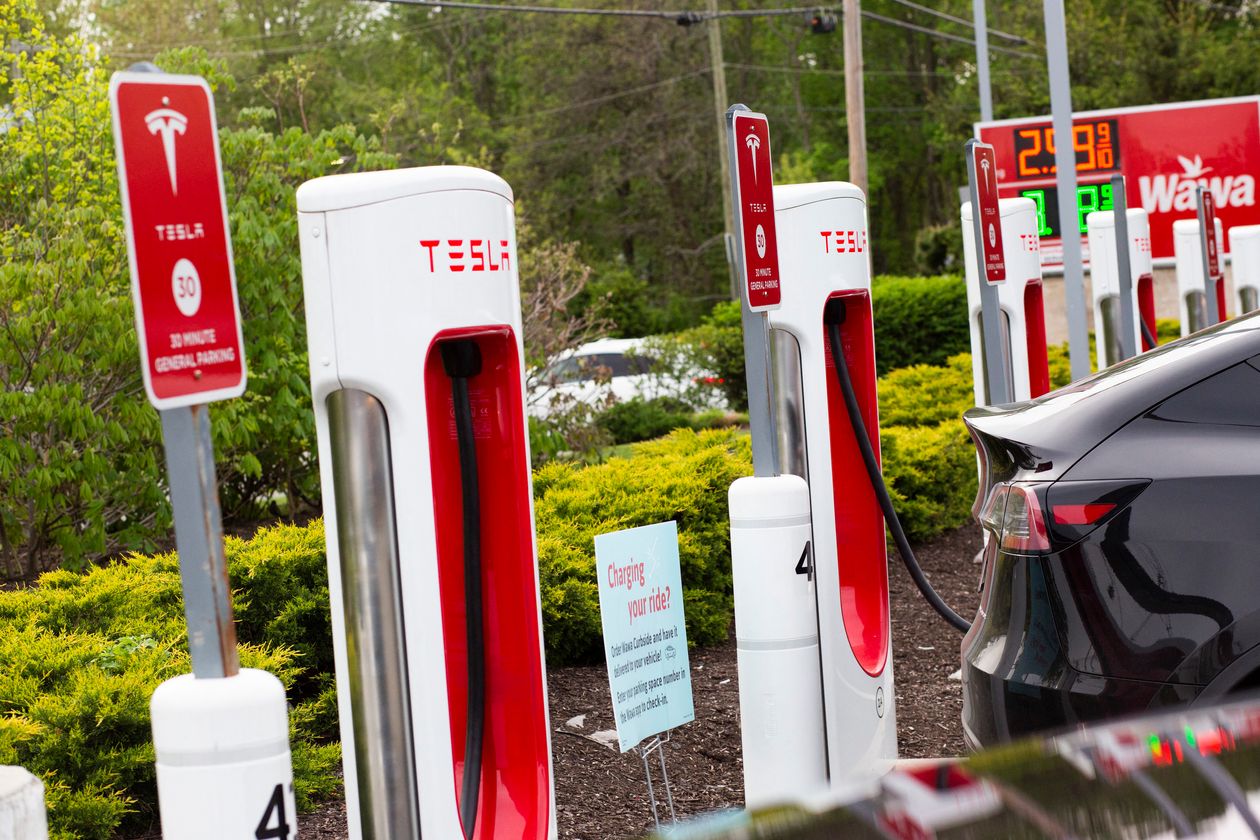
Tesla Inc. posted a record quarterly profit despite supply disruptions, fueled by rising deliveries and increasingly broad-based demand for electric vehicles.

The Silicon Valley car maker has enjoyed booming sales, driven by both its popular Model Y compact sport-utility vehicle and sustained demand in China. The company also has benefited from the wider embrace of plug-in cars as governments across the world push to phase out gasoline-powered vehicles, in some cases through subsidies.

“We’ve seen a real shift in customer perception of electric vehicles, and our demand is the best we’ve ever seen,” Chief Executive Elon Musk said Monday on an investor call.

Tesla on Monday said revenue in the first quarter jumped around 74% from the same period a year earlier to US$10.4 billion. The company generated a US$438 million net profit, up from $16 million a year ago. Wall Street on average expected the company to report sales of about $10.5 billion and net income of around $509 million for the January through March period, according to analysts surveyed by FactSet.

Tesla said it delivered 184,877 vehicles in the first three months of the year, more than double the number during the same period a year earlier. The company, which delivered nearly half a million vehicles in 2020, reaffirmed it expects that figure to rise more than 50% this year.

The company’s strong financial start to the year comes as it faces challenges on other fronts. Federal auto-safety officials are investigating the fatal fiery crash of a Model S sedan earlier this month in Texas. Neither of the victims was found in the driver’s seat, local officials have said. The National Highway Traffic Safety Administration’s probe of the wreck is one of more than two dozen investigations of crashes involving Tesla vehicles.

The crash left questions about whether or how the vehicle could have been operating without anyone in the driver’s seat.

A Tesla executive said the company was working with local and federal authorities to investigate what happened.

The car’s steering wheel, he said on the call, was found to be deformed, “leading to the likelihood that someone was in the driver’s seat at the time of the crash.” All the seat belts, post crash, were found to be unbuckled, he said. Tesla wasn’t able to recover data from the car’s memory device.

Tesla conducted a study along with authorities in which the company tried to replicate the likely crash scenario, the executive said. The company said that a driver assistance feature that helps with steering didn’t engage in the test, while another feature, adaptive cruise control, only activated when a driver was buckled in and traveling at above 5 miles per hour.

Mark Herman, the constable whose precinct the crash happened in, declined to comment on Tesla’s statement that someone likely was in the driver’s seat at the time of the crash, saying that the incident remained under investigation.

Tesla has also faced parts shortages that led the company to briefly shut down its Fremont, Calif., factory in February. Rivals such as General Motors Co., Ford Motor Co. and Volkswagen AG have had to idle some production capacity because of a global semiconductor shortage.

“We were able to navigate through global chip-supply shortage issues in part by pivoting extremely quickly to new microcontrollers,” the company said in a note to shareholders, adding that it also was devising new software for chips made by new suppliers.

Mr. Musk said the past quarter “had some of the most difficult supply chain challenges that we’ve ever experienced.” Those go beyond computer chips, he said. China production was held back because key engineers couldn’t travel there because of Covid-19 related quarantine restrictions, he said. Some of the effects are likely to last in the current and following quarter, he said.

Tesla said it had successfully lowered the cost of making cars, helping offset a decline in the average price of its vehicles.

The company’s bottom line also benefited from several factors not directly linked to car sales. Its financial results have been aided by the sale of regulatory credits to rival auto makers that need them to comply with emissions-related rules. Such credits brought in $518 million in the most recent quarter, up from $354 million during the year-earlier period. Tesla has previously said it doesn’t expect such sales to be a material part of its business.

The company also said it saw a positive earnings effect from the sale of bitcoin in the period. Tesla bought $1.5 billion worth of the cryptocurrency in the first quarter and sold 10% of that, Chief Financial Officer Zach Kirkhorn said. The company is now accepting bitcoin as payment for products sold in the U.S.

Mr. Kirkhorn said the company opted to invest in bitcoin when it was looking for a place to store cash it didn’t immediately need as a way to preserve liquidity while also earning a return. “It is our intent to hold what we have long-term and continue to accumulate bitcoin from transactions from our customers as they purchase vehicles,” he said on the investor call.

Tesla’s success in popularizing electric vehicles transformed the company into the world’s most valuable car maker. Its success also spurred legacy car makers and startups alike to develop competing models, some of which are showing early signs of eroding Tesla’s market share.

In the U.S., for example, Tesla vehicles accounted for roughly 70% of the all-electric vehicles sold in the first quarter, according to the research firm Cox Automotive Inc. That is down from about 82% during the same period a year earlier.

Tesla’s stock soared more than eightfold last year. It is up roughly 4.5% in 2021 after advancing 1.2% on Monday ahead of results. The stock retreated more than 2% in after-hours trading.

Global demand for electric vehicles continues to increase, though, and Tesla is adding production capacity to keep pace. The company said it remains on track to begin producing vehicles this year at its new car plants near Austin, Texas, and outside Berlin, its first in Europe. Tesla has expanded capacity at its first overseas plant in Shanghai and began delivering China-made Model Y vehicles this year after kicking off with the Model 3 sedan in 2019.

China has been a growth engine for Tesla, helping to lift the company to its first full-year profit last year. But the company has hit a rough patch in the market recently. Chinese authorities summoned Tesla in February over consumer quality complaints. The government also restricted the use of Tesla vehicles by military personnel as well as employees at key state-owned companies over data-security concerns.

Earlier this month, a single protester with a disputed claim about the safety of Tesla’s vehicles drew widespread attention across the Chinese internet, which is closely controlled by the government.

Tesla has apologized for its treatment of some customers in China and said it would do better. Mr. Musk said last month that Tesla would be shut down if it used its vehicles to spy, which he said was “a very strong incentive for us to be very confidential.”

Tesla also reaffirmed that it expects to deliver its first semitrailer trucks to customers in 2021, two years after initially planned. Mr. Musk said in January that the company didn’t have enough battery cells to go into production with the vehicle.


Reprinted by permission of The Wall Street Journal, Copyright 2021 Dow Jones & Company. Inc. All Rights Reserved Worldwide. Original date of publication: April 26, 2021