Outdoor Lighting Ideas To Turn Your Yard Into A Luxury Resort

Last summer, those of us charmed enough to have a backyard to call our own tended our gardens and zhushed our patios with new furniture, maybe even springing for an outdoor rug. When it came to exterior lighting, however, most people aimed no higher than a swag of Edison-bulb string lights and a feebly flickering hurricane candle.

“Outdoor spaces sometimes get overlooked after the sun goes down,” said Memphis interior designer Sean Anderson, alluding to such lame attempts at illumination. This spring, however, as we prepare to host en plein air again, why not tackle outdoor lighting—especially if you’ve upgraded everything else? Beyond a wish to enjoy their private plot at night, homeowners light landscapes “so that when you’re inside the house you can see the garden and not just a black hole,” said Ive Haugeland, founding principal of Shades of Green, a landscape architecture firm in Sausalito, Calif.

The best way to banish murky shadows is to borrow the sort of layered lighting scheme found in professionally designed living rooms. In simplest terms, you want three tiers. Start with the highest level, via lofty lanterns or up-lighting that draws eyes skyward or even chandeliers (yes, weatherproof versions exist; see “Worth Wiring”). Next fill in the midrange with sconces, illuminated plants or sculptures and tabletop portable lanterns. And don’t forget low-level illumination—that is path, understep and underseat lighting.

The cumulative effect should be subtle, not stark, “that feeling of fireflies on a summer night, that sense of discovery,” as San Francisco designer Ken Fulk put it. “The default has previously been an overly lit space.”

At a residence in San Francisco, Ms. Haugeland recently hung two outdoor-rated glass chandeliers beneath a minimalist pergola. To provide eye-level glow, she uplit the knotty trunks of century-old olive trees, then set low LED lighting into step risers for safer sauntering after dark. The chandeliers are “a little over the top, so they’re very fun and playful and what you don’t expect to see outside,” said Ms. Haugeland.

Solar-powered outdoor fixtures are still too dim to rely on, said the landscape architects we polled. A reasonably sized fixture can’t house enough photovoltaic cells to produce anything but a sickly glow. Meanwhile, the latest low-voltage LEDs not only last a long time, they can be easily and cheaply wired. “[In the] 1980s and into the ’90s, landscape lighting was run using high-voltage electricity,” said Washington, D.C., landscape architect Joseph Richardson, who recently uplit the river birch trees surrounding his own Arlington, Va., home. “It meant fixtures were very large and very bulky, and the cost was extreme. You had to run buried conduit plastic pipes through the yard, and if someone were to hit that with a shovel they could be electrocuted.”

Today’s LED fixtures suck as little as 3 watts as opposed to the 35 watts that incandescents fed on, Mr. Richardson said. That means “you can use low-voltage wiring—a small wire that lays on top of soil under mulch,” said Megumi Aihara, founding partner and principal of San Francisco’s Spiegel Aihara Workshop. “You can install [that] after a garden is built, and it would not hurt you if you touched those wires.” (Note: The designers we interviewed recommended hiring a professional electrician or landscape firm to at least install your main transformer, which converts your home’s 120-volt juice to 12-volt power.)

To light her North Carolina yard (pictured on D1) designer Gray Walker turned to low-voltage specialists Outdoor Lighting Perspectives (OLP) of Charlotte. A brick walkway behind her house leads to a small eight-sided gazebo. “You’ve got your path lights to illuminate the ground and then I like to lift the eye up,” said Ms. Walker. Uplit oak trees and Japanese magnolias create a “wonderland” of branches. The path passes a trio of gurgling columnar fountains that are highlighted to provide midlevel illumination, while other lights shine on shrubs, casting shadows on the brick exterior of her Georgian-style home. “This adds a bit of texture and dimension to the wall,” said Mari Zaragoza, production coordinator at OLP. “It was important to not keep everything in the same level, to create as much depth and texture as possible.”

Ms. Walker’s gazebo quietly commands attention at night. Two upturned accent lights shine thin lines of light through its slatted roof for a “glowing effect,” said Ms. Zaragoza. “We really thought this created a natural focal point without it being too overdone.”

Low-voltage lighting helped Ms. Aihara execute a multilevel scheme in a Los Angeles yard (pictured, above). Perforated metal tubes diffuse light throughout the canopy of deciduous trees, and cast modest pools on the deck and the greenery that surrounds it. Another one of Ms. Aihara’s tricks: Dek Dots from Dekor lighting. “They’re small, half-inch LED dots,” she said. “During the day, they disappear, and at night they twinkle on the ground.”

Don’t wish to deal with running any kind of electrical wiring? You can easily find options that plug into an outdoor socket but are far more aesthetically ambitious than string lights. Examples include articulating floor lamps and hanging lamps like Lightology’s Garota Plug-In Pendant (see “No-Pro Lamps”).

Even better: lights that you can cart around as freely as a flashlight. “We’re noticing an increased interest in rechargeable, free-standing lights that run on LED bulbs and batteries,” said Greenwich, Conn., landscape architect Janice Parker. Check out the cartoonish mushroom lamps from Hay at the MoMA Design Store as well as braided-rope lanterns by Talenti. Both double as tabletop and path lighting. Ms. Parker hangs portable LED lanterns from tree branches or decorative hangers. “You can easily move them around as needed, and guests can use them if they want to go for a stroll.”

Other landscape architects are eschewing visible fixtures altogether, hiding strips of LEDs under stair treads, for example. In the courtyard of a Berkeley, Calif., home, design firm Delaney + Chin tucked wet-location LED tape under a white stone bench as well as in the ground to shine a wash of light along the bottom of a corten steel wall. The goal, as Ms. Parker put it, is to achieve lighting “that you do not perceive as coming from fixtures but naturally from the moon.” Roderick Wyllie of Surfacedesign, a landscape architecture firm in San Francisco, recommends placing fixtures at least a foot away from the plant or architectural element they’re meant to highlight to avoid harsh, unflattering “hot spots.”

Such toned-down design lets us see and appreciate the nighttime sky, notes Mr. Wyllie. Many municipalities are embracing dark-skies policies intended to curb light pollution and lessen the impact on birds, the bugs they eat and other fauna, said Matthew Bromley, a landscape designer in Bedford, N.Y. “We can be impactful without being garish or feeling like we’re in Las Vegas.”

You may not need as many path lights as you think, for example. Mr. Richardson said one of the habitual mistakes homeowners make when they tackle lighting themselves is spacing path lights too closely. “It almost gives you a runway effect,” he said, adding that you can ensure navigability without committing overkill. “I try not to space [them] any closer than maybe 12 feet apart.”

Another interior technology that has moved outdoors: dimming. “There are times when you may want outdoor lights brighter or dimmer for whatever reason,” said Mr. Fulk. Perhaps you wish to bring the lights up slowly as the sun retires. He reports a growing demand for this flexibility. Similarly, multiple designers said their clients love that many LEDs can be tweaked—even transformed into a rainbow of hues—from their smartphones using programs from Lutron Homeworks and Savant.

As with LEDs inside your home, colour temperature, or Kelvin ratings, matter. A bulb on the high end of the Kelvin range, near 6500, will emit a cooler, bluer light. Lower kelvins translate to warmer, softer whites. For outdoor use, Dan Spiegel, who’s also a founding partner and principal at Spiegel Aihara Workshop, advises selecting lightbulbs with lower colour temperatures, around 2700 Kelvins.

Whether you hire professionals or do it yourself, Mr. Richardson recommends starting slowly. You can add extra light sources later. “Once you take the fixture out of the packaging and stick it in the ground it gets harder to return.” For her part, every time Ms. Walker pulls into her driveway at night, she appreciates the effort she’s put into her lighting, she said, from the gazebo to the glow-guided path. “It just makes me feel like I live in a little jewel box.”

NO-PRO LAMPS

Six rechargeable or plug-in lights you can layer into a three-tiered scheme yourself

Low

From left: Hay PC Portable Lamp, approx. $122, store.moma.org; Talenti Tribal Lamp, approx. $1544, Cantoni, 972-934-9191

Medium

From left: Inda Copenhagen Table Lamp, approx. $1100, Burke Decor 888-338-8111; Pedrali Giravolta Floor Lamp, approx. $510, shopdecor.com

High

From left: Simple String Lights, approx. $577, westelm.com; Garota Plug-In Pendant, approx. $1300, lightology.com


Reprinted by permission of The Wall Street Journal, Copyright 2021 Dow Jones & Company. Inc. All Rights Reserved Worldwide. Original date of publication: April 23, 2021.

Decline Sydney And Melbourne Clearance Rates

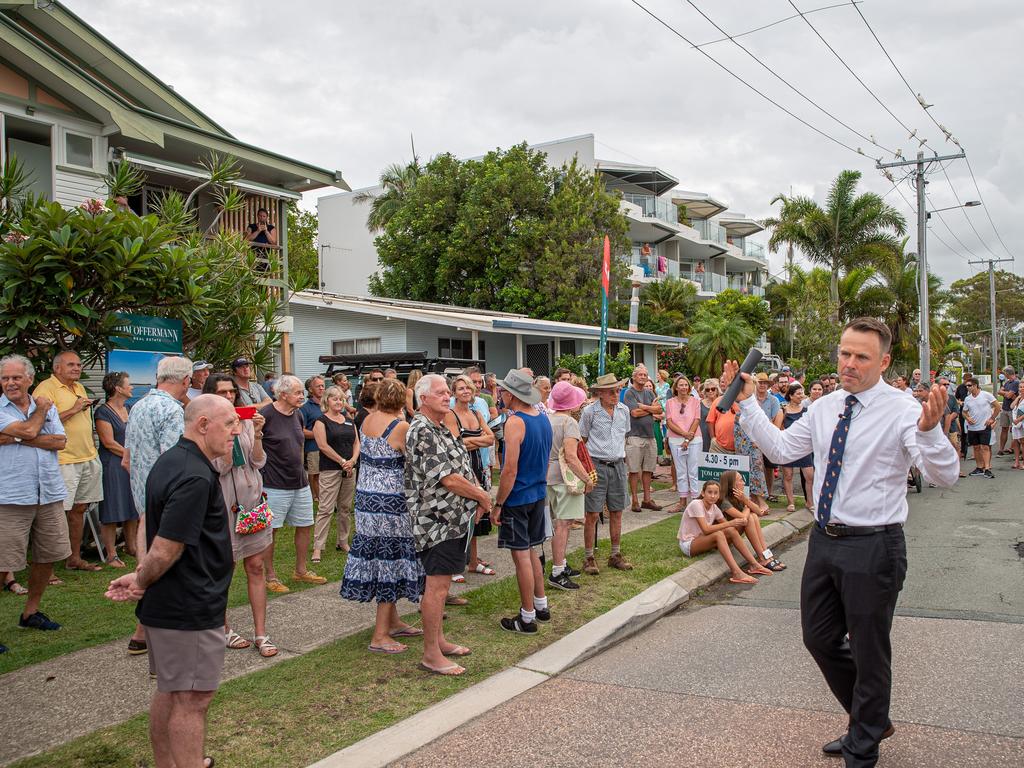
Auction clearance rates in the dominant markets of Sydney and Melbourne dipped at the weekend.

The number of listings also fell significantly in most capitals compared to the previous weekend, with the exception of Adelaide where listings surged to the highest number (111) of the year.

The Sydney home auction market produced another relatively strong result of 85.1% sell through. However, the clearance rate was down on the previous weekend (86.2%), and well below March’s record results.

Sydney auction numbers were also lower at the weekend – possibly impacted by the ANZAC Day holiday – with 672 homes listed compared to 785 the previous weekend. Saturday saw the lowest offering since early March, with the exception of Easter.

Sydney recorded a median price of $1,449,000 for houses sold at auction at the weekend, 7.1% lower than the $1,560,000 reported the previous weekend.

Elsewhere, Melbourne’s auction clearance rate fell for the third consecutive weekend to 79.0%, down on last weekend’s 79.7% and the lowest recorded for the year.

A mere 835 homes were reported listed for auction on Saturday in Melbourne, well below the 1062 auctioned the previous weekend, and the lowest non-holiday offering since February.

Melbourne recorded a median price of $975,000 for houses sold at auction on the weekend, 2.5% lower than the $999,900 recorded a week earlier.

Green Is Good: Prices Higher in Sydney’s Leafy Suburbs

Sometimes the grass is, in fact, greener.

The value of parks, trees and backyards is bolstering property prices in a number of “green suburbs” in Sydney according to data from Corelogic.

It comes as the post-COVID-19 world shifts towards a renewed focus on healthy, urban living with many cities nationally increasing parkland, cycle lanes and more.

Greenspace refers to public or private land that is completely or partly covered with grass, trees, shrubs or other vegetation. In Sydney, that looks like parks, community gardens, cemeteries, school yards, playground and vacant lots.

New findings from Corelogic suggest that there has been a direct increase in housing value premiums in suburbs across Sydney where the average of green or open space is higher.

Highest proportion of public greenspace

Average house sale price 2019 Average unit sale price 2019 Average % public greenspace
Heathcote – Waterfall $912,937 $622,500 80.50%
Berowra – Brooklyn – Cowan $1,007,297 $738,500 78.10%
Terrey Hills – Duffys Forest $2,185,206 $585,000 75.00%
Asquith – mount Colah $1,065,767 $660,995 66.30%
Menai – Lucas Heights – Woronora $998,368 $738,072 64.10%
Bayview – Elanora Heights $1,871,173 $1,718,333 57.80%
Woronora Heights $1,095,702 $976,250 57.40%
Turramurra $1,924,818 $993,229 57.00%
Helensburgh $941,500 $726,368 56.20%
Manly Vale – Allamie Heights $1,795,322 $722,182 52.70%

^Source: Corelogic

“Our case study has revealed a positive correlation between housing values and greenspace,” Corelogic head of research Tim Lawless said.

“As Australia’s climate change strategies and domestic policy evolve over the years ahead, the market’s readiness to value ‘greenness’ as a tangible property feature may strengthen.”

“In areas where greenspace was scarce, such as the Eastern Suburbs and Inner City, private greenspace had a far stronger relationship with price,” Lawless added.

However, when compared to European cities, the correlation between greenspace and housing prices was low due to Sydney’s larger volume of greenspace.

For example, Sydney currently has 46% public greenspace while Amsterdam has 13% and London 33%.

The Newest Status Symbol For Homeowners: Trophy Trees

For decades, Walter Acree operated a modest landscaping business in Deerfield Beach, Fla. A self-described rebel, he mowed lawns in his bare feet, his then-long hair falling around his shoulders. Then, a few years ago, he stumbled into a lucrative niche business: helping South Florida’s superrich find trophy trees—the latest in status symbols for the most well-off Americans.

“I’m kind of unique,” said Mr. Acree, now the owner of Green Integrity’s, a tree relocation and landscaping firm. “Not a lot of people do what I do.”

Mr. Acree, 61, a so-called tree broker, regularly drives his wealthy clients around South Florida in search of the perfect tree for their garden, whether it is a giant kapok, an enormous canopied oak, a baobab, a ficus or a banyan. Together, they scope out trees in other people’s gardens and outside local businesses, then approach the owners with an unsolicited offer.

Then, it is Mr. Acree’s job to find a way to transport the tree to his client’s property. Sometimes, that involves using a long flatbed truck, a barge or even a 300-ton crane. Mr. Acree has also developed his own technique, which he calls “arbor division,” for moving the largest trees. It involves slicing the tree vertically into several parts using 6-foot-long saws with specially hardened blades, transporting the individual pieces to the site, then reassembling the tree with steel aircraft cable, ratchet straps and bolts.

Walter Acree, owner of Green Integrity’s, a company based in South Florida that uses an arbor dividing system to relocate large specimen trees. PHOTO: ZAK BENNETT FOR THE WALL STREET JOURNAL

Mr. Acree’s business has been flourishing for more than five years, but it went into overdrive this past year as hoards of ultrahigh-net worth home buyers piled into the South Florida market amid the Covid crisis. While trophy trees are a nationwide trend, Miami tree-brokers have particularly benefited because of the area’s diversity of available trees. The city’s system of canals also makes it easier to transport trees by boat without having to cut back tree canopies.

Mr. Acree said that in recent years he has worked to install massive trees on properties owned by celebrities such as the singer Enrique Iglesias. He recently gave an estimate of about $250,000 to relocate a tree for a wealthy homeowner on Miami’s Indian Creek Island.

Landscape architects dealing with big names said they are seeing nondisclosure agreements hit their desks like never before as the superrich seek privacy in their horticultural endeavors. Tim Johnson, a partner at Fernando Wong Outdoor Living Design in Miami, said it is as a sign they are hitting the big time.

“It’s the busiest the business has ever been and we’re doing things at a scale that is just remarkable,” he said, noting that his firm recently had several clients purchase the houses next to theirs just so they can tear them down and build a bigger garden.

A few years ago, Mr. Johnson had a client who beat out basketball great Michael Jordan in a bidding war over a 45-foot canopied oak tree, which Mr. Johnson deemed the ideal tree. The deal for the oak closed in the low six figures.

“You want a tree that’s balanced,” Mr. Johnson said. “With this tree, it was perfectly proportioned and had a lot of character. The way the branches went off in both directions. This was the perfect oak tree.”

The absurdity of the situation isn’t lost on Mr. Acree. He said his wealthiest clients are finance and business types whose wealth dwarfs that of movie and music stars. “If they want it, it will happen,” he said with a laugh.

Once, he got into a debate with Mr. Iglesias over which way a tree he was installing on his property should face; Mr. Acree thought the curve of the tree should bend away from the house, as it would in the natural world, but Mr. Iglesias wanted it bent toward the house. Against his own judgment, he did it Mr. Iglesias’s way. A short while later, the singer called to have him rotate it back, he said. A representative for Mr. Iglesias didn’t respond to requests for comment.

The appeal of transporting a trophy tree is easy to explain, said Raymond Jungles, a Miami-based landscape architect. For one, a big tree helps mitigate the scale of a very big house. A unique or particularly old tree, like a piece of art, is also a great conversation piece. Lastly, it means high-net-worth buyers don’t have to wait for a newly planted tree to grow on their site.

“Older people especially don’t really want to wait a long time to see a tree. They want it right away, they don’t want to wait 20 years,” he said. “And now the younger people with money, they don’t want to wait either, usually.”

The most significant trees can range in price from tens of thousands to hundreds of thousands of dollars, depending on their look and how difficult they are to access.

“If it’s in a backyard and there are power lines all over the place and I’ve got to get supercranes in there to get it, then I can’t pay as much for it,” said Mr. Acree. “If the tree is on the water where I can pull up to it with a barge and take it to another house that’s on the water, then that tree is worth a whole lot more.”

Mr. Acree said trees like the one he installed on Indian Creek Island, a large banyan, are particularly challenging as his workers aren’t permitted to bring large equipment over the bridge onto the island. All the equipment has to be brought in by barge.

Some tree owners are more willing than others to sell to wealthy buyers. Mr. Acree said some are skeptical of the offer and think he’s trying to rip them off. Others have a sentimental attachment to the tree.

“Sometimes they wouldn’t sell it for a million dollars,” he said. “Sometimes their grandmother planted it or they planted it for their dad or something. Those you never get.”

The search for the perfect tree occasionally leads homeowners farther afield.

Los Angeles real-estate developer Michael Chen said it took 18 months of obsessive searching and planning before he finally installed the perfect centerpiece for a $65 million spec house he was building in Beverly Hills: he calls it the “tree of life.”

The large 150-year-old olive tree, imported from Tuscany, stands at the center of the house, encased in a glass courtyard, surrounded by a shallow reflecting pool and positioned against a book-matched marble backdrop. It took 15 workmen and a 110-ton crane to hoist the tree about 60 feet into the air and lower it into the house safely. He said a street in the tony Trousdale Estates area of Beverly Hills had to be closed while the move took place.

“I was thinking, ‘If that thing drops it would just blow up the building,’ ” Mr. Chen recalled. “Everyone’s nervous. Of course, there’s a lot of risk.”

After working with a pair of tree curators in California, and unsatisfied with the selection of trees available locally, a grower in Tuscany helped him identify the perfect one, a 15-foot tree with foliage in the shape of a heart with two wings that open up like an angel.

“I said, ‘This is it. Nothing else,’ ” Mr. Chen said. “It’s like the ‘Lord of the Rings’ tree.”

He had it shipped to northern California in a large shipping container and then transported via flatbed truck to a parking lot he leased near the site. Hired police escorts accompanied it to the home site. A crew dug a 6-foot deep hole beneath the home’s courtyard to accommodate the tree’s huge roots. Some of Mr. Chen’s workers questioned whether it would survive the journey. “All of that for one tree,” he said with a laugh.

In all, he estimated that while the tree itself cost only about $17,000, the cost of getting it where it needed to be set him back an additional $40,000.

New York-based landscape designer Deborah Nevins said she has also seen homeowners go to great expense and effort for the tree of their dreams. Once, a client helicoptered in a large magnolia for their garden because a tractor trailer couldn’t make it around a turn in the winding roads of Beverly Hills where the house was located.

She said the tree, which was stored in a wooden box, was attached to the aircraft using straps and chains and then lowered onto the site. “Thankfully, no one dropped it in the wrong place,” she said.

These are sometimes techniques pioneered by horticulturists at major corporations. Walt Disney Co. used to relocate some of the more unusual trees on its park properties by drilling through the center of the trunk and inserting steel rods. The rods were then used as handles for hoisting the tree by crane to its desired location. The company once spent close to $1 million to relocate a 55-foot, 85-ton tree at Walt Disney World.

To move a giant tree—one that is more than about 18-feet wide—homeowners are typically required to get a permit to carry a superload, which often means paying for a local or state police escort depending on local regulations and where the tree needs to go, Mr. Acree said.

Often, they are moved in the middle of the night when the roads are quiet. Disasters can happen. Once, Mr. Acree said a colleague caused a huge traffic jam on a major highway outside Fort Lauderdale and took out a power line because he hadn’t pared back a tree’s foliage enough before hitting the road. He was dragging utility poles behind him.

“I said to him, ‘Why didn’t you stop?’” he said. “He said he thought [the poles] would come off.”

Mr. Jungles said tree-brokering can be a slippery business and some tree-brokers don’t take enough care to ensure the safe delivery of trees and properly prepare their roots for transplant. Some also try to get away with transporting trees without the proper permits. Reputable tree brokers typically offer insurance for trees, ensuring their survival for at least a year after the move, he said.

But there are still no guarantees, especially if workers don’t adequately prepare the roots of the tree for replanting. Mr. Jungles said he once advised a client to pay $25,000 for a lignum vitae tree for his property. A week after he moved it to the site, it died.

“It broke my heart,” he said, noting that it also hurt his own pocketbook as he felt bad and refunded the client.

Mr. Johnson said criticism that these processes put trees at risk is sometimes misplaced, since they are often rescuing trees that would otherwise be cut down. His firm recently brought in a 90-foot tall kapok for the Four Seasons Hotel at The Surf Club in Miami that had previously been owned by a local sugar company in Central Florida. Some local residents complained that it was wrong to cut down a perfectly healthy tree so that it could be replanted at the luxury project.

“When we planted it, people accused us of tree abuse but actually it was going to be cut down,” he said. “The business owner was worried it was going to fall over and crush them in a hurricane. Its canopy was a magnificent hurricane catcher.”

That is not such a concern for the Surf Club, because they can afford to closely maintain the canopy, he said.

Mr. Acree said he has a strong record of keeping trees alive. He said he came up with his technique of cutting up the tree before transport years ago after some particularly demanding clients insisted that the trees on their site be delivered with their canopies intact rather than stripped back to the trunk. They didn’t want to wait for them to sprout back later.

“I called everyone I could and they said ‘There’s no way you’re going to do this,’ ” he recalled. “They just didn’t think trees would live because no one had really done that before.”

He’s since transported hundreds of trees using the technique. He said cutting the trees vertically, leaving each piece with a portion of the root and foliage, transforms them into separate organisms. While the bark around them grows back as one, inside they are effectively separate living trees.

Andre Radandt, the former chief executive of Bolthouse Farms, recently tapped Mr. Acree to transport a ficus tree for the garden of a megamansion he was developing in Miami and it was cut into thirds. Over the course of about six months, Mr. Radandt said the tree repaired itself.

The tree became a defining feature of the property, which has since sold for US$29 million.

“It certainly paid for itself, so to speak,” Mr. Radandt said of the ficus.

Reprinted by permission of The Wall Street Journal, Copyright 2021 Dow Jones & Company. Inc. All Rights Reserved Worldwide. Original date of publication: April 22, 2021.

Prestige Property: 20 Linlithgow Road, Toorak, VIC

 Toorak, Melbourne’s blue-chip locale is filled with a heady array of historic homes and modern mansions, yet few compare to the 950sqm contemporary masterpiece listed here.

Sprawled across a 1270sqm block, replete with low maintenance garden, the Stephen Jolson designed residence boasts 4-bedrooms, 3-bathrooms, 6-car parking across three levels in one of Toorak’s most prestigious positions.

The striking sculptural façade of cantilevered solid concrete ‘blades’ and tall window walls are the most salient features of the home.

Inside, it conceals lavish interiors highlighted by Australian Bluestone walkways, American Oak floors, and a hydronic underfloor heating system.

Arriving via the circular drive and grand bronze porte cochere entry one emerges into voluminous gallery-like spaces that provide sophisticated living, dining, and entertaining.

A central light atrium extends throughout all three floors while northern light pours in through walls of glazing that unfold to the entertaining terrace.

Elsewhere, the Statuario marble kitchen with separate scullery and bar is fitted with Miele appliances, three Vintec wine fridges and a Sub-Zero fridge and freezer.

The casual open living and dining areas include a hidden home theatre, descender TV and gas fire.

The first floor finds a library with yet another kitchenette, study or fifth bedroom while a central bathroom accompanies four retreat-style bedrooms including the palatial master suite with twin deluxe walk-in robes. Also here, a study, stunning open ensuite replete with marble benchtops,  a freestanding stone bath and private terrace all enjoying panoramic valley views.

Downstairs sees a lounge with granite bar, concealed kitchenette, gym, steam room and bathroom complementing the jaw-dropping 20-metre indoor lap pool.

Throughout the home is fitting with smart technology including full CBUS home automation, enjoys access via private lift, boasts an oversized three-car garage (with parking for a further three vehicles) while enjoying Toorak’s conveniences moments from Toorak Village, High Street Armadale and Melbourne’s most esteemed private schools.

The listing is with RT Edgar’s Antoinette Nido (+61 419 654 856) with a price guide of $15.5m-$17m; rtedgar.com

Sydney’s Inner-City Vacancies Could Tighten

Finding an inner-city rental is set to become increasingly difficult as the number of vacancies in Sydney’s inner suburbs is set to tighten as a number of investors look to sell their properties to take advantage of rapidly rising prices.

According to data from suburbtrends.com more than one in three (34%) of properties listed for sale in Leichhardt, in Sydney’s inner west, are ex-rental homes – the highest proportion of investment properties currently on the market in a given area.

North Sydney and Mosman fared similarly with one in four (25%) properties listed ex-rentals, the eastern suburbs presented 28% in the month of March.

Of course, if the bulk of homes being bought are to be turned into owner-occupiers, there will be some flow-on effects to the rental market.

Further, 14% of the Perth city market and 5% of the Melbourne city market are ex-rentals.

Property Of The Week: 9A Andrew Avenue, Millswood, SA

This unique residence located in Adelaide’s Millswood is a contemporary exercise in class and quality.

Located on a 509sqm plot nearby to Hyde Park’s cobblestone centre, and moments to the CBD, this 3-bedroom, 3-bathroom, 2-car garage home comes with a combination of solar-powered tech, security, easy-living footprint, lap-pool and an enviable mandate to entertain.

Inside sees high-end finishes with generous dimensions from its formal lounge and master retreat to the open-plan rear – fitted with a gas fireplace – boasting access to the pavilion and the heated pool.

The layout is complemented by the home’s soaring ceiling, striking kitchen – fitted with Miele appliances, stone benchtops and butler’s pantry – and sleek bathrooms, including a two-way ensuite servicing bedroom 2 and 3.

Further, the main bedrooms sees a large walk-in robe, access to the front verandah and private ensuite.

Elsewhere the home boasts an abundance of storage through an in-built Sonos sound system

The home is nearby to Adelaide’s best parks. Goodwood’s cafes and theatre, King William road’s food and fashion and transport to the CBD.

The listing is with James Robertson (+61 421 882 997) of Ouwens Casserly Real Estate. Expressions of Interest; ocre.com.au

Interview: Blainey North, Architect / Interior Designer

Blainey North

Blainey North’s surname fits well – the ebullient Sydneysider and enviable multitasker on an upward trajectory like few others.

Architect, interior and industrial designer, entrepreneur, business leader and firm Australian success story, North is a standout, having launched her eponymous studio at 21 and pushed hard to achieve ever since.

It’s meant working across a swathe of differing projects, from luxury Australian residences to hotels (Crown Towers and Metropol but two), megayachts (the 54m Mischief), restaurants (Bistro Guillaume) to the world’s tallest residential tower (New York’s Central Park Tower) and more.

We caught up to talk Bladerunner, ‘Zoom walls’ and gender neutrality in design.


Kanebridge News: So much of your work is framed by a sense of architectural allure – which perhaps isnt surprising as this was your chosen field of study, right? 

Blainey North: Yes, I studied architecture and always approach our projects with an eye focusing on the built elements before I even look at the interior decoration. I believe interiors should be crafted with the walls, ceilings and floors becoming part of the consideration in shaping the idea.


KN: Does having such greatly assist in your design process and also your industrial design work with the various Blainey North Collection pieces? 

BN: The rigour in designing a piece of furniture is the same as that of a building, it’s just a set of entirely different problems to solve. I love the freedom of designing the furniture and lighting pieces as they are like beautiful little jewels that I can design without any client in mind. It’s a lovely artistic outlet for me. The latest collection, titled Man and the Machine was inspired by my deep fascination with the city and a bodies movement through it. It was almost an indulgence to be able to think and craft pieces based on a particular area of my interest.


KN: It’s arguably strange that more interior designers dont produce their own pieces – what do you see as the main barriers to overcome here?

BN: To produce and manufacture something is far more involved than anyone would imagine. The design part is actually only a small fraction of what is required as the process of trial and error in prototyping, finding the right people to build it with you, the cost and the labour are all enormous factors in being able to produce a product of excellent quality. That’s all before you have a sale. I’m incredibly proud of our furniture and lighting collection, however it is a very distinct business to the interiors.

Blainey North
A three-storey waterside residence in Sydney’s Rose Bay.

KN: How has COVID impacted or brought change to the way you approach (indeed, clients are wanting you to approach) certain aspects of residential interiors and spaces?

BN: People are again ‘living’ in their homes. By that I mean, they’re entertaining and spending time in and about the house. It’s similar to the1800’s in that respect, and so too there’s a desire for a similar traditional house layout — where the kitchen and the ‘working”’ parts of a house are separated from the entertaining. And so we’re designing homes again with butlers pantries and stand alone kitchens, formal dining rooms, formal lounge areas. It’s a return to the past… Oh, and we’re also being asked to design specific walls for people’s Zoom background, which is quite fun.


KN: Is there a preference when it comes to interiors — in regards to residential over, say, large scale ‘commercial efforts?

BN: I absolutely love working at a large scale – there’s a rush about building something that’s so much larger than you. We’re interestingly seeing a trend where homes and apartments are becoming far bigger, in both Australia and the rest of the world. Many of the homes and apartments we’re working on are over 2000sqm internal… Frankly, though, I love all forms of design and select the projects we take on based on whether I feel inspired by the brief and have a nice synergy with the client.


KN: I recall a want to make every project ‘magazine worthy’ — can you explain this philosophy? 

BN: Many design firms work on a model of designing a large number of projects with simple design and then take on a few special projects that they put extra time and energy into ( they might make a loss on these). My dream was to create a business where the everyday design process in the studio was so rigorous that every project was a project you were proud to show. It’s been a huge decision as it’s meant that financially you take a long term vision. However, right now, 20 years in, it’s meant we have a large body of work that we can stand behind and have so many repeat clients that we’ve worked with for over 15 years now.

Blainey North
A Sydney residence on the edge of the CBD.

KN: You dont present, through your work and also on a personal level, as someone who necessarily follows or adheres to trends. Fair to say theres a Blainey North narrative and that’s your focus

BN: I do spend a lot of time researching and looking at what is current and new, however I’ve always been a lone wolf. Emulating trends in design is just background noise in my opinion. I believe that original design comes from a different place and a unique process, something we like to work with the client on. I like to think of every project being a grand scale couture dress – it’s designed and made just for you.


KN: If you did have to target some likely design trends to appear this year and across 2022 – what can people expect?

BN: Detail and craft – it’s like the 1920’s all over again. The world is coming out of a period of minimalism and great pain and we’re ready to celebrate again and see beauty in all aspects of our life. I think that will mean that creativity will flourish in all areas of the arts with a specific focus on our interior spaces, the ones we have spent so much of the year inhabiting. It’s an incredibly exciting time to be in my field.


KN: In regards to your aesthetics there’s often a sense of moody and arguable masculinity to some of the work — fair summation?  

BN: I’ve always found this idea of gender based aesthetic so curious, I mean, what does it mean to have a male or female aesthetic? If it’s floral and curved should that mean it’s feminine? I can say that I attempt to be original in detail and concept in each of our projects, and bring that rigour to the detail as well. I think it’s that attention to detail and alignment that is similar to the principles of Art Deco.

KN: Where do you find inspiration — is much of it delivered, simply, by the everyday and all that surrounds you in Sydney

BN: I’m usually researching something in my spare time — for example, I’m currently interested in the direction of Kris Van Assche, the creative director of Berluti. In his latest collection he’s been fusing the art of a particular ceramicist and morphing it into fashion in a way I haven’t seen before. It’s started me thinking about how I might use this same technique and apply it to our architecture and interiors. I’m sure that our next project will have some of this inspiration coming from the art world.

Blainey North
A grand waterfront residence in Sydney.

KN: Are Australians — generally speaking — becoming braver and bolder with their approach to interior and architectural design? 

BN: I think there is a new appreciation for design as a whole. Australia has now seen that good design might be more expensive in the short term, but it can deliver financially in the long term. That means that the developers are enthusiastic about building good design and understand that can relate to better sales and longevity in the product.


KN: Do you feel international markets are increasingly looking enviously at the contemporary design aesthetics we’ve developed here — especially in relation to open interiors, use of light, airiness and so on?

BN: Absolutely, we have such a unique set of criteria here with intense light and an amazing climate, we’ve developed amazing solutions to the indoor/ outdoor transition.


KN: Crown Spa Sydney is a recent project of yours can you talk us through the concept here and what you were wanting to achieve. And your take on the Chris Wilkinson-designed building itself, from an architectural standpoint? 

BN: We wanted the spa to feel like the moment you start drifting off to sleep, that space between sleeping and waking where your peripheral vision blurs. I think that’s one of the most beautiful and relaxing moments in a day, when the mind stops before it goes into a dream state. The design is full of curves and semi transparent walls of resin that you slip around. We worked with Hayden Cox, the famous Sydney surfboard shaper to create these unusual tables and benches in organic surfboard like shapes. It’s lovely as it feels incredibly relaxing but also somewhat unusual — a space which flows and you can’t quite put your finger on.

As for the buildng, it’s our greatest piece of architecture second only to the Sydney Opera House. It was an incredible feat to be able to build a tower which is twisting in three directions. There isn’t a straight wall on the whole façade which meant it was a challenging project for all the team involved. The documentation required complex spacial thinking and resolution. I’m so proud to have worked on the project — it’s rare that such an architectural vision is executed at this level of quality.


KN: What are your other artistic pursuits beyond design? 

BN: One could argue I’ve made an art out of dining out. However I do spend time going to galleries and I’m a patron of the Sydney Film Festival. I really love film and find film sets of great inspiration for our work. In fact, one of our designs had wall panels inspired by the set of the movie Bladerunner.


KN: Name three timeless pieces every home needs and a simple sentence as to why?  

BN:

  1. Something beautiful to put your bag/ keys on when you walk in the door. I think that’s important as it’s the first moment when you arrive home and should set the tone for your home.
  2. A lamp in the living room — because great entertaining is about people feeling comfortable and lamps throw a beautiful soft light to make people feel just that.
  3. A great coffee table. It’s the centrepiece of the living room so make it something amazing to look at.


KN: What projects are exciting you most in regards to the year ahead — those which you can discuss?

BN: We are so excited to be finishing the apartments in Central Park Tower, the tallest residential tower in the world and which is on Central Park in Manhattan. It’s been an amazing challenge to build during Covid, however, we’ve created some amazing new systems to work with our clients and offices internationally. We’re presenting more and more in virtual reality, where I can walk the client and the team through the design in real time on the computer.


blaineynorth.com

Future Returns: Investing in the Global Luxury Industry

The global luxury industry has had a good run over much of the past decade and signs are pointing to continued strength despite a difficult stretch during the pandemic.

S&P’s Global Luxury Index has beaten the MSCI All Country World Index over the past five years by about 4.3%. It’s been a hotbed for M&A activity, including LVMH’s recent US$15.8 billion acquisition of Tiffany & Co. The sector has proven popular with investors from individuals through to private equity—a pre-pandemic Deloitte survey found 70% of respondents, most of whom were small-medium private equity funds were considering investing in a fashion and luxury asset.

Jessica Gerberi says structural growth themes in the industry have turned luxury stocks from a cyclical to secular growth opportunity.

Gerberi, a senior research analyst with Calamos Investments in Naperville, Ill., was positive on the industry before the pandemic, partly based on the resilience of luxury goods companies, some a century or two old. “Their resilience was just tested in such an unprecedented way with Covid, and Covid’s really been an accelerant for positive change in this industry,” she says.

Bain & Co. finds despite a contraction in the overall global luxury industry due to the pandemic, global online luxury sales grew almost 50%, to about US$59 billion, in 2020, compared to about US$39.7 the prior year. This sales channel is forecast to grow further, from an estimated 23% last year to more than 30% by 2025. Gerberi says the industry may not see a full recovery until 2022 or 2023, but the speedy adaptation to selling online undertaken by many companies offers a compelling reason to consider investing in luxury stocks.

“The strong getting stronger will likely continue to be a theme in this industry,” she says.

Besides the anticipated post-pandemic rebound, growth in emerging markets offers another compelling reason for the sector’s strength. One estimate anticipates the global middle class ballooning to 5.3 billion people by 2030, bringing about 2 billion up the economic ladder. This group is expected to splurge on luxury items, and the industry will reap the reward, particularly in China.

Due to these developments, Gerberi says in a post-Covid, normalized environment there could even be some upside to the industry’s approximate 5% annual growth rate. She shared three tips with Penta on how to invest in the global luxury industry.

Understand Different Exposures

Not all luxury stocks are equally exposed to different elements. For instance, some companies focus on a single brand while others have what Gerberi calls “natural diversification,” meaning multiple brands or that they operate in multiple categories.

“Some of these big luxury conglomerates have built their businesses upon M&A and acquiring new brands, which I think speaks to their ability to balance growing the equity and managing the heritage of their legacy brands,” she says. “But [they are] also keeping on top of current trends and being willing to take a risk on a brand that might not be fully in their wheelhouse.”

She mentions Moncler’s US$1.4 billion acquisition of Stone Island, which brought the down jacket maker together with a streetwear brand. Gerberi says these moves allow companies to tap into certain trends or companies growing at a faster rate than the overall luxury industry.

Geographical exposure comes into play as well. Much of the industry is listed in Europe rather than the U.S., for instance. And though the customer base is often considered from North American or European vantage points, luxury companies serve a diverse, global base of consumers beyond those regions. This means they’re impacted by much broader, global trends.

Embracing Digital Evolution

“Covid really accelerated the digital strategies that companies in the industry are pursuing,” Gerberi says. “And of course they came into the pandemic in varying degrees of development.” This follows other accelerations in online retail, which observers say advanced e-commerce sales and technology by several years during the pandemic.

This evolution is about more than simply having a robust e-commerce site, offering products for sale via third party or increasing the depth and breadth originally offered online. Gerberi says luxury brands have created new digital avenues to engage with their customers and build customer relationships including special sales events, setting up virtual showrooms—even biometric scanning to offer virtual beauty trials.

Investors should watch how companies have embraced this shift, as not all companies have seized the chance to innovate their digital platforms and complement their in-person shopping experiences. “That gap between the haves and have nots has widened,” Gerberi says.

China’s Growing Consumption

The growth of emerging market middle classes is a promising tailwind for luxury goods, Gerberi says. “But in the near term it likely wouldn’t be anywhere as meaningful as the continued growth of the Chinese consumer in this industry.”

In 2019, the Chinese consumer accounted for 35% of global luxury sales. That figure is estimated to rise to 50% by 2025. This may pose attractive investment opportunities in brands with less-established presences in China, offering room to expand their customer base there. Though China-based luxury brands are emerging, globally-recognised brands are expected to be the main driver of this consumption.

Gerberi expects “a good pipeline for luxury consumption” to continue, as China’s Gen Z population ages and gains more disposable income.

Factors like relatively quick economic bounce back from Covid, unemployment returning to pre-Covid levels, and a continued strong appetite for luxury goods bode well for continued sales growth. “All of those things continue to bode well for the outlook for the Chinese consumer with regards to luxury,” she says.

Reprinted by permission of Penta. Copyright 2021 Dow Jones & Company. Inc. All Rights Reserved Worldwide. Original date of publication: April 20, 2021

“Don’t Fear A Crash”: Dr Andrew Wilson

Kanebridge News: Let’s cut straight to it – your response to the almost daily diatribe being espoused by the naysayers in regards to the national housing market, specifically Sydney, and predictions about its alleged imminent failure?

Dr Andrew Wilson: Such attention-seeking crash predictions have consistently proved to be wrong in the past, and will again prove just as wrong this time. The prospect for the preconditions for falling house prices – sharp increases in interest rates – has never been more remote.

KN: How do you view market movement in the major capitals the next 12 months?

AW: Strong growth in all capitals – Melbourne, Sydney and Perth top performers all likely higher by 10%. Price’s growth will likely decline over the year as affordability falls through higher prices with flat interest rates and low incomes growth.

KN: And the residential rental market?

AW: Lower vacancy rates and higher rents for houses compared to units generally across the board.

KN: Perennial question then – advice for those trying to get into the property market this year?

AW: Maximise your buying potential. Be prepared to compromise. Be prepared to be disappointed. Consider buying first and then selling. As always, consult a financial advisor.

KN: How important is data use in property and how can a novice best apply such sets in regards to a purchase?

AW: Reliable, real-time data provides the foundation for property decision making – enhanced by objective, rational commentary that joins the dots.

KN: What do you see as the most important data consideration(s) when assessing movement in a specific market?

AW: Local supply and demand factors, matched with the overarching macroeconomic drivers and real-time market activity measures of prices and volumes.

My Housing Market’s founder Dr Andrew Wilson.

KN: Clearance rates across the country, specifically Sydney, have recently hit record highs — how do you analyse such numbers, given this is unprecedented?

AW: The Sydney market is responding to high levels of affordability with prices – despite recent strong growth – still at the levels of four years ago. Over that period mortgage rates have fallen by over 1% and incomes have increased by over 6%, giving buyers the capacity to pay more for property. With credit restrictions and coronavirus impediments now eased – the market has clear air to catch up.

KN: Your take on why we’re a property engaged culture?

AW: High aspiration for home ownership and investment underpinned by a strong financial sector and enhanced taxation benefits.

KN: To those that might not know you – you formerly worked as a chief economist for the Domain group, Australian Property Monitors before launching  My Housing Market.

AW: Well, my background is in the science and philosophy of housing market economics — I was an academic researcher and lecturer at RMIT University before I worked my way to chief economist at Domain Group and, now, running my own offering and analytics through My Housing Market.

KN: What was the impetus to launch My Housing Market – and how does the platform differentiate itself from what else is out there?

AW: My Housing Market combines high-level, comprehensive, real-time data insights into property markets with detailed, credible and reliable expert commentary. The ‘what’ and the ‘why’.

KN: What is it about property that you’re drawn to?

AW: I have to live somewhere.

KN: Well played …

Kanebridge News uses real-time data supplied by My Housing Market.