China Creates Its Own Digital Currency, a First for Major Economy

A thousand years ago, when money meant coins, China invented paper currency. Now the Chinese government is minting cash digitally, in a re-imagination of money that could shake a pillar of American power.

It might seem money is already virtual, as credit cards and payment apps such as Apple Pay in the U.S. and WeChat in China eliminate the need for bills or coins. But those are just ways to move money electronically. China is turning legal tender itself into computer code.

Cryptocurrencies such as bitcoin have foreshadowed a potential digital future for money, though they exist outside the traditional global financial system and aren’t legal tender like cash issued by governments.

China’s version of a digital currency is controlled by its central bank, which will issue the new electronic money. It is expected to give China’s government vast new tools to monitor both its economy and its people. By design, the digital yuan will negate one of bitcoin’s major draws: anonymity for the user.

Beijing is also positioning the digital yuan for international use and designing it to be untethered to the global financial system, where the U.S. dollar has been king since World War II. China is embracing digitization in many forms, including money, in a bid to gain more centralized control while getting a head start on technologies of the future that it regards as up for grabs.

“In order to protect our currency sovereignty and legal currency status, we have to plan ahead,” said Mu Changchun, who is shepherding the project at the People’s Bank of China.

Digitized money could reorder the fundamentals of finance the way Amazon.com Inc. disrupted retailing and Uber Technologies Inc. rattled taxi systems.

That an authoritarian state and U.S. rival has taken the lead to introduce a national digital currency is propelling what was once a wonky topic for cryptocurrency theorists into a point of anxiety in Washington.

Asked in recent weeks how digitized national currencies such as China’s might affect the dollar, Treasury Secretary Janet Yellen and Federal Reserve Chairman Jerome Powell have said the issue is being studied in earnest, including whether a digital dollar makes sense someday.

The dollar has faced challengers before—the euro, to name one—only to grow more important when rivals’ shortcomings became apparent. The dollar far outstrips all other currencies for use in international foreign-exchange trades, at 88% in the latest rankings from the Bank for International Settlements. The yuan was used in just 4%.

Digitization wouldn’t by itself make the yuan a rival for the dollar in bank-to-bank wire transfers, analysts and economists say. But in its new incarnation, the yuan, also known as the renminbi, could gain traction on the margins of the international financial system.

It would provide options for people in poor countries to transfer money internationally. Even limited international usage could soften the bite of U.S. sanctions, which increasingly are used against Chinese companies or individuals.

Josh Lipsky, a former International Monetary Fund staffer now at the Atlantic Council think tank, said, “Anything that threatens the dollar is a national-security issue. This threatens the dollar over the long term.”

The digital yuan resides in cyberspace, available on the owner’s mobile phone—or on a card for the less tech-savvy—and spending it doesn’t strictly require an online connection. It appears on a screen with a silhouette of Mao Zedong, looking just like the paper money.

In tests in recent months, more than 100,000 people in China have downloaded a mobile-phone app from the central bank enabling them to spend small government handouts of digital cash with merchants, including Chinese outlets of Starbucks and McDonald’s.

“It’s pretty good,” said Tao Wei, a young woman in Beijing, after spending a test allotment. It took her just an instant to pay for her two-year-old daughter’s birthday portrait by pointing her iPhone toward a scanner. The Chinese Communist Party has also let members settle monthly dues with digital yuan.

China has indicated the digital yuan will circulate alongside bills and coins for some time. Bankers and other analysts say Beijing aims to digitize all of its money eventually. Beijing hasn’t addressed that.

Digitized money looks like a potential macroeconomic dream tool for the issuing government, usable to track people’s spending in real time, speed relief to disaster victims or flag criminal activity. With it, Beijing stands to gain vast new powers to tighten President Xi Jinping’s authoritarian rule.

Elements of this kind of control already exist in China, as digital payments have become the norm. Mr. Mu has said the central bank will limit how it tracks individuals, in what he calls “controllable anonymity.”

The money itself is programmable. Beijing has tested expiration dates to encourage users to spend it quickly, for times when the economy needs a jump start.

It’s also trackable, adding another tool to China’s heavy state surveillance. The government deploys hundreds of millions of facial-recognition cameras to monitor its population, sometimes using them to levy fines for activities such as jaywalking. A digital currency would make it possible to both mete out and collect fines as soon as an infraction was detected.

A burst of cash-accumulation in China last year indicates residents’ concern about the central bank’s eye on every transaction. Song Ke, a finance professor at Renmin University in Beijing, told a recent conference that China’s measure of yuan in circulation, or cash, popped up 10% in 2020.

What about volatility? Cryptocurrencies such as bitcoin are famous for that. But the People’s Bank of China will strictly control the digital yuan to ensure there aren’t valuation differences between it and the paper bills and coins.

That means it won’t make sense for investors and traders to speculate in the digital yuan as some do with cryptocurrencies. Anti-counterfeiting measures will be designed to make it impossible for anyone besides the People’s Bank of China to create new digital yuan.

While China hasn’t published final legislation for the program, the central bank says it may initially impose limits on how much digital yuan individuals can keep on their person, as a way to control how it circulates and provide users a dose of security and privacy.

China’s central bank won’t use the new technology as a way to get more money into circulation, since every yuan issued digitally will essentially cancel one yuan circulating in physical form.

When bitcoin launched in 2009, most nations’ policy makers largely played down its significance. China paid attention.

Always hypervigilant to threats, the leadership feared that a cryptocurrency could undermine government power if people began using it in earnest. Zhou Xiaochuan, China’s top central banker from 2002 to 2018, has said bitcoin both dazzled and frightened him. In 2014, he launched a formal study for a possible Chinese digital currency.

China hardly looked like a currency pioneer. Its strict government control of the yuan, for instance, ran counter to the rip-roaring trade in other major currencies.

At the same time, a financial-technology revolution was under way in China, with the frenetic adoption of the AliPay and WeChat apps making cash mostly unneeded, and turbocharging startup companies with ways to pay on the go.

Then, in mid-2019, Facebook Inc. said it would pursue its own cryptocurrency. The realization this could circulate in a user base far bigger than any national population brought immediate recognition that technology could upend traditional currencies.

While U.S. regulators focused on stopping Facebook, ultimately succeeding, China accelerated its pursuit of a digitized yuan, launching trials in April 2020.

Suddenly, China’s money moves bore watching. Central bankers from the U.S. and other Western economies fret that what Facebook planned with a digital currency could now be done by China, a powerful government.

“There is a sort of Uber fear,” said a senior European central banker who has spoken to Western counterparts, referring to stress on taxi systems when the ride-hailing company arrived in cities around the world. “You don’t want another country’s currency circulating among your citizens,” the banker said.

The U.S., as the issuer of dollars that the world’s more than 21,000 banks need to do business, has long demanded insight into major cross-border currency movements. This gives Washington the ability to freeze individuals and institutions out of the global financial system by barring banks from doing transactions with them, a practice criticized as “dollar weaponization.”

American sanctions on North Korea and Iran for nuclear programs hobble their economies. Swiss banks abandoned their famous secrecy eight years ago to avoid Washington’s wrath in a showdown over taxes. After the February coup in Myanmar, the U.S. used sanctions to block the movement of top military officials’ financial assets through banks. The Treasury’s database of sanctioned individuals and firms—the “Specially Designated Nationals and Blocked Persons List”—touches virtually every nation on earth.

Beijing is especially discomfited by a fast-expanding part of the sanctions register: more than 250 Chinese names, including politicians the U.S. accuses of atrocities against ethnic minorities or of curtailing freedoms in Hong Kong. Sanctions left Carrie Lam, China’s top official in Hong Kong, with a stockpile of cash in her home because banks feared that accepting her business would risk exposing them, too, to an American freeze.

The digital yuan could give those the U.S. seeks to penalize a way to exchange money without U.S. knowledge. Exchanges wouldn’t need to use SWIFT, the messaging network that is used in money transfers between commercial banks and that can be monitored by the U.S. government.

The chance to weaken the power of American sanctions is central to Beijing’s marketing of the digital yuan and to its efforts to internationalize the yuan more generally. Speaking at a forum last month, China’s Mr. Mu, the central bank official, repeatedly said the digital yuan is aimed at protecting China’s “monetary sovereignty,” including by offsetting global use of the dollar.

In a 2019 war game at Harvard University, veteran U.S. policy makers scrambled to craft a response to a nuclear-missile development by North Korea secretly funded with digital yuan. Because of the currency’s power to undercut sanctions, the participants, including several who are now in the Biden administration, deemed it more threatening than the warhead.

Nicholas Burns, a longtime American diplomat and favorite to be ambassador in Beijing, told the group, “The Chinese have created a problem for us by taking away our sanctions leverage.”

As China’s marketing for the digital yuan kicks into high gear, an English-language animation circulated online by state broadcaster CGTN shows a man in an American-flag shirt knocked out by a golden coin depicting digital yuan.

“This is one of the building blocks of China’s move toward world market status and greater involvement in setting the framework of the global economy,” the narrator says.

Initially, the digital yuan won’t change significantly how money circulates through China’s financial system. Under the central bank’s direction, the six biggest commercial banks—all government-owned—will distribute digital yuan to smaller banks and to app providers AliPay and WeChat, which are expected to manage sender-recipient interactions.

Unlike electronic transactions today, the digital yuan is designed to move from A to B instantaneously, at least in theory removing a way banks and financial apps profit off fees and brief built-in delays in such handoffs. The only necessary middleman is the central bank. Mr. Mu has said the digital yuan, because it is state-backed, will reduce risks to the financial system posed by China’s dominant payment platforms that are private companies.

When a global TV audience turns its attention to skaters and bobsledders in Beijing’s Winter Olympics next February, authorities are expected to give visiting athletes digital yuan to spend while they are in the spotlight, an indication of ambitions that stretch beyond China’s shores.

Beijing has joined an initiative to develop protocols for the cross-border use of digital currencies, working with the Bank for International Settlements and the central banks of Hong Kong, Thailand and the United Arab Emirates.

China’s digital strides draw attention to how the U.S. needs to modernize its own financial infrastructure, according to Kevin Warsh, a former Fed governor now at Stanford University’s Hoover Institution. “If we wait 5 or 10 years, we may well end up with some very bad policy choices,” he said.

More than 60 countries are at some stage of studying or developing a digital currency, according to research group CBDC Tracker. Digital currencies hold some of their biggest potential for the 1.7 billion people globally who the World Bank says lack a bank account. The Bahamas has already issued a digital currency to address financially underserved populations. Some central banks say such currencies would come in handy for families of migrant laborers who make tiny fund transfers that are cumbersome and expensive.

The senior European central banker noted that international person-to-person money transfers can take days and worried that speed and efficiency could eventually make the digital yuan a preferred currency for remittances as countries deepen financial ties with China.

China, with a working model, is offering a ready way for managing digital cash. President Xi last year called for China to seize opportunities to set international rules for digital currencies, much as Beijing has sought to influence and dominate an array of advanced-technology standards such as for 5G telecommunications, driverless cars and facial recognition.

Asked during a recent Senate appearance whether the dollar could be digitized to help the U.S. defend its supremacy, the Fed’s Mr. Powell said researching that question is a “very high-priority project.”

“We don’t need to be the first,” he said. “We need to get it right.”


Reprinted by permission of The Wall Street Journal, Copyright 2021 Dow Jones & Company. Inc. All Rights Reserved Worldwide. Original date of publication: April 5, 2021.

Prestige Property: 282 Skinners Shoot Road, Skinners Shoot, NSW

While Byron Bay has carved a name for itself as the sunny celebrity hideaway that homes the Hemsworths amongst other Hollywood A-listers, it isn’t yet devoid of all its tranquil charm.

Enter Koreelah, a grand, stone gated, 100-year-old pile decorated with towering pines and old-growth forest only four minutes from Byron town.

The 5-bedroom, 3-bathroom, 6-car home is set on 3.88-hectares neighbouring the likes of Australian businessman and Celebrity Apprentice boss Mark Bouris, singer Angus Stone and former Nine boss David Gyngell.

Through the sandstone foyer, the elegant old dame boasts four-metre-high ceilings a central stone fireplace and open-plan living spaces. It’s here the caterer’s sized kitchen – replete with stainless-steel appliances and temperature-controlled wine storage –  living and dining area spills towards the outdoor space.

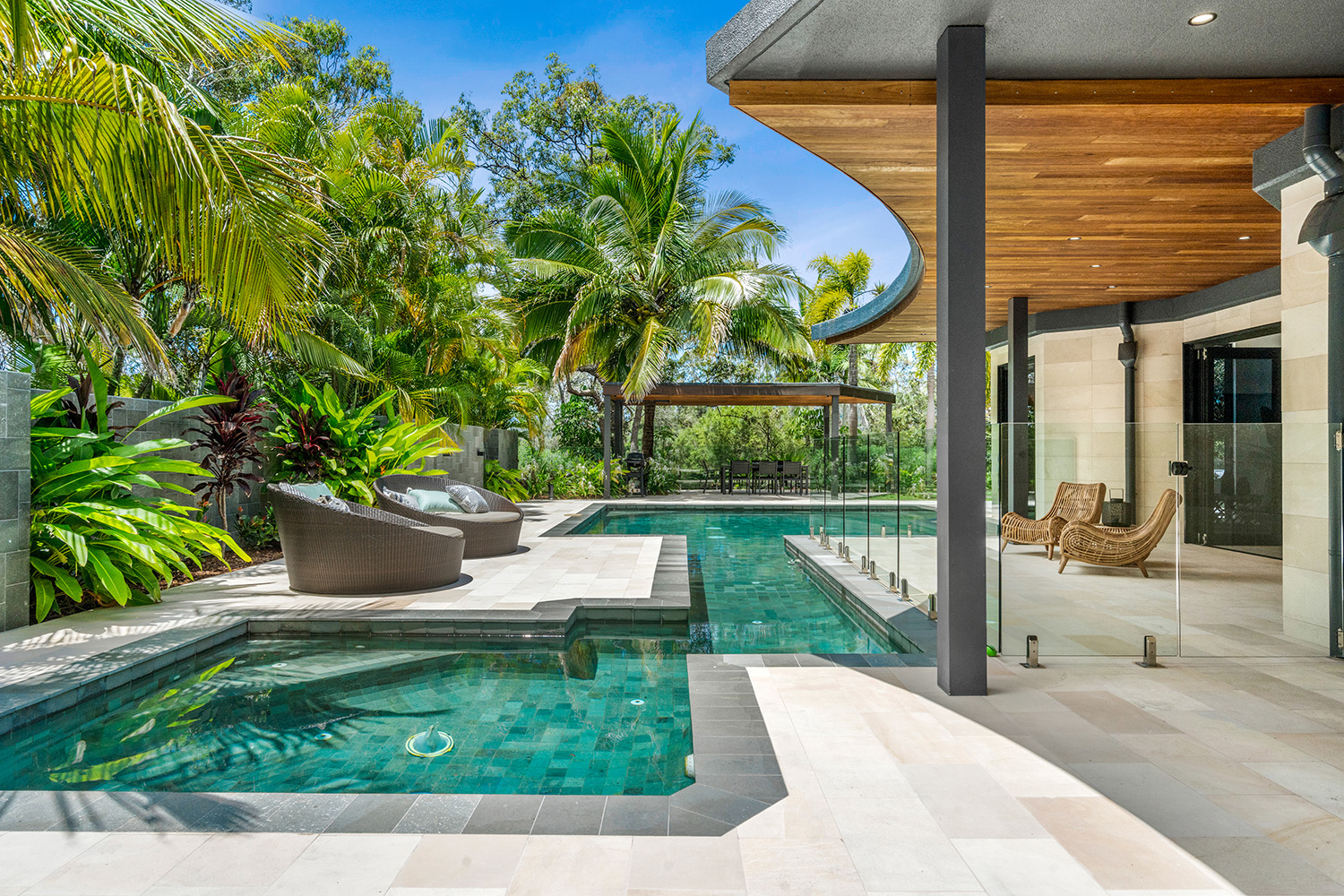
Ideal for outdoor entertaining, the home is replete with a 16-metre outdoor mineral pool, five-person spa and full-sized pizza oven that soaks all while soaking in views from Mt. Warning to the coast.

Elsewhere the five bedrooms all open out to the wraparound veranda while the main has access to its own, private covered deck, ensuite and outdoor bathtub.

Further, a section of the home – complete with kitchen and living area – can easily transform into a secondary accommodation, nanny zone or home office with separate entrance and courtyard.

Moreover, the home offers an 80-tree olive grove, irrigated with town water, a 20-tree citrus orchard alongside mano, apple, guava and jackfruit trees. Keeping its green appeal, the residence has solar panels and a 75000L rainwater stores.

Pacifico Property’s Christian Sergiacomi takes the home to auction on April 16 with a guide of $9-$9.5 million.

Pacificoproperty.com.au

Five Properties To Buy For $1 Million

PERTH: 134A Rosebery Street Bedford WA 6052

‘Go west’ Pet Shop Boys famously warbled, and looking at this central and affordable Perth pile, it’s hard to disagree.

A designer abode within easy reach of the CBD, coffee strip and with a pool? Little wonder many are leaving the east in search of affordable lifestyle offerings such as this.

Only eight years old, this two-storey affair offers bedroom upstairs – the main suite with generous sitting area, WIR and ensuite – with alluring living on the ground, inclusive of open-plan, designer living/dining/kitchen (the latter with Smeg appliances) as well as cinema room and neat study.

The downstairs seamlessly opens to a generous and decked outdoor alfresco area and the aforementioned in-ground pool. This is designer living well conceived – an energy-efficient home featuring solar passive design, ground floor concrete slab heating, brick wall insulation as well as commercial-grade glazing throughout.

Located just a 10-minute walk from the acclaimed Beaufort St cafe strip, the home rests opposite Catherine Reserve, with an abundance of schools, Galleria Morley and Inglewood shopping just moments away.

All offers presented by Friday April 9 at 5pm. The property is with Chris Pham of Remark Urban; urban.realmark.com.au


MELBOURNE: 7A/29 Queens Road Melbourne VIC 3004

With uninterrupted views across Albert Park Lake, Port Phillip Bay and the City Skyline, this is light-filled, central living at its best.

Boasting two bedrooms – the main with neatly held ensuite and exclusive, private balcony – the seventh-floor offering extends to another bedroom (which also leads to main, wrap-around balcony), well-appointed, granite kitchen and modern main bathroom as well as neat laundry and secure car park with lift access and storage cage.

The main living/dining rests independently of the kitchen and boasts timber flooring and exemplary views via floor-to-ceiling windows throughout.

Located in an alluring Art Deco-inspired building, enjoy private resident’s fully-equipped gym, heated indoor swimming pool and spa, expansive terrace overlooking Albert Park Golf Course and also building manager.

Located on the edge of the CBD, enjoy easy access to the Royal Botanic Gardens and Fawkner Park, with nearby trams on Toorak Road.

Asking $920,000 – $1,000,000 and listed with Gary Ormrod of Kay & Burton South Yarra; kayburton.com.au


SYDNEY: 49 Bestic Street, Rockdale, NSW 2216

With Sydney’s median house price well above the $1.2 million mark, you may be thinking it’s impossible to get a house close to the CBD for that mythical price.

Enter this charming 4-bedroom solid brick home in Rockdale, in Sydney’s south. Less than 15km or 20-minutes from the CBD, this expansive one-storey family home sees plenty of its original character features left behind such as decorative ceilings, a fireplace and polished timber floors.

Elsewhere, the home has been extensively modernised, with new kitchen and bathroom fixtures bringing the property into the contemporary age.

Further, the home is located on the ‘high-side’ of Bestic Street, which means the elevated back veranda, which flows on from the kitchen, gives far-reaching district views.

With Rockdale shops, train station and access to freeway connections all nearby, it’s a bargain in a convenient location.

Auction is April 10, price guide $1 million; bayview.century21.com.au


BRISBANE: 18 Power Street, Norman Park, Qld 4170

Moments from Brisbane CBD arrives this warm, inviting character home.

The 3-bedroom, 2-bathroom, 2-car garage sees French doors lead you into the lounge and kitchen area which is complete stone benchtops and Miele appliances

Here, an open plan living space is found upstairs with city views. The main living area sees polished timber flooring and high ceilings alongside a lounge room with built-in cabinetry.

The main living area is separated from the bedroom quarters allowing for a quiet space, with the main bedroom featuring an ensuite with double basins and walk-in wardrobe.

Importantly, Norman Park offers a list of local amenities you can’t pass up. Nearby cafes on Oxford Street in Bulimba alongside access to the CityCat into the CBD is coupled with elite schooling options all moments away.

The listing is with Emil Jeresic of NGU Real Estate, POA;.ngurealestate.com.au/


ADELAIDE: 2/108 Stephen Terrace, Gilberton, SA 5081

Situated in one of Adelaide’s most prestigious location comes this two-storey, 3-bedroom, 3-bathroom, 2 car garage home in stunning Mt Gambier stone.

Downstairs comprises a spacious open plan living and dining complete with a sleek modern kitchen, new appliances and walk-in pantry.

A double-height void to the second storey brings in natural light that is further highlighted by a gorgeous glass chandelier.

A gas log fire, flanked by built-in glass display cabinets is the focal point of the living room, while a separate study with an outlook to a private front garden is also found in the home.

Concertina café-style doors give access to the alfresco dining area, while a family room on the first floor opens to a large terrace enjoying tree-top views.

Close to Adelaide Botanic, The Linear Park and Adelaide’s finest private schools, it’s the ideal family home nearby to Adelaide CBD.

The listing is with Richard Hayward of Klemich property, POA; klemich.com.au

Australian Housing Prices Up 500% Over 25 Years

Proving itself as a reliable investment, research from the Real Estate Institute of Australia (REIA) shows the price of Australian housing is up 500% over 25-years.

According to data from REIA, the median price for Australian housing inflated from $160,000 in 1996 to $825,000 in 2020.

Other dwellings, such as units and apartments have seen capital values increase by just over 400% in comparison however these assets produce higher yields.

The data shows that over the past five years, housing grew by 25%, from a median of $683,000 to $825,000 while other dwellings rose by 10% to $600,000.

Mr Kelly said that over the 25-year period, Australian housing yields tightened from 5.1% to 2.9% while other dwellings have recorded a drop in yields but not as dramatic, falling from 5.2.% to 3.7%.

“Houses in Darwin have the highest return averaging 4.2%. In 1996, housing investments in Darwin were yielding 6.4%.

“Melbourne and Sydney have always had the lowest yields both falling from around 4% in 1996 to just 1.8% in 2020.

“The pandemic saw Melbourne and Sydney experience rising vacancies with Melbourne now the highest in Australia at 5% while Sydney is currently at 3.7%,” said Mr Kelly.

Further, Mr Kelly said that there has been a decline in investors in the market in recent times particularly as concerns have emerged with moratoriums on evictions and rising vacancies.

“Despite rising vacancies and the low yields, we are starting to see investors reemerge as they respond to a rising market with further growth expectations and low borrowing costs,” Mr Kelly added.

REIA’s latest report, Real Estate Market Facts found that in the December quarter 2020, the weighted average capital city median price for both houses and other dwellings increased in the Australian residential property market.

“The weighted average capital city median price increased by 6.0% for houses and by 0.9% for other dwellings. The weighted average median house price for the eight capital cities increased to $825,205. Over the quarter, the median house price increased in all capital cities.

“At $1,211,488, Sydney’s median house price continues to be the highest amongst the capital cities, 46.8% higher than the national average. At $490,000 Perth has the lowest median house price across Australian capital cities, 40.6% lower than the national average.”

Xiaomi Enters Electric Vehicle Market With US$10 Billion Commitment

HONG KONG—Chinese electronics giant Xiaomi Corp. became the latest tech company to launch a foray into China’s burgeoning electric vehicle market, pledging $10 billion over the next decade to the effort.

Xiaomi Chief Executive Lei Jun will lead the new stand-alone subsidiary focused on electric vehicles, the company said Tuesday. It will spend an initial 10 billion yuan, equivalent to about $1.5 billion, to launch the new company, expanding its investment in the coming years.

Xiaomi’s entrance into electric vehicles makes it one of China’s most high-profile tech companies to date to join the increasingly crowded market for such automobiles. Xiaomi’s status as a popular consumer brand with a rapidly expanding global footprint, could give it an edge over its many rivals, though new entrants into the car market face significant hurdles.

Mr Lei appeared late Tuesday before a cheering theatre of spectators in Beijing following the announcement. He told the audience that he had deliberated for months with the company’s board about whether Xiaomi should enter the electric vehicle market. He said he ultimately decided that the company’s deep cash cushion gave him the confidence to move forward.

“We have accumulated a lot of wisdom and experience and it’s time for us to try the waters,” Mr. Lei said.

Mr Lei offered scant details on how or when any Xiaomi vehicle would come to market, and didn’t disclose whether it had enlisted an outside manufacturer for the effort. Last week, Chinese car maker Great Wall Motor denied a report that it was working with Xiaomi on electric vehicles.

China is the world’s largest electric vehicle market, and Xiaomi joins a crowded field of companies looking to compete in the business. Sales of electric vehicles have been booming since industry champion Tesla Inc. began building its high-end cars in Shanghai in late 2019. Domestic rivals include NIO Inc.—whose soaring stock has made it one of the world’s most valuable auto makers—as well as Li Auto Inc. and Xpeng Inc.

In January, search-engine giant Baidu Inc. disclosed that it was entering the electric vehicle market with partner Geely Automobile Holdings Ltd. Apple Inc. has been seeking partners to build electric vehicles since late last year, though talks to do so with South Korea’s Hyundai Motor Group broke down in February.

Xiaomi is betting that its entry into electric vehicles will build on its resurgent success in smartphones. In the fourth quarter, the company became the world’s third-largest smartphone maker behind Apple and Samsung Electronics Co., occupying that spot for the first time ever. Booming sales in China, India and Western Europe have fueled its rise, while troubles at its Chinese rival Huawei Technologies Co. have sent customers flocking to its cut-rate devices.

The details of Xiaomi’s electric-vehicle effort came toward the close of a roughly two-hour new product launch hosted by Mr Lei in Beijing on Tuesday. In addition to smartphones, Xiaomi sells an array of consumer devices, and Mr Lei spent most of the event revealing a grab bag of new gadgets, including an internet-connected air conditioning unit, a home humidifier and a new laptop.

Only at the very end did Mr Lei discuss Xiaomi’s electric-vehicle plans. As an image of Mr Lei with his arm around Tesla CEO Elon Musk flashed behind him, the Chinese CEO said he had been a Tesla owner since 2013, and long had an interest in the technology.

“I hope that one day there will be a Xiaomi car on each and every street,” he said.

Reprinted by permission of The Wall Street Journal, Copyright 2021 Dow Jones & Company. Inc. All Rights Reserved Worldwide. Original date of publication: March 30, 2021

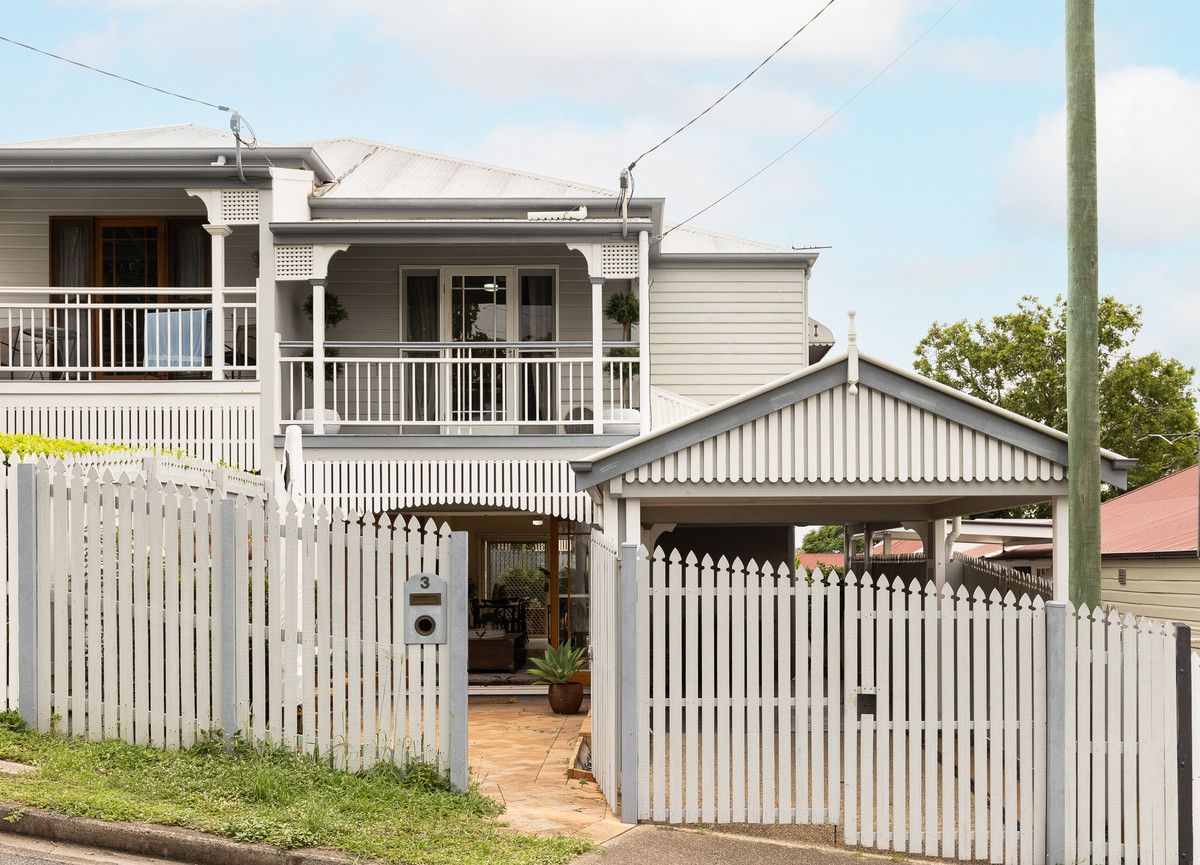
Property Of The Week: 51 Allen Street, Hamilton, QLD 4007

This generously sized, beautifully renovated Queenslander is a study in relaxed, modern charm.

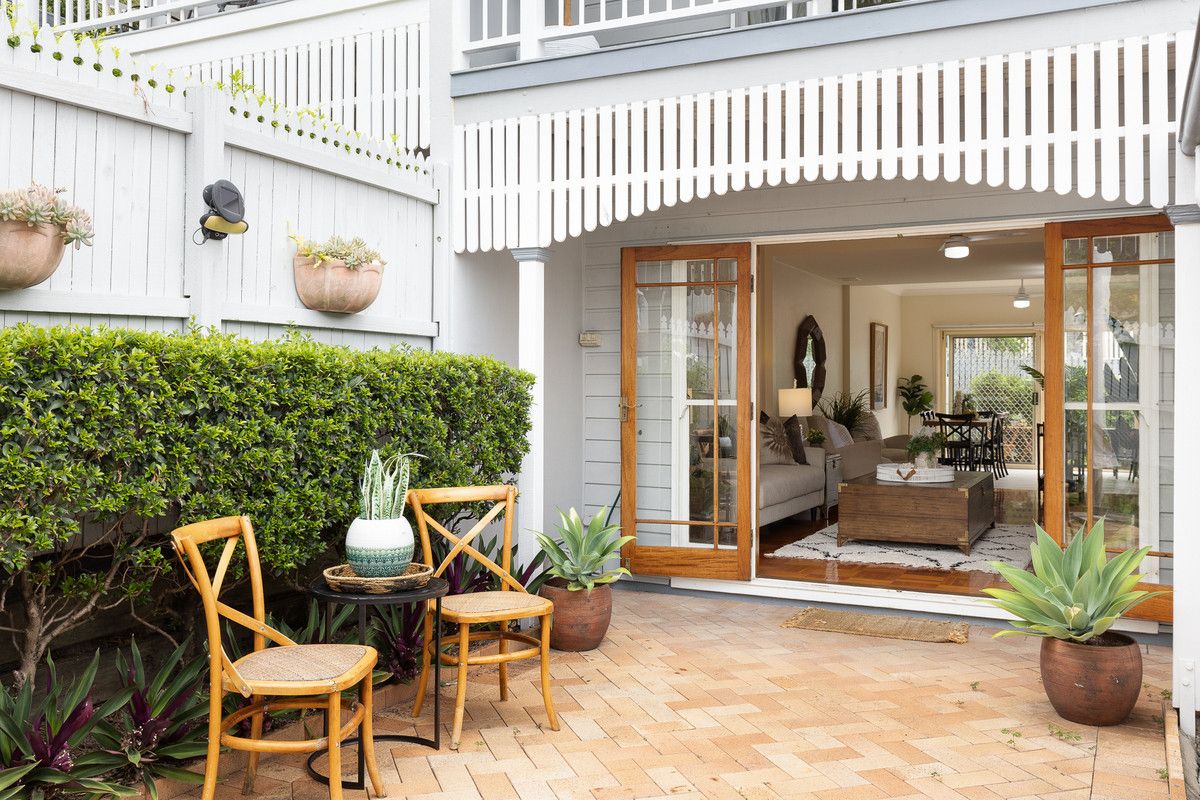
Spread over two levels, the 4-bedroom, 2-bathroom, 2-car parking home is situated on a generous 607sqm plot only 5km from Brisbane CBD with a northerly aspect nearby the Brisbane River.

Despite the renovation, the home has kept plenty of its original character making good use of its high ceiling, vertical joinery, original pine flooring, plantation shutters and ceiling fans.

While a Queenslander at heart, the home has been reimagined for modern family living and renovated to include a contemporary kitchen, fitted with stone benchtops, Smeg appliances and a Liebherr integrated refrigerator.

The kitchen flows towards the living and dining which is connected to the covered entertainment deck offering inner-city Brisbane living at its best.

Further, the home sees oversized bedrooms, including a master complete with walk-in robe, while elsewhere designer bathrooms are complete with stone bench finishes.

On the lower level is two utility rooms alongside a multi-purpose area, currently used as a family room that flows out to the covered entertainment area and low maintenance, expansive backyard.

A short stroll to Race Course Rd precinct, Brisbane airport, public transport and more, it’s a rare opportunity to experience inner-city living through a classic lens.

The listing is with Richardson & Wrench’s Kim Olsen (+61 413 539 865). POA. Clayfield.randw.com.au


Chinese Investors Poised For Return

The second half of 2021 will see Chinese investors re-enter the Australian real estate market according to Asian proptech company Juwai IQI. 

The property platform’s Asian Investment in Australia Q1 report indicated Australian real estate attracts more than six times the Chinese GDP-adjusted investment when compared to the United States.

Chinese investment enquiries into Australian real estate fell nearly 20% last year, due to the pandemic. However, Juwai is forecasting that number will turnaround in the second half of 2021.

“Chinese real estate enquiry levels in Australia should begin to recover in 2021 as the pandemic recedes and Asian economic wealth-creation machines continue to bounce back from their early 2020 doldrums,” a Juwai spokesman said.

Further, the Juwai spokesman said post-pandemic Australia would continue to appeal to Chinese migrants, second-home buyers, tourists and students with foreign buying made by permanent residents to reach pre-pandemic levels by the end of 2022.

APRA Says House Prices Not Its Job

APRA

The Australian Prudential Regulatory Association (APRA) has told the government its responsibility is financial stability and lending practices, not house prices which are on an unprecedented rise across our nation’s capitals.

The soaring housing prices, which has seen an increase in 2.1% growth in February alone, the fastest pace in almost 17 years, has seen calls for regulators to cool the market.

“It’s not our job to solve house prices and it’s not our job to solve house pricing affordability. The extent to which there is dynamic emerging of increased risk-taking by the community … at this stage it’s not evident,” APRA chairman Wayne Byres told a federal parliamentary committee on Monday.

When questioned at the live-streamed House Standing Committee on Economics hearing, whether the regulator was concerned about young people and first home buyers being priced out of the market Mr Byres reminded the government that the regulator’s focus was on lending practices and not housing.

“I think the bank has been very clear, and we have been very clear, in saying our job is not to set or seek to target house prices,” Mr Byres said.

Mr Byres acknowledged credit restrictions could have a knock-on effect on housing prices, however, reiterated APRA’s position.

“The last statement from the Council of Financial Regulators said quite clearly we are watching for a deterioration in lending standards and that’s not evident at this point,” Mr Byres said. “That is not to say it won’t emerge, but it’s not obvious at this point. We are watching with our fellow regulators.”

China Starts Raising Prices for the World

Chinese Manufacture

HONG KONG – Rising raw-materials costs and unrelenting supply-chain constraints are prompting many Chinese exporters to increase prices for the goods they sell abroad, raising fears it may add to global inflationary pressures.

The fears have deepened in recent days, after a grounded container ship blocked the Suez Canal, further straining global supply lines stretched by the coronavirus pandemic and stronger-than-expected demand for computer chips and other goods.

Rene de Jong, director of Resysta AV, an outdoor furniture manufacturer based in the southern Chinese city of Foshan, said he plans to raise prices by around 7% on new orders this summer.

That’s largely because prices of chemicals and metals that are used to produce cushions, foams and frames in the company’s factories in China and Indonesia have climbed rapidly in recent months. Shipping freight rates have also climbed roughly 90% since last June, though they are often paid by clients.

“In my nearly 25 years in China, I’ve never seen anything like this. I’ve never seen shipping costs like this before while steel and aluminium prices shot through the roof,” he said, adding that the company’s profit margins are under pressure.

Other Chinese exporters raising prices include apparel businesses and a toy wholesaler who told The Wall Street Journal his company has raised prices for new orders across the board by 10% to 15% since the beginning of March.

Price increases from Chinese factories alone aren’t necessarily enough to push inflation higher in the U.S. and elsewhere. Much of the sting could be absorbed if Western retailers choose to eat the cost increases themselves without passing them on to consumers, though doing so would squeeze retailers’ profit margins.

Also, official inflation calculations in the U.S. encompass far more than just the consumer goods people buy from abroad. Before the pandemic, more than 60% of consumer spending in the U.S. was on services like dining out or travelling, rather than on consumer goods.

Still, price increases by Chinese factories add yet another source of upward pressure on global prices at a time when the cost of everything from lumber to steel and cotton is higher. Some economists and investors worry that the trillions of dollars of stimulus unleashed worldwide will ultimately lead to more inflation than policy makers anticipate, especially if recent bottlenecks in global supply chains persist, though there are fierce debates over how bad the problem could become.

“There’s definitely a risk [that inflation will increase]. It’s not just the position of exporters. It’s everything, from the bottlenecks caused in global shipping to the idea that the stimulus might unleash more demand than supply can keep up with,” said Nick Marro, lead analyst for global trade at the Economist Intelligence Unit. Even so, “it’s somewhat premature to assume that we are going to see runaway inflation at this point.”

What’s clear is that Chinese manufacturers making products for the rest of the world are finding it increasingly hard to hold the line on costs, especially after the pandemic and lockdowns hurt their profits last year. In the past, Chinese factories with cheap labour were often a force for keeping global prices for everything from jeans to sofas lower, but that’s becoming less true as the factories’ own costs climb.

Shipping rates, which soared in recent months amid port bottlenecks and container shortages, are part of the problem. In some cases, clients ask Chinese suppliers to share the burden. In other cases, Chinese factories themselves are having to pay more to ship in imported raw materials, like lumber.

Meanwhile, prices for many commodities have stayed high or kept climbing, and some businesses are choosing to pass those costs on to customers.

Prices for imports from China to the U.S. rose 1.2% over the past year, the fastest increase since 2012, with most of the increase coming in the three months ending in February, according to data from the U.S. Bureau of Labor Statistics.

One positive for American consumers is that the U.S. dollar has remained stronger than many economists expected, which gives its shoppers more buying power when paying for imported goods. Many families accumulated savings during the pandemic, making it easier for them to pay a little more.

Prices are moving higher “primarily on stronger demand,” said Robin Xing, chief China economist at Morgan Stanley. “Manufacturers will find ways to pass on costs in this circumstance. This will not derail the global recovery.”

Some Chinese manufacturers, meanwhile, have said they have been reluctant to increase prices for fear of losing market share, and expect raw materials costs to cool off.

However, there is little sign at the moment that the forces pushing costs higher in China will ease soon.

Ni Fang, manager of Ji’an Huaerxin Shoes Co., a producer of work boots in Jiangxi province that mostly sells to Europe and Southeast Asia, said that after China’s Lunar New Year in February, the company started receiving notices from suppliers of price increases ranging from 10% to 30% for raw materials used in boots and their packaging, including polyurethane, steel and paper.

The factory responded in late February by raising most product prices by around 5%.

“This round of spike in raw materials costs pushed us close to the point where we couldn’t bear it anymore,” said Ms. Ni, adding that the factory still absorbs parts of the cost increase for fear of turning away too many clients.

Other factors may be contributing to higher costs in China. Authorities are trying to limit fossil-fuel consumption to help China achieve its goal of reducing carbon emissions, which may be making it harder for steel and other sectors to increase production. Chinese officials in January reiterated their goal of ensuring that crude steel output will decline year-over-year in 2021, even as steel demand is projected to increase this year as the economy recovers.

Factory owners and economists say they also suspect some buyers are hoarding commodities, adding price pressure.

Chen Yang, a trader at a state-owned textile company in Jiangsu province, said some upstream suppliers began hoarding cotton before the Lunar New Year, telling him they expected the latest $1.9 trillion stimulus bill from the U.S. would buoy commodities prices across the board. Cotton prices jumped to around $2,600 a ton in early March, compared with around $1,990 a ton in mid-February, according to Mr Chen.

As a result, his company had to increase product prices accordingly, since raw materials account for about 70% to 80% of total costs.

“I got calls from clients almost every day asking about the prices, but very few actually placed orders,” he said. “They all want to wait for the prices to cool off. But they’ll have to order sooner or later.”

Reprinted by permission of The Wall Street Journal, Copyright 2021 Dow Jones & Company. Inc. All Rights Reserved Worldwide. Original date of publication: March 29, 2021

The Wildest Requests Pro Landscapers Have Fielded

Some of us might debate placing any sort of decoration in our yard. Will our neighbours find even a discreet tin deer statue pretentious? Other homeowners, however, freely pursue extravagant landscape ambitions limited only by their imaginations. Santa Barbara designer Margie Grace recalled designing and installing over 10 types of gardens on a three-acre site in five months. “A couple of months later they called,” she said, noting that she and the clients are still friends. “They wanted to put in a model (ride-on) train that ran ‘round the whole thing—and the adventure continued.” Here, a collection of the most fantastical outdoor-design directives professionals have ever confronted.

“A young family in Texas requested a moat and drawbridge around their country estate. It sounded like a lot of fun, but unfortunately logistically we just couldn’t make it work [within their time frame].” —Michelle Nussbaumer, interior designer, Dallas

“For a wraparound terrace on Fifth Avenue, a well-known fashion designer requested a trampoline for her boyfriend, who insisted it was safe, with no netting or railings on the edge. It was 16 stories up. The boyfriend never had an accident, but he wore out his welcome. We removed the trampoline and added planters with peach and apple trees.” —Janice Parker, landscape architect, New York

“Our client requested that we accommodate his refurbished World War II Sherman tank that was to be stored in a show garage neatly tucked into the hillside of their 62-acre site. The request was revoked when it was determined that their Belgian-block driveway would be destroyed and have to be repaved every time they took the tank out for a spin.” —Margie Lavender, architect, Ike Kligerman Barkley, N.Y.

‘We had to create some really intense engineering to stabilise the home while protecting the trees,’ said Miami architect Chad Oppenheim of ancient pines that geologists wanted to remove but the client loved.

Chad Oppenheim

“We were asked to create a miniature golf course and ice skating rink for a Connecticut client. During the warmer months, the kidney-shaped course featured buildings and monuments—the Eiffel Tower, the Statue of Liberty—to serve as golf holes, and in the cooler months [it was cleared and] chilled to be a skating rink.” —Chris Pollack, builder/developer, Greenwich, Conn.

“[A client] told me she had begun taking trapeze lessons and would like to install a trapeze above her pool inside a garden pavilion…She thought it would provide a unique way to exercise. A local stage-rigging company helped us attach a trapeze to the ceiling beams and equip it with a motorised lift. When finished, she would just drop into the swimming pool.”—Mark Lavender, interior designer, Chicago

“We designed an elaborate terrace with wall panels of rusted steel, a water feature, outdoor kitchen—you name it. The biggest challenge? Meticulously detailing and designing comfortable areas for the dog to go to the bathroom.” —Brianne Bishop, interior designer, Chicago

With help from Hess Landscape Architects and MAMO Architects—and carefully conceived hydraulics—Philadelphia interior designer Marguerite Rodgers satisfied an Avalon, N.J., homeowner’s desire for a backyard pool that could be covered with a sturdy surface on which to entertain.

Halkin | Mason Photography

“It was an exhaustive wish list—a white garden (“like the one at Sissinghurst Castle,” the client said), a theatre garden (“like Lotusland”), a parterre garden (“like Versailles”), a Zen garden, children’s garden, vineyard, herb garden, veggie garden, outdoor chess… And could we complete it in five months and have it look fully grown? Endless midnight design sessions and five months later, the gardens were complete.” —Margie Grace, landscape designer, Santa Barbara, Calif.

“A young family was looking for ways to incorporate a pool in their backyard, ideally without losing square footage for their children to play and space for them to entertain. They asked if there was technology like a hydraulic retractable floor that would cover the pool. With the right team, their goal was achieved, the first such pool in northeast America.”—Marguerite Rodgers, interior designer, Philadelphia

“A movie director’s property for his new Los Angeles home featured incredible, ancient pine trees, and his directive to us was ‘Do whatever it takes to preserve these trees.’ Problem was, the geologists wanted them removed to stabilise the cliff-side property. We had to create some really intense engineering, like tremendous caissons, to stabilise the home while protecting the trees. In the end, the window in one of the rooms basically frames these beautiful, old sacred trees.” —Chad Oppenheim, architect, Miami