
Sports And Charity Top Pursuits of the Wealthy
Ever wondered what preoccupies the wealthy? This report has the answer.

By Fang Block
Fri, May 28, 2021 11:31am < 1 min


Ever wondered what preoccupies the wealthy? This report has the answer.
< 1 min
The world’s richest population are most passionate about philanthropy and sports outside of their pursuit of wealth, according to a Wealth-X report Thursday.
More than one-fifth of the wealthiest individuals, those with a net worth of more than US$5 million, cites philanthropy and sports as their top interests, followed by public speaking, the outdoors, technology, education, and travel, according to the report, Interests, Passions and Hobbies of the Wealthy 2021.
Writing, politics, and art round up the top 10, according to Wealth-X, a global information and insight provider on the wealthy.
Interest in philanthropy increases in line with the wealth level. While 40.4% of those with a net worth of more US$100 million choose philanthropy as their top interest, 22% of those with a net worth between US$5 million and US$ 10 million do so, according to the report.
For the ultra-high-net-worth population, those with a net worth of more than US$30 million, there is a marked difference between women and men. Nearly 47.8% of ultra-wealthy women engage in philanthropy as their top pursuit, compared to 31.1% of men, making philanthropy the second-most popular interest among them, according to the report.
Millennial interests differ significantly from those of the general wealthy population, with the top 10 including travel, music, food, and animals, according to the report.
Reprinted by permission of Penta. Copyright 2021 Dow Jones & Company. Inc. All Rights Reserved Worldwide. Original date of publication: May 27, 2021.
 Copyright 2020, Dow Jones & Company, Inc. All Rights Reserved Worldwide. LEARN MORE


BNW Developments has established a Sydney presence, joining Arada and Sobha Realty among the growing number of UAE developers pursuing Australian buyers and development opportunities.
The Australian leather house has opened an immersive four-day pop-up in Manhattan, unveiling its Bloom Collection and redefining what a product launch can look like.
The global economy is increasingly exposed to the risks of an AI slowdown, as data-centre investment fuels growth, trade and technology exports worldwide. While Asian economies benefit from booming chip and hardware demand, a pullback in AI spending could trigger market losses, weaken global trade and increase recession risks.
4 min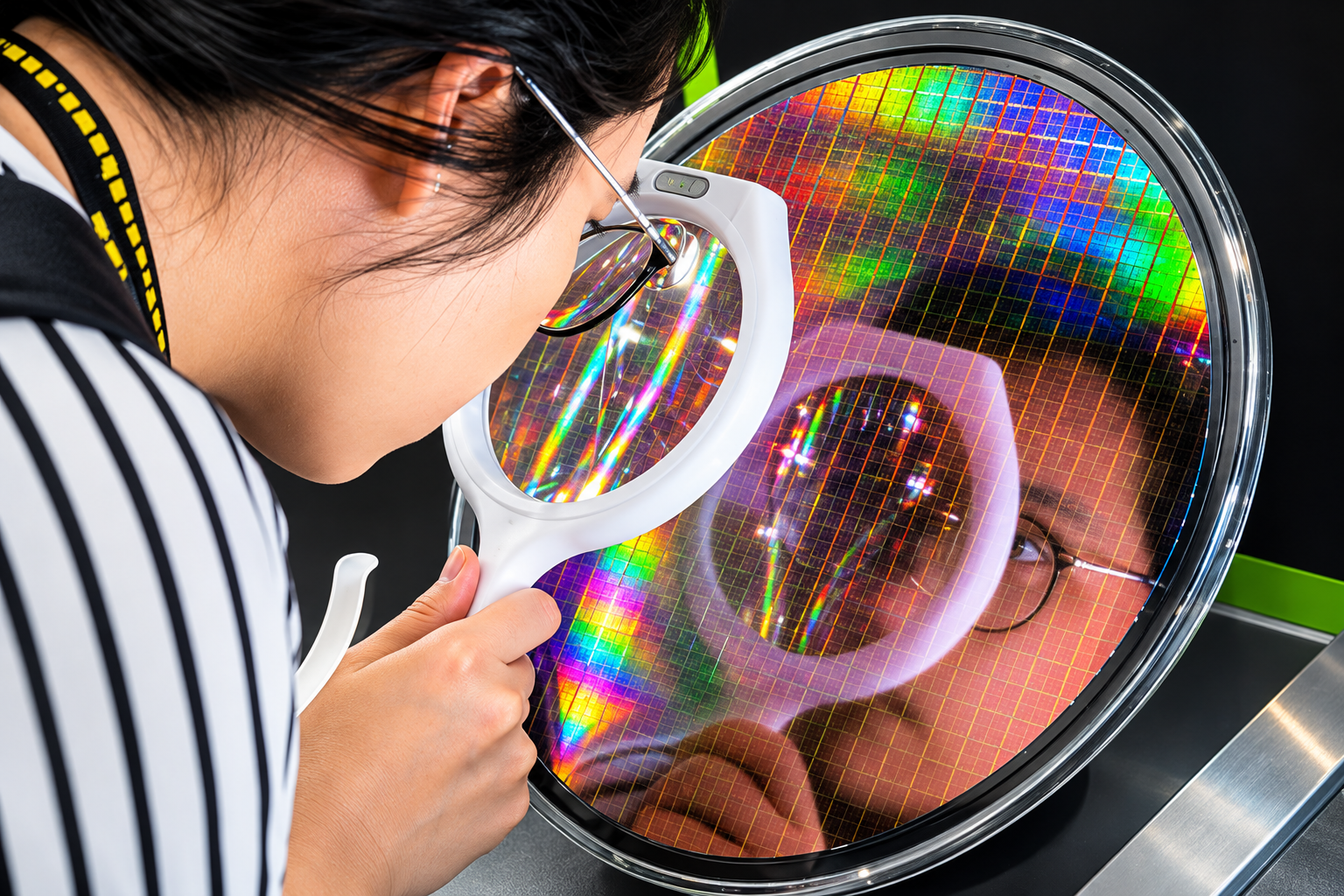
A message from the violent swings in stock markets over the past week: The fallout from an artificial-intelligence bust wouldn’t stop at the U.S.’s shores.
The AI build-out has been an engine of growth not just for the U.S. this year but for the whole global economy. Squeezed by the energy crunch caused by the Iran war, the world has relied heavily on U.S. data-center investment to power otherwise lackluster growth.
Global trade has thrived as Asian economies such as China, Taiwan and South Korea have enjoyed booming exports of computer chips, server racks and electronic equipment to feed ravenous demand for computing power in the U.S.
The Silicon Valley bounty is spreading as other economies join the party. Assembly hubs such as Vietnam and Mexico are seeing exports take off. Malaysia, Thailand and Australia are building data centers of their own. Europe’s industrial giants are supplying the power and cooling systems that make the AI revolution possible.
Yet the anxiety that spread through global markets in the aftermath of the U.S. midterm elections shows this growing dependency on Silicon Valley has a downside.
A slowdown in AI investment would punish exports in economies that in many cases show few other signs of growth. A sustained stock slide would crush mom-and-pop investors all over the world who have piled into technology stocks in anticipation of bumper returns. Overstretched budgets mean governments have limited room to respond with more spending.
Economists calculating what might happen if the pace of investment slows or the AI boom turns to full-blown bust say the only real question is how severe the global consequences will be.
“There is very little that can be done to prevent a global recession should the AI boom collapse,” said Frederic Neumann, chief Asia economist at HSBC in Hong Kong.
Stock markets have been on a wild ride since the Democrats’ victory in the U.S. midterm elections sparked concerns that Congress will hit the brakes on data-center development.
The latest upset in the industry has been the alleged spying scandal engulfing Nvidia, the linchpin of the AI ecosystem because of its deep pockets and advanced chips.
Stocks have clawed back some losses in recent days, moves that suggest many investors think the selloff is overdone. Even so, key stocks and indexes remain well below recent peaks. The tech-heavy Nasdaq index closed Wednesday 8% below its year-to-date high. Japan’s Nikkei index is down 16%, and South Korea’s Kospi, home to major memory-chip maker Samsung Electronics and SK Hynix, is down 43%.
For now, the stock-market gyrations haven’t spilled over into real economic activity, with global data pointing to the AI boom still going strong.
Asian economies are still seeing bumper export growth, with many of the gains driven by surging prices for chips and other hardware. China’s exports were up 35% year-over-year in October, according to figures from data provider CEIC. South Korea’s were up 93%, with Japan, Taiwan, Singapore and others also posting double-digit gains.
Economists at Capital Economics said the export bonanza means global trade is on track for its best spell of annual growth this year since the days of hyperglobalization in the early 1990s, excluding the big rebounds after Covid-19 and the 2008-09 financial crisis.
But the consulting firm warned that as much as 80% of recent export growth has been concentrated in AI-related goods, leaving global trade vulnerable to any change in U.S. spending on data centers. China, South Korea and other major economies are beset by weak consumption, meaning a drop-off in trade would have an outsize hit on growth.
Political and regulatory hurdles could drag on data-center investment. So, too, could rising interest rates or disappointments on earnings if AI firms’ revenues fail to keep up with outlays. The AI splurge already eclipses past infrastructure booms such as the railroads, and even without external pressure it might struggle to maintain that breakneck rate of growth.
As data-center investment slows, “AI capex will turn from a major prop to a drag on world trade,” Marcel Thieliant, head of Asia-Pacific at Capital Economics, said in a report.
Some economists have looked back to the dot-com bubble of the early 2000s as a yardstick to measure the possible costs to the global economy of an AI blowup.
In that episode, U.S. business investment sank and stocks crashed, hurting U.S. consumer spending and crushing imports.
As a share of gross domestic product, U.S. imports of IT-related equipment fell 55% in two years from their mid-2000 peak, according to Oxford Economics—a drop that hit Asian and other economies that were suppliers of the goods. Global trade plummeted, and world growth in 2001 collapsed to just 2%, consistent with a global recession.
The globalized financing of the AI boom would in a bust spread financial pain around the world, adding to the damage from a steep fall in trade. Gaurav Ganguly, head of international economics at Moody’s Analytics in London, said the world would struggle to absorb a sharp AI stock slide on top of an oil shock, tariffs and rising interest rates.
“The result could be a severe economic shock with global recessionary consequences,” he said.


