
Corey Pavin on Taking a Shot at Making Golf Greens More Green

By JOHN SCOTT LEWINSKI
Wed, Jun 26, 2024 11:04am 4 min
4 min
4 min

 4 min
4 min
Though golf courses offer long acres of lush grass, tall trees and rippling ponds, they’re not the most popular venues among environmentalists. Citing their effect on wildlife and the potential impact on a venue’s water table, those worried about conservation and sustainability find much to dislike on any 18-hole tract.
For more than a decade, 1995 U.S. Open champion Corey Pavin has worked to improve golf’s relationships with the world hosting it. Known as one of the more amiable and self-effacing players on the PGA Tour (and, currently, the Champions Tour), the 64-year-old native of Southern California remains one of the leading proponents of sustainability in golf.
During preparations to play the 2024 Senior PGA Championship at Michigan’s Harbor Shores—a course built on a reclaimed industrial dumping ground in Benton Harbor—Pavin explored what brought him into the sustainability movement and why he continues to push more environmentally responsible golf courses.
Penta : You claimed a Major Championship, won 15 times on the PGA Tour and captained a Ryder Cup team during four decades of professional golf. How did you find an interest in sustainability along the way?
Corey Pavin: I grew up in California, so recycling was always a big deal there before the movement expanded across the United States and around the world. So, I came into golf already aware of the need to recycle and look after the environment.
What brought you into a leadership position working toward environmental sustainability in golf?
I do most of this work due to my association with Dow Chemical. I’ve been with them for 15 years now, and they started a big program for sustainability and recycling. They’ve done a lot to make me aware of what needs to be done and helped me to reduce my own carbon footprint. … I also worked with the nonprofit GEO Foundation for Sustainable Golf, which is dedicated to making golf and the golf community ecologically friendly.
Have you found there to be tension between the sport of golf and the environmentalist movement?
I knew growing up the environmental effects of golf and golf courses was a huge concern and a cause of a lot of conversation. There were debates over the chemicals used on a course and how they can affect groundwater and other elements.
I think a lot of strides are being made with what materials get used on a golf course with an eye toward what effect they could have on the environment. There’s been a lot of work in the last two decades to make courses less harmful.
What advancements have golf operations made in course design, building, and management?
First of all, there’s been a push for years now with course designers to avoid bringing in any outside species such as grass or other plants that could change the ecology of an area. You’re seeing so many more courses now that use only native elements. There’s also been a lot of strides made on how courses are maintained, what grasses they use, and how the greens crews treat the grasses.
Is it difficult to balance environmental factors with efforts to provide a quality golf course?
You want to design and build a quality course and keep it in good shape, but we have the means now to eliminate negative environmental impact from a golf course being built or operating. For example, concepts such as using recycled, non-potable water for the grass or choosing salt-resistant grasses that can be fed with brackish seawater keep fresh water preserved and entirely off the course.
Beyond water usage, what positive effects can a modern golf course have on the environment?
You also have to consider the adjacent land near a course. The presence of golf near a forest or marshland can lead to an effort to preserve that space that wasn’t a priority earlier.
Are you seeing efforts to update or reimagine golf courses built before the environmental movement came to the fore?
Yes, there are so many modification ideas a golf course can use to limit or reduce the amount of grass that needs to be watered. I’m seeing courses add natural waste areas of plants that require very little water or more sandy areas that require no water at all. Over the last decade, I’ve seen courses all around the world shifting to those designs. Beyond saving water, those ideas also reduce the amount of necessary maintenance and save energy.
Way back when, crews used to just bulldoze everything and transform an area into a course without giving thought of what that could do. Once it became clear that we could build golf courses that can involve more of the natural habitat and disturb much less of the natural environment that was already in place, I think it became obvious there was no reason to design or build courses any other way.
As a player, does it just make you happy seeing these sustainable changes?
I love seeing it, not just because I’m aware of how important clean water is, but because I’ve always liked golf courses that have a natural look to them.
The 2024 Senior PGA Championship was at Harbor Shores this year—a course developed on wetlands reclaimed from an industrial waste site. Could we see golf actually restoring the environment in cases like we find in Benton Harbor, Mich.?
I think that’s a great example of responsible course building and management. Initially, [Harbor Shores] was more a case of recycling and reclamation, but it operates now within those wetlands as a sustainable model. We can see more cases of dump sites becoming courses because you’re dealing with land that can’t really be used for much else. Once the ground is cleaned and treated, I can’t think of any better place to build a golf course because just the act of creating the venue cleans that garbage from the land.
We can now make golf courses that look like they were always supposed to be there from the beginning.
This interview has been edited for length and clarity.
 Copyright 2020, Dow Jones & Company, Inc. All Rights Reserved Worldwide. LEARN MORE




BNW Developments has established a Sydney presence, joining Arada and Sobha Realty among the growing number of UAE developers pursuing Australian buyers and development opportunities.
The Australian leather house has opened an immersive four-day pop-up in Manhattan, unveiling its Bloom Collection and redefining what a product launch can look like.
AI-powered travel agents are challenging online booking platforms, but Airbnb’s exclusive listings and direct customer relationships could give it an edge. Its next challenge: turning repeat guests into loyal customers through stronger rewards and innovation.
3 min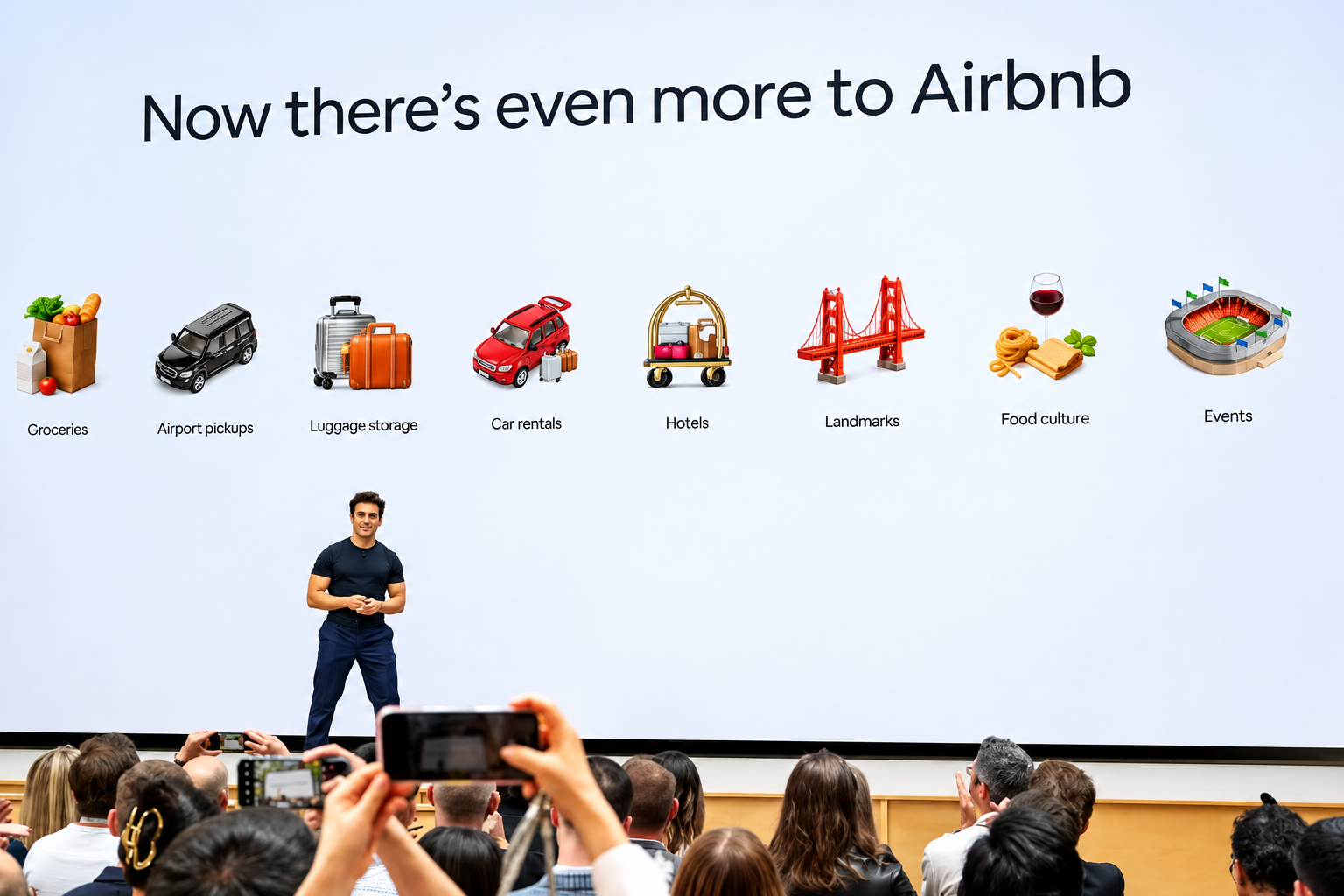
AI agents like Muse can already find you the cheapest hotel room in Paris. But they can’t locate a cheaper version of that Catskills cabin you’ve been eyeing, because it might only be available on Airbnb ABNB -1.43%decrease.
Investors should pay attention to that distinction. When Meta Platforms META 3.38%increase launched its Muse agent last month, travel stocks including Booking Holdings BKNG -1.19%decrease, Expedia and Airbnb all fell sharply.
Airbnb, though, has a real chance to emerge as a winner from the upheaval. The catch: Its stock already reflects above-industry growth. To justify its valuation, Airbnb will need to turn repeat customers into loyal ones.
Online travel companies make much of their money by simplifying search and collecting fees on bookings. AI agents threaten that model.
But not all travel marketplaces are equally exposed. Booking and Expedia largely sell hotel rooms that travelers can also book directly or through competing sites. If an agent can find the same room elsewhere, it has little reason to favor either Booking or Expedia.
Booking and Expedia also sell sponsored listings that steer travelers toward particular properties. Wells Fargo estimates those will account for about 8% of Expedia’s revenue and a much higher percentage of profit next year.
Airbnb has more ways to adapt. More than half its listings are available only on its platform, and more than 90% of its traffic comes directly to its app or website.
The customer relationship doesn’t end after booking, either. Bernstein analyst Richard Clarke notes that 90% of Airbnb guests go on to message their hosts about arrival times, keys or local taxes, giving Airbnb a connection to both sides of the transaction.
How the companies have responded to the possible agentic future is telling.
Expedia quickly signed on as a Muse partner. Airbnb hasn’t, and Chief Executive Brian Chesky says AI chatbots have so far been a boon, sending customers to Airbnb’s website.
Chatbots might work for buying paper towels, he quipped at a Skift conference last month, but people enjoy planning trips. He argued that browsing dozens of homes isn’t something a text-based chatbot is well suited for.
Still, the AI jitters arrived just as Airbnb was persuading investors it deserved its pricey multiple. For years after its 2020 initial public offering, the stock—which trades around 25 to 30 times forward earnings—went nowhere. Investors saw a mature operator trading at a growth premium.
This year, Airbnb growth seems to be accelerating. The stock jumped in August after the company raised its full-year revenue-growth guidance with its second-quarter results. Wells Fargo analyst Ken Gawrelski credits a run of product improvements under a revamped leadership team.
Among the changes: letting guests reserve now and pay later, adding hotels, and a redesigned home page and app. Investors were also betting on what comes next, including thousands more hotels, car rentals and, eventually, advertising.
The irony is that some of those growth drivers push Airbnb closer to the kind of business Booking and Expedia run—the kind of business AI agents could threaten. Even if AI agents capture a large share of travel planning and booking, Airbnb would capture the demand. But it and others would slowly lose control over how customers find and choose properties.
That would undermine the advertising opportunity investors are counting on. The bigger point for Airbnb and other marketplaces is that losing control of customer acquisition could mean surrendering some of their pricing power and margins.
To bulletproof itself, Airbnb might look to another e-commerce giant that has so far kept AI agents at arm’s length: Amazon.
Like Amazon, Airbnb has a loyal customer base and hard-to-match supply. But it has nothing like Prime membership to make customers think twice before taking their business elsewhere.
That is where loyalty comes in. Business travelers stick with Hilton or Marriott because enough nights earn them perks. Leisure travelers rarely accumulate stays with one chain. Airbnb has millions of listings and plenty of repeat customers, but no broad rewards program. It has begun experimenting with credits on hotel stays, but it should make loyalty a priority, not just a promotion.
Airbnb also plans to launch its own AI agent next year. But travelers using an agent might still want it to search Airbnb, Vrbo, Booking and hotel websites alike, rather than limit itself to one company’s inventory.
Eventually, Airbnb might have to strike deals with agent makers, using its unique homes as leverage to negotiate favorable terms, says Gawrelski. Such deals, along with rewards for loyal guests, could over the long term eat into the company’s roughly 13% take rate, he adds. But if they bring in enough additional bookings, the trade-off could be worthwhile.
History offers a reason not to panic. The shift from desktop to mobile unsettled investors in Alphabet and Amazon, but both emerged as major beneficiaries. Companies with valuable assets can come out of a platform shift stronger, if they adapt quickly enough.
Airbnb has homes the bots can’t easily replace. Now it needs to give guests a reason to insist on booking them there.
