Hollywood Hills Home Built for MGM Co-Founder Samuel Goldwyn Selling for Nearly $4 Million
It was the first of three Los Angeles estates the movie mogul built—the biggest of which is owned by Taylor Swift, who restored it and won landmark status
By EVELYN BATTAGLIA
Fri, May 31, 2024 9:32am 4min
Another century-old Goldwyn estate just hit the market asking $3.495 million.
L.A. LIGHT
Taylor Swift took on the role of preservationist when she bought and restored a Beverly Hills mansion built for movie mogul Samuel Goldwyn—and if she’s looking for a new project, another century-old Goldwyn estate just hit the market asking $3.495 million.
The 1916 Spanish-style villa was built for the Polish-born producer in the Hollywood foothills of Runyon Canyon, a little-known artist enclave with a rich legacy. It was a starter home for Goldwyn, who eventually bought two other properties in Los Angeles as part of the so-called Goldwyn trifecta, according to listing agent Ingrid Sacerio of the Agency, who listed the home last week.
L.A. LIGHT
The two other homes include an Italianate mansion built a couple blocks away by Los Angeles developer E.F. Fuller (it sold in 2022 for $6.4 million), and the grand Georgian Revival mansion in Beverly Hills that Swift bought in 2016 for $25 million before launching a campaign to have it officially landmarked . She still owns the home.
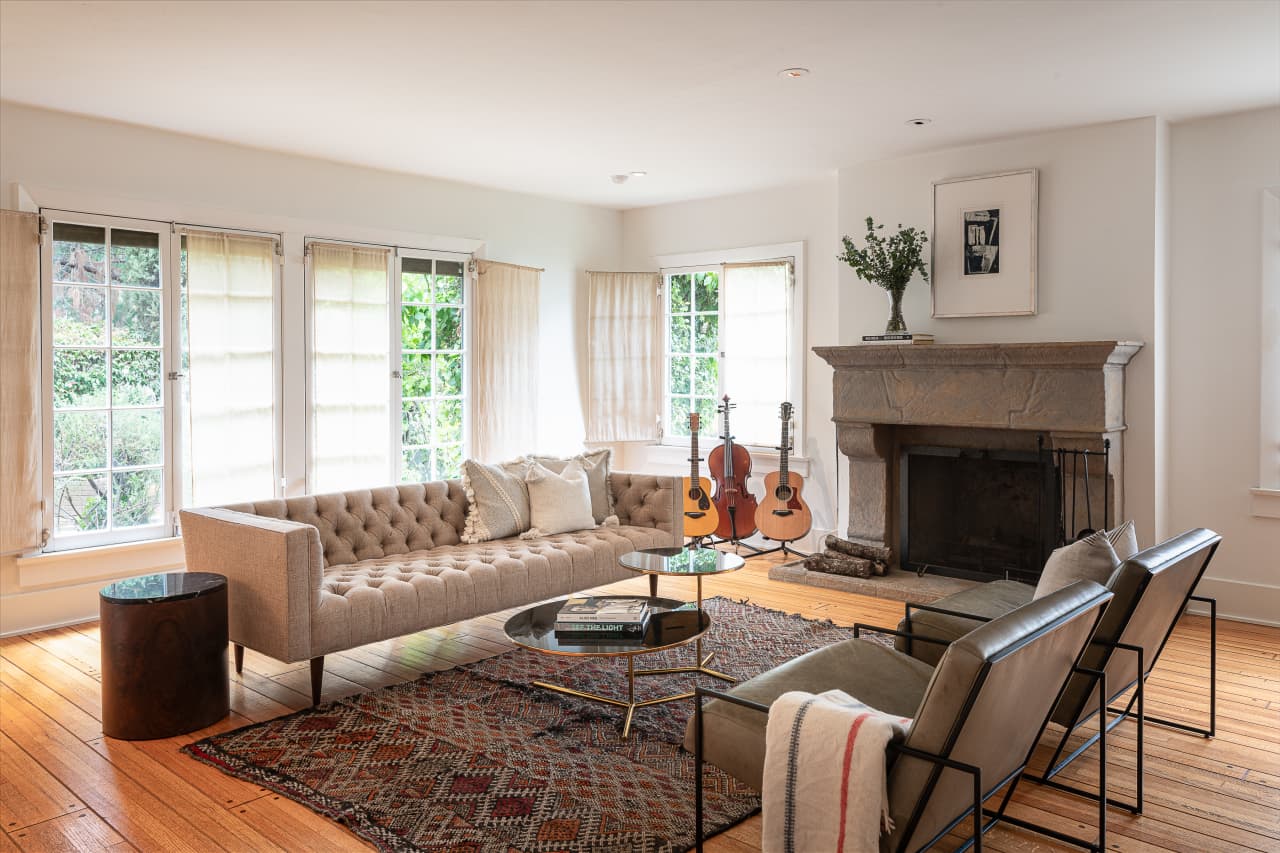
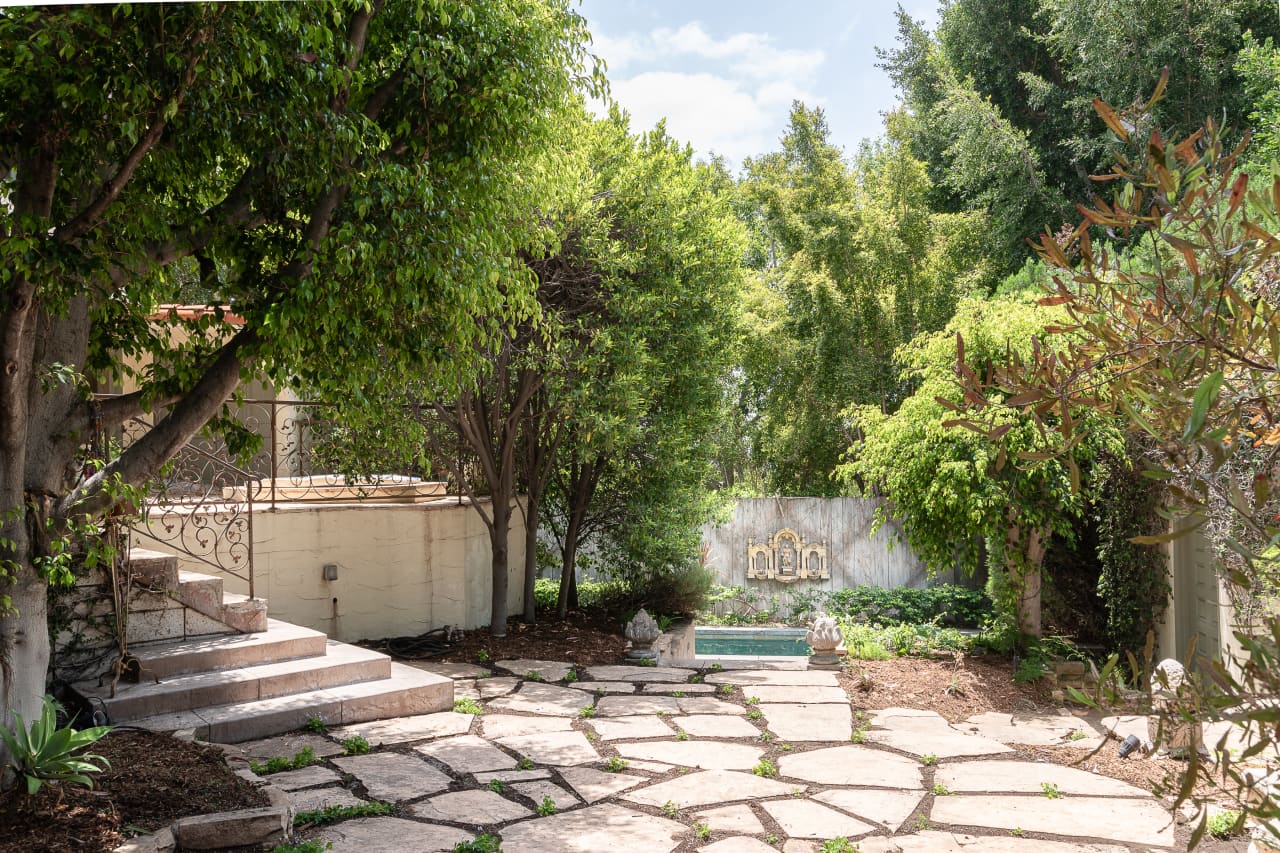
Should Swift (or anyone else) wish to flex their conservation muscles, the Hollywood property already boasts original architectural details, including the windows, interior doors and oak floors throughout. A triptych sculpture from the 1928 “Cleopatra” movie set and other artefacts and fountains dot the landscaped grounds.
L.A. LIGHT
Sacerio said it also has a lucky legacy: Soon after moving in, Goldwyn co-founded MGM and began producing acclaimed films of the 1930s and ’40s, including “Stella Dallas,” “Wuthering Heights,” and “Little Foxes,” and hit musicals such as “Guys and Dolls,” starring Marlon Brando and Frank Sinatra, and “Porgy and Bess.”
The neighbourhood “was a magnet for silent movie stars back in the day,” said seller Shel Pink, who is an artist, author of the self-care book “Slow Beauty” and the founder of beauty-product brand SpaRitual. She purchased the house in 2015 with musician Ran Pink. “One of the houses across the street was reputedly owned by one who had parties that lasted for days.”
Pink said the history of the neighbourhood was a significant draw. “Everyone knows about the music scene in Laurel Canyon but not about this little enclave in Runyon Canyon, which has attracted writers like Joan Didion, who rented here in the 1970s, and other creative types over the decades.”
She was also drawn to the house’s Old Hollywood history and its location on the hill. “We are slightly above but not so high that we have to drive down steep, winding roads, so it’s super accessible,” Pink said.
The 3,398-square-foot residence sits on a corner lot and features four bedrooms and three bathrooms. A separate studio with its own entrance is adjacent to the two-car garage at the rear of the property.
L.A. LIGHT
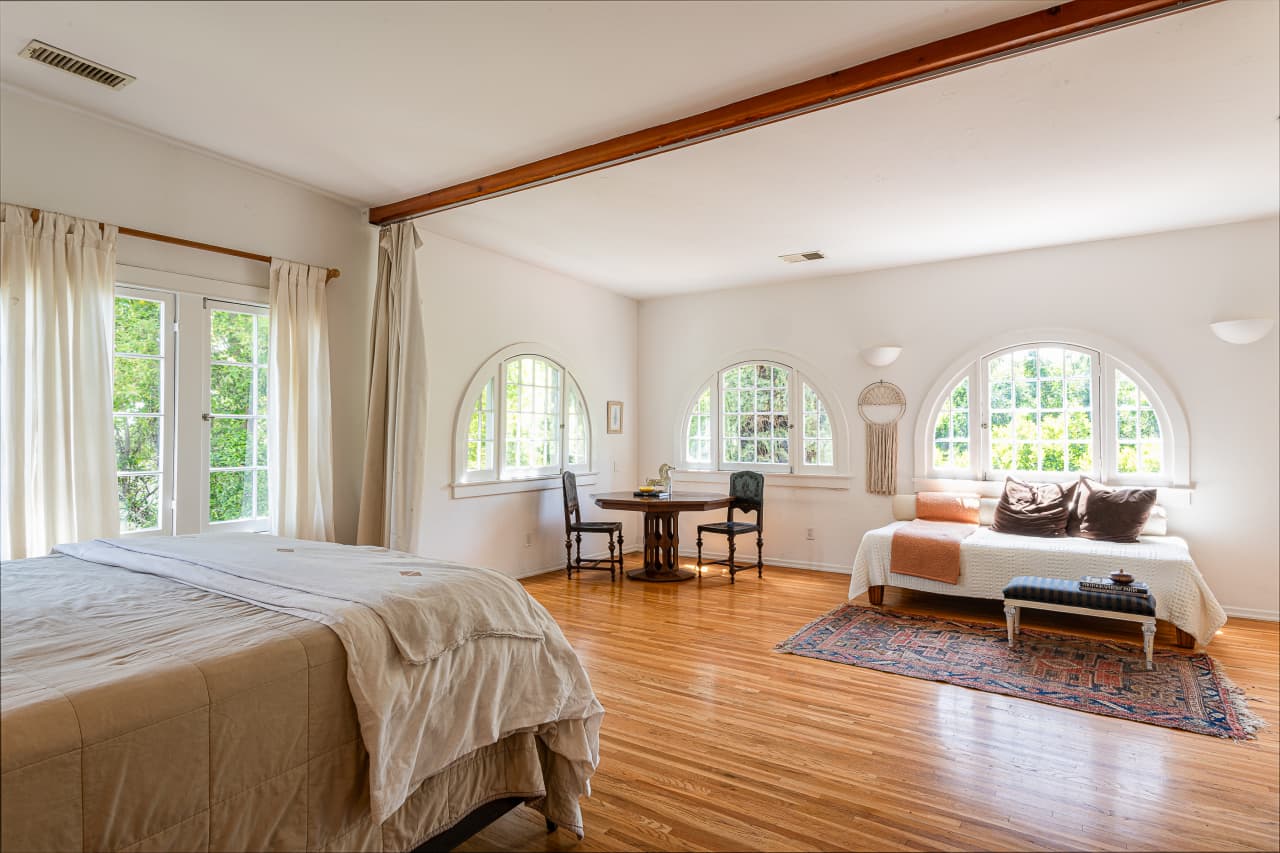
Upstairs, the primary bedroom now incorporates what was once a neighbouring sunroom with a vaulted ceiling and semi-circle, or half-sun, windows; a previous owner added a ceiling-mounted curtain that Pink says can be drawn to block out the morning sun or to keep the sleeping area cool during the day. Two more bedrooms (one en-suite) are on this level.
The fourth bedroom with a walk-in closet on the ground floor is currently used as a den. A designated office overlooks the dining room, which flows into a living room on one side and the kitchen on the other—all enclosed with expansive windows and glass doors, allowing light to flood the interior, Pink said.
L.A. LIGHT
A tall fence surrounds the entire property, which is further protected with double gates—a two-door pedestrian gate along the street and another leading into the porch outside the front door, both customised by the previous owner, Pink said.
The garage’s location at the rear of the property provides additional privacy. “No one ever sees anyone coming and going out of the front gate,” Sacerio said. Instead, they pull into the garage, walk across a pebbled area, up a few steps to a patio with a hot tub, and into the breakfast nook in the kitchen.
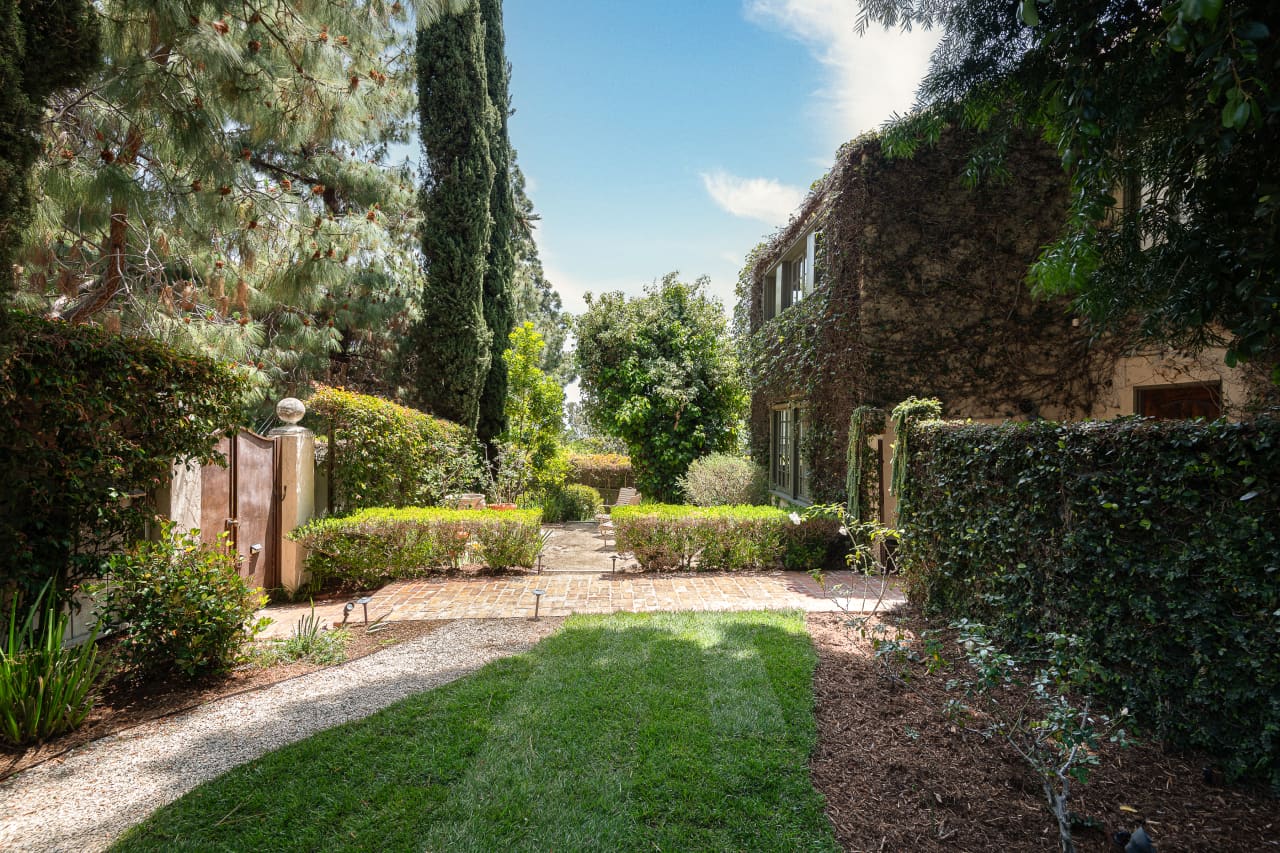
A landscaped brick pathway circumnavigates the perimeter of the property, crossing a patio with an outdoor fireplace and ending in steps leading down to a long, narrow pool.
“From the moment you enter the gardens and see the ivy walls, there’s a poetry and a wildness here—I like to say that we have our own mini forest that hugs the home and creates a serene oasis in the middle of an urban environment,” Pink said. “It feels like a secluded retreat. Everyone comments on the beautiful energy and sense of calm as soon as they step inside.”
Copyright 2020, Dow Jones & Company, Inc. All Rights Reserved Worldwide. LEARN MORE
The Australian leather house has opened an immersive four-day pop-up in Manhattan, unveiling its Bloom Collection and redefining what a product launch can look like.
Following the successful launch of its Palais Collection, MAISON de SABRÉ has unveiled a new modular handbag system offering more than 720 styling combinations.
Related Stories
Property
$8.1 billion, 10,000-home community set for Dubai neighbour Sharjah
By Ruba Jaajaa 21/09/2026
Property
The 60-Year-Old Real-Estate Agent Giving History Lessons on Instagram
By 26/08/2026
Property
Mortgage Rates Are All Over the Place—and That Could Be Good for Buyers
More than 10,000 homes, an expansive central park and a mix of hospitality, retail and wellness facilities will form Azizi Developments’ first master-planned community in the emirate.
By Ruba Jaajaa
Mon, Sep 21, 2026 2min
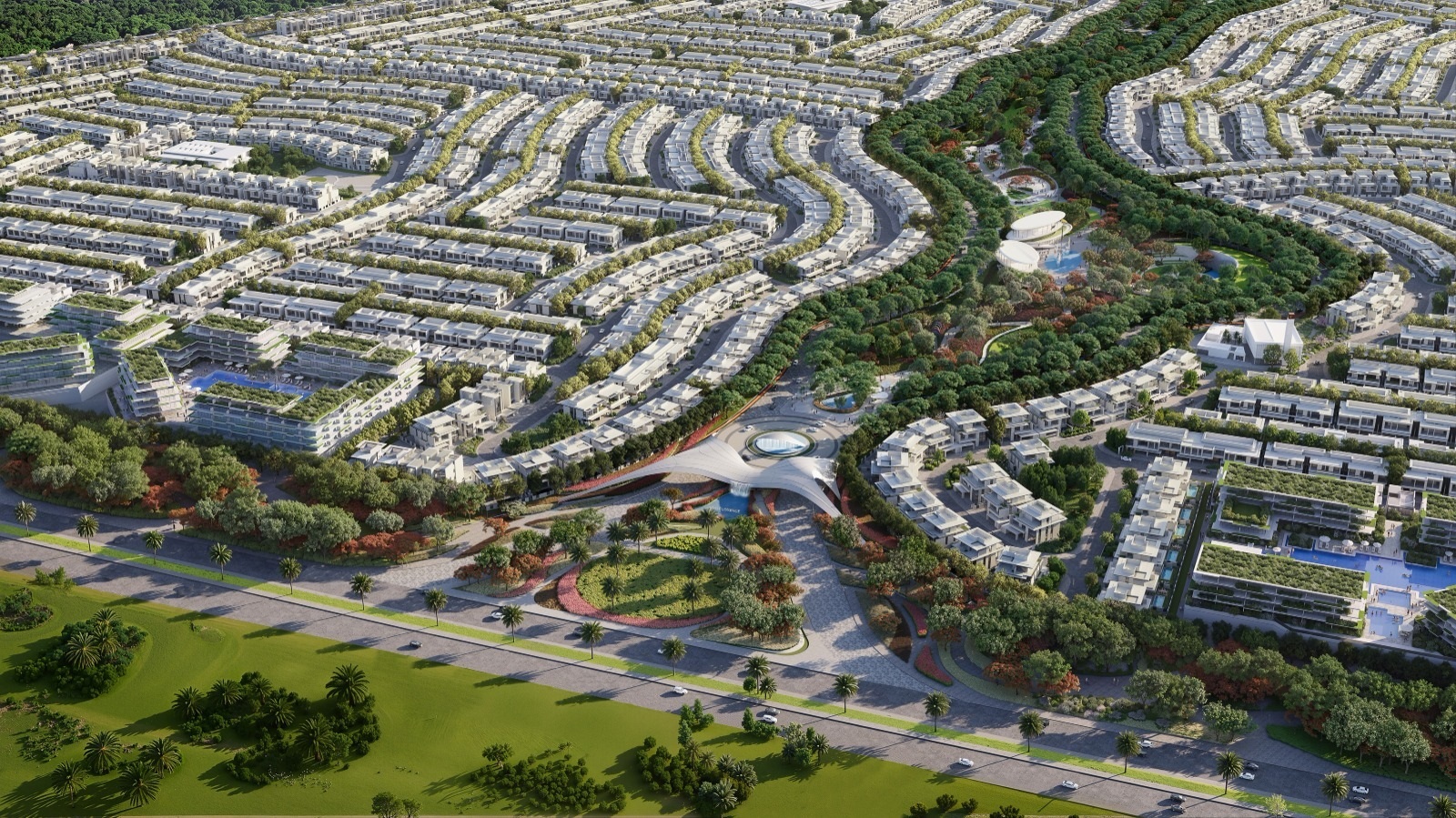
Sharjah is set to receive one of its largest new residential communities, with Azizi Developments unveiling plans for a US$8.1 billion master-planned precinct containing more than 10,000 homes.
Named Azizi Florence, the freehold development will comprise 1,130 villas, more than 6,000 townhouses and 3,500 apartments. Three-bedroom townhouses will start from US$515,000, with an indicative rate of US$231 per square foot of saleable space.
The project marks the Dubai-based developer’s first move into Sharjah, expanding a portfolio that includes the planned Burj Azizi skyscraper and the Azizi Venice community in Dubai.
A park at the heart of the community
Rather than treating landscaping as an afterthought, Azizi Florence will be organised around a 1.7 million sq ft central park.
The wider precinct is planned as a self-contained neighbourhood combining homes with retail, hospitality, education, leisure and wellness facilities.
Six residential clusters will sit within the development, each with its own park, clubhouse, community centre and landscaped gardens. The approach reflects a broader shift across large Middle Eastern developments, where greenery, recreation and everyday convenience are increasingly central to the residential proposition.
The scale of Azizi Florence suggests it is intended to function as a neighbourhood rather than a collection of housing estates. Its mix of housing types should also give the project broader appeal, accommodating apartment buyers alongside families seeking townhouses or standalone villas.
Azizi expands beyond Dubai
Azizi Developments has delivered more than 45,000 homes to buyers from over 100 countries and says it has approximately 150,000 units under construction.
Much of its growth has been concentrated in Dubai, where its portfolio extends across Palm Jumeirah, Mohammed Bin Rashid City, Dubai South, Sheikh Zayed Road and Downtown Jebel Ali.
Its most prominent current project is Burj Azizi, which is intended to become the world’s second-tallest building. Azizi Florence represents a different type of undertaking: a low-rise, family-oriented community built around public space and daily amenity.
For company founder and chairman Mirwais Azizi, the Sharjah project also carries a personal connection. The emirate was his first home in the UAE more than three decades ago, adding a symbolic dimension to the developer’s expansion.
Sharjah’s residential ambitions grow
Although Dubai and Abu Dhabi have traditionally captured much of the international attention directed at the UAE property market, Sharjah has been steadily broadening its residential offering.
Large freehold communities such as Azizi Florence have the potential to attract both local families and international purchasers looking for comparatively accessible entry points into the Emirates’ property market.
At a starting price of US$515,000, the project’s three-bedroom townhouses will sit well below the cost of equivalent family homes in many of Dubai’s more established luxury communities.
The ultimate appeal, however, will depend on execution. At this scale, the quality of the public realm, connections between residential clusters and delivery of the promised supporting infrastructure will be as important as the homes themselves.
If those elements come together, Azizi Florence could help establish a new benchmark for large-scale residential development in Sharjah—and give buyers another option beyond the UAE’s better-known property markets.



 4 min
4 min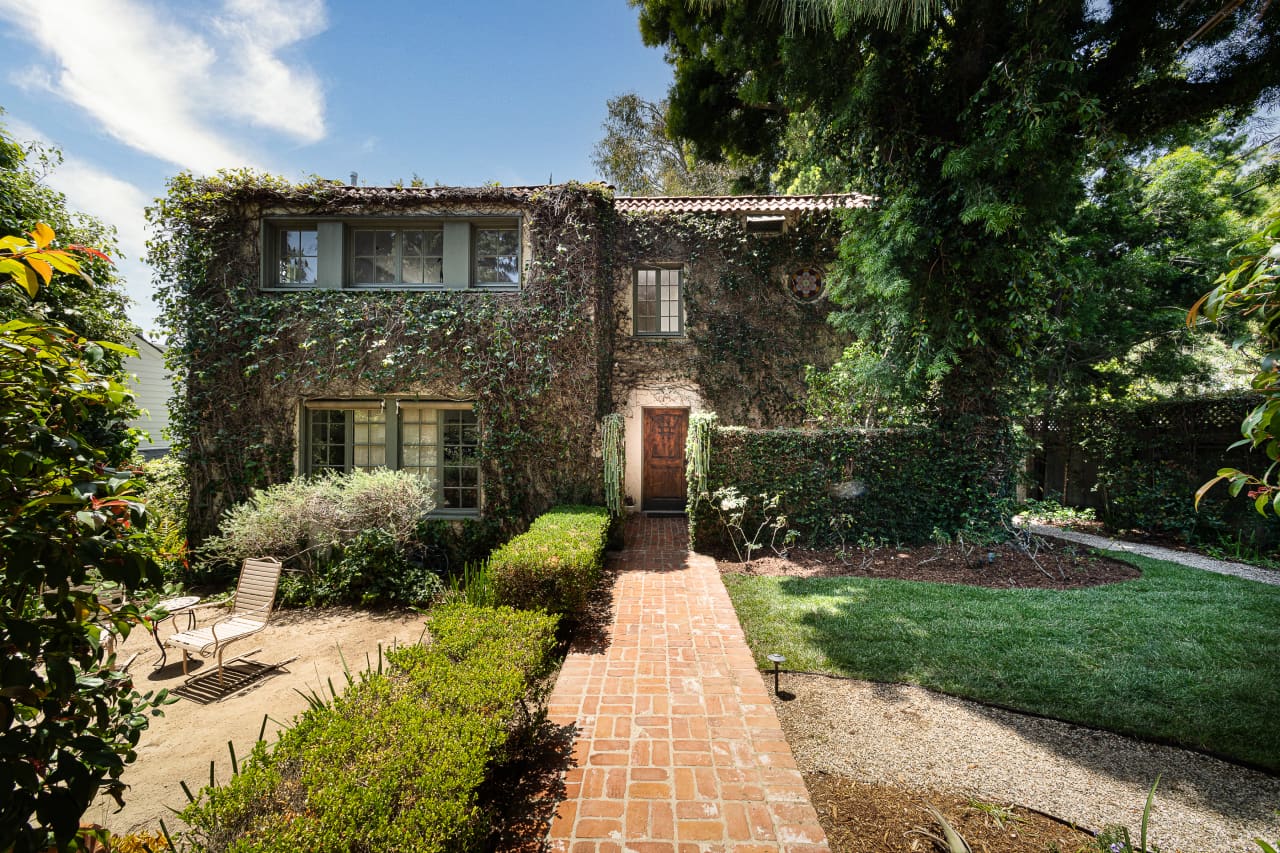
 Copyright 2020, Dow Jones & Company, Inc. All Rights Reserved Worldwide.