Aston Martin builds all of its cars with a peak blend of performance and luxury. Still, their six-figure creations can lean more aggressively into one side or the other of that simple recipe.
For example, the DBD707 SUV hides a 4-litre V8 engine capable of 697 horsepower, but its overall size and endless creature comforts nuzzle a little closer to luxury’s embrace. The small-batch Valour muscles up on the performance scale with its prized manual transmission and 5.2-litre, 705 horsepower V12 power plant. Meanwhile, the recently redesigned DB12 is the company’s best attempt at splitting the performance-luxury gambit right down the middle.
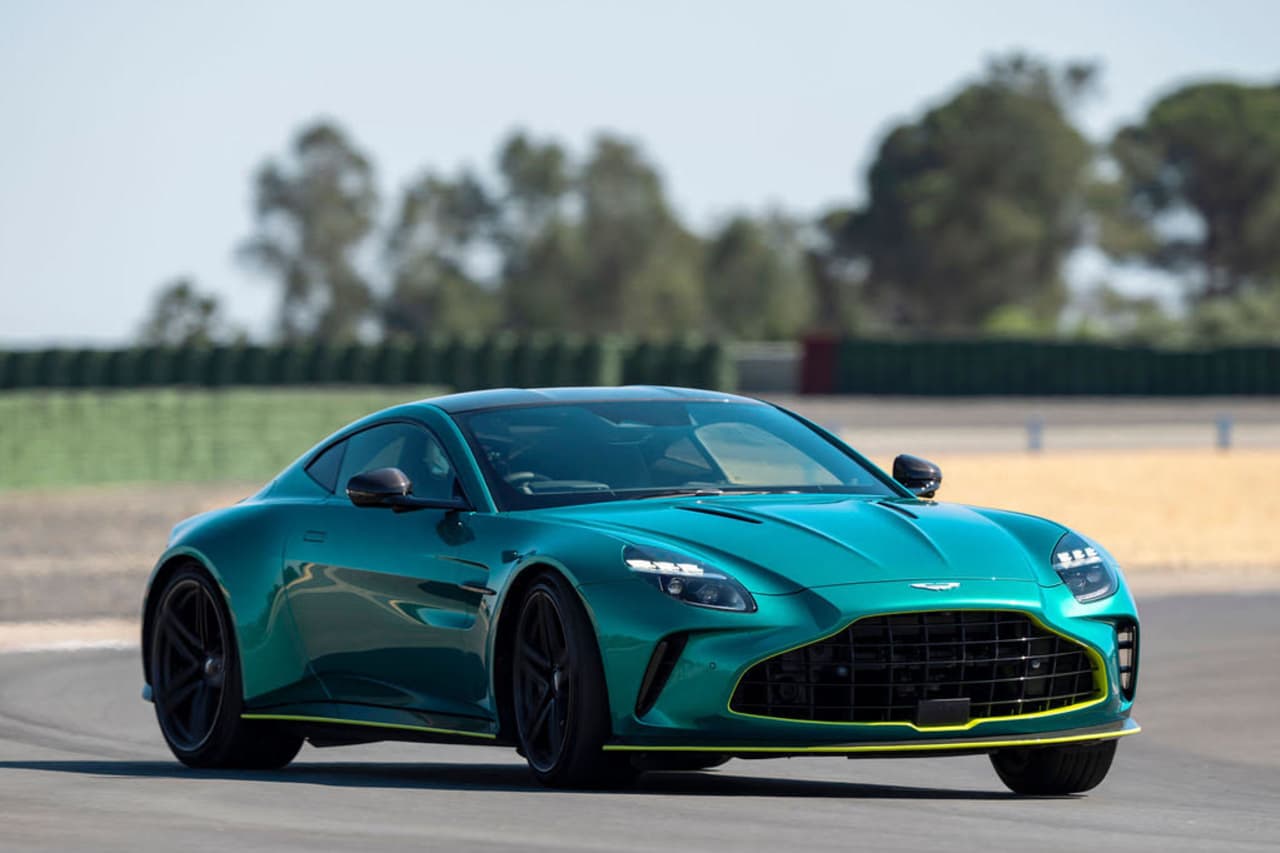
Amid all of those supercar machinations, the Aston Martin Vantage sneaks away to play as the most performance-centric car coming out of the Gaydon, England, factory. Redesigned for 2025, the US$191,000 coupe reasserts itself as the most dedicated “driver’s car” in a very driver-friendly line. Should this be in pounds first?
During a road drive and speed testing event at Spain’s Circuito Monteblanco about an hour outside of Seville, the new Vantage proved itself as Aston Martin’s most accessible track-day companion.
Aston Martin is the most accessible day-track companion. Aston Martin
A first look at the latest addition to its very elite Warwickshire family pulls the eyes right to the newly extended rear wells that jut out around 21-inch, forged alloy wheels. While widening the car’s haunches, the wheel positioning reduces unsparing weight and gives the new Vantage a much more athletic pose.
Beyond that muscular base, the Vantage continues the modern Aston Martin styling tradition of riding the razor’s edge between aggression and sophistication. While the car’s Italian and Swedish rivals opt for prominent fins and big scoops, Aston’s designers keep the lines low, wide, and balanced from the signature highlighted grille to the understated aerodynamic spoiler.
In the performance specs department, the Vantage now packs an AMG-built, 4.0-litre, V8 twin turbo, front-mid mounted engine, capable of 656 horsepower, and a top speed of 202 miles per house and a 0 to 60 mph time of 3.4 seconds.
According to James Owen, Aston Martin’s senior manager of Vehicle Engineering, if the DB12 is the automaker’s distinguished overachiever, the Vantage is its less responsible, but equally attractive pugnacious sibling.
“The DB12 is a sports tourer and is positioned in the market as a GT,” Owen says. “It’s important for us to differentiate between Vantage and the DB12—to make sure that difference is clear for buyers and enthusiasts”
Owen describes the larger, pricier DB12 (starting MSRP of US$245,000) as more refined, while he considers the 2025 Vantage as playful and passionate. He even uses the word “brutish,” if such a term can be used for a technology-stuffed, six-figure sports car.
“The word that we keep hearing when talking about the Vantage is ‘fun,’” Owen adds. “That’s what we wanted to hear. We wanted to create a car that pulls at the heartstrings because it’s so enjoyable to drive. But, we wanted it to have a challenging character to it.”
Previous versions of the Vantage fit that punkier image. While always built for speed and powerful acceleration, the last couple editions of the Vantage were a little more harsh. The steering seemed more aggressive—demanding more input from the driver. The suspension felt tighter, deliberately transmitting more of the road’s surfaces and imperfections into the driver’s backside. If any current car in the Aston Martin line is a direct descendant of the automaker’s racing pedigree at Le Mans or in F1, it’s the Vantage.
Still, amid all this talk of driving fun and racing performance, Owen is quick to remind drivers that the Vantage is still an Aston Martin— steeped in the company’s signature identity of sophistication as the grownup’s more dignified supercar.
“The Vantage also has that added feature in its wheelhouse,” Owen explains. “Yes, it will respond to a driver pushing it in a racing scenario, but—with the technology we built into the car to stabilise the body at its most comfortable driver mode settings – the Vantage is still a very pleasant place to be.”
In keeping with such pleasantness, the interior of 2025 Vantage bears no resemblance to any race car. Handmade and stitched Haircell Leather stretches in all directions in any color the buyer prefers. The Sports Plus Seats are 8-way adjustable with heat or cooling on demand. The complete infotainment suite featuring the official Aston Martin Audio system from Bowers & Wilkins is a step up from the previous Vantage (and the current DB12).
The interior includes an infotainment suite featuring the official Aston Martin Audio system from Bowers & Wilkins. Aston Martin
Once the internal comforts and engineering feats come together, the experience behind the wheel is a sensual union of car and operator. Acceleration is smooth, yet immediate. The cornering is focused and nimble, and its rear-wheel drive allows for just enough play for the occasional drift at speed in turns.
A key piece of Aston Martin technology makes the Vantage’s elite performance potential accessible to more drivers. The ESP System (Electronic Stability Programme) debuted in the DB12, and the Vantage adopts the tech to its driver mode system. ESP takes information from multiple sensors around the vehicle, feeding the accelerometer data into a computerised concept of the car’s driving conditions and the ability of the operator.
Resulting algorithms react to those conditions, road surface issues, available grip, etc., tightening up the vehicle where necessary to aid the driver and offer as much feel and performance as the given operator can manage.
In its completed package, the 2025 Vantage is aimed at a specific buyer demographic—the driving enthusiast who puts thrills ahead of all-out creature comforts.
“For each project at Aston Martin, we have a customer profile in mind,” Owen says. “They have defined interests that highlight their demographic. For the Vantage, we consider a buyer who is perhaps new to the brand and looking into the ‘entry level’ Aston Martin. That’s a buyer who isn’t concerned with having a backseat or the DB nameplate. He or she thinks performance first and foremost.”
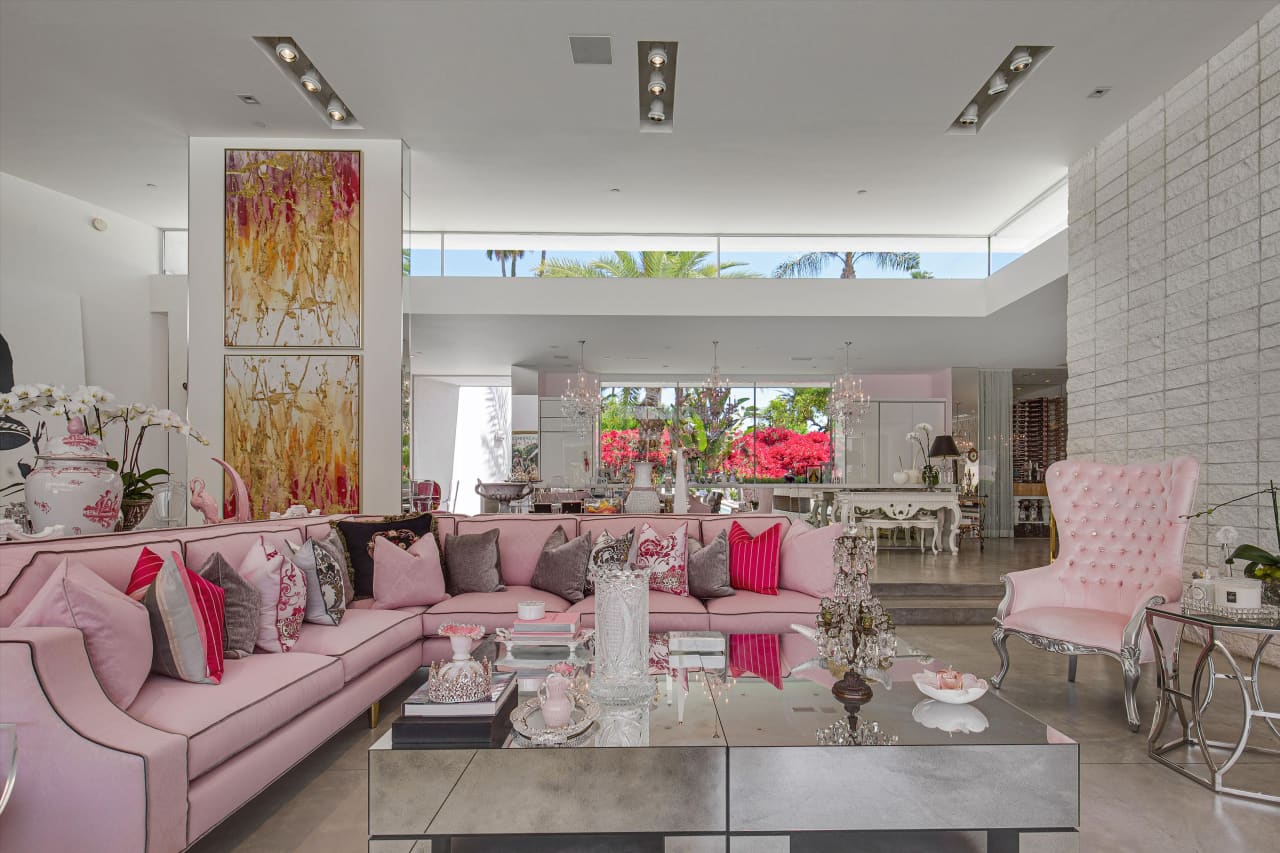
An architecturally impressive abode in Palm Springs, California, that combines mid-century style with Old Hollywood glamour has hit the market for $7.69 million.
Despite appearances, the desert getaway was actually built in 2012, by Sean Lockyer of Studio AR&D. This marks the first time the home has been on the market since its creation.
Desert Views Photography
“The goal with this project was to blend modern elegance and iconic mid-century architectural techniques,” Lockyer said.
By implementing “classic mid-century nods like floor-to-ceiling expanses of glass, aggregate block construction and a cantilevered steel roofline, the residence is unable to be dated and could easily be misjudged in age,” he added.
Desert Views Photography
The heart of the 7,000-square-foot home is its glass-encased great room, complete with a recessed living area and a double-sided fireplace that extends through the glass walls and to the adjacent covered outdoor living space, according to the listing with Todd Monaghan and Keith Markovitz of TTK Represents of Compass, who brought the home to the market earlier this month.
The owners, who couldn’t be reached for comment, paid $700,000 for the underlying property in 2009, records with PropertyShark show.
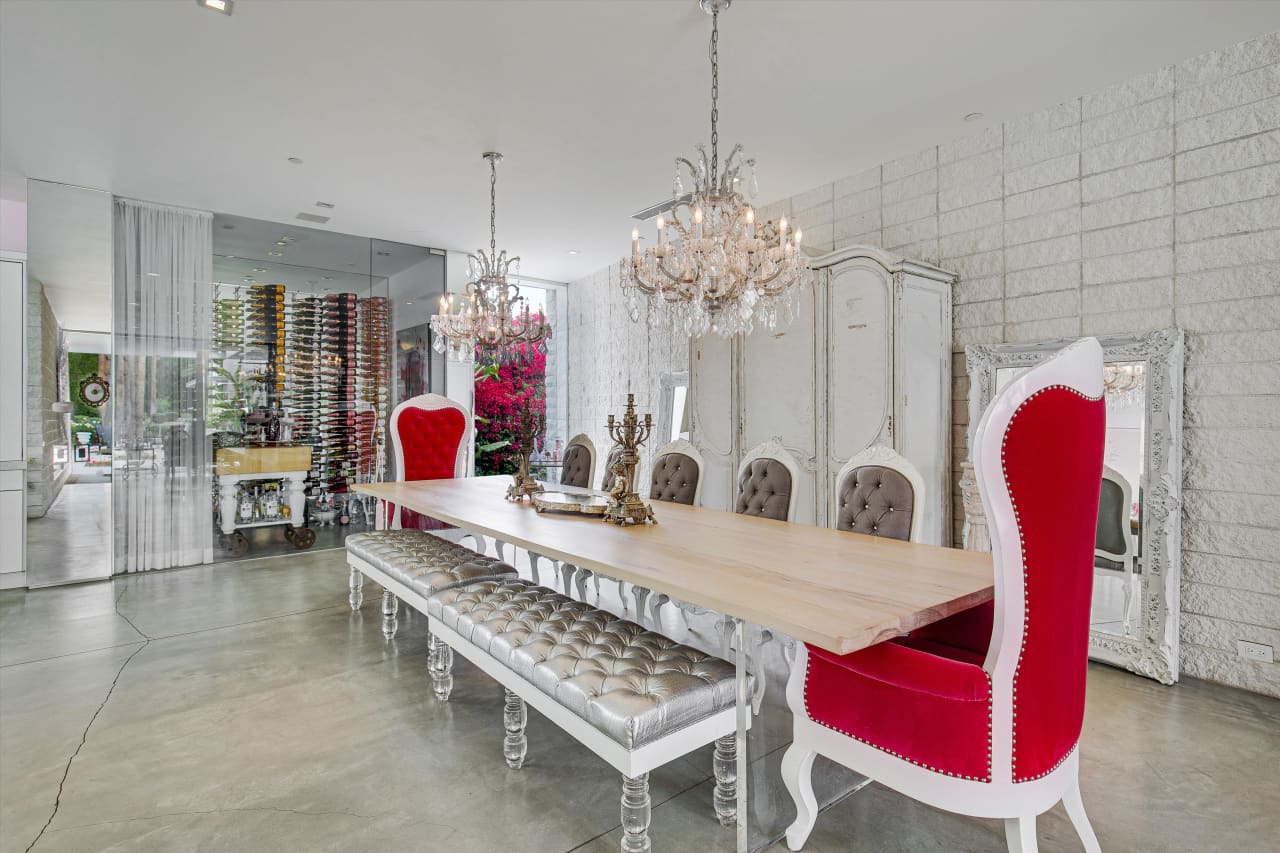
The single-story house also boasts an office that appears to hover over the ground, a media room, a wine room and an open kitchen that swaps the traditional backsplash with glass.
Desert Views Photography
There are four bedrooms, including a primary suite that occupies an entire wing of the house, and the pool sits in the centre of the home, visible from nearly all angels.
Desert Views Photography
The interior design, meanwhile, takes inspiration from Hollywood Regency decor.
The property is “among the best homes I have experienced in Palm Springs,” said Markovitz.
Christie’s remained in the grip of an ongoing cyberattack on Tuesday, a crisis that has hobbled the auction house’s website and altered the way it can handle online bids. This could disrupt its sales of at least $578 million worth of art up for bid this week, starting tonight with a pair of contemporary art auctions amid New York’s major spring sales.
Christie’s said it has been grappling with the fallout of what it described as a technology security incident since Thursday morning—a breach or threat of some kind, though the auction house declined to discuss details because of its own security protocols. Christie’s also declined to say whether any of the private or financial data it collects on its well-heeled clientele had been breached or stolen, though it said it would inform customers if that proves to be the case.
“We’re still working on resolving the incident, but we want to make sure we’re continuing our sales and assuring our clients that it’s safe to bid,” said Chief Executive Guillaume Cerutti.
Sotheby’s and Phillips haven’t reported any similar attacks on their sites.
Christie’s crisis comes at a particularly fragile moment for the global art market. Heading into these benchmark spring auctions, market watchers were already wary, as broader economic fears about wars and inflation have chipped away at collectors’ confidence in art values. Christie’s sales fell to $6.2 billion last year, down 20% from the year before.
Doug Woodham, managing partner of Art Fiduciary Advisors and a former Christie’s president, said people don’t want to feel the spectre of scammers hovering over what’s intended to be an exciting pastime or serious investment: the act of buying art. “It’s supposed to be a pleasurable activity, so anything that creates an impediment to enjoying that experience is problematic because bidders have choices,” Woodham said.
Aware of this, Cerutti says the house has gone into overdrive to publicly show the world’s wealthiest collectors that they can shop without a glitch—even as privately the house has enlisted a team of internal and external technology experts to resolve the security situation. Currently, it’s sticking to its schedule for its New York slate of six auctions of impressionist, modern and contemporary art, plus two luxury sales, though one watch sale in Geneva scheduled for Monday was postponed to today.
The first big test for Christie’s comes tonight with the estimated $25 million estate sale of top Miami collector Rosa de la Cruz, who died in February and whose private foundation offerings include “Untitled” (America #3),” a string of lightbulbs by Félix González-Torres estimated to sell for at least $8 million.
Cerutti said no consignors to Christie’s have withdrawn their works from its sales this week as a result of the security incident. After the De la Cruz sale, Christie’s 21st Century sale on Tuesday will include a few pricier heavyweights, including a Brice Marden diptych, “Event,” and a Jean-Michel Basquiat from 1982, “The Italian Version of Popeye Has no Pork in his Diet,” each estimated to sell for at least $30 million.
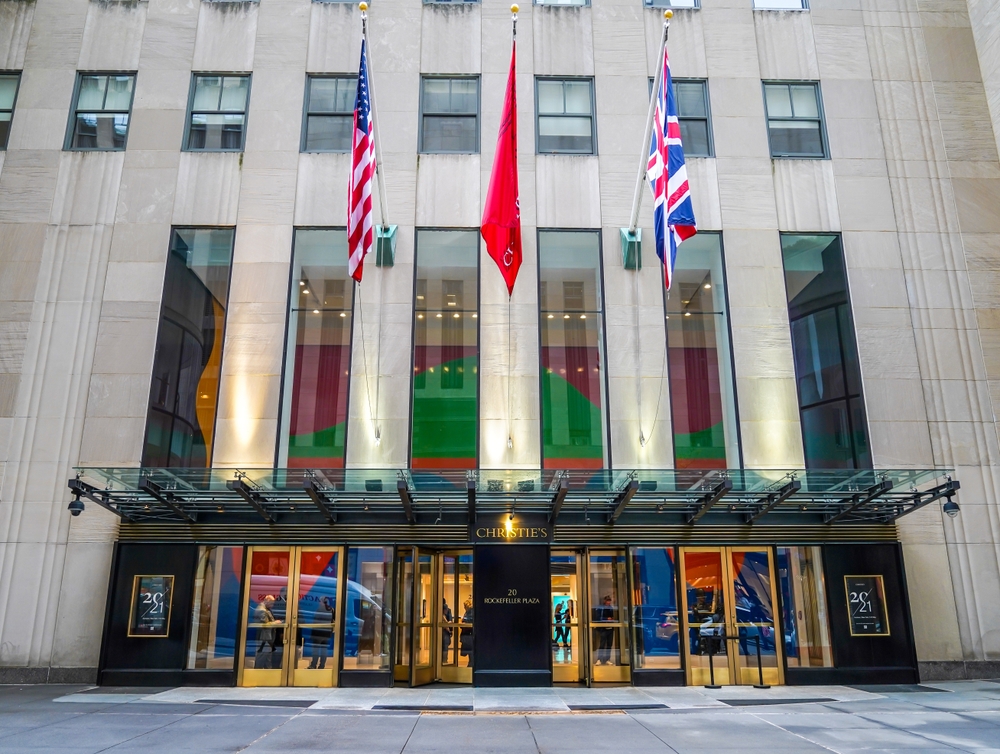
But the cyberattack has already altered the way some collectors might experience these bellwether auctions at Christie’s. Registered online bidders used to be able to log into the main website before clicking to bid in sales. This week, the house will email them a secure link redirecting them to a private Christie’s Live site where they can watch and bid in real time. Everyone else will be encouraged to call in or show up to bid at the house’s saleroom in Rockefeller Center in Midtown Manhattan.
If more bidders show up in person, the experience might prove to be a squeeze. During the pandemic, Christie’s reconfigured its main saleroom from a vast, well-lit space that could fit several hundred people into a spotlit set that more closely evokes a television studio, with far fewer seats and more roving cameras—all part of the auction industry’s broader effort to entice more collectors as well as everyday art lovers to tune in, online.
Once this smaller-capacity saleroom is filled, Christie’s said it will direct people into overflow rooms elsewhere in the building. Those who want to merely watch the sale can’t watch on Christie’s website like usual but can follow along via Christie’s YouTube channel.
Art adviser Anthony Grant said he typically shows up to bid on behalf of his clients in these major sales, though he said his collectors invariably watch the sales online as well so they can “read the room” in real time and text him updates. This week, Grant said a European collector who intends to vie for a work at Christie’s instead gave Grant a maximum amount to spend.
Grant said the cyberattack popped up in a lot of his conversations this past weekend. “There’s a lot of shenanigans going on, and people have grown so sensitive to their banks and hospitals getting hacked,” he said. “Now, their auction house is going through the same thing, and it’s irksome.”
When Lamborghini announced its end-of-an-era Huracán Super Trofeo Jota last April, in an edition of just 10, it sold out immediately. No price was announced, though it was probably above US$400,000. That hardly deterred buyers eager to own one of the last Huracán supercars.
Lamborghini Huracán
Ferrari’s limited-edition 812 Competizione and 812 Competizione A in 2021? The 999 hardtops (US$598,567) and 599 targas (US$694,549) were gone very quickly, though maybe not in 60 seconds.
Meanwhile, the Rolls-Royce Black Badge Cullinan “Blue Shadow Private Collection” cars that appeared in 2023, just 62 in number, disappeared within two weeks. Black Badge Series II Cullinans start at US$470,000 for 2025, but these special editions are pricier—more than US$600,000.
“The primary driver for Rolls-Royce Cullinan clients is not price, but a combination of lifestyle and personalised exclusivity,” says Martin Fritsches, president and CEO of Rolls-Royce Motor Cars North America.
Rolls-Royce Cullinan
The global supercar market was US$17.5 billion in 2023, reports MarketResearch.biz, but it could soar to US$24.9 billion by 2033. Supercars, Business Research Insights says, “are a symbol of luxury, performance and status, appealing to affluent buyers who seek exclusivity and the thrill of driving a high-powered machine. … With a growing global economy and increasing wealth, the demand for supercars continues to rise.”
In the U.S., the American International Automobile Dealers Association reported that luxury brand deliveries in 2023 were more than 2.6 million, accounting for 17% of U.S. light-vehicle sales. That was up from 2.2 million sales in 2021 (and a 14.7% share).
Supercar sales represent small totals, but big potential profits. It’s a niche with an increasing number of startups, including battery cars from companies such as Lucid and Rimac. Ferrari, for instance, reported a US$1.36 billion profit in 2023, a yearly record. That’s despite producing only 13,221 units in the year. Ferrari has typically produced between 8,000 and 11,000 cars annually, but it’s one of the world’s most written-about, admired, and sought-after brands.
And Lamborghini had its best year in 2023, with an operating profit of US$777 million. That’s on sales of 10,100 globally. But each sale was a big ticket: The Huracán buyer in 2023 paid between US$212,090 and US$340,690. Volume didn’t help Tesla all that much. The company sold 1.8 million vehicles globally in 2023 (and had the world’s best-selling car in the Model Y), but has been experiencing declining profits.
This year, the supercar and luxury carmakers are revelling in the power of special editions and the one-of-one “bespoke” commission. Without having to make major changes to their existing models, the companies are able to greatly increase the price—via distinctive colours, interior appointments, and personalisation. Perhaps Tesla would do better if it too delved deeper into accommodating its eager customers with vast personalisation possibilities. Who wouldn’t want a one-of-10 SpaceX Edition of the Model Y?
Meanwhile, established supercar makers are rapidly transitioning to electric and hybrid drive, motivated by international regulations that will ban internal-combustion engines by 2035. Maserati, for instance, is introducing electric “Folgore” versions of its GranCabrio convertible this year, and MC20 supercar in 2025. There will be a new electric SUV in 2027 and a four-door battery Quattroporte in 2028. Electrification is not likely to lead to either lower prices or lower demand, but there’s no certainty.
The Collector Market Is Cruising, Too
The market for collector vehicles above US$200,000 also remains quite healthy. The US$143 million paid for the 1955 Mercedes-Benz 300 SLR Uhlenhaut Coupe in 2022 surpassed the results of any other car sold at auction by more than US$90 million.
This 1955 Mercedes-Benz coupe broke records when it sold for $142m in 2022
Critics who said that high-dollar buyers would never buy US$200,000-plus cars online (without seeing them in person) have been proven dramatically wrong, and the increase in online buying on sites like Bring a Trailer (BaT) and Cars & Bids has stoked rising values.
“March 2024 was the largest-volume month in our Premium Listings category since we launched it in 2019,” says Randy Nonnenberg, president and co-founder of BaT. “April 2024 followed on with 64 vehicles selling at over US$200,000 in value, with the top sale a Bugatti Chiron at US$3.075 million.”
Offerings in that price range from a US$250,000 1932 Ford hot rod coupe and a Lexus LFA to modern Ferraris and Ford GTs, Nonnenberg says. “The low transaction fees of our online platform make it very attractive for buyers of these expensive items when compared to other venues.”
Pre-owned supercars (and adjacent American muscle) often appreciate in the marketplace, with the rare (and most powerful) ones commanding huge prices.
“The strong US$3.5 million paid at our Amelia Island auction in March 2024 for a Porsche 918 Spyder Weissach—as well as many other strong prices for contemporary supercars—demonstrates the strength in this segment,” says David Gooding , president of the Gooding and Company international auction house. Seven cars priced at more than US$10 million were offered at auction last year, reports Hagerty, with as many as 10 expected in 2024.
McKeel Hagerty , CEO and chairman at Hagerty, says the US$200,000 price point is an interesting one in the enthusiast car market.
“With a budget like that, you can buy some fantastic classics with a rich history, late-model supercars, or you can build a wide variety of the latest restomods [older cars restored with modern amenities],” Hagerty says. “These are the dream cars of the American upper-middle class.”
Hagerty says that US$200,000 would buy “a great, early Porsche 911 S or Jaguar Series 1 E-Type Roadster.” A supercar car lover might also find a Lamborghini Huracán or Ferrari 458 with “weapons-grade performance” in the price range, or a Plymouth Superbird and ‘66 Mustang GT350, he adds.
A rare 2015 Porsche 918 Spyder Weissach supercar
Despite the demand, Brian Rabold, vice president at Hagerty Automotive Intelligence, says that high-priced cars don’t necessarily appreciate as fast as some others when they age.
“In the past five years, the 87 vehicle generations in the Hagerty Price Guide with an average value between US$200,000 and US$500,000 have seen an average value growth of 9.24%. This lags behind the 35% average value growth seen in the remaining 1,351 vehicle generations,” Rabold says.
Nevertheless, he says the future “looks bright” for the US$200,000 to US$500,000 segment. “These vehicles are becoming more popular among collectors. Surprisingly, Baby Boomers (who hold most of the wealth in the country) are not driving this growth.” Hagerty is seeing more queries from Gen-X.
“Owning a desirable car or truck that you can drive, or show is much more fun than storing your stock certificates in a safe,” says Craig Jackson , chairman and CEO of the Barrett-Jackson auction house. “Plus, it can offer a long-term upside if you research before you buy.”
The world is at a startling demographic milestone. Sometime soon, the global fertility rate will drop below the point needed to keep population constant. It may have already happened.
Fertility is falling almost everywhere, for women across all levels of income, education and labor-force participation. The falling birthrates come with huge implications for the way people live, how economies grow and the standings of the world’s superpowers.
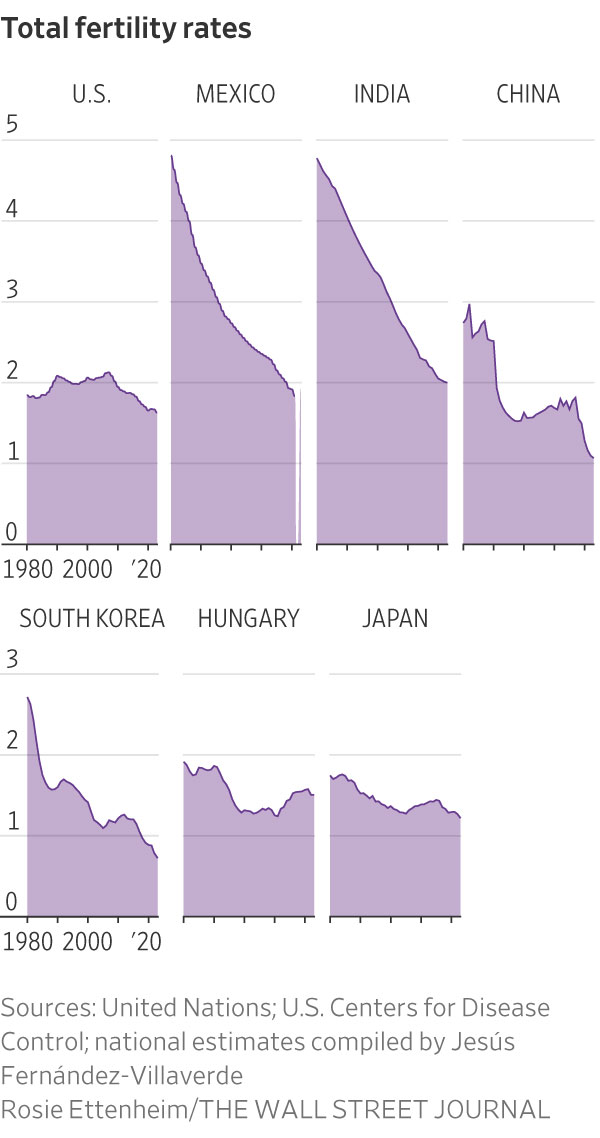
In high-income nations, fertility fell below replacement in the 1970s, and took a leg down during the pandemic. It’s dropping in developing countries, too. India surpassed China as the most populous country last year, yet its fertility is now below replacement.
“The demographic winter is coming,” said Jesús Fernández-Villaverde, an economist specialising in demographics at the University of Pennsylvania.
Many government leaders see this as a matter of national urgency. They worry about shrinking workforces , slowing economic growth and underfunded pensions; and the vitality of a society with ever-fewer children. Smaller populations come with diminished global clout, raising questions in the U.S., China and Russia about their long-term standings as superpowers.
Some demographers think the world’s population could start shrinking within four decades—one of the few times it’s happened in history.
Donald Trump , this year’s presumptive Republican presidential nominee, has called collapsing fertility a bigger threat to Western civilisation than Russia. A year ago Japanese Prime Minister Fumio Kishida declared that the collapse of the country’s birthrate left it “standing on the verge of whether we can continue to function as a society.” Italian Prime Minister Giorgia Meloni has prioritised raising the country’s “demographic GDP.”
Governments have rolled out programs to stop the decline—but so far they’ve barely made a dent.
Demographic surprise
In 2017, when the global fertility rate—a snapshot of how many babies a woman is expected to have over her lifetime—was 2.5, the United Nations thought it would slip to 2.4 in the late 2020s. Yet by 2021, the U.N. concluded, it was already down to 2.3—close to what demographers consider the global replacement rate of about 2.2. The replacement rate, which keeps population stable over time, is 2.1 in rich countries, and slightly higher in developing countries, where fewer girls than boys are born and more mothers die during their childbearing years.
While the U.N. has yet to publish estimated fertility rates for 2022 and 2023, Fernández-Villaverde has produced his own estimate by supplementing U.N. projections with actual data for those years covering roughly half the world’s population. He has found that national birth registries are typically reporting births 10% to 20% below what the U.N. projected.
China reported 9 million births last year , 16% less than projected in the U.N.’s central scenario. In the U.S., 3.59 million babies were born last year, 4% less than the U.N. projected. In other countries, the undershoot is even larger: Egypt reported 17% fewer births last year. In 2022, Kenya reported 18% fewer.
Fernández-Villaverde estimates global fertility fell to between 2.1 and 2.2 last year, which he said would be below global replacement for the first time in human history. Dean Spears, a population economist at the University of Texas at Austin, said while the data isn’t good enough to know precisely when or if fertility has fallen below replacement, “we have enough evidence to be quite confident about…the crossing point not being far off.”
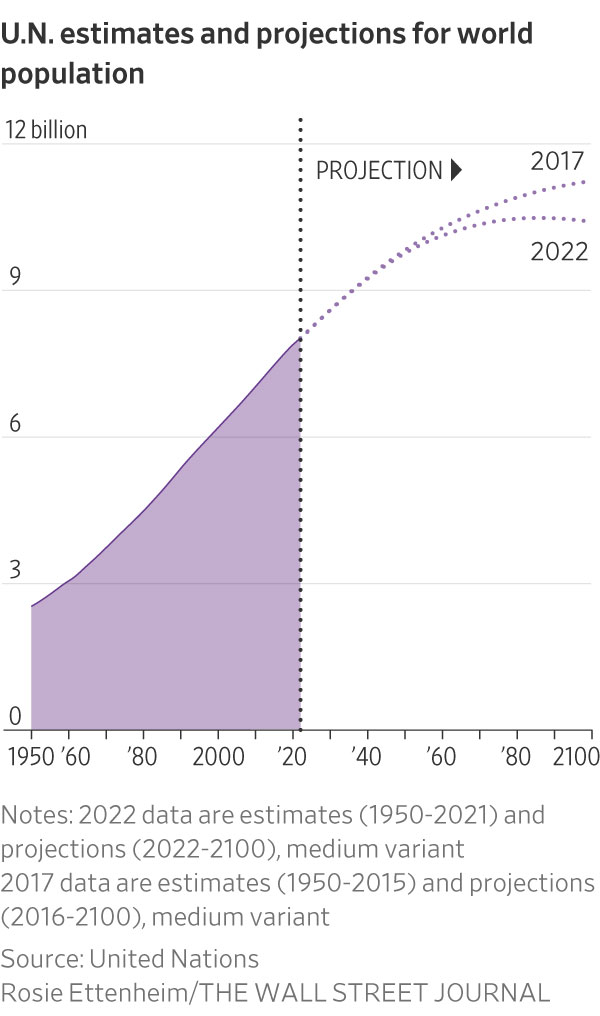
In 2017 the U.N. projected world population, then 7.6 billion, would keep climbing to 11.2 billion in 2100. By 2022 it had lowered and brought forward the peak to 10.4 billion in the 2080s. That, too, is likely out of date. The Institute for Health Metrics and Evaluation at the University of Washington now thinks it will peak around 9.5 billion in 2061 then start declining.
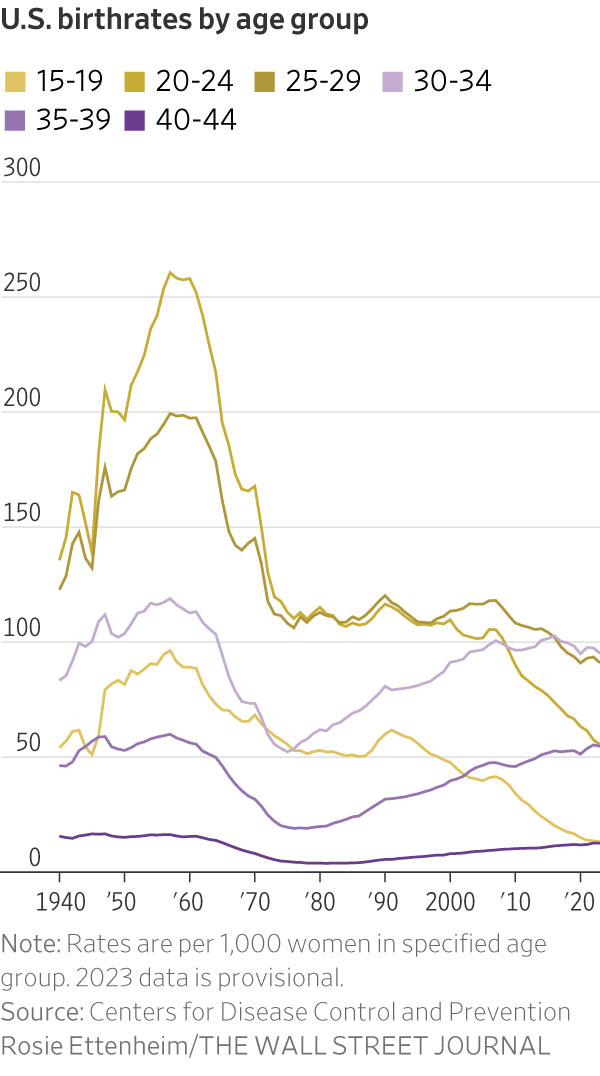
In the U.S., a short-lived pandemic baby boomlet has reversed. The total fertility rate fell to 1.62 last year, according to provisional government figures, the lowest on record .
Had fertility stayed near 2.1, where it stood in 2007, the U.S. would have welcomed an estimated 10.6 million more babies since, according to Kenneth Johnson, senior demographer at the University of New Hampshire.
In 2017, when the fertility rate was 1.8, the Census Bureau projected it would converge over the long run to 2.0. It has since revised that down to 1.5. “It has snuck up on us,” said Melissa Kearney, an economist at the University of Maryland specialising in demographics.
A second demographic transition?
Historians refer to the decline in fertility that began in the 18th century in industrialising countries as the demographic transition. As lifespans lengthened and more children survived to adulthood, the impetus for bearing more children declined. As women became better educated and joined the workforce, they delayed marriage and childbirth, resulting in fewer children.
Now, said Spears, “the big-picture fact is that birthrates are low or are falling in many diverse societies and economies.”
Some demographers see this as part of a “second demographic transition,” a societywide reorientation toward individualism that puts less emphasis on marriage and parenthood, and makes fewer or no children more acceptable.
In the U.S., some thought at first that women were simply delaying childbirth because of lingering economic uncertainty from the 2008 financial crisis.
In research published in 2021 , the University of Maryland’s Kearney and two co-authors looked for possible explanations for the continued drop. They found that state-level differences in parental abortion notification laws, unemployment, Medicaid availability, housing costs, contraceptive usage, religiosity, child-care costs and student debt could explain almost none of the decline. “We suspect that this shift reflects broad societal changes that are hard to measure or quantify,” they conclude.
Kearney said while raising children is no more expensive than before, parents’ preferences and perceived constraints have changed: “If people have a preference for spending time building a career, on leisure, relationships outside the home, that’s more likely to come in conflict with childbearing.”
Meanwhile, time-use data show that mothers and fathers, especially those that are highly educated, spend more time with their children than in the past. “The intensity of parenting is a constraint,” Kearney said.
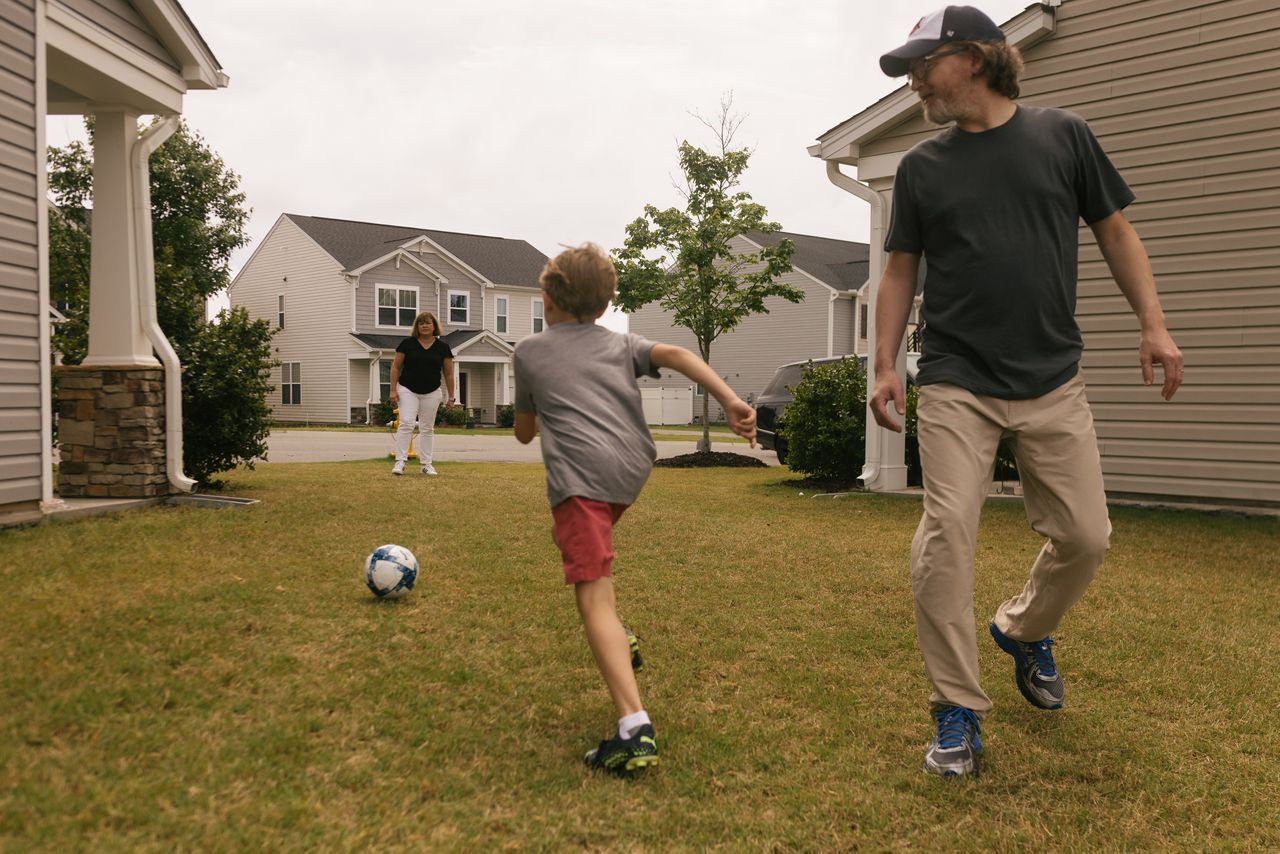
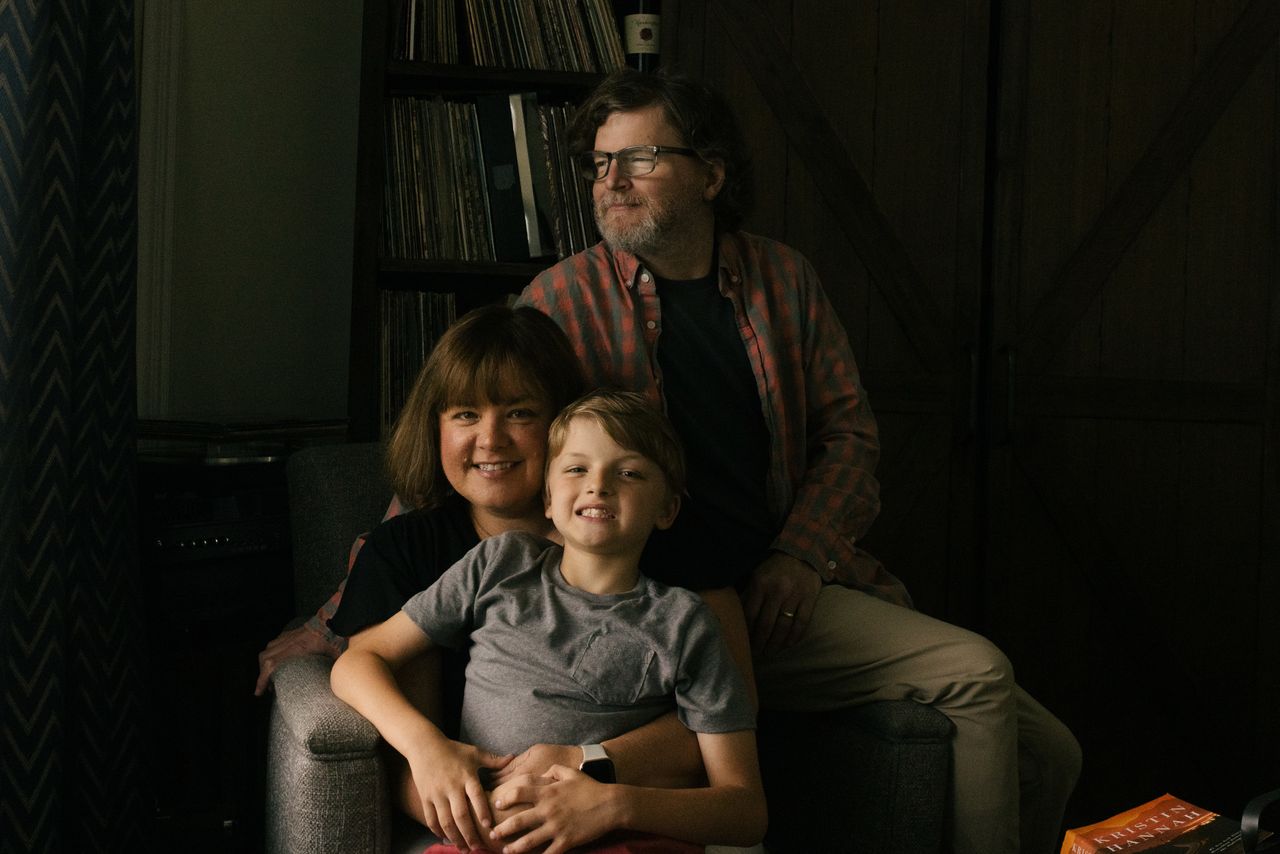
Erica Pittman, a 45-year-old business banker in Raleigh, N.C., said she and her husband opted to have only one child because of demands on their time, including caring for her mother, who died last year after a long battle with multiple sclerosis. Their 8-year-old son is able to participate in theatre workshops, soccer and summer camps because the couple, with a combined income of about $225,000 a year, has more time and money.
The Pittman family in Raleigh, N.C. PHOTO: ANGELA OWENS/THE WALL STREET JOURNAL
“I feel like a better mom,” Pittman said. “I feel like I can go to work—because I have a fairly demanding job—but I can also make time to volunteer at his school, be the chaperone for the field trip and do those kinds of things, because I only have one to coordinate with my schedule.”
Pittman said she only questions their decision when her son says he wishes he had a sibling to play with. In response, she and her husband, a middle-school history teacher, pick vacation destinations with a kids’ club, such as a Disney cruise, so her son can play with others his age.
‘Plugged into the global culture’
Fertility is below replacement in India even though the country is still poor and many women don’t work —factors that usually sustain fertility.
Urbanisation and the internet have given even women in traditional male-dominated villages a glimpse of societies where fewer children and a higher quality of life are the norm. “People are plugged into the global culture,” said Richard Jackson, president of the Global Aging Institute, a nonprofit research and education group.
Mae Mariyam Thomas, 38, who lives in Mumbai and runs an audio production company, said she’s opted against having children because she never felt the tug of motherhood. She sees peers struggling to meet the right person, getting married later and, in some instances, divorcing before they have kids. At least three of her friends have frozen their eggs, she said.
“I think now we live in a really different world, so I think for anyone in the world it’s tough to find a partner,” she said.
Sub-Saharan Africa once appeared resistant to the global slide in fertility, but that too is changing. The share of all women of reproductive age using modern contraception grew from 17% in 2012 to 23% in 2022, according to Family Planning 2030, an international organisation.
Mae Mariyam Thomas, at her house in Mumbai, India, has opted to not have children. PHOTO: ATUL LOKE FOR THE WALL STREET JOURNAL
Jose Rimon, a professor of public health at Johns Hopkins University, credits that to a push by national leaders in Africa which, he predicted, would drive fertility down faster than the U.N. projects.
Once a low fertility cycle kicks in, it effectively resets a society’s norms and is thus hard to break, said Jackson. “The fewer children you see your colleagues and peers and neighbours having, it changes the whole social climate,” he said.
Danielle Vermeer grew up third in a family of four children on Chicago’s North Side, where her neighbourhood was filled with Catholics of Italian, Irish and Polish descent and half her close friends had as many siblings as her or more. Her Italian-American father was one of four children who produced 14 grandchildren. Now her parents have five grandchildren, including Vermeer’s two children, ages 4 and 7.
The 35-year-old, who is the co-founder of a fashion thrifting app, said that before setting out to have children, she consulted dozens of other couples and her Catholic church and read at least eight books on the subject, including one by Pope Paul VI. She and her husband settled on two as the right number.
“The act of bringing a child into this world is an incredible responsibility,” she said.
New policies
Governments have tried to reverse the fall in fertility with pro natalist policies.
Perhaps no country has been trying longer than Japan. After fertility fell to 1.5 in the early 1990s, the government rolled out a succession of plans that included parental leave and subsidised child care. Fertility kept falling.
In 2005, Kuniko Inoguchi was appointed the country’s first minister responsible for gender equality and birthrate. The main obstacle, she declared, was money: People couldn’t afford to get married or have children. Japan made hospital maternity care free and introduced a stipend paid upon birth of the child.
Japan’s fertility rate climbed from 1.26 in 2005 to 1.45 in 2015. But then it started declining again, and in 2022 was back to 1.26.
This year, Prime Minister Fumio Kishida rolled out yet another program to increase births that extends monthly allowances to all children under 18 regardless of income, free college for families with three children, and fully paid parental leave.
Inoguchi, now a member of parliament’s upper house, said the constraint on would-be parents is no longer money, but time. She has pressed the government and businesses to adopt a four-day workweek. She said, “If you’re a government official or manager of a big corporation, you should not worry over questions of salary now, but that in 20 years time you will have no customers, no clients, no applicants to the Self-Defense Forces.”
Hungarian Prime Minister Viktor Orban has pushed one of Europe’s most ambitious natality agendas. Last year he expanded tax benefits for mothers so that women under the age of 30 who have a child are exempt from paying personal income tax for life. That’s on top of housing and child-care subsidies as well as generous maternity leaves.
Hungary’s fertility rate, though still well below replacement, has risen since 2010. But the Vienna Institute of Demography attributed this primarily to women delaying childbirth because of a debt crisis that hit around 2010. Adjusted for that, fertility has risen only slightly, it concluded.
In the U.S., while state and federal legislators have pushed to expand child-care subsidies and parental leave, they have generally not set a higher birthrate as an explicit goal. Some Republicans, though, are leaning in that direction. Last year, Trump said he backed paying out “baby bonuses” to prop up U.S. births, and GOP Arizona Senate candidate Kari Lake recently endorsed the idea.
Republican Sen. J.D. Vance of Ohio said falling fertility matters beyond the economic pressures of a smaller labor force and unfunded Social Security. “Do you live in communities where there are smiling happy children, or where people are just ageing?” he said in an interview. Lack of siblings and cousins, he said, contributes to children’s social isolation.
He’s studied potential solutions, in particular Hungary’s approach, but hasn’t seen proof of anything that works over the long term.
The Institute for Health Metrics and Evaluation found little evidence that pro natalist policies lead to sustained rebounds in fertility. A woman may get pregnant sooner to capture a baby bonus, researchers say, but likely won’t have more kids over the course of her lifetime.
Economic pressure
With no reversal in birthrates in sight, the attendant economic pressures are intensifying. Since the pandemic, labor shortages have become endemic throughout developed countries. That will only worsen in coming years as the post crisis fall in birthrates yields an ever-shrinking inflow of young workers, placing more strain on healthcare and retirement systems.
Neil Howe , a demographer at Hedgeye Risk Management, has pointed to a recent World Bank report suggesting that worsening demographics could make this a second consecutive “lost decade” for global economic growth.
The usual prescription in advanced countries is more immigration, but that has two problems. As more countries confront stagnant population, immigration between them is a zero-sum game. Historically, host countries have sought skilled migrants who enter through formal, legal channels, but recent inflows have been predominantly unskilled migrants often entering illegally and claiming asylum.
High levels of immigration have also historically aroused political resistance, often over concerns about cultural and demographic change. A shrinking native-born population is likely to intensify such concerns. Many of the leaders keenest to raise birthrates are most resistant to immigration.
As birthrates fall, more regions and communities experience depopulation, with consequences ranging from closed schools to stagnant property values. Less selective colleges will soon struggle to fill classrooms because of the plunge in birthrates that began in 2007, said Fernández-Villaverde. Vance said rural hospitals can’t stay open because of the falling local population.
An economy with fewer children will struggle to finance pensions and healthcare for growing ranks of elderly. South Korea’s national pension fund, one of the world’s largest, is on track to be depleted by 2055. A special legislative committee recently presented several possible pension reforms, but there’s only a short window to act before the next presidential election campaign heats up.
There’s been little public pressure to act, said Sok Chul Hong, an economist at Seoul National University. “The elderly are not very interested in pension reform, and the youth are apathetic towards politics,” he said. “It is truly an ironic situation.”
More millionaires call New York City home than anywhere else in the world, according to a report from international wealth migration specialists Henley & Partners.
The Big Apple, which has seen its high-net-worth population jump by 48% over the past decade, is home to 349,500 millionaires, 744 centi-millionaires—those with liquid investable wealth of over US$100 million—and 60 billionaires, according to the firm, which collaborated with data intelligence firm New World Wealth for the analysis.
The city also ranked as the top spot for millionaires last year.
California’s Bay Area, encompassing San Francisco and the tech-mecca of Silicon Valley, ranked second. Wealth in the Bay Area has grown at one of the fastest rates in the world, increasing its number of wealthy citizens by a sizeable 82% over the past decade. It’s now home to 305,700 millionaires, 675 centi-millionaires, and 68 billionaires.
New York and the Bay Area were among 11 areas in the U.S. on the top 50 ranking, making the country the world’s foremost hub of moneyed residents.
Across the pond, London, which ranked as the wealthiest city in the world for many years, tumbled down the ranking, and now sits in fifth place with just 227,000 millionaires, 370 centi-millionaires, and 35 billionaires, a decline of 10% over the past decade, said the report, which was released earlier this week.
Cities with the fastest growing wealth, meanwhile, can be found in China.
Shenzhen’s wealthy population is snowballing most, with their numbers surging by 140% in the last 10 years, the report said.
“Hangzhou has also experienced a massive 125% increase in its [high-net-worth] residents, and Guangzhou’s millionaires have grown by 110% over the past decade,” said Andrew Amoils, head of research at New World Wealth, in the report.
Looking ahead, when it comes to wealth growth potential over the next decade, “cities to watch include Bengaluru, India; Scottsdale, Arizona; and Ho Chi Minh City in Vietnam,” he added. “All three have enjoyed exceptional growth rates of over 100% in their resident millionaire populations over the past 10 years.”
Underpinning the growth of the world’s wealthiest cities has been the robust performance of financial markets of late, from the S&P 500 to Bitcoin, according to Juerg Steffen, CEO of Henley & Partners.
Plus, “rapid advancements in artificial intelligence, robotics, and blockchain technology have provided new opportunities for wealth creation and accumulation,” Steffen said. “Yet, even as new opportunities emerge, old risks persist. The war in Ukraine, which has seen Moscow’s millionaire population plummet by 24% to 30,300, is a stark reminder of the fragility of wealth in an uncertain and unstable world.”
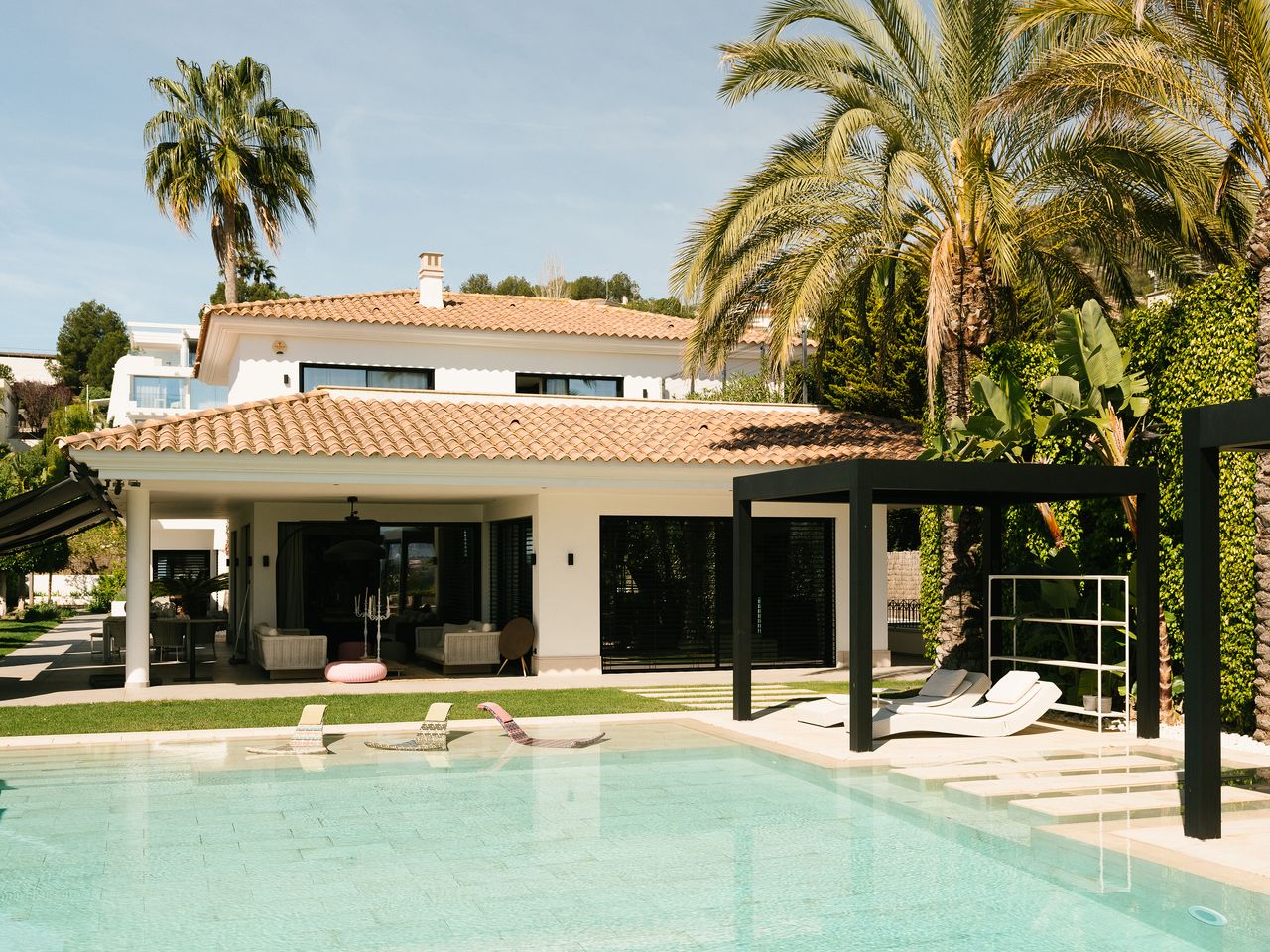
In their post pandemic search for a European second home, Florida’s Martin and Patricia Tantow had a lot of boxes to tick.
The couple, who confined their search to the mainland Mediterranean coast, wanted sea views, walkable beach and town access, and a unit that was easy to renovate—or, as they call it, a “liveable fixer-upper.”
They found what they were looking for in Sitges, a Spanish resort town that had been under the radar for U.S. buyers and vacationers.
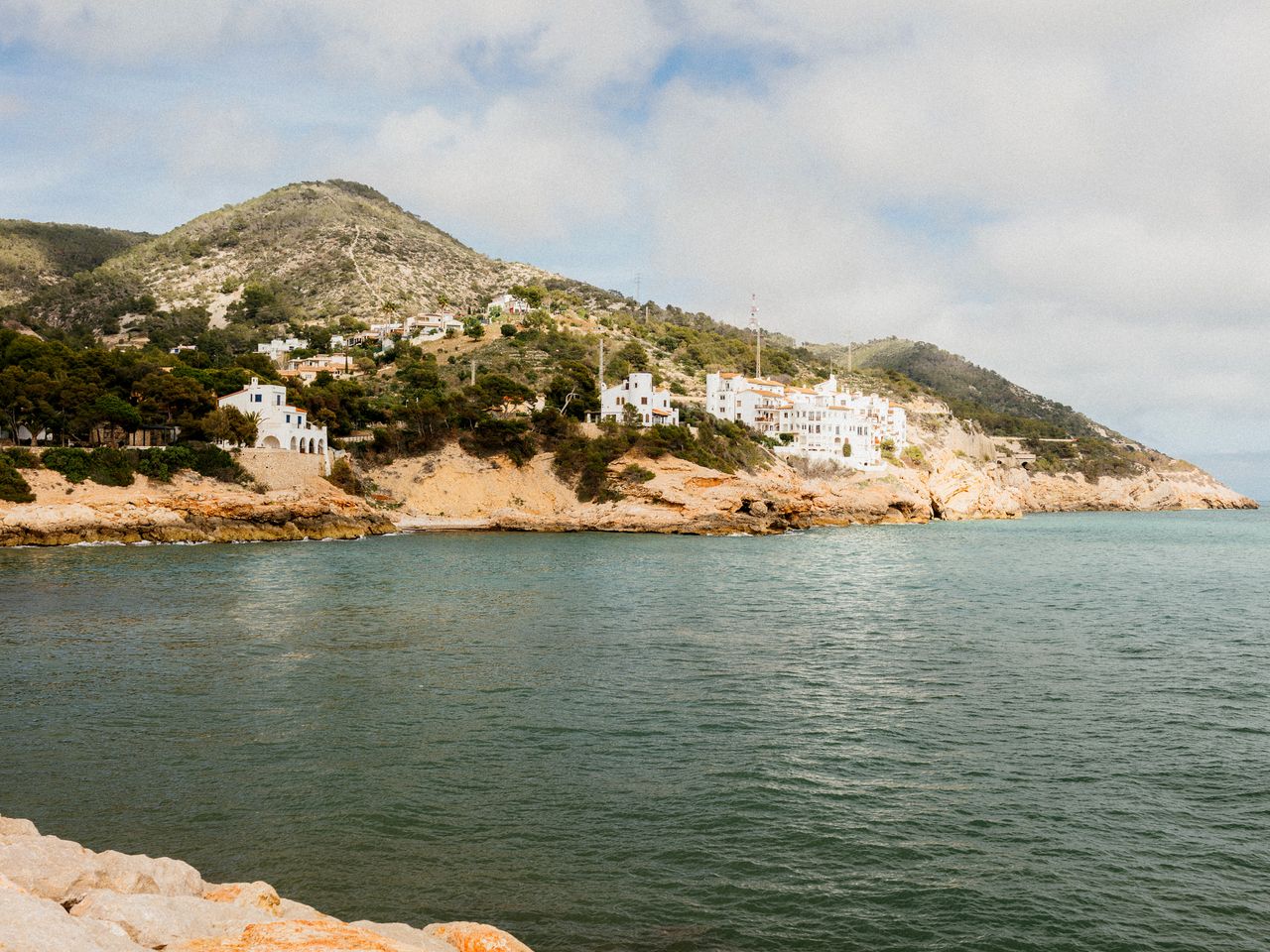
Sitges, with around 30,000 year-round residents, is known for its sandy beaches, 19th-century villas, 21st-century mansions, quaint historic centre and thriving residential real-estate market. Only a 25-minute drive from Barcelona’s international airport, the community is one of three select resorts that compete for the title of mainland Spain’s most expensive.
Home prices in Sitges average $457 per square foot, up 7.3% in the past year and 21% in the past five years, according to Idealista, a Spanish real estate website. Jesús Encinar, CEO and chairman of Idealista, says that Cadaqués, up the Catalan coast from Sitges and near France, is now at the top, with average prices in March reaching $575 per square foot. Málaga in the south of Spain is now at $458 per square foot, edging past Sitges.
Of the three, Sitges is the most convenient for trans-Atlantic air connections—and, local homeowners say, year-round charm. Smaller and less glitzy than Marbella, Sitges has temperate winters and hot summers, and it’s bigger and more accessible than remote whitewashed Cadaqués, where life dies down in the chillier offseason.
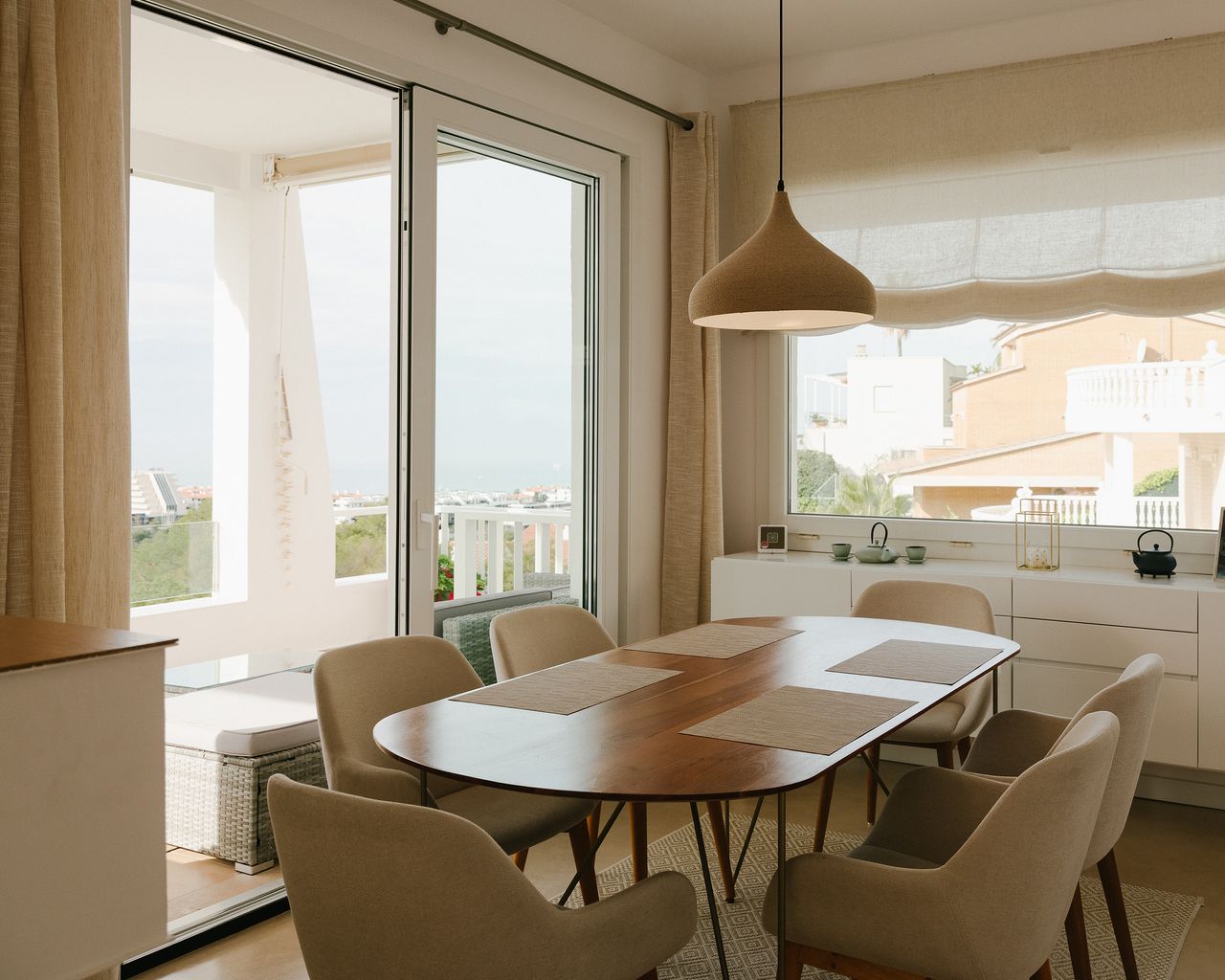
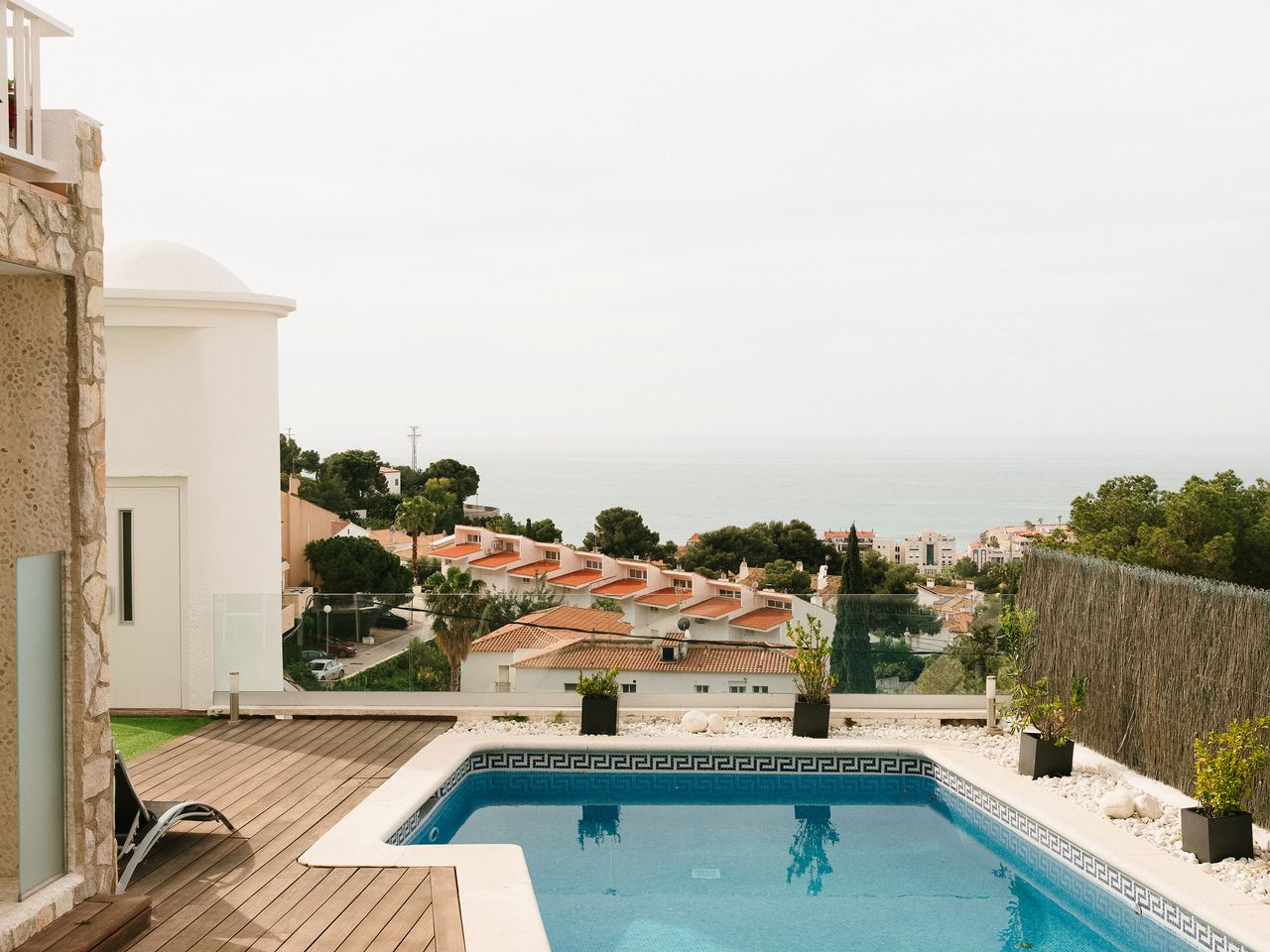
The Tantows’ dining room is on the second floor. PHOTO: ANTHONY PEREZ FOR THE WALL STREET JOURNALThe Tantows renovated the deck area around the pool and redid the compact lot’s landscaping. PHOTO: ANTHONY PEREZ FOR THE WALL STREET JOURNAL
The Tantows paid 1.3 million euros (about $1.39 million) in July 2023 for a compact 2,300-square-foot Sitges home on a steep 1/5th-acre lot, offering prized southern exposures and expansive sea views. They plan to divide their time about equally between their primary Sarasota, Fla., home and Spain, where they can work remotely.
Able to live in the 1990s property while wrapping up the renovation, the couple has spent about $270,000 on refurbishments, and they plan to spend around $50,000 more on the four-bedroom home before they’re done.
“We painted inside and outside, and we opened things up a bit by breaking down some walls,” says Patricia Tantow, a marketing executive at an IT company. Other structural improvements included new solar panels, energy-efficient doors and windows, and insulation upgrades. They also decided to convert a lower-level gym into a home office and gaming area.
The couple, both 50, view the investment as a vacation home for now and a potential retirement home later. Patricia Tantow still seems a bit surprised at where they ended up.
“My dream was to buy in the south of France,” she recalls. “But then I came to Sitges and there was something special here. It’s very cute, but very diverse as well—you feel like you belong here. So I changed my mind about France and said, ‘Let’s try to make this happen.’”
Long popular with the LGBTQ community, Sitges traditionally attracts second-home buyers from Northern Europe, as well as elsewhere in Spain. Now the number of American buyers is rising, says the Tantows’ agency, Lucas Fox, where in-house sales to Americans doubled in 2023 compared with the year before. The rise of remote work and LGBTQ word-of-mouth are each helping to fuel interest, says the agency.
American visitors to the town are also increasing. Marina Norwell, of Oliver’s Travels, the U.K.-based villa-rental specialists, says inquiries from the U.S. quadrupled in 2023 from the year before.
Norwell says a top choice for villa-minded Americans is a 10-bedroom country house with a saltwater swimming pool, about 15 minutes from the centre of Sitges, with a high-season weekly rate of about $18,500. Norwell says it’s popular with larger groups.
Sitges is something of a paradox, say residents. Known for its freewheeling nightlife in high season, it becomes a quieter, family-friendly community the rest of the year. The Tantows, who relocated during the pandemic from San Francisco to Florida, said they have no qualms about letting their two children, 9 and 11, explore on their own—something they couldn’t imagine back in San Francisco.
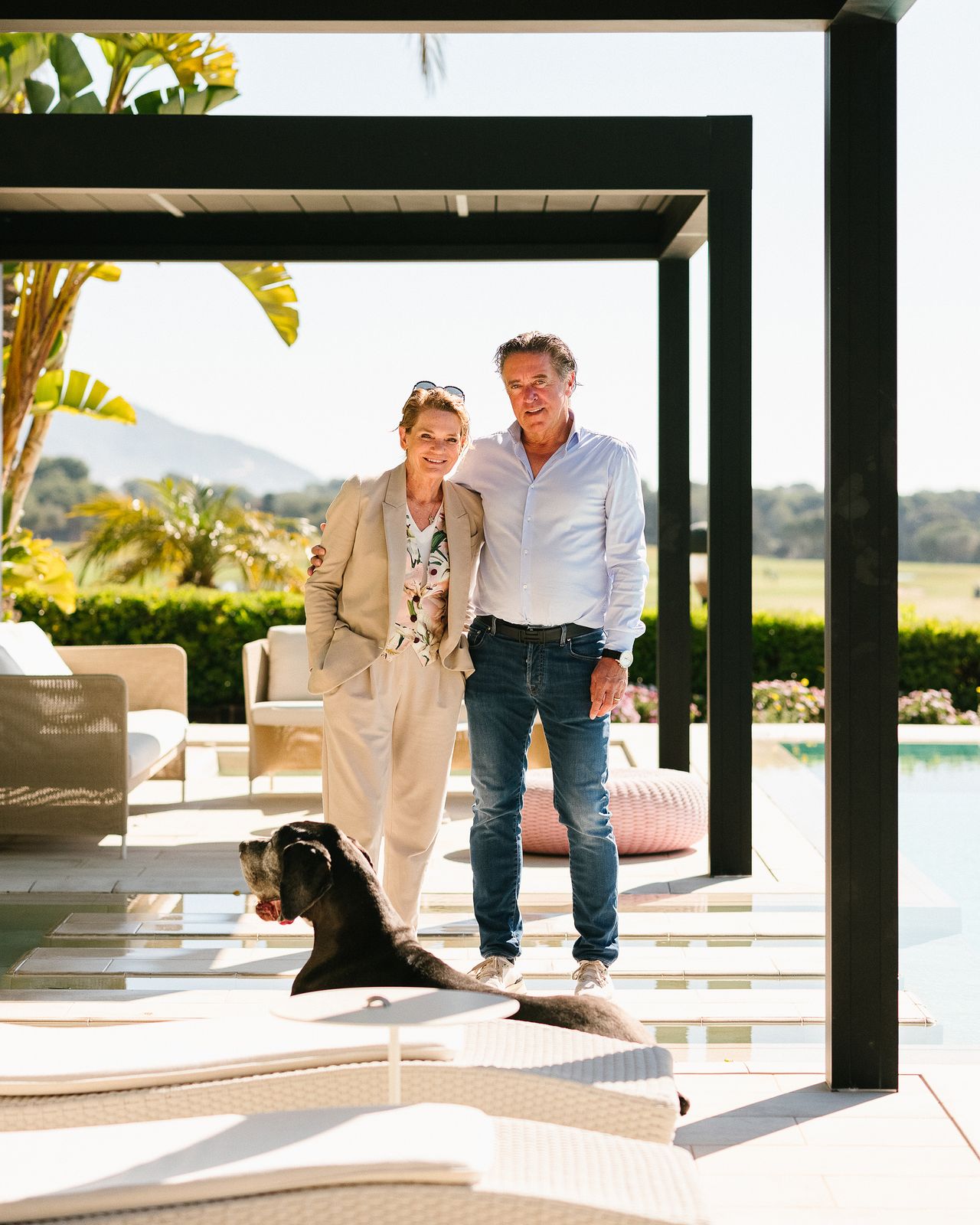
A desirable setting to raise children was also on the minds of full-time Dutch residents Ben Aquina and his wife, Carmen Aquina. The couple moved to Sitges in 2015 from the Netherlands to give their two sons, then 12 and 13, an international experience, he says.
The family rented for two years “to make sure that everything would go well with the kids,” says Aquina, a 63-year-old retired businessman. Then he and his wife, now 57, paid about $2.8 million in 2017 for a 7,000-square-foot, four-bedroom house on a ½-acre lot in a gated community near the city’s premier golf course, Club de Golf Terramar.
Ben and Carmen Aquina are selling their four-bedroom Sitges home for $5.79 million. PHOTO: ANTHONY PEREZ FOR THE WALL STREET JOURNALThe renovated open-plan kitchen and dining area of the Aquina home. PHOTO: ANTHONY PEREZ FOR THE WALL STREET JOURNAL
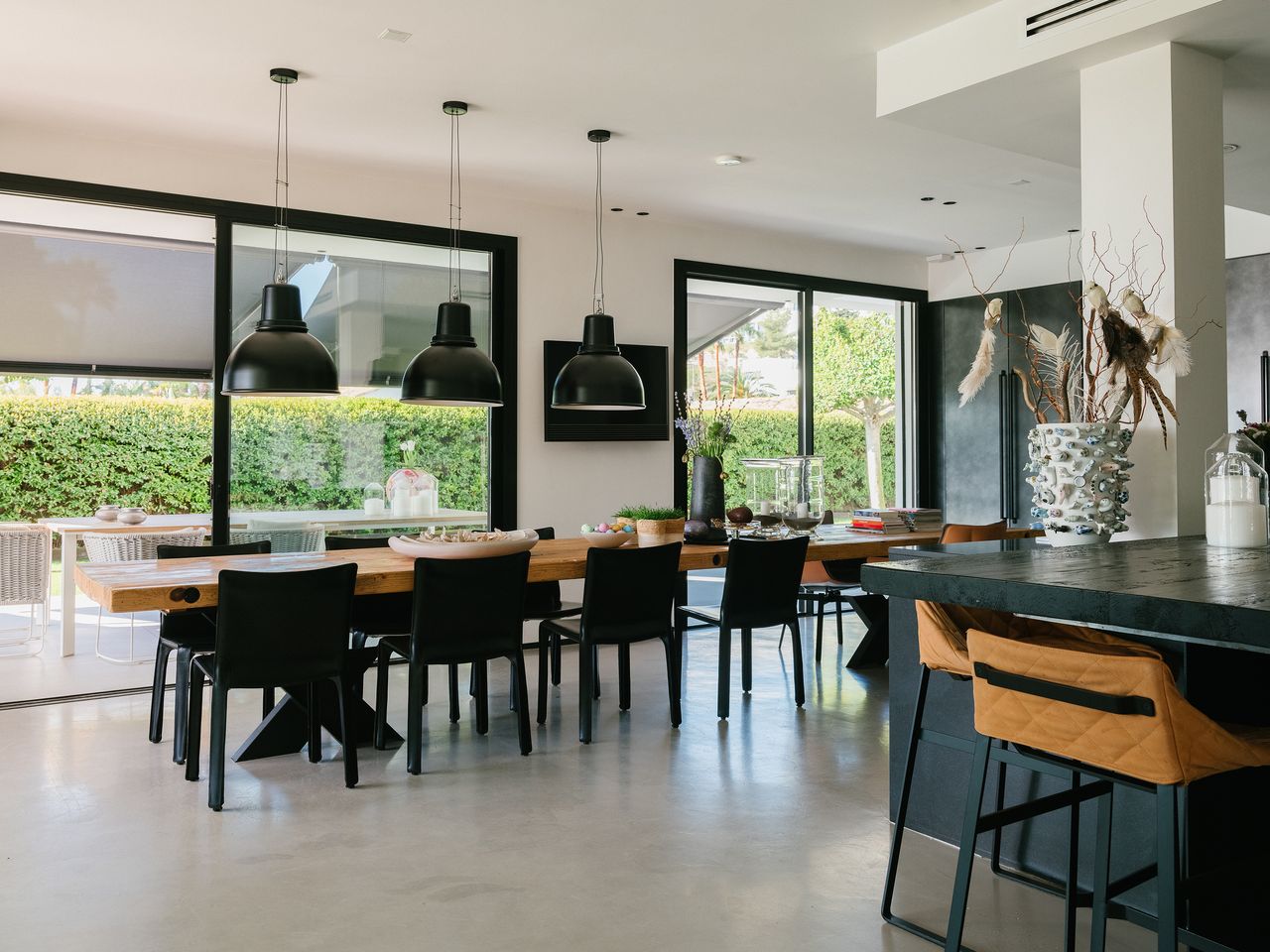
They spent more than $3 million on a gut renovation of the three-level property, originally built in 2004, adding everything from a new kitchen and upstairs terrace to a new outdoor pool.
“We love Sitges,” says Ben Aquina. “Life is so nice; the climate is perfect.”
Now that their sons are attending universities in Amsterdam and Rotterdam, the couple has listed the home for $5.79 million, with Rachel Haslam of Lucas Fox handling the sale. They plan to downsize locally to an apartment, as well as spend more time back in Holland.
At their current asking price, the Aquinas would just about break even, but many Sitges lovers are willing to take a loss, says Jordi Carbonell, sales director for Barcelona’s surrounding areas at Engel & Völkers Spain.
Carmen Aquina, 57, and her husband, Ben Aquina, 63, plan to downsize to a Sitges apartment from their 7,000-square-foot home. PHOTO: ANTHONY PEREZ FOR THE WALL STREET JOURNAL
Catalonia led the way in the industrialisation of Spain in the 19th century, and Sitges became a spot for Catalan magnates to build lavish summer villas, often in a style associated with architect Antoni Gaudí up the coast in Barcelona. Still expensive to buy, and often very expensive to modernize, they typically need a new kitchen and new air-conditioning system, and even a new roof, requiring a total investment of almost $10 million to $11 million, says Carbonell. New owners may never resell for that price, he adds, “but some people just love these properties.”
Carbonell says the highest square-foot prices can now be found on Passeig Maritim, the palm-lined boulevard bordering the beach. In 2023, Lucas Fox sold a 1,930-square-foot contemporary apartment on the boulevard’s continuation, Passeig de la Ribera, for $1.6 million, or $831 per square foot, far exceeding the resort’s average.
Both the Tantows and the Aquinas were drawn to the community’s proximity to Barcelona—“Sitges wouldn’t be Sitges without Barcelona,” says venture capitalist Martin Tantow, who says the family relies on direct flights from Miami and California. But they also use it as a getaway to the nearby Penedès wine region, home to Catalonia’s sparkling Cava wines.
Carbonell says Sitges-bound buyers who want more land often head up to Penedès, where luxury properties can come with stables and tennis courts. Meanwhile, budget-minded international buyers who want access to Sitges but more space for their euro are increasingly heading a 15-minute drive away to nearby communities, Sant Pere de Ribes, closer to the vineyards, and Vilanova i la Geltrú, a small city down the coast, where “you can spend 450,000 euros on a home but still enjoy Sitges on the weekends,” he says.
Mary Anne Gibbons and Michael Healy, a couple in their early 70s from Washington, D.C., recently capped off an Iberian holiday with a first-time visit to Sitges, opting for an Oliver’s Travels villa near Sant Pere de Ribes, where they paid around $1,400 in total for four nights in a three-bedroom renovated stone house.
Intending to use the setting as a base for discovering Barcelona, Gibbons says they opted most days to hang out in Sitges instead.
“It’s a really cute town with a very relaxed atmosphere,” says the attorney, who enjoyed the seafront promenade and quaint shops and cafes. “Very chill.”
You and a friend have a can’t-miss idea for a new business. You’ve got a great name, and the logo is perfect.
It is time to ask each other some hard questions.
Talking up front about tough subjects like how you work, how you deal with stress and your expectations for the business can save lots of headaches later. “Most issues are neutral when you discuss them ahead of time,” says Jane Brodsky , who ran a barre-and-spin studio with a partner for 10 years in Washington, D.C. “But in the heat of the moment, issues become personal and larger than they need to be.”
Here are crucial questions that should be settled at the start to help make the partnership succeed.
How did your family communicate?
Maybe you were raised in a family that talked through disagreements to find solutions. But maybe your partner grew up in a house where the loudest voice won. That could be a problem when issues arise in the business: Experts say that when people are under stress, they often fall back on behaviours that were imprinted at home—and different styles could clash.
At Happy Being, a company that sells nutritionally enhanced teas and drink powders, the three co-founders discussed communication style before they started the business.
“We discovered that one partner gets triggered if he feels no one is listening,” says co-founder Dutch Buckley . “It goes back to an early fear of not being heard.”
(For his part, co-founder Josemaria Silvestrini says that early on he “definitely needed the validation of being recognised and being right.”)
So, the three work at making sure everyone has a say in meetings, and they made a rule that no one’s work is ever belittled. On the flip side, when someone on the team accomplishes something, someone else on the team draws attention to it.
What does success look like to you? And failure?
While these may seem obvious—like, the business either succeeds or fails—everyone’s definition is different, and they are surprisingly specific. Certainly, monetary goals or anything that can be enumerated will help partners envision each other’s goals. Is one looking to grow slowly with customers and suppliers in the community and get to better than break even after three years, while the other wants to be cash-flow positive in year one and scale quickly to sell the business to a larger entity after 10 years? There’s a lot of success and failure in between those two outcomes, depending on your perspective.
Silvestrini of Happy Being recommends hashing it out together on the whiteboard until everyone agrees on an explicit definition of success for the company. “Hopefully, it’s an easy 10-minute conversation,” he says. “Because if founders have different objectives, the boat is going nowhere.”
What does everyone bring to the table?
It is crucial to discuss what each partner is contributing to the partnership in terms of expertise, experience, network and money. Kathryn Zambetti , an executive coach specializing in founder relationships, recommends taking an honest strengths-and-weaknesses inventory of yourself and your partner and then discussing what you both bring to the table. The exercise will help delineate which responsibilities naturally suit each partner, and it will highlight areas that will require additional work or outsourcing.
The clearer the roles can be defined, the better. If you are opening a bakery, you and your partner shouldn’t both be good at just making bread. Someone needs to handle marketing, suppliers, leases and licensing, financials and hiring and managing employees.
Why are you doing this?
You and your partner need to be in complete alignment on your motivations. Does this venture need to support your family or merely add to your vacation fund? Are you doing it to prove your father or your high-school econ teacher wrong? Any answer other than unfailing commitment to the mission or the product is a red flag.
“Your north star has to be something bigger than money to succeed,” says Buckley. “People will go through things that test them, but if money is the only motive, that won’t be enough.”
What pushes your buttons?
Just like in a marriage, you want to know best how to support and protect your business partner. Understanding what puts each of you in a fight-or-flight mode can be key to getting the best out of each other.
Do you need to be consulted on all decisions, or just major ones? Do you need to be recognized as the leader and sit at the head of the table? Do you fear having to downsize your home if the business fails?
What does your workday look like?
Does a day at the office mean working 9 to 5? Can the work be done remotely and on your own time? If you work well at night and need rapid responses to questions, is it a problem having a partner whose phone goes on “do not disturb” every evening at 7? Having the conversation and understanding expectations is key.
When Buckley started Happy Being, the team learned that one of the partners got up very early. “I had to tell him, ‘We don’t want 6 a.m. calls.’ ”
Do you like taking gambles?
A penchant for lottery tickets, Las Vegas gambling or high-adrenaline activities like skydiving shows a potential partner’s tolerance for risk and whether that aligns with your own. There will be countless decisions early on in a business concerning risk, and the partners need to be on the same page.
So ask about it. You go into the venture planning and hoping for success, but how much money or time is your partner willing to lose if it doesn’t succeed? How much of their parents’ or in-laws’ money would they bet on the partnership?
Is the business more important than the friendship?
Many business partners start as friends. But would you each be willing to give priority to making the right decision for the business, even if it means possibly hurting the friendship? Would you each be capable of letting the other one go if it was better for the company? Most advisers recommend choosing a partner who has a common business goal and letting the friendship build from that, rather than trying to build a partnership on top of a strong friendship.
“Your business partner will be one of your most intense relationships, but it shouldn’t fulfill every role in your life,” says Amy Jurkowitz, entrepreneur and co-founder of branding adviser Bread Ventures. “You need to be compatible in how much energy you will both put into the business.”
If the partnership doesn’t work out, how will it end?
A co-founder relationship is a binding agreement with financial and emotional repercussions, just like a marriage. But starting a business has the added stress of having the company—the baby—arrive on day one. If there is a divorce, who gets custody?
The more specific you can be about potential breakups, the better. If you are both putting capital in at the start, would you expect to get that out if you exited? What if, several years in, one partner can’t continue to struggle without a regular paycheck and leaves—and the next year the company finally turns a profit or is bought by another company? Would the partner who left get a share of the money?
These discussions should help make it clear that the survival of the company—and not the partnership or the friendship—is the ultimate goal. Those who have been through a business breakup recommend involving a third party to help sort through these issues at the outset.
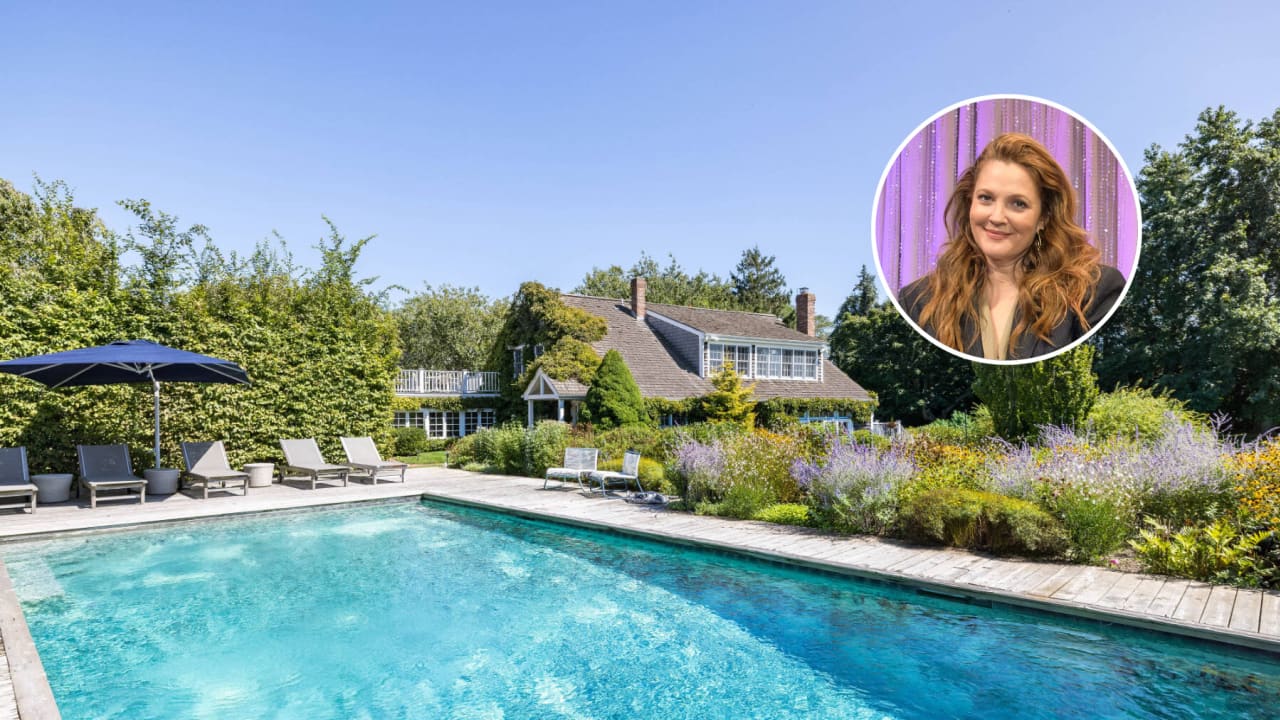
Drew Barrymore is making an almost $8.5 million adjustment to her real estate portfolio with the listing of her home in the Hamptons.
The renovated barn, built in 1920, is asking $8.45 million and sits on 1.7 acres in the heart of Sagaponack, less than a mile from the ocean. It hit the market last week.
The actress and talk show host has owned the seven-bedroom home—which has appeared across her social media platforms—since 2019, when she paid $5.5 million for it using a limited liability company for the purchase, records in PropertyShark show.
Lena Yaramenko for Sotheby’s International Realty
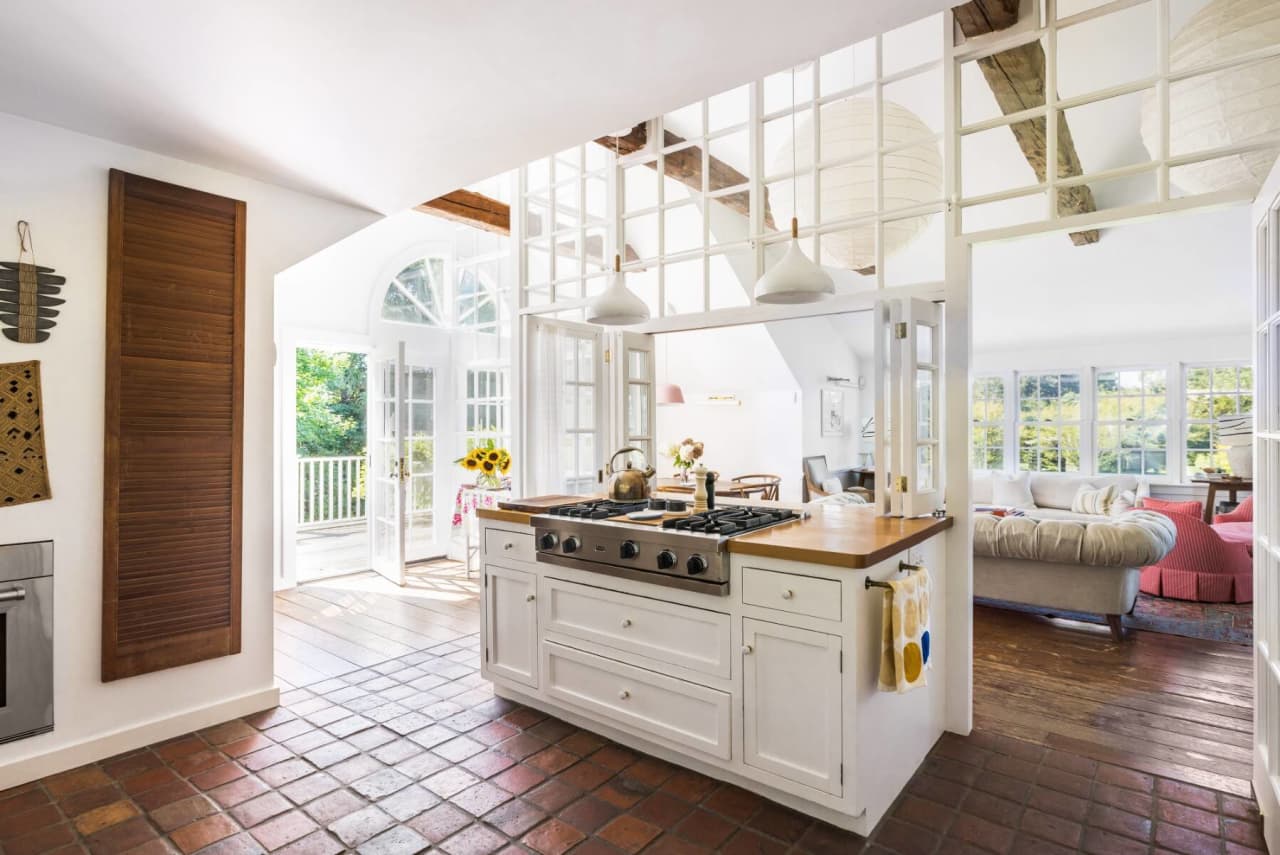
Despite its transformation into a residence, the former barn still has plenty of period charm, from soaring ceilings and exposed beams to hardwood floors.
The hub of the 6,850-square-foot, light-filled home is the great room and adjacent breakfast nook and kitchen, the latter of which is separated from the rest of the space by a wall made from window frames. Glass doors open up from the great room onto a deck.
Lena Yaramenko for Sotheby’s International Realty
There’s also a living room with a brick fireplace, a pink-painted dining room with a sloping ceiling and a skylight, and a den. Plus a separate one-bedroom guest house with a living room and office area, according to the listing with Kathy Konzet of Sotheby’s International Realty – East Hampton Brokerage. Konzet wasn’t immediately available to comment.
Lena Yaramenko for Sotheby’s International Realty
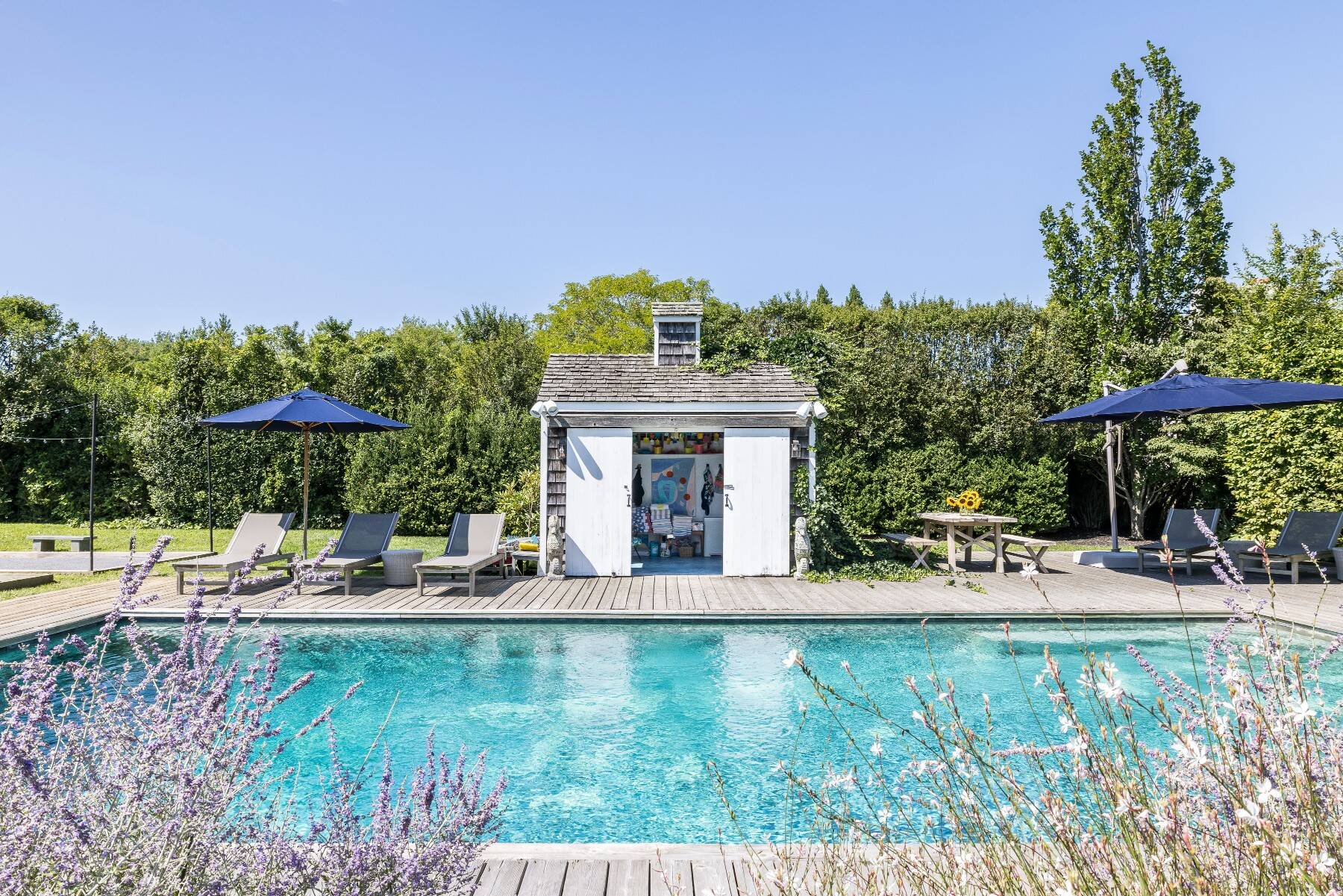
The park-like grounds, complete with flowering gardens and rolling lawns, are home to a pool, pool house, a bocce court and plenty of areas for outside entertaining.
Barrymore, 49, began her career at just 11 months old when she appeared in a dog food commercial, and at 7, she starred in 1982’s “E.T. the Extra-Terrestrial.” As an adult she’s best known for roles in “Charlie’s Angels,” “Grey Gardens,” “The Wedding Singer,”and “50 First Dates.”
Her talk show, “The Drew Barrymore Show,” debuted in 2020. A representative for the star couldn’t be reached for comment.
Something isn’t translating in Duolingo ’s first-quarter earnings report.
Shares of the language learning app provider are down nearly 14% in late trading to $210, after the company issued first-quarter financial results that topped Street estimates. Through Wednesday’s regular session close, the stock was 86% higher for the last 12 months.
For the quarter, Duolingo reported revenue of $167.6 million, up 45% from a year ago, inching past the Street consensus at $165.7 million. Profits were 57 cents a share, well ahead of consensus at 27 cents. Adjusted Ebitda, or earnings before interest, taxes, depreciation, and amortization, were $44 million, up from $15.1 million a year earlier.
Bookings were $197.5 million, up 41%. Daily active users were 31.4 million, up 54% from a year ago, while monthly active users were 97.6 million, up 35%.
For the June quarter, Duolingo sees revenue of between $175 million and $177.5 million, with adjusted Ebitda ranging from $36.8 million to $39.1 million. Street consensus had called for revenue of $176.9 million, with adjusted Ebitda of $38.6 million.
Duolingo’s forecast for the full year calls for revenue of between $726.5 million and $735.5 million, with adjusted Ebitda ranging from $167.1 million to $176.5 million. Street consensus has been calling for $728.4 million in revenue and adjusted Ebitda of $167.2 million.