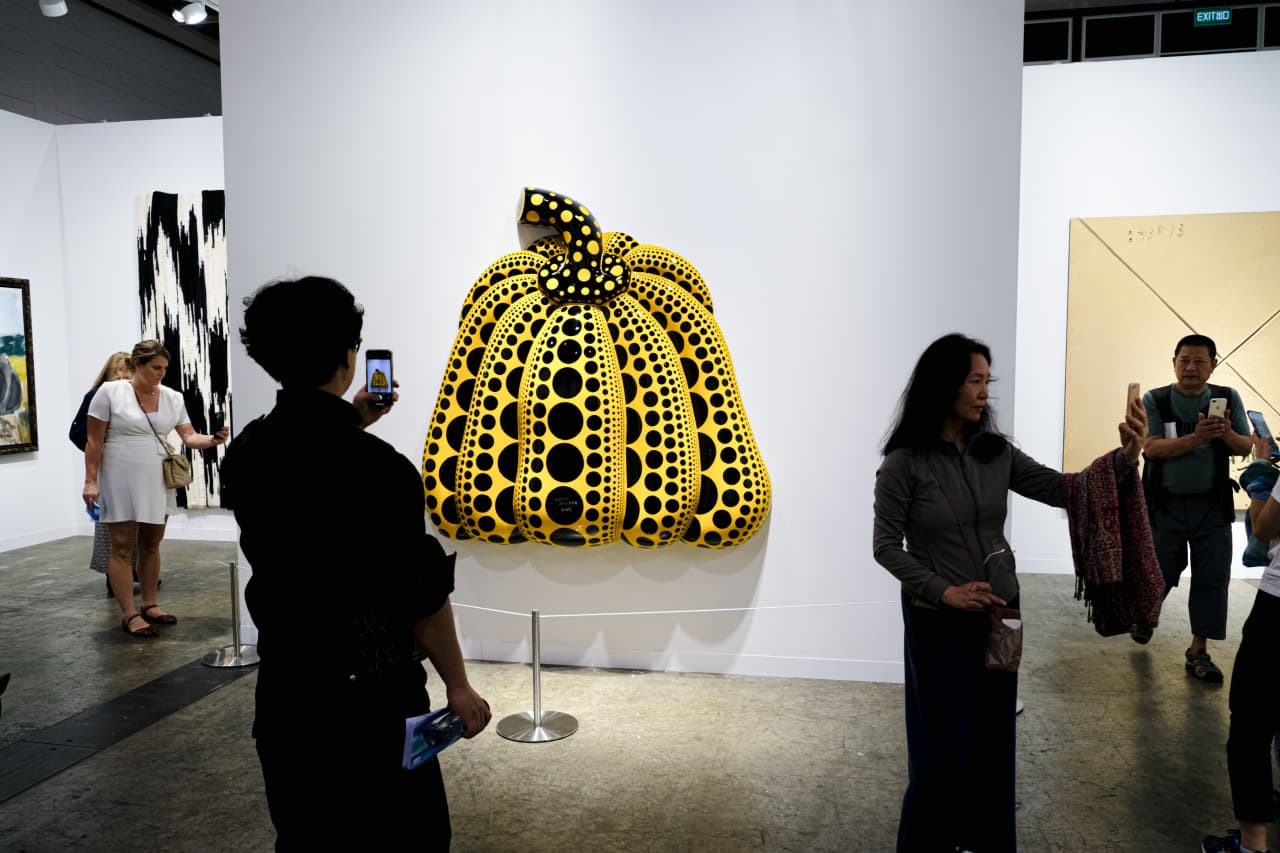
Artworks by Yayoi Kusama collectively sold for nearly US$81 million last year at the major global auction houses, making her the top-selling 21st-century contemporary artist, according to the Hiscox Artist Top 100 report.
The boost in sales for Kusama’s works pushed David Hockney, the previous year’s top-selling artist, to second place. Hockney’s art garnered US$50.3 million in sales last year, down from US$74.7 million in 2022, said Hiscox, a London-based specialty insurer.
The second annual ranking, compiled with research and analysis from London-based ArtTactic, also showed Kusama’s No. 1 ranking was consistent with a strong showing by women artists overall last year. Joining Kusama among the top five last year was Cecily Brown, who ranked fourth with US$31.7 million in sales.
Yoshitomo Nara, ranked third with sales of US$36 million and George Condo ranked fifth with sales of US$29.5 million.
Total sales of contemporary art made after the year 2000 fell 17% to US$955 million last year from US$1.5 billion in 2022, according to the report. Though sales of contemporary art by women fell 8% to US$306 million, the number of works sold rose 21%. And sales by their male peers fell a much sharper 20%, the report said.
“The market for female artists has been much more resilient than that for male artists,” the report said.
The results go beyond ultra-contemporary art. Earlier this year, ArtTactic reported that overall sales of art by women at the major auction houses hit a record US$825.8 million last year, up 7% from a year earlier.
Another mark of progress: Art by women comprised 32% of 21st-century art auction sales last year, up from 29% in 2022, as the number of women artists behind these sales continued to climb. There were 728 women artists represented last year, up 179% from 2019, the report said.
“Contemporary female artists have always been undervalued and underrepresented,” Robert Read , head of art and private clients at Hiscox said in a news release. “Meaningful progress has been made in recent years, as the market gradually begins to recognise the importance and value of their work, but we are still some way from parity.”
Following Kusama and Brown, the top female artists by sales value were Julie Mehretu, with sales of US$21.4 million; Jadé Fadojutimi, with sales of US$8.5 million; and Jenny Saville, with sales of US$7.8 million.
The Hiscox report just examined the auction market for works created in the 21st century and sold at Christie’s, Phillips, and Sotheby’s. This segment was stronger than much of the art market last year, with sales still 26% above pre-pandemic levels. Sales of art made before 2000 have fallen 22% since 2019, the report said.
This segment of the market is also making up a larger share of all post-war and contemporary art sold at auctions, reaching 70% last year from 63% a year earlier.
The Hiscox report was consistent with other analyses of the art market last year that found large-ticket sales, over US$1 million, declined in favour of sales of works with price tags of US$50,000 or less.
Within the 21st-century art category, the number of lower-priced works sold gained 25% while the number sold above US$1 million fell by 12%. The trend is backed by a near doubling in the number of artists making 21st-century works that end up at auction since 2019, the report said.
The benefits of so-called flipping—or the practice of selling art made by young artists within two years of their creation—fell dramatically, bringing in US$39 million in sales last year from US$67 million in 2022. That’s despite the number of lots with this newly made art at 662 was about the same as the previous year.
Though Kusama is 95 years old, 41% of those making 21st-century art are under age 45, unsurprisingly. Leading this group of younger artists last year was: Nicolas Party, whose works sold for US$20.2 million; the late Matthew Wong, whose works sold for US$16.5 million; Fadojutimi; Caroline Walker, whose works sold for US$7.5 million; and Dmitri Cherniak, whose works sold for US$6.7 million.
Art was the investment of passion that gained the most in value in 2023, according to Knight Frank’s Luxury Investment Index (KFLII). This is the second consecutive year that art has risen the most among the 10 popular investments tracked by the index, up 11 percentin 2023 and 29 percent in 2022. Art was followed by 8 percent growth in jewellery, 5 percent growth in watches, 4 percent growth in coins and 2 percent growth in coloured diamonds last year.
The weakest performers were rare whisky bottles, which lost nine percent of their value, classic cars down six percent and designer handbags down four percent. Luxury collectables are typically held by ultra-high-net-worth individuals(UHNWIs) who have a net worth of US$30 million or more.Knight Frank research shows 20 percentof UHNWI investment asset portfolios are allocatedto collectables.
In 2023, the KFLII fell for only the second time, with prices down 1 percent on average.
“Despite record-breaking individual salesin 2023, a surge in financial market returns contributed to a shift in allocations impactingon luxury asset value,” the report said. “… our assessmentreveals a need for an ever more discerningapproach from investors, with significantvolatility by sub-market.”
Sebastian Duthyof AMRsaid the 2023 art auction year began with notable sales including a record price for a Bronzino piece. But confidence waned as the year went on.
“It was telling that in May, Sotheby’s insertedone of its top Old Master lots – a Rubens’ portrait– into a 20th Century Modern evening sale. But by then, it was clear that the confidence among sellers, set by the previous year’s record-bustingfigures, was ebbing away. In the same month,modern and contemporary works from thecollection of the late financier Gerald Finebergsold well below pre-auction estimates.”
The value of ultra contemporary or ‘red-chip’ art contracted the most in 2023.
“Works by a growing group of artists bornafter 1980 have been heavily promoted by megagalleries and auction houses in recent years.With freshly painted works in excess of £100,000almost doubling in 2022, it was little surprise thatthis sector was one of the biggest casualties last year. There is a risk there are now simply too manyfresh paint artists with none really standing out.”
In the jewellery market, MrDuthy noted that demand was strongest for colouredgemstones of exceptional quality, iconic signedperiod jewels, single-owner collections, and items with historic provenancein2023. In the watches market, Mr Duthy said collectors chased the most iconic and rare timepieces.
“A Rolex JohnPlayer Special broke the model record when it sold for £2 million at Sotheby’s in May, double the pricefor a similar example sold at Phillips in 2021,” he said.
Although whisky was the worst-performing collectable in 2023, it has delivered the highest return on investment among the 10 items tracked by the index over the past decade, up 280 percent. Andy Simpson of Simpson Reserved, said2023 was a challenging yearbutthe best of the best bottles gained 20 percent in value.“In myopinion some bottles that lost significant valuein 2023 will return through the next two years asthey are simply so scarce and, right now at least,so undervalued,” Mr Simpson said.
Whisky was the worst performing collectable in 2023 but it had highest return on investment over a 10-year period. Image: Shutterstock
Classic car expert Dietrich Hatlapasaid the 6 percent fall in collectable vehicle values in 2023 followed a 22 percent surge in 2022. “The strong performance of other investment classes such as equities may have dampened collectors’ appetites –it’s a very small market so it only takes a minor change in portfolio allocations to have an effect, and there has also probably been a degree of profit taking. However, we have seen some marques like BMW (up 9 percent in value) and Lamborghini (up 18 percent), which appeal to a younger breed of collector, buck the trend in 2023.”
Mr Duthysaid a dip in the share price of the top luxury handbag brands last Autumn appeared to spook investors.“Last autumn it was possible to pick up anHermès white Niloticus Himalaya Birkin in goodcondition for under £50,000. The recent slidereflects a general correction at the upper endthat’s been underway for some time rather thanchanging attitudes to the harvesting of exotic skins.”
According to Knight Frank’s Attitudes Survey, the top five investments of passion among Australian UHNWIs are classic cars, art and wine.Fine wine values gained just 1 percent in 2023 as the market continuedits correction, said Nick Martin of Wine Owners. “It’s been a hell of a long run, so I’m not that surprised. Some wines from very small producers that had enjoyed the most exuberant growth have seen the biggest drops. It had got a bit silly, £50 bottles had shot up to £200 or £300.”
Favourite investments of passion: Australia vs Global
1. Classic cars (61 percent of Australian UHNWIs vs 38 percent of global UHNWIs)
2. Art (58 percent vs 48 percent)
3. Wine (48percent vs 35 percent)
4. Watches (42 percent vs 42 percent)
5. Jewellery (18 percent vs 28 percent)
Best returns among investments of passion (10 years)
In the latest example of Dubai’s thriving luxury real estate market, a 19-bedroom megamansion in the city’s prestigious gated golf community of Emirates Hills has sold for US$40.2 million.
The villa, which sits on the largest lot in the posh enclave, changed hands last week, and the sale was handled by Leigh Borg and Timothy Ogunniyi of Dubai Sotheby’s International Realty.
“To own the largest land plot in Emirates Hills along with one of the biggest homes in the community makes this property stand out,” Ogunniyi said. “To find a property that gives you 80,000 square feet of land and 55,700 square feet of living space is rare in Dubai.”
Other large plots in the community are “not quite as massive,” he added. It’s “very seldom these plots come into the market in Emirates Hills. No doubt, this presented a great appeal to the buyer and an opportunity to capitalise on its value.”
DUBAI SIR
The home has a classic feel, with an exterior that “combines timeless architectural elements with the use of natural materials, all of which are reflected in the roof shape, window style and classic columns,” Ogunniyi said.
It also has far-reaching views of the Dubai skyline and the surrounding golf course.
“With the market in Dubai appreciating, it is fair to say that this was a very good deal to come by, both for buyer and seller,” Ogunniyi said, without disclosing the identities of the parties. The seller had owned the villa for the past 15 years and lived in the property when in town, he added. Mansion Global couldn’t identify either party.
Dubai’s luxury home market has been on a tear, complete with sky-high prices that grew 17.4% last year , and record-breaking transactions.
“This year, we have witnessed a significant evolution in the luxury real estate landscape, characterised by the introduction of new iconic developments and a sustained influx of wealthy investors, many of whom boast billionaire status,” said George Azar, CEO and chairman of Dubai Sotheby’s International Realty.
“While there exists a substantial demand for super prime homes, it’s crucial to note that the market currently lacks a sufficient number of uber-luxury projects and finishes that resonate with the discerning tastes of global billionaires,” he added. That gap “underscores the resilience and strength of this segment within our market.”
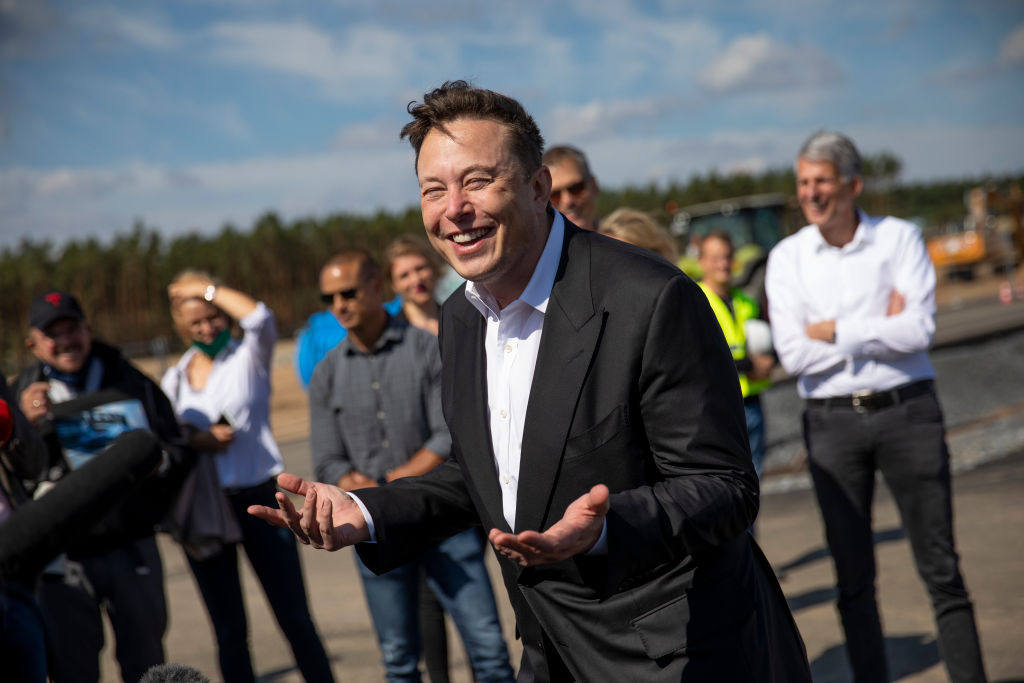
Tesla Chief Executive Elon Musk has spent years trying to build the automaker of the future. It’s the electric-car company of the present that’s now giving him trouble.
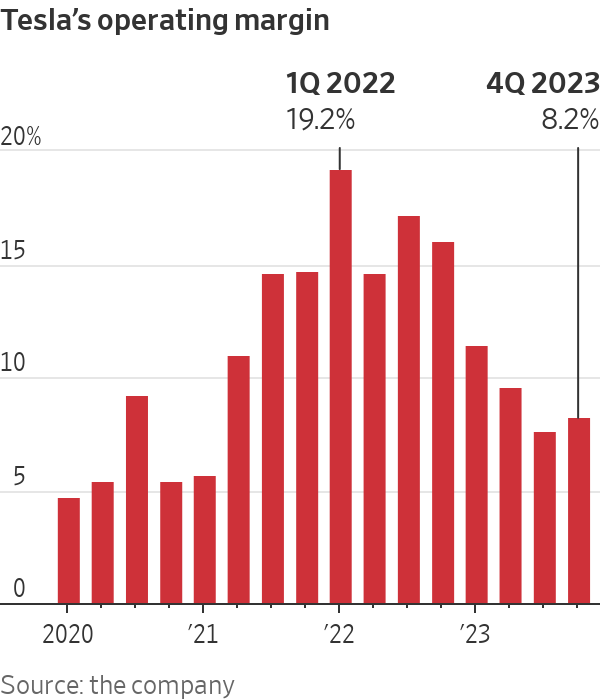
After a period of rapid expansion, the company has seen its sales fall and its once-enviable margins shrink. For the first time in years, the biggest question for Tesla is not whether it will be able to make enough cars, but whether people will buy them.
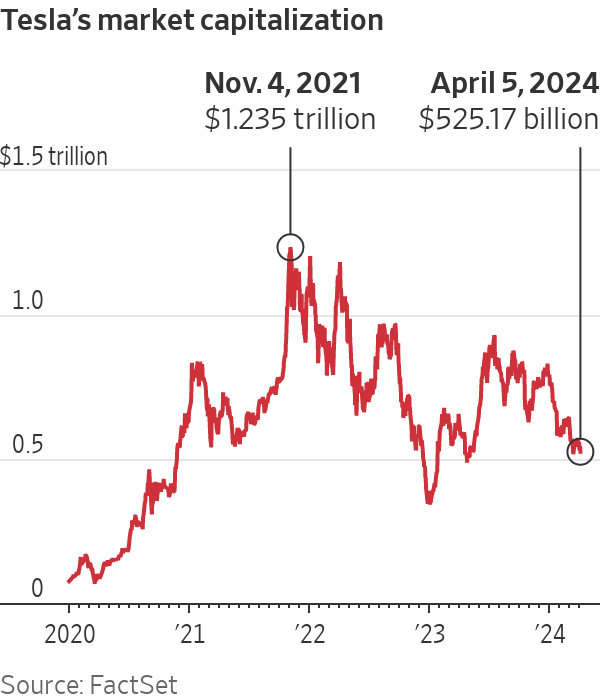
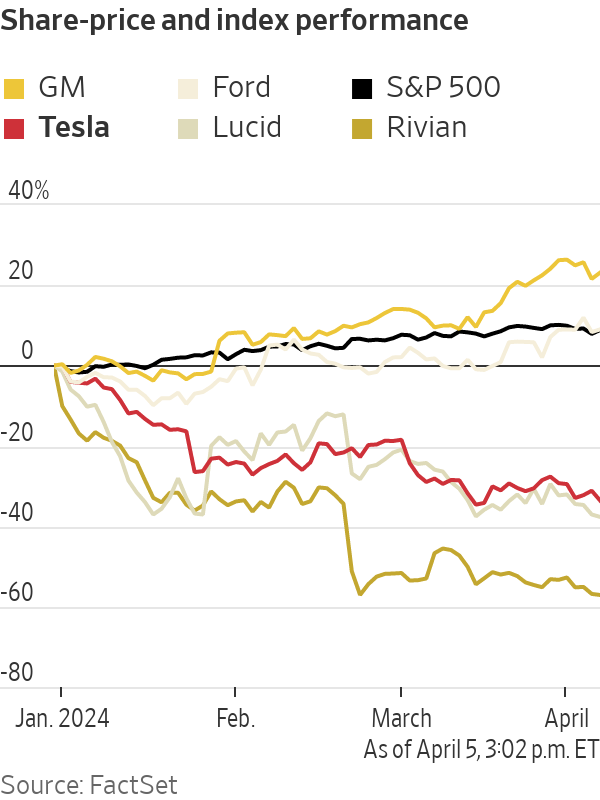
The company’s stock, down 34% this year, has been the worst performer in the S&P 500 index. While Tesla remains the world’s most valuable automaker by a wide margin, its market capitalisation has tumbled by more than half since it peaked in 2021.
Consumer appetite for electric vehicles is cooling. The core of Tesla’s lineup is dated. The company has been cutting prices to spur demand. Big, moonshot bets have not panned out as Musk predicted—at least not yet. And Chinese carmakers are now the ones that look like nimble, tech-savvy upstarts.
Musk’s attention, meanwhile, has sometimes been elsewhere. He bought Twitter, sold some Tesla stock along the way and started an artificial-intelligence company . Of late, he has been picking fights with everyone from OpenAI to Disney Chief Executive Bob Iger . Surveys suggest his public persona has alienated some would-be Tesla buyers.
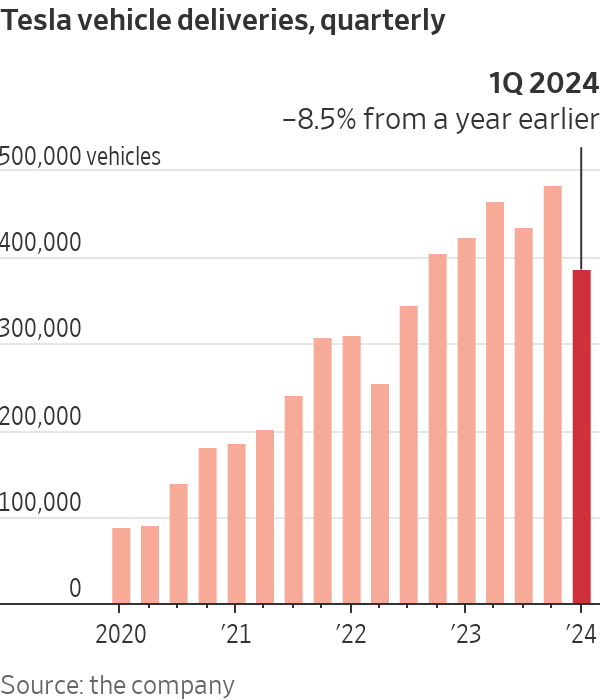
This week, the company reported its first year-over-year decline in quarterly deliveries since 2020—a result that badly missed Wall Street’s expectations.
Musk’s company remains a formidable player in the electric-vehicle market globally and is the clear leader in the U.S. It is still making money on its vehicles, while many established car companies are struggling to turn a profit on their EVs, after committing tens of billions of dollars to expand their offerings. But the boom times of Tesla’s past have faded, and the bright future imagined by Musk—where people will ride around in fully autonomous Teslas—remains distant.
“Tesla is going from the golden era to a really challenging era,” said Mark Fields , a former CEO of Ford Motor who now serves on several corporate boards. Tesla and Musk didn’t respond to requests for comment.
Boom times
Three years ago, Tesla appeared all but unstoppable.
After years of financial uncertainty and production challenges, the company had turned a corner and was delivering quarter after quarter of record profit.
Its factories were humming , even as a global shortage of semiconductors led many rivals to curtail auto production. Consumer demand was strong enough that Tesla was hiking prices, and waiting lists for new vehicles grew long enough that some buyers were paying a premium for lightly used ones.
As automakers set about remaking themselves in Tesla’s image, Musk—a master salesman with an uncanny knack for inspiring investors to believe in his vision —sought to catch the next market wave: artificial intelligence.
At a Tesla recruiting event in the summer of 2021, the billionaire took the stage in Palo Alto, Calif., dressed all in black, as is his custom.
Tesla had for years been working to develop technology that would allow a computer to assume more of the driving tasks, rolling out the software as part of its Autopilot system.
In an attempt to emphasise Tesla’s might in the artificial-intelligence space—and ambitions beyond the competitive, traditionally low-margin automotive business—Musk unveiled the company’s latest effort: a friendly humanoid robot. The robot, Optimus, was not ready yet. In its place, a human dressed in a robot costume danced on stage.
“Tesla is much more than an electric-car company,” Musk told the crowd. “In the future, physical work will be a choice.”
In late October 2021, rental-car company Hertz Global Holdings said it was ordering 100,000 Tesla vehicles as it looked to expand its fleet of EVs. For investors, the deal was a sign that EVs were becoming mainstream—and soon more drivers would have an opportunity to try one.
Tesla’s market value eventually peaked above $1.2 trillion in early November, up more than 2,000% in two years.
The euphoria was short-lived.
Musk soon began unloading Tesla stock, embarking on a spree that continued for more than a year and resulted in his selling more than $39 billion in shares. The sales—executed in part to fund Musk’s eventual purchase of Twitter—spooked the market and weighed on Tesla’s stock.
‘Enough on our plate’
The surprises kept coming in 2022.
On a late-January earnings call, Musk revealed Tesla would not be introducing any new models that year, attributing the decision to supply-chain constraints. Instead, the company would churn out as many of its existing models as possible.
Tesla sold four models at the time, but just two drove the lion’s share of the company’s sales: the Model Y sport-utility vehicle and the Model 3 sedan.
Plans for a $25,000 car—a model Musk had teased in late 2020 and said likely would be ready in three years—had been put on ice.
“We have enough on our plate right now,” Musk said.
The move was risky. In the car business, new and redesigned models are critical to holding buyers’ interest and maintaining pricing power.
Analysts were perplexed. One questioned whether Tesla could hit its growth targets with fewer than a half-dozen passenger-vehicle models in its lineup.
Musk brushed off the concern. Instead, he alluded to his vision for a future where Teslas would be able to operate autonomously around the clock—making them even more valuable.
“It’s apparent from the questions that the gravity of Full Self-Driving is not fully appreciated,” Musk said, referring to a souped-up version of Tesla’s driver-assistance technology. (The system doesn’t currently make Tesla vehicles autonomous.)
As the year wore on, investors grew increasingly jittery. Musk’s pursuit of Twitter only amplified concerns on Wall Street that the Tesla CEO was not focused enough on his carmaker.
“Twitter is a distraction,” Gary Black, managing partner of the Future Fund, a Tesla investor, said at the time. “All of the space has been sucked up by him talking about Twitter, and so you don’t hear him tweeting about EVs.”
Warning signs flashed in China, where wait times for new Teslas fell to about a month as of September 2022, from four-plus months in the spring, according to Bernstein Research.
Tesla executives, including chief designer Franz von Holzhausen, pressed Musk to revive plans for the company’s more affordable, mass-market car, arguing it was necessary for Tesla to reach its growth targets, according to Walter Isaacson ’s biography of the CEO. Musk had been more interested in developing autonomous cars that could operate in a robotaxi fleet.
‘Our responsibility is to try to get as many people into an EV as possible,’ says Tesla’s chief designer, Franz von Holzhausen. PHOTO: PHILIP CHEUNG FOR THE WALL STREET JOURNAL
“Our responsibility is to try to get as many people into an EV as possible,” von Holzhausen told The Wall Street Journal earlier this year.
And while he is optimistic about the promise of self-driving cars and encouraged by Tesla’s recent progress, von Holzhausen said the transition will not be simple.
“Maybe I’m more pragmatic about it, but I think autonomy is…it’s going to be a challenge,” he said. “It’s still sci-fi to a lot of people.”
In late October, Tesla cut prices in China by an average of around 7%, according to Bernstein.
Soon after, it began offering temporary discounts on its most popular models in the U.S.—by $3,750 at first, then $7,500 plus 10,000 miles of free fast-chargin g if customers took delivery before year-end.
Tesla’s 2022 ended on a downbeat note. Its annual vehicle deliveries—up 40% over the prior year— fell short of the company’s initial goal and underperformed Wall Street’s expectations. The stock suffered its worst annual performance on record, declining 65%.
By early January 2023, it became clear within Tesla’s finance department that the company needed to take more aggressive action to move cars, people familiar with the matter said.
Tesla had opened two new factories in 2022—one in Germany and another in Texas—expanding its production capacity roughly 80% in less than a year. Unsold inventory climbed to 13 days’ worth of supply in the final three months of 2022, from just four days in the second quarter, according to Tesla’s financial disclosures.
As January unfolded, orders weren’t keeping pace with internal forecasts, one of the people said.
Employees developed a plan that called for Tesla to cut prices more permanently, an unusual strategy in an industry where companies typically try to be more discreet with their incentives.
Deep price cuts
Elsewhere in the auto industry, Tesla’s rivals were unleashing a barrage of new EV models, including ones designed to directly compete with the Model Y and Model 3.
On a Thursday night in January 2023, Tesla quietly updated its website, slashing prices across its lineup, in some cases by nearly 20%.
Tesla made cuts that were even deeper than the finance department had initially proposed, the people familiar with the matter said.
For Musk, it was a calculated gamble. Tesla’s double-digit operating margins meant it could better absorb the price cuts than rivals, and the move would also put the squeeze on competitors—many of which were losing money on their EVs.
Across the Atlantic, Vincent Cobée, then-CEO of Stellantis ’s Citroën brand, was at the Brussels Motor Show when a journalist told him about Tesla’s price cuts.
Cobée’s first thought: “He’s completely nuts.”
Then: “We’re in deep trouble,” he recalled later.
The maneouvre did boost sales at Tesla—for a time. The company’s vehicle prices fell by an average of 12% globally in the first half of 2023, and deliveries rose 19% compared with the prior six months, according to Wells Fargo.
But in the second half of 2023, as Tesla continued to lower prices and layer on incentives, the company’s vehicle-delivery growth slowed to 3%, compared with the first half—a figure that Wells Fargo analysts described as “concerningly low.”
Some in the auto industry were also starting to sour on electric vehicles.
Dealers who once were bullish about the technology began worrying about the cars stacking up on their lots. Companies that had been racing to scale up EV production suddenly began delaying their investments and shifting their attention to hybrids, which were selling well.
For Tesla, the only new model on the horizon was the Cybertruck—a long-delayed and difficult-to-manufacture pickup truck that eventually hit the market in November . Even so, the model is only available in North America, and Musk has warned it is unlikely to generate significant cash flow before the end of this year.
A Cybertruck on display at the Petersen Automotive Museum in Los Angeles last year. Elon Musk Musk has warned that the truck is unlikely to generate significant cash flow for Tesla before the end of this year. PHOTO: ROGER KISBY FOR THE WALL STREET JOURNAL
In China, the world’s largest car market and a production hub for Tesla, a price war had already broken out. The country’s leading EV maker, BYD, and other Chinese car manufacturers were mounting their own offensive, rapidly releasing more affordable EVs that were winning over the domestic market and beginning to make inroads overseas.
In January of this year, Hertz delivered another blow, saying it was selling about a third of its global EV fleet —much of it made up of Tesla vehicles. The rental-car company had previously flagged problems with fast-falling EV resale values and pricey repairs.
Drop in deliveries
Then came the news from earlier this week: Tesla delivered 386,810 vehicles globally in the first three months of 2024, down 8.5% from a year earlier . It was the company’s lowest quarterly performance since the third quarter of 2022.
Wall Street analysts had slashed their expectations for Tesla’s first-quarter performance in the weeks before the disclosure on Tuesday, but the company still came up short.
Musk has sought to quell concerns by describing the company as being in between two growth waves—the first driven by the Model 3 and Model Y, the second to be propelled by the company’s next generation of vehicles, including the much-anticipated low-cost car , which he said in January is due to enter production in late 2025.
In recent weeks, employees were told to prioritise development of a robotaxi, according to a person familiar with the matter.
Reuters on Friday reported that Tesla had canceled plans for the inexpensive car. Musk denied the report on X, as Twitter is now known. Hours later, he added that Tesla plans to unveil its robotaxi model in August.
As Musk has used his social-media platform to address polarising topics such as immigration and race, there is evidence that Musk is doing Tesla no favours with his extracurricular activities.
The company’s reputation among potential U.S. buyers has taken a hit since Musk acquired Twitter, according to market-intelligence firm Caliber. The automaker’s “consideration” rate—where survey respondents said whether they are very likely to buy, or continue buying, products from Tesla—fell from 46% to 35% between September 2022 and this March, Caliber said.
As Tesla’s profitability has weakened, Musk has talked up the potential of the company’s autonomous-driving strategy.
“Most people still have no idea how crushingly good Tesla FSD will get,” he posted on X in late March. “Cars will take you where you want automatically, just like getting in an elevator and pressing a button, something that also used to be manual.”
Despite the recent stock decline, Tesla’s valuation—$525 billion at Friday’s close—still towers over those of other automakers.
Many investors remain confident that Musk, who has defied the odds many times before, can deliver on this vision. Some, such as Owuraka Koney, a managing director at investment manager Jennison Associates, are betting Tesla will be able to generate ample revenue by selling downloadable software, such as its driver-assistance technology, long after it makes that initial car sale.
Said Koney: “We remain very bullish over the long-term.”
— Ryan Felton, Tim Higgins, Mike Colias and Sean McLain contributed to this article.
Social media personality Supercar Blondie, a London-based Australian whose real name is Alex Hirschi, found her niche posting automotive eyecandy for eager viewers rather accidentally.
“I started out as a journalist, and I just fell into cars through my radio show,” says Hirschi.
For someone who “fell into” cars, they’ve certainly been good to her—the Supercar Blondie network of social channels that includes Supercarblondie.com has 110 million subscribers, including 18.4 million on YouTube and 56 million on Facebook. The content has 2 billion views per month, according to the company.
Alex and Nik Hirschi, the Supercar Blondie couple, in Las Vegas. Jim Motavalli photo
Hirschi, whose first car was a lowly Mitsubishi Lancer, produces the Supercar Blondie content with her husband, Nik Hirschi, who is Swiss. The radio show was on the Arabian Radio Network in Dubai from 2012 to 2017. Dubai is full of supercars, and Hirschi, then known as “Radio Blondie,” said it was a natural fit to drive some of them—Bentleys, McLarens, Ferraris—for on-air features. The independent Supercar Blondie content creation company was launched in Dubai (where Nik Hirschi worked at Bloomberg, Barclays, and Thomson Reuters) in 2017 and has been growing ever since.
“I just loved supercars, and what started out as a hobby after I was loaned a Bentley Flying Spur to drive around Dubai eventually got more serious,” Alex Hirschi says. “We started filming my encounters with cars and uploading the video to our channel.” These days the couple travels 300 days a year; Penta first caught up with them at the Consumer Electronics Show in Las Vegas.
The Tyde Icon electric hydrofoil uses BMW batteries. SBX Cars Photo
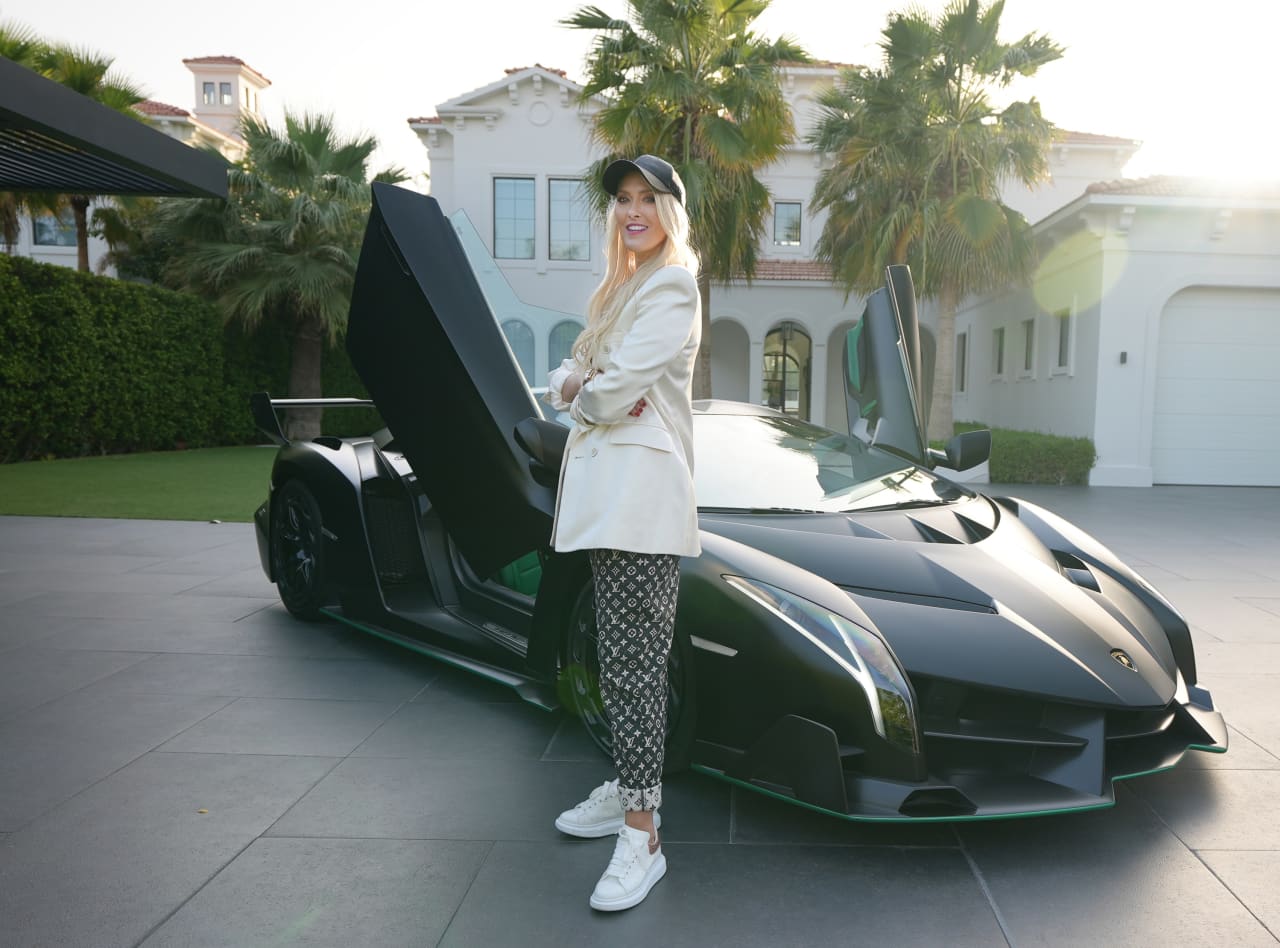
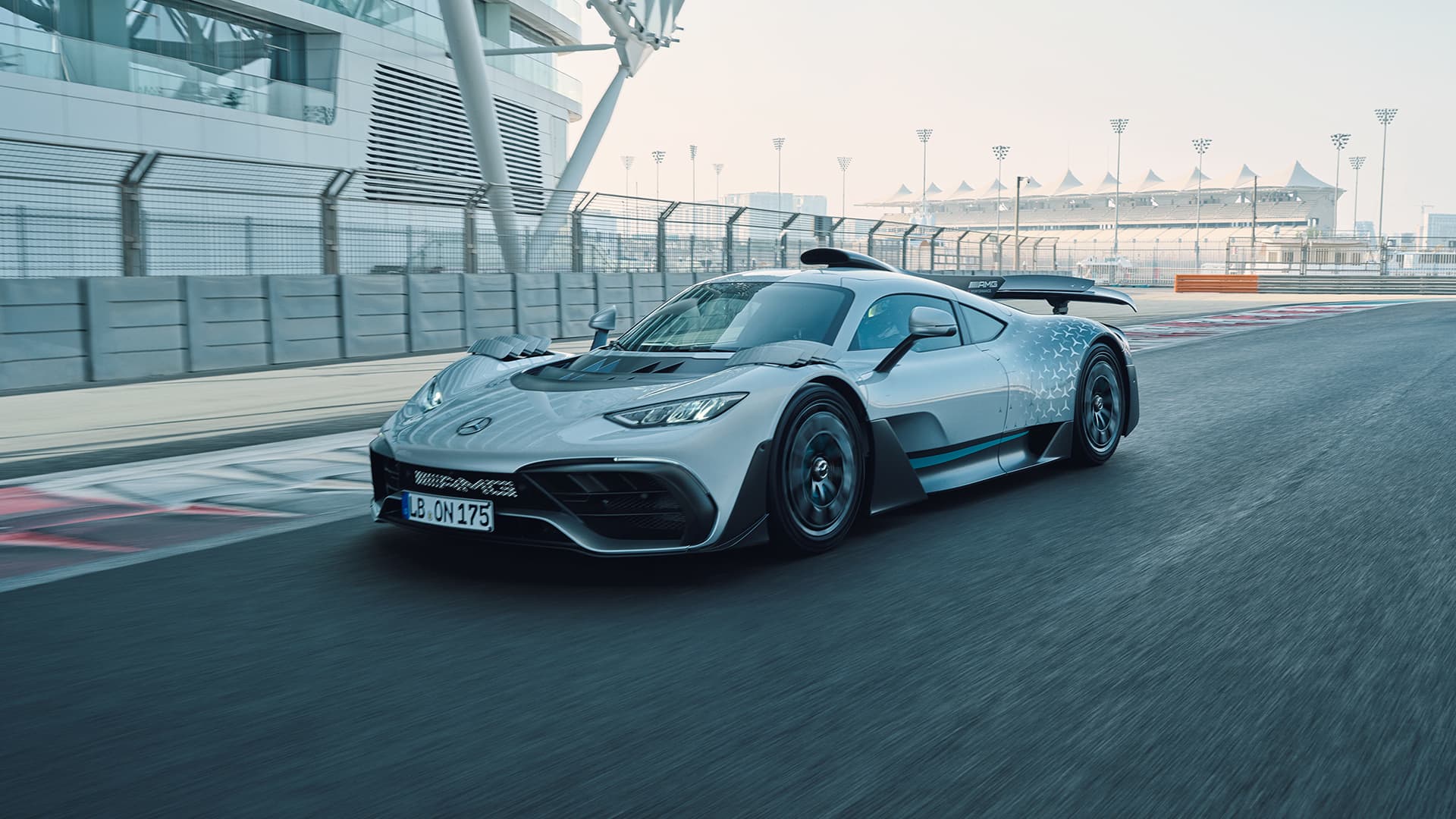
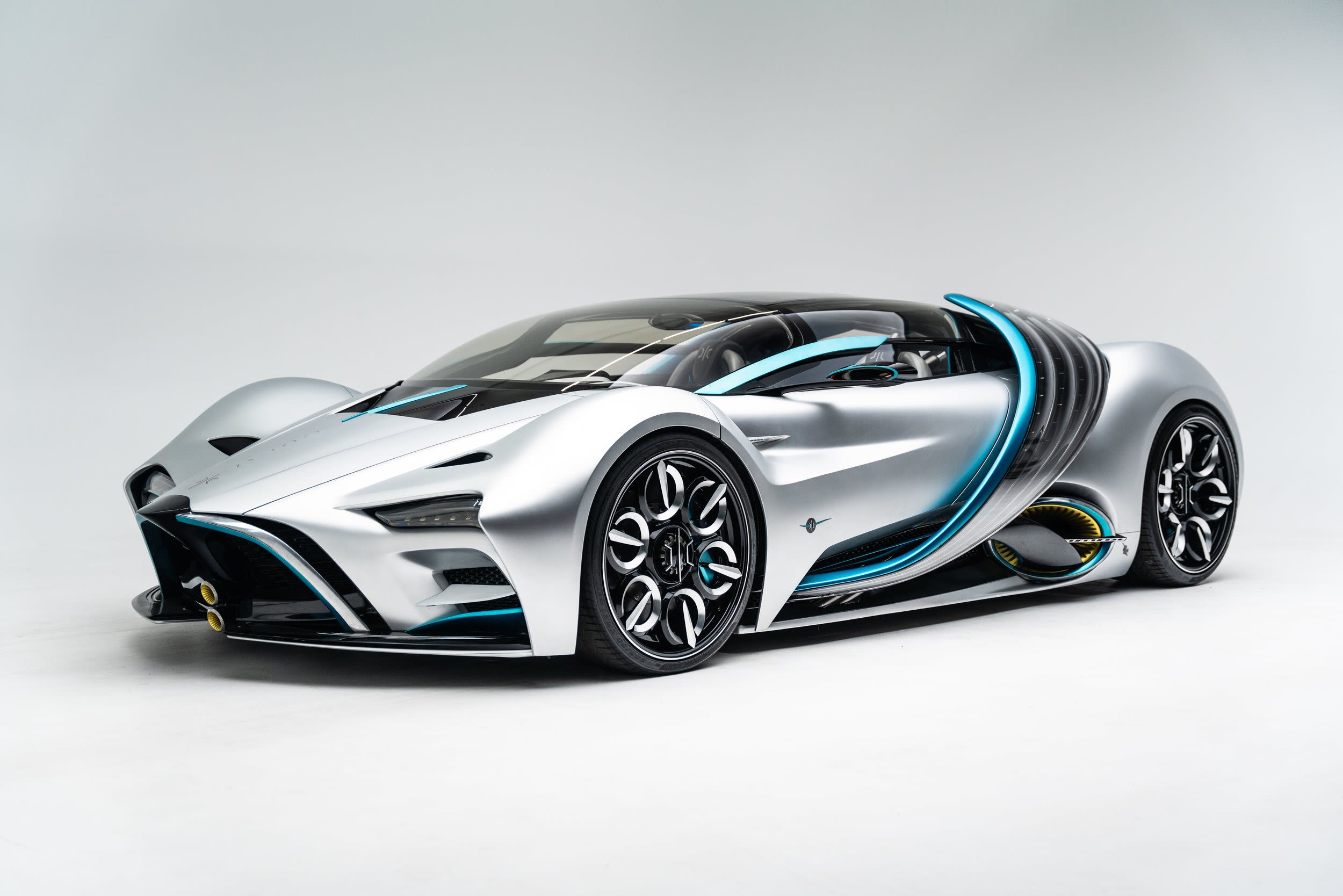
And now SB Media Group, based in London with 65 employees, Nik as CEO and Alex as the co-founder and on-air talent, is going into the auto auction business. SBX Cars, based in California, launched this week. The inaugural inventory goes beyond cars, and includes an electric Tyde hydrofoil yacht designed by BMW. There’s also a no-reserve Tesla Cybertruck, a one-of-nine Lamborghini Veneno Roadster, and a one-of-three Lamborghini Veneno Coupe. Likely attracting attention will be the first public auctions of the Mercedes-AMG One and the Hyperion XP-1 hydrogen-powered prototype. There were three LaFerrari prototypes, and one will be auctioned by SBX Cars.
A collection of John Player Special Lotus F1 racing cars will also be auctioned, as well as Lotus transporters, and founder Colin Chapman’s personal plane and some vehicles from his garage. Other high-dollar items include a Mercedes 300SL “Gullwing,” a Lamborghini Miura, a BMW 507, and an Aston Martin DB5. The estimated valuation of the auction lots consigned is US$100 million.
The Mercedes-AMG One was limited to 275 units. SBX Cars Photo
The auctions will be online, but there could be some in-person events in the future. “We’re going to be the only digital auction site that focuses on the high end,” Nik Hirschi says. “We will focus on cars that are super-cool, with many that are one-of-a-kind, and we’re going to be attracting collectors from all over the world. Every car will be represented on the site with 200 photographs, taken by our global network.” Video will also be available.
SBX Cars says it will speed up the process for consignors, with just a few weeks until their cars become available on the site. Once up, the vehicles will remain available for one to two weeks. SBX Cars Auction Director Lance Butler, a Bonhams veteran, said in a statement that the auction “introduces our clients to a far easier buying and selling process, all while accessing one of the world’s largest global audiences by way of Supercar Blondie.”
The prototype Hyperion XP-1. SBX Cars Photo
Mercedes 300SLs, Aston Martin DB5s, and BMW 507s are frequently auctioned around the globe, but SBX features some true exotics.
For celebrities like Taylor Swift, Rihanna, Tiger Woods, and Steven Spielberg, fame is bringing fortune.
They’re among 14 performers, athletes, and entertainment moguls―along with Oprah Winfrey, Tyler Perry, and Michael Jordan― on the 2024 Forbes World’s Billionaires List, which the media company released this week. The annual ranking “has seen an explosion in celebrity billionaires in recent years,” Forbes said in a statement.
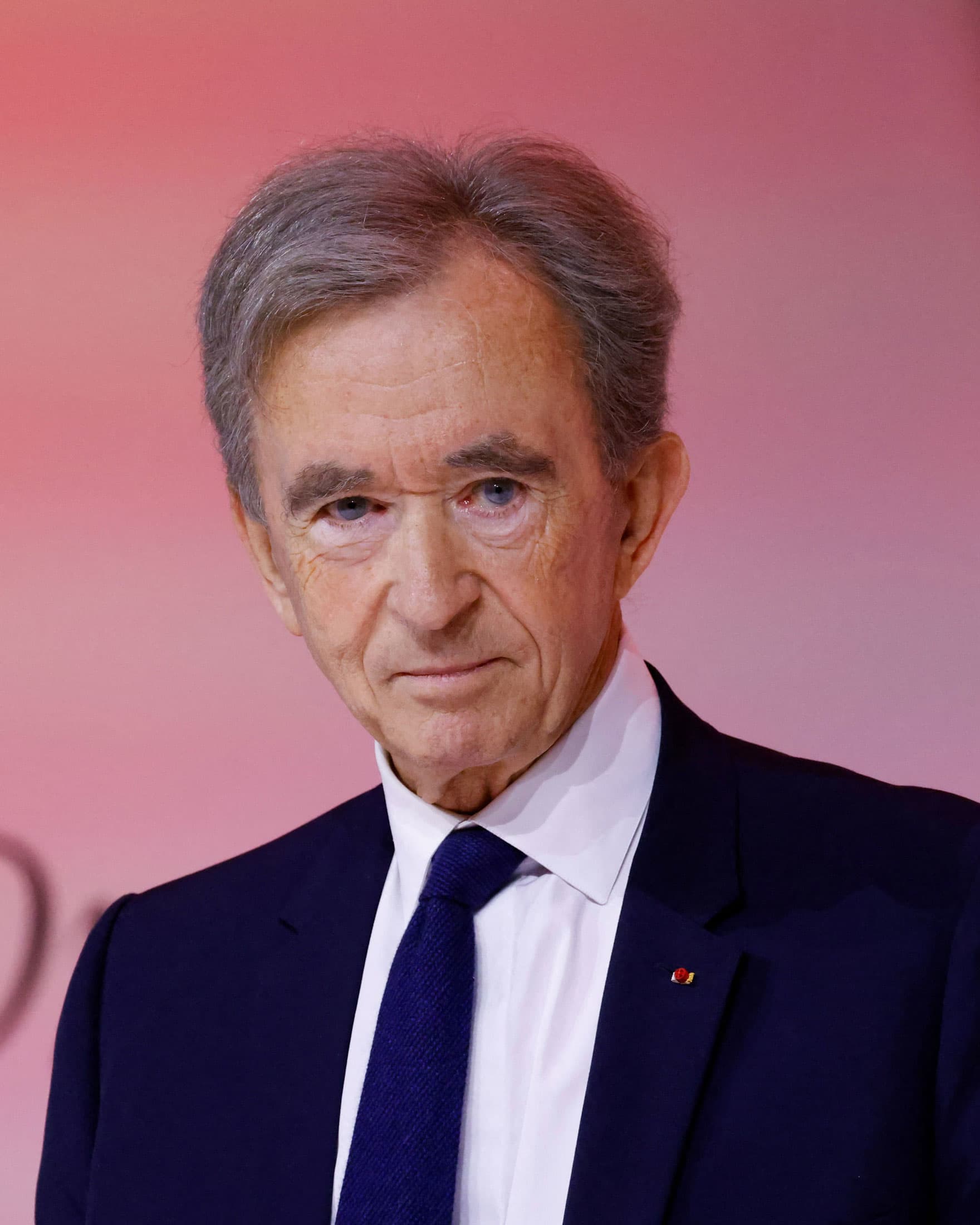
Topping the roster of fortunes: LVMH CEO Bernard Arnault , with an estimated net worth of US$233 billion―up from US$211 billion last year. Tesla and SpaceX founder Elon Musk ranked second, with a US$195 billion war chest, up from US$180 billion in 2023. Just a billion dollars short of second place, Amazon CEO Jeff Bezos placed third with US$194 billion, or $80 billion more than a year ago.
LVMH CEO Bernard Arnault topped the list with an estimated net worth of US$233 billion. Getty Images
Tech titans dominate the rest of the top 10, which includes Meta CEO Mark Zuckerberg (US$177 billion), Oracle co-founder Larry Ellison (US$141 billion), Berkshire Hathaway CEO Warren Buffett (US$133 billion), Microsoft co-founder Bill Gates (US$128 billion), former Microsoft CEO Steve Ballmer (US$121 billion), Reliance Industries honcho Mukesh Ambani (US$116 billion), and Google co-founder Larry Page (US$114 billion.)
Swift made her debut on the list this year, along with 262 other “new billionaires” including shoe mogul Christian Louboutin, 19-year-old Brazilian heiress Livia Voigt, and NBA legend and entrepreneur Earvin “Magic” Johnson.
For Swift, worth an estimated US$1.2 billion, it’s the second star turn on a rich list this month. Last week, Swift made her first appearance on the 13th Hurun Global Rich Report, an annual survey from China-based media and research firm Hurun.
But the ultra wealthy had a very good year regardless of name recognition. The world now has more billionaires than ever, Forbes reported, with 2,781 in all. That adds up to 141 more than last year’s list, and 26 more than a record 2,755 billionaires set in 2021.
The richer are also richer, according to the list. Billionaires’ aggregate worth is now US$14.2 trillion, up US$2 trillion from 2023―and US$1.1 trillion above the previous record, also set in 2021, Forbes said.
Taylor Swift made her debut on the list this year with an estimated US$1.2 billion. Getty Images
A “flurry” of billionaires are getting rich through the AI “gold rush,” according to Forbes.
“The poster child for all this is Nvidia co-founder and CEO Jensen Huang ,” whose company’s stock surged 300% over the past year. Open AI CEO Sam Altman , who briefly lost control of his company last year, also made the list, owing to canny investments in his former role as head of VC firm Y Combinator.
The U.S. leads in billionaires, with a record 813 worth a total US$5.7 trillion. China ranked second, with 473 billionaires whose combined net worth is US$1.7 trillion. India set a record with 200 billionaires this year. Forbes said it calculated wealth using stock prices and currency exchange rates as of March 8. Two-thirds of the billionaires on the list emerged wealthier than a year ago; one-third have lost money.
Forbes’ list diverged from the Hurun rich list, where Musk reigned as the world’s wealthiest and Bezos and Arnault ranked second and third, respectively. The Hurun list was even richer, ranking 3,279 billionaires, up from 3,112 the previous year. The number of billionaires increased by 5% and their total wealth was up 9%, Hurun said.
At the Wharton School this spring, Prof. Ethan Mollick assigned students the task of automating away part of their jobs.
Mollick tells his students at the University of Pennsylvania to expect to feel insecure about their own capabilities once they understand what artificial intelligence can do.
“You haven’t used AI until you’ve had an existential crisis,” he said. “You need three sleepless nights.”
Top business schools are pushing M.B.A. candidates and undergraduates to use artificial intelligence as a second brain. Students are eager for the instruction as employers increasingly hire talent with AI skills .
American University’s Kogod School of Business is putting an unusually high emphasis on AI, threading teaching on the technology through 20 new or adapted classes, from forensic accounting to marketing, which will roll out next school year. Professors this week started training on how to use and teach AI tools.
Understanding and using AI is now a foundational concept, much like learning to write or reason, said David Marchick, dean of Kogod.
“Every young person needs to know how to use AI in whatever they do,” he said of the decision to embed AI instruction into every part of the business school’s undergraduate core curriculum.
Marchick, who uses ChatGPT to prep presentations to alumni and professors, ordered a review of Kogod’s coursework in December after Brett Wilson, a venture capitalist with Swift Ventures, visited campus and told students that they wouldn’t lose jobs to AI, but rather to professionals who are more skilled in deploying it.
American’s new AI classwork will include text mining, predictive analytics and using ChatGPT to prepare for negotiations, whether navigating workplace conflict or advocating for a promotion. New courses include one on AI in human-resource management and a new business and entertainment class focused on AI, a core issue of last year’s Hollywood writers strike.
Officials and faculty at Columbia Business School and Duke University’s Fuqua School of Business say fluency in AI will be key to graduates’ success in the corporate world, allowing them to climb the ranks of management. Forty percent of prospective business-school students surveyed by the Graduate Management Admission Council said learning AI is essential to a graduate business degree—a jump from 29% in 2022.
Many of them are also anxious that their jobs could be replaced by generative AI. Much of entry-level work could be automated, the management-consulting group Oliver Wyman projected in a recent report. That means that future early-career jobs might require a more muscular skillset and more closely resemble first-level management roles .
Faster thinking
Business-school professors are now encouraging students to use generative AI as a tool, akin to a calculator for doing math.
M.B.A.s should be using AI to generate ideas quickly and comprehensively, according to Sheena Iyengar, a Columbia Business School professor who wrote “Think Bigger,” a book on innovation. But it’s still up to people to make good decisions and ask the technology the right questions.
“You still have to direct it, otherwise it will give you crap,” she said. “You cannot eliminate human judgment.”
One exercise that Iyengar walks her students through is using AI to generate business idea pitches from the automated perspectives of Tom Brady, Martha Stewart and Barack Obama. The assignment illustrates how ideas can be reframed for different audiences and based on different points of view.
Blake Bergeron, a 27-year-old M.B.A. student at Columbia, used generative AI to brainstorm new business ideas for a project last fall. One it returned was a travel service that recommends destinations based on a person’s social networks, pulling data from their friends’ posts. Bergeron’s team asked the AI to pressure-test the idea, coming up with pros and cons, and for potential business models.
Bergeron said he noticed pitfalls as he experimented. When his team asked the generative AI tool for ways to market the travel service, it spit out a group of very similar ideas. From there, Bergeron said, the students had to coax the tool to get creative, asking for one out-of-the-box idea at a time.
Professors say that through this instruction, they hope students learn where AI is currently weak. Mathematics and citations are two areas where mistakes abound. At Kogod this week, executives who were training professors in AI stressed that adopters of the technology needed to do a human review and edit all AI-generated content, including analysis, before sharing the materials.
Faster doing
When Robert Bray, who teaches operations management at Northwestern’s Kellogg School of Management, realised that ChatGPT could answer nearly every question in the textbook he uses for his data analytics course, he updated the syllabus. Last year, he started to focus on teaching coding using large-language models, which are trained on vast amounts of data to generate text and code. Enrolment jumped to 55 from 21 M.B.A. students, he said.
Before, engineers had an edge against business graduates because of their technical expertise, but now M.B.A.s can use AI to compete in that zone, Bray said.
He encourages his students to offload as much work as possible to AI, treating it like “a really proficient intern.”
Ben Morton, one of Bray’s students, is bullish on AI but knows he needs to be able to work without it. He did some coding with ChatGPT for class and wondered: If ChatGPT were down for a week, could he still get work done?
Learning to code with the help of generative AI sped up his development.
“I know so much more about programming than I did six months ago,” said Morton, 27. “Everyone’s capabilities are exponentially increasing.”
Several professors said they can teach more material with AI’s assistance. One said that because AI could solve his lab assignments, he no longer needed much of the class time for those activities. With the extra hours he has students present to their peers on AI innovations. Campus is where students should think through how to use AI responsibly, said Bill Boulding , dean of Duke’s Fuqua School.
“How do we embrace it? That is the right way to approach this—we can’t stop this,” he said. “It has eaten our world. It will eat everyone else’s world.”
Makers of consumer goods have been bracing for a slowdown in consumer spending after ebullient pandemic times. Ulta Beauty is now saying that the decline is happening faster than it expected.
The entire beauty category is experiencing weaker spending across price points and product segments, said Dave Kimbell , Ulta’s chief executive, at an investor conference Wednesday. The retail chain is among beauty companies that reported strong growth in revenue and profits over the past three years as consumers stepped up purchases of makeup, perfumes and skin-care items.
“Things that are going on in our consumers’ lives has led to a bit slower growth than we had anticipated in the category,” Kimbell said.
Ulta also isn’t expecting much growth in comparable sales in the current quarter from the first quarter last year. Comparable sales reflect sales at Ulta stores open at least 14 months and from e-commerce.
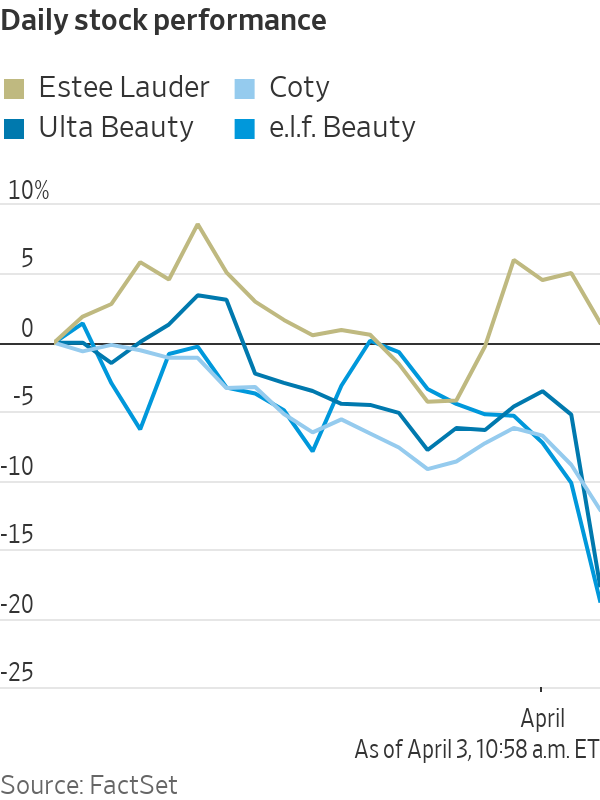
The comments helped send Ulta shares down 15% in Wednesday trading. Other beauty companies, including e.l.f. Beauty , Coty and Estée Lauder , also fell.
Ulta’s shares have lost about a fifth of their value after closing at a record of $567.18 on March 13, the day before the company released its fourth-quarter earnings.
“We do expect a normalisation to occur this year in the category,” said Jessica Ramirez , senior research analyst at Jane Hali & Associates. “However, we believe the consumer will continue to prioritise the beauty category as products across skin care and wellness are replenishable.”
The competitive landscape is also shifting in beauty. Sephora, the LVMH Moët Hennessy Louis Vuitton -owned rival to Ulta, is expanding its bricks-and-mortar presence in Kohl’s stores. Other retailers are also increasing their presence in the beauty business, Ulta executives said. New products are expected to help drive traffic to Ulta, including those from tennis star Serena Williams ’s new line Wyn Beauty, executives said.
U.S. retail sales are expected to rise this year from 2023, but at a slower pace than during the Covid-19 pandemic period, according to the National Retail Federation. The trade group forecast that retail sales would increase between 2.5% and 3.5% this year, just below the 10-year average of 3.6% before the health crisis.
“The foundation of the economy is relatively sturdy and still on a sustainable path,” NRF Chief Economist Jack Kleinhenz said Wednesday. “Barring unexpected shocks, it should continue growing in 2024, although not spectacularly” as a result of slower job and wage gains.
Other consumer-goods companies are bracing for a slowdown. PVH , the company behind brands Calvin Klein and Tommy Hilfiger, said on Tuesday that it has taken a cautious approach to planning in 2024 as a result of softer consumer spending in January and February. It forecast overall revenue this year would fall between 6% and 7% from 2023.
Is gold’s strength a flash in the pan or a golden opportunity?
The yellow metal just completed its best two-quarter stretch in eight years on its way to a record high of $2,319 per ounce today.
That performance comes as a bit of a surprise at first blush. After all, gold prices typically rise when interest rates decrease and fall when rates swing higher. Yet recent economic data suggest the Federal Reserve will have to keep interest rates elevated for longer than previously thought to tame inflation.
There has been some good news on inflation. Last Friday, for instance, we learned that the core personal consumption expenditures (PCE) index, which is the Fed’s preferred inflation measure, rose just 2.8% year over year and 0.3% month over month, as expected , in February.
Shorter-term trends paint a more challenging picture for the Fed, however, given that the three-month core PCE trend reflects 3.5% annual growth compared with 2.5% in late 2023.
“The relevant news is that recent inflation data are rising briskly,” writes Michael Lewis, who heads Free Market Inc., an economic consulting firm. This translates into higher rates for longer as the odds of a June rate cut have fallen to 58% from 73% a month ago. Mary Daly, the chief of the San Francisco Federal Reserve, said Tuesday there is “ really no urgency ” to cut rates. Fed Chairman Jerome Powell echoed that sentiment today.
Monday’s ISM manufacturing index report reinforces that narrative . In March, the index delivered its strongest growth since September 2022, rising to 50.3, easily exceeding the expectation of 48.4.
Not surprisingly, on Monday, stocks fell as the yield on the 10-year bond surged to 4.32%. Tuesday we saw more of the same with key stock indexes falling and the 10-year yield rising as high as 4.4% , its highest level in 2024 . Higher rates have been pressuring stocks, bonds, and cryptocurrencies .
Gold is powering higher, however. March 22 is the last day that gold prices fell. The price of gold has risen 9.7% this year while the yield on the 10-year has gained 10.4%.
“Gold is the near-zero yielder that is then showing record demand, despite a world where high nominal yields and carry are still dominant,” wrote Deutsche Bank macro strategist Alan Ruskin in a newsletter last week. “If gold prices won’t go down in an inflated nominal yield world, they can surely go up as the G-10 yield plateau gives way, and yields likely start their descent in” the second half of this year, Ruskin continued.
So what explains gold’s recent rise amid higher rates? Strong demand from China is one factor . The People’s Bank of China went on a buying spree last year, acquiring a net 225 metric tons of gold—the most among all central banks and the country’s biggest expansion of gold reserves since 1977.
With China’s central bank reserves at a record high, its consumers are also actively buying the precious metal, partly due to concerns about their economy and stock market. Among Chinese investors, demand for gold-related ETFs is “booming,” according to The Wall Street Journal, and Chinese imports of gold have surged 51% in the first two months of 2024 compared with the same period last year.
Gold’s more volatile counterpart, silver, surged to a two-year high today, gaining 5% to $27.22 per ounce. Unlike gold, which is at a record high, silver would need to rise more than 80% to reach its 2011 high of near $50.
“The formerly nonchalant silver finally appears ready to join gold’s advance,” John Roque, a technical analyst at 22V Research, wrote in a note, Barron’s reported . “$30 as the first target and then, presuming a breakout, $40 as the second target.” Silver prices are up 12.5% this year.
The entire commodities complex is showing relative strength as the Bloomberg Commodity Index is at its highest level since December . Crude oil is 20.6% higher this year.
Safe-haven demand for gold may increase given fast-rising geopolitical tensions in the Middle East. Moreover, concerns about the national debt are growing louder and more pointed from notable figures across the political spectrum. Unfortunately, there is no indication that politicians will quit pandering to short-term considerations (meaning votes) by making tough choices. As such, expect them to keep playing Kick the Can until one of them slices their foot.
Given all of this, the outlook for gold remains bright . On March 29, Barron’s cited an analysis by economist Charles Gave, founder of Gavekal Research. “The S&P 500 is on the verge of becoming overvalued versus the stock of capital, while gold is almost undervalued against my measure of retained earnings.”
Gave added, “Gold is ‘undervalued’ against the S&P 500 by a hefty -52% and -13% versus its own long-term trend. In contrast, the S&P 500 stands 33% above its own long-term trend level.” Recommending that investors hedge equity exposure with at least 20% of their portfolio in gold, Gave concluded, “At this point my preference based on the relative position of the two reserve assets is to favour gold, followed by equities.”
Inflation is proving stickier than expected in the U.S. and Europe, creating a headache for central bankers and sowing doubts on whether investors are too optimistic about the world economy.
The decline in inflation from highs of around 9% to 10% across advanced economies in 2022 represent the easy gains, as supply-chain blockages eased and commodity prices, especially for energy, normalised.
The “last mile” is proving tougher . Underlying inflation, which excludes volatile food and energy prices, slowed to 3% in the second half of last year across advanced economies but has since moved up to 3.5%, according to JP Morgan estimates.
That is forcing investors to rethink bets that inflation would steadily decline to central banks’ targets, generally around 2%. There are even concerns it could surge again, mirroring the second wave that characterised the high inflation of the 1970s.
Economists’ and central banks’ forecasts of sustained falling inflation depend on “strong gravitational forces that are not yet validated in global labor costs, short-term expectations, or in recent signals from commodity markets,” JP Morgan wrote in a note. Services inflation remains elevated while goods prices, which had fallen last year, are now moving higher, it noted.
Waiting on the last mile
Central bankers say they expected the last mile of falling inflation to be bumpy. Yet they are also signaling their willingness to wait before cutting interest rates. Fewer, or no, rate cuts would have sweeping repercussions for the global economy and markets, whose recent rally began after a narrow majority of Federal Reserve officials recently reaffirmed projections to cut interest rates three times this year.
On Friday, the U.S. Commerce Department reported that the price index of personal-consumption expenditures, the Fed’s preferred indicator of inflation, rose a relatively tame 2.5% in the 12 months through February, up modestly from 2.4% in January. Beneath the surface, the trend was less comforting. The index excluding food and energy climbed by 3.5% on an annualised basis in the three months through February, up from around 2% late last year.
“These shorter-term inflation measures are now telling me that progress has slowed and may have stalled,” Fed governor Christopher Waller said in a speech Thursday, before the latest inflation data.
“In my view, it is appropriate to reduce the overall number of rate cuts or push them further into the future,” Waller said.
Fed Chair Jerome Powell struck a more balanced note Friday, saying inflation is on a sometimes bumpy path toward 2%, and strong economic growth allows policymakers to wait. “Is progress on inflation going to slow for more than two months?…We’re just going to have to let the data tell us that,” Powell said in an interview at the San Francisco Fed.
Joachim Nagel , president of Germany’s Bundesbank and a member of the European Central Bank’s rate-setting committee said in late February that underlying inflation in the eurozone was still 2 percentage points higher than its 1999 to 2019 average.
“If we reduce interest rates too early or too sharply, we run the risk of missing our target,” and might need to raise interest rates again, he said. He highlighted a recent International Monetary Fund report that found four out of every 10 inflation shocks since the 1970s had yet to be overcome even after five years.
In Italy, underlying inflation climbed to 2.4% in March from 2.3% the previous month, according to data published Friday. French headline inflation cooled to 2.3% in March, but services prices remained sticky, rising by 3% from a year earlier.
Why is inflation proving stubborn?
Despite the sharp interest-rate increases of the past two years, economic growth is resilient, especially in the U.S. The Atlanta Fed said Friday its real-time indicator of first quarter U.S. economic growth ticked up to 2.3% from 2.1%. Consumer spending, adjusted for inflation, increased by around 5% on an annual basis in February, the Commerce Department said.
“The unexpected strength of real consumption” means “there is still no rush to cut interest rates,” said Paul Ashworth , an economist with Capital Economics.
While Europe’s growth has stalled since late 2022, recent business surveys suggest the outlook is brightening. Meanwhile, job creation has been strong on both sides of the Atlantic, and wage growth remains high, partly reflecting tight labor markets. Wages are an important input to services-price inflation in the eurozone, which has been running at a 4% annual rate since November.
March inflation data for the entire eurozone will be published on Wednesday. ECB officials have indicated they could start to cut interest rates in June from the current 4% level, while the subsequent pace of cuts after that is unclear.
Central banks may be part of the problem
Central banks themselves may be inadvertently adding to inflation pressure. By signaling a pivot toward interest-rate cuts last fall, they pushed global borrowing costs down and asset prices up, supporting spending.
Some factors favour inflation declining further. In both the U.S. and Europe, a surge of immigration could help keep a lid on wage increases.
The U.S.—but not Europe—is also seeing big increases in productivity, that is output per worker, which helps to offset high wage growth. It is unclear, however, how long that will last. The pandemic might have changed how Americans work and use technology, but “once we have made those changes, they’re done, so I don’t see this as a driver of sustained productivity growth,” the Fed’s Waller said.
Meanwhile, oil prices have risen recently, which could push up headline inflation.
To offset a slumping property market, China has dramatically boosted manufacturing capacity and exports, which have weighed on global goods inflation. But its export prices have recently started to increase, according to JP Morgan.
If central banks react to stubborn inflation by backing away from rate cuts, that would put pressure on both heavily indebted governments and employers. That could test central banks’ will to finish the last mile and push inflation all the way to target.
Higher government spending on defence and green energy, and geopolitical tensions that crimp global trade, are likely to pressure central banks to tolerate higher inflation over the coming years, according to a Brookings Institution paper published in March.
“A strengthening of central bank independence combined with a more credible public debt policy is likely needed,” said the paper, by economist Kenneth Rogoff of Harvard University and three co-authors.