New Suburb Record For Hendra Brisbane

Hendra Brisbane

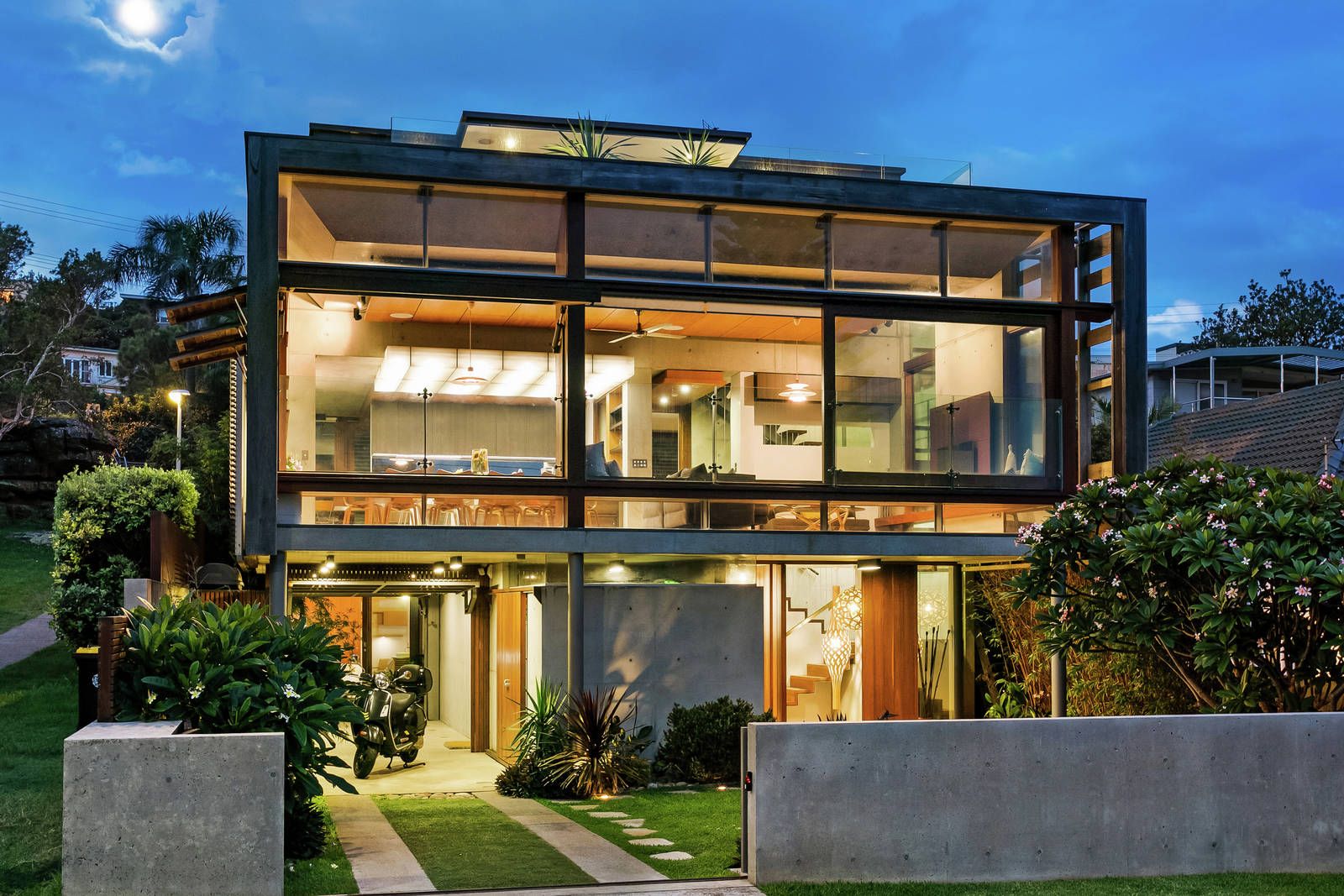
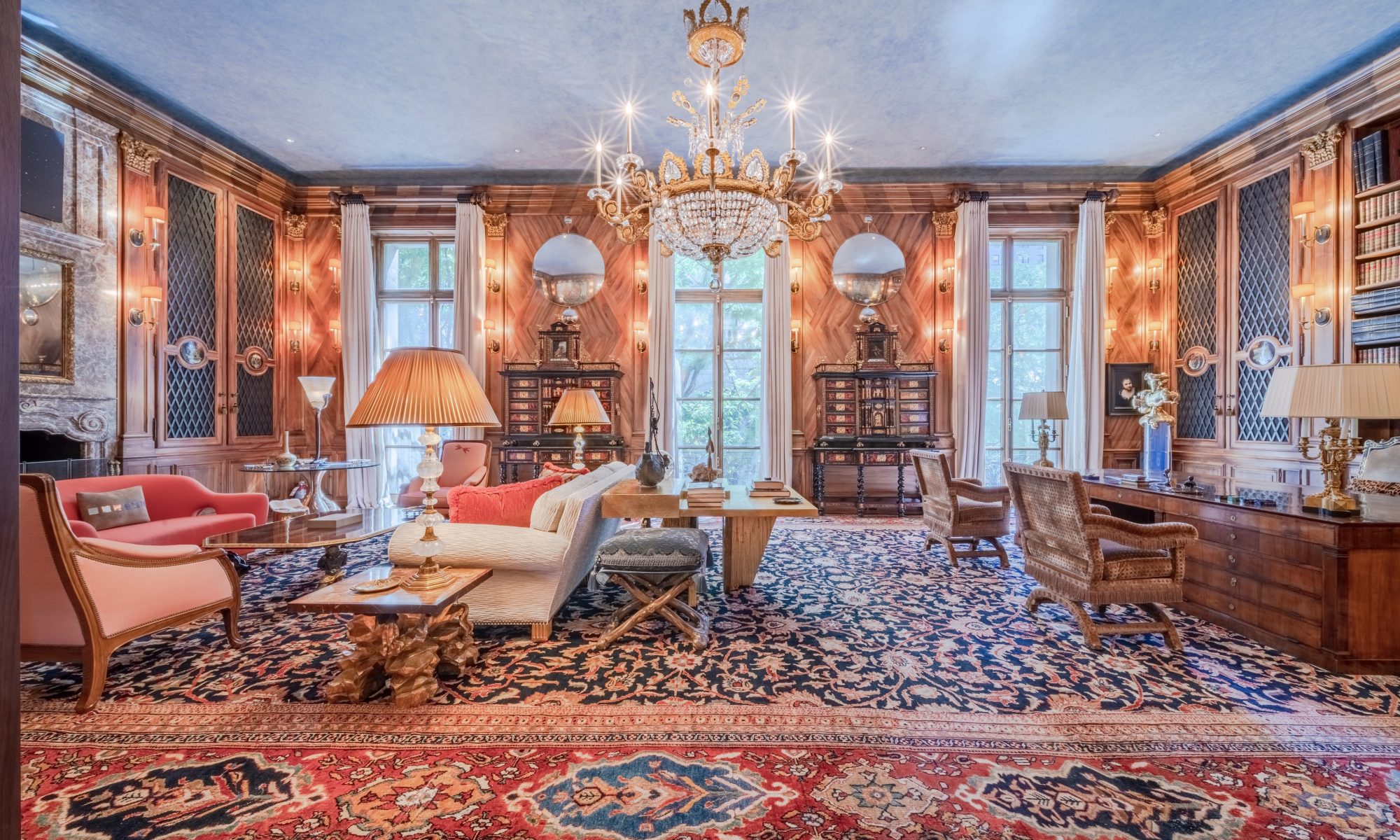
A six-bedroom, Hampton’s style home located at 38 Newmarket street in the Hendra, Brisbane has broken the suburb record.

The $3.65m sale by Place Ascot’s Patrick McKinnon has set a new standard for the area, with the residence inspected 156 times proper to sale, including 5 virtual inspections.

The home, known as ‘Caulfield House’, was once the residence of champion thoroughbred, Bore Head, winner of the 1965 Caulfield Cup. The home was purchased by racing royalty Caitlin Lavin, daughter of well-known horse owner Peter Lavin.

Caitlin told the media in a recent interview the purchase was totally unplanned and serendipitous.”

The home was reimagined by designers ‘Innovate’, giving the home a sense of modern luxury with coffered ceiling, blackbutt timber floors alongside hand-painted custom joinery.

Elsewhere the home offers three-metre-high ceilings, gourmet kitchen with a double-glazed glass-encased wine room, breakfast bar, and a storage-filled butler’s pantry that links to the residence’s garage.

Along with marble external paving, the alfresco area hosts an outdoor kitchen with in-ground infinity-edge swimming pool and self-contained pool house accommodation converted from the old stables.

Gough Whitlam’s Home Sells Prior To Auction

Gough Whitlam Cabramatta

Intent on preserving a part of Australian political history, former NSW Labor Premier Barrie Unsworth has led a team to purchase the Sydney home of late Prime Minister Gough Whitlam.

Sold for $1.15 million (prior to auction), the achieved price was $400,000 above a guide of $720,000 – $750,000.

Resting at 32 Albert Street in the south-western suburb of Cabramatta, the property was purchased by the Whitlam Heritage Home Fund – a public company established by Mr Unsworth, Gough’s son Nick Whitlam, NSW Labor president Mark Lennon and Unions NSW secretary Mark Morey.

The Fund is focused on the restoration of the property to its original state and its preservation as a historic site, one which will eventually open to the public.

“The main thing is we have acquired it for posterity,” said Mr Unsworth in a recent interview.

Whitlam lived in the four-bedroom house for 22 years, from 1956 to 1978. The property played a central role in various political moments, including Whitlam’s historic 1972 federal election win for Labor, which came after 23 years of Liberal leadership.

Whitlam served as Prime Minister of Australia from 1972 to 1975.

An Award-Winning Home Hits The Perth Market

Dalkeith

A combination of technology, sustainability and luxury – 42 Hobbs Avenue, Dalkeith, WA is an multi-award-winning home by Giorgi Exclusive Homes is an indulgent display in the sought after enclave of Dalkeith.

The combination of soaring ceiling heights, glass walls and the use of architectural voids sees the residence create a capacious, light filled home spread across an 1103sqm plot.

The 5-bedroom, 3-bathroom, 4-car garage home boasts Carrara marble tiling underfoot that is heated by a cutting edge under-floor hydro cooling and heating system throughout.

The main living area – which sees the lounge, dining – is fitted with a gas fireplace amd extends to one of the three kitchens in the home fitted with Gaggenau appliances and a Corian benchtop, supplemented by a scullery.

Entertaining is not limited to the indoor spaces, with the living area spilling outdoors to the alfresco lounging area replete with outdoor kitchenette, pizza oven and infinity pool. Elsewhere, the residence boasts an expansive wine cellar, including temperature-controlled cellaring.

The main bedroom sees an oversized ensuite, complete with marble adornments along with an elongated walk-in robe. The other bathrooms throughout the residence match with marble tiling.

Also upstairs is a retreat and expansive study area which is accessible via the internal lift or the stairs.

Throughout the home, a number of sustainability measures including underground rainwater tanks and recycled grey water as well as clever features including remote energy management and a smart home system that controls the intercom, lighting and shutters.

Sat in the enviable suburb of Dalkeith it offers the best of Perth’s village life, the residence is nearby Perth Flying Squadron Yacht Club and the Swan River.

The listing is with Shengxi Li from Honsun Realty (+61 487 380 423). Asking price; $7m.

Honsunrealty.com


Commercial Market Confidence Slowly Returns

Commercial Market

While Australia has fared better than most countries in its response to COVID-19, the commercial market has taken a hit.

The recovery from the pandemic amplified recession is now, slowly, starting to find the commercial property market sentiment according to NAB’s quarterly commercial sentiment survey which – through its Commercial Property Index –  saw expectations for capital values and rents lift to a still weak -35 pts, well below the overage of 0 pts.

Overall sentiment towards the commercial property market lifted in all states in Q4, although still negative, ranging from -64 pts in VIC to -11 pts in QLD and WA. Market conditions are expected to remain negative in all states in the next 12 months except in WA (+8 pts), with VIC (-51 pts) the least confident.

Longer-term confidence however looks more positive in most states, except VIC (-16 pts) and NSW (-5 pts), with WA (+34 pts) highest.

Sentiment is not consistent across all commercial sectors, CBD hotels registered a score of -64 pts, Retail -58pts and Office -41pts, the industrial sentiment rose sharply (-25 pts) pointing to demand for online retail and requirements for warehousing and logistic spaces as the cause.

Expectations for a stronger near-term recovery in economic activity has boosted overall confidence levels in commercial property markets with an expectation to measure +2 pts in two-years.

On the development front, an above average 54% of property developers plan to start new works in the short-term (next 6 months), up from 39% in Q3.

Further, the rental outlook across commercial markets is less decisive, with Retail (-3.9% & -1.8%) and Office (-2.7% & -1.4%), with the outlook weakest in the Eastern seaboard states. The outlook for Industrial rents (1.4% & 2.1%) has however improved sharply.

Melbourne To Hold 1000 Auctions This Weekend

Melbourne Auction

2020 was a tumultuous year for Melbourne real estate agents and with a snap five-day lockdown which ran from midnight February 12 until midnight Wednesday February 17, 2021 didn’t begin much better.

Melbourne’s first ‘Super Saturday’ of 2021 will now get underway weekend with the lockdown and restrictions to end on Wednesday night.

It comes with the city due to hold an incredible 1004 auctions this week ending Sunday, February 21. A significant jump from last week’s sales which saw 299 homes sold with a clearance rate of 91 per cent – this, despite the stage four lockdown measures.

This weekend, on-site inspections and auctions will be allowed to resume – as long as social distancing is adhered to and there is a one person per 2sqm if electronic record keeping is in use. Without electronic record keeping, a limit of one person per 4sqm applies.

Darwin Market Records Strong Growth

Darwin
The December quarter saw the Darwin property market enjoy a spike in sales volumes, up more than 20 per cent alongside rising median property prices.
A new report from the Real Estate Institute of the Northern Territory (REINT) detailed the state capital’s strong end to 2020, with ascendent median house and unit prices. 
According to the REINT’s ‘Real Estate Local Market (REALM) Report’, the median price of units outpaced that of housing, up 6.7 per cent against the 4.2 per cent rise in the median price of detached dwellings.  
Growth covered wider Darwin except for the north east. The current median house price in the city is now $500,000, with units at $320,000.
Elsewhere, Katherine saw a surging 73.7 per cent rise in sales volume, with Tennant Creek up 50 per cent and Alice Springs continuing its move along a robust growth corridor, up 36 per cent.

“While it is far from the peaks of 2014, this has been the most positive year in over half a decade and bodes well for continued growth into 2021,” said REINT chief executive Quentin Kilian.

Median rents also increased in the Greater Darwin Area by 6.9 per cent (houses) and 6.6 per cent (units), with rental yields strong for the investor set – house yields rising to 5.3 per cent and unit yields steady at 5.9 per cent.

Bitcoin Briefly Crossed US$50K. Regulators Are Circling.

Bitcoin

Bitcoin’s climb above US$50,000 for the first time on Tuesday marks a psychological milestone for investors—but it could trigger extra regulatory scrutiny.

The move higher means the cryptocurrency has more than doubled in value in just two months after several splashy news announcements. The gains come after a 303% increase in Bitcoin’s price last year.

In recent trading, Bitcoin was selling for $48.726. Bitcoin was up more than 4% earlier on Tuesday but has retreated back. Its price is up nearly 70% so far this year.

This month, Elon Musk’s Tesla (ticker: TSLA) said it bought $1.5 billion of Bitcoin and will start accepting it as payment for its electric vehicles at some point soon. BNY Mellon said it would hold, transfer, and issue Bitcoin for clients, and Mastercard (MA) said it would integrate Bitcoin into its payments network this year.

A possible catalyst for Tuesday’s move higher: MicroStrategy (MSTR), a business-intelligence company that has become a Bitcoin investing platform, said it would sell $600 million of convertible notes to buy the crypto. It sold $650 million of notes in December to do the same thing.

Shares of MicroStrategy fell 3.7% on Tuesday but are up 570% over the past year, compared with the S&P 500’s 16.7% one-year gain.

Bitcoin was once dismissed as a quirky sideshow in finance, with a shadowy history and cultlike following. Its increasingly mainstream appeal puts a spotlight on regulation as banks and professional traders take it seriously.

Earlier this month, newly confirmed Treasury Secretary Janet Yellen told an industry innovation policy roundtable that she sees “the promise” of these new currencies. “But I also see the reality: Cryptocurrencies have been used to launder the profits of online drug traffickers; they’ve been a tool to finance terrorism.”

President Joe Biden’s nominee to head the Securities and Exchange Commission, Gary Gensler, is also well-versed in crypto, having spent the past few years teaching about digital currency and the blockchain technology that underlies it at the Massachusetts Institute of Technology.

“Bitcoin and other cryptocurrencies will come under the spotlight from watchdogs like never before and this can be expected to create volatility in the market,” said Nigel Green, the founder and CEO of U.K.-based deVere Group, a financial advisory firm.

DeVere sold half its Bitcoin holdings in December, when the price had surged to $25,000.

Green said in a December blog post about the sale that it was to take profit after last year’s run-up. “It was not due to a lack of belief in Bitcoin, or the concept of digital currencies,” the post said.

Wedbush analyst Daniel Ives said Tesla’s embrace of Bitcoin could be a “game-changer” for the crypto. “We believe the trend of transactions, Bitcoin investments, and blockchain-driven initiatives could surge over the coming years,” he said. “This Bitcoin mania is not a fad, in our opinion, but rather the start of a new age on the digital currency front.”

More financial and payment companies are pushing Bitcoin into the mainstream. Robinhood, Square (SQ), and PayPal Holdings (PYPL) allow Bitcoin trading. Fidelity Investments has a business to store and trade crypto.

And more are considering jumping in. In January, asset management giant BlackRock (BLK) gave two of its funds the go-ahead to invest in crypto.

A unit of Morgan Stanley’s (MS) asset-management business is reportedly examining adding it as an option for investors. JPMorgan Chase (JPM) Co-President Dan Pinto said last week client demand isn’t there yet, but it will get there.

“If over time an asset class develops that is going to be used by different asset managers and investors, we will have to be involved,” Pinto said on CNBC.

China Blocked Jack Ma’s Ant IPO After An Investigation Revealed Who Stood To Gain

Jack Ma

When China’s leader Xi Jinping late last year quashed Ant Group’s initial public offering, his motives appeared clear: He was worried that Ant was adding risk to the financial system, and furious at its founder, Jack Ma, for criticising his signature campaign to strengthen financial oversight.

There was another key reason, according to more than a dozen Chinese officials and government advisers: growing unease in Beijing over Ant’s complex ownership structure—and the people who stood to gain most from what would have been the world’s largest IPO.

In the weeks before the financial-technology giant was scheduled to go public, a previously unreported central-government investigation found that Ant’s IPO prospectus obscured the complexity of the firm’s ownership, according to the officials and government advisers, who had knowledge of the probe. Behind layers of opaque investment vehicles that own stakes in the firm are a coterie of well-connected Chinese power players, including some with links to political families that represent a potential challenge to President Xi and his inner circle.

Those individuals, along with Mr. Ma and the company’s top managers, stood to pocket billions of dollars from a listing that would have valued the company at more than $300 billion.

During his eight years as president, Mr. Xi has sidelined many of his rivals, and his hold on power now compares to that of Mao Zedongr.

His initiatives have included campaigns against corruption, real-estate speculation and other high-risk financial activities. Mr. Xi has used the antigraft crusade to target both actual corruption as well as to strengthen his own hold on power. Ant’s IPO plan represented the kind of payday and accumulation of wealth that Mr. Xi has long frowned on.

An Ant spokesman said in a statement that the details of Ant’s shareholding structure were fully disclosed in the group’s prospectus and in its public business registration records.

Before the probe, regulators at the central bank were already worried about Ant’s business model. The company owns a mobile payments app called Alipay that is used by more than a billion people. It gives Ant voluminous data on consumers’ spending habits, borrowing behaviors and bill- and loan-payment histories, which the company has used to build a financial-services giant.

It has made loans to close to half a billion people, operates the country’s largest money-market fund and sells scores of other financial products. But it hasn’t had to follow the tough regulations and capital requirements that commercial banks are subject to. It makes profits from the transactions, while state-owned banks supply the majority of the funding and take on most of the risk.

“On one hand, you got a bunch of individuals potentially amassing large amounts of wealth,” one of the people familiar with the probe into the shareholders said. “Then on the other hand, much of the risk has been transferred to the state side.”

In a late-October speech, Mr. Ma harshly criticized regulators for rules he said were unnecessary and held back technology innovation. He infuriated top financial officials—some of whom were in the room for the speech.

The public blast of the state’s regulatory powers, coupled with the investigation into Ant’s ownership structure—which had started even before Mr. Ma’s speech—formed the basis for Mr. Xi’s decision to shut down Ant’s IPO and force the company to scale back lending and other banklike services, according to the people familiar with the probe.

Mr. Xi at the same time launched a campaign to rein in China’s technology sphere overall to prevent big firms like Ant from using their size and their troves of consumer data to engage in anticompetitive practices.

The moves indicate that after years of using a light hand with tech entrepreneurs, Mr. Xi is making greater demands for them to be aligned with the political priorities of the day.

Alarm bells

Some of Ant’s investors and the way their stakes were structured set off alarm bells as regulators dove into the details of the prospectus, the people familiar with the investigation said.

One is Boyu Capital, a private-equity firm founded in part by Jiang Zhicheng, the grandson of former Chinese leader Jiang Zemin. Many of Mr. Jiang’s allies have been purged in Mr. Xi’s anticorruption campaign, though he remains a force behind the scenes.

Another stakeholder with ties to Mr. Jiang, part of what is called the “Shanghai faction,” is a group led by the son-in-law of Jia Qinglin, a former member of the Politburo Standing Committee, the top echelon of the Communist Party.

Other backers seen as problematic include a real-estate developer who benefited from peer-to-peer lending schemes years earlier—schemes that nonetheless caused scores of investors to lose their life savings when they went bust, the people familiar with the probe said.

Mr. Ma’s connection with Jiang Zhicheng, a Harvard-educated “princeling,” as the offspring of China’s leaders are called, goes back to the years when Mr. Ma was expanding Alibaba Group Holding Ltd., the e-commerce giant that is the source of his wealth as one of China’s richest people, and that eventually spawned Ant Group.

In 2012, the younger Mr. Jiang, also known as Alvin, helped Mr. Ma negotiate a deal to buy out half of Yahoo’s stake in Alibaba. A consortium of investors consisting of Mr. Jiang’s Boyu, China Investment Corp., and the private-equity arms of China Development Bank and Citic Group, all with strong political ties, financed part of the $7.1 billion needed. The nearly 5% stake in Alibaba the consortium received in return soared in value when the company listed on the New York Stock Exchange two years later.

Boyu became one of the early investors in Ant in 2016—although this time in a more roundabout way. Its base in Hong Kong was a potentially sticky issue at a time when Chinese regulations restricted “offshore,” or outside the mainland, ownership of payment services, a core part of Ant’s business.

According to commercial records viewed by The Wall Street Journal, Boyu first set up a subsidiary in Shanghai, which invested in a Shanghai-based investment firm. That firm then invested in a private-equity firm called Beijing Jingguan Investment Center, which in turn bought shares in Ant.

Beijing Jingguan is listed as one of 16 investors that provided a total of 29.1 billion yuan, or about $4.5 billion, to Ant in 2016. It also joined another group of funds that invested 21.8 billion yuan in Ant in 2018. Both investments gave Beijing Jingguan a nearly 1% stake in the company, according to Ant’s IPO document, putting it among its top 10 shareholders. The prospectus doesn’t mention Boyu’s involvement with Beijing Jingguan.

Mr. Jiang and other Ant investors mentioned in this article declined to comment.

Another stakeholder behind layers of investment vehicles is Beijing Zhaode Investment Group, controlled by Li Botan, the son-in-law of Mr. Jia, the former Politburo Standing Committee member with strong ties to Jiang Zemin.

Among China’s business and political elites, Mr. Li is best known for having helped establish in 2009 the Maotai Club, a private club in a historic house near Beijing’s Forbidden City that had been a haunt for princelings and their patrons until recent years.

Since he took power in late 2012, Mr. Xi has directed his ire at corruption in the party and the tales of members’ lavish banquets and harems of mistresses that had turned ordinary Chinese into cynics. Events like those held by Mr. Li’s Maotai Club were seen by the leader as harmful to the party. “You people, you either eat and drink yourselves into the grave, or die between the sheets,” he said at a meeting with senior officials earlier in his tenure, according to people briefed on the remarks.

Mr. Xi had little interest in having the Ant IPO funnel enormously lucrative financial stakes to well-known Chinese princelings, the people familiar with the probe said. For the leader, that could only widen the income gap and hurt his initiative to reduce poverty.

‘Red capitalist’

To fend off growing regulatory pressure as Ant became bigger, Mr. Ma made stakes in Ant available to an array of state stalwarts such as the national pension fund and China Investment Corp., the country’s massive sovereign-wealth fund, as well as its largest insurers.

Having such “strategic investors” on board—all poised to profit from the IPO—helped Ant’s stock-listing application sail through various levels of securities regulators last summer, the people familiar with the matter said. The application was approved in a month.

“Jack is very politically savvy,” said Gary Rieschel, a venture capitalist who helped manage Softbank’s investments in Asia in the early 2000s. “But if he hadn’t made them all rich, that wouldn’t have mattered.”

Over the years, with the political connections he garnered, Mr. Ma had become one of the most prominent of the “red capitalists”—tycoons with strong links to rulers—that have been a fixture of Communist reign in China.

For instance, after the 1949 takeover, the party turned to wealthy industrialist Rong Yiren to get the war-torn nation back on its feet. Giving business magnates some leeway and support also has worked in Beijing’s favour. Soon after China started to revamp its planned economy in the early 1980s, Liu Chuanzhi founded what is now Lenovo Group, the world’s largest maker of personal computers, with a loan from the government.

Mr. Ma, 56 years old, started Alibaba in 1999 in his apartment in Hangzhou, the capital of economically vibrant Zhejiang province. Softbank’s chief executive, Masayoshi Son, famously invested $20 million in Alibaba after a short meeting with Mr. Ma a year later. “I could smell him,” Mr. Son, known as a risk taker driven by instinct, recalled in a public talk in 2019. “We’re the same animal.”

The value of Zhejiang’s entrepreneurialism wasn’t lost on Mr. Xi, who ran the province from 2002 to 2007 and encouraged companies like Alibaba to expand.

Freewheeling finance

Some backers found among the layers of Ant’s shareholders highlighted the freewheeling attitude to internet finance, or fintech, the people with knowledge of the probe said. One was the real-estate developer Wang Xiaoxing, who raised funds from peer-to-peer lending firms that regulators say channelled the life savings of some mom-and-pop investors into high-risk financing schemes.

When those lending schemes went bust in the past few years, Ms. Wang found her way to invest in Ant through a private-equity fund set up by China International Capital Corp., or CICC, a leading Chinese investment bank.

Some of Mr. Ma’s longtime friends also gained stakes in Ant through various investment vehicles. They include some of China’s wealthiest individuals, such as property tycoon Lu Zhiqiang; Shi Yuzhu, chairman of the online gaming firm Giant Interactive; and Guo Guangchang, co-founder of Fosun International Ltd.

Mr. Guo’s Fosun, along with several other highflying private companies that took out large loans to finance overseas buying sprees, landed in hot water a few years ago for taking on too much debt. Regulators launched a series of investigations that curtailed the companies’ ability to borrow, shaking China’s business elite.

At a Beijing forum on Oct. 24—the same day Mr. Ma made his critical remarks at a Shanghai venue—Pan Gongsheng, a deputy governor at the People’s Bank of China, hinted at concerns over the nature of Ant’s owners.

“Some nonfinancial companies have blindly expanded into the financial industry,” Mr. Pan said, according to a transcript of his speech at the forum hosted by the prestigious Peking University. “Their shareholding structure and organizational structure are complex, and there are even prominent problems such as cross-shareholding, false capital injection and huge capital extraction,” he added.

Mr. Pan’s remarks were aimed squarely at Mr. Ma’s Ant, people close to the central bank said.

“Shareholding structure is one reason why we need to regulate firms like Ant,” an official at the central bank said.

For years, the kind of innovation Mr. Ma brought into the Chinese economy was in line with the leadership’s goal of turning China into a tech powerhouse. In recent years, Alibaba has also ventured into artificial intelligence and cloud computing, both deemed as key to China’s future.

There was some grumbling among officials in 2014 that Mr. Ma took Alibaba’s listing to New York, but the political environment was still encouraging, as evidenced by official moves to liberalize China’s currency and boost stock investing.

In 2015, that changed. Chinese stock markets crashed as a slowing economy popped a debt-financed stock boom. In the years since, the policy pendulum has shifted in favour of the state sector.

Mr. Ma had planned to list Ant on the new tech-oriented STAR Market in Shanghai, along with the market in Hong Kong, in an effort to please top leadership, according to people close to the company. The STAR Market was developed at the behest of Mr. Xi to create a Chinese stock market for tech firms that would rival Nasdaq.

The gesture did little to ease officials’ concerns about the billionaire’s plans.

Ant will now be restructured mainly as a financial firm subject to the kind of capital requirements applied to banks. The more stringent rules mean the firm may have to raise funds to beef up its capital base, opening a door for big state banks or other types of government-controlled entities to buy stakes. Existing shareholders’ stakes could be diluted as a result.

Ant’s key shareholders, senior managers and directors are also expected to be vetted by financial regulators, who will focus on examining their qualifications and sources of capital.

The officials close to the probe said it would take some time for Ant’s restructuring to be completed. “Whether the company can revive its IPO or not is not within the scope of the high-level government agenda right now,” one of the officials said.

CBA Tips Housing Growth

Sydney Housing

The Commonwealth Bank of Australia is forecasting a surge in house prices over the next two years.

The latest figures to come from the bank indicate as much as 16 per cent for housing prices alongside a unit price growth of nine per cent.

This comes as lending rates have lifted sharply, signalling a housing market is on the “cusp of a boom”.

“The increase in new lending is now feeding into higher prices for bricks and mortar,” says CBA economist Gareth Aird.

In the Bank’s most recent economics issues report, released today, the CBA reported that the predicted boom was to come off the back of record low interest rates and a labour market that is set to rebound sharply.

This, combined with rental yields that arrived well above the borrowing rates means that property markets will, in theory, rise.

“The CBA is reporting positive momentum is building within the property market and “as the market firms, would-be buyers are more confident to purchase and this brings other buyers into the market,” adds Aird.

And although the news is positive for homeowners, it is less so for unit-owners, with a 7 per cent growth disparity between houses and apartments.

Bill Gates Has A Master Plan for Battling Climate Change

A day before the inauguration, as Lady Gaga rehearsed “The Star-Spangled Banner” in Washington, D.C., wildfires burned in Sonoma, Santa Cruz and Ventura counties in California, shocking climatologists who had never witnessed the state’s fire season extend into January. NASA had just announced that 2020 tied with 2016 for the warmest year on record. As the Covid-19 pandemic drove city dwellers to search for places that felt surer, safer—Vermont, Kansas, Idaho—the FBI began arresting Americans who had rioted in the U.S. Capitol. Online sales of “prepper” gear (gas masks, food preservation kits) were brisk.

Bill Gates was at his lakeside compound in Seattle, gearing up for his next effort to save the planet from mass extinction. For 20 years, Gates has been studying the twin global afflictions of disease and poverty. These efforts led him to consider climate change and its vexing impact on civilization. This month, Knopf will publish his latest book, How to Avoid a Climate Disaster. Remarkably, given the state of the world, it is an optimistic, can-do sort of book, chock-full of solutions for a problem President Jimmy Carter began warning about in 1977.

Last month’s inauguration of President Joe Biden had a big influence on Gates’s outlook. An earlier draft of the book included measures for a second Donald Trump term. In November, after the election, he edited these parts out, including provisions for how U.S. state and foreign governments could account for an absence of federal support. Another Trump win, Gates says, would have left us “holding our breath for four years and trying not to turn blue.”

“I hope Joe Biden stays healthy,” he had told me during our first virtual interview in December, while seated in a glass-walled conference room at Gates Ventures known as the fishbowl, where he has been taking meetings and relying on the Microsoft Teams platform during the pandemic.

Seattle’s Lake Washington glints over his shoulder, where far below a distant motorboat leaves a wake as Gates slips into his preferred posture, slouched with an ankle across a knee in an ergonomic conference-room chair. Gates, who is 65, has already confronted intractable problems, from trying to eradicate polio to epic rivalries with Steve Jobs and Google. The co-founder of Microsoft also sounded the alarm early about the need to prepare for a global pandemic. Climate change is yet another challenge Gates has served onto his own plate.

Although he has confidence in our collective ability to avoid the earth’s descent into a landscape of scorched rainforests and liquefying glaciers, his prescription is daunting: The planet must reduce the amount of greenhouse emissions being pumped into the atmosphere, currently about 51 billion tons per year, to zero by 2050. Nothing less, he says, will prevent a catastrophe, and he is calling for a full-scale technological revolution to make it happen.

“This is, you know, a harder problem than even ending the pandemic or getting rid of malaria,” Gates says. But the good thing, he adds, is that we have “all these idealistic people who are really pushing the cause forward, so 10 years from now they can see concrete metrics of the right progress, which is not just the low-hanging fruit.”

The crux of his argument is that, as helpful as innovations like electric cars, solar panels, lithium-ion batteries and plant-based burgers are to the effort, they don’t go far enough. There isn’t enough land on earth to plant enough trees to offset our carbon dependency. “The key point in my book is that a serious climate plan—which we don’t have yet—involves counting in your head all the different sources of emissions,” Gates says. This reckoning has to go beyond agriculture and electricity to encompass all carbon-spewing processes (transportation; concrete and steel production) so that we can develop green alternatives. So, for example, Gates believes we must invent green steel.

During an interview from the fishbowl a few days after the Capitol riot on January 6—a day he spent glued to the television even as the congressional vote counting continued well into the night—Gates says we are already on the cusp of a revolution. Climate change, he notes, went nearly unmentioned in the 2016 presidential debates. By the 2020 primaries, after Greta Thunberg had chastised Boomers for fiddling as frog and bee populations collapsed, Democrats were fighting over who would spend the most to fix the problem. “We got innovation on the climate agenda,” Gates says. The next United Nations Climate Change Conference is coming this November in Scotland. “In Glasgow, we’ll do even better.”

Gates gave a TED Talk about climate change in 2010. It hasn’t received as much attention as his pandemic-warning talk, but it marks the point when he grasped that greenhouse gases were hampering the philanthropic goals of the Bill & Melinda Gates Foundation. In the early naughts, he was traveling frequently to sub-Saharan Africa and South Asia to study child mortality, HIV and other problems. Travelling in Lagos, Nigeria, one night, he recounts in his book, he wondered at the city’s relative darkness and many unlit homes. Gates recognized a form of impoverishment that he hadn’t considered—energy poverty.

Globally, per-capita income rises with national energy use, meaning that cheap energy is critical to reducing poverty. “It’s hard to be productive if you don’t have lights to read by,” Gates writes in How to Avoid a Climate Disaster. He cites the influence of Canadian scientist Vaclav Smil, who helped him understand how energy shapes civilizations. Gates has written that he looks forward to Smil’s books, which are dense with statistics, with the same gleeful anticipation fans have for a new Star Wars movie.

By 2006, the year An Inconvenient Truth, Al Gore’s groundbreaking documentary about global warming, came out, Gates had invested in energy development. So-called clean tech had become trendy, with more than $25 billion pouring into solar power, battery companies and other new technologies from 2006 to 2011. Gates went all in, even investing in nuclear energy, which, unlike solar and wind, provides a constant, not intermittent, power source.

Clean-tech venture markets crashed in 2011. Fracking had cut the cost of natural gas, depressing demand for green alternatives. One heavily hyped solar-panel startup, Solyndra, illustrates the complexity of funding energy innovation. Solyndra’s thin-film solar cells, a promising technology subsidized with $535 million in federal loan guarantees, proved too expensive to compete with government-subsidized imports from China. The company went bankrupt in 2011, leaving taxpayers ultimately on the hook for the loan.

An analysis by the Massachusetts Institute of Technology estimates that venture investors lost more than half of their money on Cleantech 1.0. Gates is unfazed by such losses. He says he has personally invested $2 billion in climate change innovation so far and expects to invest another $2 billion over the next five years. “I’m only going to lose money on this stuff,” he says, shrugging. “But that’s not in short supply.”

Gates’s current thinking about climate innovation galvanized in June 2015. While attending meetings in London, he was probed by an editor at the Financial Times about the lack of pioneering research into clean-energy solutions. The exchange bugged him. During a meeting the next afternoon in a suite at the Four Seasons Hotel on Park Lane, he began pacing and mumbling, according to two people who were with him at the time, Larry Cohen, head of Gates’s private office, Gates Ventures, and Jonah Goldman, who runs Gates’s policy and advocacy, including climate efforts. “It’s just not enough of a focus, and the wrong people are organizing this,” Gates muttered.

As his group left the hotel and climbed into a black Mercedes van to head to another meeting, Gates and his team concocted a plan to vastly increase the amount of public and private money going toward energy innovation. By the time he emerged on the other side of London, Gates had decided to create a venture capital fund and to organize government leaders to invest billions of dollars in climate technology. “We could call it Breakthrough Energy,” Gates later posited.

“That was not what we expected when we landed in London,” says Goldman.

The speed of what followed reflects the magnitude of Gates’s reach. He pitched then–French president François Hollande the next day in Paris at the Élysée Palace. In September, he crashed a United Nations meeting between Hollande and India’s prime minister, Narendra Modi, to pitch the leader of one of the world’s biggest carbon producers. Modi, enthusiastic about the idea, proposed his own name for the coalition, Mission Innovation, which Gates accepted.

In Seattle, Gates’s team began to structure the $1 billion venture fund. When Gates laid out the plan to Rodi Guidero, managing director for strategic investments at Gates Ventures (who now oversees Breakthrough Energy Ventures), Guidero blurted, “That’s a terrible f—ing idea.” He argued the fund would lose money and embarrass Gates.

“Why do you think I care about that?” Gates replied.

(In retelling the story, Guidero now says, “I can’t believe I said a thing like that to Bill Gates.” Gates says he doesn’t remember the exchange.)

Gates’s team established unusual criteria for the fund. Any venture must feasibly eliminate a minimum of 500 million tons of greenhouse gases annually, with an investment horizon of at least 20 years, rather than the standard 10. That meant older participants might not live to see a payout.

“In another 20 years, you’re not going to be wondering if you got a return,” says Larry Cohen. “You’re wondering if there’s going to be a planet left for your great-grandchildren.”

Breakthrough Energy Ventures spurned institutional investors. “It’s easier to make these decisions when you don’t have to justify your lower investment returns to your boss,” says John Arnold, a Houston-based billionaire and former energy trader who invested in the fund and joined as co-chair.

In the fall of 2015, Gates emailed a global cadre of billionaires who could afford to lose tens of millions investing in Breakthrough Energy Ventures. They included Jack Ma, Jeff Bezos, Vinod Khosla and Prince al-Waleed bin Talal.

It turned out to be an appealing club to join, and a model of global billionaire diversity (although female members are scarce). Other investors include Michael Bloomberg, LinkedIn co-founder Reid Hoffman, SoftBank founder Masayoshi Son, South African mining businessman Patrice Motsepe, Mukesh Ambani (India’s wealthiest person), Richard Branson, Bridgewater hedge-fund founder Ray Dalio and Beijing real-estate developers Zhang Xin and Pan Shiyi.

John Doerr, the legendary venture capitalist at Kleiner Perkins who made early bets on Netscape, Amazon and Google, says the $50 million he put into the venture was his biggest-ever personal investment at the time. “The idea that we would gather entrepreneurs and business leaders from around the globe…I found exciting,” Doerr says. “I think it’s one of the most remarkable pieces of fundraising I’ve ever witnessed.”

Doerr is a believer. He says the climate crisis is the next big investment opportunity. “This is the mother of all markets,” he says.

“It was stunning to me how easy it was to raise the money,” Gates says.

In November 2015, just five months after the London van ride, Gates stood sandwiched between U.S. President Barack Obama and Canadian Prime Minister Justin Trudeau, the only private citizen onstage at the launch event for Mission Innovation at the Paris climate summit.

Gates looked sheepish in group photos, having been stranded for about an hour in an awkward situation for an introvert. “Our press conference was delayed because [Modi] and Obama were talking one-on-one,” Gates recalls. “And so I’m standing there with all these other leaders of all these other countries waiting for Obama and Modi to come.”

At last Gates arrived at centre stage, wearing a dark suit and a too-short blue tie, to announce his initiative: Twenty-eight billionaires had opted in, and 20 countries had committed to double clean-energy R&D spending in an effort to curb climate change.

Last year’s global average temperature was roughly 1 degree Celsius warmer than the baseline 1951 to 1980 mean, according to NASA. Melting permafrost has spit out human cadavers and a woolly mammoth that had been locked in the frozen earth for more than 40,000 years. Residents of Tuvalu, an island nation in the South Pacific, are jockeying for space as their archipelago is swallowed by rising seas.

How much will it cost to halt this trajectory? Gates employs simple formulas. Removing carbon from the atmosphere, for example, currently costs at least $200 a ton, and he thinks it’s possible to quickly get that down to $100 per ton. To remove 51 billion tons of emissions per year at $100 per ton would require spending $5.1 trillion per year, or 6 percent of the world’s GDP. Which is much cheaper, Gates points out, than shutting down whole sectors of economies, as has happened during the pandemic.

What’s more, there is a precedent for this sort of radical innovation on the part of the government. In 1973, the U.S. Defense Advanced Research Projects Agency, also known as DARPA, began a program to network computers called the Internetting project. By 1986, the National Science Foundation had launched the backbone of what would become the Internet, a system capable of carrying large volumes of information across its networks. NASA and the Department of Energy contributed. Europe joined, and eventually so did commercial and private network providers, followed by several generations of Silicon Valley entrepreneurs, many of them the same people now putting their Internet-derived riches into climate innovation. Gates suggests the same approach can work for climate change research and development. But, he argues, we no longer have decades to make it happen.

Gates proposed in December that the U.S. create a National Institutes of Energy Innovation, and fund it along the lines of the existing National Institutes of Health, which is the largest biomedical research agency in the world, with an annual budget of more than $40 billion. The NIEI should focus on research fields such as low-carbon fuels, energy storage and renewables, he says.

How to Avoid a Climate Disaster presents ideas with the methodical approach of a college textbook. In addressing how current solutions fall short, Gates puts forward some tree-planting arithmetic on page 129:

“[T]he math suggests you’d need somewhere around 50 acres worth of trees, planted in tropical areas, to absorb the emissions produced by an average American in her lifetime. Multiply that by the population of the United States and you get more than 16 billion acres, or 25 million square miles, roughly half the landmass of the world.” An intervention of this scale would be enough to cover only the United States. (Gates nonetheless buys carbon offsets for his own footprint, paying, he says, $400 per ton—more than 40 times the price of typical offsets.)

Gates is a believer in free markets, and one of the key concepts in How to Avoid a Climate Disaster is based on Keynesian economics. He proposes using a measure that he calls the “green premium” to understand how a zero-carbon technology can replace its carbon-spewing analog. The green premium specifies how much more that new technology costs. For instance, in his book Gates writes that green aviation biofuel is sold at an average cost of $5.35 per gallon. This amounts to a green premium of more than 140 percent over standard jet fuel, at an average of $2.22 per gallon.

Gates wants the world to jump-start zero-carbon technologies, which face far greater hurdles than developing new software. “You bootstrap those markets to get the scale, to get the green premium…down enough so that by 2050…you can say to [India] with a straight face: Buy clean steel,” Gates says.

In practice, this means governments stepping up with tax credits, loan guarantees and other supports. But Gates believes investors must play their role. He recently raised a second $1 billion Breakthrough Energy Ventures fund, largely with the same group as the first round. Investments will be guided by Breakthrough Energy’s in-house team of scientists and entrepreneurs, with two investment heads—Carmichael Roberts, a chemist and entrepreneur, and Eric Toone, also a chemist—deciding where to place bets and then acting as cheerleaders and mentors. “Everybody inside BEV is a company builder,” says Roberts.

Ramya Swaminathan is chief executive of the BEV-backed Malta, a battery company that emerged from X, Alphabet’s “moonshot factory.” After a setback involving another potential investor, she called Roberts. “Carmichael said something I’ve never heard from an investor before,” Swaminathan says. “ ‘Here’s how we failed.’ It seems subtle, the inclusion: we.”

A Breakthrough investment, an electric-car battery company called QuantumScape, already appears promising. Also backed by Volkswagen, it went public last fall. Its stock yo-yoed from $23.50 to more than $130 a share before leveling off around $50 in January.

Gates is particularly fond of TerraPower, a Bellevue, Washington–based developer of safer nuclear energy that Gates co-founded in 2008, with an investment that reports estimated at the time as more than $500 million. Gates, who declined to confirm the size of his initial investment, does not share most of the world’s terror of nuclear technology.

“Nobody’s gone back and done a complete redesign of a nuclear energy plant since those early days of the ’50s,” Gates says. “So the question is, in the digital age, can you build a nuclear reactor whose economics, safety potential and waste output are utterly different than the current generation of nuclear? You really have to start from scratch.”

TerraPower’s approach, designed after Gates paid for supercomputer modeling, stores heat in tanks of molten salt. Without high pressure, the technology will eventually be able to run on spent fuel rods, so that existing stockpiles of nuclear waste are reduced as they are recycled.

“Can nuclear be super safe?” Gates asks. “I say yes.”

After 10 years of developing a prototype, TerraPower was on the verge of building a demonstration plant in China in 2018, when the Trump administration pulled the plug amid rising tensions with the country. Chris Levesque, TerraPower’s chief executive, recalls taking the call from the U.S. Department of Energy in his office, his general counsel at his side. “It was October 11, 2018,” he says, the date fixed in his memory. “It was devastating…. It [was] really almost like the grieving process—first it’s disbelief, then it’s acceptance.”

Levesque faced what venture capitalists call the second valley of death—a low point when startups are likely to fail. While his nuclear-industry colleagues and employees wondered if TerraPower was done for, Gates stepped in. He turned to Capitol Hill. Six weeks after the China deal was rescinded, TerraPower pivoted to a plan to construct a prototype reactor on U.S. soil, with Gates later promising to contribute at least half the cost. The plant was funded by Congress last October and is one of two new nuclear reactors approved, each awarded $80 million in funding. Gates has committed to invest another $500 million in TerraPower, which Levesque expects will start generating energy in seven years. “We’ll push forward,” Gates says. “It takes kind of a long-term thinker.”

As a teenage prodigy in the 1970s, Gates wrote computer code to schedule classes for the student body of his Seattle high school (and later admitted that he hacked the system so that he could place himself in all-girls’ classes). After dropping out of Harvard to co-found Microsoft, he conceded in a 2016 interview he could be a nightmarish boss, memorizing employee license plates to keep tabs on who was working late or on weekends and employing a self-made management theory that no one should report to a manager with a lower IQ than their own.

These days, a half-dozen friends and associates describe Gates as a polymath who relentlessly tries to decipher puzzles. To keep him at peak productivity, his senior team at the Gates Foundation and Gates Ventures (he left Microsoft’s board in 2020) hold an annual meeting to determine how best to allocate his time over the coming year, says Cohen, who left Microsoft with Gates in order to establish what is now Gates Ventures.

It isn’t helpful to interrupt Bill Gates. He speaks in circles, wending his way around ideas and unleashing a cascade of details that can be difficult to follow until its conclusion. “I’m not a natural like Steve Jobs, who could really get people riled up,” he says.

When I asked what makes him good at solving complex problems, Gates spoke without hesitation for six minutes and 45 seconds, touching on his approach to eradicating malaria, building strong teams, his understanding of concrete and cement, Americans’ generally more positive outlook about nuclear energy than the Europeans’, and much more. He concluded, “This is fun work.”

He paces, according to colleagues, and his voice gets squeaky when he’s excited, but he often fails to emote when faced with tragedy. “It’s actually hard to convey what it’s like to be there watching a kid who’s dying of malaria. I could get better at that,” he says. In a social setting, small talk is not his thing. Gates is the guy in the corner talking to another brainiac.

“Tony Fauci and I were quite obscure and would go to cocktail parties and nobody would talk to us,” says Gates of the director of the National Institute of Allergy and Infectious Diseases, who has taken a star turn during Covid-19. “Now Tony’s like the rock star and Saturday Night Live has women throwing bras at him.”

Gates sees his role in climate change falling squarely on the side of science. “I won’t be the biggest advocacy person. I will be on the innovation piece,” he says. “I do hope to mostly use logic as opposed to lobbying dollars.”

In February, as his book was about to arrive in stores, Gates was preparing to launch two new facets of Breakthrough Energy, the umbrella organization under which BEV sits, including a series of philanthropic fellowships in green industries for post-graduate technologists and business leaders. Another program, Breakthrough Energy Catalyst, will sell real carbon-offsets (not tree-planting credits) to help fund market-ready technologies such as aviation biofuel refineries while enabling high-net-worth individuals, companies and institutions to meet climate pledges. “You can’t buy your way out of your climate impact,” says Jonah Goldman. “You have to buy your way into the solution.”

Melinda Gates, whom Gates married in 1994, is often seen as a humanizing influence on her husband, a scenario neither of them appears to relish. (Through spokespeople she declined to be interviewed for this piece.) The couple has three children, Jennifer, a 24-year-old medical student; Rory, 21, and Phoebe, 18, both college students.

Melinda does offer social guidance, Gates acknowledges. She counselled against making too many references to cow farts, he writes in How to Avoid a Climate Disaster, attempting to limit his mentions of the methane produced by ruminant livestock.

Yet he thinks the popular view of Melinda as his alter ego is shortsighted. “Melinda and I are more alike than people think,” Gates says. “Yes, you can see her empathy more easily than mine—though I cry more easily than she does. Melinda’s very analytical—like top-1-percent analytical, though yes, I’m weirdly even more analytical.”

If the Gates approach works, a handful of billionaires could become vastly richer from taxpayer-backed technologies, which poses a question of equity. “These people are the winners of the system that is producing [these] problems,” says David Callahan, founder and editor of Inside Philanthropy, which tracks trends in charitable giving.

Chuck Collins, director of the Program on Inequality and the Common Good at the Institute for Policy Studies, a progressive Washington, D.C., think tank, who also worked with Gates’s late father, Bill Gates Sr., would like to see the effort—and the rewards—spread around more. “I would rather have fewer billionaires and more broadly controlled venture funds funded by taxpayers, funded by pools of donors, but not by five or 10 mega-billionaires or centi-billionaires,” Collins says. “That’s where it becomes corrosive—concentrations of power.”

Gates says he understands those concerns, and today’s general societal distrust of billionaires, but this is really no time to quibble.

“I think you should attack billionaires who try and avoid the estate tax or billionaires who try and avoid paying capital gains taxes,” he says. “There’s a lot of things to go after billionaires for, besides their willingness to put money into a fund that’s super high-risk, and in the best case, they won’t get their money back for over a decade. And they’re doing it because they believe in climate.”

Gates is a little worried that people will get sick of hearing from him this year as he flies around trying to save the planet. There’s climate change, there’s the pandemic (not to mention Alzheimer’s research, another of his passion projects). “ ‘Boy, this guy sure is telling us what to do in two different areas. Who does he think he is?’ They’re going to get full of me,” Gates says.

He slouches and ducks his chin as he makes a joke. “I’m just trying to avoid kryptonite as much as I can.”