Future Returns: Investing In The Circular Economy

Australian Fashion Waste

The shift to a global economy based on reusing, repairing, and recycling—instead of making things, using them, and then throwing them away—is gaining traction as a sustainable investing theme.

Today, only 8.6% of the global economy is circular as the world consumes 100 billion tons of materials a year, according to Circle Economy, an Amsterdam-based global impact group.

Closing the loop on how goods are produced and consumed can address the problems created by depleting the Earth’s resources, in addition to the problems of pollution and climate change. According to the U.K.’s Ellen MacArthur Foundation, 45% of global greenhouse-gas emissions are generated by the creation and use of products and food, while the rest is generated by the use of energy.

Rising environmental challenges such as drought, fires, and flooding, in addition to changing consumer preferences and government regulation, are driving companies big and small to break away from a reliance on finite resources and to seek other solutions, says Jessica Matthews, head of sustainable investing at J.P. Morgan Private Bank.

That means, “by 2030, the circular economy could yield up to US$4.5 trillion in economic benefits globally,” she says. The benefits? “Saving 92 million tons of textiles in landfills, 1.3 billion tons of food waste, and 45 trillion gallons of water wasted through food production every year,” she says.

This multi-trillion dollar opportunity is leading growth-oriented, as well as sustainability-minded, investors to pay attention to this growing theme, as the push to create a circular economy drives innovation and new business models.

“Companies are innovating to tackle the challenge,” Matthews says. “That’s why it’s a growth story.”

The private bank currently has about US$12.5 billion in client assets invested in sustainable strategies across 100 funds on its platform, Matthews says. The assets are in all kinds of vehicles, from exchange-traded funds to private equity—and represent a range of investing approaches.

Matthews recently spoke with Penta about the potential for investing in the circular economy today.

The Business Case

What makes the circular economy an investing opportunity is that companies stand to profit more by reusing, refurbishing, and repairing products rather than sourcing virgin materials to make them, Matthews says.

Circular practices already are being used by clothing companies as well as technology and manufacturing companies, the Ellen MacArthur Foundation said in a September report titled “Financing the Circular Economy.”

In 2019, the resale market for fashion, including companies such as the RealReal, grew 25 times faster than the broader retail sector, while Philips, a Dutch conglomerate, reported 13% of revenues resulting from its circular practices.

In addition to major companies that are reforming how they make things—such as Unilever’s pledge to cut its use of virgin plastics in half by 2025—small companies are sprouting up to facilitate the shift, the report said.

Examples include RePack, based in Helsinki, which makes reusable, returnable packaging for products bought online, and Algramo, a Chilean startup, which allows consumers to refill cleaning products made by companies such as Procter & Gamble and Nestlé.

The move away from plastics for packaging is expected to create a US$700 million demand for corrugated cardboard in Europe and the U.S., the foundation said.

Investing Opportunities

According to the Ellen MacArthur Foundation there are 10 public stock funds globally focused on the circular economy, either in full or in part, including BlackRock’s BGF Circular Economy Fund, the Geneva-based Decalia Asset Management’s Decalia Circular Economy fund, and BNP Paribas’s Easy ECPI Circular Economy Leaders UCITS ETF.

There were also at least 10 corporate bonds issued globally with the assistance of major investment banks such as Goldman Sachs, HSBC, and Morgan Stanley, with proceeds either in full or in part dedicated to circular practices, the foundation said. Issuers include Alphabet’s US$5.75 billion sustainability bond (with a circular economy component), Daiken Corp.’s JPY5 billion (US$46 million) bond, and Owens Corning’s US$450 million bond.

Private market equity, debt, and venture capital funds are also on the rise—there were 30 funds as of the first half of last year, up from three in 2016, the foundation said.

At J.P. Morgan, Matthews is evaluating the available public mutual funds and is looking to bring one on its platform. Since many of the companies involved in the circular economy today are in niche businesses, “you have to be careful about how limiting you are in your universe,” she says.

Public funds focused broadly on companies with the best environmental, social, and governance practices also buy stocks of corporations on the leading edge of the circular economy, even if these companies—such as Unilever, Adidas, and Nike —don’t represent a distinct circular economy story.

J.P. Morgan is also looking at private markets. Similarly, the bank has found more opportunities to invest in the circular economy through funds that look at sustainability broadly, Matthews says. For instance, the bank has invested with a private venture firm focused on sustainability and climate solutions that has invested in a company working to create cold-pack packaging with less Styrofoam.

“Where [the circular economy] becomes more widely adopted and seen is in being favoured in broader sustainability portfolios,” Matthews says, adding that ESG managers doing fundamental research today will find themselves looking at some of the trends around circular, because “they are still underappreciated by the market.”

Apple’s Electric-Vehicle Talks With Hyundai Break Down

Hyundai and Apple

Apple Inc.’s talks with Hyundai Motor Group have broken down without an agreement for the South Korean auto giant to assemble vehicles for the iPhone company, Hyundai affiliates said Monday.

In regulatory filings, Hyundai Motor Co. and Kia Corp. said they are “not in talks with Apple over developing an autonomous vehicle.” The two auto makers have fielded multiple requests from other firms to jointly develop autonomous electric vehicles, though no initial steps have been determined, according to the regulatory filings.

The companies had held talks with the Cupertino, Calif. technology giant about a deal for Hyundai subsidiary Kia to build vehicles for Apple in Georgia, The Wall Street Journal reported last week. The prospect of an auto partnership had sent the Korean companies’ stocks soaring this year, igniting investor enthusiasm after both Kia and Hyundai had suffered years of slumping car sales.

Shares sank 6% for Hyundai Motor following Monday’s regulatory-filing disclosures, while Kia plunged by more than 13%.

Apple began seeking potential automotive partners late last year as it considers whether it can begin production of a vehicle as soon as 2024. In a rare move for a potential Apple partner, Hyundai in January said it was talking to Apple about a potential cooperation around electric, driverless vehicles. No sooner than it had said so, Seoul-based Hyundai tried to backtrack on the statement.

Kia had begun reaching out to potential partners in recent weeks about making an electric car for the iPhone maker, even without a deal having been locked down, the Journal previously reported.

Apple has flirted with other automotive companies over the years, but without reaching a partnership. Word of its secret car program broke in 2015, stoking excitement for the potential of what new possibilities Apple might bring to the auto market. The interest raised fears among traditional car makers that they’d soon be surpassed—like Nokia Corp. or BlackBerry Ltd. had been after the iPhone’s debut in 2007.

Instead, Apple’s auto effort has been largely unrealized as it has struggled to decide which path it will choose. It has gone through different leadership and approaches since beginning in 2014.

Tesla Buys $1.5 Billion In Bitcoin

Elon Musk As Tesla Buys Bitcoin

Tesla Inc. said Monday that it bought $1.5 billion in bitcoin, a disclosure that follows Chief Executive Elon Musk’s promotion of the cryptocurrency and other digital-currency alternatives on Twitter.

The electric-vehicle company also said it expects to start accepting bitcoin as payment for its products soon. Bitcoin prices jumped more than 10% after the announcement, according to cryptocurrency research and news site CoinDesk.

Tesla disclosed its bitcoin purchase in its latest annual report, saying the move aims to “diversify and maximize returns on our cash that is not required to maintain adequate operating liquidity.” Tesla said a board committee had approved changes to company rules on investments, adding that it can also invest cash in gold bullion and gold exchange-traded funds among other assets.

The bitcoin purchase, likely among the largest by a public company, comes after a rally in 2020 when the price more than quadrupled. Tesla is joining a handful of other companies that have disclosed bitcoin holdings. Software developer MicroStrategy Inc. acquired about $425 million worth of bitcoin last summer, and its CEO, Michael Saylor, has become an outspoken proponent.

Companies holding bitcoin in their treasuries face an accounting risk: Because bitcoin and other digital assets are considered “indefinite-lived intangible assets,” rather than currencies, any decrease in their value below what the company paid for them—even a temporary one—can force a company to write down the value, taking an impairment charge. MicroStrategy posted a net loss in the third quarter of 2020 because the price of bitcoin dropped temporarily in September.

Tesla said it would analyze its holdings in the cryptocurrency each quarter to see whether impairments are warranted based on bitcoin prices. “If we hold digital assets and their values decrease relative to our purchase prices, our financial condition may be harmed,” the company said.

Sharp changes in the digital currency’s valuation might be why companies have acquired millions, rather than billions, of dollars’ worth of the cryptocurrency, said Michel Rauchs, founder of Luxembourg-based digital-assets consulting firm Paradigma Sarl: “It is definitely greater risk but greater reward there.”

Bitcoin recently traded Monday at $43,602.68, according to CoinDesk. Its price averaged $34,730.12 in January and is currently more than eight times higher than bitcoin’s 2020 low of a little under $5,000.

Mr. Musk has shown growing interest in bitcoin in recent years, after tweeting in 2018 that the only cryptocurrency he owned was one-quarter of a bitcoin a friend had given him—which today would be worth more than $10,000. Around Jan. 29 the Tesla chief changed his Twitter biography to “#bitcoin,” which sent prices for it higher, before removing that reference.

“I think bitcoin is really on the verge of getting broad acceptance by sort of the conventional finance people,” he said last week on the social-networking app Clubhouse. Mr. Musk said he needed to be cautious with his public statements about cryptocurrencies because “some of these things can really move the market.”

Tesla didn’t respond to a request for comment. The company said in its report that it updated its investment policy in January but didn’t disclose the exact timing of either its board decision or its bitcoin purchase.

“He’s already telegraphed it to the market,” said Meltem Demirors, chief strategy officer at London-based asset management firm CoinShares, referring to Mr. Musk’s mentioning bitcoin in his Twitter biography. “One of the world’s largest corporations doing this—I think it opens the floodgates.”

Recently, Mr. Musk’s tweets about dogecoin, a cryptocurrency started as a joke in 2013, have helped drive up that virtual currency’s price.

Tesla has struggled to maintain cash while ramping up vehicle production, but its shares soared some 480% in the year ended Friday as investors piled into electric-vehicle makers and the company reported a string of quarterly profits. Tesla took advantage of that surge by selling billions of dollars in new stock, shoring up its cash position. The company’s cash holdings totalled around $19.4 billion at the end of last year, up from around $6.3 billion at the end of 2019.

Mr. Musk’s tweets have drawn regulatory scrutiny, including from the Securities and Exchange Commission over a 2018 post in which the CEO said he had secured funding to take Tesla private. Mr. Musk and the SEC later settled in a deal requiring the company to sign off on any written statements he made that could be deemed material. He has since mocked the regulator on Twitter.

The SEC is unlikely to challenge Mr. Musk over his bitcoin tweets, said John Coffee Jr., a Columbia University law professor who specializes in securities law, especially after a federal judge rebuked the commission when it sought to hold the CEO in contempt in 2019. Tesla didn’t respond to a request for comment about whether Mr. Musk had sought approval for his bitcoin commentary.

Mr. Musk’s online remarks can move markets. After touting online shopping site Etsy Inc. in January, the stock rose more than 8% on the open. Shares in CD Projekt SA, the maker of the troubled Cyberpunk 2077 game, rose more than 15% after Mr. Musk praised the game. Both stocks retreated later. Last year, Mr. Musk tweeted that he thought Tesla’s share price was too high. The market agreed, and the stock fell before recovering.

An affinity for bitcoin seems a natural fit for Mr. Musk, who has bristled at government constraints. Last year he battled local authorities in California that ordered his lone U.S. car plant closed as part of broader measures to curb the pandemic. Mr. Musk reopened the facility after several weeks, daring authorities to arrest him. They didn’t.

Part of bitcoin’s appeal for some holders is that it isn’t circulated or controlled by a government or nation. Unlike opening up a bank account to store dollars, euros or yen, starting a bitcoin account doesn’t require providing identifying information. Bitcoin is effectively anonymous, and law enforcement can’t freeze a bitcoin account as they could a bank account.

Payments company Square Inc., which shares bitcoin advocate Jack Dorsey as its CEO with Twitter Inc., acquired about $50 million worth for its corporate treasury in October. Massachusetts Mutual Life Insurance Co. acquired $100 million worth in December to hold in its general investment account.

Companies might have grown more optimistic about bitcoin after the March 2020 selloff, when it recovered faster than the broader stock market, said Joel Kruger, a currency strategist at LMAX Group.

The added wrinkle with Tesla is the plan to accept bitcoin from customers. Few companies now accept bitcoin directly as payment; Overstock.com Inc. is among the few that do. Some large companies experimented with bitcoin payments in 2014 and 2015, like Dell Technologies Inc. and Expedia Group Inc., but most later dropped it for lack of use.

While Tesla’s move would be high profile, a more substantial development is expected later this year, when PayPal Holdings Inc. plans to allow its customers to use their bitcoin holdings for payments.

Mr. Musk’s ties to the financial-services industry date to the 1990s, when he invested most of the $22 million he earned from the sale of an internet business into a new startup, X.com, that became PayPal. EBay Inc. bought PayPal for $1.4 billion in 2002.

As the largest shareholder, a 31-year-old Mr. Musk collected more than $100 million. He used the money to start Tesla and Space Exploration Technologies Corp., the rocket company he also runs, as well as solar-cell company SolarCity, now part of Tesla.

The Risks and Rewards of Diversifying Your Bond Funds

Bonds

Baby boomers investing for retirement back in the ’80s, ’90s and ’00s rarely had to worry about the bonds in their nest eggs.

Bonds back then mainly served as risk-reducing ballast for when stocks tanked. And they weren’t that much of a sacrifice because they often paid healthy interest yields of 5% or more.

But now, when boomers are supposed to have increased bond weightings in their portfolios—40% or more of a nest egg, according to the conventional wisdom—rates have fallen to the floor. Interest yields on a bond index fund are as low as 1.1%. As a result, retirees and other index bond investors are left staring at tiny interest coupons and a greater risk of rising rates, and thus of lost principal.

“With interest rates near their historic lows, so close to zero, there’s generally only one direction they can go,” says Steve Kane, a manager of the $90 billion MetWest Total Return Bond fund (MWTRX).

In response, investors might want to consider adding to their fixed-income portfolios some bond funds that can offer higher yields than U.S. bond index funds and offer varying degrees of protection from the risk of rising rates. At the moment, commonly used bond-market calculations suggest that for every percentage-point rise in rates, a U.S. bond index fund will lose about 6% in price, wiping out years of interest receipts.

The main reason bond index funds are likely to get hit so hard is because of a feature in the index funds’ most widely used benchmark, the Bloomberg Barclays U.S. Aggregate. The “Agg,” as it’s known, is heavily weighted to the most conservative U.S. government bonds.

This investment-grade-only index is thus more vulnerable to rising rates because it doesn’t include some riskier categories of bonds such as high-yield, or “junk,” bonds, or floating-rate loans that pay higher interest and are often found in actively managed bond funds.

Indeed, sponsors of some actively managed target-date mutual funds—multiasset funds whose mix of investments grows more conservative as investors age—take action to serve retirees’ need for extra income by adding “diversifying buckets” of funds that aren’t part of the Agg index.

T. Rowe Price Group Inc., for example, puts about one-sixth of the bonds in its target-date fund for 70-year-olds in high-yield (or junk-bond), emerging markets and floating-rate funds. JPMorgan Chase & Co. puts one-fifth of retirees’ bonds in high-yield and emerging markets.

A series of retiree investment models designed by Morningstar personal-finance director Christine Benz allocates 14% to 22% of bonds to such categories, depending on investors’ risk appetites. Such bonds can “bump up yields and provide extra diversity,” Ms. Benz says.

The interest rates on these three kinds of funds may be double or triple that of a bond index fund. And funds that focus on some bonds, like high-yield and emerging markets, often outperform the index over a full market cycle. Funds of both types beat the index in the past decade, according to Morningstar.

These types of investments do make retirees’ portfolios riskier, however. All three categories got hit twice as hard as the safer index early last year, falling more than 20% in price while bond index funds fell just 8.6%, Morningstar says. Stocks fell 35% during the same period. Most of the losses have since been regained.

Still, seeking to avoid such swings is why some target-date fund sponsors, especially index managers like Vanguard Group, tend to avoid emerging-markets, junk and floating-rate bond funds.

Bogus boosts?

Maria Bruno, head of U.S. wealth-planning research at Vanguard, says trying to boost bonds’ return this way is misguided. Ms. Bruno agrees with those who say bonds should be “ballast” for times when stocks tank. “They shouldn’t be seen as a return-generating investment,” she says.

Dan Oldroyd, head of target-date strategies at J.P. Morgan Asset Management, disagrees. Mr. Oldroyd says that with stock valuations “stretched,” adding risk in a bond bucket with high-yield and emerging markets is a reasonable step. Similarly, Kim DeDominicis, a target-date portfolio manager for T. Rowe, says high-yield and emerging-markets funds can offer possible higher returns and guard against rising rates with “modest increases to expected volatility.”

The target-date funds discussed earlier, including similar Vanguard funds, and the Morningstar buckets all include inflation-protected-bond allocations of 7% to 15% of total assets. While those bonds have yields near zero, they can help protect purchasing power if inflation kicks up.

Riskier, higher-yielding assets are common in actively managed bond funds. A majority of the dozen largest report holding more than 5% of assets in high-yield bonds; five say they have more than 5% in emerging-markets debt.

The $70 billion Bond Fund of America has 6.9% in high-yield and emerging markets. Margaret Steinbach, a fixed-income director for the fund, says higher doses of these kinds of riskier allocations “could potentially compromise the downside protection” of bonds.

But others are more gung-ho. “We’ve been adding high-yield and emerging-markets bonds,” says Mike Collins, co-manager of the $64 billion PGIM Total Return Bond Fund, which holds 14.8% in the two categories. He says individuals could hold as much as half of their bonds in such riskier buckets, depending on their time horizon and risk tolerance.

DIY choices

For do-it-yourself index investors who want to add such exposure, Ms. Benz suggests Vanguard High-Yield Corporate fund (VWEHX), iShares J.P. Morgan USD Emerging Markets Bond (EMB) exchange-traded fund and Fidelity Floating Rate High Income fund (FFRHX).

Less-daring options include bumping up the yield only slightly with an investment-grade corporate bond fund, or moving some bond assets to lower-yielding money-market funds or short-term bonds to reduce interest-rate risk.

Morningstar bond-fund analyst Eric Jacobson says retired bond investors can also try to boost returns more safely by choosing an active manager from among top core-plus bond funds—which typically allocate 15% to 20% of their assets to riskier debt—such as Mr. Kane’s MetWest Total Return Bond fund, Dodge & Cox Income (DODIX) or Fidelity Total Bond ETF (FBND).

While that requires paying a much higher fee on one’s entire bond bucket than for a bond index fund, Mr. Jacobson notes that active bond managers have generally outperformed the index, thanks partly to the riskier assets.

Zip Co Seeks U.S. Investment

Zip Co

Zip Co is working to bridge the valuation gap between its rival Afterpay.

It is understood Zip Co management is lobbying for U.S. investment hoping to highlight its buy now, pay later platform and shine a light on its potential for growth in the world’s biggest economy where it owns Quadpay.

Also, Zip wants to consider the possibility of a U.S. listing with the company weighing up the value in issuing American Depository Receipts that would give it the ability to trade in the U.S.,  simultaneously giving the company greater access to U.S. capital markets.

This would also allow Zip to keep its primary listing on the Australian Securities Exchange while having a secondary listing for investors who would prefer to stick with the Nasdaq or NYSE.

If Zip was to attempt the (albeit nascent) American Depository Receipts plan, other Australian tech success would see it as a valuable inroad to higher market valuations. The move would also help Zip bridge the gap between main competitor Afterpay, which currently holds a $35 billion valuation advantage.

Prestige Properties In Adelaide Pique Buyer Interest

Adelaide Market

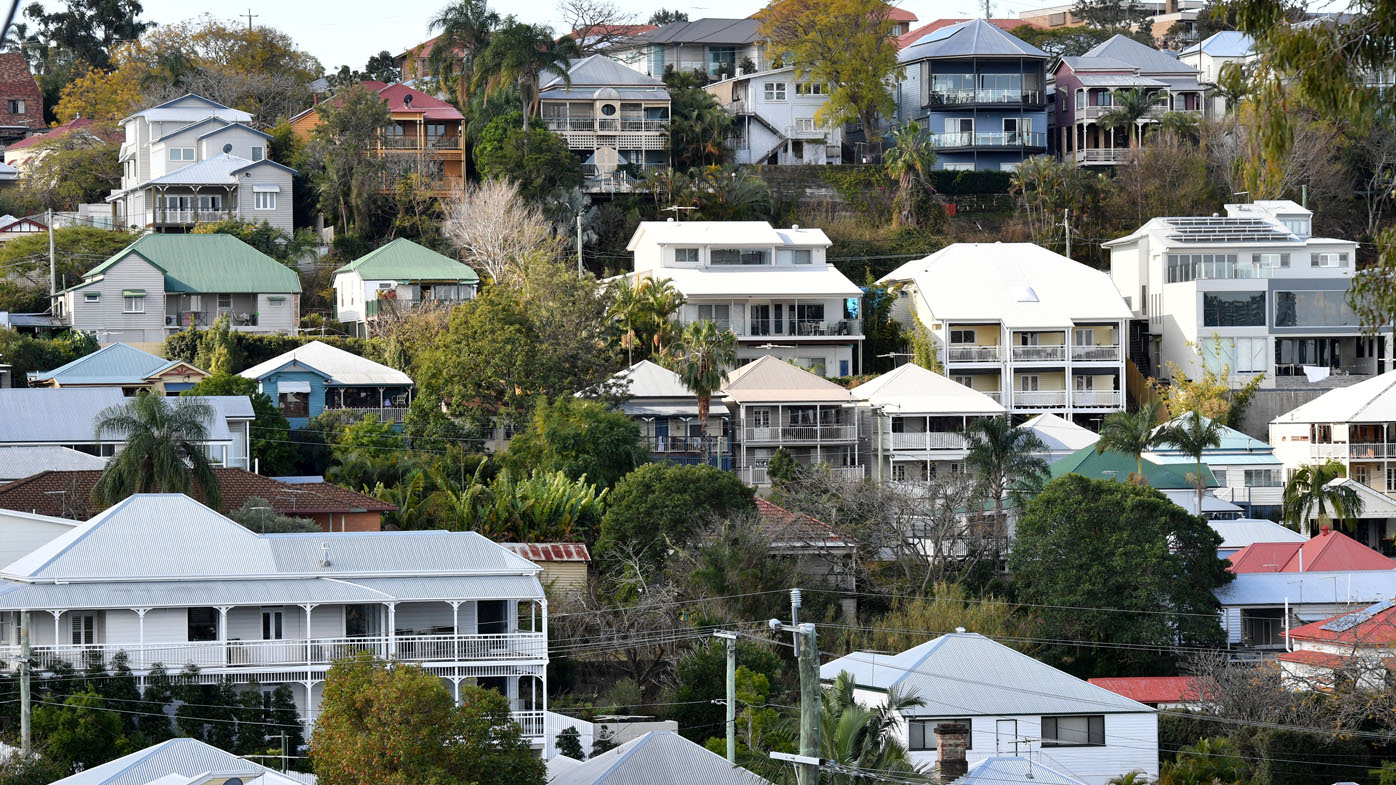
Sandstone villas and opulent mansions in South Australia’s premier inner-city suburbs have become hot property for Adelaide house hunters looking for lifestyle as well as economic security.

While there’s been plenty of activity and attention placed on rural living and lifestyle areas, Adelaide’s inner-city listings too, particularly in blue chip suburbs such as Toorak Gardens and North Adelaide, have also been snapped up for record prices in the past few months.

Several driving factors have helped pique interest and confidence, not least the city’s handling of the pandemic—with less than 600 cases in total and four deaths.

As of December, its unemployment rate of 6.4% was no longer the highest in the country and its relatively affordable median house price of $509,978  and Australia’s historically low interest rates has contributed to its appeal.

Housing is half the price of Sydney, where median house prices have passed $1 million, and more than 60% cheaper than Melbourne’s median house price of $821,904.

Fox Real Estate principal Andrew Fox said there was uncertainty in the market around March and April but confidence returned quickly and activity and prices “went from strength to strength.”

“We were very fortunate in 2020,” he said. “Many generational top-end properties changed hands for excellent prices while low interest rates and low stock levels fueled the market.”

Sotheby’s South Australia director Grant Giordano confirmed that “a lot has been happening in terms of luxury sales” around Adelaide and said it still offers great relative value compared to other cities.

“These prestige properties are incredibly attractive, I always talk about the relative value of Adelaide, when you’re buying one of these properties, you’re buying tomorrow’s value today,” he said.

“It’s a city that goes through a cyclical cycle, once one big sale occurs, they all go and reset the market’s expectations.”

He said South Australians have adjusted their lifestyle habits as a result of the pandemic.

“People have more disposable income and are limiting discretionary buys and instead investing in their day-to-day lifestyle because they’re stuck at home,” he said.

“Many buyers are thinking ‘If I’m stuck at home might as well enjoy the space which I’m currently in’,” he said.

Williams Luxury managing director Stephanie Williams said 2020 brought about a distinct shift among Adelaide’s more affluent buyers, who sought larger properties that are better suited to the current “Covid lifestyle,” that include home offices, gyms, theatre rooms and outdoor areas.

“As we are all spending more time at home our needs have broadened somewhat to require these extra living environments and our high profile clients and professionals are now working from home more than ever before,” Ms Williams said.

“We also have a strong level of international relocations and ex-pats returning to Adelaide—as it offers excellent lifestyle options with very low levels of congestion,” she said. “Extremely low-interest rates, improved lending conditions from the banks, government stimulus and an absolute lack of supply in both sales and rental properties are also key fundamentals in driving the current market.”

“It’s very close to the perfect storm for vendors right now, as everyone wants to buy and only a very low number of people actually want to sell.”

Prestige Properties

Reputable and refined, North Adelaide is known for its stunning mansions and tall terraces on leafy lined streets, where a statue of naval officer and the state’s first surveyor-general Colonel William Light stands atop Montefiore Hill, overlooking the city he planned.

North Adelaide’s charismatic old homes and well-to-do residents have long defined the suburb’s distinct social, cultural and geographic differences.

All but one of Adelaide’s 10 most expensive homes were built in the 1800s and they remain highly sought after as proven in late 2020 when the historic North Adelaide mansion at Molesworth Street went under contract within three days of hitting the market.

Sotheby’s South Australia


Sold through Sotheby’s South Australia, the $4.5 million sale price made it one of North Adelaide’s most expensive transactions on record.

Neighbourhood amenities such as grand old pubs, modern hip cafes, gourmet supermarkets and a diverse range of restaurants contribute greatly to the village atmosphere, while the impressive and revamped Adelaide Oval sporting ground lies between the suburb and the central business district.

A walk along the River Torrens leads to the Adelaide Zoo, the city’s aquatic centre, and the education facilities, such as North Adelaide Primary, are not only among the state’s oldest but with Adelaide High School, among the top performers too.

The rich selection of amenities contributes significantly to the appeal, Mr Giordano said, with buyers eager to get into the area.

“Very rarely on the city fringe do you have such green and private living so conveniently laid out. When you’re talking about the Adelaide Hills or beach lifestyle, they’re lifestyle choices at the expense of convenience,” he said. “In North Adelaide, you make no compromise. It’s the closest suburb to the city and it has some of the grandest and most historically resonant properties in Adelaide.”

The exclusive location and quality of housing are what attracts the suburb’s two main demographics, Ms Williams said, with families attracted to the lifestyle and close proximity to elite schools while professional couples appreciate the cosmopolitan lifestyle, golf courses, parklands and close proximity to the Adelaide Oval.

Outlook 2021

Buyer interest in Adelaide is widespread. The number of eyeballs per online listing city-wide increased dramatically between 2019 and 2020, and according to CoreLogic’s head of research Tim Lawless, the city received minimal disruption during the pandemic.

“Adelaide housing values reached a new record high in November after recording five consecutive months of growth,” Mr Lawless said in his review of the 2020 market.

“Adelaide’s housing market has seen minimal disruption through the Covid period so far, only recording one month where values dipped lower—a drop of only 0.2% in June.”

Figures released by realestate.com.au also show suburbs such as North Adelaide are among the most sought-after by online house hunters, recording a 92% increase in views per listing in 2020 compared to 2019.

One of 2020’s hottest listings was an 1878-built sandstone villa on Mills Terrace, North Adelaide, which attracted almost 18,000 views in the leadup to its Dec. 20 auction through Williams Luxury.

Six registered bidders took part in the auction of 52 Mills Terrace, North Adelaide, which sold for $3.3million on December 20.

Williams Luxury

The grand and imposing four-bedroom home occupying a 1200 square metre landscaped block on one of North Adelaide’s most prestigious streets sold at auction for $3.3million and attracted six registered local and interstate-based bidders.

“North Adelaide generally has a very low level of luxury homes available to the market and the most prestigious properties can be tightly held by the same family for generations,” Ms Williams said.

“The market conditions at the end of 2020 were very unusual for the area with several luxury homes coming onto the market around the same time,” she said. “All of these properties have now sold and we are back to experiencing traditional very low levels of new properties coming onto the market.“

CoreLogic figures for North Adelaide show the suburb’s median house price first broke the $1 million barrier in October 2020, while SQM Research listing data highlights the shortage of property available for sale, with 28 houses available in January, the lowest since June 2020.

Mr Fox remains confident about Adelaide’s outlook, particularly given its reputation as a “safe haven” when it comes to health and the economy, two contributing factors that had lured many expats back from overseas as well as new residents from interstate.

“Our inner-city, hills, regional and beachside locations have seen significant growth and are always sought-after, but we have seen demand and growth pretty much across the board,” he said.

“The prestige market is extremely strong and it’s probably the most opportune time to sell in years. Stock levels are relatively low and it’s not unusual to receive a dozen or so offers on a prestige property, and we can’t see it slowing down this year,” he added.

General Motors And Other Car Makers Have Big EV Goals. Why The Numbers Make No Sense.

Electric Vehicles

General Motors shook up the car industry this past week, saying it is aiming to stop selling gasoline-powered cars by 2035, much sooner than many on Wall Street would have predicted.

It is a sign that analysts and investors should be sharpening their pencils to figure out what is likely—and what is possible—for global electric-vehicle demand. The results of that number crunching will help to show whether the market has valued highflying EV stocks correctly and which, if any, still offer good value.

It isn’t an easy equation to solve. Auto makers express their goals—one indication of what might happen in the market—in different ways.

General Motors (ticker: GM) has its target for 2035. Tesla (TSLA) CEO Elon Musk has talked about selling 20 million EVs by 2030 and plans to increase its production volume at 50% a year for the foreseeable future.

Volkswagen (VOW. Germany) wants up to 25% of vehicle sales to come from battery-powered electric vehicles by 2030. And Toyota (TM) plans to sell 5.5 million electrified vehicles by 2030—a figure that includes hybrid electric cars as well as fuel-cell vehicles.

Barron’s added up the numbers in the publicly announced goals, aligning them by year and filling in some gaps. We calculate that, based on company comments, somewhere between 15 million and 20 million EVs will be sold a year by 2025. That implies an average annual growth rate of about 50% between last year and then. With that growth, EVs would account for roughly 15% to 20% of total light-vehicle sales.

Wedbush analyst Dan Ives qualifies as an electric-vehicle bull, but his estimate of EVs’ share of the market isn’t that high. “I am laser-focused on the skyrocketing EV demand out of China, Biden green initiatives, and [battery innovation] across the EV supply chain,” he tells Barron’s. “It looks like a golden age for EVs.”

Still, he is assuming EVs will win about 10% of the global market by 2025.

Focusing on China is a good idea. It’s the largest new-car market in the world and government incentives make buying an EV a “no brainer” for most consumers, according to Ives. Goldman Sachs analyst Fei Fang has predicted EVs will have 20% of the Chinese market by 2025.

RBC analyst Joseph Spak recently projected battery- and hybrid-electric vehicles could account for roughly 15% of new-car sales by 2025. That call was made back in December, before GM announced its aspiration to be all-electric by 2035.

Now Spak believes his projection could be too low. He did his own math to illustrate why.

“GM historically has had [about] 17% total U.S. market share,” he wrote in a recent research note. In December, he expected EVs to account for 40% of U.S. new-car sales by 2035. But for GM to go all-electric by then, assuming it keeps its historic 17% of the market, it would have to win 43% of U.S. EV sales, he said.

“The other way to interpret this [math] is that there could be upside to our 40% [battery electric] mix assumption,” added the analyst. That would be bullish for EV stocks, but he has a word of caution too. “A massive ramp in battery supply is needed to support this,” he said.

That gets at another important point for investors. There are many tertiary effects from faster EV penetration.

For one, as EVs take a bigger share of the market, they will start to get more of the capital the industry is willing to spend on product development. GM, for instance, is spending about half its capital over the next few years on EV and autonomous-driving technologies. By 2030, cars powered by internal combustion engines—ICE cars, in industry jargon—won’t look as attractive, relatively speaking, as those programs are drained of resources.

Electricity infrastructure is another critical issue. Right now oil and the refining industry essentially power cars. In the future, utilities and the electric grid will bear the burden.

The math needed to predict global electricity demand is harder, but higher EV penetration in 2025 would probably boost growth, now at roughly 3% a year, by a couple of percentage points. That seems manageable, but it means more investment in utilities.

The other side off the electricity equation is oil. Oil demand could fall slightly compared with 2019, a pre-pandemic year, if the world’s pool of EVs grows faster than expected. There are roughly 2 billion light vehicles on the road and nearly all take gasoline.

The next step in this math class is to value the EV sector. That isn’t easy either.

Given the growth and accelerating penetration, figures for 2025, when EV companies should be making real money, seem like a reasonable place to start. Apple (AAPL), the world’s most valuable company, trades for about 19 times estimated 2025 cash flow of about $120 billion.

Tesla is trading for about 65 times estimated 2025 cash flows. That is triple the figure for Apple, although if Musk’s goals are met, Tesla’s annual sales will go from more than 4 million vehicles to about 20 million over the next five years—between 2025 and 2030.

China’s NIO (NIO) is another highly valued EV stock. Analysts haven’t made public projections for its 2025 financials. But its shares trade for about 30 times estimated 2024 cash flow. According to analysts, NIO vehicle shipments are expected to go from roughly 345,000 to about 800,00 from 2025 to 2030. That is less growth than Tesla is looking to produce, but it still implies sales would more than double.

The 2025 valuation math can’t tell investors to buy or sell the stock, or the sector, but it does offer context about the coming golden age of EVs. Tesla stock is up about 21% year to date. NIO shares are up almost 19%. The S&P 500 is up about 2%.

Investors expect a lot. Morgan Stanley’s Adam Jonas pointed out that January EV sales in the U.S. were still less than 3% of the total, but he isn’t an EV bear. He rates Tesla stock at Buy and has a target of $880 for the stock-price target.

The ICE Age is ending. If the switch to EVs is rapid, valuations for manufacturers might not be unreasonable. The effects on other industries are just starting to be felt.

Covid-19 Leaves Universities Short On International Students—And Money

SYDNEY—Australia’s decision to close its borders protected it from the coronavirus. But that policy is wreaking havoc on the country’s universities, which relied on lucrative tuition from foreign students who are stuck overseas.

Experts say it will take years for the schools, among the best in the world, to recover from the economic damage. Already, Australian universities have cut more than 17,000 jobs, according to industry group Universities Australia. It said operating revenue fell 4.9% last year and is expected to fall another 5.5% this year.

“As students finish and we haven’t got new ones coming, we’re yet to hit the bottom basically,” said Peter Hurley, a policy fellow at the Mitchell Institute for Education and Health Policy, which forecast that the country’s universities could lose up to $15 billion in international tuition through 2023.

Leaders all over the world have needed to balance protecting their populations from the virus with the economic damage that those policies can cause. But with a vaccine rollout expected to start in Australia soon, pressure is ramping up on conservative Prime Minister Scott Morrison to provide clarity on how and when international students could return.

Leaders in the nation’s states and territories have pressed for some places in the quarantine system to be reserved for international students, but Mr. Morrison has argued that returning Australians must come first. Thousands of Australians remain stranded overseas because the government has imposed caps on returning travelers, part of an effort to ease pressure on its hotel quarantine system and to minimise the risk of highly contagious variants of the coronavirus from spreading into the community.

The matter could be discussed at a cabinet meeting later this week. Any change in policy could signal whether Mr. Morrison is ready to loosen border restrictions with vaccines on the horizon.

Phil Honeywood, chief executive of the International Education Association of Australia, said overseas students are starting to doubt that they will return to Australia this year. He is concerned some students may drop out and go study in other countries like Canada, the U.K. and the U.S.

“The stickability of those students is now in question,” he said.

Ahmed Korayem, a 32-year-old in Egypt, wasn’t sure whether to start a master’s program in compliance and regulation at an Australian university because of the country’s border closures. He worries that studying online wouldn’t be the same as being there in person and that it would be difficult to interact with his professors because of the time difference.

Mr. Korayem has decided to enroll at school, but he said a prolonged period of border closures could force him to drop out later.

“If it’s three months and then I would be able to move and continue my studies face-to-face, I can handle this. If it’s more than that, then I think no,” Mr. Korayem said. “The uncertainty can be stressful.”

Foreign students, particularly from China and India, have been lured to Australia by its relative proximity to Asia, easy access to visas and high-quality schools. Australian universities charged them higher fees than domestic students; international tuition at one point made up more than 40% of student revenue at universities, according to an estimate from the Mitchell Institute.

Although students can study remotely online, international-student enrollments were already down 14% as of November, according to Australian government data. The number of international students physically in the country has fallen further—and is down about 35% when compared with pre-pandemic levels—according to the Mitchell Institute’s Mr. Hurley.

“I don’t think anybody had on their risk scenarios literally no international travel,” said Paul Duldig, chief operating officer at Australian National University in Canberra, the capital. The school estimates its international-student tuition fees fell last year by about 30%.

Aside from cutting staff, universities are delaying campus improvements and eliminating fields of study. Australia’s reputation for producing important academic research is also at stake, given that universities used much of that international tuition to fund scholarly pursuits. About 11% of Australia’s researchers, including postgraduate students and staff, could lose their jobs due to the decline in fees from international students, according to research from the Melbourne Centre for the Study of Higher Education.

To make up for the revenue decline, the Australian government included about $770 million in aid to fund university research in this financial year’s budget. But a long-term solution depends on allowing international students back into the country, according to academics who have studied university finances.

Before the pandemic, Australia was the third top destination for international students, behind the U.S. and the U.K., according to United Nations data. Australian universities were also more reliant on international students than other countries. In 2018, 27% of all students in higher education in Australia were from overseas, according to data from the Organization for Economic Cooperation and Development, a group of wealthy countries that has 37 members. That was the second highest percentage in the OECD, behind tiny Luxembourg. In the U.S., just 5% were international students.

At Monash University, one of Australia’s top research schools, tuition from international students fell $85 million last year and overall revenue dropped by $270 million, a nearly 5% decline. The school is cutting 277 jobs and eliminating 2% of its courses. It is also shelving or deferring long-term building plans, including a new medical educational center, a biomedical teaching facility and an artificial-intelligence and data-science building.

Margaret Gardner, president and vice chancellor of the university, said having international students on campus enriches the academic experience for domestic students who get exposed to different cultures and viewpoints even if they are going to school close to home.

“It’s not just about plugging a hole,” she said. “I can’t begin to tell you how much difference it makes to the education you provide.”

Why the Silver Trade Shouldn’t Be Lumped In With GameStop Stock and AMC

Silver Investment

Silver soared, then dropped. Whatever happens now, the metal’s price movements will look nothing like what happened with the stocks that faced a spectacular short squeeze and are now falling.

Monday, the price of actual silver rose as much as 9% to $29.52 per ounce. “Retail traders who drove the short squeezes in stocks like GME last week were banding together to try and trigger a squeeze in silver,” wrote Tom Essaye, founder of Seven’s Report Research, in a note.

It all revolves around the practice of short selling, where people borrow a stock and sell it, hoping the price will fall, making it possible to buy shares at a lower price and return them. A short squeeze happens when the price of the stock rises, rather than falls, forcing short sellers to buy. If a lot of the stock available for trading has been sold short, there can be a scramble to buy that triggers spectacular price gains.

That is what happened with GameStop (ticker: GME) last month. Other stocks that had been aggressively sold short surged as well.

But the iShares Silver Trust (SLV), after rising 11% to $27.76 a share Monday, is now down 11% from that level. There are key differences between companies like GameStop and AMC Entertainment (AMC) and silver.

First off, GameStop rose as much as 1,800% in a few weeks in January. AMC rose as much as 890% in roughly the same period. The iShares Silver exchange-traded fund, which buys futures contracts linked to the direction of the metal’s price, rose to roughly its all-time high of $27, set in August, and failed to break past it.

With the price down Tuesday, fundamentals, rather than the possibility of a short squeeze, are returning to the fore. While silver is an asset that can take part in a “reflation rally,” or one that occurs when economic stimulus jolts an economy out of recession and spurs inflation, that possibility doesn’t seem to have been enough to send the silver ETF to a new high.

Importantly, options trading was an important factor in the gains for GameStop and AMC. Retail traders were buying calls, or the right to buy shares at a specified strike price on a later date. The hope is that an option’s strike price will be lower than the stock’s price when that day comes, making it possible to buy at the strike price and make a profit by immediately selling on the open market.

That possibility forces the brokers who wrote the options contracts to hedge by buying the shares. It adds to demand for a stock and can contribute to a short squeeze, as appears to have happened with GameStop and AMC. Retail traders posting on Reddit were able to move the stock without much capital because they could buy call options at a far lower price per underlying share than the cost of the actual stock.

For silver, the overarching theme is that retail traders can’t summon up the large pool of capital needed to create huge demand for silver.

Traders aren’t buying calls on silver right now, Andrew Smith, chief investment strategist at Delos Capital Advisors, told Barron’s, citing the activity he saw Tuesday. That’s partly because buying calls on commodity ETFs, which reflect a blended forward expected price—based on the prices forecast for several different dates—is a complex process.

Buying silver outright, which is what retail traders did, requires much more money. There are no call options and no need for brokers to hedge against them.

“Squeezing the market isn’t likely” from here, wrote Jeff Currie, global head of commodities research at Goldman Sachs, in a note. In order for the WallStreetBets crowd to send silver prices up the 700% they rose in 1980, when the wealthy Hunt brothers gobbled up almost one-third of the global supply, they would have to own 4,600 tons of silver each.

Silver could certainly charge ahead, just not so fast so soon.

Jeff Bezos To Step Down As Amazon CEO; Andy Jassy To Take Over

Jeff Bezos

Jeff Bezos is stepping down as chief executive of Amazon.com Inc. to become executive chairman, marking the biggest change in leadership of the tech giant since he started it in a Washington state garage more than 26 years ago.

Amazon said on Tuesday that he will be succeeded as CEO in the third quarter by Andy Jassy, Mr Bezos’s closest lieutenant and the longtime head of the company’s booming cloud-computing business.

Mr Bezos, 57 years old, is handing over the day-to-day reins, as Amazon’s core businesses of online retail and business-computing services are booming during the Covid-19 pandemic, which has shifted work and life to the internet more than ever. The company announced his changing role as it reported that revenue in the fourth quarter soared 44% to US$125.56 billion—surpassing US$100 billion for the first time in a three-month span—and profit more than doubled.

But Amazon also faces the biggest regulatory challenges in its history, with multiple federal investigations into its competitive practices and lawmakers drafting legislation that could force Amazon to restructure its business. Tension with regulators and lawmakers has directly embroiled Mr Bezos, who was called to testify in front of Congress last summer for the first time.

Mr Bezos’s leadership of Amazon has made him one of the most respected, and feared, leaders in business, as well as fantastically wealthy. He is currently neck-and-neck with his rival rocket entrepreneur, Tesla Inc. CEO Elon Musk, as the world’s wealthiest person. Forbes lists Mr Bezos’s wealth at more than $196 billion.

In an email to employees made public Tuesday, Mr Bezos said he plans to focus his energy now on new products and early initiatives as well as his outside interests. “Being the CEO of Amazon is a deep responsibility, and it’s consuming,” Mr Bezos wrote. “When you have a responsibility like that, it’s hard to put attention on anything else.”

Mr Bezos’s move makes Amazon the latest of today’s tech giants to transition leadership away from the people who started them. The co-founders of Google stepped back from their management roles at its parent Alphabet Inc. in 2019, and both Apple Inc. and Microsoft Corp. have long been run by successors to their founders.

Mr Bezos left a career on Wall Street to start Amazon.com in 1994 as a scrappy online bookseller during a time when most Americans didn’t own computers. Amazon became an against-all-odds success story that would go on to completely disrupt the bookselling industry along with nearly every other industry in its path, from logistics to advertising. The company today is America’s largest online retailer, the leading provider of cloud-computing services, a significant player in Hollywood, a competitor in bricks-and-mortar groceries through its Whole Foods subsidiary, and a growing rival to United Parcel Service Inc. and FedEx Corp. in logistics. Amazon employs nearly 1.3 million people.

The executive imbued the Seattle-based company with a “Day 1” philosophy of always maintaining an underdog startup ethos. However, in recent years, Mr Bezos has stepped back from day-to-day management of the tech giant—with a brief pause when he became more actively involved in the early days of the pandemic. Many in his inner circle describe Mr Bezos’s role over the past few years as akin to that of an executive chairman. The executive famously tries to not schedule meetings before 10 a.m. and to make all of his tough decisions before 5 p.m. Amazon employees say the billionaire is elusive, with many saying they have never spotted him on the company’s sprawling downtown Seattle campus.

In 2016, he appointed two of his top deputies to oversee management of daily operations. Jeff Wilke was named CEO of world-wide consumer at Amazon, overseeing everything from Amazon’s retail arm and warehouses to its advertising and devices business. Mr Jassy was CEO of the cloud business, called Amazon Web Services.

The appointments freed up Mr Bezos to devote time to innovations and moonshots. He took on pet projects such as Amazon’s voice assistant product, the Echo, and spent time with Amazon’s studio executives on what movies and television programs it had in the pipeline.

Mr Bezos’s tightknit group of top lieutenants at Amazon has seen its ranks thin out in the past few years. In addition to Mr Wilke’s departure at the beginning of the year, Jeff Blackburn, a 20-year veteran and member of Mr Bezos’s team of top executives, took a sabbatical in 2020. Steve Kessel, another member of Mr. Bezos’s top executives, retired from the company last year.

Beyond Amazon, Mr Bezos bought the Washington Post in 2013 and has spent a sizable chunk of his time at Blue Origin LLC, the space company he founded. While the coronavirus pandemic re-engaged Mr Bezos, as the company had to deal with unprecedented demand, he remained involved with Blue Origin’s mission. Just last week Mr Bezos posted a photo on Instagram of a “hotfire test” of a Blue Origin engine.

Mr Bezos, a father of four children, also has experienced a major transition in his personal life recently. In 2019, Mr Bezos and his wife divorced and the National Enquirer tabloid reported his affair with a former television reporter who was the wife of a Hollywood executive.

The leadership transition at Amazon will take place as it grapples with unprecedented scrutiny.

The company is currently the subject of probes from the Justice Department, the Federal Trade Commission, the European Union and other governing agencies about whether it participates in anticompetitive practices.

In October, the House Judiciary Committee’s Antitrust Subcommittee—before which Mr Bezos testified in July—concluded its 16-month investigation into the biggest U.S. tech companies. Its report accused Amazon of exerting “monopoly power” over sellers on its website and suggested legislation that could cause Amazon to exit business lines—like its private-label or devices businesses—that compete with sellers on its platform.

In response to the Congressional report, Amazon said: “All large organisations attract the attention of regulators, and we welcome that scrutiny. But large companies are not dominant by definition, and the presumption that success can only be the result of anticompetitive behaviour is simply wrong.”

On Tuesday, a member of the committee, Ken Buck (R., Colo.), tweeted Amazon’s announcement saying: “I have some questions for Mr Jassy,” indicating that the new CEO will inherit much of the regulatory scrutiny from his predecessor.