Drones Are Poised To Reshape Home Design

Let’s say you want a hamburger.

With a few taps on your phone—no onions, please—the order is placed, with delivery set for within the hour. Soon, your specially wrapped burger appears on the horizon, borne aloft by a humming drone. A retractable door on your rooftop opens to reveal a landing pad and delivery receptacle. The drone places the burger into a box, preferably heated, and a small elevator brings it into the house. “Ding.” Your app alerts you that your burger is warm and waiting.

It’s getting closer: A future where droves of drones buzz through neighbourhoods to drop off and pick up groceries, food orders and packages. Architects and builders might have to rethink overall home design to accommodate remote delivery, with drone landing pads mounted on kerbside mailboxes, built onto rooftops or perched on windowsills. This, in turn, could reshape entire neighbourhoods to include designated drone airspace and traffic patterns designed to ensure the safety of residents.

Drone divisions created by Amazon.com Inc., United Parcel Service and Google’s parent Alphabet Inc. have all received permission from the U.S. Federal Aviation Administration for limited deliveries, paving the way for commercial drone service. Amazon Prime Air is testing technology to deliver packages weighing up to 2.26kg in 30 minutes or less. Alphabet’s Wing trials in Christiansburg, Va., allow residents to get deliveries from FedEx Corp., Walgreens and local restaurants. In Florida, UPS subsidiary Flight Forward and CVS Health Corp. deliver prescription medications to residents of the Villages, the largest retirement community in the U.S.

Still, none of the major players have figured out a seamless way for consumers to receive their deliveries at home. Cargo landing in backyards and driveways raises safety questions regarding both people and packages.

At least one tech startup is working on a solution. Valqari, a Chicago company founded in 2017, is developing drone-delivery mailboxes that can accept all types of shipments, from retail packages to restaurant meals. The top of the mailbox acts as a landing pad, and the drone activates a retractable door to a space where packages can be safely deposited, explains Valqari founder and chief executive Ryan Walsh.

Mr Walsh says he envisions drone-delivery mailboxes mounted on rooftops and windowsills of homes or part of a centralized bank of mailboxes that can serve a neighbourhood or apartment complex. Someday, drone-delivery mailboxes will be “as common as a garage,” he says.

The idea isn’t far-fetched. In South Florida, the Paramount Miami Worldcenter condo building was designed to include a “skyport,” a platform on the roof that could someday accommodate vertical takeoff and landing, or VTOL, vehicles as a shuttle for residents. While the possibility of air taxis is years away, “I could see package delivery as happening sooner,” says developer Dan Kodsi, chief executive of Royal Palm Cos. “We have capability because elevators run all the way to the roof.” He adds that the skyport concept has been a selling point at Paramount Miami, where apartments are for sale from about US$750,000 to US$11 million for a penthouse. “Some people bought [units] knowing that it could potentially raise the value of their property,” he says.

Another concept for potentially incorporating drone delivery into residential development comes from Walmart Inc. The retailer <a”icon none” href=”https://pdfaiw.uspto.gov/.aiw?PageNum=0&docid=20190300202&IDKey=1EE7B2FDEDBE&HomeUrl=http://appft.uspto.gov/netacgi/nph-Parser?Sect1=PTO1%26Sect2=HITOFF%26d=PG01%26p=1%26u=/netahtml/PTO/srchnum.html%26r=1%26f=G%26l=50%26s1=20190300202.PGNR.%26OS=%26RS=” target=”_blank” rel=”noopener”>submitted a patent application for a delivery chute mounted onto an apartment building. Drone deliveries would be dropped through the chute and onto a conveyor belt, which would transport packages into the building’s mailroom for distribution.

When the majority of homes are outfitted with drone-delivery mailboxes and landing pads, they could form the cornerstone of “smart cities,” Mr Walsh projects. Outfitted with solar panels, the mailboxes could provide their own electricity—and even generate enough electricity to sell back to the grid. Data from meteorological sensors could ensure that drones will be able to land safely, with the added benefit of making weather forecasting hyper-local. Masses of mailboxes would also provide a place to put transportation sensors that could report real-time road and traffic conditions or telecom technology that could bolster wireless signals, making cities smarter. Mapping sensors would be particularly useful in remote or rural areas, which tend to be the least mapped.

Enthusiasts say that drone deliveries require less manpower than delivery trucks and would reduce both traffic congestion and fuel emissions. But before hamburgers can fly through the sky, a lot of things have to happen. Chief among them is a drone air-traffic control system to manage unmanned aircraft and protect the airspace from attacks. Currently, the FAA is working on a way to link drone registration to uniform tracking requirements, allowing the agency to identify drone operators and digitally follow their vehicles from takeoff to landing. Tech innovators must ensure that collision-avoidance technology can avert drone crashes. And companies themselves must surmount logistical challenges in stocking, deploying and recharging drones.

On the consumer end, the public will want assurances that their peace and privacy is protected. For example, in Australia, drone-delivery trials by Wing resulted in complaints from residents in suburban Canberra that the crafts were noisy and intrusive. Based on that feedback, Wing developed new propellers that emit a quieter, lower-pitched sound, an Alphabet representative says. In terms of privacy, she added that drone cameras take still, low-resolution images that are used strictly for navigation.

Overall, the main concern is safety, says German academic Mario Schaarschmidt, who specialises in logistics, technology and innovation management in services. Earlier this year, Dr Schaarschmidt and his colleagues at the University of Koblenz-Landau released a paper that aimed to assess whether consumers would willingly adopt drone deliveries. People who were interviewed in the research most frequently cited fears about their personal safety as well as financial risks of property loss.

Over time, Dr Schaarschmidt thinks widespread drone deliveries could become the norm for homes, “but only if the first deliveries with drones go smoothly. If you experience any problems, people won’t accept them.”

Hemsworth Brothers Part With Modern Malibu Getaway

Hemsworth Malibu Property

The Hemsworth brothers have sold off a modern Malibu home they owned together for approx. $6.3 million, Mansion Global has learned.

The four-bedroom white-stucco home is located at the base of the Santa Monica Mountains. The three brothers and actors— Liam, 30, Chris, 37, and Luke, 40—owned the property together, as a peaceful vacation spot, according to information from the listing agency.

From its inland perch, the contemporary hacienda-inspired house overlooks both the mountains and the Pacific Ocean and has access to nearby horse stables, according to the listing with Eric Haskell of The Agency.

The deal is so fresh it has yet to log in public property records, and little is known about the buyer, except that they were represented by agents Chris Cortazzo and Susan Saul of Compass.

The Hemsworths bought the property through a trust in 2016 for $3.45 million, according to property records. They listed the home in September for $6.3 million.

Amenities, befitting a triple threat of Hollywood heartthrobs, include a home theatre that could be repurposed into a family room, according to the listing. There’s also a 750-bottle temperature-controlled wine cellar and an open kitchen with restaurant-grade appliances and quartz countertops.

The house features an open kitchen. ALEXIS ADAMS

While the 427sqm home boasts a modern open floor plan, floor-to-ceiling sliders in the kitchen can separate it from the dining room in a pinch. Other contemporary design details include polished concrete floors, marble bathroom finishes and tall walls suited for displaying artwork, according to the listing.

Outside, an outdoor dining area boasts dramatic views across the 1.3-acre property and over the mountains, images show.

The brothers have been riding out the pandemic in their native Australia, and have traded in their Malibu retreat in favour of New South Wales’ sunny surf spot Byron Bay, where the Hemsworths have reportedly purchased multiple properties.

How to Better Keep Track Of Small Expenses And Fees In New Year

Carrying Money

In making financial goals for the new year, the approach many people tend to take is to go big. In doing so, they might be missing the small picture.

“These smaller goals become your true financial foundation, a solid base that is crucial for your financial success, especially when you start reaching and planning for the larger goals in life,” said Michaela McDonald, a financial-advice expert at Albert, a finance app.

Ms McDonald says many of her clients have asked for advice to help them achieve lofty financial objectives, but neglecting day-to-day financial health is often the reason people struggle to accomplish even half of their savings goals throughout the year.

For many, 2020 has been exhausting, so it might be tempting to write off little expenses and fees to eschew another headache. But small amounts can matter—here’s how to find and look at the tiny corners of your financial life without getting overwhelmed.

Track down your accounts

Joy Liu, a financial trainer at the Financial Gym, recommends tracking down all your accounts and debts—even the small ones.

“Sometimes, we can unintentionally have little accounts everywhere, so it might be a good indicator that you may need to streamline,” said Ms Liu.

Consolidating accounts can prevent you from being charged a maintenance fee on an account with a small amount that doesn’t meet balance requirements. Americans paid an average fee of $15.50 for not meeting the minimum amount for their interest checking accounts this year, according to Bankrate.com.

Tracking down small debts is crucial to your financial well-being as well. Ms Liu says the best way to do that is by pulling a full credit report to see if you have any unpaid debts. To order a free credit report, visit annualcreditreport.com. Federal law allows one free credit report from Equifax, Experian, and TransUnion a year.

“From there, it’s just opening that stack of unopened mail to track down the other stuff,” she said.

Check on interest

A popular way to save on a bit of interest is to take advantage of 0% offers for a new credit card or balance transfer. These promotions often require a transfer fee, then for a set number of months interest won’t be charged.

If you have taken out any 0% offers on a credit card on another type of loan in the last 12 months, even for a small amount, pay attention when those promotional periods end. There might also be an annual fee for the cards you didn’t have to pay when you initially signed up.

“Make sure you have a plan to either have it paid off by that time or maybe do a balance transfer without being charged interest unintentionally,” said Ms Liu.

Mind the freebies

Perform an audit of your subscriptions, especially the ones which will increase in price in the new year. Some of the most pernicious monthly charges are from apps and free-trials that people forget to cancel or pause.

These charges can quickly add up monthly and prevent people from making headway on their financial goals.

Pay attention to small spends

Tracking small expenses can be time-intensive. There is the traditional way of printing out your credit card statements and highlighting all small expenses under a certain threshold, but it might be easier to let a money app or spreadsheet do the work.

Keep track of small fees as well, for banking and investment accounts. Ms McDonald encourages people to enrol in autopay for bills and other monthly expenses to avoid late fees.

Whether you are using a low-fee robo adviser or a human adviser, check in on whether the management fees or account minimums will change in the new year and whether the difference is worth comparison shopping. If you have been paying a “teaser” fee to try out a new adviser or product, evaluate the results to see if you want to stay with it.

Why Australian Buyers Are Turning to the Mornington Peninsula

Mornington Peninsula

It’s been anything but business as usual for the Mornington Peninsula, one of Australia’s blue-chip coastal regions, an hour southeast of Melbourne.

Against the backdrop of the global pandemic, rising unemployment, strict social distancing and economic fears, the prestige coastal community has offered homeowners a refuge and demand has seen it rise to become one of the country’s best performing areas.

Once the domain of wealthy second-home owners who decamped to their holiday properties over summer, it’s become a permanent hotspot with buyers across all price brackets trying to get a foothold in the area for the best part of six months.

Offering an appealing mix of diverse housing and an aspirational coastal lifestyle, the Mornington Peninsula is a comfortable commute to Melbourne’s Central Business District and has immediate access to restaurants, cafes, wineries and recreational activities.

Peninsula Sotheby’s International Realty managing director Robert Curtain described 2020 as being “a very different real estate market.”

“Every month since March 2020 has been a record month for us in terms of total sales value and volume,” he said.

There was no let-up in interest over Christmas and New Year’s holidays after a busier than expected trading period in the winter reduced stock levels ahead of summer.

Among several notable transactions in December, was the $5.5 million (US$4.26 million) sale of a two-bedroom house on 461 square meters of beachfront land on Mentor Road on Blanarring Beach and a home on Bowen Road in Sorrento that sold for more than A$4.5 million within 24 hours of hitting the market.

An architect-designed house on MacGregor Avenue in Portsea, which has a price guide of A$6.8 million to A$7.3 million, is typical of what discerning buyers are looking for in a luxury Peninsula property Mr. Curtain said.

Designed by Guildford Bell with five bedrooms and five bathrooms, it occupies a private 3,000-square-meter block in easy walking distance of the beach.

“High buyer demand and a lack of stock creates competition and ultimately strong sales results. This year we have seen very quick and sharp increases in property prices never seen before,” Mr Curtain said of the activity.

“The majority of buyers are either upgrading existing homes or making a longer-term commitment to buying on the peninsula. Without question the restrictions on travel has changed lifestyle options for many buyers,” he said.

Australia implemented international and national border control measures and physical distancing rules to reduce the spread of Covid-19 from March 2020.

Movement restrictions and social distancing requirements resulted in a ban on all in-person property inspections and auctions across the country.

Although Australia flattened the curve and lockdown restrictions eased in late May, a cluster of cases led to a second wave of infections in Victoria. A “state of disaster” was declared and Victoria faced severe restrictions including a nightly curfew, mandatory face coverings in public and the closure of schools and businesses between August and October. The Victorian Department for Health and Human Services reports more than four million Victorians have been tested for the virus since March with the state recording several days of zero new cases in early January.

Kay & Burton Portsea managing director Liz Jensen, who has sold property on the Mornington Peninsula for 35 years, said she was shocked at the demand that followed the lift in restrictions in October.

She said while the area was usually always busy in spring, she estimated inquiry levels increased three-fold once Victorians were allowed to move freely around their state again.

Big-Ticket Sales

The momentum of spring on the Mornington Peninsula has carried through to summer according to agents. More than 32,000 people have taken a shine to a listing for a home on Wild Coast Road in Portsea, making it one of Australia’s most viewed properties in January, according to online sales portal, realestate.com.au.

Several groups have conducted private inspections since it was listed the week prior to Christmas and an offer is imminent, said Ms Jensen, who is the listing agent for the property.

With a price guide of $8.8 million to $9.75 million, the eight-bedroom luxury home is embedded among the sand dunes and is not your “usual beach house,” Ms Jensen said.

Its indulgent resort-like feel has been designed to cater for large family gatherings or to be shared with groups of friends.

“There’s not much in these areas, it’s a thin market, so there’s always a level of buyers for properties of this calibre,” she said.

“Buyers are accelerating their plans, they’re not old enough to retire, but they’re choosing homes down here to live in permanently. We have people buying everything in every price bracket from $1.5 million to $10 million and everything in between.”

Buyers, she said, are looking with intention and showing a new appreciation for the established area.

“Over the last Covid year and going into this one, I find people to be very clear in their mind that they want to live a certain lifestyle that is more relaxing and less stressful,” she said.

“They want to enjoy themselves more and be able to share that with their family and friends. That works well down here,” she added.

A Strong Outlook for 2021

The trend hasn’t been lost on REA chief economist Nerida Conisbee, who picked the Mornington Peninsula as one of her top 2021 regional performers, based on its stellar results in 2020.

“Mainly because the region has seen the biggest jump in views per listing in Australia this year,” she said.

“The most popular suburb with house hunters is Blairgowrie where views per listing have more than doubled in 2020. It suggests buyer demand is accelerating while prices in Portsea jumped 20% last year to hit almost $2.4 million.”

However, Ms Conisbee expects Australia’s best-performing regional areas to be those that are closest to a capital city as movement returns and restrictions ease.

Regional Australia

The Australian Government’s $257 billion in direct economic stimulus to cushion the blow of the pandemic and the country’s record-low interest rate have helped support the property market but it’s the explosion of people shifting from capital cities that has had a dramatic impact on regional markets.

The spike in city-dwellers fleeing urban environments for a coast or country lifestyle meant regional house prices grew faster than metropolitan values for the first time in nearly 15 years.

Regional property values jumped 6.9% in the 12 months to December 2020 more than three times the 2% figures of the combined capital cities, CoreLogic revealed last week.

CoreLogic’s Asia Pacific Head of Research Tim Lawless said it was the first time during a rising market where regional markets had outpaced capital cities. Traditionally, regional areas outperformed capital cities during downturns.

“As remote working opportunities became more prevalent and demand for lifestyle properties and lower density housing options became more popular, regional areas of Australia saw housing market conditions surge,” Mr Lawless said.

It’s a movement not lost on the Mornington Peninsula, which appears to have its short-term future all but assured with January set to be another record month, according to Mr Curtain at Sotheby’s.

“The forecast for 2021, especially the first half, is likely to stay very strong as a lack of stock with more people using their homes than ever continues and cheap money provides further confidence for buyers,” he said. “But it’s a crazy world, so I’ll leave predicting the latter half of the year to those with a crystal ball.”

The Coronavirus-Era Shopping Response to a Downturn: Trade Up

Shoppers have a new mantra this year: Treat yourself.

Stuck at home and spending far less on travel, experiences and dining out, consumers are trading up on everything from designer handbags to diamond jewellery, according to industry executives and market-research firms.

The splurging defies the norms of past economic downturns, when consumers traded down to less-expensive items. And it isn’t only the well-off taking part. Less-affluent shoppers are buying items like premium spaghetti sauce or salon-worthy shampoo that was previously out of reach or thought to be not worth the price before the coronavirus pandemic forced people to curtail activities and isolate.

Stephanie Moon bought a Chloé handbag on sale for around A$890 this summer as a reward for signing her first client to her newly launched consulting firm. The 38-year-old San Francisco resident said she doesn’t usually buy designer bags, but felt like she could afford one now.

“I’m saving so much money, because I’m not going anywhere or doing anything,” she said. “Normally, I’d treat myself to a night out with my girlfriends, but that wasn’t an option this year.”

Millions of Americans remain out of work, and jobless claims are at their highest level since September. Yet despite some signs of slowing growth in November, retail spending has been strong relative to the broader economic outlook, boosted by a surge in online shopping. The National Retail Federation predicts holiday sales will rise 3.6% to 5.2%. Shoppers have been loading up on Christmas decorations, which are in short supply, as they try to brighten dreary, pandemic days.

After years of watching consumers, especially young ones, shift their spending to experiences, retailers across the spectrum say they have noticed more splurging on things, from luxury chains like Neiman Marcus Group Inc. and Saks Fifth Avenue to Macy’s Inc. and Signet Jewelers Ltd., owner of the Jared chain.

“Over the past few years, consumers have been making choices, ‘Do I take a trip to Rome or buy a handbag?’ ” said Marc Metrick, the chief executive officer of Saks Fifth Avenue. “This year, the decision has been eliminated.”

Mr Metrick said the biggest burst of demand is from shoppers who crave luxury products but can’t regularly afford them.

Neiman Marcus Chief Executive Geoffroy van Raemdonck said wealthy shoppers are buying more-expensive jewellery, shoes and handbags. “The same customer who would have bought one handbag last year is buying two this year, or is buying a more-expensive bag,” Mr. van Raemdonck said.

Neiman Marcus, which emerged from bankruptcy in September, has also attracted “entry-level” consumers who rarely, if ever, shopped with the luxury chain before Covid-19, he said. To appeal to them, it recently announced a partnership with payments company Affirm to offer instalment payments over six to 36 months at no extra charge.

NPD Group Inc. found that customers across various income levels, from those making less than $25,000 a year to those making more than $100,000 annually, are spending more on retail purchases than they did a year ago. Notably, for lower-income consumers, that spending didn’t dissipate after the stimulus checks ran out this summer.

“The growth rate in retail sales at the low end is higher than at the high end,” said Marshal Cohen, NPD’s chief industry adviser. “Consumers are gilt gifting, sending bigger, better gifts and rewarding themselves.”

Signet’s Jared chain is seeing the most growth at the highest price points, including items costing more than US$5,000, according to Bill Brace, Signet’s chief marketing officer. At Jared, sales of 2-carat loose diamonds and luxury watches are up 30% from Nov. 1 through mid-December, compared with the same period a year ago. Over the same period, sales of 1.25-carat diamond stud earrings have climbed 40% compared with last year.

Mr Brace said sales in those categories are growing at a rate of two to four times Signet’s overall sales growth in the most recent quarter. The company also owns the Kay Jewelers, Zales and Piercing Pagoda chains.

“Women are looking for zoom-worthy jewellery,” Mr Brace said. “They are going bigger on diamond studs.” He added that one Signet customer in Colorado recently bought three special-edition watches that cost more than US$10,000 each. “It’s unusual for someone to buy three at one time,” he said.

Macy’s customers are buying more-expensive jewellery, handbags and sleepwear, with shoppers spending more on each item than they did on similar purchases in the past, according to a spokeswoman. At the company’s Bloomingdale’s chain, affluent customers are snapping up luxury products.

“It’s not just because people are buying the snob apparel,” said Tony Spring, Bloomingdale’s CEO. “People realize you can have really nice things that don’t come close to costing what experiences cost.”

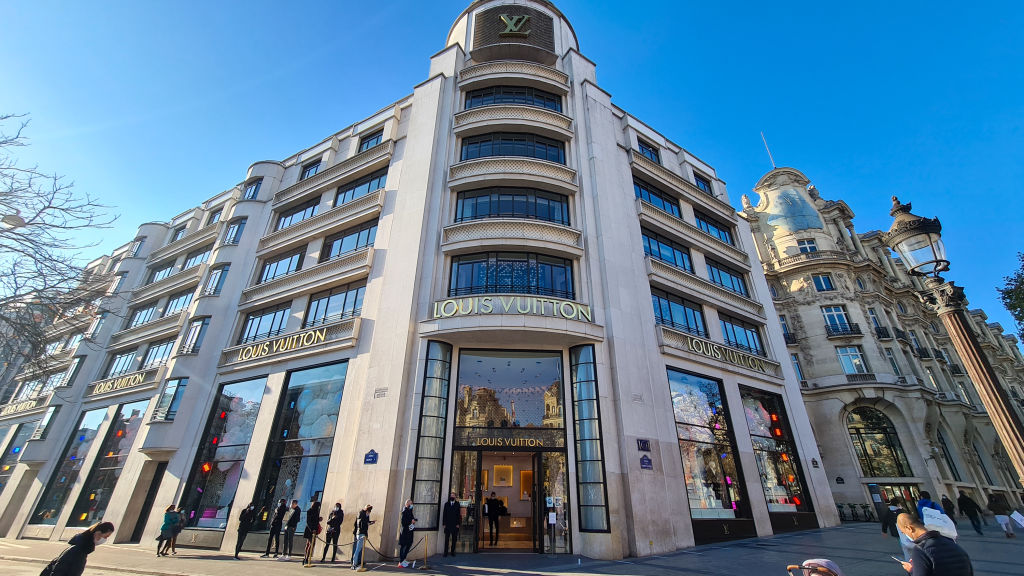
The strong demand has allowed some luxury brands to raise some prices, according to Erwan Rambourg, HSBC Holdings PLC’s global co-head of consumer and retail research. This spring, Louis Vuitton raised prices about 8% globally, while Chanel instituted a roughly 5% price increase, he said.

A Chanel spokesman said the brand, like most other luxury labels, regularly adjusts prices to reflect changes in production costs, raw-material prices and currency fluctuations, and also to help avoid price discrepancies between countries. Louis Vuitton declined to comment.

“Since Covid hit, you’ve had a tendency from consumers to buy less, but buy better,” Mr Rambourg said. “Unlike after 9/11, which made spending on luxury seem vulgar and inappropriate, today there is no stigma.”

Sarah Johnson has been buying Givenchy lipstick, Chanel blush, and Yves Saint Laurent eye shadow, often spending $200 in one shot. Before the pandemic, the 52-year-old New York City resident, who works in public relations, would have been satisfied with drugstore brands.

Now she is considering buying a designer handbag as a holiday gift for herself. “I would never have bought a designer bag in the past, but maybe I’ll use the money I saved for vacation to buy that Balenciaga bag I’ve always wanted,” she said, referring to the brand’s bags, which cost upward of $1,000.

Shoppers of all incomes are also trading up in everyday purchases like bottled water and spaghetti sauce, according to IRI, a market research firm that tracks $1.1 trillion in consumer-products spending.

“We expected low-income shoppers to buy more value brands,” said Krishnakumar Davey, president of IRI’s Strategic Analytics practice. “But they are buying higher-end products.”

Roy Cohen says he is saving $2,000 a month since he stopped paying rent on his Manhattan office in June. The 65-year-old career counsellor cancelled his vacation and is dining out less.

Instead, the East Hampton, N.Y., resident says he is donating more to charity and splurging on things like premium olive oil. In the past, he said he would have bought the generic version at Costco Wholesale Corp.

“I’m very value-oriented,” Mr Cohen said. “Before, I never would have thought expensive olive oil was worth the money.”

From Airbnb to Tesla, It’s Starting to Feel Like 1999 All Over Again. It May End the Same Way.

Maybe this time is different. Those words, supposedly the most dangerous to utter in the investing realm, came to mind amid the frenzied pops in the highly anticipated initial public offerings of the past week.

They recalled the wild IPOs at the end of the last century, when the public’s enthusiasm for all things dot-com had investors paying crazy prices for new stocks that often lacked earnings, revenue, or, in some cases, actual operations. After the calendar turned over to the year 2000—without the world descending into chaos from the Y2K computer bug, remember that?—the bubble popped, especially after Barron’s published its seminal cash-burn story that March, which showed that the dot-com kids were rapidly running through the liquid assets compliant capital markets had provided to them. As it turned out, the Nasdaq Composite had posted its top tick a bit more than a week earlier, although we only learned that in retrospect.

What is different this time is that the current highflying IPOs are coming from innovative companies that have become major businesses, nurtured by their private-market investors while attracting throngs of fans who wanted to become shareholders as well as customers. So they clamoured for DoorDash (ticker: DASH) and Airbnb (ABNB), sending their shares soaring in their first day of trading by 86% and 113%, respectively, over their respective IPO prices.

So great was the frenzy that there was furious buying of the call options of ABB (ABB), the big European industrial company out of confusion with the ticker for Airbnb, our former Barron’s colleague Mike Santoli amusingly reported on CNBC. That wasn’t the first case of mistaken identity with a hot IPO. Instead of getting in on the 2019 IPO of Zoom Video Communications (ZM), which has become one of this year’s stay-at-home winning stocks, punters mistakenly chased penny stock Zoom Technologies (ZTNO) ahead of the former’s IPO.

What does recall the dot-com bubble era are the valuations accorded these IPOs. In his preview of the Airbnb offering last week, colleague Andrew Bary quoted New York University professor and tech entrepreneur Scott Galloway bullishly predicting a US$100 billion market value—by the end of 2022. At the end of its first day trading on Thursday, its market cap already topped Galloway’s no longer outlandish projection, which was three times what had been estimated just a week earlier.

Another blast from that past is Tesla‘s (TSLA) 50%-plus jump since Standard & Poor’s announced last month the electric-vehicle stock’s inclusion in the S&P 500 index. That recalled the 64% jump in then-dominant internet search company Yahoo! in December 1999 ahead of its addition to the benchmark index, just a few months before the Nasdaq’s peak.

S&P 500 index funds and portfolios that followed the benchmark will have to buy Tesla without regard to the stock’s value, as colleague Evie Liu reports. But the slavish adherence to this particular market gauge belies the tenet of index investing—that the efficient market distills the reasoned assessments of buyers and sellers of the value of a security. “Whether or not [Tesla CEO] Elon Musk will ever deliver autonomous driving, we are drifting closer to autonomous investing,” writes Jim Grant in the current Grant’s Interest Rate Observer.

Even if that’s the case, this episode demonstrates that the S&P 500 doesn’t represent the entirety of the U.S. stock market. For instance, the Vanguard 500 Index fund (VFIAX) has significantly lagged the Vanguard Total Stock Market Index fund (VTSAX), 15.64% to 17.8% in the year through Wednesday, according to Morningstar data. Over the past 12 months, the gap is 17.41% to 19.14%.

For his part, Musk decried the “M.B.A.-isation of America” to The Wall Street Journal this past week for U.S. corporations supposedly focusing too much on financials. Which is ironic given Tesla’s adept financial engineering, including its announcement this past week of a $5 billion sale of stock, its third equity financing this year, for a total $12 billion.

Musk’s criticism seems directed at those skilled at analyzing the EV maker’s income statement and balance sheet, such as Vicki Bryan, who pens the Bond Angle research letter. Tesla’s addition to the S&P 500 followed its reporting of a requisite four consecutive profitable quarters, which can be “traced entirely to energy credit sales plus noncash account and unusual items—none of which are its core business,” she writes.

These items provided a $1.6 billion boost to reported free cash flow of $1.93 billion in the four quarters through Sept. 30, which, however, ignored $100 million for solar-equipment capital expenditures and $1.1 billion in capex funded by leases. Taking all that into consideration, operations actually consumed more than $800 million in cash, she concludes.

The entire $9.18 billion year-over-year increase in reported cash, to $14.53 billion on Sept. 30, resulted from net borrowing of $1.5 billion and the sale of $7.7 billion in stock and equity equivalents, Bryan adds. The ebullient stock market, augmented by the index effect, provides the cheap capital to keep the Musk magic going.

That’s what’s different this time from the dot-com era. There seems to be a seemingly limitless font of money to be tapped by hypergrowth companies that promise to change how we work, live, and get around. The question is whether it will end differently.

Bitcoin Shoots Past $20,000. Why It’s the Best-Performing Investment of the Year.

Bitcoin crossed US$20,000 on Wednesday for the first time, the latest milestone in a rally that has made it the best-performing investment of 2020. Bitcoin was trading just above $20,500 on Wednesday morning, up 180% for the year.

Bitcoin has crossed $19,000 several times this year, after first hitting that number in 2017. But it consistently faltered just before hitting $20,000 and had fallen below $4,000 as recently as March.

It is nearly impossible to explain Bitcoin’s price changes, but analysts had described $20,000 as a key psychological level—like other big round market numbers that don’t mean very much on their own.

The rise has been fueled this year by institutions, which have been growing more comfortable with Bitcoin and even holding some on their balance sheets. Massachusetts Mutual Life Insurance Company (MassMutual), an institution that has been around for 169 years, announced last week that it had bought $100 million in Bitcoin, joining companies like Square (ticker: SQ) that have already bought in.

The enthusiasm is filtering down to retail investors, who now have more options to buy crypto, including through their PayPal Holdings (PYPL) accounts.

News that big companies are buying in “swells consumer interest,” says Nigel Green, founder and CEO of deVere Group, a financial advisory and fintech firm.

There is no generally accepted way to value Bitcoin, and it produces no cash flows. But high demand can spur price increases, because the cryptocurrency’s software limits its supply to 21 million. More than 18.5 million Bitcoins have already been created.

If Bitcoin can hold this level, some analysts are predicting sharp moves higher.

“If Bitcoin is able to stay meaningfully above $20,000 for a few days, we would expect prices to move significantly higher over the next six months,” says Greg King, CEO of Osprey Funds, the digital asset subsidiary of REX Shares.

But exciting numbers like $20,000 can be dangerous with a volatile asset like this. Cryptocurrency exchange OKEx and blockchain data firm Kaiko released a report this month showing that large traders tend to sell their positions just as smaller traders jump in — meaning the “smart money” may be unloading crypto as soon as they see hype-fueled rallies like this. And with selling pressure, the price can turn south in a hurry.

“When Bitcoin rallies, the market tends to forget previous, long-drawn-out bearish stretches, and the sentiment shifts to manic euphoria,” the report notes.


Apple Stock Is Rallying On A Report iPhone Demand Is Stronger Than Expected

Apple Iphone

Apple shares were higher on Tuesday following a report that the company is increasing production of its 5G iPhones amid surging demand.

Nikkei Asia reported that Apple (ticker: AAPL) plans to produce 95 million to 96 million iPhones in the first half of 2021f, a nearly 30% increase from a year earlier. The target includes the new iPhone 12 line as well as older iPhone 11 and iPhone SE models.

According to the report, Apple plans to build up to 230 million iPhones in total in 2021. The story said that, according to an executive at one key Apple supplier, demand is stronger than expected in particular for iPhone 12 Pro and iPhone 12 Pro Max. Demand for the entry-level iPhone 12 Mini, by contrast, is described as “a bit sluggish.”

The story also said Apple plans “an aggressive production schedule for its high-end computers,” including the MacBook Pro and the iMac Pro, and that Apple is planning a new Apple TV set-top box for watching streaming services.

Apple didn’t comment on any element of the Nikkei Asia report.

Wedbush analyst Dan Ives said 96 million iPhones in the first half of calendar 2021 would be “well ahead of Street expectations.” He said Street consensus for the fiscal year ending in September 2021 is for Apple to produce 215 million phones—although there is a bull case that would have the total north of 240 million.

Ives continues to see “an unprecedented upgrade cycle for Apple with a major holiday season on the horizon over the coming weeks.” He maintained his Outperform rating and US$160 target on Apple shares.

Apple shares closed up 5.01% to $127.88 Tuesday as the Dow Jones Industrial Average rose 1.1%.

Metals Markets Steel For Price Rises As Australia Pushes To Save Cultural Sites

Western Australian Juukan Gorge

SYDNEY—Rio Tinto PLC’s destruction of two ancient caves in Australia to expand an iron-ore mine could have ramifications for global commodity markets if local lawmakers intensify scrutiny of mining activities that threaten heritage sites.

Among the most controversial recommendations made by a federal-government inquiry into the destruction of the rock shelters at Juukan Gorge in Western Australia in May is a moratorium on expansions of existing mines or new pits that encroach on sites of cultural or historical significance. Even if lawmakers opt for a less hard-line approach, experts warn of potential delays to production and higher costs that could affect supply of key raw materials such as iron ore, used to make steel.

None of the recommendations handed down by the inquiry in its interim report on Wednesday are binding, but miners risk inflaming tensions with some investors who feel the industry needs to show greater sensitivity to environmental and cultural issues if they don’t accept them. They also face sensitive negotiations with indigenous groups that are the traditional owners of the land.

Metals prices have been rallying as China’s economy bounces back strongly and other major markets recover from the coronavirus crisis. Copper prices have risen to their highest level in almost eight years. Iron ore is one of the best-performing assets this year, fetching $150.75 a metric ton on Wednesday, its highest price since early 2013.

China’s unexpectedly strong appetite for these commodities has raised concerns over whether there’s enough supply, with many analysts predicting market deficits for iron ore and copper through at least the middle of next year.

Delays to mining projects in Western Australia, where companies dig up metals including copper and gold, could push commodity prices higher and exacerbate shortages already worsened by pandemic-driven disruptions to operations elsewhere. Iron ore is considered to be most at risk because Australia accounts for more than half of the world’s trade in the commodity by sea.

“This could be a watershed moment for the Western Australia mining industry and could impact Western Australia iron-ore production, and possibly other commodities, in 2021 and beyond,” Goldman Sachs said.

Already there are tensions between miners and some investors following the report into the loss of the Juukan caves, which contained a trove of artifacts that indicated they had been occupied by humans more than 46,000 years ago.

Fortescue Metals Ltd., the world’s fourth-largest iron-ore exporter by volume, rejected the idea of a voluntary moratorium on new heritage consents. “We do not believe that this is either a feasible or practical solution,” Elizabeth Gaines, Fortescue’s chief executive, said.

Fortescue said it had worked with indigenous groups to protect and avoid nearly 6,000 heritage sites threatened by its mining activities.

Miners must balance the need to replace the ore that they unearth with respecting the interests of indigenous groups. Fortescue pointed out that the iron-ore industry has been a pillar of Australia’s economy as it emerges from a first recession in 29 years.

“A moratorium would unnecessarily stall mining, infrastructure and other activities for an unknown and possibly extended period,” said Tania Constable, chief executive of Minerals Council of Australia, an industry group.

Still, many investors feel the industry needs to do more, and have pushed for leadership changes when standards fall short. Rio Tinto Chief Executive Jean-Sébastien Jacques and two other executives were ousted after several investors criticized the company’s initial response to the caves’ destruction because no one had been held accountable.

Hesta, an Australian pension fund for health-care workers, said it strongly supports the recommendation that companies with existing heritage approvals, known as Section 18 permissions, suspend related works until they can verify consent by traditional landowners.

“The inescapable findings of the inquiry are that Aboriginal heritage sites remain vulnerable to destruction,” said Debby Blakey, Hesta’s chief executive. “It would be unacceptable to investors that boards of mining companies are not actively and transparently seeking to understand their exposure to this risk.”

Kim Christie, an iron-ore analyst at Wood Mackenzie, said a near-term squeeze on commodities supply from Australia isn’t likely. The final report from the inquiry won’t be finalized until next year. Still, there is a risk of higher mining costs and delays to expansions or new mines later as miners sharpen their focus on heritage issues and consultation with traditional owners, she said.

“Certainly moving forward if there is going to be that greater level of tightness [in supply] it could support prices higher than we otherwise would have thought,” Ms Christie said.

Scrutiny will especially fall on Rio Tinto. A moratorium on new heritage consents could affect up to 12 projects that Rio Tinto has planned over the next five or so years to maintain its iron-ore production at current rates, Goldman Sachs said. That means there is a risk that Rio Tinto won’t ship 327 million tons of iron ore next year as the bank had earlier forecast.

Rio Tinto said it is reassessing its mining operations in places with identified heritage sites that could be affected over the coming two years.

“I think Rio Tinto would rather forgo a few tons than their reputation,” said Ms Christie, of Wood Mackenzie.

Clean Air: The Next Luxury Apartment Perk

Clean Air

When buyers of real-estate developer John Roe’s seven condos walk into their new Manhattan homes sometime after May next year, Mr Roe wants them to breathe deep and feel good about it. That’s because he has spared no expense on air quality.

The boutique building, called Charlotte of the Upper West Side, is being constructed with an airtight external shell. Fresh air, tempered, filtered and then treated with ultraviolet light, will be constantly pumped into each room, while the same amount of used air is extracted. If a resident is worried—say they muttered “God bless you” to a sniffly dinner guest a worrisome number of times last night—they can boost the air exchange in their unit by 120%. Buyers of Mr Roe’s properties will be well aware of how special their air is: Marketing materials, which typically might describe the amenities and luxe touches, include elaborate diagrams and animations describing how the air system works.

The cost of all this magnificent air? The cheapest unit will list at $11 million (A$14.5 million), while penthouses will hit $18 million (A$23.8 million), Mr Roe says. Those price tags are largely due to the location, size and luxury finishes of the units, but the air system wasn’t cheap, either, Mr Roe says. Still, like everything else in real estate that was once the preserve of the elite—think roof decks, gyms, stainless steel—these technologies were already on a path of increased adoption and lower cost. Covid-19 has poured accelerant on the trend.

Executives at some of the country’s largest developers say they believe that by 2030 such systems will be commonplace in all residential development. Buildings with a high degree of mechanical ventilation and energy efficiency will be routine. Indoor sensors will identify when air quality has dropped and automatically increase ventilation. Systems will aim to mitigate outdoor air problems, such as general pollution or smoke from bushfires, as well as indoor threats, such as a sick resident, a burned pot roast or overenthusiastic spraying of lemon polish. Homes will feature dynamic air systems with a “crisis mode” that can upgrade filtration and run a disinfection protocol. Once the threat has been neutralised, systems will return to status quo to save energy.

At the same time, questions remain about what technology is most effective and worth the cost in both dollars and energy use. Will home buyers care about air quality when Covid-19 is no longer affecting daily life?

Scott Walsh, a vice president and project director for Lendlease, a global real estate and investment firm, says he believes that, armed with a new understanding about air quality, consumers will demand homes that improve it.

Already, developers are drawing up blueprints with a focus on fresh air flow, filtration and purification.

“Air quality is now front of mind for our buyers,” says Elisa Orlanski Ours, chief planning and design officer at Corcoran Sunshine, the new development wing of the Corcoran Group real-estate brokerage. Her developer clients are currently exploring how to filter and disinfect the air in both public and private spaces, she says.

The most cutting edge technology today, which will gradually become less expensive and more widespread, is an “energy recovery ventilator,” says Andrea Mancino, executive vice president of New York for Bright Power, an energy management consultant. These are ventilation systems that recapture energy from hot air leaving the building to heat or cool the filtered fresh air going back in.

Air quality experts believe that the wide adoption of MERV 13 or 14 air filters—which the ASHRAE trade group, formerly known as the American Society of Heating, Refrigerating and Air Conditioning Engineers, recommended in April—will be sufficient to manage major particle-related problems. MERV, or “minimum efficiency reporting value,” describes the efficiency of a filter at trapping particles of different sizes.

The pandemic has brought a jolt of interest to systems that go beyond filtering undesirable particles out of the air. Instead, they act upon particles to destroy them, through ultraviolet light, UV photo oxidation, ionization and other tactics. Scientific studies are expected to shed light on which methods and systems are most effective in a home.

“All these products work somewhat differently, and for a lot of these new products, we don’t have good studies to know how well they actually work,” says Max Sherman, the residential team leader of ASHRAE’s epidemic task force.

Gandolfo Schiavone, president of Sav Mor Mechanical, an HVAC company, says that since July his company has installed over 300 air purifiers on buildings’ existing ventilation systems around the New York area. Blueair, a Swedish maker of portable air purifiers that Unilever bought in 2016, has seen triple-digit growth this year, says chief product officer Jonas Holst.

Mr Holst believes that the U.S. will eventually buy air purifiers at the same rate as Asia. “In the U.S., the penetration rate for purifiers is about 15%. In Japan and Korea, about 40% of homes have an air purifier,” he says.

Clean Air
Mr Levitt examines a MERV 13 filter at Lakehouse. Air quality experts believe that the wide adoption of MERV 13 or 14 filters will be sufficient to manage major particle-related problems. PHOTO: DAVID WILLIAMS FOR THE WALL STREET JOURNAL

Sensor technology that analyzes indoor air quality is already in use in a handful of new luxury homes. Delos, which founder Paul Scialla describes as a “wellness real estate and technology company,” sells a system that monitors and mitigates air, water and light quality. Through an app, homeowners can see when their air quality drops below optimal standards; the built-in system then triggers ventilation.

In the near future, sensor-based technology that not only detects problems, such as cleaning chemicals in the air, but also responds by, say, automatically ventilating a space, will become widespread, as more manufacturers create better and cheaper systems, contractors learn about them and homeowners demand them, predicts Ryan Donovan, senior category manager for indoor air quality at Ferguson Enterprises, a seller of plumbing and HVAC products. Systems will also become more sensitive: “In 10 years, I do think it’s possible that the sensor will tell you there’s a flu virus,” Mr Donovan says.

Insiders compare the current state of the air quality industry to the early days of the organic food movement, before a U.S. Department of Agriculture standard was formalised. Today, there are a handful of voluntary certifications that speak to air quality, including Passive House and the WELL Building standard, founded by Mr Scialla’s Delos. Whether such labelling will eventually cohere into a government-backed standard, or lead to regulation, isn’t known.

At Lakehouse, a 196-unit condo building in Denver, developer Brian Levitt designed features he hopes will help him achieve the WELL certification “gold” level, he says. The apartments are for sale for US$499,000 to US$1.825 million. Mr Levitt says that residents will get their own ventilated air, furnishings were “off-gassed” in a warehouse for months, and he used low VOC paints and glues. “Buyers may not be willing to pay a premium for WELL yet, but we do think it increased our sales absorption,” and lowers resistance to multifamily living, says Mr Levitt, president of NAVA Real Estate Development.

Clean Air.
Mr Levitt developed Lakehouse with features he hopes will help the project achieve the WELL certification ‘gold’ level. PHOTO: DAVID WILLIAMS FOR THE WALL STREET JOURNAL

Air quality is a concern across the price spectrum. Michael Bohn, senior principal at Studio One Eleven, an architecture and design firm based in Long Beach, Calif., redesigned an affordable-housing complex in Santa Ana, Calif., after the pandemic struck. It will now include MERV 14 filters and balconies for each unit.

Indoor air quality cannot widely improve until the building industry finds ways to ventilate, heat, cool, filter and purify air in an energy efficient way. Newly-constructed buildings have the best shot, says Dr Sherman: They can be designed to avoid leakage of air and can use the most efficient mechanical systems. Retrofitting existing buildings while meeting green building standards that will eventually become law is harder, says Derek Tynan, a project engineer with Efficient Energy Compliance, a consulting firm for commercial buildings in New York.

Developers and engineers believe one of the answers lies in dynamic systems that can boost air quality mitigations in times of crisis—thus using more energy—and then reset to a more energy-efficient setting when it is safe to do so.

It’s not clear whether pandemic shock will lead to lasting change. Dan Holohan, an author of 24 books about the steam heat industry, has studied engineering manuals during and after the 1918 flu pandemic. Back then, there was lots of discussion of “the fresh air movement,” but once it was all over, so was any mention of infectious disease, says Mr Holohan.

“Once we get vaccinated, people will forget this ever happened and get back to doing the cheapest thing,” he says.