
Peter Lindbergh’s Parisian Mansion Is For Sale
The historic former abode of the acclaimed photographer was also once home to Picasso.
By Terry Christodoulou
Fri, Jul 31, 2020 5:05am 2 min
2 min
2 min


The historic former abode of the acclaimed photographer was also once home to Picasso.
2 min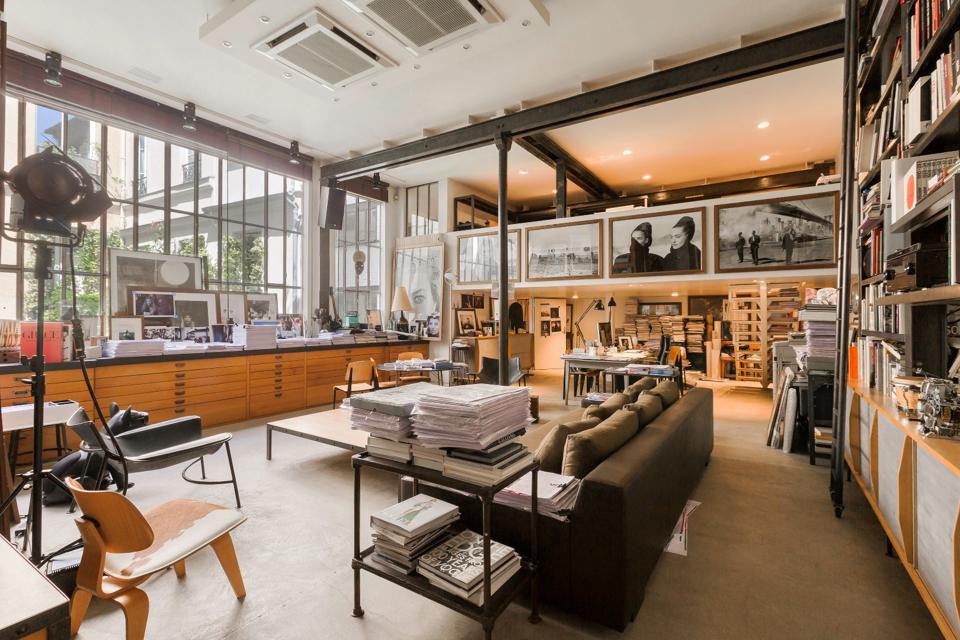
While we’re all dreaming of a French escape, the opportunity to own Peter Lindbergh’s (think Cindy Crawford, Naomi Campbell, Christy Turlington and that heady ‘90s supermodel period) Parisian estate has come up for grabs.
The enviable 6th arrondissement address (5-7 Rue des Grands-Augustins) presents a grand mansion at the site of what was once the Hôtel d’Hercule – itself known to house a venerable who’s who across many differing eras.
Dating to the 14th century, the hotel and its various buildings housed former French kings, Savoy princes, lords, artists – including Picasso, who lived and worked here from 1936-1955 – among others.
King Charles VIII is said to have paid 10,000 pounds for the property in 1493, and it’s also claimed that a nine-year-old Louis XIII was crowned king within the mansion.
Lindbergh, who died in 2019, had the spacious mansion reflect his artistic career and life. The 496sqm residence covers three expansive floors complete with two kitchens, two cellars, a workshop, two parking spaces and a private 103sqm garden terrace.
The first floor harbours an entry hall opening to a lofty living room complete with fireplace, as well as two bedrooms, bathroom, kitchen, mezzanine office and loft.
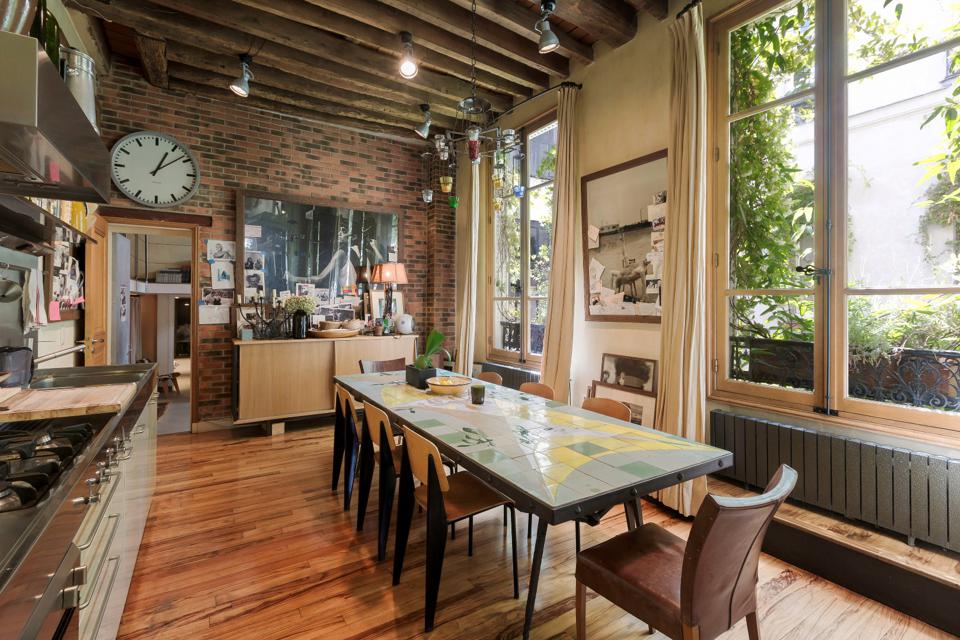
The second floor boasts a robust interior complete with a bedroom, shower room and aforementioned workshop. The third floor, meanwhile, offers a red bricked industrial kitchen topped with wood beams, sloped picture windows and garden terrace.
The property is currently listed with David Stanley at Emile Garcin Propriétés for approx. $27.3 million.
The Australian leather house has opened an immersive four-day pop-up in Manhattan, unveiling its Bloom Collection and redefining what a product launch can look like.
Following the successful launch of its Palais Collection, MAISON de SABRÉ has unveiled a new modular handbag system offering more than 720 styling combinations.
More than 10,000 homes, an expansive central park and a mix of hospitality, retail and wellness facilities will form Azizi Developments’ first master-planned community in the emirate.
2 min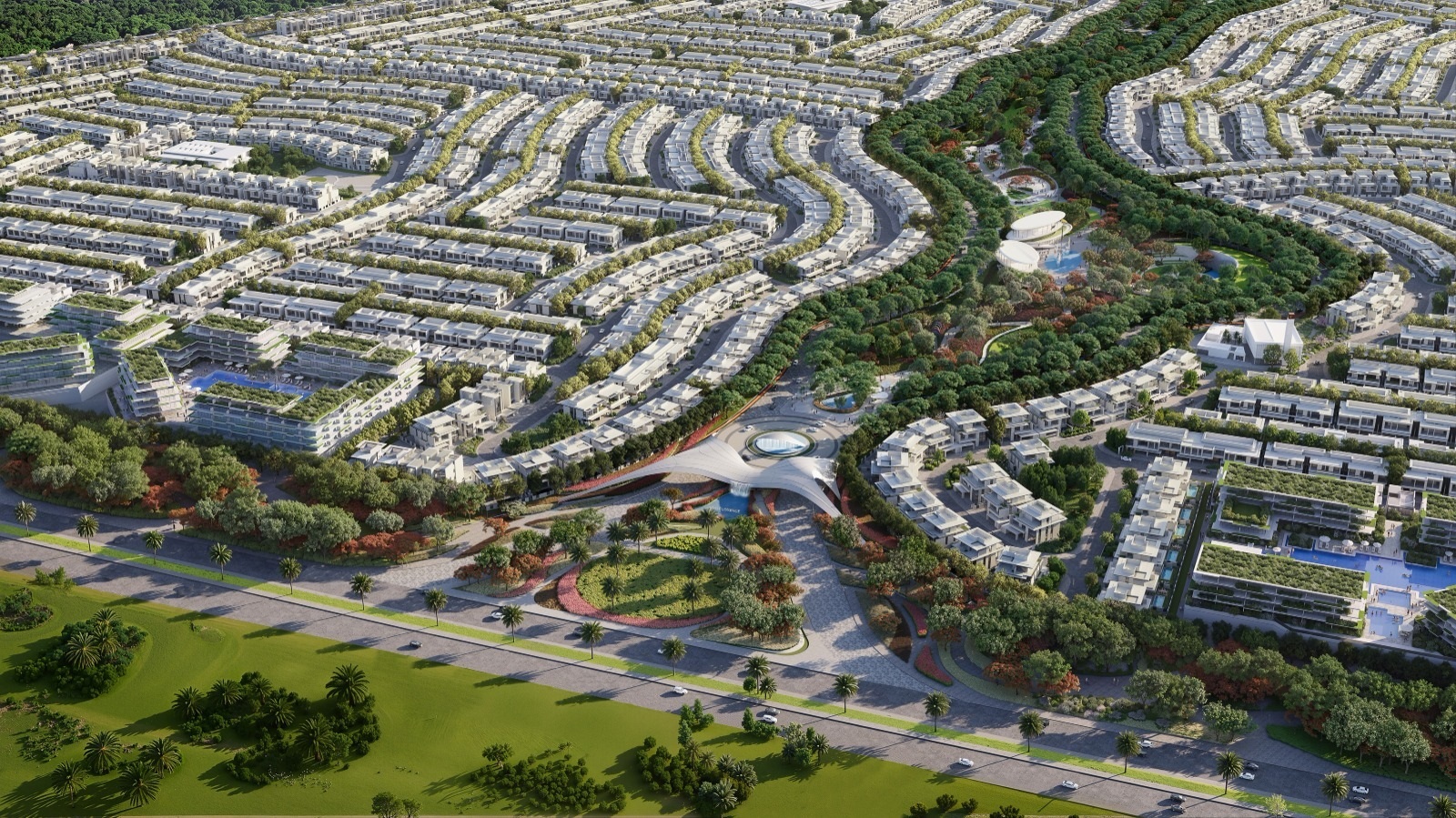
Sharjah is set to receive one of its largest new residential communities, with Azizi Developments unveiling plans for a US$8.1 billion master-planned precinct containing more than 10,000 homes.
Named Azizi Florence, the freehold development will comprise 1,130 villas, more than 6,000 townhouses and 3,500 apartments. Three-bedroom townhouses will start from US$515,000, with an indicative rate of US$231 per square foot of saleable space.
The project marks the Dubai-based developer’s first move into Sharjah, expanding a portfolio that includes the planned Burj Azizi skyscraper and the Azizi Venice community in Dubai.
Rather than treating landscaping as an afterthought, Azizi Florence will be organised around a 1.7 million sq ft central park.
The wider precinct is planned as a self-contained neighbourhood combining homes with retail, hospitality, education, leisure and wellness facilities.
Six residential clusters will sit within the development, each with its own park, clubhouse, community centre and landscaped gardens. The approach reflects a broader shift across large Middle Eastern developments, where greenery, recreation and everyday convenience are increasingly central to the residential proposition.
The scale of Azizi Florence suggests it is intended to function as a neighbourhood rather than a collection of housing estates. Its mix of housing types should also give the project broader appeal, accommodating apartment buyers alongside families seeking townhouses or standalone villas.
Azizi Developments has delivered more than 45,000 homes to buyers from over 100 countries and says it has approximately 150,000 units under construction.
Much of its growth has been concentrated in Dubai, where its portfolio extends across Palm Jumeirah, Mohammed Bin Rashid City, Dubai South, Sheikh Zayed Road and Downtown Jebel Ali.
Its most prominent current project is Burj Azizi, which is intended to become the world’s second-tallest building. Azizi Florence represents a different type of undertaking: a low-rise, family-oriented community built around public space and daily amenity.
For company founder and chairman Mirwais Azizi, the Sharjah project also carries a personal connection. The emirate was his first home in the UAE more than three decades ago, adding a symbolic dimension to the developer’s expansion.
Although Dubai and Abu Dhabi have traditionally captured much of the international attention directed at the UAE property market, Sharjah has been steadily broadening its residential offering.
Large freehold communities such as Azizi Florence have the potential to attract both local families and international purchasers looking for comparatively accessible entry points into the Emirates’ property market.
At a starting price of US$515,000, the project’s three-bedroom townhouses will sit well below the cost of equivalent family homes in many of Dubai’s more established luxury communities.
The ultimate appeal, however, will depend on execution. At this scale, the quality of the public realm, connections between residential clusters and delivery of the promised supporting infrastructure will be as important as the homes themselves.
If those elements come together, Azizi Florence could help establish a new benchmark for large-scale residential development in Sharjah—and give buyers another option beyond the UAE’s better-known property markets.
