A resilient global economy is leading to a rise in wealth once again for the world’s richest individuals, despite plenty of economic and geopolitical uncertainty, according to a new report.
Globally, the population of those with at least US$1 million in investable assets rose by 5.1% last year to 22.8 million, while their wealth rose 4.7% to US$86.8 trillion, according to the 28th annual World Wealth Report from Capgemini Research Institute, a global think tank division of Paris-based Capgemini.
It’s a sharp difference from a year earlier, when global wealth fell 3.3% to US$83 trillion.
The growth trend was particularly evident in the U.S. last year, where economic resilience, slowing inflation, and soaring U.S. stocks led to a 7.3% increase in the population of those with at least US$1 million in investable assets to 7.5 million, Capgemini said. The wealth of these individuals rose 7% to US$26.1 trillion.
“We are back in business,” says Elias Ghanem, global head of Capgemini Research Institute for Financial Services. “It’s a good message for the economy, it’s a good message for the people, and it’s a good message that growth is back on stage.”
Among the ultra wealthy—those with at least US$30 million in investable assets—the global population rose by 5% to 220,000, while their wealth grew by 3.9% to about US$29.4 trillion. That represents 34% of total global wealth, according to Capgemini.
A big reason for the upturn in wealth was a strong recovery in global stocks, and the fact that the wealthy moved their assets out of cash and cash equivalents. Globally, this population’s average allocation to cash was 34% as of January 2023; by January this year, cash allocations dropped to 25% on average.
“There’s a move in the high-net-worth mind from wealth preservation back to growth, and that’s good,” Ghanem says.
Although average global stock allocations dropped to 21% as of January this year from 23% a year earlier, the wealthy boosted their allocations to fixed-income by 5 percentage points to 20%, to lock in higher rates, Ghanem says. They also moved money into real estate as prices declined, increasing that investment, on average, by 4 percentage points to 19%.
“As interest rates went up, the real estate to be sold increased, and thus the price went down, and high-net-worth individuals leveraged the opportunity to invest,” Ghanem says. That investment has a positive ripple effect on the broader economy, he says.
The wealthy also boosted their allocations to alternative investments, mostly private equity and private credit, by 2 percentage points to 15%. That’s money that funds the private sector, where businesses are engaged in creating industries and products “that are essential to transforming our economy,” Ghanem says.
The message all these moves make: “Money is circulating again and money circulating is growth for everyone,” he says.
Capgemini’s annual report doesn’t predict the future, but the shifts in asset allocation point to a new perspective by the wealthy that takes into account the shocks of the recent past, from the pandemic, to inflation, and war.
“The business environment has considered these factors and is able to manage them,” Ghanem says.
Whether China reopens for business remains “a big question mark,” however, he says. Though the Nasdaq stock index in the U.S. gained 43% in 2023, after tumbling 34% a year earlier, the Shanghai Stock Index posted a decline of 3.7% last year, better than a nearly 15% drop a year earlier, but still sluggish.
As a result, Asia has yet to regain its status as the world’s wealthiest region—which it was from 2017-19, on the strength of growth in both China and India, Ghanem says.
The report was based on a survey of 3,119 individuals (including more than 1,300 ultra-wealthy) living in 26 markets in North America, Latin America, Europe, the Middle East, and Asia-Pacific, the firm said.
The findings are aimed at wealth management firms serving these elite populations across the globe. Among the uber-wealthy, Capgemini warns these firms have competition from family offices that are better positioned to orchestrate non-financial services, such as education or travel, and to bargain among banks to get the best deals, and services. That’s reflected in the fact the number of wealth management firms hired by the ultra-wealthy has risen to seven on average from three in 2020, Capgemini found.
“With their diverse operating models fully aligned with the objectives of the families they service, family offices are becoming more visible and are significantly challenging traditional wealth management firms,” the report said.
Capgemini’s conclusion: Wealth management firms need to decide if they want to compete against family offices or collaborate with them.
One way the report urges them to compete is by developing behavioural finance technology driven by artificial intelligence. These systems can be trained to understand biases and identify them early on to help individuals avoid making bad decisions, Ghanem says.
“One of the strongest messages of the report is that it’s time for the banks to leverage AI-powered behavioural finance to interact better with their clients,” he says.
Bonnie Crawford was in danger of missing a connecting flight to Toronto for a board meeting last week when a United Airlines customer-service representative saved the day. She got rebooked on a pricey nonstop flight on Air Canada in business class. For free.
You’re probably thinking, “No airline ever does that for me.” Crawford isn’t just any frequent flier. The chief customer officer for a software company and Portland, Ore., resident has United’s invitation-only Global Services status.
It’s a semi-secret, status-on-steroids level that big spenders strive for every year. American and Delta have souped-up statuses, too, with similarly haughty names: ConciergeKey and Delta 360°. The airlines don’t like to talk about what it takes to snag an invite, how many people have such status or even the perks. Even the high rollers themselves don’t know for sure.
Get into these exclusive clubs and you get customer service on speed dial, flight rebooking before you even know there’s trouble, lounge access and priority for upgrades. Not to mention bragging rights and swag. People even post unboxing videos of their invites on YouTube.
Anyone with this super status needn’t fret about the value of airline loyalty or the devaluation of frequent-flier points.
Crawford was invited to Global Services for 2017 and was hooked. “It was the first taste of this magic, elusive, absolutely incredible status,’’ she says. She wasn’t invited again until this year and fears she won’t be invited back next year due to fewer costly international flights in her new job.
Shrouded in secrecy
Airlines don’t publish qualifications for Global Services, Delta 360° or ConciergeKey. That doesn’t stop road warriors from speculating in online forums about the required spending levels ($50,000-plus a year is mentioned a lot) and travel patterns (lots of high-cost international flights in premium cabins on the airline, not partner carriers).
Complicating matters: Some airlines bestow the status as part of a corporate contract, with companies allowed to pick their nominees.
Scott Chandler , senior vice president of revenue management and loyalty at American Airlines , won’t divulge any metrics. He says American devotes a significant amount of time and resources to its coveted ConciergeKey program because the travelers are the airline’s most valuable. Delta and United declined interview requests and didn’t share any info beyond statements about the programs’ exclusivity.
Chandler says fliers can reach ConciergeKey status through a combination of spending on American flights, shopping portals and credit cards. How much? He wouldn’t spill or confirm the $50,000 guesstimates. He says the makeup of the membership is broader than most people think.
“They’re basically interacting with American on a daily basis, not just when they’re flying,’’ he says.
Steve Giordano of Cherry Hill, N.J., is a managing director of a flight test and aircraft delivery company that shuttles pilots to or from assignments around the globe. The company spends up to $2.5 million on airfare every year, and he has been ConciergeKey for several years. He remembers once when the dedicated customer-service desk alerted him to a cancellation in Dublin before the flight’s pilots even knew. (He was friends with the pilot.)
In April, the airline told him he didn’t qualify for this year. He says he wasn’t too disappointed because he flies United more and has Global Services status. Giordano says he noticed ConciergeKey service slipping. On a vacation to Colombia earlier this year, he says the dedicated customer-service line and a gate agent were no help getting him home after a series of flight issues. He complained and received a form letter back. A spokeswoman says the airline sees higher satisfaction scores from ConciergeKey members than any other customer group.
In May, the airline sent him an email renewing his status after all. American is suffering through a self-induced business travel slump and working to woo back travellers .
Ace problem solvers
Giordano has also taken advantage of chauffeured drives in luxury cars to the gate during a tight connection. In Houston, United escorted him and his business partner down the stairs to the tarmac and drove them in a Jaguar to their next plane. Delta uses a Porsche , American an SUV.
“CBS Mornings” co-host Gayle King has ConciergeKey and hitched a ride like that in April and thanked the American Airlines employees who helped her in an Instagram post .
Those transfers are far from routine. Travellers with the status say the most prized perk is quick help when flight troubles of any kind arise.
A senior partner with a major consulting firm who has earned status in all three programs says a United Global Services representative called him on his way to the airport a few weeks ago after noticing that he hadn’t arrived for his flight. The cutoff time for losing his seat was approaching. They saved his seat after he confirmed he was en route.
In Charlotte, N.C., last week, as the executive was sprinting to his connecting flight, a ConciergeKey representative called the airport to make sure the gate agent knew he was coming. Boarding had ended. He got on the plane.
“That’s the stuff that makes the difference,’’ he says. “That’s the s—t that gets you home.’’
There is a limit, of course.
“They don’t hold the plane,’’ he says. “If they know you’re coming, they might not shut the door as quickly.’’
Much to his parents’ chagrin, he can’t play the super-status card to help others. And all the status in the world can’t overcome weather, air-traffic delays or missing crews.
Kim Anderson , chief executive of an online lending company, is a longtime Delta loyalist who lives in Fort Lauderdale, Fla.
Before his Delta 360° invite, Anderson had seen other travellers with the 360 bag tag on their backpacks and asked a few employees about the status over the years, but didn’t know much more. He travels a few times a month, buys extra-legroom seats or better, regularly buys a Sky Club membership and has an American Express card he uses to transfer miles to Delta. He estimates he racked up 200,000 Delta miles a year for the past few years.
Anderson was still surprised to find an invitation in his inbox a couple of years ago and says he hasn’t cracked the code.
“If I knew that, I’d put it in a bottle and sell it on Amazon ,’’ he says. He got a repeat invite this year.
Anderson says the customer service is over the top. He fired off an email complaint about rushed in-flight service in first class on a recent flight and had an answer—and bonus frequent-flier miles—before he landed.
“Those are not their trainees, I can tell you that,’’ he says.
A mansion-sized Dubai penthouse has sold for AED 139 million (US$37.8 million), a record high for the neighbourhood surrounding the city’s iconic Burj Khalifa skyscraper, according to an announcement Monday from the building’s developer, Omniyat.
The four-bedroom home is within the Lana Residences, Dorchester Collection, a hotel and residential property managed by the luxury hospitality brand that opened in April in the Burj Khalifa district, the area named for the world’s tallest building.
Courtesy of Omniyat
Designed by London-based architecture firm Foster + Partners and with interiors by French design duo Gilles & Boissier, the penthouse—one of 39 units at the building—spans close to 16,600 square feet and boasts open spaces, natural materials and views of the Marasi Bay Marina and Dubai skyline.
There are also floor-to-ceiling windows, towering ceilings and a terrace with a pool, according to listing photos.
The penthouse has almost 16,600 square feet of living space. Courtesy of Omniyat
“It’s a sanctuary in which every detail has been thoughtfully curated to evoke a sense of harmonious balance,” Mahdi Amjad, founder and executive chairman at Omniyat, said in a statement.
Mansion Global couldn’t identify the buyer of the apartment.
The building itself offers residents valet parking, an outdoor pool and all of the facilities at the connected hotel, which includes restaurants, garden terraces, cocktail bars, a cigar lounge, a Dior-branded spa and a gym.
Dubai’s property market has enjoyed a major upswing since the pandemic, complete with scores of record-breaking deals and surging home prices.
In the first quarter of the year, the city was the world’s hot spot for super-prime property purchases, with 105 homes priced at US$10 million or more changing hands in the three-month period.
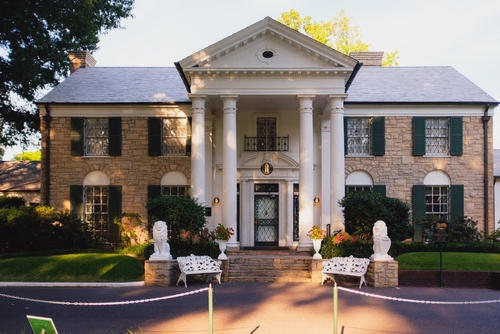
When a company tried in May to auction off Graceland, the iconic former home of music legend Elvis Presley in Memphis, a Tennessee court stepped in to stop it.
The court stopped the sale because the company that was trying to auction off the property was fake. Also fraudulent were the supporting documents the fraudsters presented that purported to show that Lisa Marie Presley, Elvis’s late daughter, had defaulted on a loan they claimed they made to her for which she used Graceland as collateral.
While this audacious and complex attempt at defrauding a famous family made national news, most other cases of attempted title theft or mortgage fraud don’t. But homes such as Graceland, where the original owners are deceased, are popular targets for scammers, according to Victor Petrescu, a real-estate attorney with Levine Kellogg Lehman Schneider & Grossman in Miami.
Homes with out-of-state owners, vacant plots of land and investment properties owned by limited liability companies are also particularly vulnerable, he said.
Here’s how it works: A fraudster targets your house and assumes your identity, using tactics similar to identity thieves to acquire your personal information and create fake IDs. He or she then tries to sell it to an unsuspecting buyer by executing a forged deed in your name. An alternative scam is to submit a mortgage application in your name to get cash out of the house.
The good news is that except in very rare circumstances, a fake deed won’t transfer your title, even if it initially gives the appearance of a transfer in public records, nor will a forged mortgage create any obligation for an innocent homeowner to pay. The bad news is that restoring your title and clearing the property of any fraudulent mortgages can be a lengthy and expensive process.
Sarah Frano, a vice president and real-estate fraud expert at First American Title Insurance Co., said there has been a sharp rise in seller impersonation fraud over the past few years, where a fraudster impersonates an owner by forging a deed conveying property to an unsuspecting buyer.
Several factors are driving the increase, including the rising popularity of remote closings and notarisations, where the parties aren’t present in person at the closing table. Home equity, which hit a record $16.9 trillion in the first quarter of 2024, according to data provider Intercontinental Exchange , is also contributing to the incidence of fraud. For scammers, that equity, which can be unlocked by a sale of a home, a cash-out refinance or a second mortgage, is an opportunity to sell the property out from under you or to steal your identity to mortgage your house.
“If you bought a house and have a big mortgage, the chances of it being stolen from you are quite slim,” said Richard Howe, register of deeds of the Northern District of Middlesex County in Lowell, Mass. “The key for this is for the wrongdoers to get a loan against the property or sell it, and nobody’s going to buy a property or put a loan against it if there is a big mortgage on it.”
Petrescu said he’s also seeing a rising number of title theft cases involving investment properties owned by limited liability companies, where a partner who was recently kicked out of the LLC continues to act and executes documents trying to transfer the property when he’s no longer part of the company or authorised to sell it.
Still, the actual risk of losing your home to title theft is quite low. “There would have to be an extreme set of facts showing the owner was aware of the issue and took no action to correct it before that deed could be deemed as valid,” said Petrescu.
But there are ramifications nonetheless. If a homeowner discovers a fraudulent deed or mortgage while applying for a home-equity loan, for example, that could push the loan application back six months or more while title gets cleared, Petrescu said. And, if they are attempting to sell the property, a title company may not want to insure the property if there is a rogue deed recorded in the county records even if it is apparent that it wasn’t a valid transfer. “So, this has real consequences,” he said. “Even if someone is not going to lose title to their property, it could be a huge setback for them.”
Here are some things you can do to avoid becoming the victim of home-title theft.
Be alert to the early signs . After targeting a vulnerable property, a home-title thief will usually try to impersonate you using forged documents, such as a Social Security card or driver’s license. There are telltale signs that someone may be trying to steal your identity. Credit inquiries will show up on a credit report, so be sure to check your credit reports regularly or consider subscribing to one of the paid services that monitors credit on your behalf. You can also freeze your credit, which restricts access to your credit report. If you receive strange bills in the mail or phone calls from lenders you haven’t contacted, or if strangers start asking questions about who owns your vacant vacation home, those can also be signs that home-title theft may be under way.
Monitor your title . Many counties offer free title monitoring services that notify owners if a new document is recorded against their property. In the Northern District of Middlesex County in Lowell, Mass., owners can register up to three residential properties, according to Howe, who noted that in his 29-year career he has only seen one case of title fraud, in January 2024, and that involved a property that was vacant because the owners were deceased. Frano suggests setting up a free Google alert for your property address. That way, if a fraudster lists your property for sale, an alert may help you stop it before it happens.
Buy the right type of title insurance . While lenders require title policies to insure their own interests when a property is mortgaged, it is a good idea to also purchase an owner’s policy when you purchase a house. There are two different types of owners’ policies, and, unfortunately, they are similarly named, which can get confusing. A standard American Land Title Association (ALTA) Owner’s Policy provides coverage only for forgeries that took place before you purchased your home, such as fake deeds in the chain of title before your closing. But this type of policy won’t protect you against forgery occurring after your property purchase. For that, you may want to consider the more comprehensive Homeowner’s Policy of Title Insurance, which does cover forgeries occurring after your closing, according to Steve Gottheim, ALTA general counsel. That enhanced coverage, available in most states, comes at an additional cost, though, which varies based on the location and purchase price of your home. Either policy will cover you for losses you incur due to fraud or forgery, including attorney fees and expenses incurred to clear title, up to the policy limit, but only the Homeowner’s Policy will cover fraud after you purchase the home.
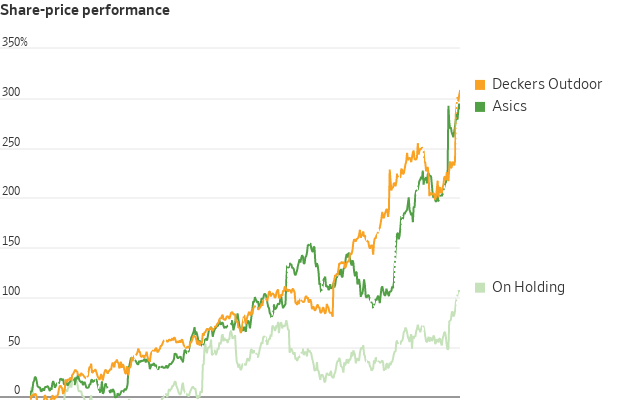
The running-shoe maker’s stock price has quadrupled in total return terms over the past two years. Its financial performance is strong: Revenue in its last reported quarter grew 14% from a year earlier while its operating profit surged 53%.
Asics has long been a well-loved brand among the running community. Around a quarter of 54,000 runners who finished the Paris Marathon sported a pair of Asics, including both winners in the men’s and women’s races, according to the company.
In fact, even Nike can trace its roots back to the Japanese company. Nike began its business in the 1960s by importing and distributing shoes from Asics, then known as Onitsuka, in the U.S. Onitsuka Tiger remains a high-end fashion brand within Asics.
Asics has benefited from the Covid-19 pandemic: More people picked up running as a hobby when they had nothing else to do. At the same time, people working from home began giving priority to comfort in their footwear—discovering that lightweight shoes with cushioned soles designed for running are pretty comfortable for walking around in, too. Running-shoe upstarts such as Hoka and On Holding have also seen explosive growth in the past few years. Hoka’s sales in the quarter ended in March surged 34% from a year earlier, pushing shares of its owner , Deckers Outdoor , to record highs.
The performance running shoes segment is Asics’ largest by revenue, and it has tried to maintain a close-knit community of runners. Asics acquired Runkeeper, a popular fitness-tracking app among runners, in 2016. In recent years, it has been acquiring race-registration companies, including Njuko Sas in Europe and Register Now in Australia. Its loyalty program has nearly 15 million members globally.
But outside of runners and Onitsuka Tiger, Asics was perhaps best known for “dad sneakers” —a style of shoes that are picked more for practicality than aesthetics. Lately, however, some old Asics designs have become unlikely fashion symbols. Youngsters have apparently eschewed conventional beauty standards and embraced the uncool: Crocs and Hoka are some other examples of “ugly shoes” that have seen an explosion in popularity .
Asics has done its fair bit, too. Its collaboration with designers from Vivienne Westwood to Cecilie Bahnsen have generated lots of buzz on social media. For example, its redesign of its 2008 Gel-Kayano 14 sneaker with Canadian design studio JJJJound has been a smash hit . The shoe can sell for more than $1,000 on online marketplace StockX. Asics was the fifth most-traded brand on StockX last year, rising from No. 10 the year before. Revenue for the company’s more fashion-minded SportStyle division grew 52% year over year in the last reported quarter.
Even better news for investors is that the company has been more profitable, too. Operating margin in its quarter ended in March was 19.4%, compared with 9.5% two years earlier. Partly that is because the company has shifted its product mix to more premium products. It has also been selling more directly to customers than through wholesalers. Around 64% of its sales were through wholesale in the first quarter, down from 74% three years earlier. E-commerce sales have risen from 13% to 17% of sales.
Asics trades at 34 times forward earnings, according to S&P Global Market Intelligence. That is a similar multiple as Deckers Outdoor but higher than bigger peer Nike, which trades at 25 times. The premium could be justified if Asics could keep growing its sales with better margins.
Asics is sprinting ahead. It still has room to run.
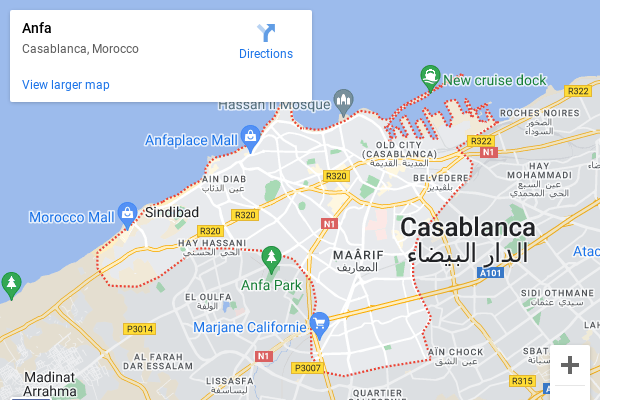
Offering a beguiling blend of rich history and cutting-edge modernity, the seaside neighbourhood of Anfa is where Casablanca’s most exclusive and luxurious residences are located.
The historic Moroccan neighbourhood still bears the original name of the port city, which was called Anfa from the time it was founded around the 10th century B.C., up until the 15th century, when its name changed to Casablanca.
“In the 7th century, Anfa was home to a fishing port. It then lost its influence until the period of the French Protectorate,” said Marc Leon, CEO of Christie’s Real Estate Morocco. The French ruled over Morocco from 1912 to 1956, after which Anfa “became one of the most emblematic districts of Casablanca due to its rich and fascinating history, its colonial and Art Deco architecture, its green spaces and the presence of the Royal Golf Anfa Mohammedia, as well as the royal residence,” he said.
The largest city in Morocco, Casablanca is the country’s economic and business capital, but the peaceful residential streets of Anfa offer respite from the hustle and bustle of big city life. The neighbourhood is set between the beachfront and the modern city centre and is known for its historic sites, its hundred-year-old racetrack and its nine-hole golf course. Together with the neighbourhoods of Racine and Gauthier, Anfa forms part of Casablanca’s “Golden Triangle,” offering a mixture of historic and modern homes, primarily villas set amid lush, spacious gardens.
Boundaries
The Anfa neighbourhood runs from the ocean to a small inland hill. It is bounded to the north by the Atlantic Ocean and to the east it extends as far as the city’s railway line and Avenue 2 Mars. To the south, it is bounded by Boulevard Al Qods, and to the west it encompasses the newly developed Casablanca Finance City, extending along the coastline as far as Madame Choual beach.
Price Range
Luxury properties in Anfa range in price from 17,000 Moroccan dirhams (US$1,705) per square meter to 35,000 dirhams per square meter, said Vanessa Bouskila, sales manager at Kensington Luxury Properties Casablanca. The larger the property, the lower the price per square meter, she added. Prices are primarily determined by the property’s location and its views, she said, with seafront properties commanding a premium.
“The most expensive villa currently on the market is listed at US$80 million,” she said, adding that the trophy properties in the neighbourhood were built by famous architects, such as the private Anfa villa designed by French icon Jean Nouvel or the circular Villa Camembert, which was designed in 1962 by German architect Wolfgang Ewerth. Properties with a famous former inhabitant are also in high demand, she said, citing Villa Bolloré, formerly owned by French industrialist Vincent Bolloré.
Housing Stock
Anfa offers a diverse selection of luxury residences, “a combination of old French colonial buildings, traditional Moroccan villas and new modern constructions on large plots of land, most of which have swimming pools,” Leon said. The neighbourhood is also famous for its experimental Art Deco and modernist villas, designed by prominent Moroccan and international architects.
Anfa is divided into four sections, according to Leon. The most exclusive and sought-after residential district is Anfa Supérieur.
Most of the neighbourhood’s new homes have swimming pools. Courtesy of Kensington Luxury Properties
“Located on a hill near the golf course, the royal residence and the homes of Moroccan notables, it is the most popular area and properties for resale are very rare and therefore very expensive,” he said. The district offers very high levels of privacy and security, he added. “There are no nearby commercial amenities. The area is only residential and isolated from the city. You will not find a single traffic light there.”
Another popular residential area is Anfa Inférieur, “a privileged district at the foot of the hill, delimited by Boulevard André Masset and Boulevard Kennedy,” he said. The neighbourhood also encompasses Anfa Raha, an extension of Anfa which was integrated around 15 years ago and offers properties with particularly large areas of land, starting at 2,000 square meters.
Residents who prefer a more modern milieu are most likely to be drawn to the former site of the city’s old airport, which has been reimagined as a business district called Casablanca Finance City, offering high-end contemporary apartments.
What Makes It Unique
With its easy access to both the seafront and the city centre, Anfa is ideally placed.
“The sea and the corniche with its attractions are a few hundred meters away on foot,” Bouskila said.
Anfa’s Arab League Park is centrally located. Hans Lucas/AFP via Getty Images
Alongside its uniquely leafy and calm residential streets—where residents can often be seen out for a jog—the neighbourhood offers plenty of green space, including the more than 100-acre Anfa Park, located in Casablanca Finance City, and the centrally located Arab League Park, with its stately row of fountains. The historic Hippodrome Casablanca Anfa was built in 1912, and horses still race along its sandy track.
Historic landmarks include El Hank Lighthouse, which offers spectacular views of the city and sea, Hassan II Mosque, one of the largest in Africa, with space to host over 100,000 worshippers, Mohammed V Square—affectionately known as Pigeon Square in honour of its abundance of the birds—and Casablanca Cathedral, which was built in 1930 and today serves as a cultural centre hosting art exhibitions and events.
Luxury Amenities
“Anfa borders the Atlantic Ocean and the numerous restaurants and private clubs of the Corniche,” Leon said. “On the city side, multiple ultra-modern private medical clinics have been established, which attract local and international patients.” The area also offers some of the city’s finest luxury shopping opportunities, with a wide range of upmarket international brands available in Morocco Mall and the Anfaplace Mall.
“The most popular sport is golf,” Bouskila said. Royal Golf Anfa Mohammedia is popular not only for its rolling greens but also for its restaurant and bar, where club members meet in the evenings, she added.
Who Lives There
With its opulent homes, a high level of security and an emphasis on privacy, Anfa is most popular with business people and politicians, Bouskila said. Over the years, it has served as a meeting point for influential decision makers.
Hassan II Mosque is one of the largest in Africa. Gamma-Rapho via Getty Images
“The neighbourhood’s history is marked by major international meetings, most notably in 1943 when Franklin Roosevelt, Winston Churchill and the French generals Henri Giraud and Charles de Gaulle outlined the Allied strategy for the post-World War II era,” Leon said.
Notable Residents
Current notable residents include former Minister of Industry, Trade and New Technologies Moulay Hafid Elalamy and his family; President of the General Confederation of Moroccan Enterprises Chakib Laalej; and Steve O’Hana, president of the Morocco-Israel business council, according to Bouskila.
Outlook
Anfa has long commanded high prices thanks to its exclusivity, but in recent years the cost of homes in the historic neighbourhood has soared.
“Since the Covid-19 pandemic, prices have increased—they have never been so high,” Bouskila said. Strong demand for the limited housing stock in Anfa ensures that prices remain elevated in comparison with other areas of the city.
“Luxury products behave the same way around the world,” she said. “Crisis does not impact the price of a Hermès bag or a Ferrari.”
It takes marine pearls about two years to develop in their shells. It took Bonnie Fraker about two seconds to declare why she wouldn’t wear them around her neck. “A pearl necklace makes me look dated,” said the retired Manhattan teacher, 73. “Perhaps there’s such a thing as ‘too classic.’”
Still, pearls persist. Ask Leigh Batnick Plessner, chief creative officer at Catbird, the Brooklyn fine-jewellery label that counts Meghan Markle and Taylor Swift as fans. “Pearl necklaces are still in demand,” she said. “But the appetite has really changed from traditional necklaces to more surprising takes.”
The traditional strand has long signified opulence and power. Julius Caesar commanded that only aristocrats could wear the gem during his reign. Figures as diverse as Marie Antoinette and the Yongzheng Emperor of the Qing Dynasty coveted the strands. In the 20th century, stateswomen like Queen Elizabeth II and Mamie Eisenhower wore them to official events. By the 1980s, punks paired pearls with their spiked collars to subvert yuppie style. Still, pearls were most associated with formidable women like Margaret Thatcher and Barbara Bush, along with the preppy clique in the 1988 film “Heathers.”
Instead of stringing the old-school pearl necklace along, many of today’s brands make pearl chokers, sometimes with smaller “baby” pearls that sit at mid-neck instead of resting on clavicles. Dior’s Couture runway in Paris featured pearl chokers; California designer Sophie Buhai makes hers with a black satin-cotton cord and single central pearl. The style “looks more modern,” said June Ambrose, a creative director and costume designer for stars like Mary J. Blige and Ciara. Ambrose wears pearls from both thrift stores and Valentino.
Also popular: freshwater pearls, uniquely shaped instead of uniformly round. Once considered the messy stepsister of marine pearls, the gems look like smeared blobs of ivory glitter—in other words, odd enough for the fashion world to swoon. “I like the individualism of them,” said Simone Rocha, the designer whose recent couture line for Jean Paul Gaultier included gowns that subbed in strands of iridescent baroque pearls for typical satin straps. Off the runway, some women flaunt them as a way to look sophisticated but not uptight. “They feel a bit more rebellious,” noted Taffy Msipa, 28, an interior creative director in Bath, U.K., who wears her Monica Vinader freshwater pearl necklace with slouchy suits. “I like how they let me look elegant, but elegant in my way.”
There’s also the “half-and-half,” an industry term for a necklace that’s half pearls and half something else. On the recent Cannes red carpet, actress Michelle Yeoh, 69, wore Mikimoto’s version with cultured pearls on one side and a spray of diamonds, inlaid with white gold, on the other.
After Yeoh’s appearance, Instagram fans lauded the look with comments like “Not your grandmama’s pearls!” and “weird but amazing,” while searches for “half and half necklace” spiked 30% on Google Trends. A gold-and-pearl version of the style popped up in the “Mean Girls” movie remake, while pop star Dua Lipa has sported Vivienne Westwood’s pearl-and-rhinestone collar.
Don’t want to part with your classic strand of marine pearls? Dallas-based therapist Katie-Beth Crumrine, 23, had her vintage double-loop necklace shortened to a collar-length one. She wears it with linen Madewell tops and jeans. “It helps elevate my look,” she said. “But isn’t snobby.” Mixing pearls with casual pieces like ceramic beads can also keep them current. Meanwhile, the creative director Ambrose tells famous clientele to pair pearls with minimal makeup, because “a pearl necklace and a bare face is chic; a pearl necklace, a full face of makeup and a red lip is really trying.”
Some modern pearl looks eschew necks altogether. See the pearl-strung friendship bracelets by Vinader, and Rocha’s irregular pearl earrings. (“I like it when they’re kind of odd and not matching,” she said.) According to jewellery designer Plessner, varied interpretations have become the point. “Pearls are kind of like a Rorschach test for your fashion personality,” she explained. “You want to be weird or ethereal or powerful? There’s a pearl look for that.”
Are Pearls Too Old-Fashioned? We Asked NYC Women.
“They’re more classy than old-fashioned. They remind me of Jackie O. But would I wear them right now? No. Maybe when I’m older.” —Brittany Bower, 29, Hospital Nurse
“No! I wear my pearls a lot, actually. I really like the weight of how they feel on my neck.” —Tara Rubin, 69, Casting Director
“Yes, but in a nice way. They remind me of my great grandmother, Nita. She used to wear them. She used to let me play with them, which I loved. I don’t think I’d wear them now, though.” —Sydney Willard, 29, Barista
“Nothing’s old-fashioned in 2024! I would wear pearls today, but, like, with a sweatshirt.” —Asia Harris, 24, Student
“I used to think they were kind of old-fashioned, like in ‘The Crown’, and then I started wearing them to the gym with a black workout tank. I have never felt more like a cool New York girl.” —Tara Strahl, 42, Library Consultant
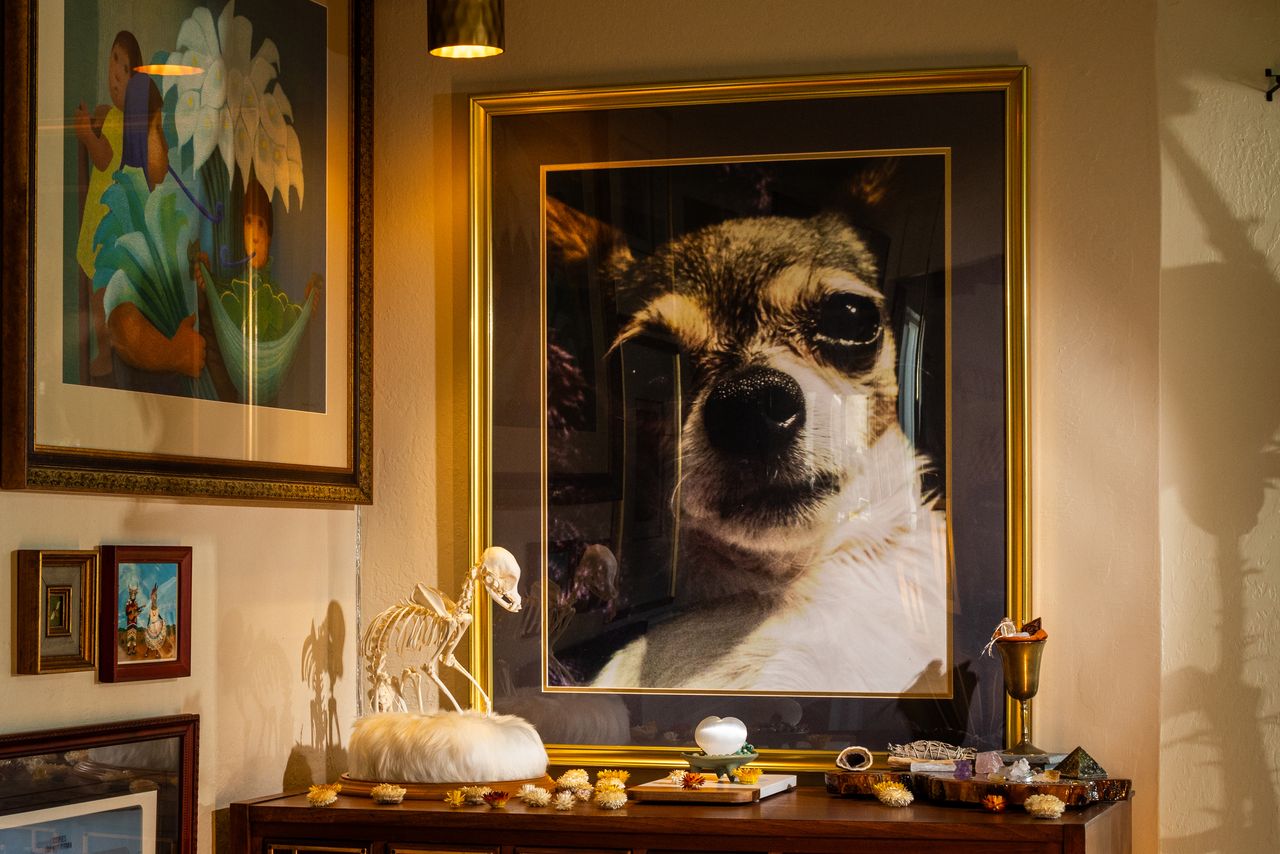
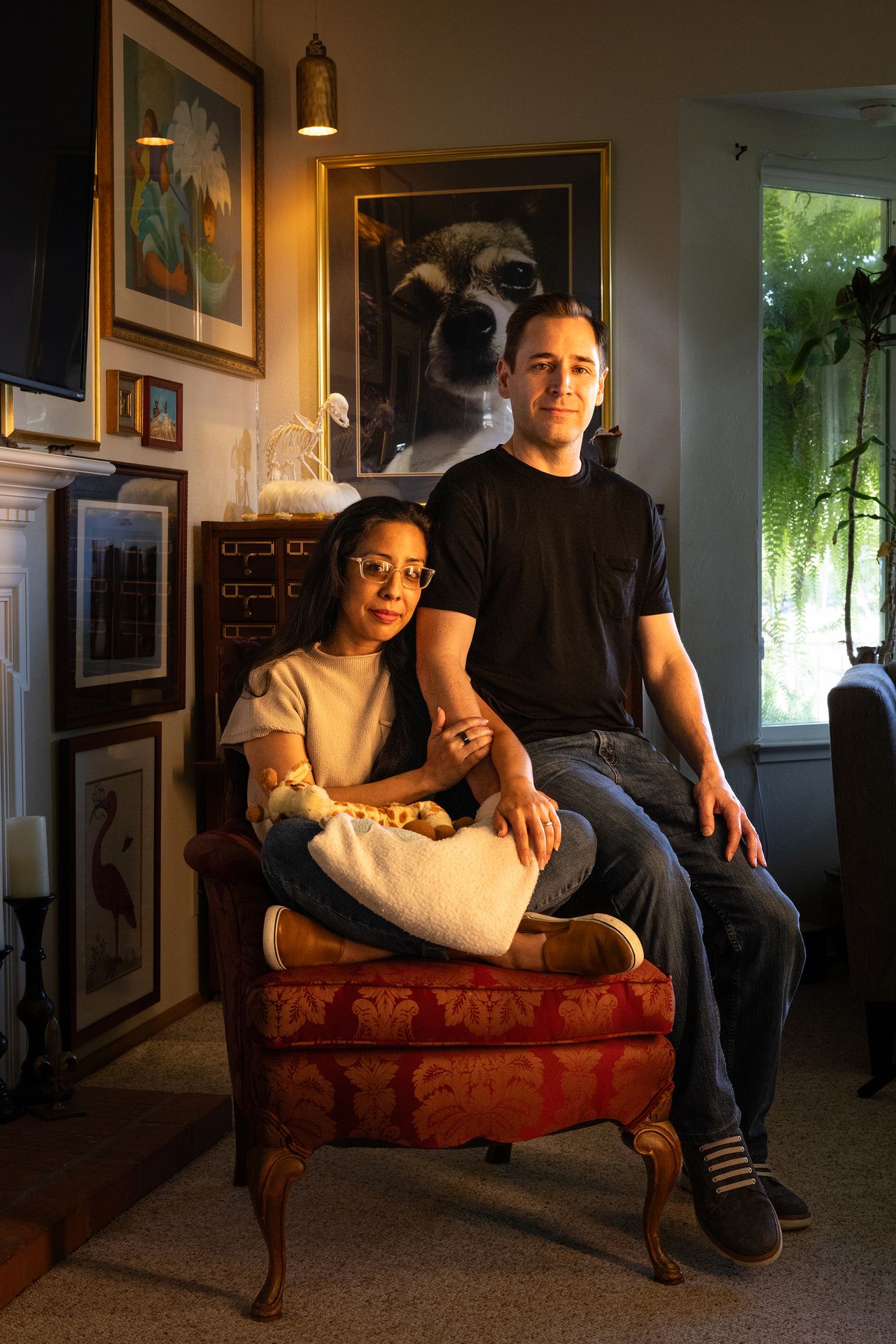
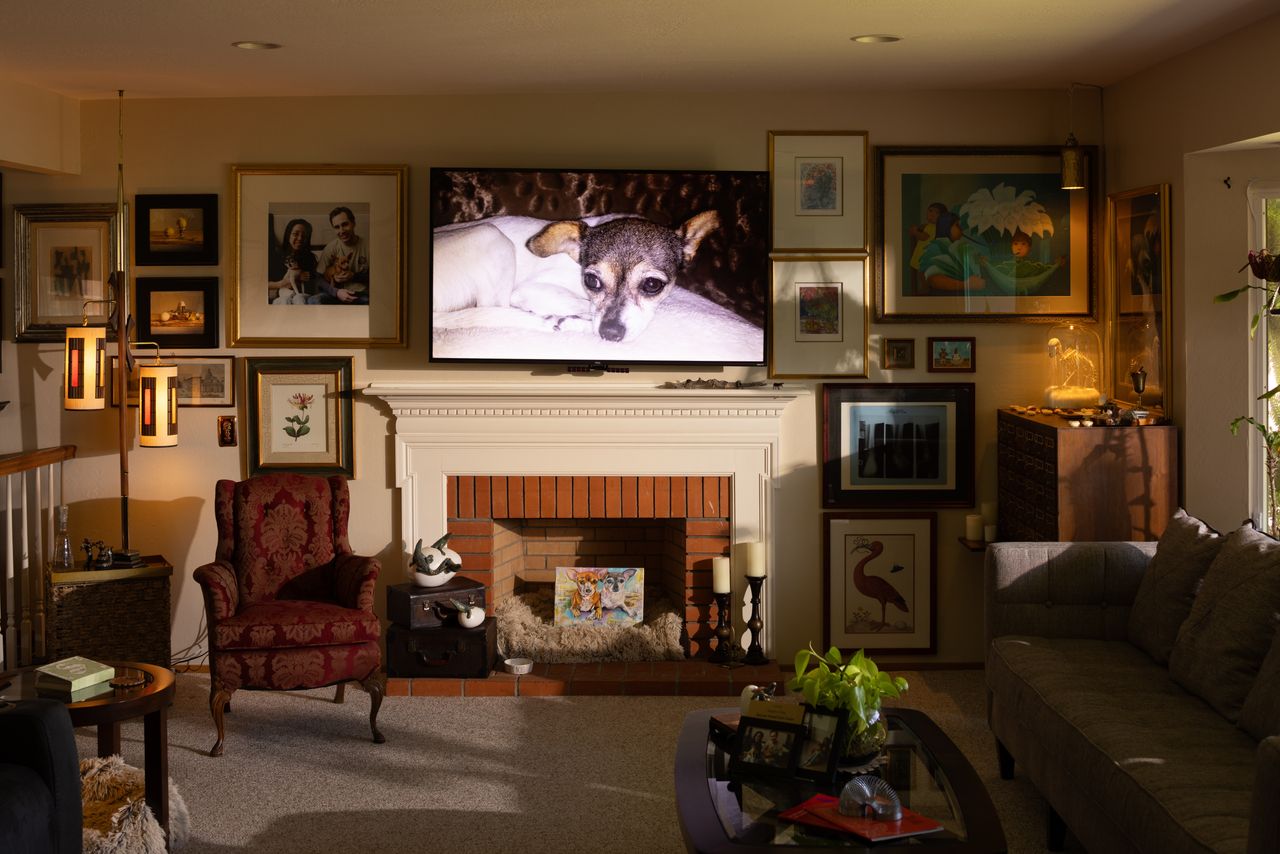
In San Jose, Calif., a preserved Chihuahua skeleton stands on a bed of fur atop an antique library card catalog. A photo of the dog, Shirley, peers down on the living-room display.
Mari Moore, a 45-year-old paralegal, paid around $6,500 to preserve her dog’s bones, a process called bone articulation, after the rescue dog, who was at least 10 years old, died in 2020.
With a new appreciation for the brevity of life, she and her husband, Kirk Moore, 45, started therapy to improve their relationship after Shirley died.
Mari and Kirk Moore remember their dog, Shirley, with a large photo and a display of her preserved bones. PHOTO: HELYNN OSPINA FOR THE WALL STREET JOURNAL
“When Shirley passed, our whole lives changed. We really realised that we want to appreciate each other,” she said. Now, they visit the shrine almost daily, especially during fights and difficult days. “It reminds me of real, pure, unconditional love, and it makes me want to be better.”
Mourning owners are memorialising their beloved cats and dogs at a rate not seen in over a century, when Victorian-era pet owners frequently taxidermied deceased companions, said the Moores’ taxidermist, Lauren Kane of Precious Creature Taxidermy in Redlands, Calif.
Lifelike taxidermy and bone articulation can cost thousands of dollars. But urns, some made of bronze or inlaid with ornate mother-of-pearl designs, are a more common and accessible choice for people who want to honour their pets and integrate a memorial into the design of their home, said Tim Murphy, executive director and chief executive of the Casket & Funeral Supply Association of America. The trade organisation supports professionals in funeral services for humans and, increasingly, for pets, he said.
Artist commissions
In 2023, about 33% of funeral homes offered pet-care services, up from 26% in 2021, according to the National Funeral Directors Association, a professional organisation for funeral-services professionals in Brookfield, Wis.
Demand has heightened since the pandemic, when bonds grew stronger as people spent more time at home with their pets, said Donna Shugart-Bethune, executive director of the International Association of Pet Cemeteries and Crematories.
While pet urns usually cost $50 to several hundred dollars, customisation can push the expense into the thousands, said Murphy. Sentimental pet owners frequently commission artists to make custom sculptures of bronze, papier-mâché, wood or pottery as vessels for pet ashes, said Coleen Ellis, the executive director of the International Association for Animal Hospice and Palliative Care.
“There is not too much of a limit on what people are willing to spend on their pets. I actually find that people are willing to spend more money on their pets than on their human loved ones,” said Nikki Nordeen of Terrybear, a St. Paul, Minn.-based supplier of memorial items to the funeral industry and pet-loss professionals.
While pet urns are usually smaller and less expensive than those designed for humans, Nordeen said some people are choosing personalised, high-end urns that rival or even exceed the cost of traditional human urns, she said. Without customisation, Terrybear’s pet urns retail for about $50 to $400 compared with an average $120 to $800 for traditional urns, said Nordeen.
Bucket and Mr. Pickles
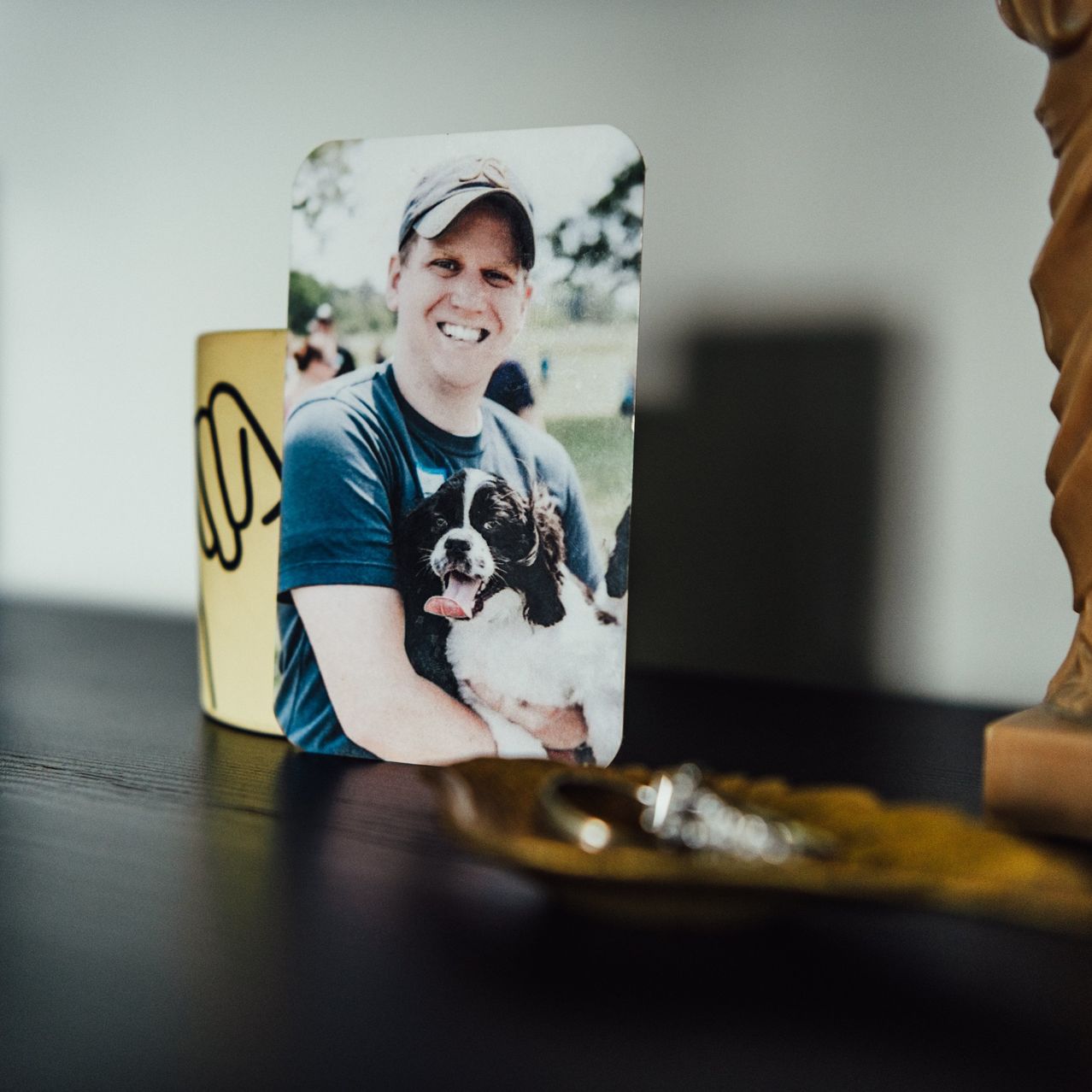
In Manhattan, Ill., a $250 square wooden urn is disguised as a shadow box, showcasing three photos of a cocker spaniel mix named Bucket, her collar and a tag that identified her as blind.
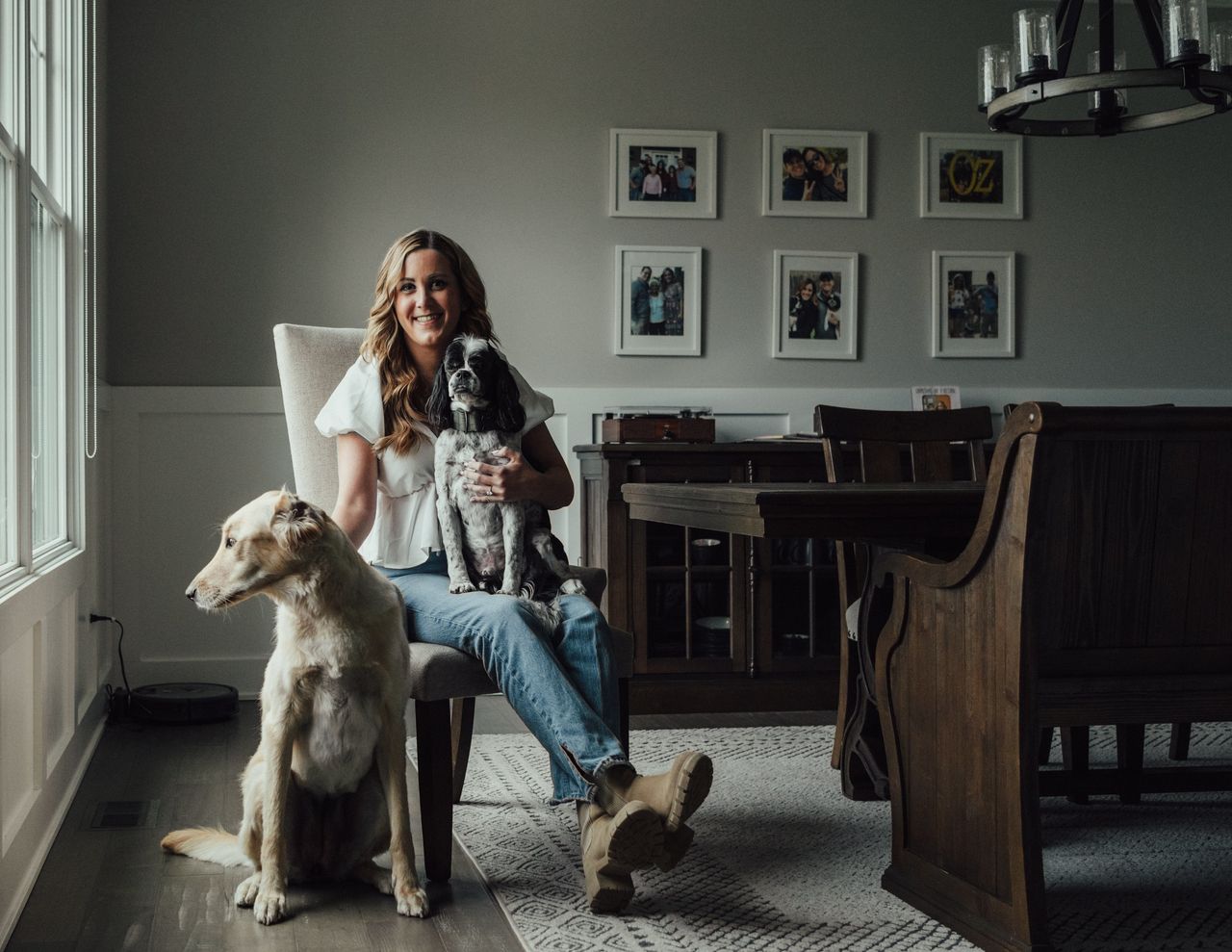
Kate Becker, a 36-year-old critical care nurse practitioner, and her husband, veterinarian Scott Becker, adopted two dogs—Bucket and Mr. Pickles—in 2014. Four years later, she said they built a house with a light-filled guest bedroom where Scott played guitar to decompress after difficult days.
Kate Becker sits with Bucket’s surviving companion Mr. Pickles (right) and her new rescue dog Sola (left). PHOTO: KEVIN SERNA FOR THE WALL STREET JOURNAL
But Kate’s life changed when her husband died of cardiac arrest at age 40 in 2020, and Bucket went into kidney failure and had to be put down a year later.
“Scott and I did not have any children, so my dogs 100% got me through,” she said. “Losing Bucket—that was really hard, especially so soon after Scott passed.”
Kate placed Scott’s urn, a box with a sea-like glass exterior, with Bucket’s urn on a dresser in the guest bedroom, with candles and her late husband’s ball cap.
“I’m grateful that Bucket is still part of my home,” said Kate, who said she limits the special items displayed to maintain an uplifting space for meditations, with Mr. Pickles by her side.
Often, mourning pet owners drape a collar over the urn’s neck and arrange the pet’s favourite toys around it. Designers recommend creating photo walls and using shadow boxes to display fur, whiskers, toys and collars. Plants can be placed near urns to represent the continuation of life in a home after a pet’s death, said interior designer Jeannelly Hartsfield of Ivyleaf Interior in Powder Springs, Ga., who has helped clients create memorial displays in their homes.
Scott had a special relationship with Bucket, Kate said. PHOTO: KEVIN SERNA FOR THE WALL STREET JOURNAL
Ruby-Rue
The cedar wood urn of Ruby, an Australian shepherd-labrador, sits on a table next to Lisa Daoust’s living room fireplace, surrounded by a favourite toy squirrel and dried flowers.
In the corner where Ruby liked to nap, Daoust, a 59-year-old retired teacher in Murietta, Calif., hung a roughly $270 photo designed by EverAfter. The Florida-based company says it shines light through crystals created with a pet’s ashes to generate unique images.
The urn, with a “Ruby-Rue” nickname nameplate by Furever Loved in Lake Elsinore, Calif., was included with the cremation, which cost about $200, she said. Depending on a pet’s size and services included, owners usually pay several hundred dollars for cremation, a fraction of the cost of human cremation.
Daoust rescued Ruby in 2002, two years before she married her husband, retired Department of Defense firefighter Jason Daoust, 51. Ruby saw Daoust through the death of her brother in January 2022 before dying in March 2022, several months before Daoust’s mother-in-law passed away. The combined grief was devastating. But finding ways to honour loved ones has helped her process her loss, she said, adding that she also has memorials for her mother-in-law and brother in her home.
“Our relationships with family and friends are so much deeper now. We don’t criticise, and we don’t judge so easily. Because in a snap, life could be gone,” said Daoust.
People frequently place pet urns in living rooms on shelves or fireplace mantels, where owners can process their pet’s passing by talking about their companion with visitors. Or, owners sometimes place them in the pet’s favourite place to spend time, whether that be in a garden or in a sun puddle in a home office, said Ellis.
The Moores prominently feature mementos in their living room. PHOTO: HELYNN OSPINA FOR THE WALL STREET JOURNAL
Though interior designers and Feng Shui practitioners generally advise that people keep bedrooms a place to focus on rest, some keep ashes in their bedrooms when their loss is fresh, said Laura Cerrano, founder of Feng Shui Manhattan, a New York City-based consulting firm.
Vivianne Villanueva Dhupa, the former owner of a pet crematory and a pet hospice facility in the San Diego area, says she encourages people to place a memento where they would expect to see their pet.
Mari Moore keeps sentimental objects, like this food bowl, to remind her of her dogs. PHOTO: HELYNN OSPINA FOR THE WALL STREET JOURNAL
“It helps with the grieving to have something to focus on, because it leaves such a void, physically and emotionally,” she said.
Dhupa has three urns in her own living room. The shelves hold a roughly $125 black ceramic urn for her black cat who died several years ago and a $395 poodle-shaped ceramic urn figurine for a poodle-mix dog who died in September. On a coffee table is a $260 white heart-shaped urn with a decorative gold heart for a Brussels griffon who died in December. She also has several stones etched with her pets’ names in the garden where her dogs liked to play, she said.
Lifelike sculptures
One highly customised urn sits on top of a piano in a Houston living room. The ceramic, 3D-printed sculpture of a dog in a claw-footed tub peers up with timid eyes amid family photos and snapshots of the collie named Darby.
Lauren Shafer, a 40-year-old marketing manager at Lone Star College-Houston North, and her husband James Shafer, a 48-year-old bass player, rescued Darby around 2010. Darby, a quiet dog that tended toward anxiety, jumped into the empty bathtub for safety whenever uncertainty came his way. When Darby died in 2015, they spent about $1,200 for the custom 3D-printed urn by Foreverence, a custom urn design and manufacturing business in the Minneapolis area.
“Splurging on a custom-designed urn is, I’m sure, not something that everybody can do, but it sure helped me to get through it a little bit easier,” said Lauren.
Urn makers add pets’ names, dates, nicknames, poems and other sentiments, which usually costs about $25 depending on the design, said Chris Christian, co-owner of Christian-Sells Funeral Home in Rogersville, Tenn. Unique custom artwork, such as pet-shaped sculptures created by hand or 3D-printed, can cost several thousand dollars.
“People want an urn or memorial item that is representative of how they viewed their pet,” said Nordeen. For her two fluffy, white Samoyeds, she chose urns with a white shimmery finish and paw prints around the sides. It’s a design that typically costs around $180 apiece, plus an additional $120 to be etched with their names, nicknames and the years they were born and died, she said.
Saying goodbye
For Mari Moore, the process is beginning all over again: In January 2024, her other Chihuahua, Laverne, died. But Mari said that this time she is hopeful about her future as an “empty-nester” as she takes on new challenges and carves out new parts of her identity beyond being a “pet mom.” She celebrated Laverne’s life with about 100 friends by hosting a fundraiser with taco and churro trucks for the City of San José Animal Care & Services centre.
The skeleton tribute seemed an appropriate way to remember Shirley because the rescue dog with numerous health issues lost much of her hair by the end of her life, said Mari. But Laverne will be fully taxidermied, positioned as if she is sleeping on a bed. The process will take about two years and will cost over $10,000, but Mari said that for her, it’s worth it to honour her pets.
“Everybody who comes over says, ‘Wow. This is beautiful,’” she said. “I really feel like we did a good job honouring them.”
Nine-hundred eighty-three people applied online for a job posted recently by tech recruiter Rob Tansey. The candidate who got the offer wasn’t one of them.
Tansey, who scouts potential hires for aviation-software maker Veryon, received a half dozen referrals from a woman he knew from past job searches. One of those six quickly became the front-runner. That’s often how Tansey operates: He estimates that just 40% of successful applicants come in cold through his company’s job portal.
“There’s an idealist in me that wants to look at all the résumés,” he says. “The reality is you just can’t.”
Who-you-know networking is back. As the number of job applicants has swelled in recent years, the key to landing a new position often turns on a personal connection that can pluck your résumé out of online obscurity and ensure it’s seen by a real person.
Behind the resurgence: frustration with the digital slog that bogs down U.S. hiring. Many hiring managers and applicants agree that the ease with which job hunters can respond to help-wanted postings has broken the online-application process by creating high volumes of candidates that hiring managers can’t hope to parse through. Meanwhile, applicants say automatic screening tools are shutting them out of opportunities.
Reverting to referrals threatens to undermine corporate diversity efforts, which were supposed to be aided by online applications. Software promised to democratise hiring by reducing human biases, but wider talent pipelines have overwhelmed some employers to the point where they’re reaching for what’s worked in the past.
To promote the use of connections, some employers, like software giant Dassault Systemes , have increased cash rewards for employees whose recommendations lead to hires. Others, including the University of Miami and its health system with 20,000 total employees, have launched new referral-bonus programs. Corporate hiring software can allow companies to identify referred candidates first, boosting those applicants over the competition.
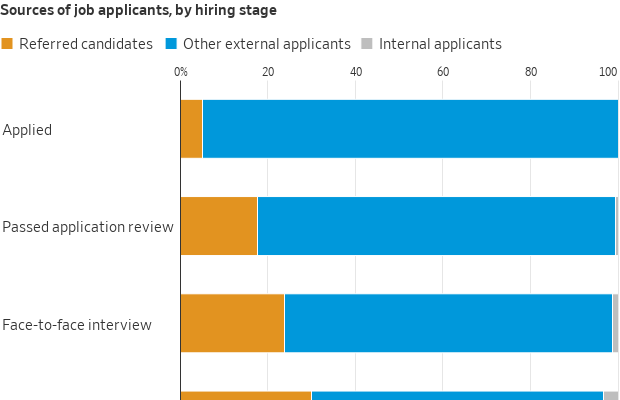
Whether recommendations come from in-house or outside the company, the advantages are significant, according to data compiled by the hiring-software company Greenhouse. For roles that were posted on Greenhouse job boards and filled in the first quarter of this year, applicants with referrals had a 50% chance of advancing past an initial résumé review, compared with 12% odds for other external candidates.
Thirty percent of eventual hires had referrals, even though people with referrals represented just 5% of the applicant pool.
“Candidates are so desperate to get noticed, and they’re asking, ‘What’s the cheat code? What’s the way to get through the filters?’” says Jon Stross, Greenhouse’s co-founder. “Get referred. It really increases your chances of getting through the first filter.”
AI arms race leads to frustration
The renewed reliance on networking comes as applicants and hiring managers are struggling to navigate the software that now dominates recruiting.
Companies are swamped by applicants in part because many job seekers are newly relying on ChatGPT and automated bots to fire off large volumes of résumés, or using other shortcuts like LinkedIn’s “easy apply” button.
Some human-resources professionals lament that cover letters sound eerily similar, as if written by the same nonhuman.
Candidates fume when they click “submit” and don’t hear back—and sometimes even when they do. Amanda Palasciano, in Red Bank, N.J., scored an interview for a senior copy-manager position as she sought a job in advertising. The catch was that her interviewer was an avatar, not a person.
The video call was awkward. Palasciano, 42, had a short window to record her response to each question. She didn’t know where to look. Soon after, she was rejected.
“It put a bad taste in my mouth about the company,” she says. “If that’s how much reliance you put on brand-new tools over people, this isn’t the right place for me.”
She decided to stop applying online and started asking former colleagues about short-term openings , aiming to convert one to a full-time job.
“This front door is locked,” Palasciano says. “We’re going through the back door, or we’re not working.”
Fewer applicants, higher quality
Lindsay Broveleit, a Minneapolis-area vice president at the marketing agency Matato, didn’t bother posting a job listing online when she needed to fill a midlevel role this spring.
She feared that listing the position on LinkedIn or the company’s website would bring throngs of low-quality applications—and she was anxious about how truthful AI-enhanced applications might be.
“A couple of years ago, I would have absolutely pursued more digital channels that are more public-facing,” she says. Not now. “We don’t want that many applicants. We want good ones.”
She thought to tap her and her colleagues’ networks to fill the role, but she soon reconsidered—even those personal channels have become oversaturated with first- and second-degree connections looking for work.
Employees are “inundated with people asking for their help to navigate into open positions,” she says.
She contracted a staffing agency instead.
Whether using agencies or their own employees, more companies are turning to people to vet prospects.
Laserfiche, a maker of content-management software, has a longstanding employee-referral program and a renewed commitment to contact everyone who is recommended by an employee.
The guaranteed outreach does not ensure an offer, says Vice President of People Jenny Bode, but it is a chance for candidates with unconventional backgrounds to make a case for themselves. With about 400 applicants for a typical opening, that’s an opportunity not afforded to everyone.
Bode values referrals partly because one helped bring her to Laserfiche in 2022. She wasn’t even looking for a job when she heard from a former co-worker she’d kept in touch with.
“She reached out to me and said, ‘I have this position. Do you want to interview for it?’” Bode recalls.
Alison Mincey introduced referral bonuses of up to $2,500 when she became chief human resources officer at the University of Miami in 2022. She estimates one in 10 hires now starts with an employee referral. The program, she says, also helps with retention: Employees are more engaged when their input is valued, and newcomers are more likely to stay and thrive when they already know a co-worker.
A flawed but indispensable system
On Greenhouse’s platform, when employees submit referrals, the software prompts them to “consider referring people from underrepresented backgrounds.”
That can be a challenge. People tend to know—and therefore recommend—people like themselves, says Ruth Thomas, chief of research and insights at PayScale, a compensation-management firm. (PayScale itself has lately doubled its usual share of new hires found through referrals, to 30%.)
Referral networks tend to reinforce demographic imbalances . A PayScale survey of 53,000 workers found that white men land more jobs and bigger raises through referrals than others because they are more likely to be connected to corporate decision makers.
Hiring managers might say, “They were in my club at Princeton, and therefore, they’re a good person,” says John Horton, an associate professor at the Massachusetts Institute of Technology’s Sloan School of Management and co-author of a recent paper on artificial intelligence in hiring. “If people start to retreat away from an open market, and it happens much through who you know and references, that would be bad.”
Cisco Systems is leaning more heavily on referrals for hiring than it has in the past. But the network-equipment company knows the approach can run counter to diversity efforts, so it also launched an effort to hire more people of color and workers without four-year degrees, says Macy Andrews, vice president of employer branding for people and purpose. That hiring initiative looks to identify candidates with transferable skills rather than mandating college. Cisco so far has made over 100 hires through the initiative.
The company is looking to cut through the online-application morass in other ways as well. Cisco recruiters now visit college campuses with preprinted offer letters, so they can snap up students who make strong impressions.
“There is a bigger point here, which is that the process of sending in résumés and having thousands—sometimes millions—to go through isn’t the wave of the future,” she says.
No connection, no luck
Samuel Joynson, of Venice, Fla., launched a thoroughly modern job hunt after he lost his job when his company went through a reorganisation. He enlisted ChatGPT to edit his résumé and draft emails and cover letters.
The language didn’t sound like him—so he changed his approach.
Joynson, 28 years old, switched to writing his own letters and emails, investing about two hours into each application. He also pushed himself to contact everyone he knew at major tech companies including Apple, Google and Microsoft , where he talked to a friend from college. On calls, he asked them about their experiences at the companies, the office environment and remote-work policies.
“I took the approach of making it as human-based as possible,” he says.
Joynson’s old-fashioned strategy paid off. Many conversations led to introductions to other employees within his target companies. He landed a role and started as a senior technical program manager at Microsoft in April.
Francisco Denis recently discovered that connections—or lack thereof—can make all the difference. He says he was a finalist for a project-manager role at Disney but was told by a recruiter that the company decided to hire someone who had worked there in the past and could plug in immediately.
Denis, 40, has applied online for more than 100 jobs this year after moving on from an unsuccessful startup. His efforts have yielded only a handful of interviews, a jarring turn from a couple of years ago, when he was routinely headhunted. He’s pouring energy into networking for the first time in his career, reconnecting with former co-workers at companies he’d like to join. He often shares his résumé and describes his arduous job search to show that he’s not looking for a handout.
Still, even a system that relies on human connections can be gamed. On Fishbowl, an app for workplace venting and career advice, users have started a forum dubbed “Job Referrals!” It has drawn hundreds of thousands of members seeking endorsements from people they don’t know.
“Anyone willing to provide a referral to Amazon ?” one user posted.
In lieu of a handshake or business card, another offered an emoji: “Looking for a referral for Spotify, thanks in advance :).”
Bogus referrals could be win-wins for the people who give and receive them. The applicants gain an edge and, if they’re hired, their sponsors might be entitled to referral bonuses.
The companies that extended the offer? They’re left with one more hiring strategy that can’t be trusted.
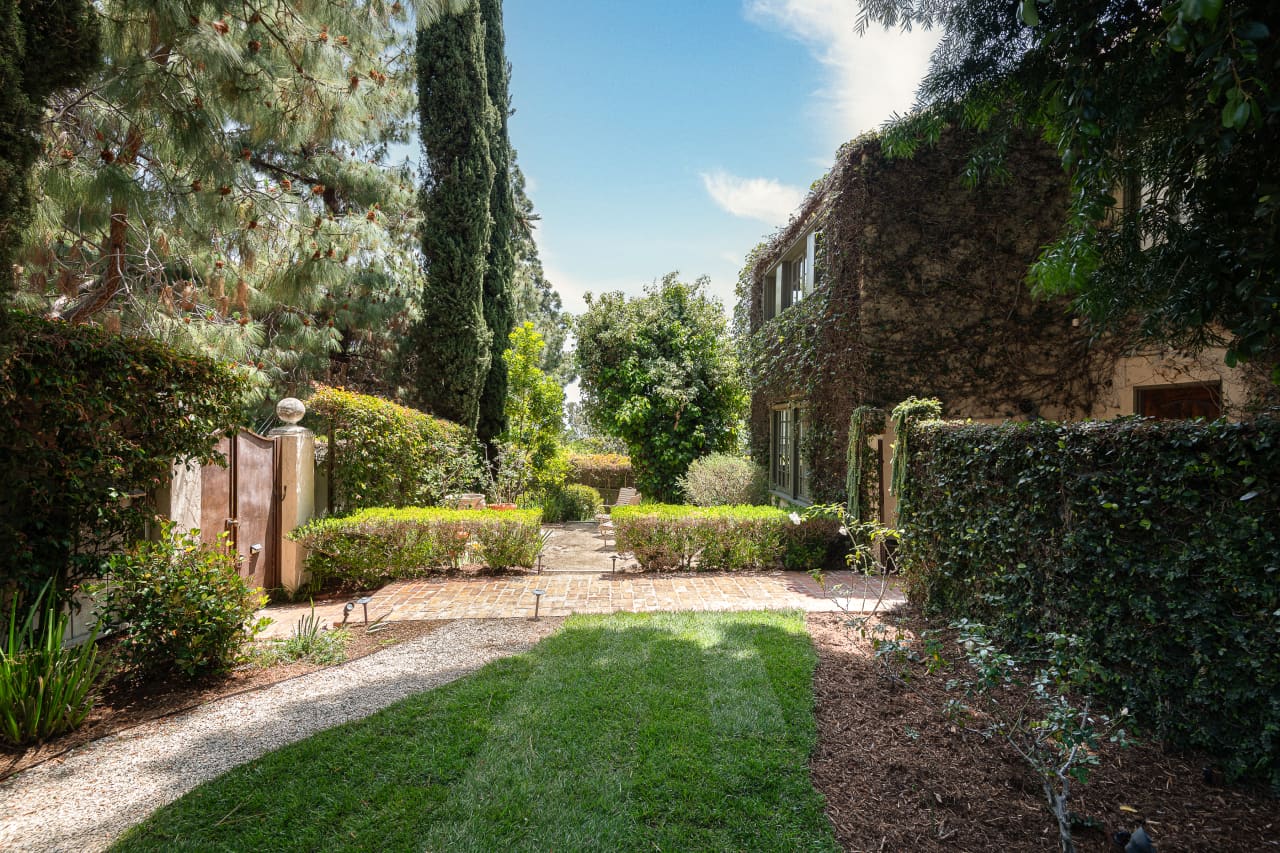
Taylor Swift took on the role of preservationist when she bought and restored a Beverly Hills mansion built for movie mogul Samuel Goldwyn—and if she’s looking for a new project, another century-old Goldwyn estate just hit the market asking $3.495 million.
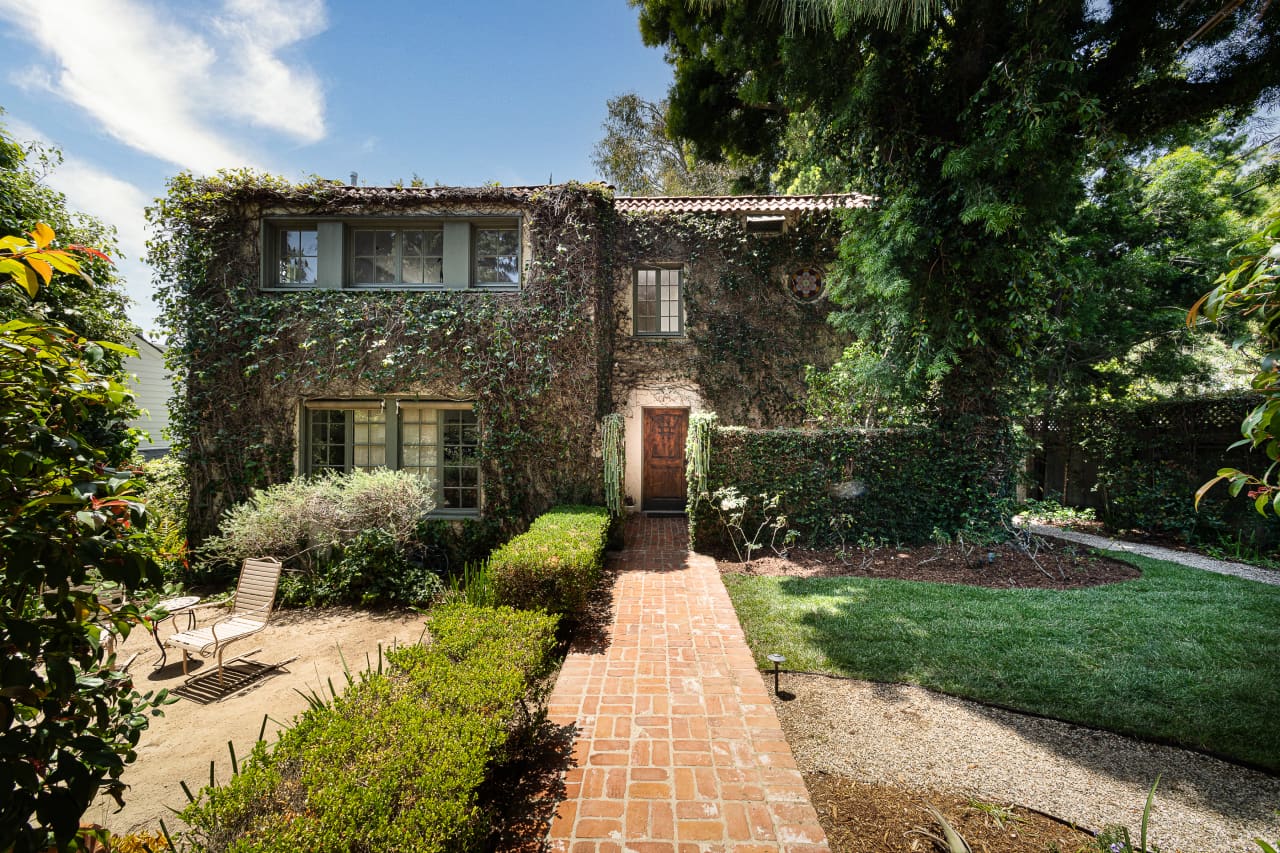
The 1916 Spanish-style villa was built for the Polish-born producer in the Hollywood foothills of Runyon Canyon, a little-known artist enclave with a rich legacy. It was a starter home for Goldwyn, who eventually bought two other properties in Los Angeles as part of the so-called Goldwyn trifecta, according to listing agent Ingrid Sacerio of the Agency, who listed the home last week.
L.A. LIGHT
The two other homes include an Italianate mansion built a couple blocks away by Los Angeles developer E.F. Fuller (it sold in 2022 for $6.4 million), and the grand Georgian Revival mansion in Beverly Hills that Swift bought in 2016 for $25 million before launching a campaign to have it officially landmarked . She still owns the home.
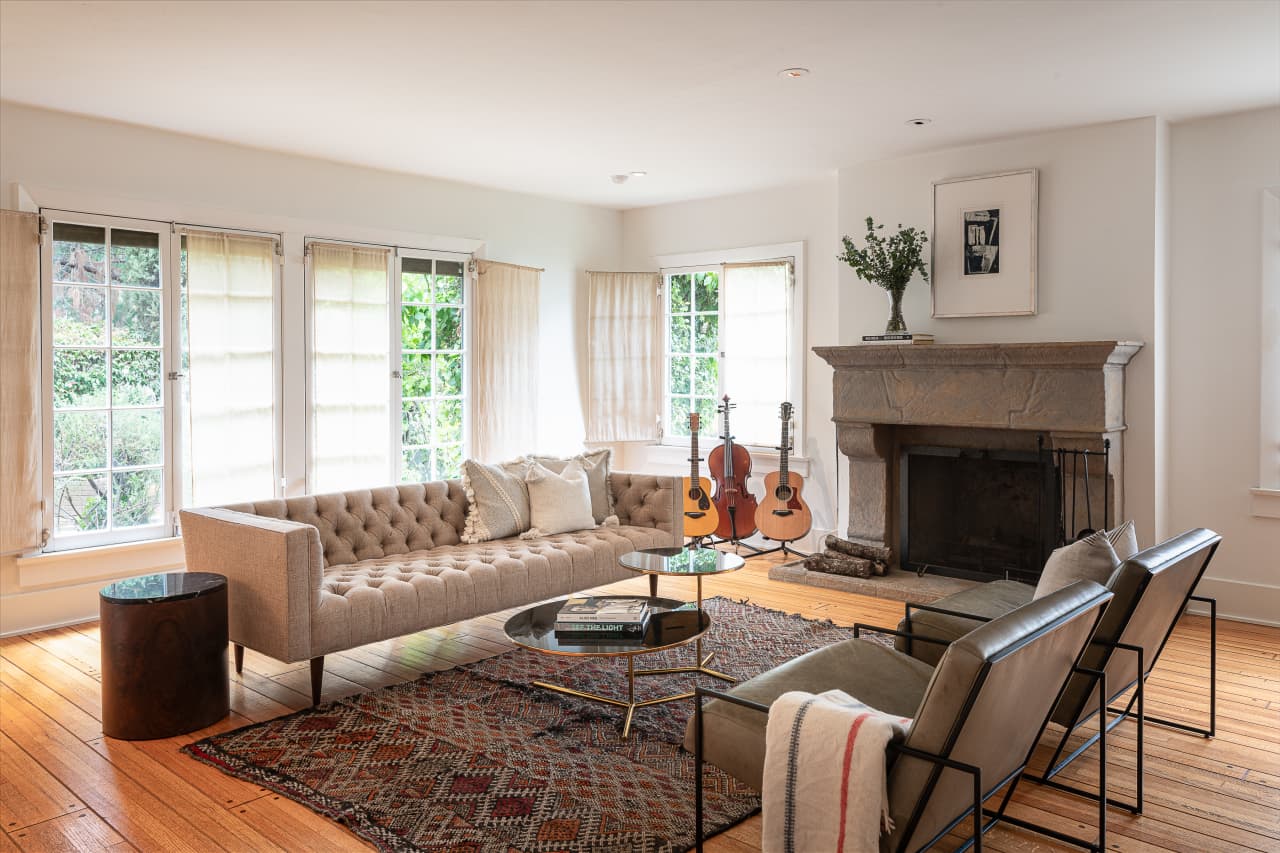
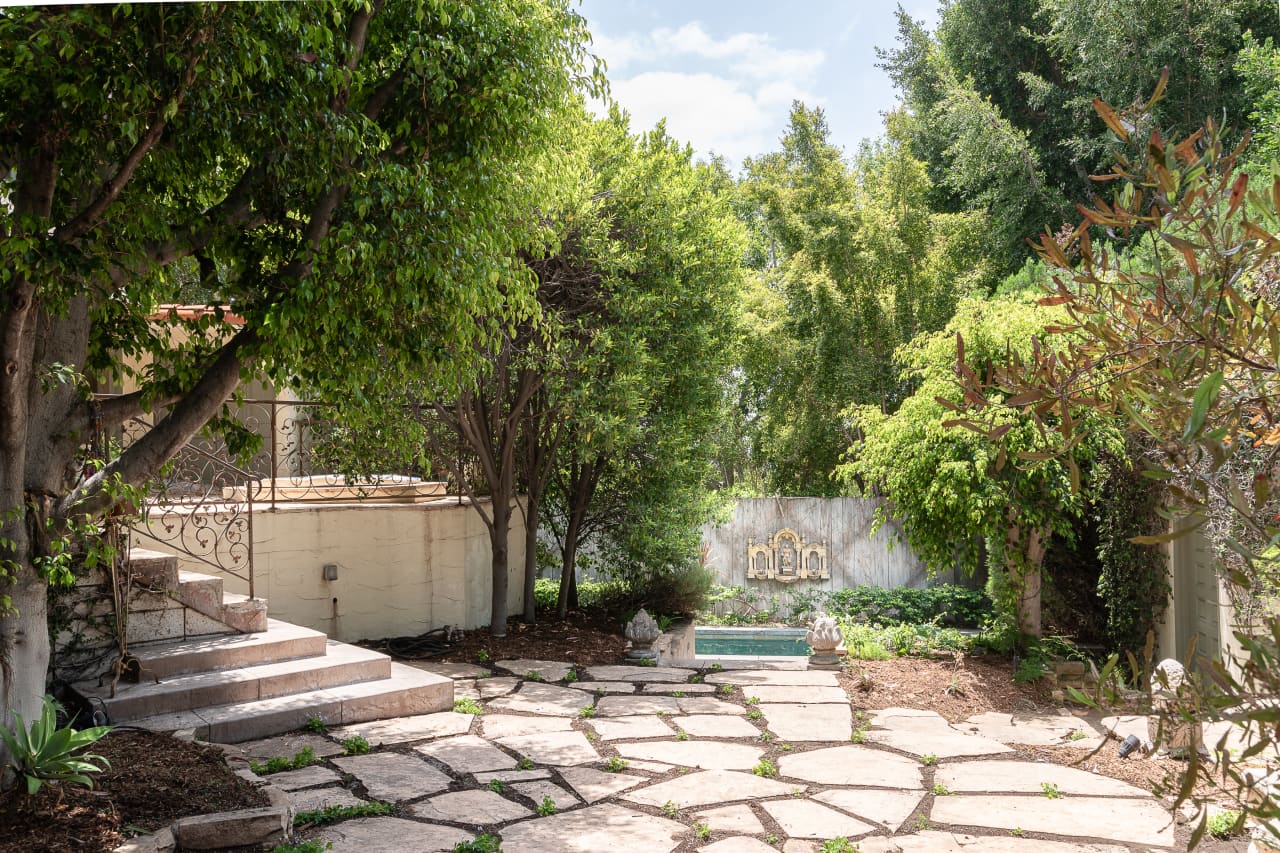
Should Swift (or anyone else) wish to flex their conservation muscles, the Hollywood property already boasts original architectural details, including the windows, interior doors and oak floors throughout. A triptych sculpture from the 1928 “Cleopatra” movie set and other artefacts and fountains dot the landscaped grounds.
L.A. LIGHT
Sacerio said it also has a lucky legacy: Soon after moving in, Goldwyn co-founded MGM and began producing acclaimed films of the 1930s and ’40s, including “Stella Dallas,” “Wuthering Heights,” and “Little Foxes,” and hit musicals such as “Guys and Dolls,” starring Marlon Brando and Frank Sinatra, and “Porgy and Bess.”
The neighbourhood “was a magnet for silent movie stars back in the day,” said seller Shel Pink, who is an artist, author of the self-care book “Slow Beauty” and the founder of beauty-product brand SpaRitual. She purchased the house in 2015 with musician Ran Pink. “One of the houses across the street was reputedly owned by one who had parties that lasted for days.”
Pink said the history of the neighbourhood was a significant draw. “Everyone knows about the music scene in Laurel Canyon but not about this little enclave in Runyon Canyon, which has attracted writers like Joan Didion, who rented here in the 1970s, and other creative types over the decades.”
She was also drawn to the house’s Old Hollywood history and its location on the hill. “We are slightly above but not so high that we have to drive down steep, winding roads, so it’s super accessible,” Pink said.
The 3,398-square-foot residence sits on a corner lot and features four bedrooms and three bathrooms. A separate studio with its own entrance is adjacent to the two-car garage at the rear of the property.
L.A. LIGHT
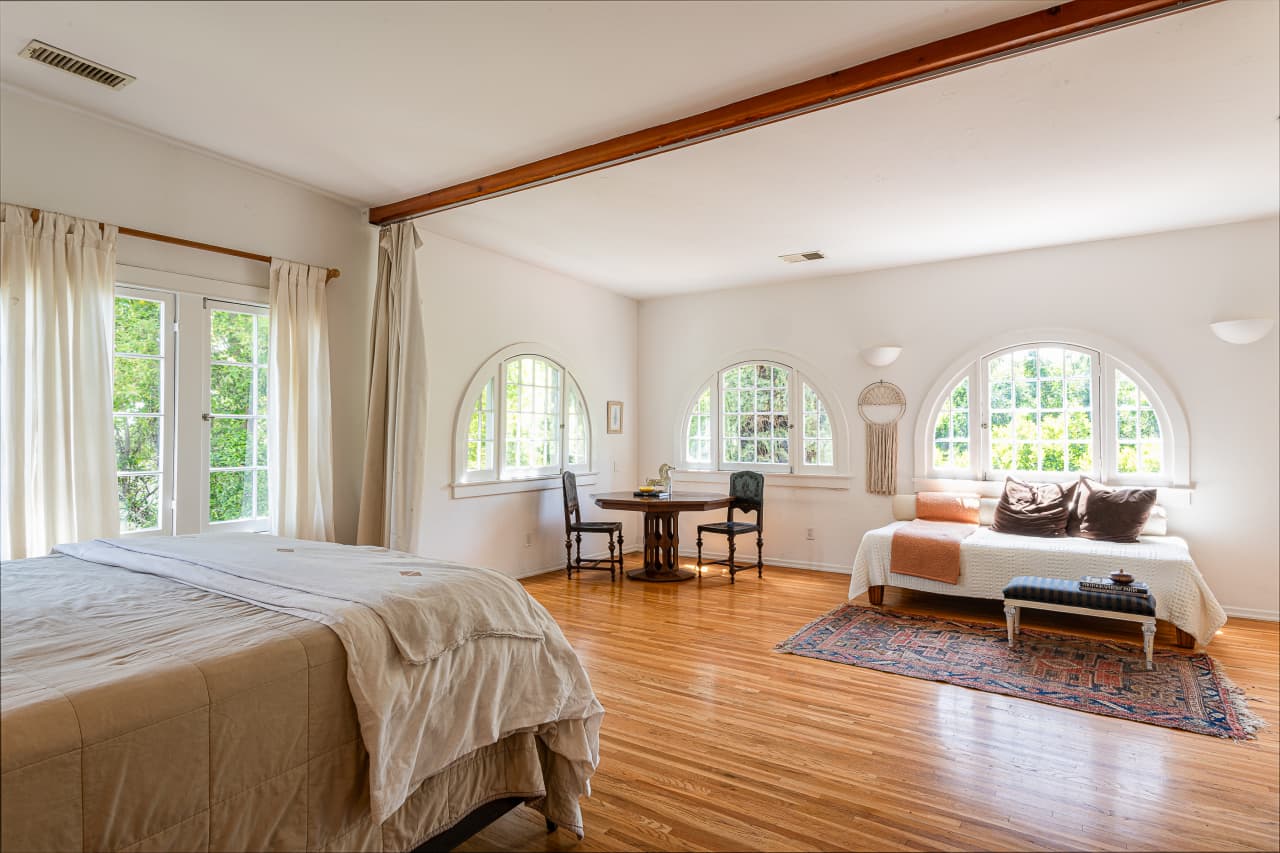
Upstairs, the primary bedroom now incorporates what was once a neighbouring sunroom with a vaulted ceiling and semi-circle, or half-sun, windows; a previous owner added a ceiling-mounted curtain that Pink says can be drawn to block out the morning sun or to keep the sleeping area cool during the day. Two more bedrooms (one en-suite) are on this level.
The fourth bedroom with a walk-in closet on the ground floor is currently used as a den. A designated office overlooks the dining room, which flows into a living room on one side and the kitchen on the other—all enclosed with expansive windows and glass doors, allowing light to flood the interior, Pink said.
L.A. LIGHT
A tall fence surrounds the entire property, which is further protected with double gates—a two-door pedestrian gate along the street and another leading into the porch outside the front door, both customised by the previous owner, Pink said.
The garage’s location at the rear of the property provides additional privacy. “No one ever sees anyone coming and going out of the front gate,” Sacerio said. Instead, they pull into the garage, walk across a pebbled area, up a few steps to a patio with a hot tub, and into the breakfast nook in the kitchen.
A landscaped brick pathway circumnavigates the perimeter of the property, crossing a patio with an outdoor fireplace and ending in steps leading down to a long, narrow pool.
“From the moment you enter the gardens and see the ivy walls, there’s a poetry and a wildness here—I like to say that we have our own mini forest that hugs the home and creates a serene oasis in the middle of an urban environment,” Pink said. “It feels like a secluded retreat. Everyone comments on the beautiful energy and sense of calm as soon as they step inside.”